Home Xi'an China Xi'an Hotels About
Home  ›  Asia  ›  China  ›  Xi'an  ›  Xi'an vs Luoyang
🇨🇳 China Travel Guide · Decide Before You Go · 2026

Xi'an or Luoyang —
which should you visit?

Two ancient capitals just 1.5 hours apart by train — the Terracotta Army versus the Longmen Grottoes. A real comparison, and why so many travellers end up doing both.

Before you decide

Two ancient capitals —different characters, barely apart

Picture this: you are planning a trip through central China, you open the map, and two names sit suspiciously close together — Xi'an (西安), old capital of the Qin and Tang dynasties and home of the Terracotta Army, and Luoyang (洛阳), another ancient capital whose cliffs hold tens of thousands of carved stone Buddhas. The question is the obvious one: with limited time, which do you choose?

Here is the answer we will unpack slowly: the two cities are only about 1.5 hours apart by high-speed train — close enough to pair on one trip, and different enough that it feels like visiting two worlds. Xi'an is imperial grandeur: walls, ramparts, an army, the start of the Silk Road. Luoyang is quieter and more devotional: Buddhist cliff art, the country's first Buddhist temple, and a city that turns into a sea of peonies every April.

This article does not declare a winner. It helps you work out which kind of traveller you are and what is worth your time. If you want to go deep on Xi'an itself, read the Xi'an attractions guide or the 3-day Xi'an itinerary — here, we focus purely on the choice between the two cities.

Quick verdict

The short answer, before the detail

If you need to decide right now

First time in China / only 2–3 days / want the genuine must-sees / flying in direct from Thailand Choose Xi'an — the Terracotta Army, an intact ancient city wall and a Muslim Quarter you can eat through all night make a set of experiences you cannot get anywhere else, and it is the easiest gateway into central China.
Into Buddhist art and history / arriving in April for the peonies / want somewhere quieter and cheaper / already done Xi'an Choose Luoyang — the UNESCO-listed Longmen Grottoes, the oldest Buddhist temple in China, and the floodlit Yingtianmen gate give you the feel of an ancient capital without the crowds.
Xi'an 西安 · Capital of the Qin & Tang

When imperial grandeur is what you came for
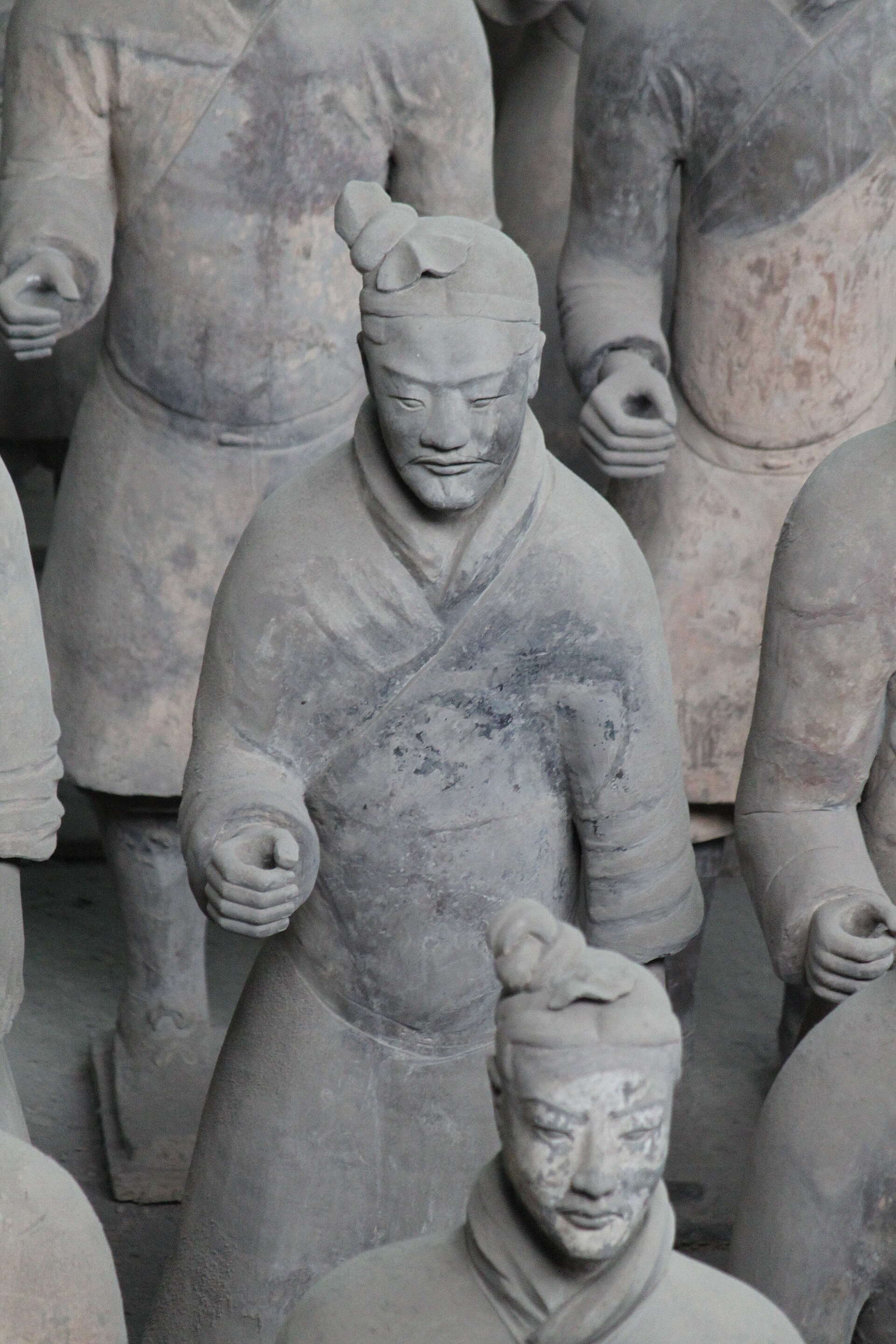
The Terracotta Army near Xi'an — rows of life-size terracotta warriors in an excavation pit, Xi'an's most famous World Heritage site

Xi'an has something Luoyang does not, and that nothing else can match — the Terracotta Army. Thousands of life-size clay figures have guarded the tomb of China's first emperor, Qin Shi Huang, for more than 2,000 years. It is one of the most important archaeological finds on earth, and for many travellers it is the single reason to fly into central China at all. Read more in the Terracotta Army guide.

Beyond that, Xi'an has the most complete intact city wall in China — 14 kilometres you can walk or cycle along the top of, built in the Ming dynasty — and a Muslim Quarter that comes alive at night with the smell of spices, grilling meat and the rhythmic thump of biangbiang noodles being made. This was the eastern terminus of the Silk Road, and it still feels like it.

The honest caveat: Xi'an is bigger and far more touristed, especially at the Terracotta Army and in the Muslim Quarter at peak times, and it needs at least two full days to do properly. But in return, you can fly direct from Bangkok or Don Mueang straight into Xi'an's airport — no connection required.

Strengths & caveats
The Terracotta Army — a global wonder Luoyang simply does not have; the main reason people fly in
Intact 14 km city wall — cycle a full loop around the old town, found nowhere else like this
A Muslim Quarter you can eat through all night — roujiamo, biangbiang noodles, grilled lamb
Direct flights from Thailand — no domestic train or flight connection needed
Hotels and tours at every level — from hostels to flagship five-star
The superb Shaanxi History Museum — perfect context before you see the real thing
More crowded, especially the Terracotta Army and Muslim Quarter at peak season
Higher accommodation and food prices than Luoyang — it is a full-on tourist city
Needs at least two full days — rushing it in one means missing the best of it
The Terracotta Army sits about an hour outside town — budget the round trip
Unmissable in Xi'an

4 highlights that define the city

The Terracotta Army
~1 hr outside town · World Heritage · thousands of clay figures

Pit 1 is the size of a football field and packed with life-size warriors, no two faces alike. Even if you have seen the photos a hundred times, standing in front of it in person still lands.

Read more →
Xi'an City Wall
City centre · Ming dynasty · 14 km loop

The most complete intact city wall in China. Renting a bike and cycling the full loop along the ramparts at dusk is one of the experiences past visitors talk about most.

Read more →
Muslim Quarter & Great Mosque
Behind the Drum Tower · street food · Chinese-style mosque

A food street that buzzes all night — and once you have eaten your fill, a short walk in lies the Great Mosque, built like a Chinese temple and quiet enough to feel like another world.

Read more →
Xi'an food — roujiamo & biangbiang noodles
Citywide · wheat and lamb · big, bold flavours

The "Chinese hamburger" roujiamo, belt-wide biangbiang noodles, and lamb paomo stew — Xi'an's food is built on wheat and Silk Road spice rather than rice.

Xi'an food guide →
Luoyang 洛阳 · The Other Ancient Capital

When Buddhist art and quiet are what pull you in

Luoyang does not try to out-Xi'an Xi'an — it offers something entirely different. The star is the Longmen Grottoes (龙门石窟), a UNESCO World Heritage site along the Yi River with around 2,345 caves and nearly 110,000 carved stone Buddhas — from figures the size of a fingertip to the 17-metre Vairocana Buddha at Fengxian Temple, carved during the reign of Empress Wu Zetian. Entry is about ¥90 (around ฿450).

Luoyang is also home to the White Horse Temple (白马寺), founded around AD 68 and considered the first Buddhist temple in China — over 1,900 years old. And every April the whole city becomes a sea of peonies during a festival that draws Chinese visitors from across the country. After dark, sites like the Yingtianmen gate and the Luoyi ancient town light up so beautifully you feel you have stepped into the Tang dynasty itself.

The honest caveat too: Luoyang has fewer headline sights than Xi'an, international visitors are still thin on the ground, and English signage and English speakers are scarce — but that is exactly why it is cheaper, quieter, and feels like a discovery. Check the festival dates and train times before you go.

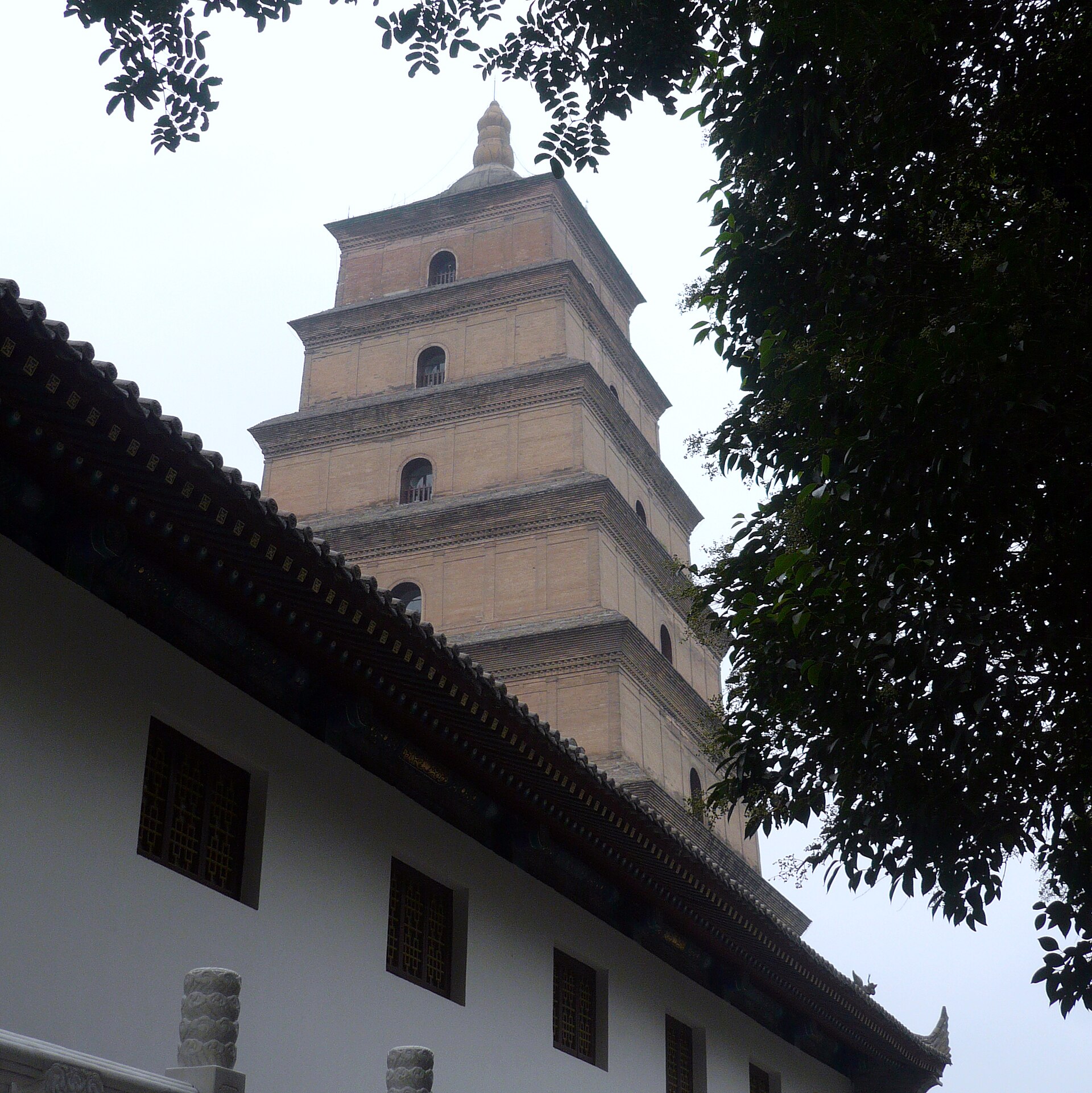
Big Wild Goose Pagoda in Xi'an — shown here on the Xi'an side to illustrate Tang-era Buddhist heritage (not a photo of Luoyang's Longmen Grottoes)
Strengths & caveats
Longmen Grottoes — UNESCO World Heritage, nearly 110,000 carved Buddhas by the river; not in Xi'an
White Horse Temple — the first Buddhist temple in China, over 1,900 years old
April peony festival — the whole city turns into a sea of flowers, a seasonal experience all its own
Floodlit Yingtianmen & Luoyi old town — even more Hanfu-wearers strolling at night than Xi'an
Clearly cheaper and quieter — guesthouses from ¥60–150 a night, shorter queues
Doable in one full day to a day and a half — easy to pair with Xi'an
No single headline sight on the scale of the Terracotta Army — it leans on Buddhist art
No convenient direct flights from Thailand — most people connect by train from Xi'an or Zhengzhou
Less English signage and fewer English speakers — have a translation app ready
During the April peony festival it gets very busy with Chinese visitors — rooms fill fast, book ahead
Unmissable in Luoyang

4 highlights that define the city

🛕
Longmen Grottoes 龙门石窟
Along the Yi River · World Heritage · entry ~¥90

Cliffs on both banks of the river carved with nearly 110,000 Buddhas. The centrepiece is the 17-metre Vairocana Buddha at Fengxian Temple, whose serene face is said to have been modelled on Empress Wu Zetian.

🛕
White Horse Temple 白马寺
Outside town · AD 68 · first Buddhist temple in China

The first Buddhist temple on Chinese soil, founded around AD 68. Later additions include Indian, Burmese and Thai-style halls, making it an international temple garden unlike anywhere else.

🌸
The peony festival 牡丹
April · Wangcheng Park ~¥40–50 · city flower

The peony has been Luoyang's signature flower since the Tang dynasty. The 2026 festival opens 1 April with peak bloom around 15–25 April — arrive in the wrong week and you may miss the flowers.

🏮
Yingtianmen & Luoyi Old Town
City centre · floodlit at night · Sui-Tang ruins

The Sui-Tang imperial gate is far more striking floodlit at night than by day. Wandering it after dark among the Hanfu-clad crowds feels like a step back into the Tang dynasty.

Compare

Every dimension in one table

Dimension Xi'an 西安 Luoyang 洛阳
Main highlights Terracotta Army · intact city wall · Muslim Quarter Longmen Grottoes (UNESCO) · White Horse Temple · peonies
Era it's known for Qin & Tang — empire, army, the Silk Road Northern Wei to Sui-Tang — Buddhist cliff art
Vibe Big, buzzing, full-on tourist city Quieter, fewer crowds, feels like a discovery
Crowds / queues Heavy, especially the Terracotta Army at peak Lighter, except during the April peony festival
Signature food Roujiamo · biangbiang noodles · lamb paomo · grilled skewers Luoyang Water Banquet (水席) · noodle soups · Henan home cooking
Time to budget At least 2 full days (3 if you love history) One full day to a day and a half
Cost Higher — a major tourist city Clearly cheaper — accommodation and food go further
Getting there from Thailand Direct flights BKK/DMK into Xi'an airport No convenient direct flight — connect by train from Xi'an/Zhengzhou
How they connect High-speed train Xi'an North (西安北) ↔ Luoyang Longmen (龙门站) ~1.5 hrs · ~75 trains/day · every 5–10 min · second-class ~¥75–100 (~฿375–500)
Best for First-timers / history & archaeology lovers / limited time Buddhist-art lovers / April peony visitors / crowd-avoiders
The decision, summed up

Which to choose if you are...

If it's your first time in central China and you have only 2–3 days — go all-in on Xi'an. The Terracotta Army, the city wall and the Muslim Quarter are the most complete and accessible set. Start with the Xi'an first-timer guide and follow it with the 3-day itinerary.
If you are excited by Buddhist art and history, or you have seen the Mogao or Yungang caves and loved them — the Longmen Grottoes in Luoyang are the most complete set of the same tradition. Well worth the 1.5-hour train ride, and easy to pair with the White Horse Temple in a single day.
If you are travelling in April — Luoyang jumps ahead, because its peony festival (peak ~15–25 April) is a seasonal experience Xi'an cannot offer. Just book your accommodation early, because it gets busy.
If you have 4–5 days and want both worlds — base yourself in Xi'an, spend three days there, then take the train to Luoyang for a day (or stay one night to catch the Yingtianmen gate at night). This is the route history lovers most often finish feeling was the best call.
Why not do both

A "do both" plan in 4–5 days

Base yourself in Xi'an, take the ~1.5-hour high-speed train to Luoyang — here is the rhythm that works best.

5 days · Xi'an base + 1 day in Luoyang (one overnight)

This formula gives you Xi'an in full first, then splits off to Luoyang at the end so you are not hauling luggage back and forth every day — leave your main bag at the Xi'an hotel and carry one night's worth to Luoyang.

Day 1
Xi'an — old town: Check in near the Bell Tower · cycle the city wall at dusk · eat your way through the Muslim Quarter all evening.
Day 2
Xi'an — Terracotta Army: Head out early to the Terracotta Army (allow half a day) · Shaanxi History Museum in the afternoon · the Datang Everbright City fountain show after dark.
Day 3
Xi'an — at your pace: Big Wild Goose Pagoda · the Great Mosque · pick up souvenirs · add anything else from the day trips guide.
Day 4
Luoyang: Morning train Xi'an North → Luoyang Longmen (~1.5 hrs) · the Longmen Grottoes for half a day · White Horse Temple in the afternoon · the floodlit Yingtianmen gate at night · overnight in Luoyang.
Day 5
Luoyang → onward: Take the morning at your pace (Luoyang Museum / the peony gardens if you are here in April) · train back to Xi'an to fly home, or continue by high-speed rail to your next city.

Only have 4 days? Drop Day 3, squeeze Xi'an into two full days (Days 1–2), do Luoyang as a day trip on Day 3 (early train out, evening train back — enough for Longmen plus the White Horse Temple), and keep Day 4 as a buffer for rest or more Xi'an. Book your train tickets ahead via the China high-speed rail guide.

Frequently asked

FAQ · Xi'an vs Luoyang

Is it hard to travel between Xi'an and Luoyang?
Not at all. High-speed trains run from Xi'an North station (西安北) to Luoyang Longmen station (龙门站) in about 1.5 hours (the fastest take around 1 hour 15 minutes). There are roughly 75 trains a day, departing every 5–10 minutes at peak times, and a second-class seat costs about ¥75–100 (around ฿375–500). This is exactly why so many travellers pair the two cities on a single trip — check the timetable and book ahead through our China high-speed rail guide.
If I only have time for one city, should I choose Xi'an or Luoyang?
For a first visit to the region, choose Xi'an. It has genuine must-see sights you cannot get anywhere else — the Terracotta Army, the only fully intact ancient city wall in China, and a Muslim Quarter you can eat your way through all night. Direct flights from Thailand land here too. Xi'an needs at least two full days. Luoyang suits travellers who are excited by Buddhist art and cliff carvings, or who arrive during the April peony bloom — it can be done in one full day to a day and a half.
Are the Longmen Grottoes in Luoyang worth the train ride?
Very much so if you care about Buddhist art or history. The Longmen Grottoes (龙门石窟) are a UNESCO World Heritage site with around 2,345 caves and nearly 110,000 carved stone Buddhas lining the Yi River. The centrepiece is the 17-metre Vairocana Buddha at Fengxian Temple, carved during the reign of Empress Wu Zetian. Entry is about ¥90 (around ฿450). If you have seen the Mogao Caves at Dunhuang or the Yungang Grottoes and loved them, Longmen is the most complete set of the same tradition.
Is Luoyang really cheaper and quieter than Xi'an?
Yes. Luoyang sees far fewer international visitors than Xi'an, and accommodation and food are noticeably cheaper — guesthouses start around ¥60–150 a night and queues at the sights are shorter. The exception is the April peony festival, when Chinese visitors flood in from across the country. If you want the feel of an ancient capital without the crush, Luoyang delivers it better.
When is the Luoyang peony festival held?
The Luoyang Peony Festival (洛阳牡丹文化节) runs every April — in 2026 it opens on 1 April and continues through the month, with peak bloom roughly 15–25 April. The peony has been Luoyang's signature flower since the Tang dynasty. Main gardens such as Wangcheng Park charge around ¥40–50. If you are coming specifically for the peonies, plan to land in that middle-of-April window and book accommodation well ahead, because it gets very busy. Always double-check the year's exact dates before you go.
If I want to do both cities, how many days do I need and where should I base myself?
Four to five days is the sweet spot. The cleanest approach is to base yourself in Xi'an — spend three days there (Terracotta Army, city wall, Muslim Quarter, Shaanxi History Museum), then take a morning train to Luoyang for a day to see the Longmen Grottoes and White Horse Temple. You can either return to sleep in Xi'an or stay one night in Luoyang to catch the Yingtianmen gate lit up at night. If Xi'an is your base, staying near the Bell Tower or Muslim Quarter is most convenient. See the top 10 hotels in Xi'an for options.