Home Xi'an China Xi'an Hotels About
Home  ›  Asia  ›  China  ›  Xi'an  ›  Attractions
🇨🇳 Xi'an Attractions · 2026

What to see in Xi'an
The Terracotta Army, a city wall & 10 sights that deliver

A city that was once called Chang'an, the eastern terminus of the Silk Road and capital to thirteen dynasties. The Ming wall still rings the old town, eight thousand clay warriors still guard the first emperor's tomb, and after dark the Tang dynasty comes back to life under the lights. Nowhere else in China keeps its roots this intact.

Why come here

The city that keeps China's roots

If Shanghai is China's future, Xi'an is its past — and not an ordinary past. This was the capital of thirteen dynasties, including the Tang, China's most cosmopolitan golden age. Back then the city was called Chang'an and sat at the eastern end of the Silk Road, drawing merchants from Persia, Arabia and Central Asia until it became the largest city in the world. Remarkably, you can still trace all of that on the ground today.

What makes Xi'an special is how much survives intact. Picture this: you cycle along a 650-year-old city wall that still rings the entire old town, looking down at modern traffic below; an hour's drive out of the city, you stand before 8,000 terracotta soldiers buried for over two thousand years; and back in town after dark, the Tang dynasty is reborn under the lights at Datang Everbright City. We picked the 10 sights that best tell the story of this old imperial capital — each card links a full deep-dive guide.

The sights

10 Xi'an attractions worth your time

Ordered by how much each one tells you about the city — tap any card for the full guide.
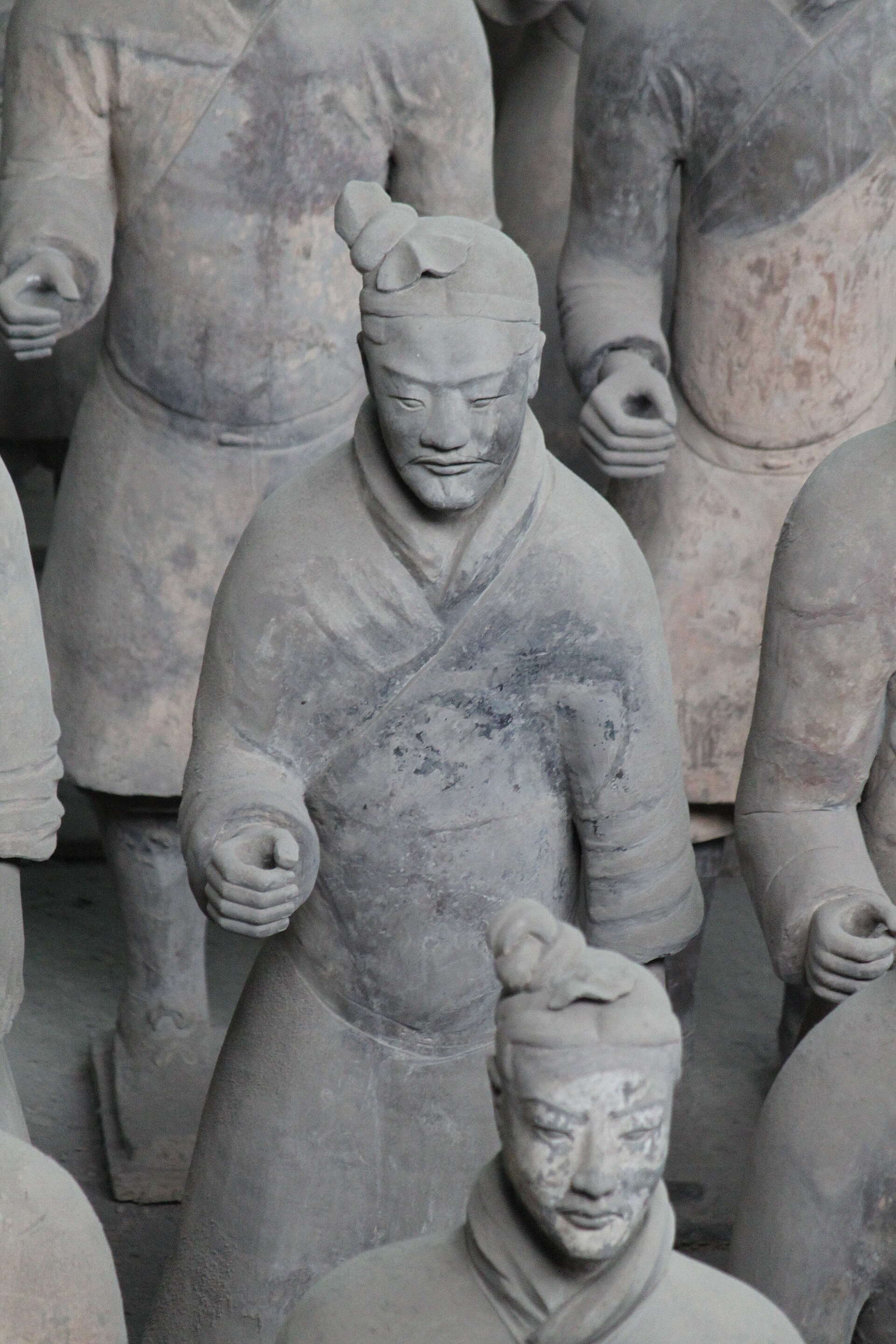
Terracotta Army Xi'an — life-size clay soldiers standing in rows inside an excavation pit at Lintong 1
The Terracotta Army (兵马俑)
Emperor Qin Shi Huang's mausoleum · why the world flies to Xi'an

Picture standing on the walkway above Pit 1, looking down at rank after rank of life-size clay soldiers stretching back into the distance — and no two faces are alike. They were sculpted more than 2,200 years ago to guard the tomb of Qin Shi Huang, the first emperor to unify China, and were discovered by farmers digging a well in 1974. Three pits are open today, with an estimated 8,000 figures in total. This is the sight that puts Xi'an on every world bucket list — you have seen the photos all your life, but standing in front of them is something else entirely.
Getting there: Tourist Bus 游5 (306) from East Square, Xi'an Railway Station · ¥7 · ~1–1.5 hrs to Lintong
Tickets: ¥120 off-season / ¥150 peak (~฿600–750) · open 8.30am–5pm
Time: allow 3–4 hrs · go early for thin crowds · a guide or audio guide is worth it
Tip: combine it with Huaqing Palace, also in Lintong, in a single day — read the full Terracotta Army guide →
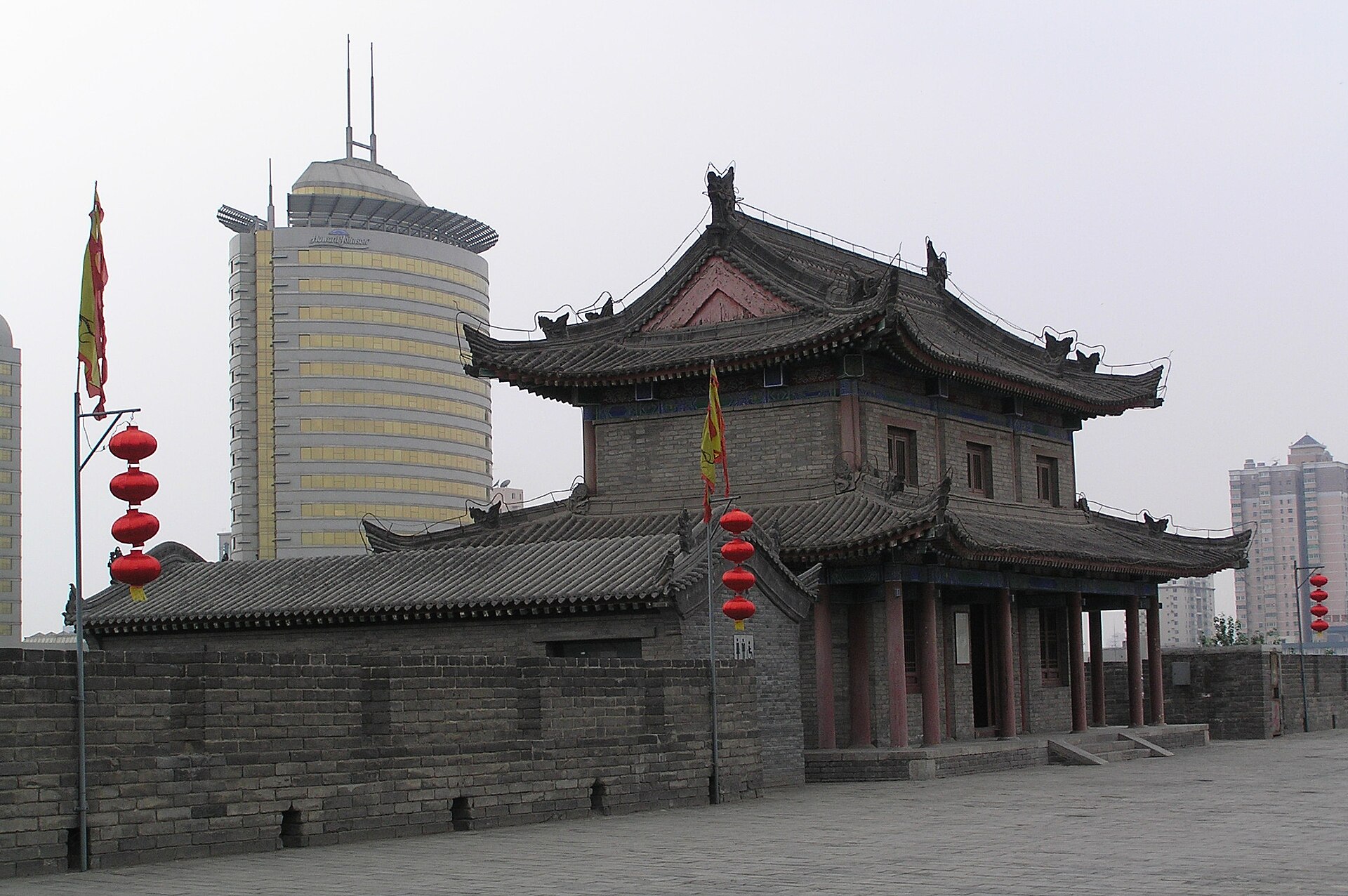
Xi'an City Wall — grey Ming-dynasty brick rampart with a wide top, red lanterns and a gate tower along the ramparts 2
Xi'an City Wall (西安城墙)
Ming-dynasty rampart · cycle the full 14-km loop

No other major Chinese city still has its full city wall the way Xi'an does. Built in the 1370s under the Ming, it stands about 12 metres tall and is wide enough on top for vehicles to pass each other. The fun part: you can cycle the complete loop along the top of the wall — 14 kilometres, around two hours, past gate towers, corner forts and rows of red lanterns. On one side you look down at the old town, on the other at modern Xi'an. South Gate (Yongning Gate, 永宁门) is the main entrance and the best photo spot, and the whole rampart is lit at night.
Metro: Yongningmen (Line 2), South Gate — the main entrance
Tickets: ¥54 (~฿270) · single bike ¥45/3 hrs (tandem ¥90) + ~¥100–200 deposit
Best time: cool morning ride, or evening for the lights · open ~8am–10pm
Tip: pick up and return the bike at any gate (East/South/West/North) — read the full City Wall guide →
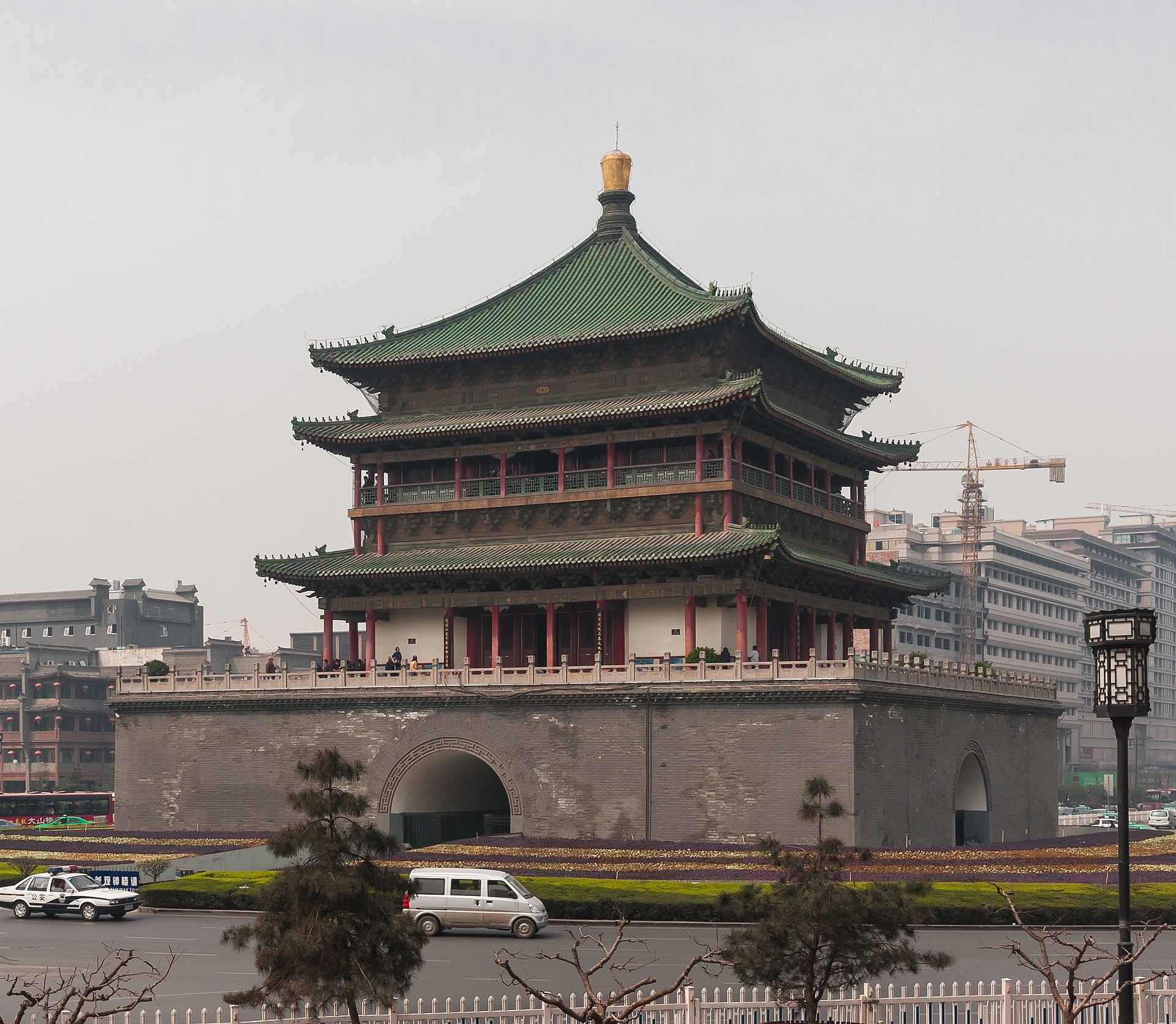
Xi'an Bell Tower — three-tier wooden tower with green roofs on a stone base at the centre of a city roundabout 3
Bell Tower + Drum Tower (钟楼 · 鼓楼)
The twin Ming towers · the dead centre of the whole city

The Bell Tower stands exactly where the city's four main streets meet — it has marked the centre of Xi'an since 1384. A three-tier wooden tower with green roofs on a brick-and-stone base, it glows gold above the roundabout at night. A short walk away is the Drum Tower, which once kept time alongside it (the bell rang at dawn, the drum at dusk); today both put on drum-and-chime performances at set times. Crucially, the gateway beneath the Drum Tower opens straight into the Muslim Quarter — you can walk right through.
Metro: Zhonglou (Line 2), Exit B/C — you surface right at the tower
Tickets: combined two-tower ticket ~¥50 (~฿250) · single tower ~¥30–35
Open: ~8.30am–8.30pm (peak season) · best lit after dark
Tip: go up in the evening for a view over the lit-up old town — read the full Bell & Drum Tower guide →
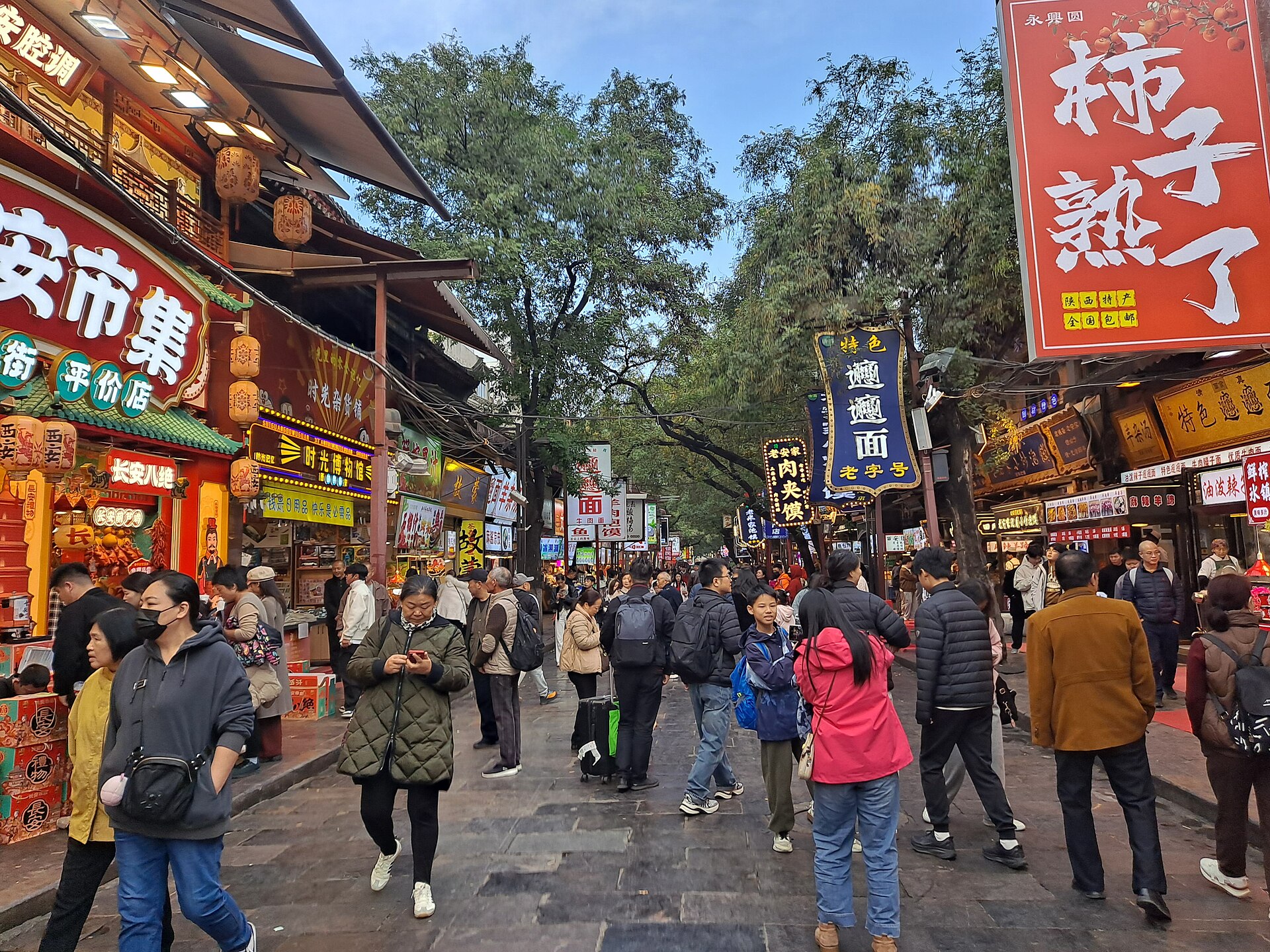
Xi'an Muslim Quarter — crowded food street with red Chinese shop signs and food stalls lining both sides 4
Muslim Quarter (回民街 Huimin Jie)
The Hui food street · where the Silk Road still lives

You know that feeling when the smell of spices, the sound of meat being pounded and the smoke off the grills hit you all at once and you are hungry before you have ordered anything? That is the Muslim Quarter. It is home to the Hui — Chinese Muslims who have lived here since Silk Road days — and its lanes are packed with stalls selling roujiamo (the "Chinese burger"), lamb skewers, biang biang noodles, candied persimmons, glazed nuts and sweets of every kind. This is where locals bring out-of-town friends to eat, not just tourists. It is busiest, and best, after dark.
Metro: Zhonglou (Line 2), walk through the Drum Tower gate · ~3 mins
Open: most stalls ~10am–midnight · liveliest in the evening
Free: free to wander · food ¥10–50 per item
Tip: arrive hungry and graze a little at many stalls — more in our Muslim Quarter street food and Xi'an food guide
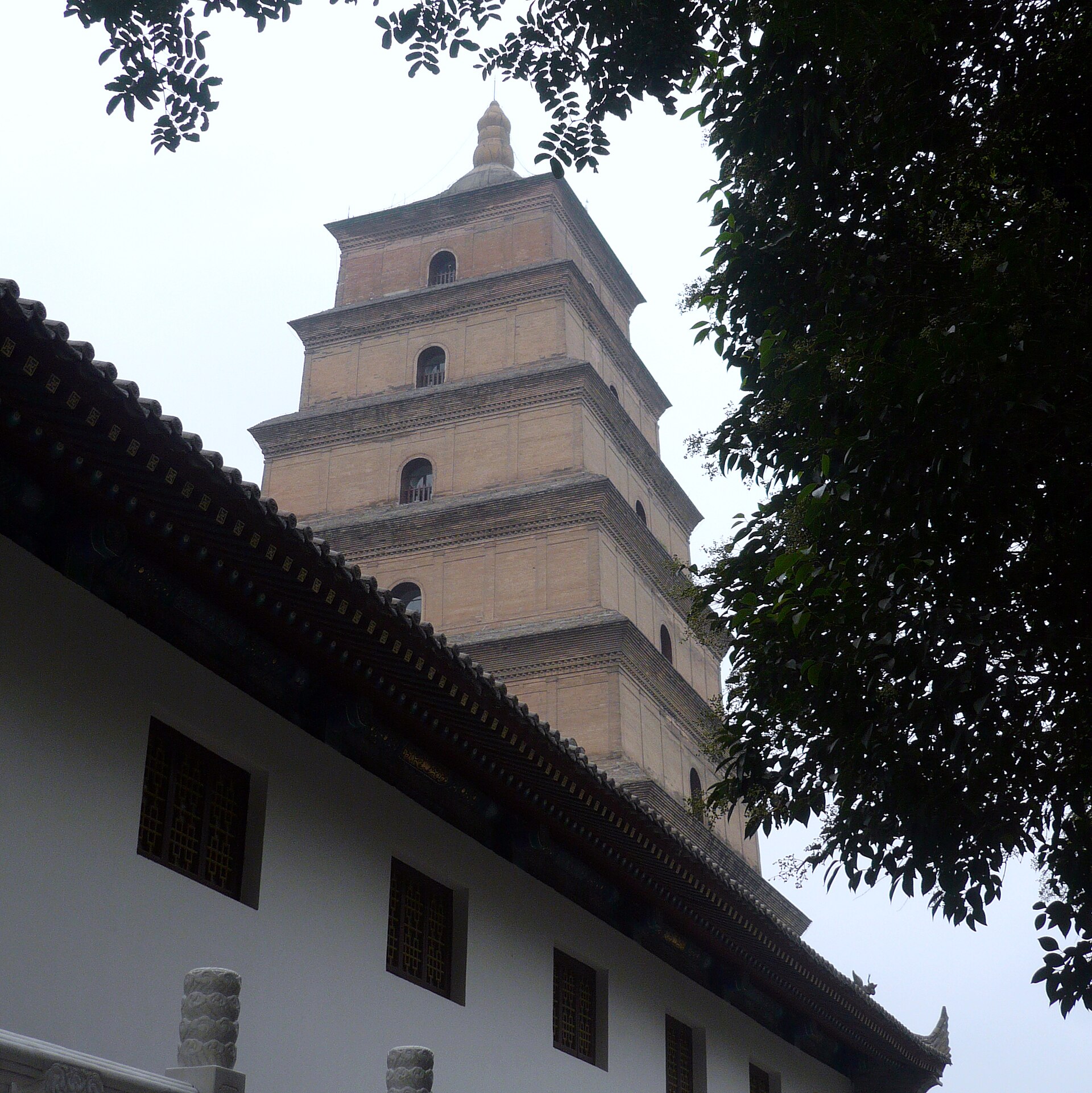
Big Wild Goose Pagoda Xi'an — square seven-tier Tang-dynasty brick pagoda rising above the roof of Da Ci'en Temple 5
Big Wild Goose Pagoda (大雁塔)
Tang pagoda from 652 AD · one of Asia's largest fountains

Ever wondered why the monk Xuanzang travelled all the way to India? The Big Wild Goose Pagoda is the tangible answer. Built in 652 AD inside Da Ci'en Temple, it was made to house the sutras and relics Xuanzang brought back from India. The square brick pagoda, seven storeys tall, has stood for more than 1,300 years; you can climb it for a view across the city in every direction. In front of it, the North Square holds one of the largest music fountains in Asia, with free shows several times a day — most beautiful after dark.
Metro: Dayanta (Lines 3/4)
Tickets: temple ¥50 (~฿250) + ¥30 to climb the pagoda · fountain free to watch
Fountain shows: 12pm / 4pm / 7pm / 9pm (noon & 4pm cancelled Tuesdays)
Tip: catch the evening fountain, then walk on to Datang Everbright City next door — read the full pagoda guide →
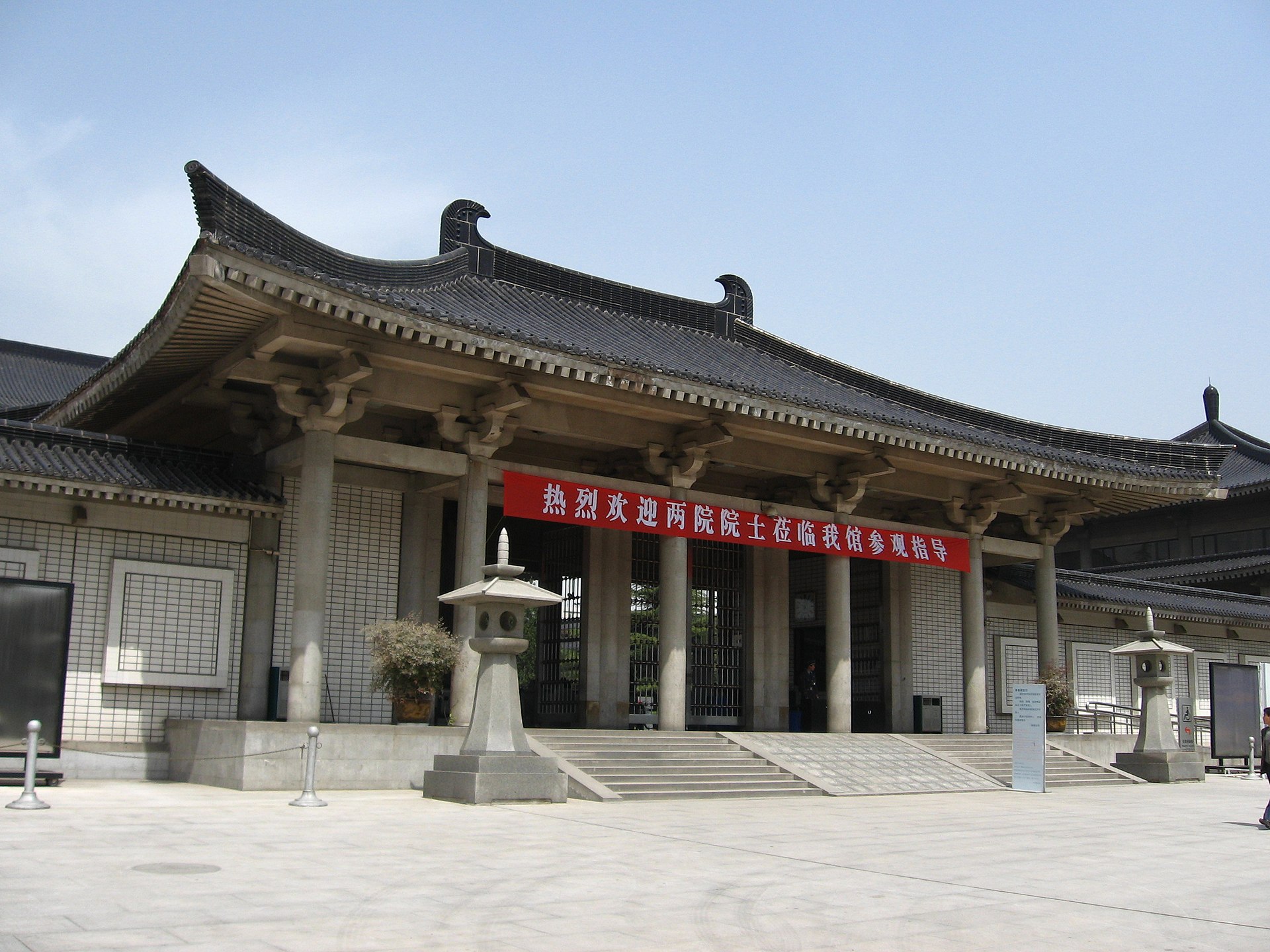
Shaanxi History Museum — Tang-style building with dark grey tiled roofs across a wide plaza 6
Shaanxi History Museum (陕西历史博物馆)
Free — but book ahead · one of China's great museums

If you want to understand why Xi'an matters this much to Chinese history, this is where to start — over 370,000 artefacts spanning the Zhou, Qin, Han and Tang dynasties, including ancient bronzes, Tang-tomb murals, the famous tri-coloured Tang ceramics (tang sancai) and exquisite gold and silver work. The building itself is a dark-tiled Tang-style design. The one thing to know: the main exhibition is free, but you must reserve in advance, and the daily quota fills fast. Plan several days ahead.
Metro: Xiaozhai (Lines 2/3), ~10-min walk
Tickets: main exhibition free (book via WeChat 陕西历史博物馆 or ticket.sxhm.com) · Tang treasures hall sold separately
Open: 9am–5.30pm (closed Mondays) · allow 2–3 hrs
Important: if you miss the free main-hall quota, you can still enter the paid Tang treasures hall — read how to book →
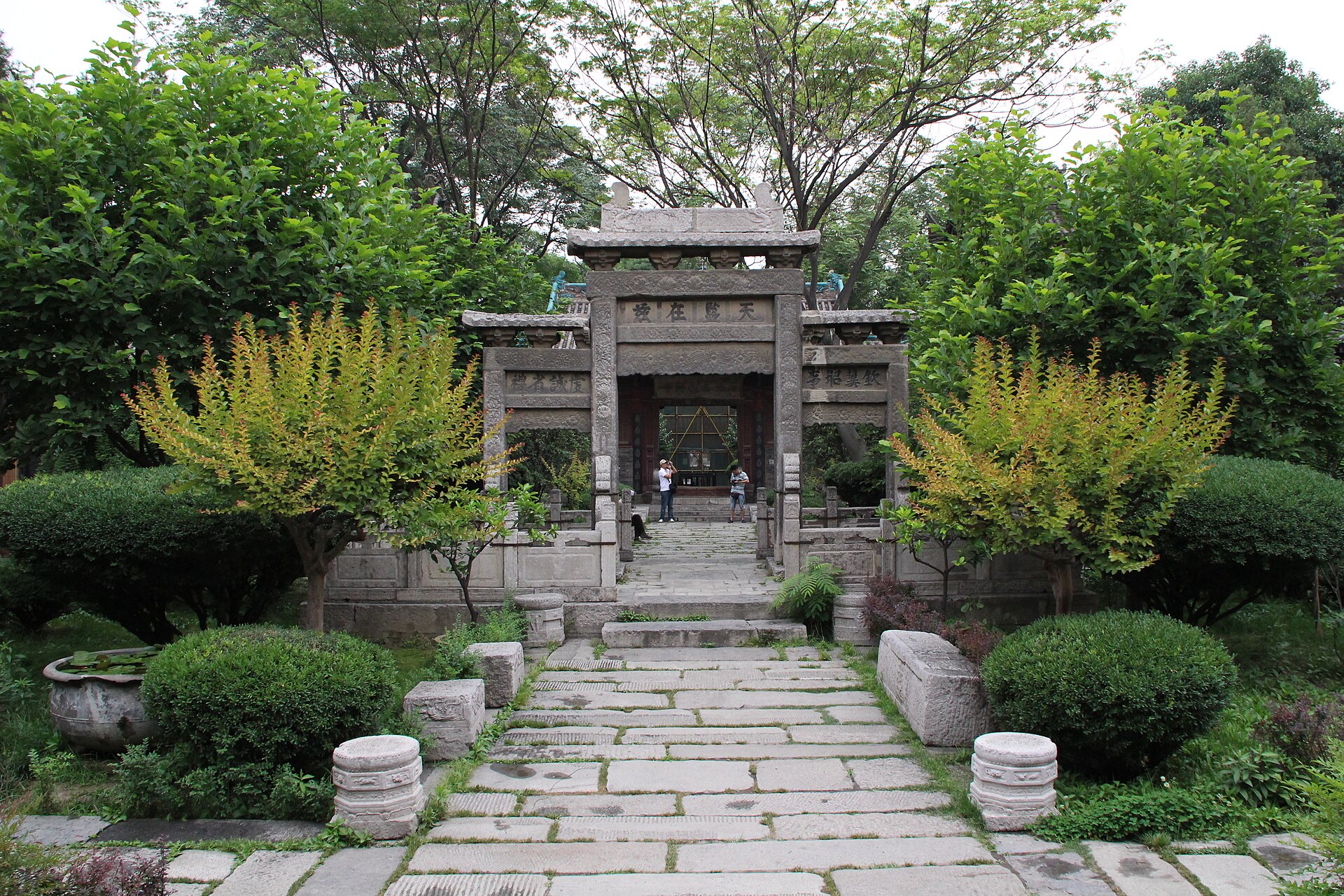
Great Mosque of Xi'an — Chinese-style stone gateway in a green garden with a paved path, in the Muslim Quarter 7
Great Mosque of Xi'an (西安大清真寺)
A Chinese-courtyard mosque · no domes, no minarets

Honestly, without the sign you might walk past thinking it was a Chinese temple or an old garden — because the Great Mosque of Xi'an has none of the domes or minarets we usually associate with a mosque. Instead it is a series of Chinese courtyards flowing one into the next, with pavilions, gardens and carved stone gateways, blending Chinese architecture with Islam in a quiet, understated way. Founded in 742 AD under the Tang, it is still an active place of worship for the Hui community today. Tucked down Huajue Lane in the heart of the Muslim Quarter, it is so peaceful inside you forget the bustle just outside.
Location: No. 30 Huajue Lane, in the Muslim Quarter
Tickets: ¥25 Mar–Nov / ¥15 off-season (~฿75–125) · free for Muslims
Etiquette: dress respectfully · prayer halls are for Muslims only
Tip: combine it with a walk through the Muslim Quarter in one trip — tap through for the full Great Mosque guide
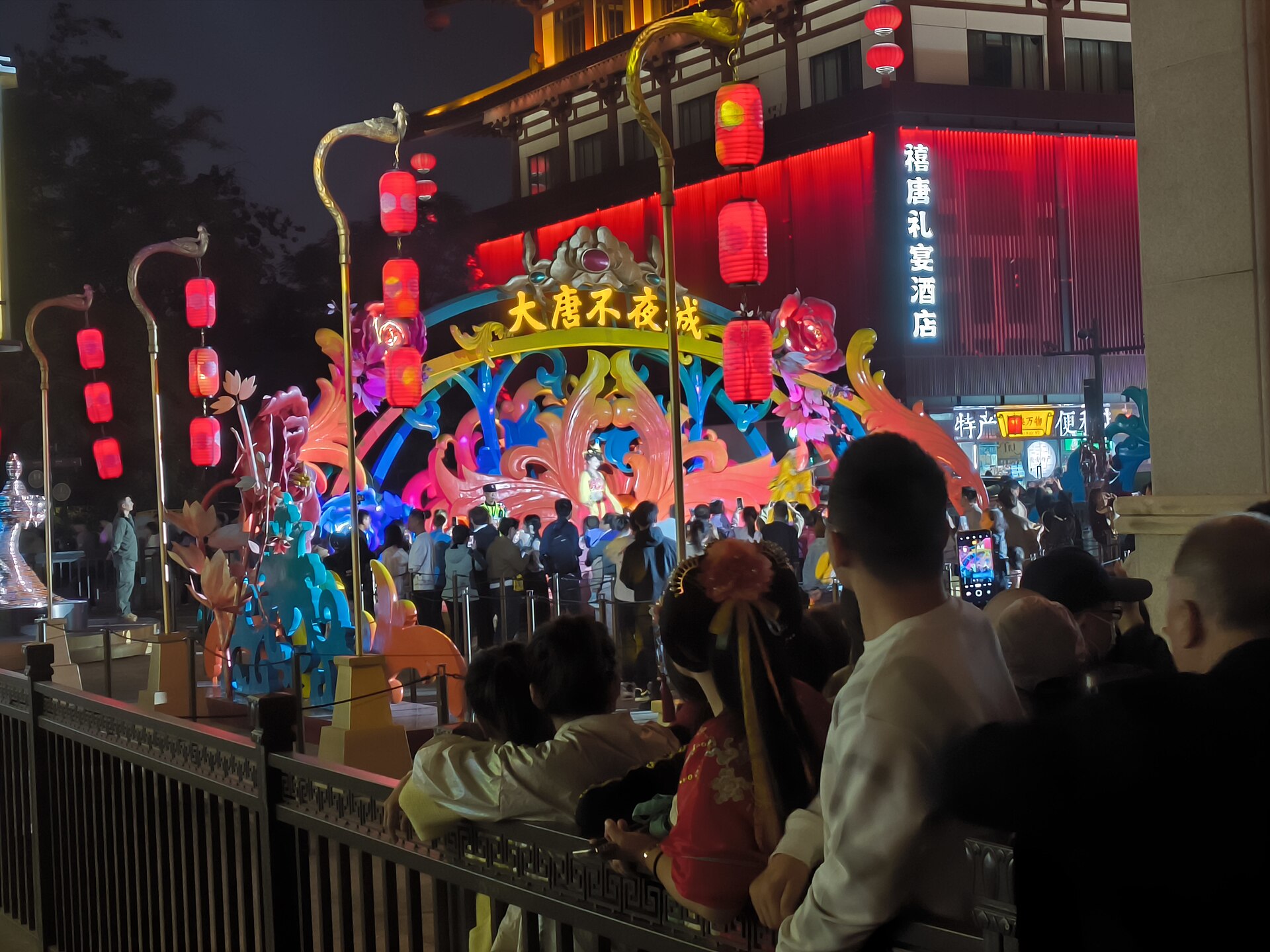
Datang Everbright City Xi'an — pedestrian street at night with brightly lit arches, red lanterns and Tang-dynasty theming, packed with people 8
Datang Everbright City (大唐不夜城)
Free 2.1-km Tang-themed night street · best after dark

Datang Everbright City is the reason young travellers all over China want to fly to Xi'an — a 2.1-km pedestrian street lined with recreated Tang-dynasty buildings. From early evening every light comes on, with live performances, costumed artists posing as "living statues", dancers and music fountains. You simply stroll, eat and photograph; every corner is a shot. It sits right next to the Big Wild Goose Pagoda, and nearby is Tang Paradise (a paid park with an evening light-and-water show). This is the Xi'an night you should not miss.
Metro: Dayanta (Lines 3/4), Exit C · ~300-metre walk
Open: all day · lights and performances start in the early evening
Free: the pedestrian street is free · Tang Paradise charges admission
Tip: arrive in the early evening, just after sunset, for the best atmosphere — read the full Datang Everbright City guide →
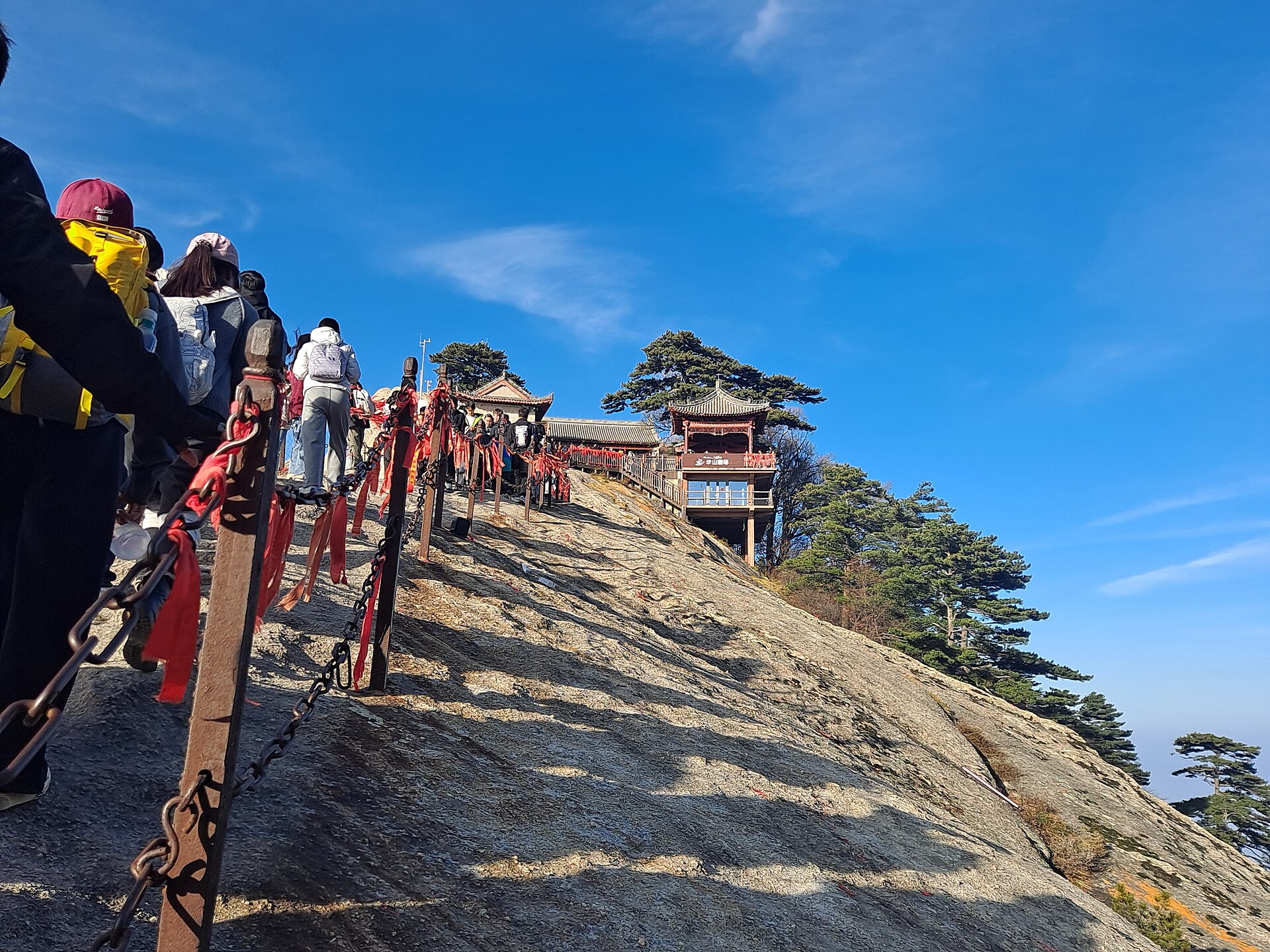
Mount Hua — steep granite ridge with hikers holding the chains, a Chinese pavilion on the summit and a clear blue sky 9
Mount Hua (华山 Mount Hua)
One of the Five Great Mountains · a day trip from Xi'an

If you have an extra day, Mount Hua more than earns it — one of China's Five Great Mountains, with sheer granite peaks that look as though they were cleaved with an axe, including the famous plank walk along a cliff face (长空栈道), said to be the most vertigo-inducing path in the world. The best part is how easy it is to reach: take the high-speed train from Xi'an North to Huashan North in just ~30 minutes, then a shuttle bus and cable car to the peaks — no need to climb all day if you would rather not. Allow a full day, or stay overnight to catch the sunrise.
Getting there: high-speed train Xi'an North → Huashan North ~30 min (¥54.5+), then free shuttle Bus 1
Tickets: park entry ~¥160 + bus + cable car (North Peak one-way ¥80 in peak season)
Time: a full day, or overnight · no city metro reaches it
Tip: leave plenty of time for travel and cable-car queues — read the full Mount Hua guide →
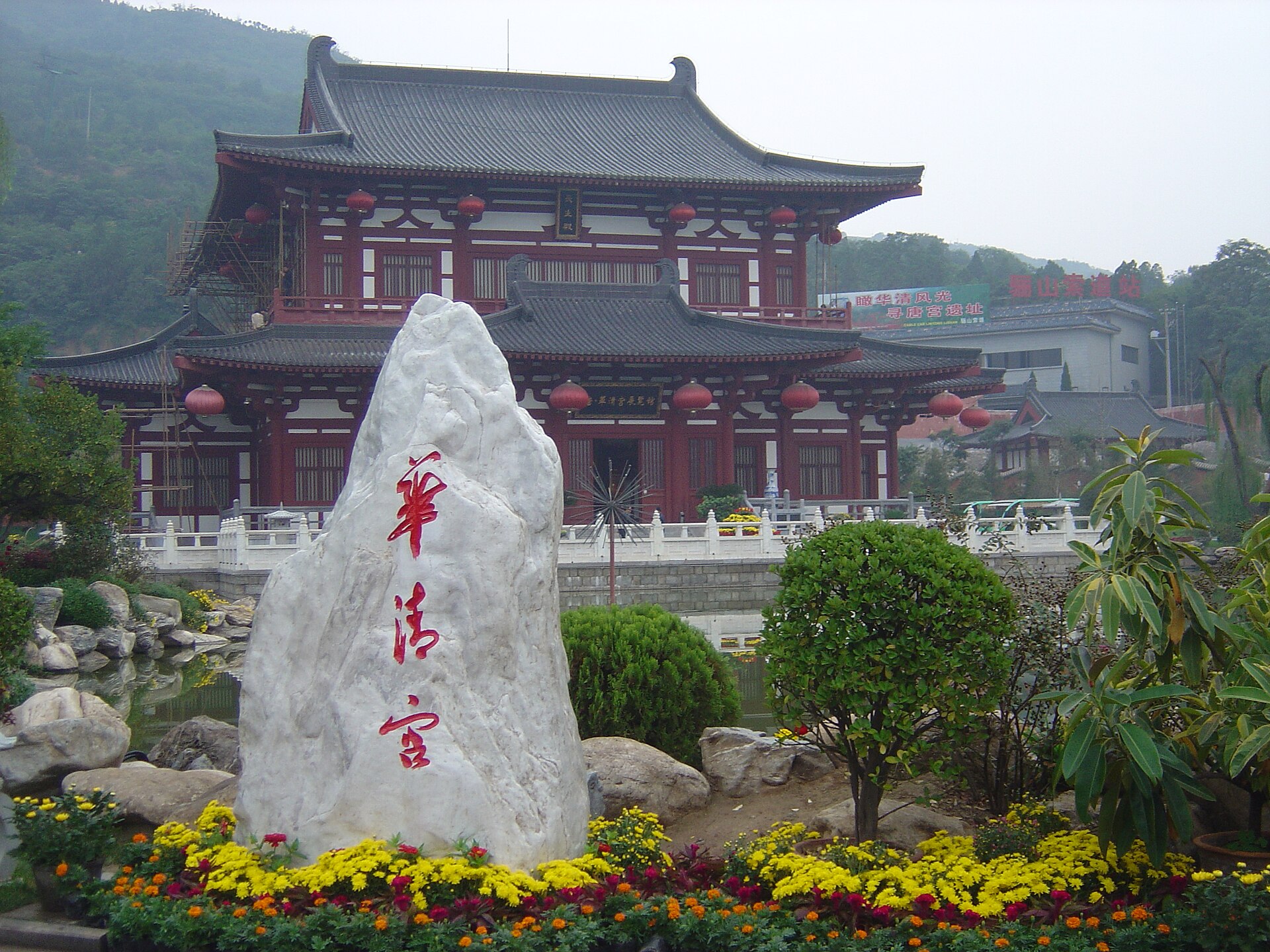
Huaqing Palace Xi'an — dark-roofed Tang-style pavilions beside a garden, with an inscribed stone reading 华清宫 and coloured flowers 10
Huaqing Palace (华清宫)
Tang hot-spring complex + Mount Li · in Lintong, by the Warriors

Huaqing Palace tells one of China's most famous love stories — the imperial hot-spring retreat that Tang Emperor Xuanzong built for his consort Yang Guifei, set at the foot of Mount Li. In the evening, the open-air show "Song of Everlasting Sorrow" (长恨歌) uses the whole mountain as its backdrop, retelling their romance with spectacular light and effects (April–October). This is also the site of the 1936 Xi'an Incident, where Chiang Kai-shek was seized — his quarters still bear bullet marks on the glass. Since it sits in Lintong alongside the Terracotta Army, you can do both in a single day.

Location: Lintong district · next to the Terracotta Army (combine into one day)
Tickets: ~¥120 (~฿600) · open 7.30am–6pm (last entry 5.40pm)
Show: "Song of Everlasting Sorrow" ~70 mins, evenings Apr–Oct (check times & weather first)
Tip: pair it with the Terracotta Army across a morning and afternoon — read the full Huaqing Palace guide →
Planning your trip

How to fit it all in

Xi'an's sights fall into three clear groups — inside the walls, around the city, and out of town.

Inside the City Wall (the centre)
Allow 1 day · Metro Line 2

The City Wall, Bell Tower, Drum Tower, Muslim Quarter and Great Mosque all sit inside the old walls and are walkable from one another. Cycle the wall in the morning, then do the Bell and Drum Towers and the Muslim Quarter through to the evening — easily a full, satisfying day.

Time needed: 1 day · Metro: Zhonglou / Yongningmen (Line 2)
Big Wild Goose Pagoda zone (south)
Allow 1 day · Metro Lines 3/4

The Big Wild Goose Pagoda, the Shaanxi History Museum and Datang Everbright City are all in the south of the city. Start at the museum in the morning (book ahead), then come back for the pagoda fountain at dusk and stroll through Datang Everbright City once the lights are on.

Time needed: 1 day · Metro: Dayanta / Xiaozhai (Lines 3/4/2)
Lintong zone (east, out of town)
Allow 1 day · Bus 游5 (306)

The Terracotta Army and Huaqing Palace are both in Lintong, about 40 km east of the city, so they pair neatly into one day — the warriors in the morning, Huaqing Palace in the afternoon. Tourist Bus 游5 (306) from Xi'an Railway Station reaches both.

Time needed: 1 full day · Getting there: Bus 游5 (306), ¥7
Day trips out of town
Mount Hua · Famen Temple · Hanyangling

Mount Hua is ~30 minutes by high-speed train from Xi'an North · Famen Temple (with the Buddha's finger relic) is ~2 hours west · the Han Yangling mausoleum is near the airport. All make great day trips. See more in our Xi'an day-trips guide →

Time needed: 1 day each · Suggested: day 4–5 if you have time
Frequently asked

FAQ · before you set out

How many days do you need in Xi'an?
Two to three days cover the main highlights. Day 1: the Terracotta Army plus Huaqing Palace (both in Lintong, east of the city, so combine them into one trip). Day 2: the City Wall (cycle it in the morning), then the Bell and Drum Towers, the Muslim Quarter and the Great Mosque. Day 3: the Big Wild Goose Pagoda, the Shaanxi History Museum and Datang Everbright City after dark. With four or five days you can add Mount Hua, about 30 minutes by high-speed train. See our day-trips guide →
How do you get to the Terracotta Army and how much are tickets?
The cheapest way is Tourist Bus 游5 (306) from the East Square of Xi'an Railway Station: ¥7, about 1 to 1.5 hours to Lintong, running 8am–7pm roughly every 7 minutes. Admission is ¥120 in the off-season (16 Nov–15 Mar) and ¥150 in peak season (16 Mar–15 Nov); the ticket covers Pits 1, 2 and 3 plus the Lishan Mausoleum site park. Be wary of unofficial "green vans" that try to drop you somewhere else — use the official bus only. Read our Terracotta Army guide →
Can you really cycle around the Xi'an City Wall, and what does it cost?
Yes. The top of the wall is wide enough to cycle the full 14-km loop, which takes around two hours. Admission is ¥54; a single bike rents for ¥45 per 3 hours (a tandem is ¥90), plus a refundable deposit of roughly ¥100–200. You can pick up and drop off a bike at any of the four gates (East, South, West, North). South Gate (Yongning Gate) is the main entrance — Metro Line 2, Yongningmen station. Read our City Wall guide →
Is the Shaanxi History Museum really free, and how do you book?
The main exhibition is free, but everyone must reserve in advance and the daily quota fills fast. Book through the museum's official WeChat account (陕西历史博物馆) or the website ticket.sxhm.com, which release tickets several days ahead — set an alarm and try the moment booking opens. If you miss the free main-hall quota, the separate Tang treasures hall sells paid tickets you can still buy. Metro Lines 2/3, Xiaozhai station. Read our museum guide →
What time is the Big Wild Goose Pagoda fountain show, and is it free?
The music fountain on the North Square — one of the largest in Asia — runs four times a day at 12pm, 4pm, 7pm and 9pm, each show about 15 minutes (the 12pm and 4pm shows are cancelled on Tuesdays, and times may shift with the weather). Standing on the square is free; the grandstand seats cost ¥30. The pagoda itself: ¥50 to enter Da Ci'en Temple, plus ¥30 to climb the pagoda. Metro Lines 3/4, Dayanta station. Read our pagoda guide →
How easy is it to get around Xi'an by metro?
Very easy within the city. Xi'an's Metro covers almost every in-town attraction, with fares of ¥2–8 per journey. Key stations: Zhonglou (Line 2) for the Bell and Drum Towers and Muslim Quarter; Yongningmen (Line 2) for the City Wall's South Gate; Dayanta (Lines 3/4) for the Big Wild Goose Pagoda and Datang Everbright City; Xiaozhai (Lines 2/3) for the Shaanxi History Museum. Pay by scanning Alipay or WeChat Pay at the gates. The Terracotta Army and Mount Hua are outside the city, reached by bus or high-speed train.
Klook · Xi'an tours

Xi'an tours — local guides take you everywhere, no queuing at the gate

Terracotta Army tours with hotel pickup, City Wall bike tickets, Mount Hua trips by high-speed train, and Tang-dynasty show tickets — book ahead on Klook and skip the gate.

See Xi'an tours on Klook →
Wherebest is a Klook affiliate partner — we may earn a commission when you book through our links, at no extra cost to you.