Out in the morning, back for dinner
Ordered by priority — the unmissable first, the deep-cuts for longer stays last.
 1
1
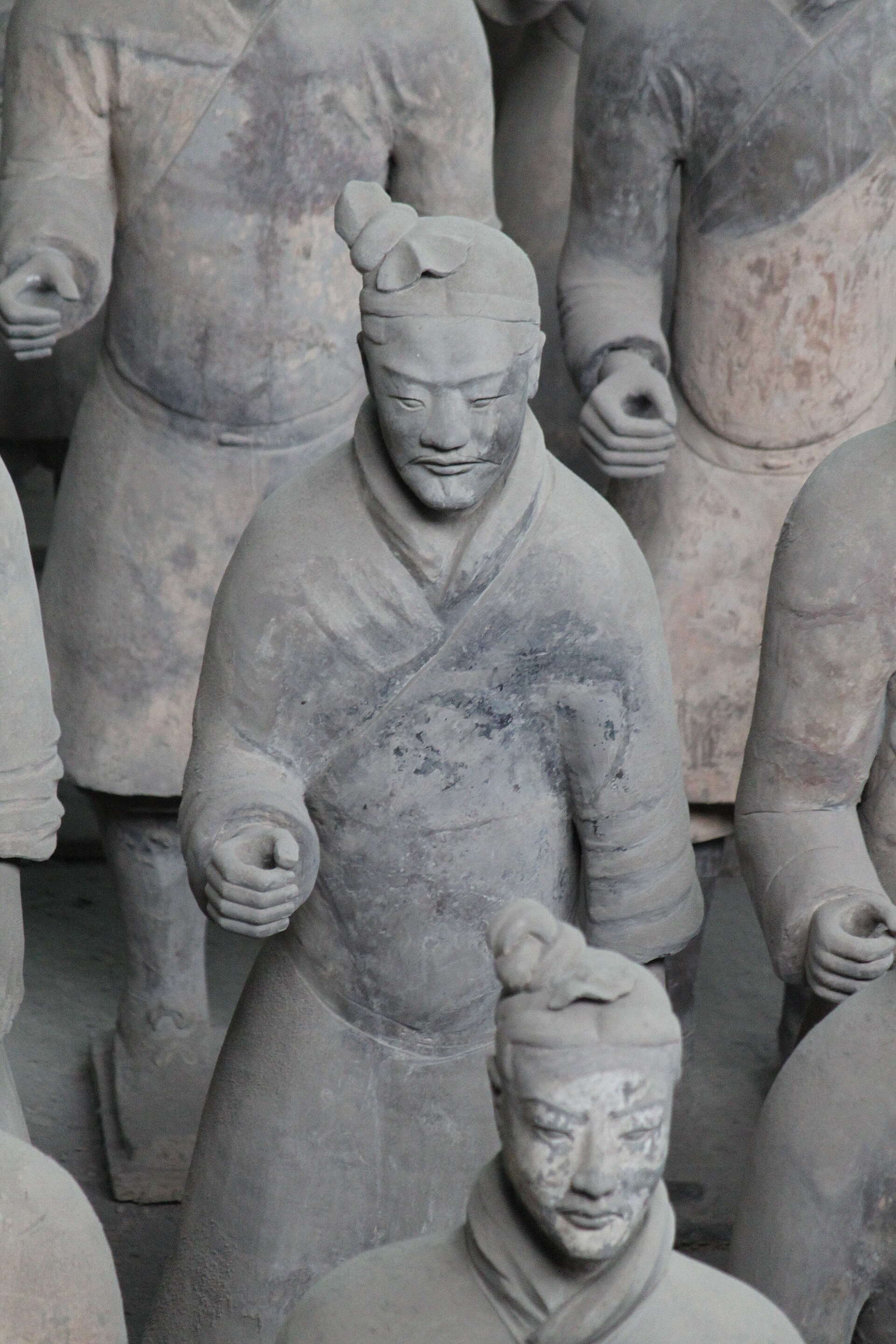
If there is one thing you cannot skip in Xi'an, it is the Terracotta Army — roughly 8,000 life-size clay soldiers that the first emperor, Qin Shi Huang, had made to guard his tomb more than 2,200 years ago, every single one with a different face. Farmers digging a well stumbled on them by accident in 1974, and the discovery has become one of the greatest archaeological finds of the century.
The museum is built over three main pits. Pit 1 is the largest and the most overwhelming: rank after rank of soldiers stretching to the far wall beneath a roof the size of a football pitch. Pits 2 and 3 are smaller but let you see the detail up close — officers, kneeling archers, war horses. Allow 3–4 hours, and genuinely consider a guide or an audio guide: without the story, these are figures in the dirt; with it, this is a whole empire's idea of the afterlife. Read the full Terracotta Army guide →
 2
2
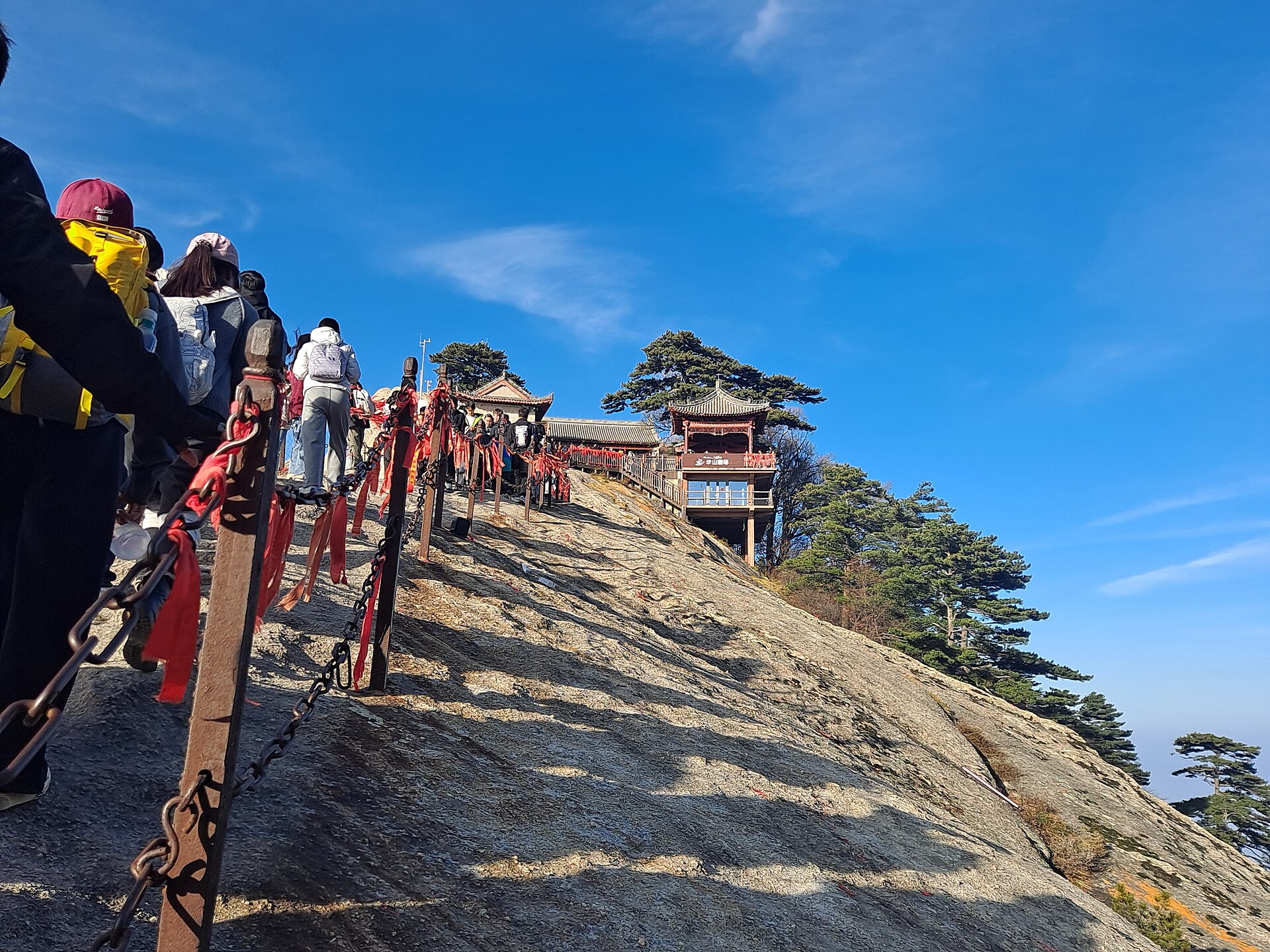
Mount Hua is one of China's Five Great Mountains (五岳) and the one with a reputation for sheer drama. Its granite peaks rise in near-vertical walls, and bolted to one of those walls is the Changkong Plank Walk (长空栈道) — a line of wooden boards no wider than your foot, fixed across a cliff face hundreds of metres above the valley. Thrill-seekers clip into a safety harness and edge along it (it is optional; anyone uneasy with heights can skip it entirely).
The easiest way up is by cable car — there are two lines, North Peak and West Peak. The West Peak line is longer and opens up wider views. The mountain has five peaks linked by ridge trails, and walking the full circuit is a serious day's effort. Note that Mount Hua has no city metro connection — you reach it by high-speed rail from Xi'an North. Read the full Mount Hua guide →
 3
3
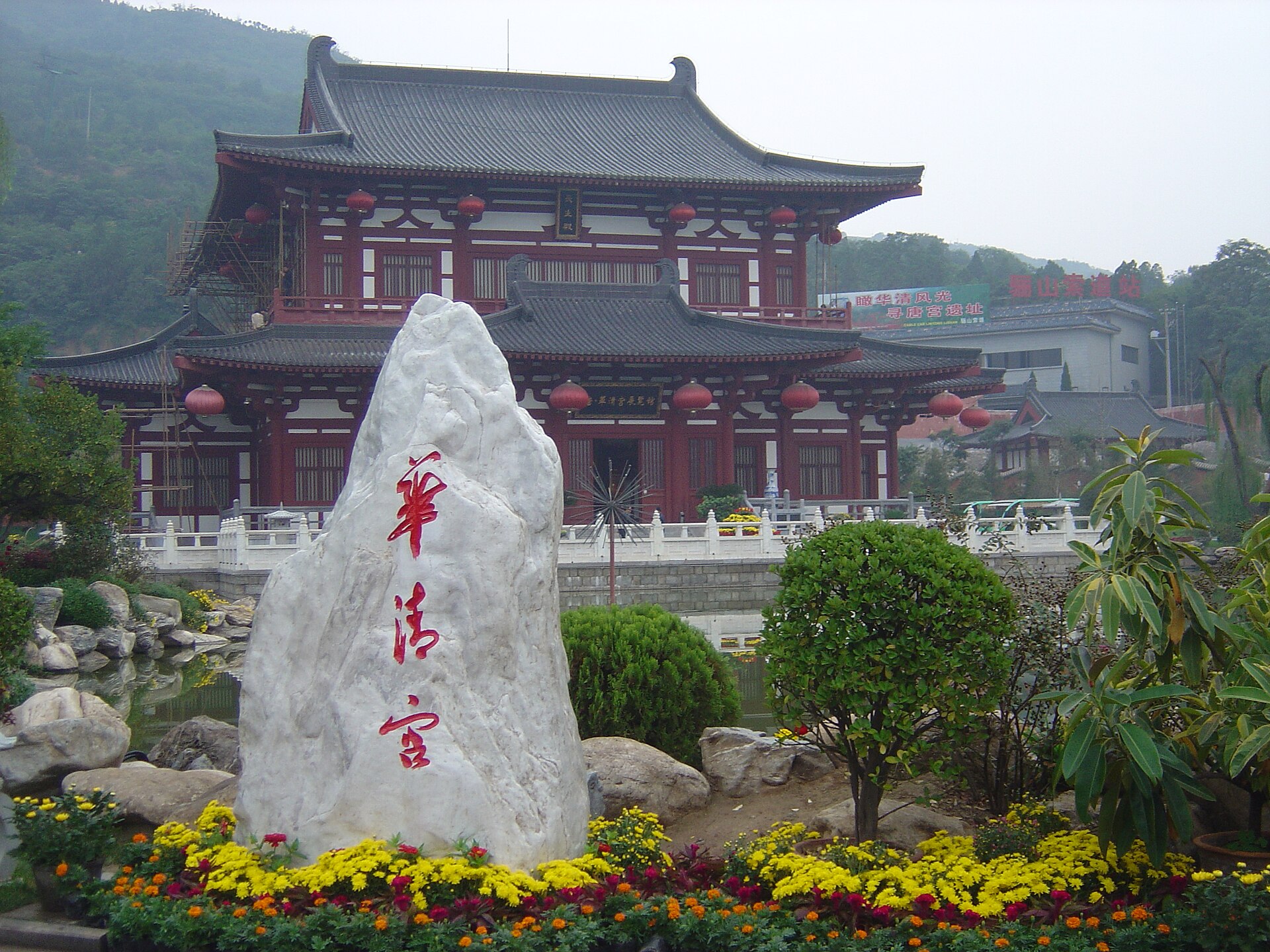
Huaqing Palace sits in the same Lintong district as the Terracotta Army, only a few kilometres away, which makes the two a natural pairing for a single day. This was the hot-spring retreat of the Tang court — the place where Emperor Xuanzong and Yang Guifei, one of the four great beauties of ancient China, came to bathe in the mineral pools. Their love story is told in the poem "The Song of Everlasting Sorrow" (长恨歌), now staged as an open-air evening show that uses the real slopes of Mount Li as its backdrop.
Above the palace rises Mount Li (骊山), which you can climb or reach by cable car, and which holds a pivotal moment of modern history: this is where General Zhang Xueliang detained Chiang Kai-shek in 1936 (the Xi'an Incident). The spot where Chiang took cover is still preserved. Paired with the Warriors in the afternoon, it fits the day perfectly. Read the full Huaqing Palace guide →
Famen Temple is a destination for Buddhists from across the world, because it holds a relic of the Buddha's finger bone — a fragment of finger bone said to be the only one of its kind surviving anywhere. It was found in 1987 beneath a collapsed old pagoda, along with thousands of Tang dynasty treasures buried as offerings: gold, silver and silk. A vast modern pagoda hall now stands over the site, and the relics are shown in an adjoining museum.
Because it lies about 120 km west of Xi'an, the temple suits travellers with a specific interest in Buddhism and history more than those on a tight schedule. If you do go, a guided day tour or the high-speed train is easier than the limited public bus. The relic itself is only put on display at certain times of year — if you want to see the genuine article, always check the viewing schedule before you travel.
If the Terracotta Army leaves you crowded out, Hanyangling is the quieter, more surprising alternative. This is the mausoleum of Emperor Jing of the Han dynasty — a different era from Qin Shi Huang. The museum is China's first underground structure of its kind, with clear glass floors that let you walk directly above the real excavation pits, looking down at the clay figures and objects exactly where they were dug up.
The figures here differ from the Terracotta Army in one striking way: they are much smaller, around 60 cm tall, and originally had wooden arms and real fabric clothing (long since perished). But there are vastly more of them, and they include people, livestock — pigs, cattle, sheep, chickens — and everyday objects, reflecting a Han court that believed in carrying ordinary life into the afterlife. The best thing about it is the location: about 20 km north of the city, just a 20-minute drive from Xi'an Xianyang Airport, which makes it an ideal stop on the way to or from a flight.
Dangjia Village is the answer for travellers who want a China that almost no foreign visitor reaches. The village sits near the town of Hancheng, northeast of Xi'an, and is reckoned to be one of the best-preserved Ming and Qing dynasty courtyard villages in China — after nearly 700 years it still has around 123 traditional courtyard homes and more than 20 ancient lanes.
What makes it special is that it is still a living village, not a set built for tourists. Walk into the narrow lanes and you find high brick walls, carved wooden gateways, and stone tablets inscribed with verses meant to teach the family's children, set into the house walls. It is quiet, uncrowded, and small enough to walk in 2–3 hours. Because it lies about 225 km away, this one suits travellers on a longer Xi'an trip who want to escape the crowds and feel rural China at a slower pace.