Visit the places that sit close together on the same day, without crisscrossing the city — less walking, more seeing — with timings, entry fees, getting around and where to stay laid out for every day.
You have just three days in Kyoto and you want it all — the Golden Pavilion, the bamboo grove, the old-town lanes and the red torii tunnel — but you are dreading walking your legs off. We have mapped the route for you. The simple idea is to travel by zone: keep places that are close together on the same day so you are not riding across the city all afternoon. You walk less, and you have time left over to stop, eat and take photos.
Kyoto is laid out as clusters of temples and shrines ringing the city centre — the east (Higashiyama) groups Kiyomizu-dera with Gion · the north and west group the Golden Pavilion with the bamboo grove · the south is Fushimi Inari. So we split the three days exactly that way: Day 1 Higashiyama · Day 2 north-west · Day 3 south, then an add-on of your choosing.
For every stop on this plan we have checked the 2026 opening hours and entry fees. Prices are given in yen (¥) with a rough baht conversion (~฿ at ¥1 ≈ ฿0.23) so you can budget before you go. If you want the bigger picture of the city first, read the full Kyoto guide.
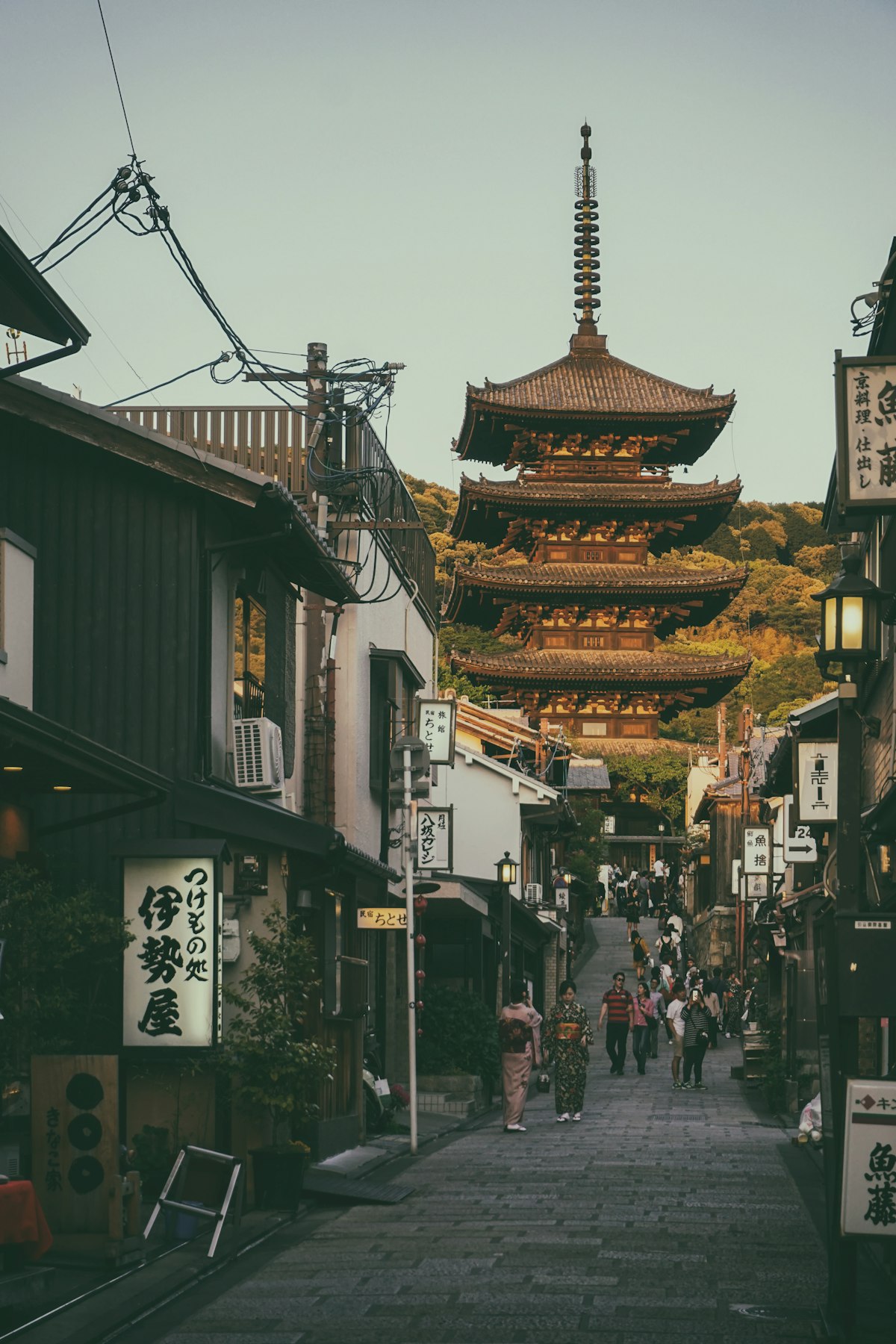
The first day starts at Kyoto's icon — climbing the Higashiyama hills past old temples and stone lanes, then closing with the old-town atmosphere after dark.
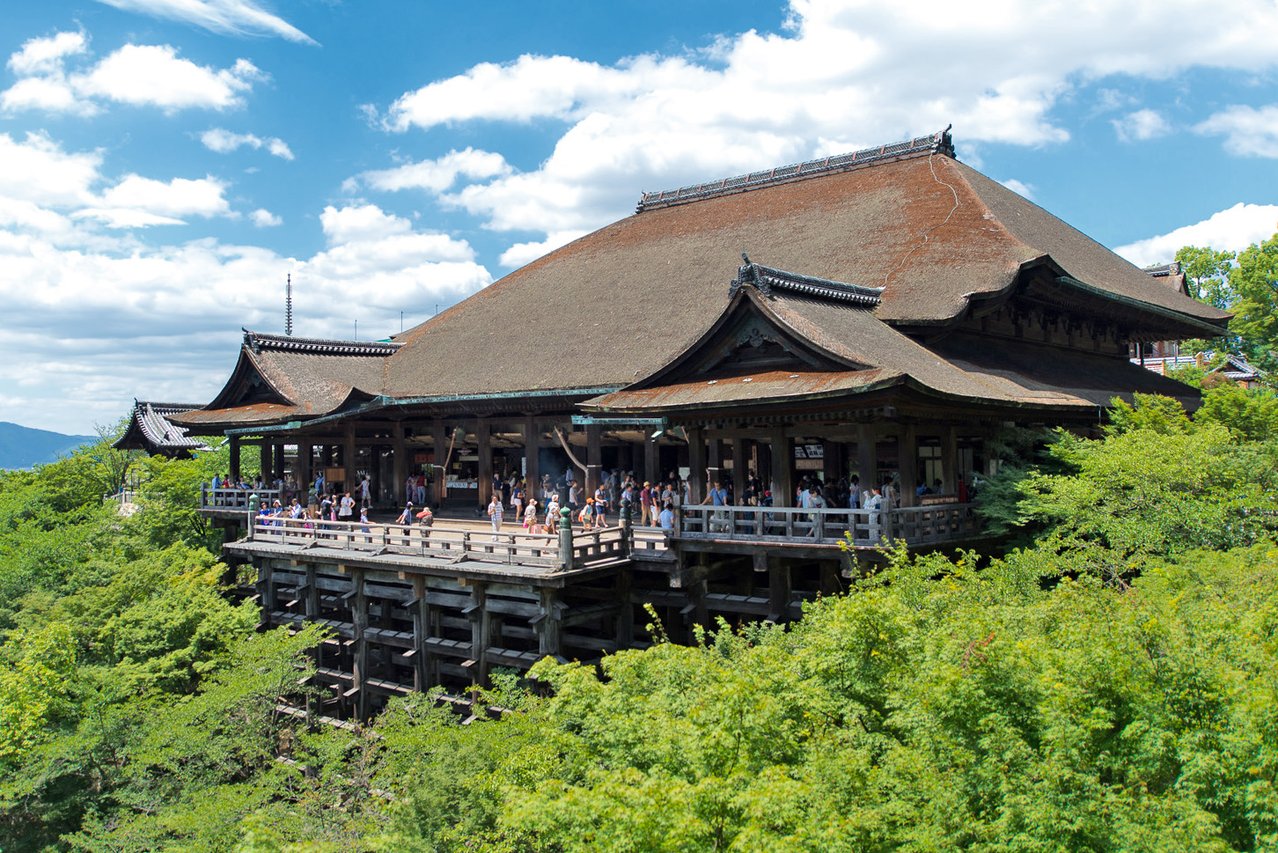
Start at Kyoto's most famous temple early, before the crowds. A giant wooden veranda juts out from the cliff above green forest — a view that tells you instantly you have arrived in Kyoto. Don't miss the three streams of the sacred Otowa waterfall, which give the temple its name. The temple is open 6.00 am–6.00 pm; come early for soft light and thinner crowds.
Walk down from the temple through the two prettiest sloping stone lanes in Kyoto. The old wooden houses on either side are now sweet shops, tea houses, souvenir stores and cafés. Try grilled mochi, matcha ice cream or dango as you stroll. You will see plenty of people in kimono taking photos here — it feels like stepping back in time, and you can easily spend an hour wandering.
This area has plenty of genuine Kyoto restaurants — udon, soba, various rice bowls and yuba (tofu skin), a local specialty. To know what Kyoto is worth trying, read the Kyoto food guide beforehand.
Continue on from Higashiyama to Yasaka Shrine at the end of the street. The bright vermilion shrine, with its great gate facing Shijo Street, is the guardian shrine of the Gion district and the host of the famous Gion Matsuri festival. Free entry, open 24 hours. Behind it, it connects to Maruyama Park, a popular cherry-blossom spot in spring.
Close the first day with a stroll through Gion at dusk — Hanamikoji Street, lined with wooden ochaya (tea houses), as the lanterns begin to glow. If you are lucky, you may spot a maiko or geiko heading to work down a side lane. Walk on to the quiet Shirakawa canal, peaceful and beautiful in the truest Kyoto way. Read a detailed Gion walking route in the Gion guide.
Today you move out of the city centre to the north-west, picking up three stops that line up in a row — starting at the Golden Pavilion, on to the rock garden, then finishing in Arashiyama.
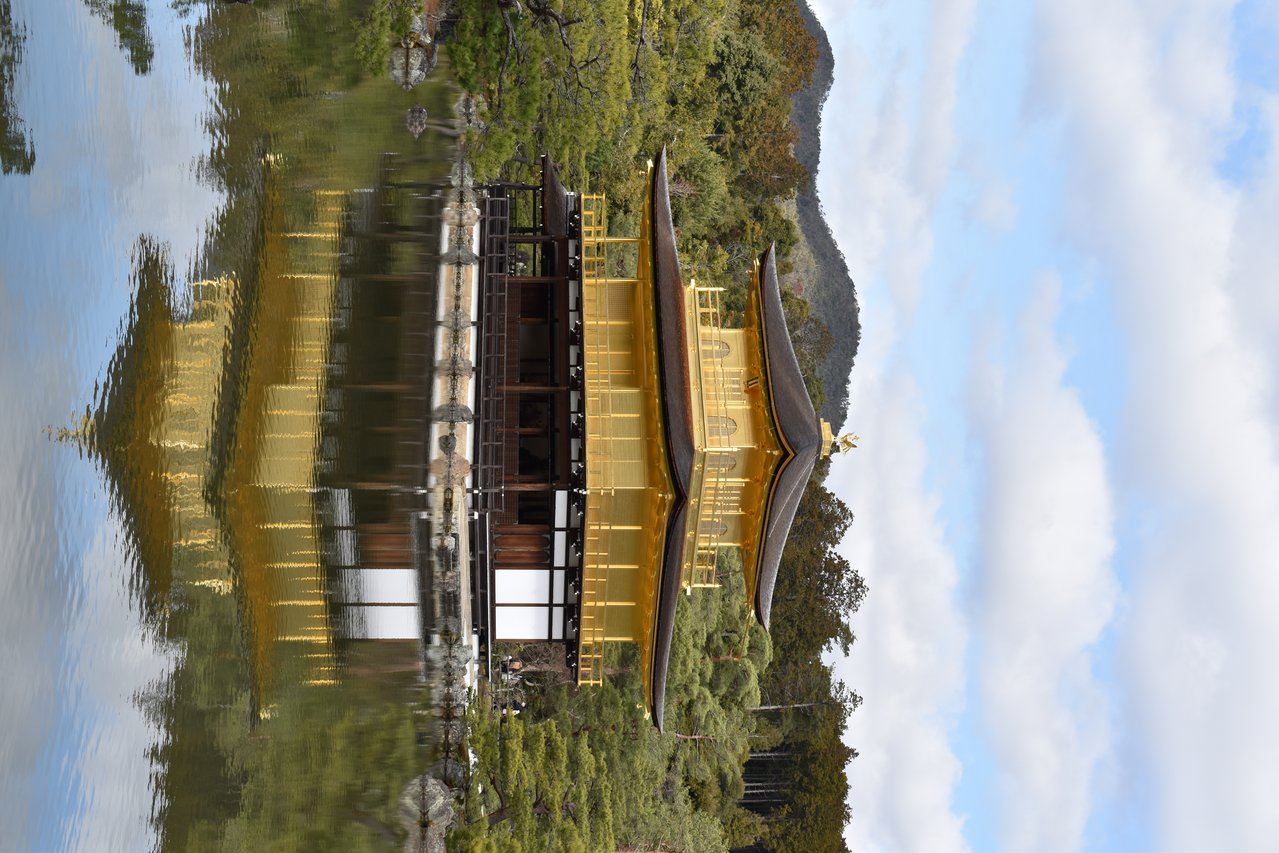
Begin the day at the Golden Pavilion right as it opens. The two-storey hall, its upper floors clad in real gold leaf, sits beside a pond that mirrors the gold in the water like a painting. You stroll the garden around the pond along a set path (you view it from outside only — you don't go inside the building), which takes about 45 minutes to an hour. The temple is open 9.00 am–5.00 pm. Take city bus 205 from Kyoto Station, around 40 minutes (¥230). Read the full details in the Golden Pavilion guide.
Only a few bus stops from the Golden Pavilion (or about a 20-minute walk), Ryoan-ji is the most famous Zen rock garden in Japan. Fifteen stones are set on raked sand, arranged so that you can never see all 15 at once. Sit quietly on the wooden veranda, look out over the garden and let your mind drift — it is a wonderfully calm break in the middle of a walking-heavy trip. Open 8.00 am–5.00 pm (may close earlier in winter).
Have lunch around Ryoan-ji, or wait and eat in Arashiyama. Then catch a ride (bus or the Randen tram) westward to Arashiyama, a riverside foothill district that feels noticeably different from the city — cooler, greener and more relaxed.
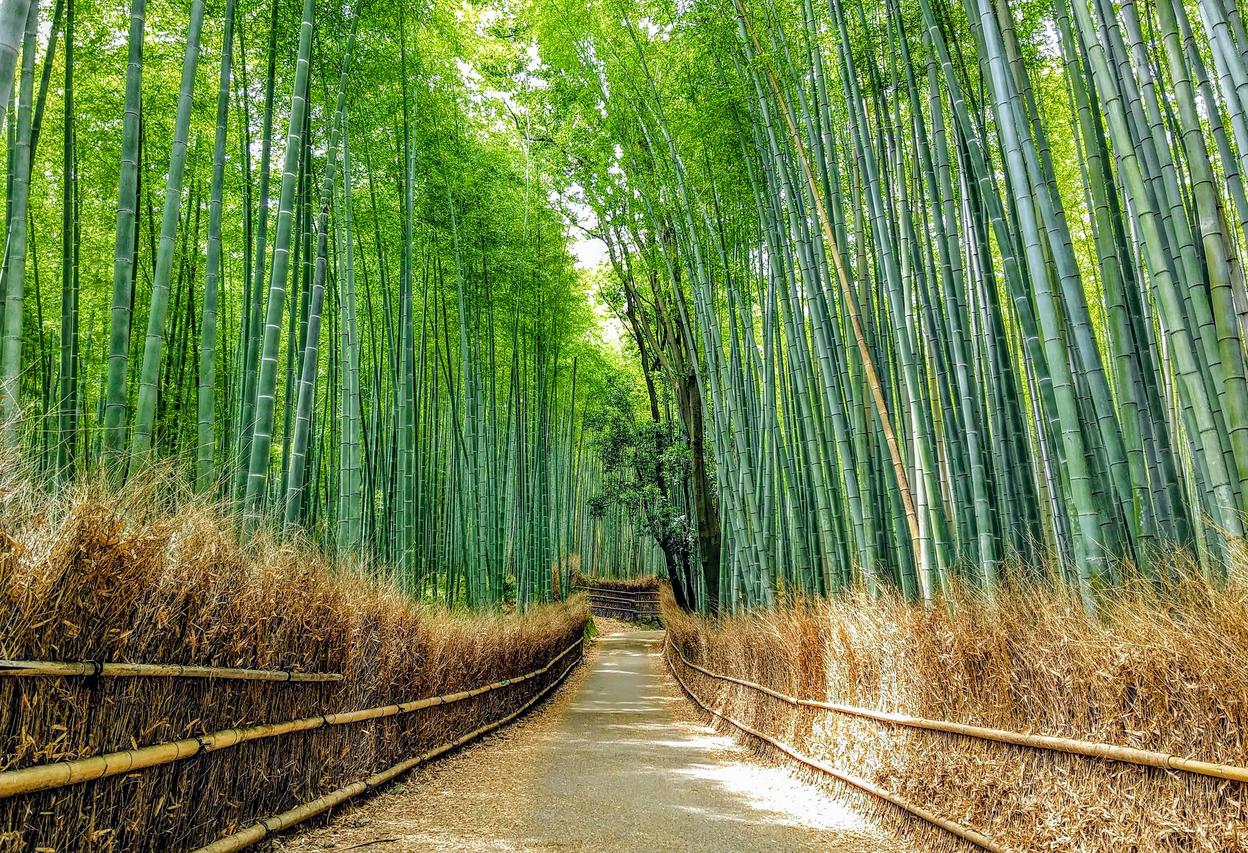
Walk the bamboo path, about 400 metres long, with tall stalks swaying on both sides and light filtering down in stripes — the shot everyone wants. Free to walk, open all day. Right beside it is Tenryu-ji, a World Heritage temple with a gorgeous pond garden set against the Arashiyama mountains as a backdrop. The temple is open 8.30 am–5.00 pm, garden ¥500 (add ¥300 to enter the buildings). Read a full Arashiyama walking route in the Arashiyama guide.
Before heading back into the city, stroll along the Katsura River and Togetsukyo Bridge, the symbol of Arashiyama. The evening light is lovely and the crowds start to thin. Stop at a roadside sweet shop or café before catching a ride back to your hotel — a full, but unhurried, end to Day 2.
The last day starts at Fushimi Inari at first light, while it is still quiet, then gives you two ways to go — on to Nara to meet the deer, or an easy day in central Kyoto.
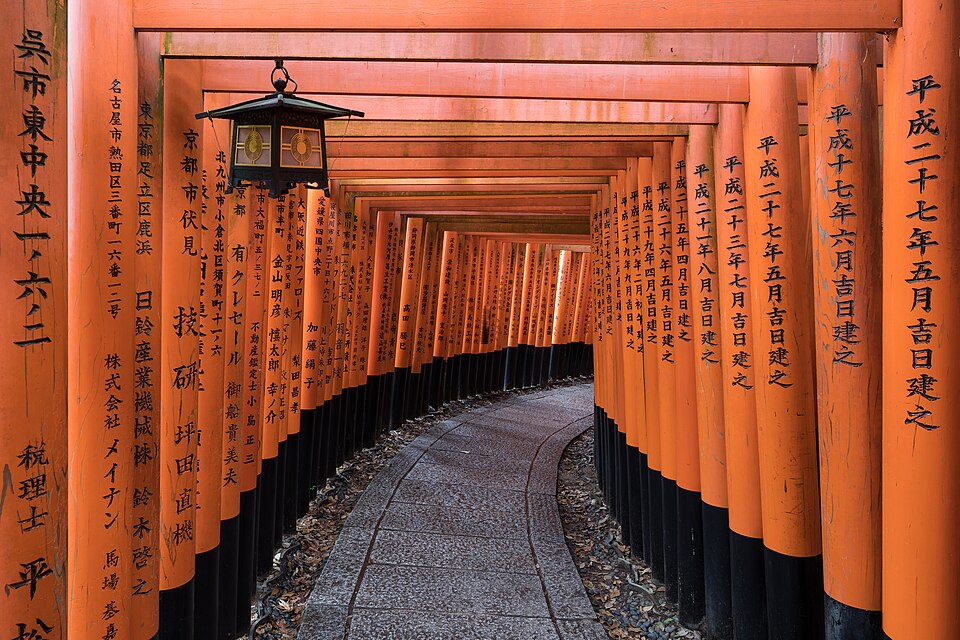
An early wake-up, but well worth it — Fushimi Inari Shrine is free and open 24 hours. Come around 6.30–8.00 am while the crowds are still thin and you can photograph the red torii tunnel (Senbon Torii) with almost no one in the frame. Hike up Mount Inari through thousands of vermilion gates; reaching the summit and back takes about 2–3 hours, but you can also just walk to the Yotsutsuji viewpoint halfway up and turn back (around 45 minutes). Take the JR Nara Line from Kyoto Station — only 5 minutes (¥150) — and get off at Inari station, right in front of the shrine. Read the Fushimi Inari guide.
After Fushimi Inari, there are two ways to go depending on your style — if you want to meet the deer and see more World Heritage sights, go to Nara for the day · if you would rather take it easy, walk less and tick off the in-city sights, choose central Kyoto. Both are great in their own way — pick whichever you like.
Take the JR train from Kyoto Station, about 45 minutes, to Nara, Japan's first capital. The highlights are Nara Park, where deer roam freely and you can feed them crackers (shika senbei), Todai-ji temple with its colossal Great Buddha (Daibutsu) inside an enormous wooden hall, and Kasuga Shrine, lined with thousands of stone lanterns. Half a day to a full day in Nara is easy. Read the full plan in the Kyoto day-trips guide.
Head back into the city for Nijo Castle (Nijo-jo), the castle of the Tokugawa shoguns, famous for its "nightingale" floors that chirp when you walk on them (an anti-assassination device) and the lovely gardens around it. Entry is ¥800 + ¥500 to enter Ninomaru Palace, open 8.45 am–4.00 pm (closed on some Tuesdays). Then continue to Nishiki Market, a covered arcade over 400 metres long that locals call "Kyoto's kitchen". Graze your way from stall to stall — pickles, sweet tamago egg, grilled fish, Japanese sweets and souvenirs. Open ~9.00 am–6.00 pm (some shops close Wednesday/Sunday).
Kyoto runs mainly on buses, because most temples sit off the subway lines — a little know-how saves you both money and time.
Many famous temples (Kinkaku-ji, Kiyomizu-dera) are off the subway lines, so you ride city buses most of the time. The fare is a flat ¥230 per trip (~฿55) regardless of distance within the city. You board at the rear door and pay as you exit at the front — tap ICOCA or drop in coins. Bus 205 is the popular route running from Kyoto Station to Kinkaku-ji.
Carry an IC card such as ICOCA (or a Suica/Pasmo you already have — they work too) to tap on every bus, subway and JR train across Kyoto and all of Japan. Fares are deducted automatically, with no scrambling for change or buying single tickets. Top it up at station machines, and use it to pay at convenience stores and vending machines too — it is something worth having from your first day in Japan.
A full-day pass at ¥1,100 (~฿250) gives unlimited city bus and subway rides within a single day. It pays for itself straight away if you take 4–5 rides or more that day — which makes it ideal for Day 2, when you hop across several zones (Golden Pavilion–Ryoan-ji–Arashiyama). On a mostly-walking day like Day 1, paying as you go with ICOCA works out better. Do the maths before buying for each day.
Each Kyoto neighbourhood offers a different experience — picking one to match your travel style is the easiest call.
Your first pick if getting around is the priority — it is the hub for buses, the subway, JR and the shinkansen, and very handy for Fushimi Inari and Arashiyama. Day trips to Nara or Osaka are easy too. There are plenty of hotels across every price level, which suits a trip like this that runs across several zones.
The heart of modern Kyoto, with department stores, restaurants, bars and Nishiki Market all within walking distance. At night there is still plenty to do over dinner, and you can walk to Gion and the Kamo riverside easily. It suits anyone who wants both convenience and the buzz of the city.
If you want to wake up to old Kyoto, stay in Gion/Higashiyama — you can walk to Kiyomizu-dera, Yasaka Shrine and the Sannenzaka lanes from early morning, before the crowds (exactly like Day 1 of this plan). There are ryokan and Japanese-style stays to choose from, though high-season prices run a little steep.