Home Kyoto Japan Kyoto Attractions About
Home  ›  Japan  ›  Kyoto  ›  Attractions  ›  Kinkaku-ji
🇯🇵 Kyoto · Attraction Guide

Kinkaku-ji, the Golden Pavilion (金閣寺)
The temple of gold mirrored on a glass-still pond — the image of Kyoto

A three-storey pavilion whose top two floors are clad in real gold leaf, floating above the mirror-flat Kyoko-chi pond — the Zen temple everyone recognises the instant they see the photo. Just ¥500 to enter, open every day.

What it is

Why the whole world comes to Kinkaku-ji

Picture this: you walk through the temple gate, follow the path round a bend, and the view suddenly opens onto something you have only ever seen on a postcard — an entire golden pavilion standing at the edge of a pond, its top two floors sheathed in gold leaf catching the light, its reflection thrown down onto water so still it forms a perfectly symmetrical twin. Dark green pines ring the pond, the sky is clear, the gold glows, the water holds steady — everything comes together in a single frame.

That is Kinkaku-ji (金閣寺), officially named Rokuon-ji, a Rinzai Zen temple in the Kita ward in Kyoto's northwest. The building first went up in the late 14th century as the retirement villa of the shogun Ashikaga Yoshimitsu, before becoming a Zen temple according to his will. The pond in front, called Kyoko-chi (鏡湖池) — literally "Mirror Pond" — was designed with small islands and carefully placed rocks in the Zen garden tradition, all so the pavilion's reflection would be as flawless as possible.

What a lot of people do not realise is that the pavilion you see today is not the original building. The old one was burned to the ground by a young monk who set fire to it in 1950 (the event Yukio Mishima turned into his famous novel). The present structure was rebuilt in 1955, and a 1987 restoration added gold leaf many times thicker than before. Today Kinkaku-ji is part of a UNESCO World Heritage Site and one of the first images the world pictures when it thinks of Kyoto.
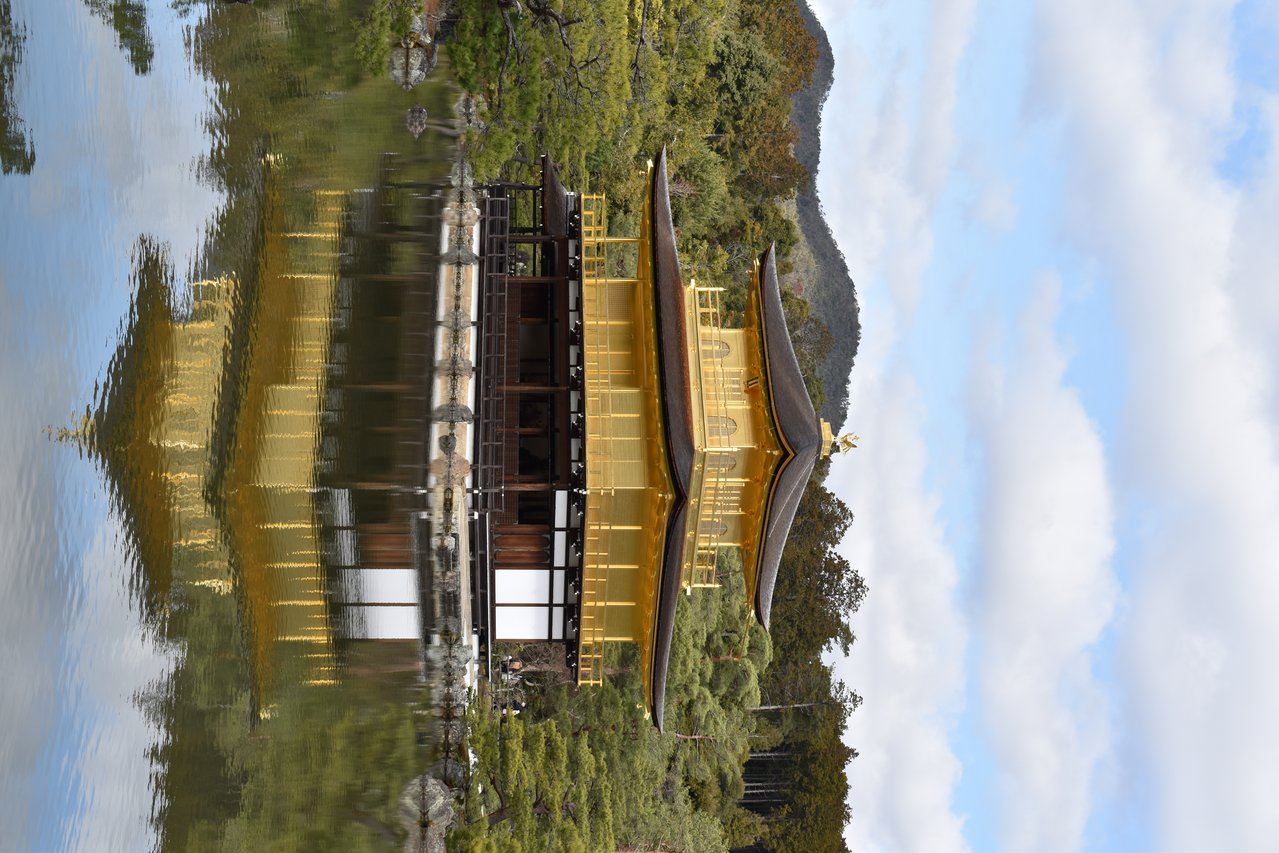
Kinkaku-ji, Kyoto's Golden Pavilion — the gold-leaf building reflected on the glass-still Kyoko-chi pond, ringed by green pines
Kinkaku-ji — the golden pavilion and its reflection on the Mirror Pond, the classic shot everyone comes to take
🎫
Entry
¥500 (~$3.50)
Children ¥300 · cash only
🕘
Opening hours
9am–5pm
Every day, holidays included, never closed
🚌
Bus
Route 101 / 205
From Kyoto Station ~40 min, ¥230
⏱️
Best time
9am, at opening
First 30 min are quiet, water at its stillest
🍁
Best season
Autumn leaves, late Nov
Winter snow is loveliest, but you need luck
⛩️
Nearby next
Ryoan-ji · Ninna-ji
20-min walk / 5-min bus to the west
Walking the grounds

5 spots you shouldn't miss as you circle the pond

The path through the temple is a single loop around the pond, about 30–45 minutes one way — and every corner tells a different story.

Tip: the path through the temple runs one way around the loop — you cannot double back. So if you want a good shot of the main view by the pond, take it at the very first spot you reach, because once you have walked on, there is no coming back.
When to go · how to shoot it

The hours when the golden pavilion glows brightest

🌅 Early morning — still water, fewer people, the sharpest reflection

If we had to pick one time, we'd go for 9am, just as the temple opens. In the first 30 minutes the crowds are still thin and the morning breeze hasn't picked up, so the pond surface stays at its flattest and the golden pavilion's reflection on the water is at its sharpest and most symmetrical. The low, angled morning light also makes the gold leaf glow brighter than it does under the flat overhead sun of midday.

The temple is busiest between 10am and 3pm, when the tour groups and day-trippers all arrive at once. If you miss the morning, the other lovely window is late afternoon, around 4pm, just before closing, when the slanting evening light turns the pavilion a deeper amber-gold.

🍁 Which season is most beautiful

Autumn leaves in late November are the peak. The maples around the pond turn a blazing red against the gold of the pavilion and the green of the pines, and the reflection on the water becomes a three-colour scene you can only catch for a few weeks a year — though it is also the busiest time. Come on a weekday morning if you can.

And winter, with snow on the golden roof, is what many people call the most beautiful view in Kyoto: the white of the snow against the gold and the green is an image that stays with you. But it only snows a few times a year in Kyoto, so it comes down to luck and a flexible itinerary. Spring and summer are gorgeous too in their own fresh-green way — honestly, it's a comfortable visit in any season.

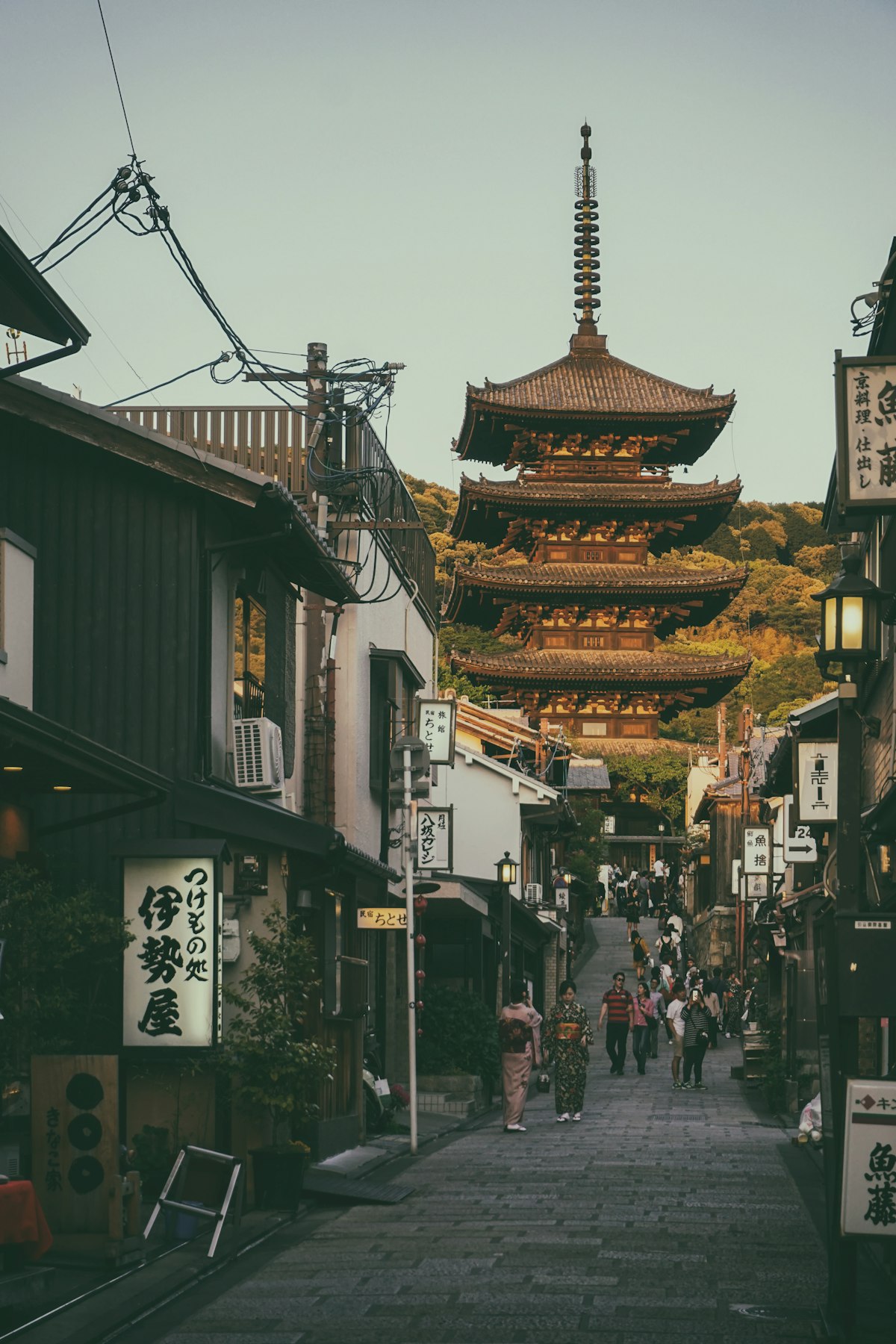
The mood of Kyoto — old temples and the nature surrounding the northwestern district near Kinkaku-ji
Kyoto — a city of old temples, with Kinkaku-ji one of the key landmarks in the northwest

📸 Tips for getting the postcard shot

The main photo spot is on the opposite side of the pond, right as you walk in. Compose with the golden pavilion filling the top half of the frame and its reflection on the water filling the bottom half, so you get the symmetry. If you've come in a group there'll be a queue to stand and shoot here — be patient, your turn will come soon enough.

A wide-angle lens lets you capture both the pavilion and the pines around the pond in a single frame, while a zoom lens is good for catching the detail of the golden phoenix on the rooftop. A clear, windless day is the day you get the sharpest reflection — go ahead and check the weather forecast before you set out.

How to get there

Getting to Kinkaku-ji from Kyoto Station — your options

Kinkaku-ji has no train station right beside it. The main way there is the Kyoto City Bus, which runs direct from in front of Kyoto Station.

🚌
City Bus route 101
From stop B2 in front of Kyoto Station
Get off at Kinkakuji-michi ~40 min, ¥230, then walk ~6 min
🚌
City Bus route 205
From stop B3 in front of Kyoto Station
Same stop ~40 min, ¥230 — watch out for the Rapid 205, which doesn't stop here
🚇
Subway + bus
Karasuma line → Kitaoji → connecting bus
~45 min, a touch slower but no traffic jams — good for busy days
Timing tip: Kinkaku-ji is on the same side of the city as Ryoan-ji (the rock-garden temple, a 20-minute walk or 5-minute bus ride to the west) and Ninna-ji a little further on. You can easily string all three together in half a day. Start at Kinkaku-ji right at opening, 9am, while it's quiet, then drift on to Ryoan-ji and Ninna-ji through the late morning — that's the most rewarding and least rushed way to do it.
Don't get them mixed up

Kinkaku-ji ≠ Ginkaku-ji — they're different temples!

The names are so similar that people confuse them all the time, but they're two different temples on opposite sides of the city. Know this before you board the wrong bus.

🏯 Kinkaku-ji (金閣寺) — the Golden Pavilion

In the northwest of Kyoto, with a building clad in real gold leaf, built by the shogun Ashikaga Yoshimitsu in the late 14th century. The highlight is the golden pavilion mirrored on the glass-still pond — an opulent, dramatic scene. This is the temple this page is about.

🌿 Ginkaku-ji (銀閣寺) — the Silver Pavilion

In the east of Kyoto, along the Philosopher's Path, built by Ashikaga Yoshimasa, the grandson of the man who built the Golden Pavilion. Despite the name "Silver Pavilion," it was never actually clad in silver — it leans into quiet Zen restraint, with a stunning sand garden and moss garden. It's an entirely different mood from the Golden Pavilion.

If you want to see both on one trip, allow time to cross the city, because they're on opposite sides. We'd suggest doing them on different days, or in different halves of the day, to keep it comfortable.

Where next · where to stay

Pair Kinkaku-ji with other spots in Kyoto

Keep going on the western side, or head back into town for an easy bite and a comfortable place to stay.

Frequently asked questions

FAQ · Kinkaku-ji before you set off

How much is entry to Kinkaku-ji?
Adult entry is ¥500 (about $3.50), and ¥300 for primary and junior-high-school children. Tickets are sold only at the entrance gate — you cannot book in advance. The ticket is a beautiful paper omamori (good-luck charm) you can keep as a souvenir, and only cash is accepted, so have coins and small notes ready.
What are Kinkaku-ji's opening hours?
Open 9am–5pm every day, including public holidays, with no closing days and the same hours in every season. The first 30 minutes after opening are the quietest. If you want a shot of the golden pavilion mirrored on still water without the crowds, arrive right at 9am.
How do you get to Kinkaku-ji from Kyoto Station?
Take Kyoto City Bus route 101 (stop B2) or route 205 (stop B3) in front of Kyoto Station, get off at Kinkakuji-michi — it takes about 40 minutes and costs ¥230 — then walk roughly 6 minutes to the temple gate. Watch out for the Rapid 205 service, which does not stop at Kinkaku-ji. The other option is the Karasuma subway line to Kitaoji Station and then a connecting bus: slightly slower but free of traffic jams.
What's the difference between Kinkaku-ji and Ginkaku-ji?
They are two different temples on opposite sides of the city. Kinkaku-ji (金閣寺, the Golden Pavilion) is in the northwest and its building really is covered in gold leaf; it was built by the shogun Ashikaga Yoshimitsu. Ginkaku-ji (銀閣寺, the Silver Pavilion) is in the east along the Philosopher's Path, built by his grandson Yoshimasa, and was never actually clad in silver — it leans into quiet Zen restraint and a sand garden. If you want to see both, allow time to cross the city between them.
When is the most beautiful time to visit Kinkaku-ji?
Early morning, 9–9.30am, when the soft morning light hits the gold leaf and reflects on the pond at its best, with fewer people. Late afternoon, around 4pm, is the other good window, when the low light turns the pavilion a deeper amber-gold. The most beautiful season is the autumn leaves in late November, when the maples around the pond blaze red, and in winter — if you're lucky enough to catch snow on the golden roof — many people call it the most beautiful view in Kyoto. But snow only falls a few times a year, so it comes down to luck.
Klook · Kyoto tours and stays

A one-day Kyoto tour covering Kinkaku-ji, Arashiyama and the famous temples — book ahead with peace of mind

A Kyoto bus tour that bundles Kinkaku-ji with the other highlights in a single day, transport tickets included, plus well-located stays near Kyoto Station — book ahead through Klook and skip the planning.

See Kyoto activities on Klook →
Find a place to stay near Kinkaku-ji and in central Kyoto on Agoda · Wherebest is an affiliate partner and may earn a commission when you book through our links, at no extra cost to you.