Home Kyoto Japan Kyoto Attractions About
Home  ›  Japan  ›  Kyoto  ›  Attractions  ›  Fushimi Inari
🇯🇵 Kyoto · Attraction Guide

Fushimi Inari (伏見稲荷大社)
The thousand red torii tunnel up Kyoto's sacred mountain

Senbon Torii — vermilion gates lined up into a tunnel that seems to never end, carrying you up Mount Inari one step at a time. Free, open 24 hours, and just a 5-minute JR ride from Kyoto Station to the entrance.

What it is

Why everyone ends up at Fushimi Inari

You have seen the photo — thousands of red gates lined up into a tunnel that runs on forever. It is the image on the cover of nearly every Japan guidebook ever printed. That is Senbon Torii at Fushimi Inari. Picture it: you step into a tunnel where two rows of vermilion pillars stand shoulder to shoulder, sunlight slipping through the gaps between the black Japanese characters painted on the posts, and the path climbing gently higher and higher — every step with a fresh torii waiting up ahead.

This is Fushimi Inari Taisha — the head Shinto shrine for the deity Inari across all of Japan (there are over thirty thousand branch shrines). It sits at the foot of Mount Inari in the Fushimi ward, in southern Kyoto. What sets it apart is the roughly 10,000 vermilion torii gates arranged into tunnels that climb the 233-metre mountain. Each one was donated by a company or an individual praying for success in business, and the characters on the posts are the donor's name and the date.

And the best part for travellers: free entry, 24 hours a day. No ticket queue, no closing time — you can walk up at any hour, from five in the morning to midnight. Add the 5-minute JR ride from Kyoto Station that drops you right at the gate, and you have one of Kyoto's must-see sights that is easy to reach and does not cost a single yen.
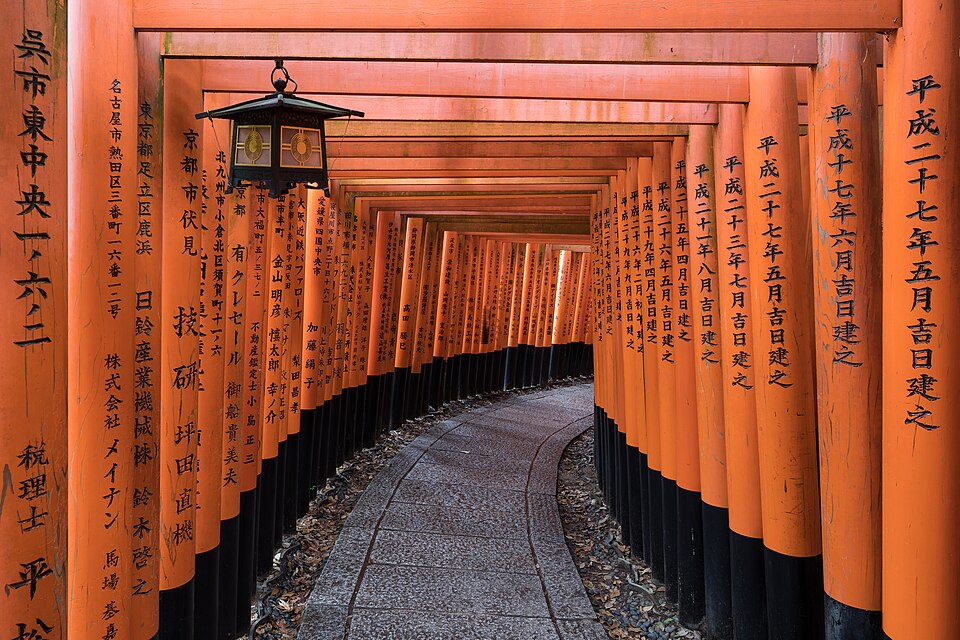
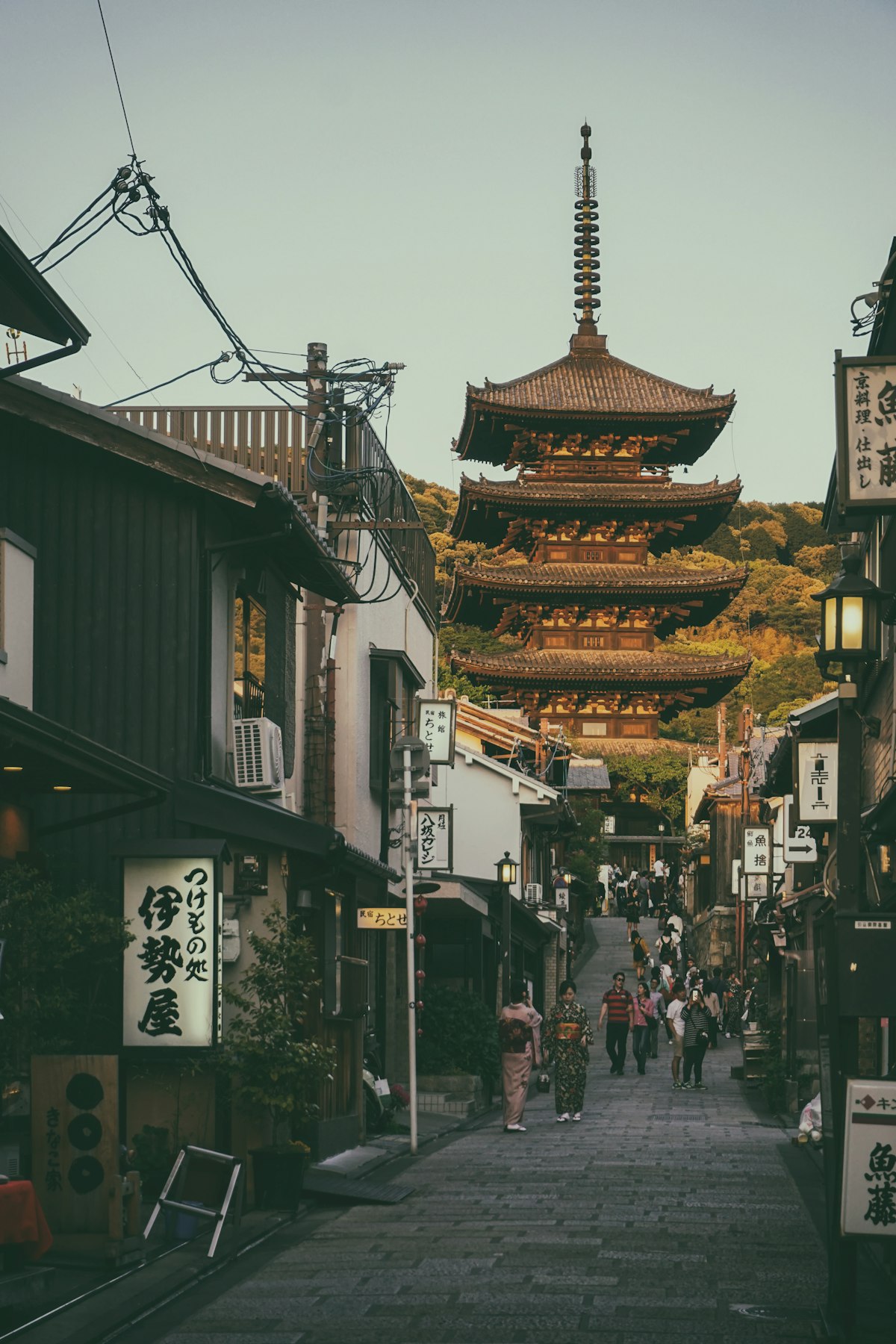
Senbon Torii at Fushimi Inari, Kyoto — a tunnel of vermilion torii gates climbing up Mount Inari, with donors' names painted on the posts
Senbon Torii — the double-row tunnel of red gates that is the iconic image of Fushimi Inari and of Kyoto itself
🎫
Admission
Free
Open 24 hours, every day, no closing day
🌅
Best time
Before 7 am / after dark
Avoid the 9 am–4 pm crowds
🚆
Getting there
JR Inari Station
~5 min from Kyoto Station, exit right at the entrance
⛩️
Number of torii
~10,000 gates
Donated by companies and individuals seeking success in business
⛰️
Height / hike time
233 metres · 2–3 hrs
Full loop up and down (halfway ~45 min)
🦊
Symbol
The fox (kitsune)
Messenger of Inari, deity of rice and commerce
Don't miss

5 spots that tell the story of Fushimi Inari best

From the Romon Gate at the entrance, climbing the mountain stage by stage — each spot has a meaning hidden in it.

Plan a great visit

Climb the mountain, shoot the torii and dodge the crowds

🚶 Hiking up Mount Inari — how far is far enough

The question everyone asks is "do I have to walk all the way to the top?" The answer is no, not at all. Most people only walk the first 30–45 minutes through Senbon Torii, which is where the red gate tunnel is densest and where you get all the shots you came for. If you want to go further, the popular turnaround is the Yotsutsuji intersection at roughly the halfway point, with its city view. Anyone who wants to conquer the full loop to the summit should allow 2–3 hours up and down.

The trail is stairs and gentle inclines that keep rising — not steep, but tiring enough near the top. Wear trainers or comfortable walking shoes, skip the heels, and carry water; the higher you go, the fewer shops there are.

🌅 When to come for great photos without the crowds

This is the heart of getting the most out of Fushimi Inari, because between 9 am and 4 pm it is packed — especially at Senbon Torii, where people queue for photos in a long line. If you want a clean shot of the red tunnel with no one in the frame, there are two golden windows: dawn, before 7 am, when the light is soft and it is peaceful, or the evening after sunset, when the lanterns along the path light up and give the place a mysterious atmosphere you do not get in daylight.

Because the shrine is open 24 hours, you can walk up at any time. If you are staying in Kyoto and can manage an early start, set an alarm and arrive just as the sky is brightening — it is well worth the lost sleep.

Tip: If a pre-dawn start is too much, swap it for the evening around 7 pm and just walk up as far as Senbon Torii. The lanterns light the path safely, and it is far quieter than the middle of the day.
A view of Kyoto, Japan — the city that is home to Fushimi Inari Shrine and countless ancient temples
Kyoto — home to Fushimi Inari. You can pair this shrine with the old districts and other temples in a single day.

🦊 Foxes, red gates and the meaning behind it all

Throughout the shrine you will see fox statues (kitsune) everywhere, because the fox is the messenger of Inari, the deity of rice, prosperity and commerce. Notice what each fox holds in its mouth — some carry a granary key, others a scroll or a sheaf of rice, each with its own meaning.

As for the thousands of vermilion torii gates, every one of them came from a donation. The black characters on the posts are the name of the company or individual who donated, along with the date. The donation cost for a single gate starts at around ¥400,000 (~฿92,000) and runs to over ¥1 million for the larger ones. If you want a souvenir, the fox-faced ema plaque at the Okusha shrine lets you draw your own expression on it — a charming keepsake you will not find anywhere else.

Getting there

How to reach Fushimi Inari

Fushimi Inari is one of the easiest sights in Kyoto to reach, because the train takes you straight to the gate.

🚆
JR Nara Line (recommended)
Inari Station (稲荷駅)
Just 2 stops, ~5 minutes from Kyoto Station, ¥150 (~฿35). Step out of the station and the red gate is right at the entrance — the quickest, simplest option (Local and Rapid trains all stop here).
🚉
Keihan Main Line
Fushimi-Inari Station (伏見稲荷駅)
Handy if you are coming from the Gion area (Gion-Shijo); walk about 5 minutes east to the shrine — the Limited Express does not stop here, so take a Local or Semi-Express.
🎟️
Tickets and passes
JR Pass / ICOCA work here
The JR Nara Line is covered by the Japan Rail Pass and by IC cards (ICOCA/Suica) — just tap in and out, no separate ticket needed.
Timing tip: Fushimi Inari sits in southern Kyoto, between Kyoto Station and the city of Nara. Visit early in the morning before the crowds, then hop on the JR south to Nara for the afternoon — the timing lines up nicely. Or if you are staying in Kyoto, ride back to Kyoto Station and continue easily to the Gion district or other temples in the same day.
Where to stay

Hotels in Kyoto for visiting Fushimi Inari

Staying around Kyoto Station makes the JR ride to Fushimi Inari easiest — find a well-located place in your budget right here.

Frequently asked

FAQ · Fushimi Inari before you go

Is Fushimi Inari free, and what are the opening hours?
It is free and open 24 hours a day, every day, with no closing day and no admission fee. The shrine grounds and the path up the mountain are open space, so you can walk in at any hour, even in the middle of the night. The souvenir shops and shrine office are only staffed roughly between 9 am and 5 pm.
When is the best time to visit Fushimi Inari to avoid the crowds?
The busiest window is 9 am to 4 pm. If you want a clean shot of the red torii tunnel with no one in the frame, come at dawn before 7 am or in the evening after sunset. The morning light is soft and there are very few people about, while at night the lanterns along the path glow and give the place a mysterious atmosphere you do not get during the day. Because the shrine is open 24 hours, you can walk up at any time.
How do you get to Fushimi Inari from Kyoto Station?
The easiest way is to take the JR Nara Line from Kyoto Station and get off at Inari, the second stop, which takes only about 5 minutes and costs ¥150 (~฿35). The moment you step out of the station, the big red torii gate at the entrance is right in front of you. If you are in the Gion area, take the Keihan Main Line to Fushimi-Inari Station and walk about 5 minutes east (the Limited Express does not stop here).
How long does it take to hike up Mount Inari?
The full loop up and down to the summit of Mount Inari (233 metres) takes about 2–3 hours, but most people only walk the first 30–45 minutes where the torii are densest (Senbon Torii), and that is plenty. The popular turnaround is the Yotsutsuji intersection at roughly the halfway point, where an open clearing gives you a view over Kyoto. Anyone with the energy and time can carry on to the top from there.
Why is Fushimi Inari covered in fox statues?
The fox (kitsune) is regarded as the messenger of Inari, the Shinto deity of rice, prosperity and commerce. Fox statues holding a key, a scroll or a sheaf of rice in their mouths stand throughout the shrine. The thousands of torii gates were all donated by companies and individuals praying for success in business; the donation cost for a single gate starts at around ¥400,000 and runs to over ¥1 million for the larger ones.
Klook · Kyoto tours and activities

Guided Fushimi Inari tours, kimono rental for photos, and Kyoto day trips — easy to book in advance

A guided walk through Fushimi Inari with the history explained, kimono rental for photos by the red gates, and day trips that round up Kyoto's highlights in one go — book through Klook in advance, simple and with clear prices.

See Kyoto activities on Klook →
Wherebest is an affiliate partner of Klook — we may earn a commission when you book through our links, at no extra cost to you.