Home Kyoto Japan Kyoto Attractions About
Home  ›  Japan  ›  Kyoto  ›  Attractions  ›  Gion
🇯🇵 Kyoto · Attraction Guide

Gion (祇園)
Kyoto's most classic geisha quarter

Stone lanes lined with wooden townhouses, centuries-old tea houses, a willow-lined canal swaying in the breeze — free to wander, loveliest after dark, but with photo etiquette you need to know before you step into the alleys.

Get to know it

Walking into Gion at dusk

Picture this: you turn into a stone-paved lane just as the light fades, and the paper lanterns outside the tea houses begin to glow one by one, their warm light washing over the dark wooden walls of the machiya townhouses on either side. It is so quiet you can hear your own footsteps on the stone. And if you are lucky — at the far end of the lane, a figure in a vivid kimono, hair pinned and ornamented, hurries past in silence. That is a maiko on her way to work.

This is Gion — the oldest and most famous geisha district in the city (in Kyoto they are called "geiko"). It stretches north and south of Shijo Street in the Higashiyama ward, from the Kamo River in the west to Yasaka Shrine in the east. This is not a museum — it is a living neighbourhood, with people who genuinely work and live here, where geiko and maiko still walk to their jobs in the tea houses (ochaya) every evening.

What makes Gion special is that wandering through it is always free — no admission, no gate. You simply follow the old stone lanes, admire the wooden houses, photograph the Shirakawa canal and soak up the Kyoto you have always pictured — but it comes with the responsibility of respecting the people who live here. We will walk you through the photo etiquette in detail shortly, because it genuinely matters.
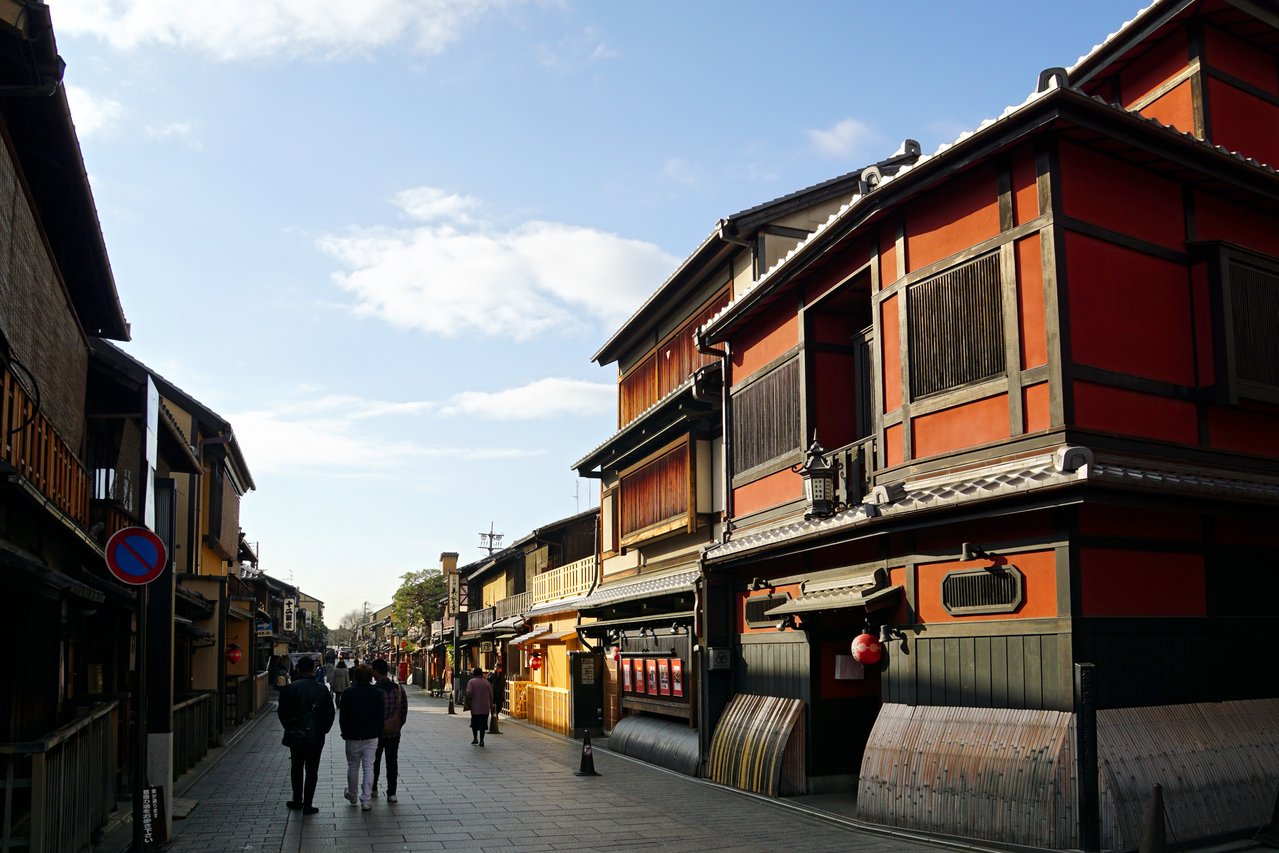
Hanamikoji lane in Gion, Kyoto — machiya wooden townhouses on both sides, paper lanterns glowing in the evening, classic atmosphere
Hanamikoji lane in the evening — the heart of Gion, wooden houses and tea houses lining both sides
🎫
Cost to wander
Free
Walk the district at any time
🌆
Best time
6–8 pm
Evening lantern glow + a chance to see a maiko
🚆
Station
Gion-Shijo (Keihan)
Exit 6, ~3-minute walk
⛩️
Highlights
Hanamikoji · Shirakawa
Wooden-house lane + willow-lined canal
⏱️
Time needed
2–3 hours
Comfortable to cover every spot
📸
Photography
Public streets OK · private alleys forbidden
Alley photos carry a fine up to ¥10,000
The spots to cover

5 places that tell Gion's story best

Walk from the main lane to the shrine at the eastern end — each spot has a charm all its own.

Read this before you enter the alleys

Maiko photo etiquette a friend would want to warn you about

📸 Private alleys = no entry, no photos

We want to tell you this straight, first of all, because Gion gets so many visitors that the disruption to residents became a serious problem — so Kyoto's authorities brought in a rule: the narrow private alleys, especially the ones branching off Hanamikoji, are strictly off-limits for both entry and photography. The signs are clearly posted, and breaking the rule can mean a fine of up to ¥10,000 (enforced since 2019). These alleys are the entrances to homes and tea houses where people actually work — they are not a photo set.

The good news is that about 90% of the touristy part of Gion can still be walked as normal — the ban applies only to the signposted private alleys. Public streets such as the main Hanamikoji and the Shirakawa canalside are still completely fine to walk and photograph.

The golden rule to remember (a heartfelt warning): if you come across a geiko or maiko on a public street — do not chase them, do not block their path, do not touch them, do not call out for them to stop. They are hurrying to work, not performers there to be photographed. If you want a photo, ask permission first and keep your distance. If they shake their head or keep walking, that means "no" — respect it and let them go. This is simply about being a good guest in someone else's home.

👘 How to see a geiko/maiko without disturbing them

The window with the best chance of a sighting is early evening, 6–8 pm, when they walk from their geisha houses (okiya) to work in the tea houses (ochaya). Weekdays are better than weekends, because there are fewer people and the tea houses keep their usual schedule. But do not get your hopes too high — on some nights you will not see anyone at all, so treat it as a bonus if you do.

If you want a proper look and the chance to take photos with a clear conscience, the best route is to book a geisha performance or a dinner with a show through a tour or cultural-experience company. You will see the dancing, hear the music and take photos officially — no need to stand around an alley disturbing anyone.

Tip: Look for a maiko performance, a kaiseki dinner, or a guided Gion night-walk on Klook — you see the geisha properly, with full etiquette, and get a deeper story than wandering alone. See Gion tours on Klook →
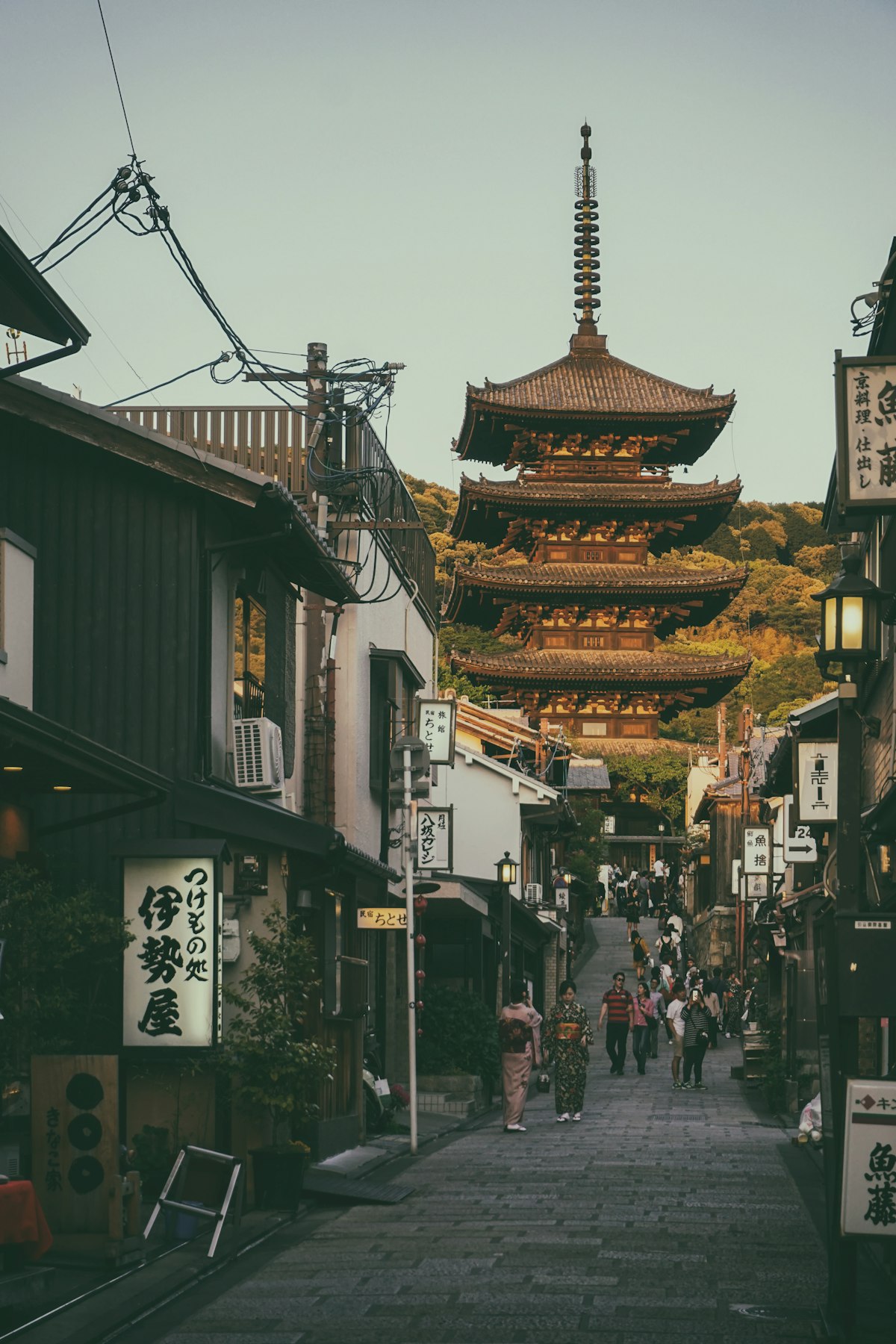
Old Kyoto streetscape — traditional wooden houses, stone lanes and heritage city scenes that flow into the Gion and Higashiyama districts
The old-Kyoto atmosphere around Gion — walk on toward Higashiyama and Kiyomizu-dera in a single day

🌙 Why you should come to Gion in the evening

Gion is pretty by day too, but then it is just an ordinary old town with tourists milling about. It is once the sun sets that the magic begins to work — the paper lanterns outside the tea houses flicker on one by one, the dark wooden walls take on depth, the crowds thin out, and if you are lucky you might catch a maiko walking to work. An atmosphere like this is genuinely hard to find anywhere else in Japan, which is why we recommend saving Gion for the end of the day, following it with dinner in the neighbourhood, and then strolling home at your leisure.

Getting there

How to get to Gion

Gion sits right in the heart of Kyoto and is very easy to reach — the nearest train stations put you within walking distance of the edge of the district.

🚆
Keihan Line
Gion-Shijo station (祇園四条)
Exit 6, about a 3-minute walk to Hanamikoji — the closest and most convenient
🚇
Hankyu Line
Kyoto-Kawaramachi station (京都河原町)
Exit 1A, ~7-minute walk across the Kamo River, through the Kawaramachi shopping area
🚌
City bus
Gion stop (祇園)
Stops right in front of Yasaka Shrine — handy if coming from Kyoto Station or Kinkaku-ji
How to time it: The best way to do Gion is to start at the Higashiyama district and Kiyomizu-dera temple in the afternoon (open until evening), walk downhill through Sannenzaka–Ninenzaka, come out at Yasaka Shrine, and enter Gion just as the sun is setting — finishing with dinner beside the Shirakawa canal. It is all within the Higashiyama ward and connects on foot, so you never need to take a single ride.
Where to stay

Hotels near Gion and the old-town district

The Higashiyama area and the Kamo River banks — wake up early and walk the lanes before the crowds arrive.

Frequently asked

FAQ · Gion before you set off

Is it free to walk around Gion?
No charge. Wandering the Gion district, the Hanamikoji lane, the Shirakawa canal and Yasaka Shrine is all free — there is no admission. You only pay if you enter Kennin-ji temple (¥500), watch a kabuki performance at the Minamiza theatre, or book a geisha performance / dinner inside a tea house.
Can you photograph maiko in Gion? What are the rules?
On private alleys with no-entry signs, especially the narrow lanes around Hanamikoji, entry and photography are strictly forbidden — breaking the rule carries a fine of up to ¥10,000 (enforced since 2019). On public streets such as the main Hanamikoji and along the Shirakawa canal you can take photos, but if you want to photograph a maiko or geiko, you must ask permission first, keep your distance, and never chase them, block their path or disturb them while they are walking to work.
What time should you go to Gion to have a chance of seeing a maiko?
Early evening, 6–8 pm, gives you the best chance, because that is when geiko and maiko walk from their geisha houses (okiya) to work in the tea houses (ochaya). Weekdays are better than weekends. But remember they are hurrying to work and usually decline photo requests — please be respectful and do not disturb them.
How do you get to Gion, and which station do you use?
The easiest way is the Keihan Line to Gion-Shijo station, Exit 6, about a 3-minute walk. Or take the Hankyu Line to Kyoto-Kawaramachi station, Exit 1A, about a 7-minute walk across the Kamo River. Kyoto city buses also stop at the Gion stop right in front of Yasaka Shrine.
What is there to see in Gion, and how many hours do you need?
The main sights are the Hanamikoji lane (machiya townhouses, tea houses), the Shirakawa canal (willows, classic atmosphere), Yasaka Shrine (eastern end, free), Kennin-ji temple (Kyoto's oldest Zen temple, with the twin-dragon ceiling painting) and the Minamiza kabuki theatre. Covering everything takes 2–3 hours. It is best in the evening followed by dinner, and you can pair it with the Higashiyama district and Kiyomizu-dera temple in the same day.
Klook · Kyoto cultural experiences & tours

Watch a maiko perform, enjoy a kaiseki dinner, or take a Gion night-walk — book ahead

See geiko and maiko with full etiquette, hear the story of the geisha district from a local guide, try on a kimono to walk the old lanes, or join a tea ceremony — book ahead on Klook for a deeper experience than wandering on your own.

Browse Kyoto activities on Klook →
Wherebest is an affiliate partner of Klook — we may earn a commission when you book through our links, at no extra cost to you.