Shanghai's best-preserved shikumen lane-houses, meticulously restored and turned over to restaurants, bars and boutiques. At night, with the lanterns on and a table outside, there is nowhere quite like it in the city.
Imagine a grid of 1920s shikumen lane-houses — those stone-gate courtyard dwellings that are uniquely Shanghai's own — and then imagine someone restoring every single one of them from roof to doorstep and opening the ground floors as restaurants, bars and boutiques. That is, more or less, what Xintiandi (新天地, "New Heaven and Earth") is.
Developed by Shui On Land in the early 2000s on a site in Huangpu district, midway between People's Square and the Former French Concession, Xintiandi divides neatly into two halves. The North Block is the one most visitors come for: restored shikumen lanes lined with international restaurants, wine bars and cafés that stay busy well into the evening. The South Block is the Xintiandi Style mall — a modern retail centre designed to harmonise with the surrounding architecture rather than clash with it.
The honest way to describe Xintiandi is to compare it with its nearest neighbour: Tianzifang on Taikang Road, about fifteen minutes' walk south. Both use the same shikumen bones. Tianzifang grew up organically from a community of artists, with residents still in the upper floors and a genuinely unscripted atmosphere. Xintiandi was planned and professionally managed from day one. The result is cleaner, more expensive and more legible as a visitor — and rather less like a real neighbourhood. That is neither a praise nor a complaint; it is just a description that helps you decide which one you want.
Xintiandi does not pretend to be something it is not. It is a well-managed heritage precinct, and within that frame it delivers very well indeed.
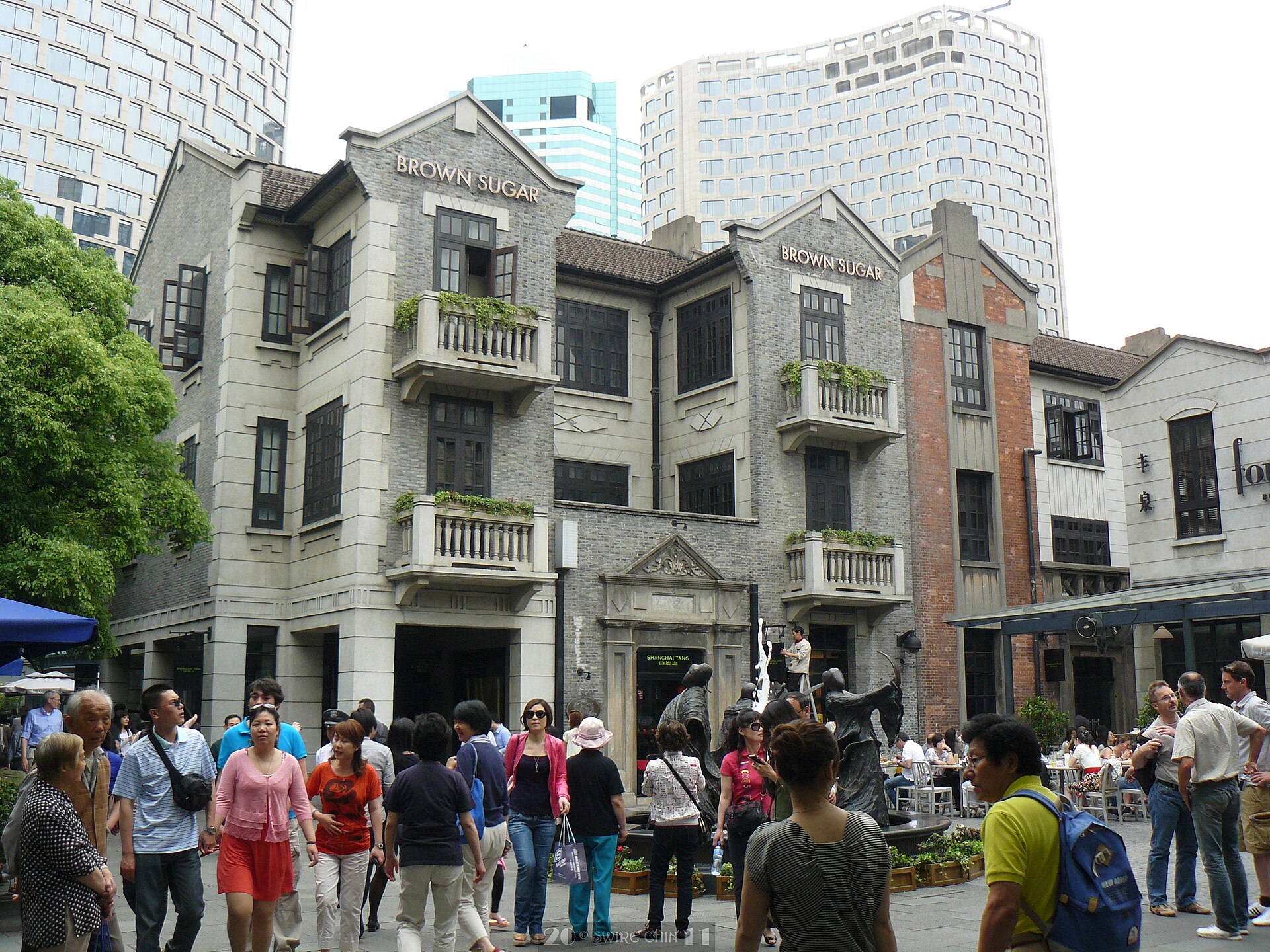
What you notice most in Xintiandi is the quality of the restoration. The original grey-brick shikumen facades have been kept intact; the stone gates with their carved lintels are in better condition than they would be anywhere the developers had not intervened. The lanes themselves are traffic-free and wide enough to walk comfortably. Every element is deliberate — which is either reassuring or slightly sterile, depending on what you came here looking for.
Xintiandi gives you a clean, legible version of shikumen architecture that is easy to photograph and easy to enjoy without any knowledge of the city. If this is your first time in Shanghai and you want a picture that says "old Shanghai," this is the least complicated way to get it — and the architecture here is genuinely beautiful, not a replica.
A dinner in the North Block — a table outside in one of the lane courtyards, lanterns overhead, the hum of conversation and (on good nights) a jazz note floating out from a nearby bar — is one of the better meals-with-atmosphere you can have in Shanghai. The restaurants are reliable at this price point. The bars start filling around 9 pm and stay busy until midnight or later.
The site of the Chinese Communist Party's First National Congress in 1921 is embedded in the Xintiandi precinct. The building is a shikumen lane-house that was used for the founding meetings and has been preserved and expanded into a free museum. Even if political history is not your particular interest, standing in the original room gives a sense of scale that changes how you think about the century that followed.
Xintiandi at night is one of the more romantic corners of Shanghai — the lanes are pedestrian-only, the lighting is warm and considered, and Taipingqiao Park alongside provides a quiet escape from the restaurant buzz. Compared to the density of Tianzifang or the scale of the Bund, this feels calm and manageable in a way that suits an evening without an agenda.
This is what people mean when they say "Xintiandi." The restored shikumen lanes of the North Block are lined with restaurants serving Japanese, Italian, French and Shanghainese food, wine bars with courtyard seating, and cafés that are busy throughout the day. In the mornings the lanes are quiet and the light on the old grey brick is excellent for photography. From around 6 pm the character shifts: tables fill, lanterns come on, and the whole precinct takes on an energy that is quite different from the daytime version. Both are worth seeing.
Walk the side lanes off the main corridor — they are quieter, the architecture is just as good, and you will find some of the better bars tucked away where the foot traffic is lighter.
The Xintiandi Style mall occupies the South Block, designed to sit alongside rather than overwhelm the surrounding shikumen. Inside is a mix of international retail brands, restaurants and a cinema. It is a contemporary shopping centre, comfortable and air-conditioned, and useful as a rainy-day option or somewhere to sit with a coffee in the afternoon. The architectural transition between the old and new sections of the precinct is itself worth pausing to look at.
In July 1921 the founding congress of the Chinese Communist Party was held in a shikumen lane-house on what is now the edge of the Xintiandi precinct. The building has been preserved as a museum and expanded with new exhibition galleries. Entry is free. The original congress room — small, ordinary-looking, plainly furnished — is still accessible, and the contrast between its scale and the enormity of what was decided here makes it one of the more thought-provoking rooms in Shanghai. Open Tuesday through Sunday; closed Mondays.
The green space immediately adjacent to Xintiandi, with a mid-sized lake, planted walkways and benches used by neighbourhood residents throughout the day. Early mornings bring elderly Shanghainese doing exercises and children in school uniform heading to class. It is an unspectacular park, but a useful one: the quietest place within walking distance of the Xintiandi bustle, free to enter at all hours, and a good place to decompress between the main sights.
Huaihai Road (淮海路), Shanghai's major mid-city shopping artery, runs close to Xintiandi's northern edge. Walking east along Huaihai from Xintiandi takes you gradually into the Former French Concession — the plane-tree canopy starts to appear, the buildings get older, and the character shifts from polished commercial to something more residential and layered. It is a twenty-minute walk that shows you two very different Shanghais in sequence.
Full guide: The Former French Concession — a complete neighbourhood guide
Xintiandi is not where you come for a cheap lunch. It is where you come when you want the food and the setting to work together.
The North Block restaurants cover a wide range of cuisines: Shanghainese benbang cooking, Japanese, Italian, French bistro, Southeast Asian and a handful of fusion concepts. Dinner at a mid-range to good restaurant runs ¥150–300+ per person (~฿750–1,500+). Some of the better restaurants offer a weekday lunch set at ¥80–120 (~฿400–600) that gives you the same setting at a more manageable price.
Reservations are strongly advised on Friday and Saturday evenings — the better restaurants fill fast, and walk-ins after 7 pm are hit-or-miss. This is compiled from real guest experiences across multiple review platforms.
Xintiandi has been a reliable evening destination for Shanghai's expat community and internationally-inclined locals for two decades. The bars in the North Block range from wine-focused places with good by-the-glass lists to cocktail bars with courtyard seating and a few spots with live music. Drinks run ¥60–120 per glass (~฿300–600) at most venues. The main action is between 9 pm and midnight; some bars continue until 1–2 am on weekends. The courtyard tables are the reason to come early and secure one.
Several independent cafés operate within the precinct — in the ground-floor rooms of restored shikumen houses, with small outdoor seating areas in the lane. Coffee runs ¥40–70 (~฿200–350). The cafés are most pleasant mid-morning on a weekday, when the lanes are quiet and the light through the old stone doorways is at its best. For a deeper look at Shanghai's café scene, the concentration of interesting independents is actually higher in the Former French Concession a short walk away.
Further reading: Shanghai café guide
Step out of the hotel and you are already in the lanes. For certain kinds of trip, that is exactly what you want.
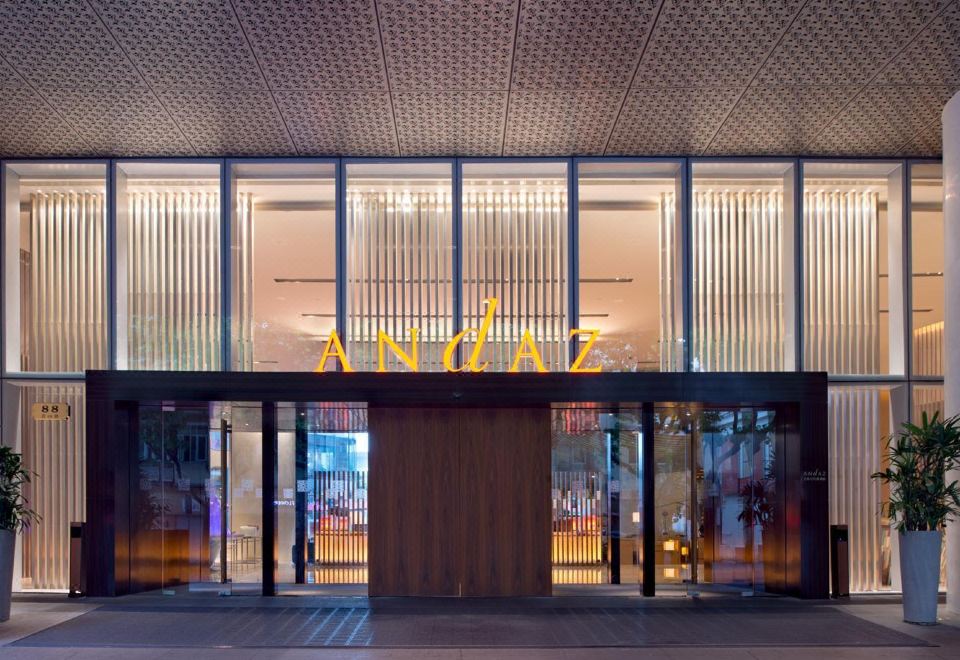
Staying in or next to Xintiandi means waking up inside the precinct — which is a different experience from visiting it. The early morning lanes, before the restaurants open and the day-visitors arrive, are genuinely quiet and atmospheric in a way that the afternoon crowds do not allow. Several of the area's hotels are embedded in or directly adjacent to the shikumen architecture.
The practical consideration: Xintiandi is central, with Lines 10 and 13 connecting it quickly to the rest of Shanghai. The Bund and Pudong are reachable in fifteen to twenty minutes by metro. If your itinerary mixes Xintiandi time with visits to those areas, the location works well. If you are spending most of your trip in Pudong specifically, a hotel closer to the river might save you a daily commute.
Or read the individual hotel reviews for properties in the Xintiandi area:
Xintiandi is in the geographic centre of Shanghai and well served by metro. From any major hotel or tourist area in the city, you are within twenty to thirty minutes by train.
9.00 am — Arrive via Madang Road (Exit 2). The North Block lanes are quiet at this hour. The light on the old grey brick is at its best and there are almost no crowds. Take your time with the architecture before the day-visitors arrive.
9.30 am — Visit the Site of the First National Congress of the CCP (中共一大会址). Free entry, open Tuesday–Sunday. Allow thirty to forty minutes. The original meeting room, preserved as it was in 1921, is genuinely affecting.
10.30 am — Find a café in one of the side lanes for a coffee (¥40–65). Sit outside if the weather permits and watch the neighbourhood wake up.
11.30 am — Walk across to Taipingqiao Park for a slow circuit of the lake before heading to your next stop.
Xintiandi comes into its own once the sun is down. Arriving in the late afternoon gives you the transition from day to evening, which is worth seeing in itself:
5.30 pm — Walk the North Block lanes in the late afternoon light. The photography is better than midday; the restaurant staff are setting up the outside tables.
6.30 pm — Dinner. Book in advance for the better restaurants — the ones with courtyard seating fill quickly on weekends. Budget ¥150–300 per person (~฿750–1,500) at a good mid-range place.
8.30 pm — After dinner, walk the lanes again. The lanterns are on, the bars have their doors open, and the precinct at night is a very different experience from the morning. Pick a bar with outdoor seating and stay a while.
10.30 pm — Metro home, or walk north along Huaihai Road toward the French Concession if the evening is warm.
For the full picture of what is nearby, see Shanghai's top attractions and the complete Shanghai city guide.