Home Shanghai China Shanghai Hotels About
Home  ›  China  ›  Shanghai  ›  Attractions
Shanghai Attractions · 2026

What to see in Shanghai
The Bund, sky-high views & 10 sights that deliver

A river divides the city into two centuries at once: the colonial Bund on one bank, the glass towers of Pudong on the other. Walk twenty minutes from a Ming-dynasty garden through a colonial boulevard into the second-tallest building on earth. Shanghai does this without blinking.

Why come here

A city where five centuries coexist

Shanghai is the only city where you can stand on a hundred-year-old promenade lined with Beaux-Arts banks and look directly across at the second-tallest building on the planet. That tension — between preserved past and absolute present — is not an accident. It is what the city has decided to be, and it makes for a place that is more layered, more surprising and more genuinely interesting than any simple "modern Chinese megalopolis" description would suggest.

The historic core on the Puxi (west) side gives you the Bund, the French Concession's plane-tree boulevards, Tianzifang's shikumen lanes, Yu Garden's classical stonework and Jing'an Temple's gold-tiled roofline rising improbably between glass towers. Cross to Pudong and Lujiazui lands you at the base of three of the tallest buildings ever constructed. We picked the 10 sights that best capture both sides of this argument — with honest advice on when to go, what to pay, and what to skip.

The sights

10 Shanghai attractions worth your time

Not just photo spots — places where the experience matches the expectation.
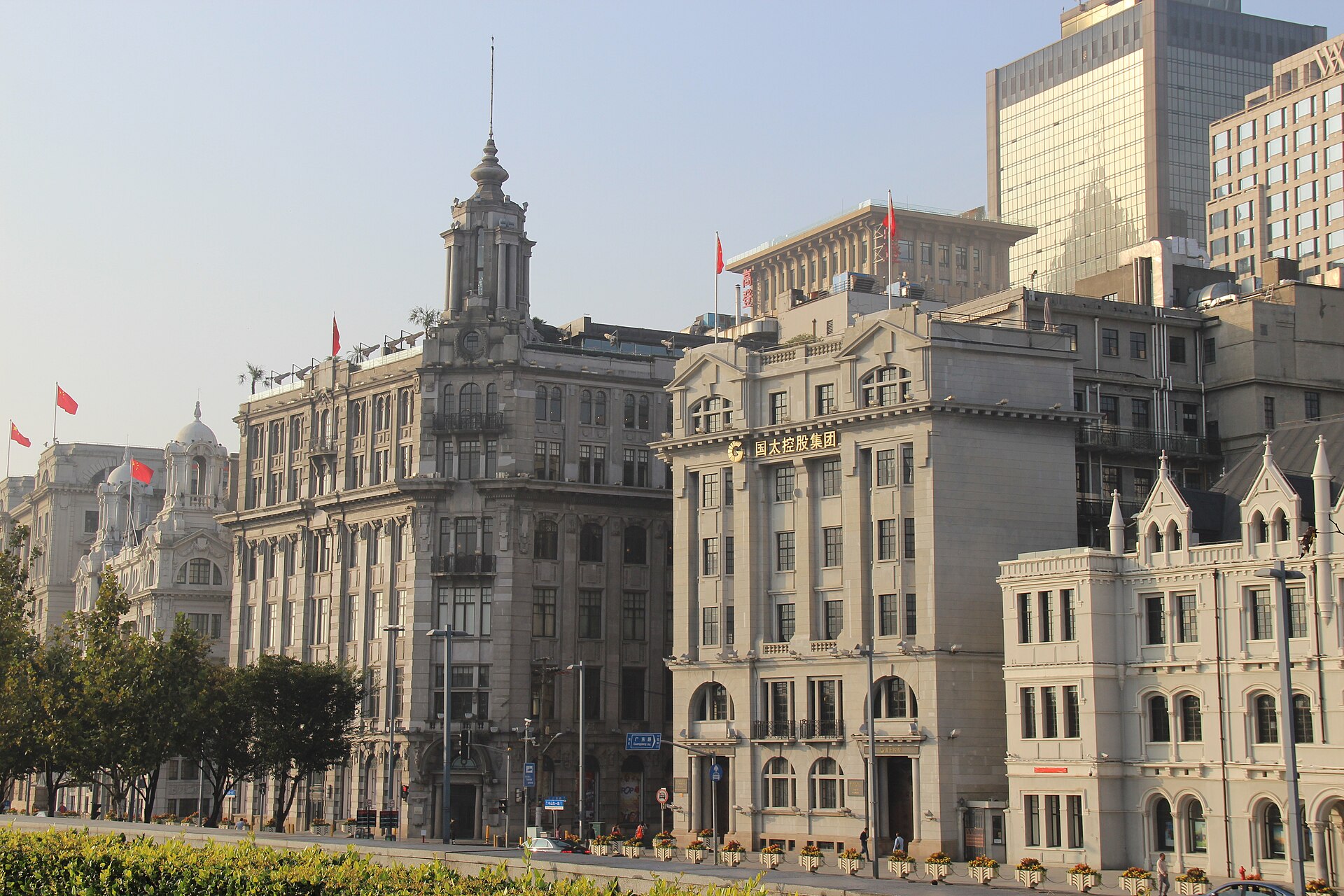
The Bund, Shanghai — colonial-era facades lit at dusk along the Huangpu River, Pudong towers glowing across the water 1
The Bund (外滩 Waitan)
Huangpu riverfront · colonial facades · Shanghai's defining walk

The Bund is the one view of Shanghai you have already seen and the one that still stops you when you stand there in person. A kilometre-long promenade runs along the Huangpu River, flanked on the landward side by thirty-odd heritage buildings — the HSBC Building, the old Customs House with its clock tower, the Peace Hotel with its green copper roof — all lit warm at night and all still in use. Across the water, Pudong's towers spike upward in a skyline that looks designed rather than grown. Come at dusk when both sides are illuminated simultaneously. Come at dawn if you want the promenade to yourself.
Best time: 6–8 pm for golden hour plus city lights · 6–7.30 am for space and soft light
Metro: East Nanjing Road (Lines 2/10), 8-min walk · or Yuyuan Road (Line 10)
Cost: Free · open 24 hours
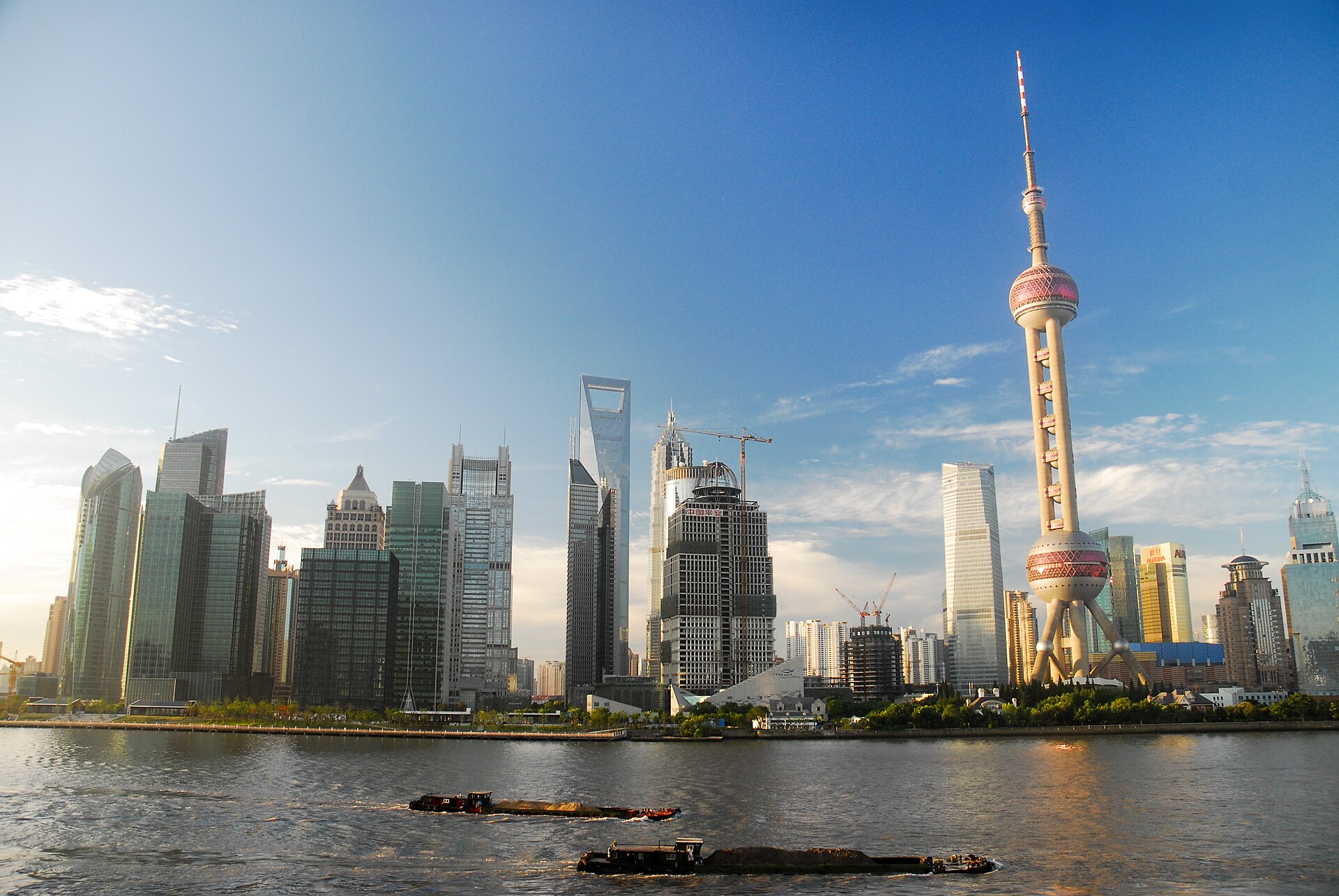
Pudong skyline, Shanghai — Shanghai Tower, the SWFC bottle-opener and the Oriental Pearl Tower at dusk, reflected in the Huangpu River 2
Lujiazui & the Pudong Skyline
陆家嘴 · The second-tallest building on earth is here

When you cross from the Bund side to Lujiazui, the scale shifts completely. Shanghai Tower stands 632 metres tall — China's tallest building, second in the world — and its Sky Walk observation floor at level 118 puts you at 546 metres with uninterrupted views across the entire city. Tickets are ¥180; book online. Next door, the SWFC (the building with the trapezoidal hole at the top that looks like a bottle opener) has a floor-100 deck at ¥180, and because it faces Shanghai Tower directly, it's the right place to photograph the taller building in context. Both are worth the money. The base of the cluster is free to walk through at any hour.
Metro: Lujiazui (Line 2) — exit the station and the towers are immediately in front of you
Shanghai Tower Sky Walk: ¥180 (~฿900) · floors 118 · open 10 am–10 pm · book ahead
SWFC: ¥180 · floors 94/97/100 · open 8 am–10 pm
Tip: Want Oriental Pearl Tower in the same frame? Go up the SWFC — the two buildings look directly at each other across the plaza.
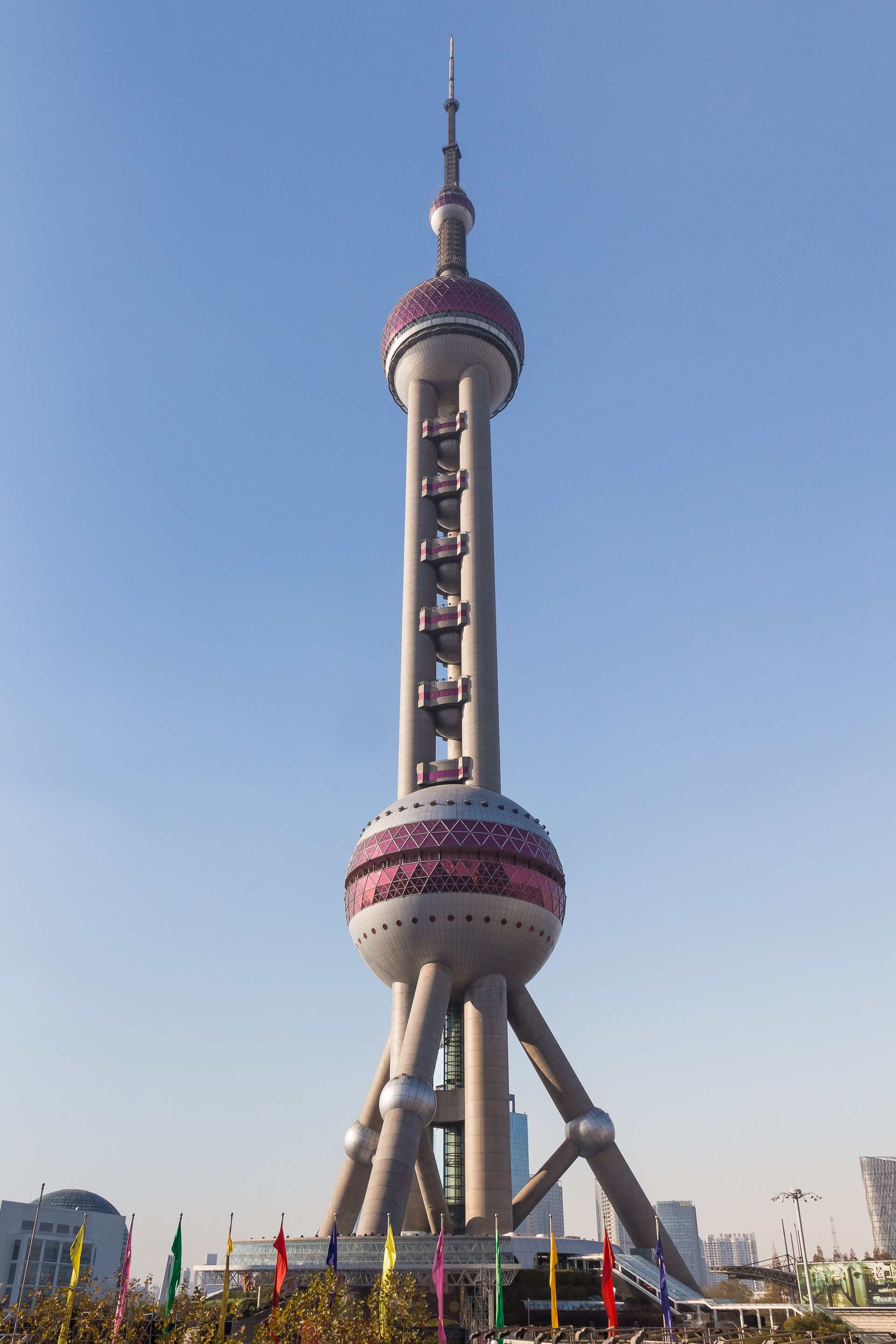
Oriental Pearl Tower, Shanghai — the pink-red TV tower reflected in the Huangpu River, clear blue sky behind 3
Oriental Pearl Tower (东方明珠)
The tower that announced modern Shanghai · built 1994

The Oriental Pearl is an improbable building — two oversized pink-red spheres stacked on a concrete column, completed in 1994 when Pudong was still farmland. It looks nothing like anything else in the skyline, and that was intentional: it was meant to signal that something new and ambitious was happening here. At 468 metres it now feels almost modest beside Shanghai Tower, but the view from the upper sphere (350 metres) looks directly across at the Bund's colonial facade — one of the best vantage points in the city. The base houses the Shanghai History Museum, an excellent and undervisited collection tracing the city from the Qing Dynasty through the treaty-port era to today.
Metro: Lujiazui (Line 2), 5-min walk
Tickets: ¥165–210 depending on floor combination · open 8 am–9.30 pm
Worth knowing: The history museum at the base is included in some ticket combinations — genuinely good
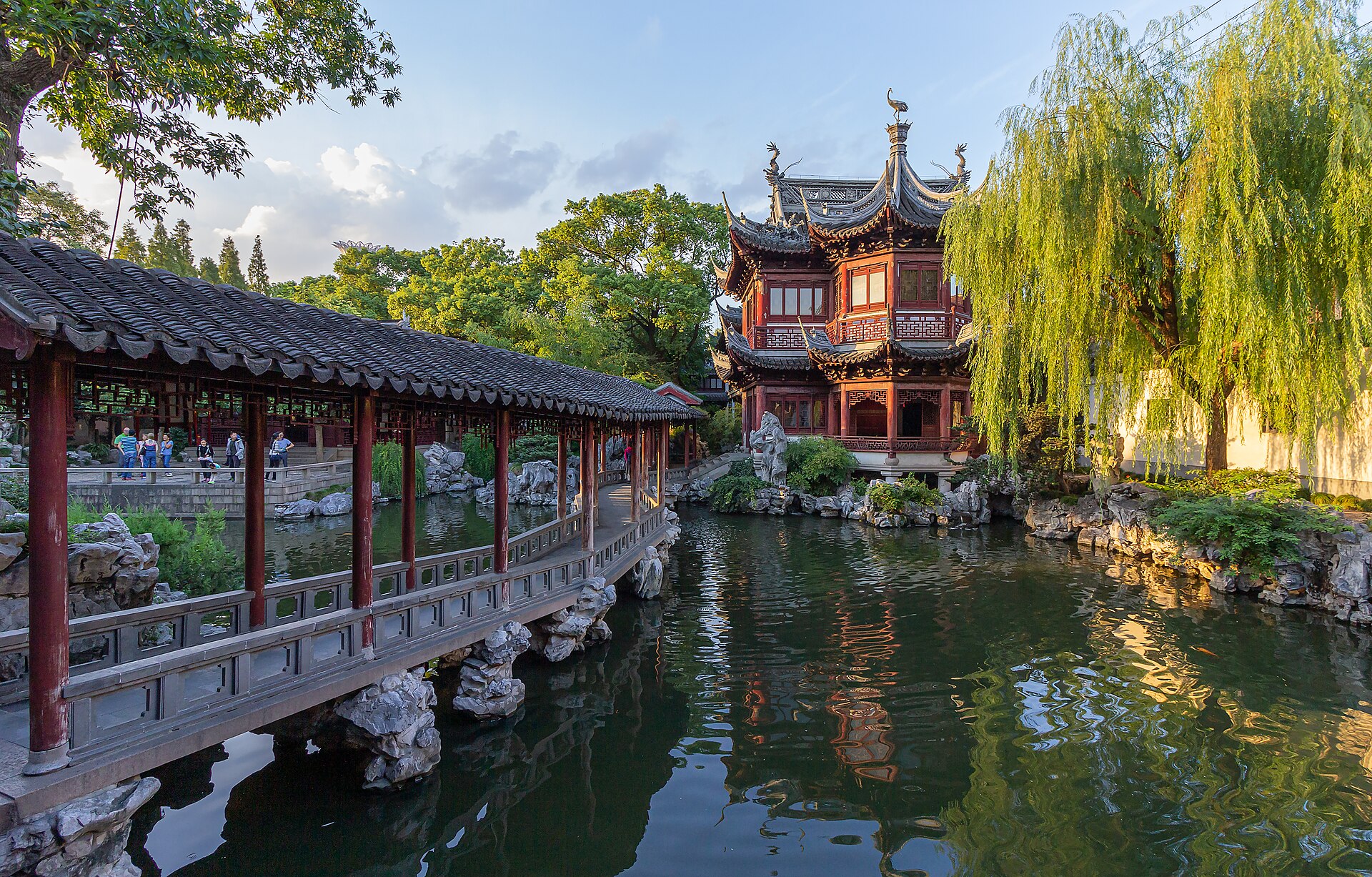
Yu Garden, Shanghai — red-roofed pavilion over a carp pond, dragon-topped white walls, classical Ming-dynasty architecture 4
Yu Garden (豫园) & City God Temple Bazaar
Ming-dynasty classical garden · built 1559 · surrounded by old-town market

A Ming-dynasty government official built Yu Garden in 1559 as a private retreat for his parents, and the design logic still holds: every step is framed to reveal a composed view, the rockeries are placed to suggest mountains, the carp ponds reflect pavilion rooflines. Dragon-topped walls made from undulating ceramic tiles divide the garden into linked courtyards. It sits implausibly inside a city of 24 million, surrounded immediately by the Yuyuan Bazaar — a pedestrianised market of tea shops, dim-sum restaurants (including the original Nanxiang Mantou Dian, operating since 1900), snack vendors and souvenir stalls. Crowded on weekends, but the historical weight is real.
Metro: Yu Garden (Line 10), 8-min walk
Garden tickets: ¥40 (~฿200) · open 9 am–5 pm · bazaar is free
Best time: Arrive before 9.30 am — the paths fill up quickly, especially on weekends
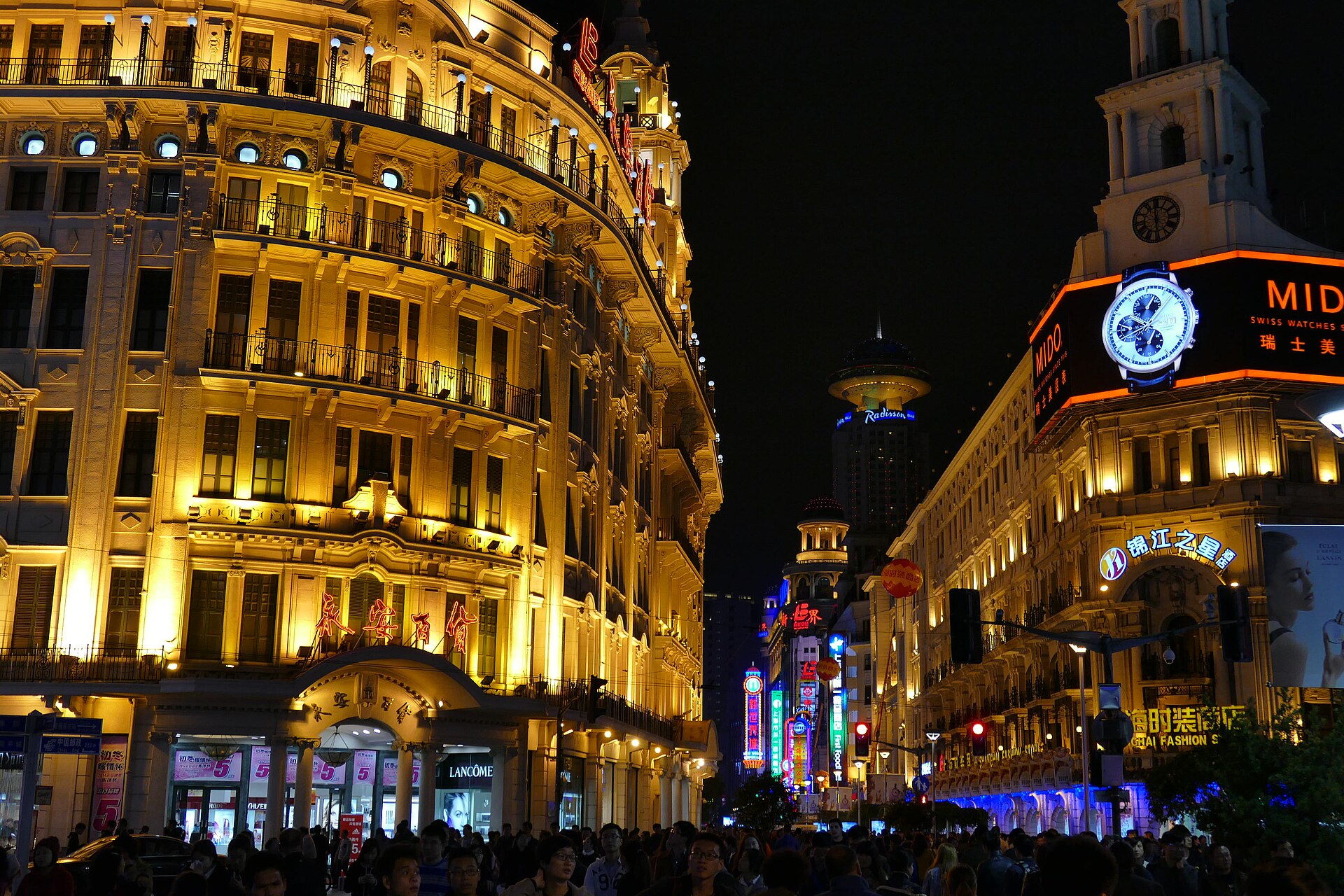
Nanjing Road pedestrian street, Shanghai — illuminated shopfronts and red Chinese signage stretching into the distance, crowds of pedestrians 5
Nanjing Road (南京路)
China's busiest pedestrian shopping street · 5.5 km, Bund to People's Square

Nanjing Road is where Shanghai puts its energy on display. The pedestrianised eastern section — roughly 1.5 km from People's Square to the Bund — is lined with department stores that have been here since the 1930s alongside international brands, food stalls, tea houses and neon signage in quantities that feel physically warm. In the evening, especially on Friday and Saturday nights, the density of people and light achieves something close to spectacle. It is not a subtle experience. But walking its length at night, elbowed by the city in every direction, is unmistakably Shanghai.
Metro: People's Square (Lines 1/2/8) or East Nanjing Road (Lines 2/10)
Best time: After 7 pm — the neon signs reach full brightness, the street fills completely
Cost: Free to walk · shops open 10 am–10 pm
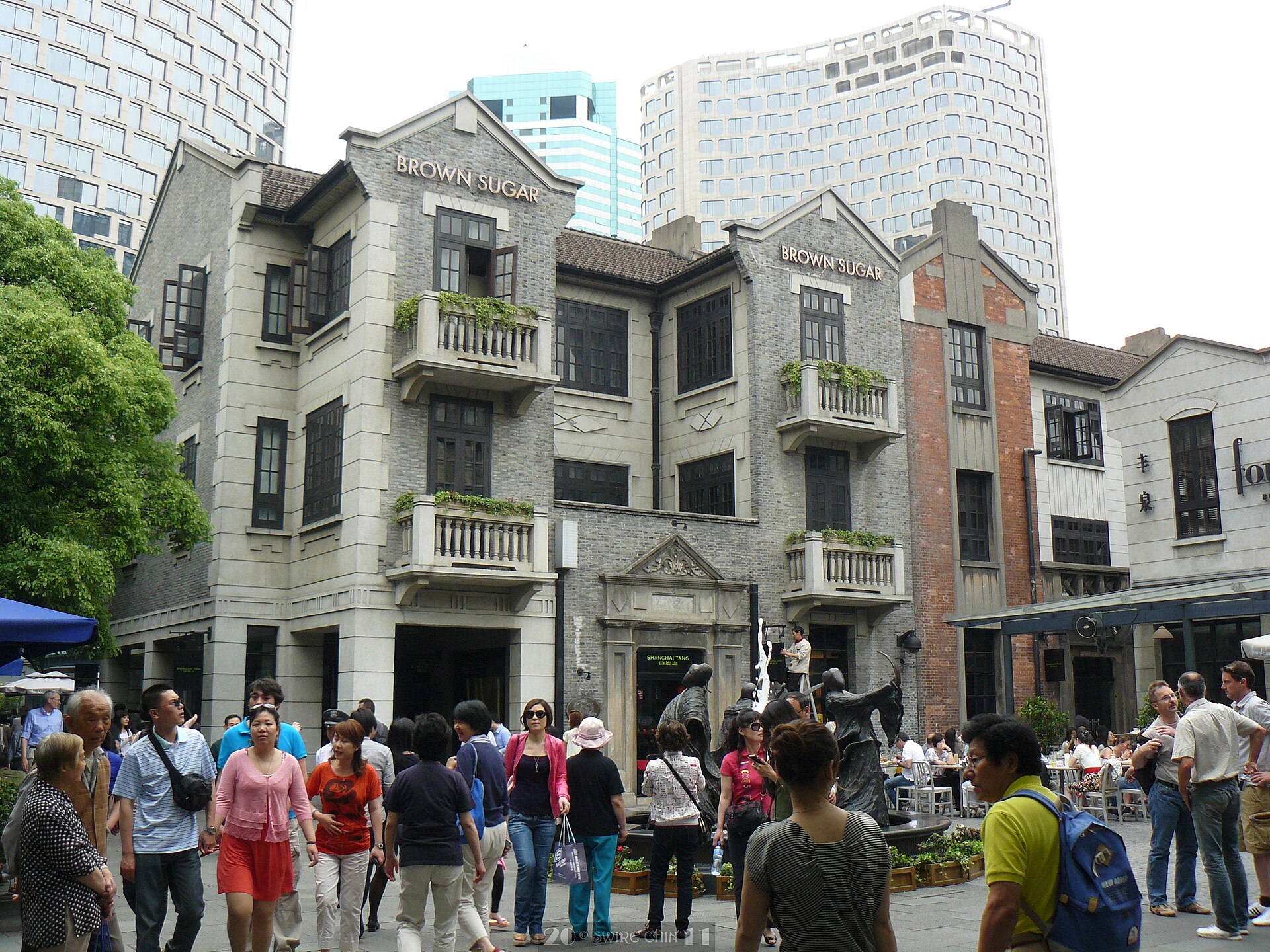
Tianzifang, Shanghai — narrow shikumen lane with grey brick walls, hanging plant pots, small café signs, old French Concession neighbourhood 6
Tianzifang (田子坊)
Shikumen art lanes · galleries, cafés and boutiques in former workers' housing

Tianzifang is the answer to what happens when a city decides to convert its old workers' housing into something that residents and visitors both want to be in. The shikumen buildings — grey brick, arched doorways, the characteristic two-storey row houses of old Shanghai — were not demolished but adapted: ground floors became independent cafés, design studios, art galleries and craft boutiques, while upper floors are still lived in. The lanes are genuinely narrow, the ceilings low, the smell of roasted coffee constant. Come on a weekday morning for the version that feels real; weekend afternoons can be busy enough to lose the atmosphere.

Metro: Dapuqiao (Line 9) or Shaanxi South Road (Line 1), 10-min walk
Hours: Open 24 hours; shops roughly 11 am–10 pm
Cost: Free entry · shopping as desired
🌳7
French Concession & Wukang Road
武康路 · Heritage villas under a canopy of plane trees

Wukang Road does something remarkable in a city of 24 million: it makes you slow down. The London plane trees that line both footpaths have grown large enough to meet overhead, creating a tunnel of green in summer and a lacework of bare branches in winter. Behind them sit Spanish Mission villas, Tudor-revival townhouses and Art Deco apartment blocks in soft ochre, olive and cream — many still in use as cafés, consulates or private homes. The Norman Foster-designed Normandie Apartments (now called Wukang Mansion) anchor the junction at the street's southern end. Walk the surrounding lanes in any direction and you will keep finding more. Take MRT Line 10 or 11 to Jiao Tong University station and wander north.
Metro: Jiao Tong University (Lines 10/11) or Hengshan Road (Line 1)
Best time: 9–11 am or 3–5 pm — the light through the tree canopy is worth timing for
Cost: Free to walk · cafés ¥35–65 per coffee
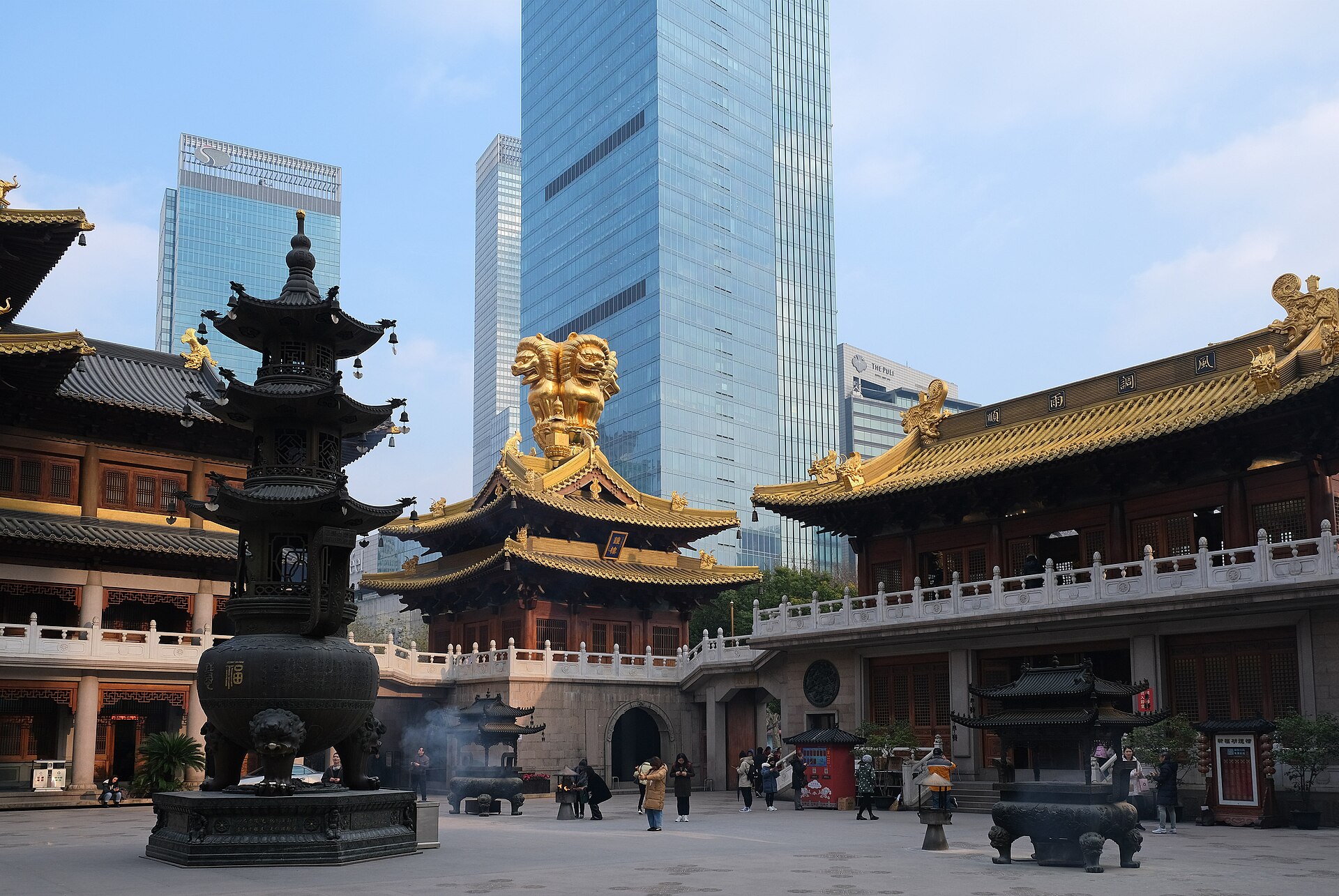
Jing'an Temple, Shanghai — golden tiled Buddhist temple roofline bright against surrounding glass towers in the Jing'an district 8
Jing'an Temple (静安寺)
1,700-year-old Buddhist temple · gilded rooflines among glass towers

Step out of Jing'an Temple metro station and the visual collision is immediate: office towers of glass and steel on both sides, and directly ahead a Buddhist temple with golden-orange tiled roofs blazing in the sun. Jing'an Temple has stood on this site for 1,700 years, though the current buildings date from a more recent restoration. What the temple delivers is the smell of incense, the deep resonance of a struck bell, the sight of worshippers moving between halls at all hours of the day — a genuine spiritual site rather than a set piece. The adjacent Jing'an Sculpture Park is free and provides a calm place to sit before or after.

Metro: Jing'an Temple (Lines 2/7) — exit directly in front of the temple
Tickets: ¥50 (~฿250) · open 7.30 am–5 pm
Worth noting: Early morning prayers are the most atmospheric time to visit
🏛️9
People's Square & Shanghai Museum
人民广场 · Free museum with 3,000-year-old bronzes · civic centre of the city

People's Square is where Shanghai lives its civic life — the broad open space where kite-flyers, retirees doing tai chi and office workers cutting through all coexist without friction. The square itself has no admission charge and is open at any hour. But the real draw is the Shanghai Museum on its southern edge: one of the finest collections of Chinese art and artefacts in the world, and entirely free to enter. The bronzeware hall (Shang and Zhou dynasties, some pieces 3,000 years old), the ceramic galleries (Song-dynasty celadon, Qing blue-and-white), the jade carvings and the furniture halls all reward genuine time. Two to three hours is not enough. Book a timed-entry slot online in advance — it is now required.

Metro: People's Square (Lines 1/2/8)
Shanghai Museum: Free, but online reservation required · open 9 am–5 pm · closed Mondays
Allow: At minimum 2–3 hours in the museum alone
🍸10
Xintiandi (新天地)
Restored shikumen · dining, nightlife and a quiet piece of history

Where Tianzifang is narrow and exploratory, Xintiandi is open and designed — an entire block of shikumen row houses carefully restored and repurposed as a dining and nightlife district. The lanes are wide enough for restaurant terraces. There are cocktail bars, wine shops, French bistros and Japanese izakayas all within shouting distance of each other. On weekend evenings the square at its centre hums in a way that the rest of Shanghai rarely does: the crowd is international, the vibe relaxed, the food expensive but good. Inside the same complex, a small museum marks the site of the First National Congress of the Chinese Communist Party (1921) — a genuinely interesting historical detour that most people walk past without knowing it is there.
Metro: Huangpi South Road (Line 1) or Xintiandi (Lines 10/13)
Hours: Restaurants and bars roughly 11 am–1 am
Cost: Free to walk · dining ¥100–400+ per person depending on restaurant
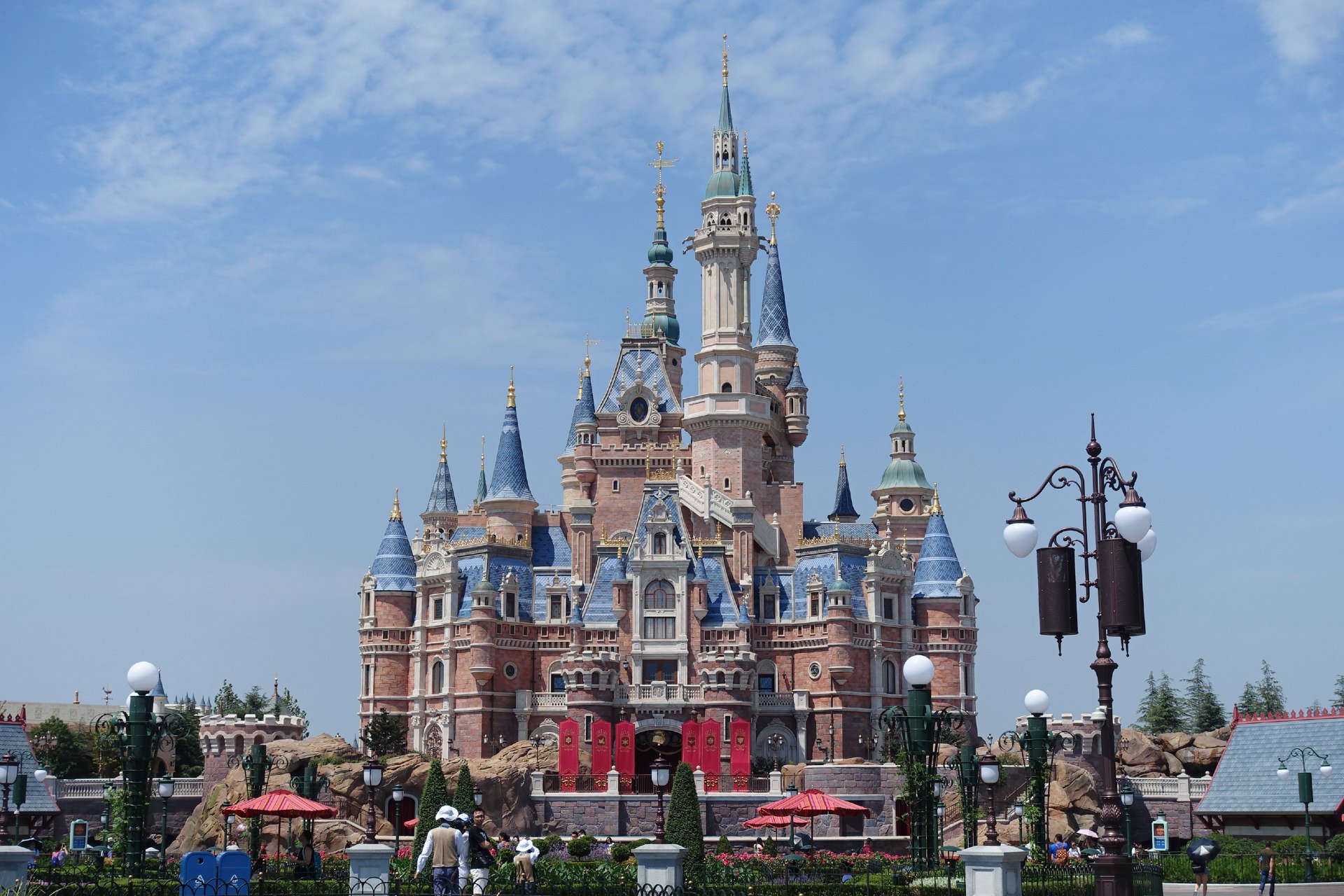
Shanghai Disneyland Enchanted Storybook Castle — the world's largest Disney castle, blue and gold spires against a bright sky +
Shanghai Disneyland
The world's biggest Disney castle · a full day, minimum

The Enchanted Storybook Castle at Shanghai Disneyland is twice the size of Cinderella Castle at Orlando — the largest Disney castle ever built — and the park around it was the most visited in Asia Pacific within three years of opening in 2016. What makes it different from other Disney parks is genuine: the content has been designed specifically for Chinese audiences, from the stage shows and character costumes to the food and the cultural references woven through each land. Even if you have been to other Disney parks, this one has a different character. Plan a minimum of one full day; families with children typically need two. Book tickets in advance at disneylandshanghai.com — the park sells out on holiday weekends.

Metro: Disney Resort (Line 11) · approximately 1 hour from central Shanghai
Tickets: ¥475–635 (~฿2,400–3,200) per day · book at disneylandshanghai.com
Allow: One full day minimum · gates open from 8 am most days
Staying near the park? We have reviewed the best hotels nearby — see hotel recommendations →
Planning your visit

How to structure your days

Shanghai's highlights cluster into two main zones — here is how to navigate them.

Puxi (West Bank) — Days 1–3
The Bund · French Concession · Old City · Metro Lines 1/2/9/10

The Bund, Nanjing Road, Yu Garden, Tianzifang, the French Concession, Xintiandi, Jing'an Temple and People's Square are all on the Puxi side and connected by metro. Expect to cover three or four sights comfortably in one day, depending on how long you linger.

Time needed: 2–3 days · Key lines: Metro Lines 1 / 2 / 10
Pudong (East Bank) — Day 2 afternoon
Shanghai Tower · Oriental Pearl · SWFC · Metro Line 2

All three major towers are within walking distance of Lujiazui station (Line 2). Come in the late afternoon, go up one tower at sunset, and stay until the full city-lights display kicks in across both banks. This is one of the most memorable evenings you can spend in any city.

Time needed: Half a day to a full day · Metro: Line 2, Lujiazui
Shanghai Disneyland — Day 4
Pudong outskirts · Metro Line 11 · 1 hour from centre

Budget a full day at minimum. Families typically need two. The park is about 40 km from central Shanghai and requires roughly an hour each way on MRT Line 11. On-site hotel rates are premium — off-resort hotels nearby offer better value; see our hotel guide.

Time needed: 1 full day minimum · Metro: Line 11, Disney Resort
Day Trips from Shanghai
Zhujiajiao · Suzhou · Hangzhou

Zhujiajiao water town is one hour away on Metro Line 17. Suzhou, with its UNESCO-listed classical gardens, is 30 minutes by high-speed rail. Hangzhou and West Lake are 50 minutes by HSR. All three are manageable as day trips from Shanghai on days five or six. See the Shanghai day trips guide → for details.

Time needed: 1 day per destination · Best for: Days 5–6 if your schedule allows
Frequently asked

FAQ · Before you set out

How many days do you need in Shanghai?
Three to four days cover the main highlights comfortably: Day 1, The Bund plus Pudong and Lujiazui; Day 2, Yu Garden, the Old City, Tianzifang and the French Concession; Day 3, Nanjing Road, Jing'an Temple and the Shanghai Museum; Day 4, a full day at Shanghai Disneyland. With five or six days, add a day trip to Zhujiajiao water town or Suzhou. See the full day trips guide →
Which observation deck has the best view in Shanghai?
Shanghai Tower's Sky Walk on floor 118 (546 metres) gives the highest and widest panorama. Tickets are ¥180; book online in advance. If you want Oriental Pearl Tower in the frame — a classic Shanghai shot — go up the SWFC floor 100 instead: the two buildings face each other directly. Tickets are also ¥180. For a free view, the Bund Promenade at night costs nothing and is hard to beat.
What is the best time to visit The Bund?
The golden window is 6 to 8 pm, when the colonial buildings on the Bund side catch warm afternoon light and the Pudong towers begin lighting up simultaneously — you get both natural and artificial illumination in the same photograph. If you want the promenade to yourself, come before 7.30 am: soft morning light, almost no crowds, and the city slowly waking around you.
How much do Shanghai Disneyland tickets cost and should I book ahead?
Tickets run approximately ¥475–635 (~฿2,400–3,200) per person per day, depending on weekday versus peak dates. Always book in advance at disneylandshanghai.com — the park sells out well before opening on Chinese public holidays and school breaks. Getting there: MRT Line 11 to Disney Resort station, about one hour from central Shanghai.
Is Yu Garden worth it and how early should I arrive?
Yu Garden is genuinely worth it — a 460-year-old Ming-dynasty classical garden hidden inside a city of skyscrapers, with dragon-topped walls, zigzag bridges over carp ponds and pavilions framing composed views. Adult admission is ¥40 (~฿200). Arrive before 9.30 am; by mid-morning the paths are packed, especially on weekends. The surrounding Yuyuan Bazaar is free to enter and has Nanxiang Mantou Dian's original xiaolongbao shop operating since 1900.
How easy is it to get around Shanghai by metro?
Very easy. Shanghai's Metro has 20 lines covering almost every major attraction. Fares are ¥3–8 per journey. Key stations: People's Square (Lines 1/2/8) for Nanjing Road; Yu Garden (Line 10); Lujiazui (Line 2) for the Pudong towers; Jing'an Temple (Lines 2/7); Disney Resort (Line 11). Pay with Alipay, WeChat Pay or a Shanghai Public Transport Card — all work at the gates without cash. Read more in our China payments guide →
Klook · Shanghai Tours

Shanghai sightseeing tours — skip the queues, see it with someone who knows

Guided Bund walks at dusk, skip-the-line tickets for Shanghai Tower, Yu Garden morning tours and Tianzifang art-lane walks with a local guide — book ahead on Klook and arrive without stress.

Browse Shanghai Tours on Klook →
Wherebest is an affiliate partner of Klook — we may earn a commission when you book through our links, at no extra cost to you.