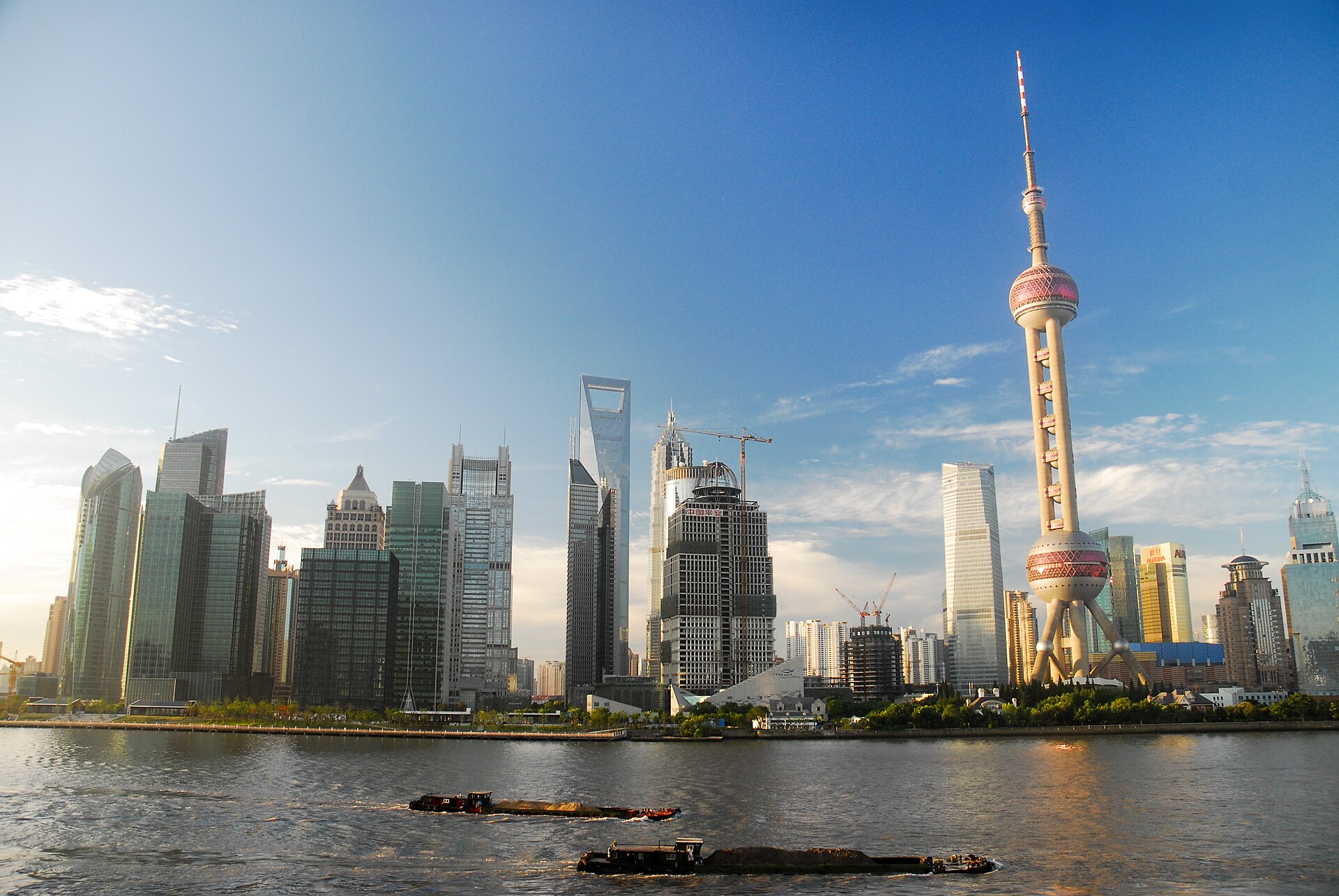
A 1.5-kilometre promenade along the Huangpu River, free at any hour, flanked by 52 European buildings from the 1920s treaty-port era — and facing one of the most dramatic skylines on the planet.
There is a moment at The Bund, usually around six in the evening, when both sides of the Huangpu River are illuminated simultaneously. On the Puxi bank where you stand: the HSBC Building, the Customs House clock tower, the Peace Hotel's copper-green roof — all lit warm and gold. Across the water: the Pudong towers rising in a skyline that looks genuinely designed rather than accidentally accumulated, with Shanghai Tower at 632 metres catching the last light at its tip. It is an image you have seen and one that still surprises you when you are there.
The Bund is a 1.5-kilometre waterfront promenade in Shanghai's Huangpu District, on the west bank of the Huangpu River. It runs from Waibaidu Bridge in the north to Yan'an Road in the south, flanked on its landward side by 52 heritage buildings in styles ranging from Baroque and Gothic to Neoclassical, Renaissance and Art Deco — all built in the 1920s and 1930s when Shanghai was one of the most cosmopolitan cities on earth, home to British, French, American and Japanese banks and consulates. The nickname "Museum of International Architecture" is not an exaggeration.
What makes it different from every other Shanghai attraction is simple: free entry, 24 hours a day, no queue, no booking. The city's residents jog here in the morning, sit by the river in the evening and bring out-of-town visitors here first, without exception. That is worth paying attention to.
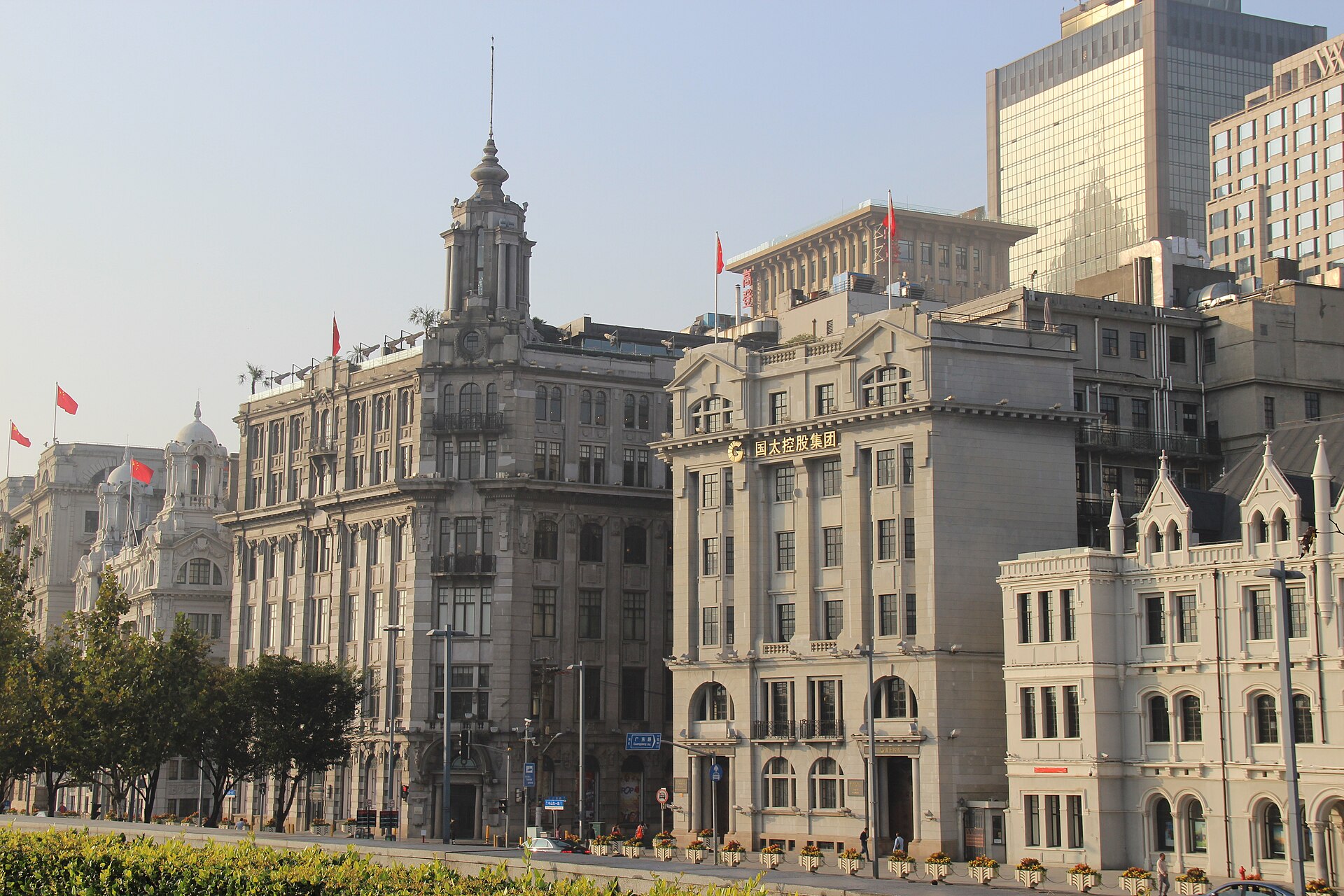
Walk south to north along the promenade — each has a history worth knowing.
Once billed as "the finest building east of Suez," the HSBC Building was the bank's Asia headquarters from 1923. The two bronze lions at the entrance — named Stephen and Stitt — are the most photographed object on The Bund. The interior mosaic ceiling in the main banking hall is extraordinary; enter during weekday business hours when it still operates as a branch of Pudong Development Bank.
The clock tower is the most recognisable element of The Bund skyline from the river. Its bells chime on the hour — the sound carries across the water and is one of the most specifically Shanghai things you will hear. The building still functions as the Shanghai Customs office.
The green copper roof is The Bund's most distinctive architectural detail — the colour comes from decades of oxidation. Charlie Chaplin, Noël Coward and numerous heads of state stayed here. The Jazz Bar in the basement has had a house band since the 1930s and still performs nightly. Now part of the Fairmont group; non-guests can have a drink at the bar.
A careful restoration turned this former banking hall into a complex of high-end restaurants and luxury boutiques. The upper floors have terraces with views over both The Bund promenade and across to Pudong — one of the better elevated perspectives without paying observation-deck prices.
China's oldest surviving all-steel bridge, spanning the Suzhou Creek where it meets the Huangpu. The bridge connects The Bund to the Hongkou district to the north. At night it reflects the city lights and is a consistently popular photography spot — especially for the angle looking south along the Huangpu.
The promenade runs the full 1.5 kilometres from Waibaidu Bridge in the north to Yan'an Road in the south, with the river on your right and the heritage buildings behind on your left. At a relaxed pace it takes 30 to 45 minutes end to end. With stops — sitting on the river-facing benches, reading building plaques, photographing the skyline — allow two hours comfortably.
The promenade is wide, flat and accessible, with benches placed throughout. It is lit well at night and genuinely busy until well past midnight on weekends. Come before 7.30 am if you want the space to yourself: the light is soft and directional, and the occasional tai chi practitioner along the riverbank is all the company you need.
Shiliupu Pier (十六铺码头) sits at the southern end of The Bund, about 15 minutes' walk from East Nanjing Road station. The standard 50-minute cruise passes both banks of the Huangpu — the colonial facades of The Bund on one side and the Pudong towers on the other — then continues under Waibaidu Bridge and returns. Ticket prices run approximately ¥115–135 per person (~฿575–675), with slightly higher rates during peak season and holidays.
The night cruise is the one worth taking: both riverbanks are fully illuminated, the Customs House clock tower is backlit, and Shanghai Tower's upper floors glow above everything. Tickets can be bought at the pier or booked in advance through Klook.
The classic frame is from the promenade looking east across the river: colonial building edges on the left, Pudong towers centred, the Huangpu in the foreground. The 6–8 pm window is the standard recommendation because the sky transitions from blue through gold to purple while both banks are illuminated. On clear evenings in autumn (September–November) the sky colour is particularly good.
For the reverse angle — photographing The Bund's colonial facade from Pudong — take Metro Line 2 to Lujiazui and walk to the Pudong riverside path. The Bund's full row of buildings fills the frame with nothing blocking it. This is the angle used on most postcards.
Metro is the quickest and most straightforward option from anywhere in central Shanghai.
Bund-view rooms, Old Town proximity, and the best first-time neighbourhoods — covered below.