Home Kamakura Japan Kanagawa Prefecture Read in Thai About
Home  ›  Asia  ›  Japan  ›  Kamakura  ›  Itinerary
🗓️ Kamakura Itinerary · 1–2 Days · 2026

Kamakura in 1–2 Days
56 minutes from Tokyo, 800 years back in time

A 13-metre Great Buddha that has sat outdoors for centuries, a bamboo grove so quiet you can hear the wind move through it, and a little train called the Enoden that runs right along the sea — this plan has been walked, not guessed, so you don't miss a thing.

How many days for Kamakura

One day for the highlights · two days to slow down

Here's the honest truth: Kamakura is one of the few towns in Japan that genuinely works as a day trip and still sends you home with plenty. The JR Yokosuka Line from Tokyo Station takes just 56 minutes and costs ¥950. Leave early, arrive before 9 am, and a single day handles all three headline sights — Tsurugaoka Shrine, Hasedera Temple and the Great Buddha at Kotoku-in.

Give it two days, though, and you'll meet the Kamakura most visitors never see — the Hasedera bamboo and the Zen lanes of Kita-Kamakura quiet in the early morning before the crowds, temples where the original architecture still stands, and Shichirigahama beach at sunset where you can have a bench to yourself.

This plan is built for both shapes of trip — Day 1 is a complete day trip on its own, and Day 2 is the bonus for anyone staying over or wanting more room to breathe. Want help choosing where to base yourself? See our Kamakura where-to-stay guide.

Day One

The Great Buddha and the seaside temples

Red shrine gates in the morning, the little Enoden train rolling along the coast, a 13-metre bronze Buddha that has sat in the open air for 750 years — the day that explains why a town of 174,000 people draws 20 million visitors a year.
01
Day 1
Tsurugaoka → Enoden → Hase → the Great Buddha
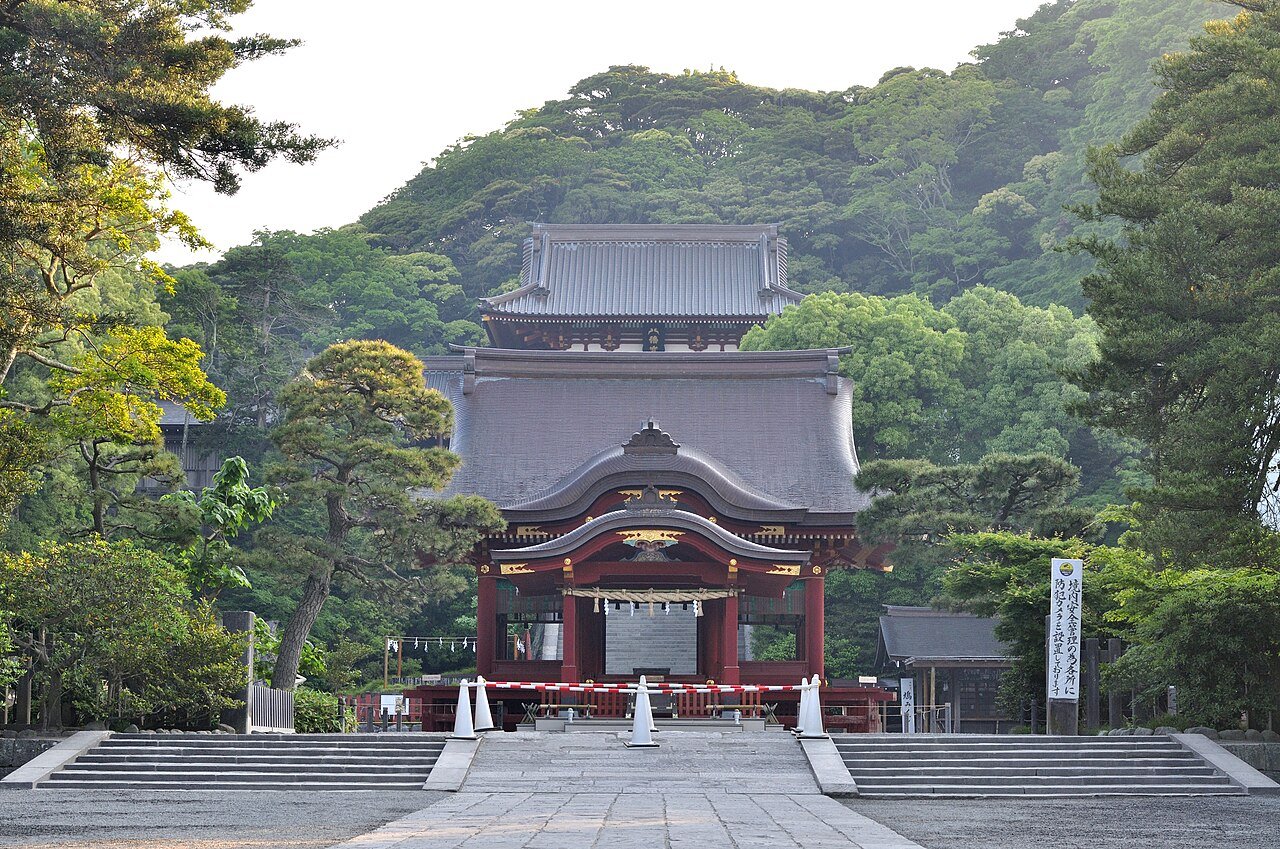
Tsurugaoka Hachimangu Shrine, Kamakura — long red staircase climbing to vermilion shrine buildings among the trees
Morning · ~2.5 hours · 9:00–11:30
Tsurugaoka Hachimangu Shrine (鶴岡八幡宮) + Komachi-dori

Step off the train at Kamakura Station, take the east exit, and head straight up Komachi-dori (小町通り) — a 400-metre shopping lane of manju sweets, coffee and craft shops that runs all the way to Tsurugaoka Hachimangu, the principal shrine of Kamakura, founded in the 12th century by the shogun Minamoto no Yoritomo. Walk up the red staircase, past the raised Dankazura approach and the lotus ponds on either side, to the main hall on the rise at the far end.

The mood here is quietly dignified — vermilion pillars, sweeping roofs, paper fortunes hanging in rows, and on some mornings a Shinto ceremony with white-robed priests moving with great care. This is a living place of worship, so please visit respectfully and photograph with consideration for those who have come to pray.

Walk: ~10 minutes from the Kamakura Station east exit
Open: 06:00–20:30 (varies by season)
Admission: Free (the inner museum is ¥200 separately)
Best time: 9:00–10:30, ahead of the next wave of visitors
Tip: The shops along Komachi-dori open around 10 am, so if you walk it on the way back in the afternoon you'll have a much better run at the browsing.
Afternoon · ~3.5 hours · 11:30–15:00
The Enoden train → Hasedera Temple (長谷寺) + the Great Buddha at Kotoku-in (高徳院)

Walk back to Kamakura Station and board the Enoden (Enoshima Electric Railway) to Hase station — five minutes, ¥200. The Enoden is a tiny local line that hugs the coast between Kamakura and Fujisawa; sit on the right-hand side for the sea views.

From Hase station it's about a 5-minute uphill walk to Hasedera, a Buddhist temple set into the hillside. The lookout terrace gives you a panorama over the sea and the town below, and inside stands a remarkable 9.18-metre carved wooden statue of Kannon, ancient and quietly imposing. In June the hydrangeas come into full bloom across the temple slope.

From Hasedera, follow the road another 7–10 minutes to Kotoku-in, home of the Great Buddha (Kamakura Daibutsu) — a 13.35-metre, 121-tonne bronze figure cast in 1252. It once sat inside a great hall, but the hall was destroyed by a storm in the late 15th century, and the Buddha has sat in the open air ever since. Standing quietly among the green pines, its face serene, it has a way of making visitors stop walking and breathe a little deeper without quite meaning to.

Enoden: Kamakura → Hase, 5 minutes · ¥200
Hasedera: ¥400 · Open 08:00–17:00 (Mar–Sep) · 08:00–16:30 (Oct–Feb)
Kotoku-in (Great Buddha): ¥300 · Open 08:00–17:30 (Apr–Sep) · until 17:00 (Oct–Mar) · +¥50 to step inside the statue
Best light: Reach Kotoku-in around 14:00–15:00 and the afternoon sun falls beautifully on the Buddha's face — by then the tour groups are starting to thin out, too.
Evening · ~2 hours · 15:00–17:30
Yuigahama beach (由比ヶ浜) + dinner

From Kotoku-in walk a little west, or ride the Enoden one stop, to Yuigahama beach — the long white-sand stretch that runs into Shichirigahama. By late afternoon the beach quietens down; grab a soft-serve or a coffee from one of the little roadside stands, sit by the water and watch the sea for a while before heading back.

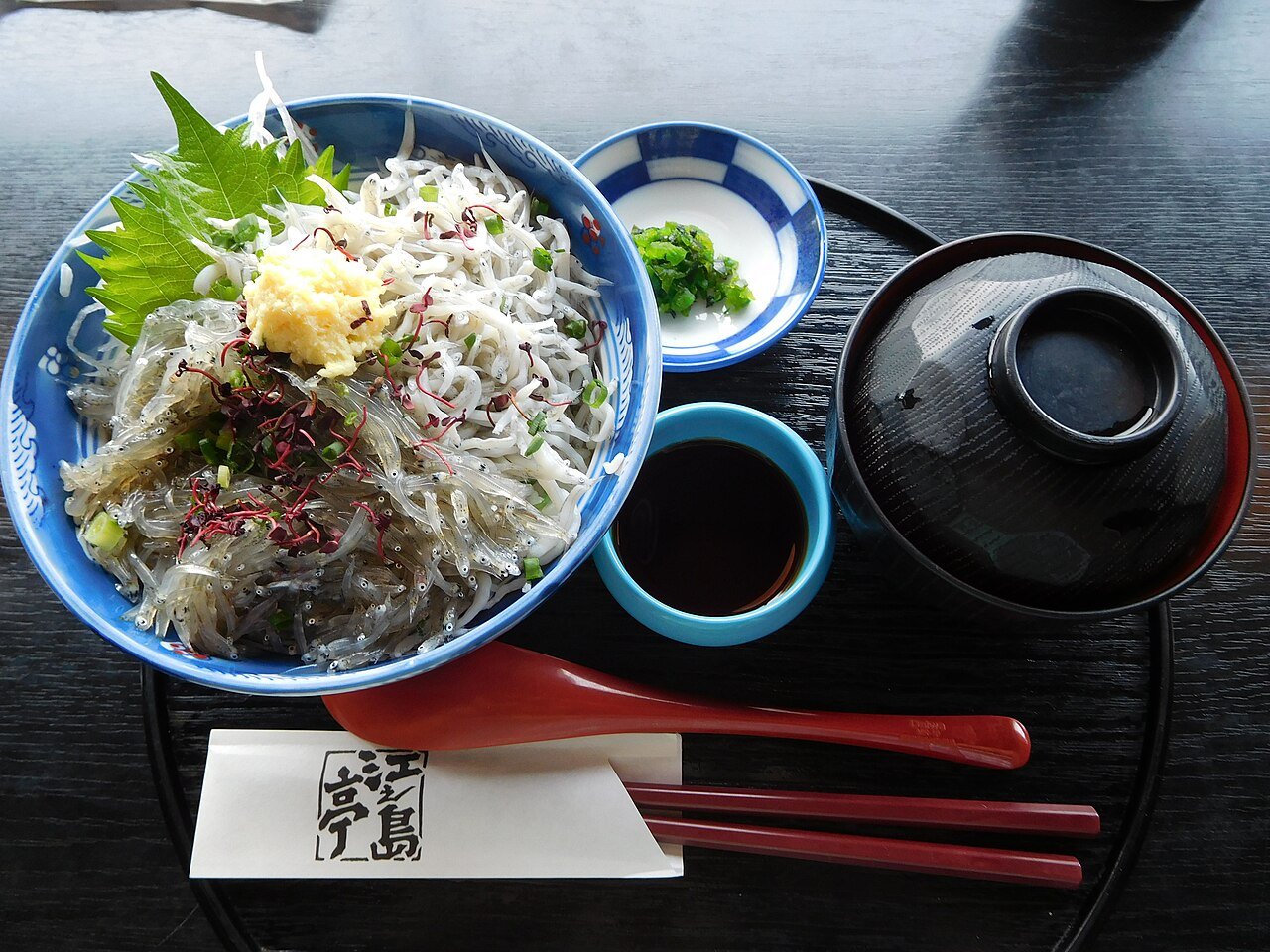
For dinner, stop in the streets around Kamakura Station before catching your train. Shirasu-don — a bowl of fresh tiny whitebait over rice — is the dish Kamakura does best, with good shops along Komachi-dori and near the station for ¥1,000–2,000 a head. Or try anything built around the fresh catch from Sagami Bay. For more, see the Kamakura food guide.
Train back to Tokyo: JR Yokosuka Line from Kamakura Station to Tokyo ~56 minutes · ¥950
Last train: around 23:00, depending on the day (check Google or Hyperdia)
Shirasu-don in Kamakura — a wooden bowl of fresh tiny white whitebait scattered over Japanese rice
Day Two

Zen lanes and the bamboo grove

Zen temples where time slows down, a bamboo forest where you hear the wind, and a beach where people come to watch the sun go down — the day that explains why some people go to Kamakura once and keep coming back.

02
Day 2
Kita-Kamakura → Hokokuji → Shichirigahama
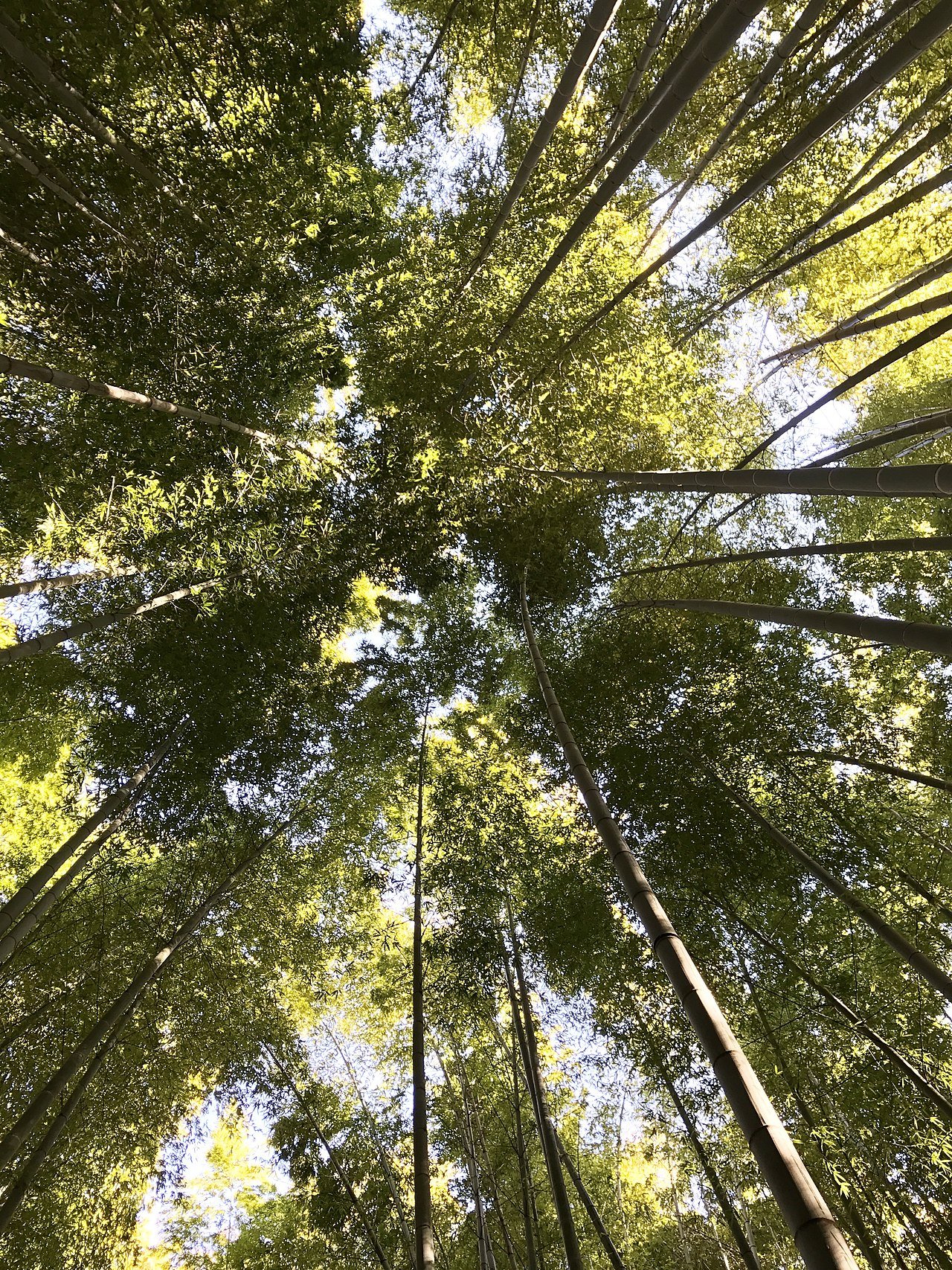
Hokokuji bamboo grove, Kamakura — a narrow path through tall green bamboo, golden light filtering between the stalks
Morning · ~3 hours · 8:30–11:30
Kita-Kamakura (北鎌倉) — Engakuji + Kenchoji

Begin Day 2 at Kita-Kamakura (North Kamakura), one stop before Kamakura Station. Walk out of the station and you're at Engakuji (円覚寺) almost at once — a major Zen temple founded in 1282. The grounds are broad and layered, with ponds, wooden bridges and halls stacked up the hillside under the shade of old trees. It is calm in the way that good Zen temples are.

From Engakuji, follow the road south about 15 minutes to Kenchoji (建長寺), the oldest Zen temple in Kamakura, established in 1253. It's still an active training monastery — on some mornings you'll see monks sweeping leaves across the wide courtyard, and the whole place really does feel as though time has slowed down. Please visit quietly and with respect.

Train: Alight at Kita-Kamakura (JR Yokosuka Line, one stop before Kamakura)
Engakuji: ¥500 · Open 08:30–16:30 (Oct–Feb) / until 17:00 (Mar–Sep)
Kenchoji: ¥500 · Open 08:30–16:30 daily
Afternoon · ~3 hours · 12:00–15:30
Hokokuji bamboo grove (報国寺) + Zeniarai Benten (銭洗弁財天)

After lunch, take a bus or taxi from the Kita-Kamakura area over to Hokokuji — a small Zen temple whose fame comes from the bamboo grove behind it. Step through the old wooden gate, past the temple hall, and you walk into a forest of more than 2,000 bamboo stalks growing so close together they screen out the sky. The sound of the leaves moving in the wind makes a soft hush unlike anywhere else.

There's a small tea house in the grove where you can sip matcha while looking out over the bamboo — ¥600 including the bowl and a sweet. Honestly, it's so quiet and so lovely that you'll lose 60 to 90 minutes here without noticing.

From Hokokuji, if you've still got the legs for it, take a short taxi or bus to Zeniarai Benten (Zeniarai Benzaiten) — a Shinto shrine tucked into a rock-face hollow on the hillside. The belief is that money washed in the sacred spring inside the cave will multiply. You enter through a short stone tunnel, and the atmosphere is something special.

Hokokuji: ¥400 (includes the bamboo grove) · Open 09:00–16:00 · matcha ¥600 separately
Bus (from Kamakura): Routes 23/24, alight at Hokoku-ji-mae · ¥220 · about 10 minutes
Zeniarai Benten: Free · Open 08:00–16:30
Note: Hokokuji stops admitting visitors after 16:00, so plan to arrive before 15:00 to give yourself proper time in the bamboo grove.
Evening · ~2 hours · 16:00–18:00
Shichirigahama beach (七里ヶ浜) at dusk

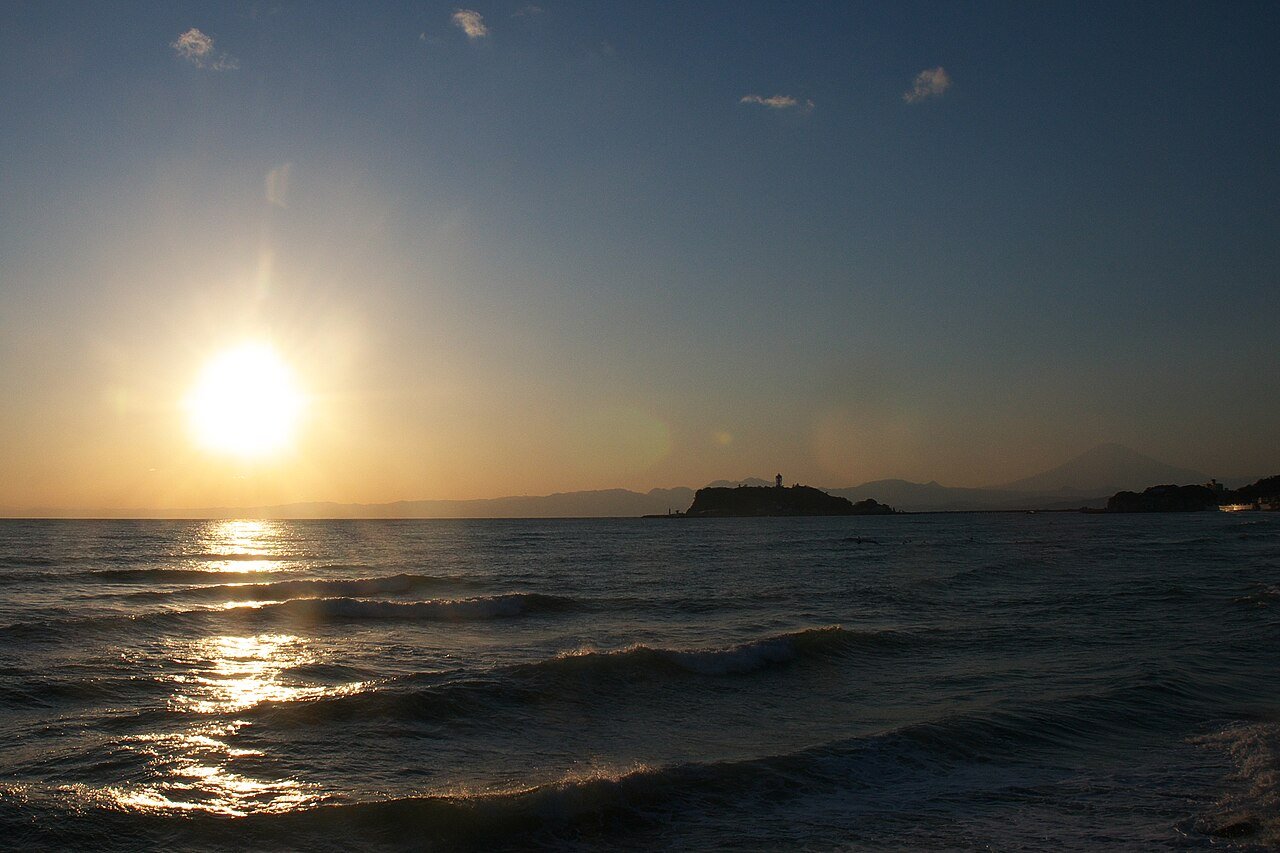
Spend your last Kamakura evening at Shichirigahama beach. Take the Enoden from Kamakura Station to Shichirigahama — 12 minutes, ¥210. It's a long beach with a view of Mount Fuji on clear days, and crucially, there are small beachfront restaurants where you can watch the sun set with fresh fish or a plate of pasta.

Picture it: a window seat, orange light sinking into the sea, the silhouette of Fuji far off, the sound of the waves, the smell of the salt — it's one of the images you'll carry home from Kamakura.

Enoden: Kamakura → Shichirigahama, 12 minutes · ¥210
Beachfront restaurants: ¥1,500–3,000 per person · book ahead on weekends
Fuji view: clearest in winter (Dec–Mar) and early morning · weekends can be hazy
Shichirigahama beach, Kamakura — golden sand in the evening, an Enoden train passing beside the shore, pink sky
🌊
You can keep going
Optional Day 3 — Enoshima island, ten more minutes on the Enoden
More on Kamakura →
Practical info

Getting There · Staying · Budget

🚆
Getting from Tokyo

JR Yokosuka Line from Tokyo Station, ~56 minutes, ¥950, no transfer. Or from Shinjuku, the JR Shonan-Shinjuku Line, ~60 minutes, ¥950. If you plan to ride the Enoden a lot, the Enoshima-Kamakura Freepass (¥1,640 from Shinjuku) covers the round trip to Fujisawa plus unlimited Enoden rides.

🚋
The Enoden in Kamakura

The Enoden (江ノ電) is a little local line running 10 stations from Kamakura to Fujisawa, ¥200–310 a trip. The 1-day Pass (¥800) pays off if you ride four times or more. Kamakura to Hase is 5 minutes, Shichirigahama 12 minutes. Trains run about every 10 minutes at peak times.

🏨
Where to stay

Most people do this as a day trip from Tokyo. If you stay over, Kita-Kamakura is lovely and quiet with small ryokan, or base yourself around Kamakura Station — figure ¥8,000–15,000 a night for a double with breakfast. For a seaside resort feel, look near Hase or Shichirigahama. See the where-to-stay guide.

Budget breakdown

Estimated cost per day, per person

Category Budget Mid-range Comfortable
Tokyo–Kamakura train (return) ¥1,900
(~$13 USD)
¥1,900
(~$13 USD)
¥1,900
or Freepass ¥1,640
Enoden + local buses ¥400–600
(single tickets)
¥800
(1-day Pass)
¥800–1,200
(+ a few taxis)
Temple & shrine entry ¥700–900
(Hasedera + Great Buddha)
¥1,900–2,400
(4–5 sites)
¥2,400–3,000
(incl. matcha ¥600)
Food (3 meals) ¥1,500–2,000
(~$10–14 USD)
¥2,500–4,000
(~$17–28 USD)
¥4,000–7,000
(seaside restaurants)
Total per day (excl. hotel) ¥4,500–5,500
(~$31–38 USD)
¥7,100–9,100
(~$49–63 USD)
¥9,100–13,100
(~$63–91 USD)

Exchange rate used: ¥1 ≈ $0.0069 USD · Prices are estimates · hotel not included if staying overnight.

Tickets & passes

Pick the pass that fits your trip

🎫
Enoshima-Kamakura Freepass

¥1,640 from Shinjuku — covers the Odakyu round trip to Fujisawa plus unlimited Enoden rides all day. Worth it if you start from Shinjuku and want to ride the Enoden across several stations.

🚋
Enoden 1-day Pass

¥800 for unlimited Enoden all day, bought at the machine or the Enoden station gate. Worth it from four rides up. Buy it separately if you already have a JR ticket to get here.

💳
IC Card (Suica / Pasmo)

Taps onto both JR and the Enoden, charging automatically — the easiest option if you'd rather not buy a specific pass. Top up at any station machine.

Frequently asked questions

FAQ · Kamakura Itinerary

Is one day enough for Kamakura?
One full day covers the main highlights — Tsurugaoka Shrine, Komachi-dori, the Enoden train, Hasedera Temple and the Great Buddha at Kotoku-in. The catch is you need an early start from Tokyo (arrive in Kamakura before 9 am) and a steady walking pace. With two days you can add the Hokokuji bamboo grove, Engakuji temple and Shichirigahama beach without rushing — which is when Kamakura really opens up.
How do you get from Tokyo to Kamakura?
From Tokyo Station, the JR Yokosuka Line runs direct to Kamakura in about 56 minutes for ¥950 one way — no transfer. From Shinjuku, the JR Shonan-Shinjuku Line takes about 60 minutes for ¥950. If you plan to ride the Enoden line a lot, the Odakyu Enoshima-Kamakura Freepass (¥1,640 from Shinjuku) covers the round trip to Fujisawa plus unlimited Enoden rides.
When is the best time to visit Kamakura?
Spring (March to April) for cherry blossom and autumn (October to November) for the maple colour are the two prime windows, and also the most comfortable for walking. June brings the hydrangeas — Meigetsuin Temple is famous for them — but the rains arrive at the same time. Weekends get genuinely crowded, so visit on a weekday if you can.
Should I stay overnight in Kamakura or return to Tokyo the same day?
Most people do it comfortably as a day trip — trains run frequently and the last one back is late. But staying over is worth it if you want to see Kamakura quiet in the early morning before the day-trippers arrive, or to continue to Enoshima without rushing. Kita-Kamakura in particular has small ryokan, and there are hotels at every price point near the station. See the Kamakura where-to-stay guide.
Is the Enoden 1-day Pass worth buying?
If you plan to ride the Enoden across several stations — say Kamakura to Hase to Shichirigahama to Fujisawa — the ¥800 Enoden 1-day Pass beats buying single tickets, which run ¥200–310 a trip depending on distance. Four rides or more and it pays for itself. If you're only doing the station area and walking to Hase, you don't need it.