Home Kamakura Japan Where to Stay Read in Thai About
Home  ›  Japan  ›  Kamakura  ›  Food Guide
Kamakura Food Guide · 2026

What to eat in Kamakura
6 foods the sea and the temples gave this town

You didn't come to Kamakura just to stand in front of the Great Buddha. You came for the bowl of silvery shirasu landed that very morning, the root-vegetable soup that a Zen kitchen has been simmering for 700 years, the dove-shaped cookies a confectioner first baked in 1897, and the matcha soft-serve outside the shrine gate that, frankly, you have not really arrived until you've eaten.

Why eat here

Kamakura's food comes from the sea and the Zen temples

Kamakura is a town where the ocean and the temples sit ten minutes' walk apart — and those two poles flavour everything you eat here. On the sea side there is shirasu, the tiny, near-translucent whitebait (young sardines and anchovies) hauled from Sagami Bay, landed daily and served fresh down Komachi-dori. On the temple side there is kenchinjiru, a root-vegetable soup that was born in the Buddhist kitchen of Kenchoji more than 700 years ago and is still alive in restaurants all over town today.

Between those two poles runs Komachi-dori (小町通り), the roughly 300-metre street that links the station to the gate of Tsurugaoka Hachimangu Shrine — a corridor of freshly fried snacks, matcha soft-serve in every grade of intensity, waffle cakes shaped like the Great Buddha, and the dove-shaped butter cookies Toshimaya has been selling since 1897. We picked 6 foods and experiences that tell Kamakura's story best — the street snacks and the sit-down classics, with the shops you can actually walk into.

The essential foods

6 things to eat before you leave Kamakura

Ranked by how unmistakably Kamakura they are — foods you won't find done quite like this anywhere else.
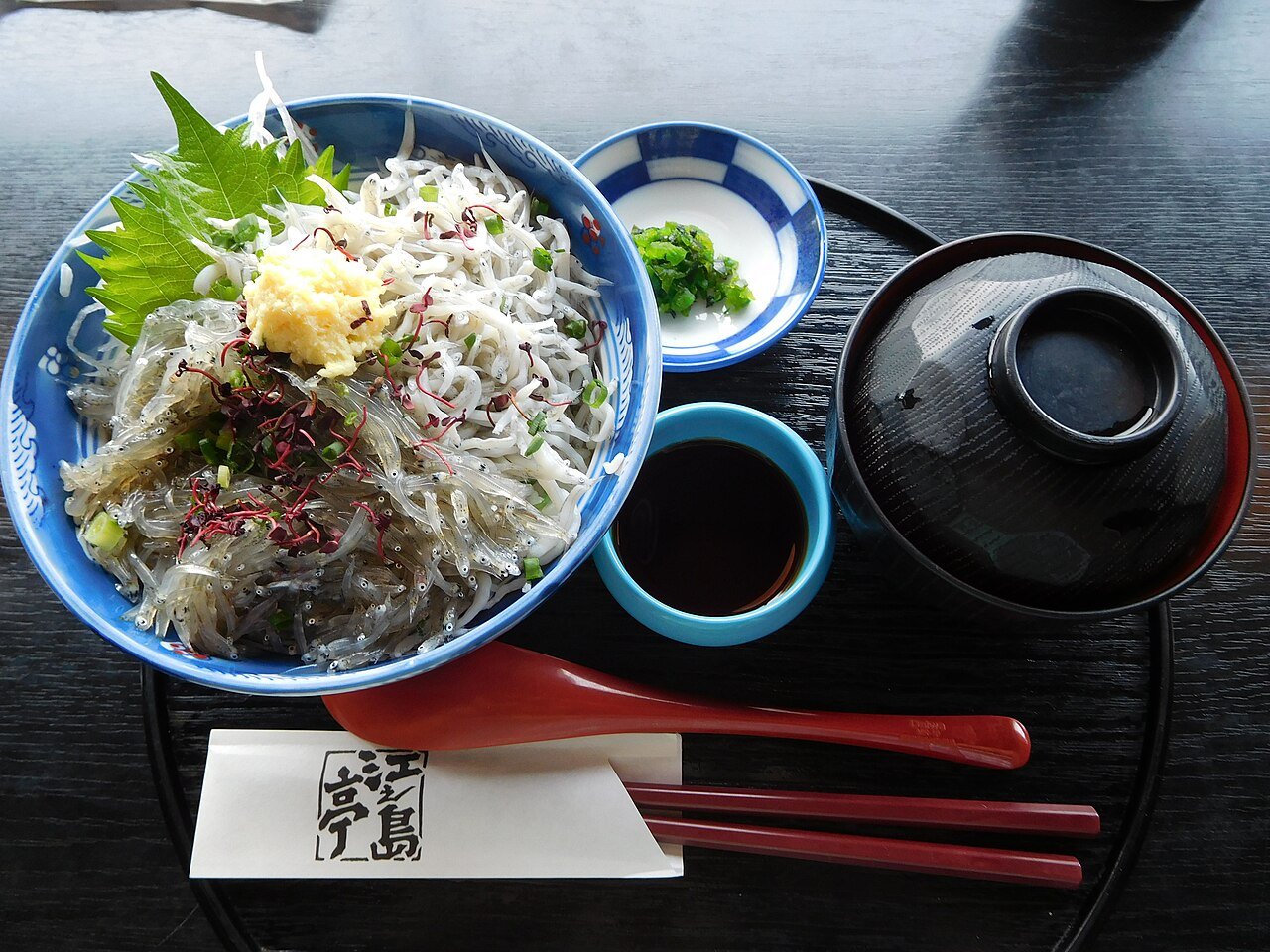
Shirasu-don — a blue bowl of fresh whitebait over hot rice from Sagami Bay, topped with grated ginger and spring onion, with a side of soy and miso soup 1
Shirasu-don (しらす丼)
Whitebait Rice Bowl · from Sagami Bay — the dish that defines Kamakura

Picture a small mountain of tiny, near-translucent whitebait — the young of sardines and anchovies — heaped over a bowl of hot, glistening Japanese rice. The taste is faintly salty from the sea, faintly sweet from sheer freshness, eaten with grated ginger, chopped spring onion and a single splash of soy. Here's the thing: if the kitchen has nama shirasu (raw) that day, count yourself lucky — the flavour is clean and oceanic, almost silky. If only kama-age (lightly boiled) is on, it's a softer, gentler pleasure. Order a nishoku-don (two-tone bowl) and you get both, side by side.
Where: Akimoto (Komachi-dori · check the board out front for the day's raw catch · the refined choice) · Kamakura Wasen (near Komachi-dori · run by a fishmonger) · seafood spots near Shichirigahama beach
Price: ¥1,200–2,500 / bowl (lunch sets include soup and salad)
Tip: Raw shirasu is a morning-to-afternoon thing — it can sell out before evening
Seasonality: Shirasu is freshest in April–May and September–October. The fishing season runs roughly mid-March to the end of December; in the closed winter season (around January–March) raw shirasu is unavailable on many days, and good shops post a notice when it is.
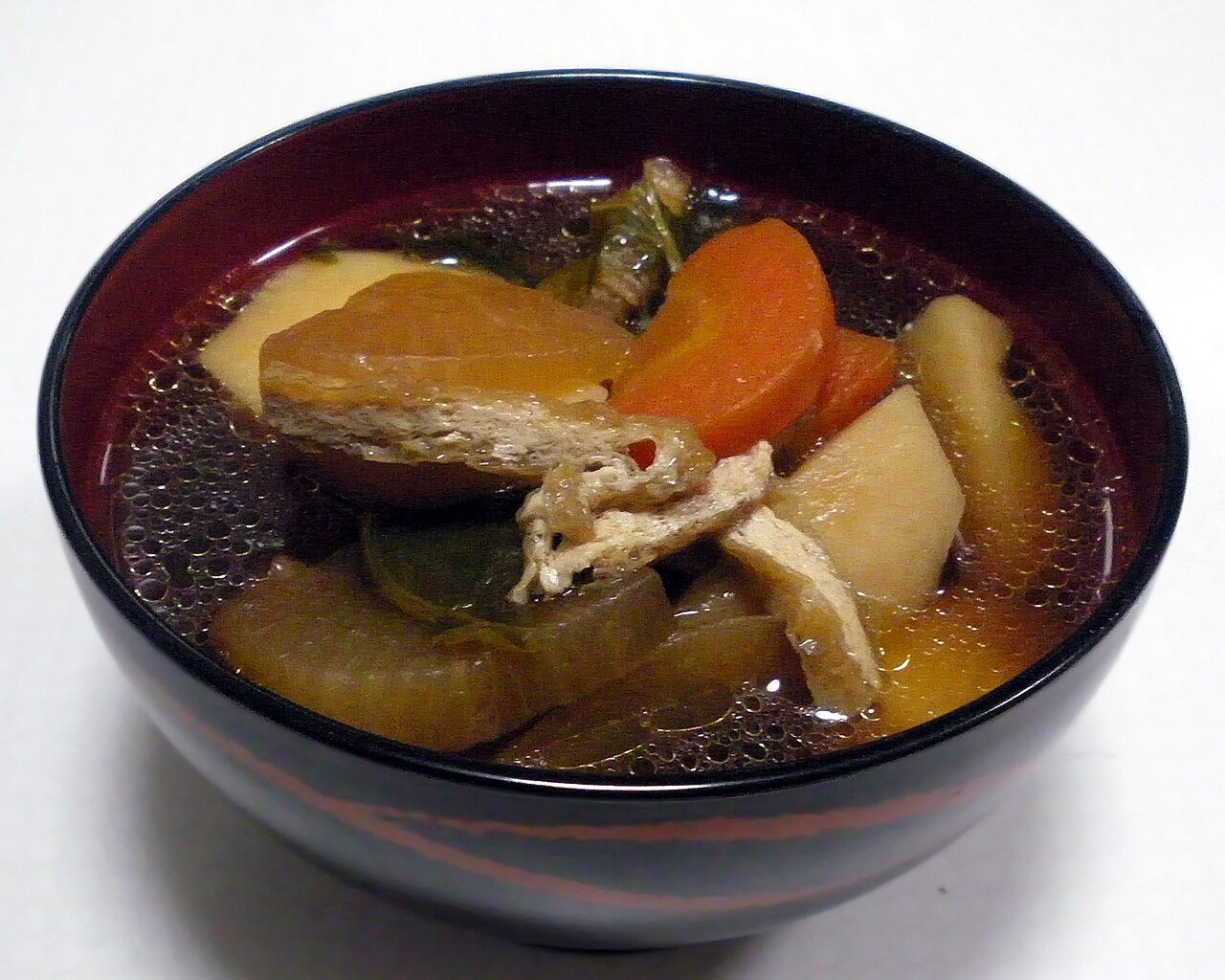
Kenchinjiru — a dark lacquer bowl of clear root-vegetable soup with carrot, daikon radish and fried tofu in a kombu and shiitake broth 2
Kenchinjiru (けんちん汁)
Root-Vegetable Soup · the 700-year-old Zen recipe from Kenchoji

This soup was born in the kitchen of Kenchoji (建長寺), the great Zen temple founded in 1253. The monks of 13th-century Kamakura simmered the root vegetables from the temple garden in a stock of kombu seaweed and dried shiitake, using nothing from any animal. The result is a pale-golden, gently warming bowl, deeply savoury with the umami of the sea kelp: fried tofu that has drunk up the broth, carrot, daikon, konnyaku and shiitake each holding a different texture, finished with spring onion and a few drops of sesame oil. On a cold day, or after a long morning of walking temples, this bowl warms you to the core.

Where: Restaurants around Kenchoji in Kita-Kamakura · Miyoshi (on Komachi-dori · kenchinjiru udon ¥1,050 · a Michelin Bib Gourmand pick in 2015) · noodle shops across town
Price: ¥500–1,000 / bowl (soup alone, or as a kenchinjiru udon set)
Note: The original recipe is meat-free — a safe, satisfying choice for vegetarians
🕊️3
Hato Sable (鳩サブレー)
Dove-Shaped Butter Cookies since 1897 — Kamakura's signature souvenir

Come back from Kamakura without a box of Hato Sable and your friends will ask where it is. These dove-shaped butter cookies have been made by Toshimaya since 1897, in the Meiji era — the story goes that a confectioner tasted a Western cookie a foreign visitor had brought, spent years working out that the magic ingredient was butter, then shaped his version as a dove, the messenger of the gods and the symbol of nearby Tsurugaoka Hachimangu Shrine. The cookie is dense and properly buttery, sablé-style, not too sweet, with a clean snap and a crumbly, fragrant centre — pure butter, no filling. Toshimaya's classic yellow box carries them home without a single crumb out of place.

Where: Toshimaya (豊島屋) flagship on Komachi-dori · branch at Kamakura Station · souvenir shops across town
Price: box of 4–5 ¥540 · box of 8 ¥1,080 · box of 20 ¥2,160
Tip: Buy the genuine yellow Toshimaya box — others make imitations, but this is the original
🪔4
Daibutsu-yaki (大仏焼き)
Great Buddha Cakes · warm batter shaped like the Daibutsu, on Komachi-dori

A street snack that could not be more Kamakura: a cast-iron mould in the shape of the seated Great Buddha, filled with egg batter and a sweet centre, clamped shut, and two minutes later out comes a hot, golden-brown little Buddha. Bite in and the warm, slightly chewy anko (sweet red bean) spills out; some shops also do a Western-style custard cream filling. Think of it as taiyaki with a different mould — a thicker, sweeter batter, eaten on the spot. Buy one and eat it right there on the pavement while it's hot; that's when it's at its best. Under ¥250 a piece, it's the best-value snack on Komachi.
Where: Tomoya (on Komachi-dori · mid-street · fillings include anko, custard, purple sweet potato and cheese-and-bacon)
Price: ¥250 / piece (standard filling)
When: Open from morning — eat one as you walk Komachi-dori toward the shrine
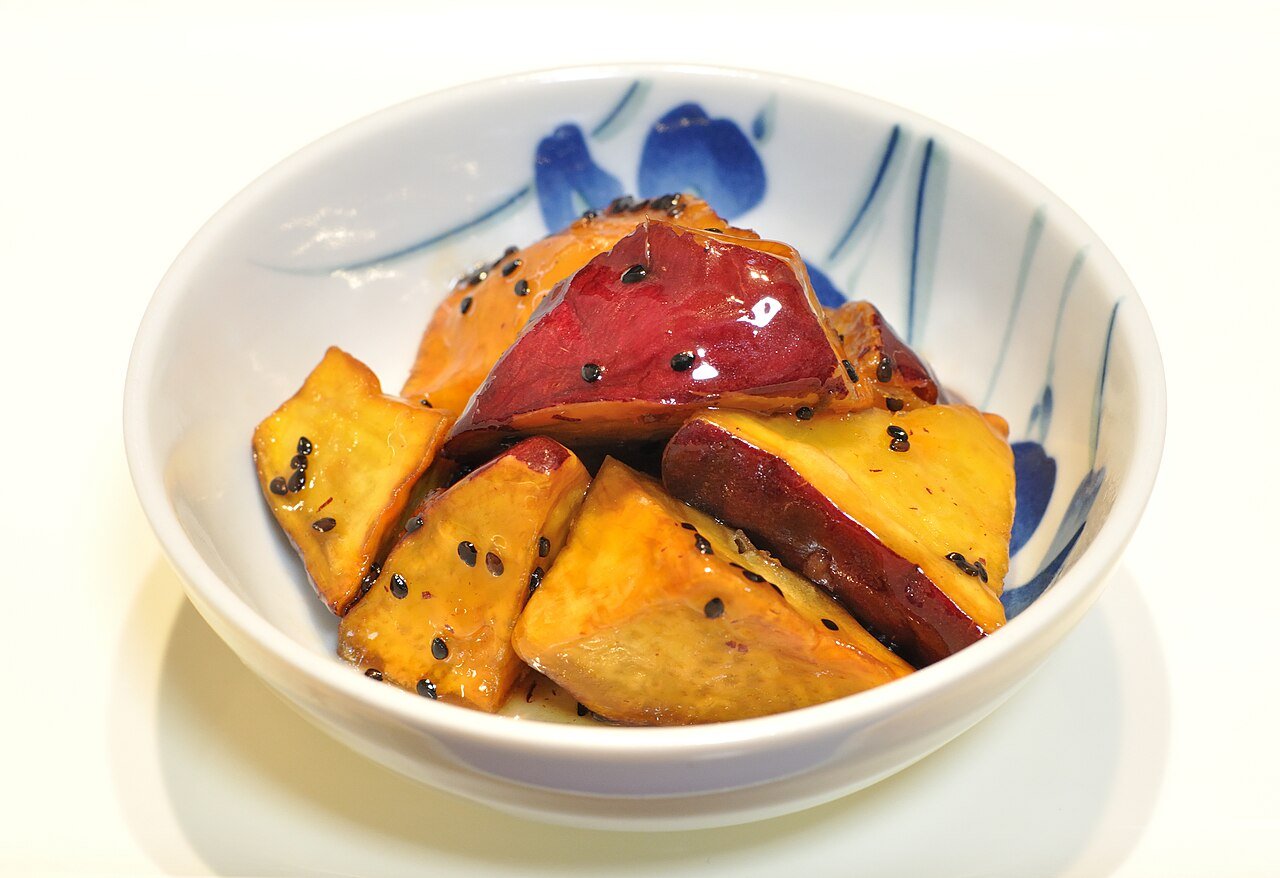
A Kamakura sweet — glossy candied sweet potato pieces glazed and sprinkled with black sesame, served in a white bowl with blue brushwork 5
Matcha Soft-Serve & Kamakura Sweets
抹茶スイーツ · from entry-level soft-serve to ceremony-grade matcha

On Komachi-dori, green-tea soft-serve seems to be on sale every thirty metres — but if you're going to pick one, look for Kamakura Cha Cha, which serves it in four grades of intensity, from a mild "kids' matcha milk" (level 1) up to a ceremony-grade level 4 that's genuinely, pleasantly bitter and tastes like real tea, at ¥500–700. Beyond soft-serve, there's dango — chewy rice dumplings on a skewer, in four pastel colours, around ¥250–400 at Sakura no Yumemiya — and yaki manju, matcha dough with a black-sesame filling at ¥80 a piece, the cheapest sweet on the street. Glazed candied sweet potato (like the bowl pictured) is another classic stall treat worth a stop.

Where: Kamakura Cha Cha (four-grade matcha soft-serve · mid-Komachi) · Arbre Noir / Yakumi (yaki manju ¥80) · Sakura no Yumemiya (pastel dango)
Price: soft-serve ¥500–700 · dango ¥250–400 / skewer · yaki manju ¥80 / piece
Tip: The popular dango sells out before 3 pm — buy in the morning
🦑6
Fresh Sagami Bay Seafood
相模湾の海の幸 · grilled squid, sashimi and seafood bowls from Kosuge Port

Kamakura has its own working harbour — Kosuge Port — where fishing boats head out into Sagami Bay each morning. Squid and cuttlefish, young tuna, fresh sea bream and botan shrimp come off the boats and reach the town's kitchens within a few hours. At Kamakura Wasen, near Komachi-dori, a whole grilled squid is ¥800 — tender rather than rubbery, with a soft whisper of smoke and a light, not-too-sweet glaze, perfect to eat as you walk. If you'd rather sit down to a proper meal, the seafood restaurants along Shichirigahama beach serve Sagami Bay catch as sashimi, tempura and fresh-fish rice bowls, often with Mount Fuji on the horizon.

Where: Kamakura Wasen (whole grilled squid ¥800 · near Komachi-dori) · seafood restaurants along Shichirigahama · morning fish stalls by the beach
Price: grilled squid ¥800 · sashimi set ¥1,500–3,000 · fresh-fish rice bowl ¥1,800–2,500
Best time: Lunch — the seafood is at its freshest through the early afternoon
Eating neighbourhoods

Where to go for what

Kamakura has several distinct areas — know what each one does best before you set out.

Komachi-dori
小町通り · 2-min walk from Kamakura Station (East Exit)

The main artery of town, running about 300 metres from the station to the gate of Tsurugaoka Hachimangu. Both sides are packed with confectioners, tea shops, fryers and cafes — Hato Sable, daibutsu-yaki, matcha soft-serve, pastel dango and lunchtime shirasu bowls are all on this one street.

Best for: Street snacks · green tea · souvenirs · Hours: 9 am–5 pm (heaving around lunch)
Kita-Kamakura (Zen temple district)
北鎌倉 · Kita-Kamakura station, JR Yokosuka Line

A quieter area lined with the great Zen temples — Kenchoji, Engakuji and Meigetsuin. Restaurants here lean toward traditional Japanese food: kenchinjiru, sesame tofu and ceremony-grade tea served in shops near the temple gates. Calm and contemplative — the lunch the locals favour.

Best for: Kenchinjiru · ceremonial tea · a quiet lunch · Hours: 11 am–2 pm
Hase (Great Buddha)
長谷 · Hase station on the Enoden line

The area between the Great Buddha and Hasedera temple, with cafes and snack shops tucked along the side lanes — ideal for a pause after a morning of sightseeing. The local restaurants in the back streets here tend to be cheaper than Komachi-dori.

Best for: Coffee · a light bite after the temples · Hours: 10 am–4 pm
Shichirigahama & the beach
七里ヶ浜 · Shichirigahama station on the Enoden line

A beach with Mount Fuji on the horizon on clear days, and a line of seafood restaurants along the road — perfect for a sunset dinner. The casual seafood places here let you read the menu from outside before you commit.

Best for: Fresh seafood · a dinner with a view · Hours: 5–8 pm
Eating order

How to eat it all in one day in Kamakura

What to eat when — the order you won't regret
8.30 am
Morning — start in Kita-Kamakura (one stop before Kamakura) Get off at Kita-Kamakura rather than Kamakura first. Walk into Kenchoji or Engakuji; the restaurants here open early. Order a kenchinjiru udon set (¥1,050) and eat it slowly, before the tour crowds arrive.
10.30 am
Mid-morning — Komachi-dori, now the shops are open Ride one stop to Kamakura Station and walk Komachi-dori. Buy a box of Hato Sable at Toshimaya to take home, grab a daibutsu-yaki at Tomoya while it's still hot, and try a level-3 matcha soft-serve at Kamakura Cha Cha.
12.00 pm
Lunch — the shirasu bowl that begins with checking the board Stop at Akimoto or Wasen on Komachi-dori and read the board out front first: nama shirasu (raw) or only kama-age (boiled) today? Either way, order it, and eat it with the miso soup and salad that come with the set (¥1,500–2,000).
2.00 pm
Afternoon — the Enoden to the Great Buddha and the sea Take the Enoden from Kamakura Station to Hase. Walk to the Great Buddha and Hasedera temple, then duck into a cafe in the side lanes — or pick up any pastel dango still left from the morning.
5.30 pm
Evening — fresh seafood on Shichirigahama beach Stay on the Enoden to Shichirigahama and pick a seafood restaurant with a Fuji view. Order a whole grilled squid (¥800) or a mixed sashimi set (¥2,500). Sunset falls around 6.00–6.30 pm in May through August.
Frequently asked

FAQ · Before you go eating

Is raw shirasu (nama shirasu) available every day, or only on certain days?
Raw shirasu depends entirely on each morning's catch — if the sea is rough or the boats don't go out, restaurants serve only kama-age (lightly boiled) shirasu instead. The catch is freshest in April–May and September–October, within a fishing season that runs roughly mid-March to the end of December. Some shops, including Akimoto on Komachi-dori, chalk a board out front each morning saying whether they have nama (raw) that day — check the board before you order.
Is kenchinjiru suitable for vegetarians?
Yes. Kenchinjiru is a traditional Buddhist temple soup (shojin ryori) made with no animal products at all — the stock comes from kombu seaweed and dried shiitake, and the bowl is filled with fried tofu, carrot, daikon radish, konnyaku, shiitake and spring onion, seasoned with light soy and sake. Vegetarian travellers can order it with confidence at the temple-side restaurants in Kita-Kamakura.
Can I walk to Komachi-dori straight from Kamakura Station?
Yes — leave by the East Exit (Higashiguchi) of Kamakura Station and head toward Tsurugaoka Hachimangu Shrine. Komachi-dori runs about 300 metres from the station to the shrine gate, lined the whole way with freshly fried snacks, matcha soft-serve and Hato Sable cookies. It's an easy 30–40 minute stroll if you don't stop to eat at every stall — and you will want to.
Where can I buy Hato Sable (dove cookies) in Kamakura?
Toshimaya, the original maker since 1897, has its flagship on Komachi-dori and a branch at Kamakura Station, and the cookies turn up in souvenir shops across town. A small box starts at around ¥540 (4–5 pieces) and a large box runs to about ¥2,160 (20 pieces). Because they're dense, pure-butter cookies, they travel well and survive a long flight home without crumbling.
How much should I budget for food in Kamakura per meal?
Kamakura is a tourist town close to Tokyo, so prices sit a little above rural Japan. Komachi-dori street snacks run ¥80–600 each, a shirasu-don or lunch set is ¥1,200–2,500 per person, a sit-down seafood meal somewhere like Wasen is around ¥2,000–3,500 per person, and a kenchinjiru udon set at a temple-side restaurant is ¥1,000–1,200 a bowl. Budget ¥3,000–5,000 per person per day and you'll eat very well.