Home Beppu Oita Japan About
Home  ›  Asia  ›  Japan  ›  Beppu  ›  Itinerary
🌋 Beppu Travel Plan · 1–3 Days · 2026

How Many Days
Do You Actually Need in Beppu?

From cobalt-blue boiling water at 98°C on your first morning to being buried in hot black sand by afternoon — this plan is built around what actually fits in each day, with real bus numbers and honest time estimates.

How long to plan

One day works, two days is the version worth having

Picture this — you step off the bus into Kannawa district and the whole street is wreathed in steam. Not from vents or machines. From the ground, the drains, the gaps between paving stones. Every building has a private cloud above it. That is a Tuesday morning in Beppu, and you have not even reached the hells yet.

Beppu is not like other onsen towns in Japan. It does not just offer a soak. It offers something you look at, something that buries you, something that smells of sulphur on the mountain road and then suddenly of pine trees. The seven Jigoku hells, the Takegawara sand bath, the ropeway above the steam clouds, and — if you have a third day — Yufuin fifty minutes away by bus.

The three plans below are designed so you can pick the one that matches your schedule: one full day for the core highlights, two days to breathe and add nature, three days to include a mountain onsen valley. For a full rundown of every site, see the Beppu attractions guide.

Day One

All 7 Jigoku Hells + the Sand Bath

Morning in Kannawa · steam-cooked lunch · Takegawara sand burial in the afternoon · evening onsen and toriten chicken — the day that makes you understand why people keep coming back.
01
Day 1
Jigoku Hells · Sand Bath · Evening Onsen
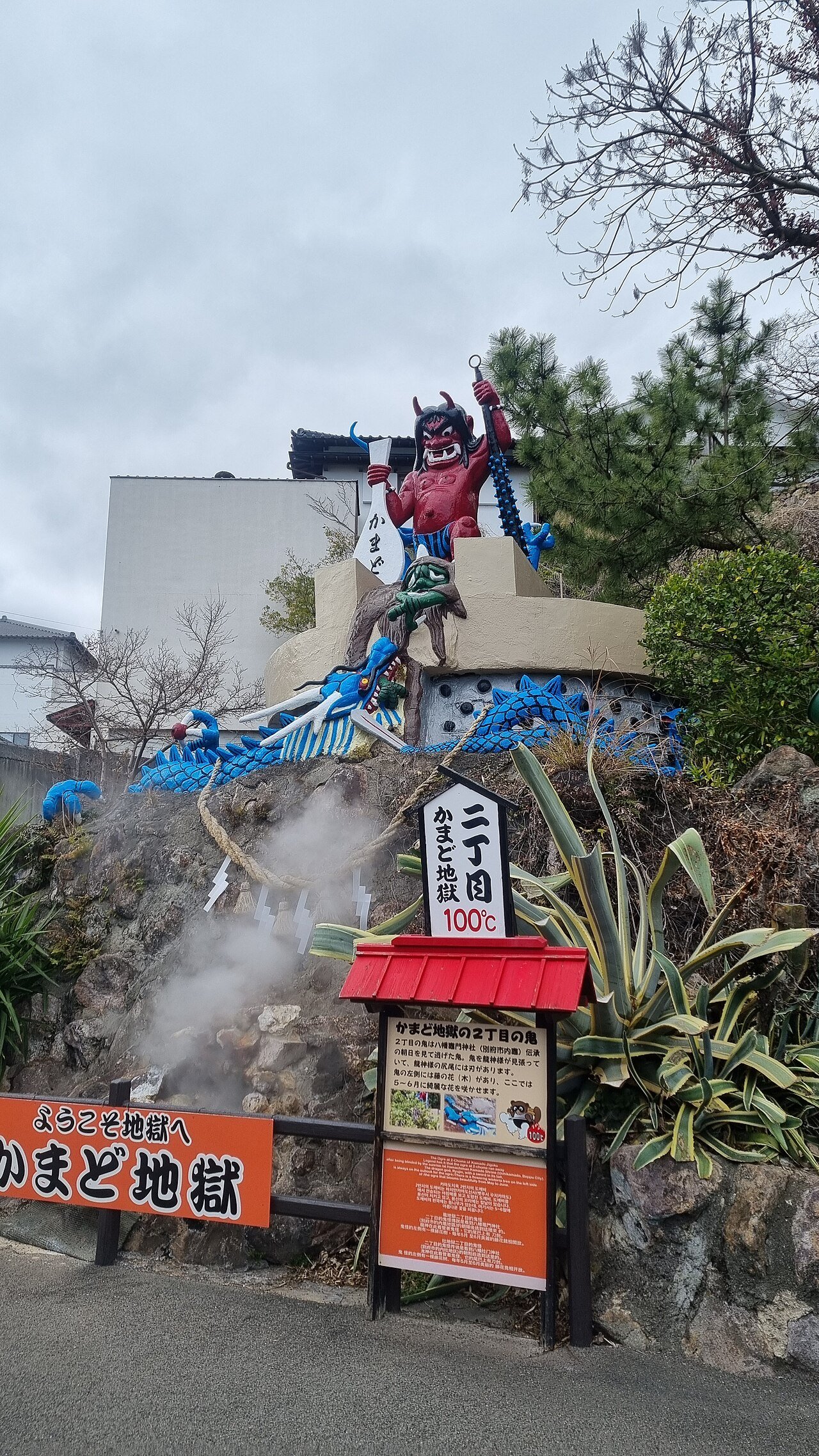
Kamado Jigoku, Beppu — steam rising from a blue-green geothermal pool surrounded by dark rocks
Morning · ~3 hours
Kannawa Cluster — Five Hells on Foot

Start at Beppu Station and take Kamenoi Bus route 5 or 7 to Kannawa (about 15 minutes, ¥220). All five Kannawa hells are within comfortable walking distance of the bus stop — follow the signs through the steam-hazed lanes in this order:

Umi Jigoku (Sea Hell) — the largest and most photographed: cobalt-blue water at 98°C, 200 metres deep, with giant lotus pads floating in a shallower adjacent pool. Oniishibozu Jigoku (Monk's Head Hell) — grey bubbling mud that forms smooth domes like shaved monk heads. Kamado Jigoku (Cooking Pot Hell) — the most varied, with pools in blue, green, grey and red all within the same site. Oniyama Jigoku (Devil Mountain Hell) — the crocodile hell: over eighty live crocodiles bred on the site's geothermal heat since 1923. Shiraike Jigoku (White Pond Hell) — the quietest of the five, pale milky water, good for a slower look.

Bus: Kamenoi routes 5 or 7 from Beppu Station · ~15 min · ¥220
Combined 7-hell ticket: ¥2,400 adults / ¥1,200 children · valid 2 days
Opening hours: 08:00–17:00 daily
Klook: Book Beppu hell tickets in advance on Klook — skip the counter queue
Worth knowing: Buy the Kamenoi Mini Pass for one day (¥1,100) before your first bus — it pays for itself once you have ridden four or more times in the day, which this itinerary easily does.
Midday · ~1 hour
Shibaseki Cluster (Two Hells) + Jigoku-Mushi Steam Lunch

After the Kannawa five, take bus route 16 or 16A from Kannawa to Shibaseki (5 minutes). The final two hells are here:

Chinoike Jigoku (Blood Pond Hell) — deep crimson-red water from iron-rich clay, the oldest named hell in Japan, documented since 867 CE. Tatsumaki Jigoku (Waterspout Hell) — a natural geyser that erupts roughly every 30–40 minutes, shooting water to 50 metres at 105°C.

Back in Kannawa for lunch, try jigoku-mushi — food steamed in geothermal steam at 98°C. Chicken, corn, eggs, tofu and vegetables come out firmer and sweeter than boiling or roasting because the moisture of the steam penetrates the food differently. Several shops along the Kannawa lanes offer the full setup.

Bus Kannawa to Shibaseki: routes 16 or 16A · ~5 min
Jigoku-mushi lunch: ¥1,000–2,000 per person · several shops in Kannawa
Afternoon · ~2 hours
Takegawara Sand Bath

From Shibaseki, route 16A runs back to Beppu Station (about 40 minutes). From the station it is a ten-minute walk to Takegawara Onsen — a wooden bathhouse built in 1938 and one of Beppu's most recognisable buildings. The sand bath experience works like this: you change into a cotton yukata, lie down in a shallow trough of dark volcanic sand, and an attendant buries you up to the neck. The sand is heated by geothermal water underneath. You stay buried for ten to fifteen minutes.

The combination of heat and the weight of the sand does something that a regular onsen soak simply cannot: it compresses and then releases the muscles in your back, shoulders and legs. After the sand, a regular onsen bath in the same building costs ¥300 and rounds out the experience.

Location: ~10 min walk from Beppu Station (east exit)
Sand bath: ¥1,500 · Regular onsen: ¥300
Hours: 08:00–22:30 · closed Wednesdays
Before you go: Remove all jewellery before the sand session. The bathhouse provides the yukata and a towel for your head — you do not need to bring anything. The sand is hot enough that most people find 12–15 minutes ideal; the staff will advise if you look uncomfortable.
Evening · ~2 hours
Town Onsen + Toriten Dinner

Beppu has over one hundred public bathhouses (koshuu yokujou) scattered through the city, most costing ¥100–300 and open until late. Pick any one near your hotel for a quiet soak to close out the day. For a full breakdown of each onsen type and the best neighbourhoods, the Beppu onsen guide covers everything you need.

Dinner should be toriten — chicken tempura, Oita-style, lighter and less oily than standard tempura, eaten with ponzu sauce or a touch of Japanese mustard. It is not a tourist dish; it is what people in Oita actually eat, and Beppu's izakayas around the station serve it properly. Pair it with cold barley shochu if you want to drink the way the locals do.
Public onsen: ¥100–300 · found throughout the city
Toriten dinner: ¥800–1,500/person · station-area restaurants
Day Two

Mount Tsurumi Ropeway + Takasakiyama + Yukemuri

A summit with an unobstructed bay view · 1,200 wild macaques in real forest · the steam-city viewpoint that does not look like it belongs in real life — or swap the day for a full Yufuin run instead.

02
Day 2
Tsurumi Ropeway · Takasakiyama Monkeys · Yukemuri View
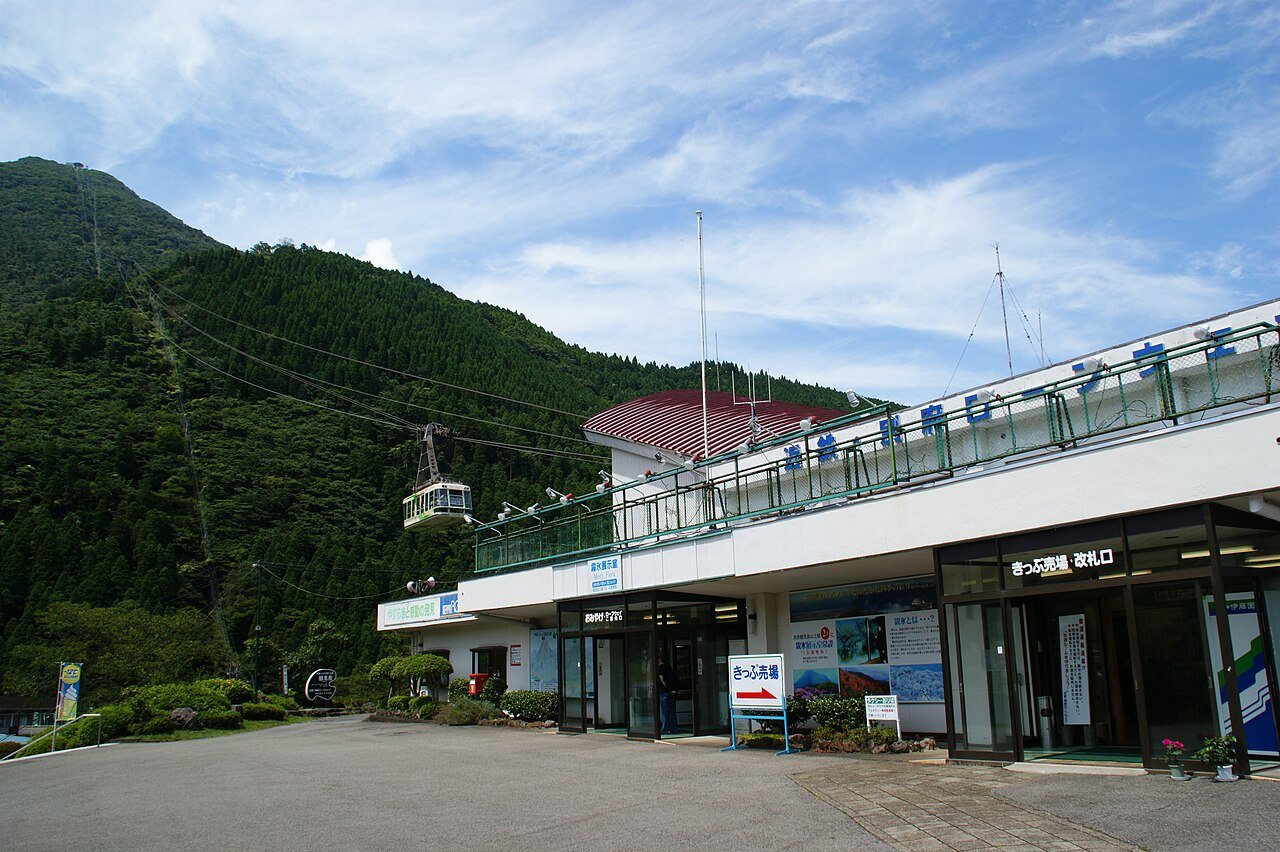
Beppu Ropeway gondola ascending Mount Tsurumi with Beppu Bay visible in the background
Morning · ~2 hours
Beppu Ropeway — Mount Tsurumi (1,375 m)

Take Kamenoi Bus route 20 from Beppu Station to the ropeway lower terminal (about 30 minutes, ¥330). The cable car takes ten minutes to reach the summit at 1,375 metres. On a clear day the view takes in all of Beppu Bay, the city below with its steam clouds, and the islands of the Seto Inland Sea on the horizon.

In spring wisteria blooms along the summit walking trail; in autumn the whole hillside turns amber and red. The summit has a small shrine and several short walking loops — allow an hour up top before taking the ropeway back down.

Bus: Kamenoi route 20 from Beppu Station · ~30 min · ¥330
Ropeway: ¥1,600 round trip · hours 09:00–17:00
Afternoon · ~2.5 hours
Takasakiyama Monkey Park + Yukemuri Viewpoint

Takasakiyama (高崎山) is a forested hillside where roughly 1,200 wild Japanese macaques (snow monkeys) live completely free. You walk into the forest and the monkeys walk around you. There are no fences on the monkey side. The path to the feeding area takes about fifteen minutes, and the monkeys are unfazed by visitors who move quietly. The one rule to remember: do not make direct eye contact, which reads as a threat.

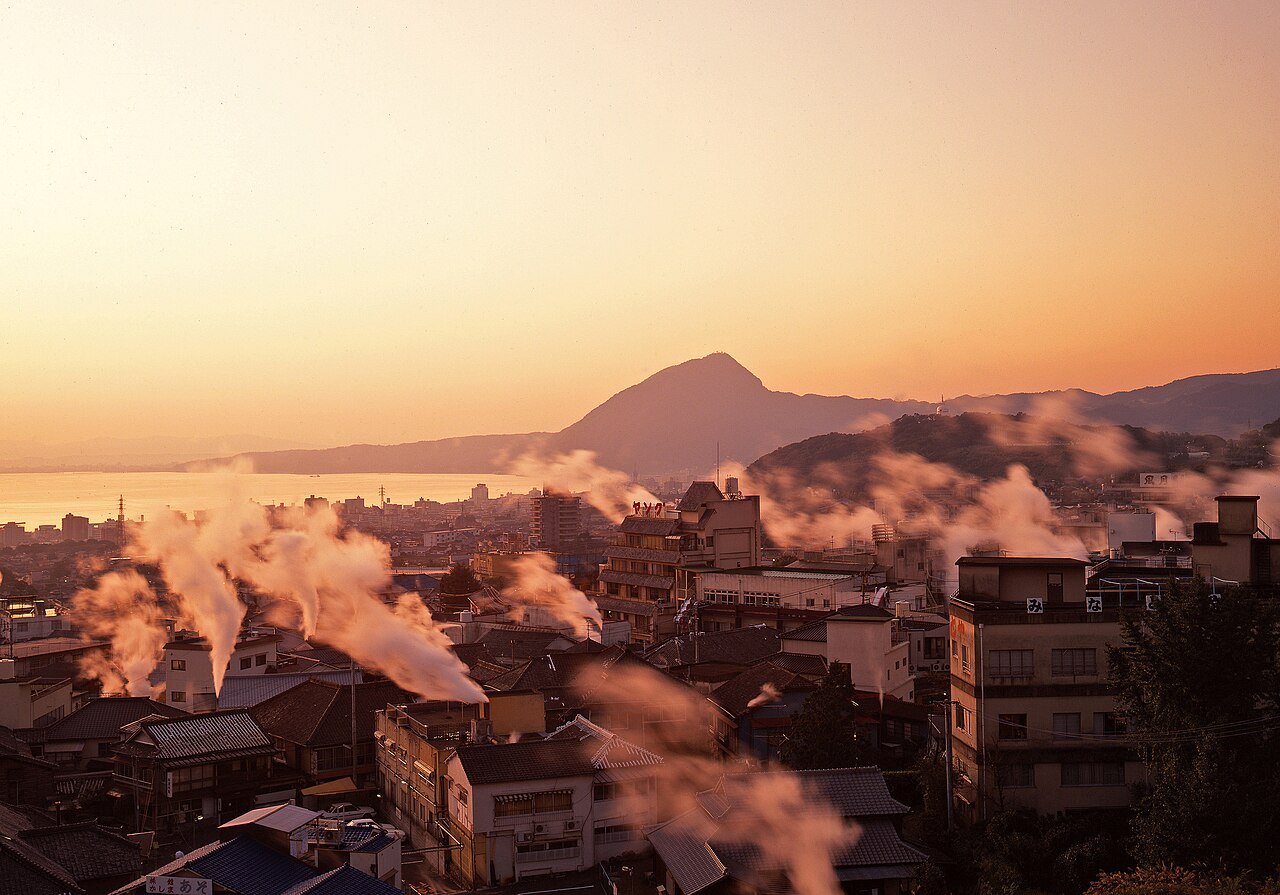
From Takasakiyama, catch the bus back toward Kannawa and walk up to the Kannawa Yukemuri Observatory (鉄輪ゆけむり展望台) — a free viewpoint that looks down over the Kannawa neighbourhood. From here every rooftop has a plume of steam rising from it, and the whole district looks like a painting of some impossible city. The denser the air temperature, the more dramatic the steam — mornings and evenings are the best times, but afternoon still delivers.

Takasakiyama: ¥520 · 09:00–17:00
Yukemuri Observatory: free · short walk from Kannawa bus stop
Alternative Day 2: If you prefer a full Yufuin day instead of the ropeway and monkey park, skip forward to the Day 3 plan below — the content is identical. Both are valid second-day choices.
Evening
Myoban Onsen District or a Ryokan Night

The Myoban (明礬) onsen district, five minutes by bus from Kannawa on route 16, is the most atmospheric neighbourhood in Beppu for an evening soak. The water here is high in sulphur and milky white; the traditional thatched huts (yunohana workshops) on the hillside collect sulphur crystals from steam vents, as they have done for centuries. The smell is stronger here than anywhere else in Beppu, which is exactly the point.

If your budget allows it, tonight is the night for a ryokan — eating a kaiseki dinner served in your room and soaking in a private bath that fills from the same underground water that has been heating this city for a thousand years. Reviews: Suginoi Hotel · ANA InterContinental Beppu · Kannawaen Ryokan

Myoban: Kamenoi route 16 from Kannawa · ~5 min · public onsen ¥200–400
Day Three (optional)

Yufuin — The Onsen Town in the Valley

Fifty minutes from Beppu by bus · farm buildings turned into cafes · a lake that steams at dawn · milk-soft water in quiet outdoor baths — a slower day after two days of walking.

03
Day 3
Yufuin — Valley, Lake, Onsen
Steam clouds rising over Kannawa district rooftops in Beppu as seen from the Yukemuri viewpoint
Morning · Travel + Yufuin Street
Bus Beppu to Yufuin (~50 min)

Leave Beppu Station around 08:30–09:00 and take Kamenoi Bus route 36 to Yufuin. The journey takes about 50 minutes and costs ¥1,050 each way. Buying the Kamenoi Wide Pass for one day (¥1,800) covers unlimited buses in both Beppu and Yufuin — worth it if you plan to ride back and take other buses in Beppu later.

Arriving in Yufuin, walk along Yufuin Floral Village and the main Yufuin-Yunishida street toward the lake. The town feels genuinely rural — former farm buildings converted into ceramics shops, craft workshops, soft-serve ice-cream stands using local dairy, and cafes where the coffee is the only thing that needs to be ordered slowly. Browse at your own speed.

Bus: Kamenoi route 36 from Beppu Station · ~50 min · ¥1,050 one way
Wide Pass 1 day: ¥1,800 · covers Beppu + Yufuin unlimited
Afternoon · ~3 hours
Kinrin-ko Temple + Lake Kinrin + Yufuin Onsen

Follow the street to Kinrin-ko Temple (金鱗湖) and Lake Kinrin — a natural lake fed by geothermal springs from below. In the early morning, the temperature difference between the water and the air creates a low mist that drifts above the surface; if you stay overnight in Yufuin you can see this properly. During the day the lake is calm and the surroundings — converted farmhouses, a wooden shrine gate, old camphor trees — look like a film set for something that does not exist yet.

Spend the early afternoon at one of Yufuin's many day-use onsen facilities. The water here is softer than Beppu's — lower mineral content, gentler on the skin, good for sensitive types. After your soak, try Yufuin's dairy specialities before catching the bus back: fresh-milk soft serve, baked cheesecake, or a small pudding from one of the stands on the main street.

Lake Kinrin: free · ~20 min walk from Yufuin Station
Yufuin day-use onsen: ¥500–800 · many open to non-guests
Return bus: Kamenoi route 36 · every ~1 hour · ~50 min to Beppu Station
Evening · End of trip
Back to Beppu + Final Soak

Back in Beppu by late afternoon, there is just enough time for one final public bathhouse visit before dinner or departure. If you are heading to Fukuoka, the Sonic express from Beppu Station reaches Hakata in about 2 hours and 10 minutes — JR Pass holders ride free. The last useful trains run until around 21:00–22:00.

For a last meal, try Beppu cold ramen (reimen) — chewy wheat noodles in chilled clear broth, a Beppu invention you will not find in many other places — or dango-jiru, a thick miso soup with flat wheat-flour dumplings, the most traditional dish in Oita. More detail in the Beppu food guide.

Train to Fukuoka: Sonic from Beppu Station · ~2h 10min · JR Pass valid
Dinner: ¥800–1,500 per person · station-area restaurants
♨️
Staying overnight in Yufuin?
One night in Yufuin means seeing the morning mist over Lake Kinrin — the view that day-trippers always miss.
Back to Beppu Guide →
Practical information

Where to Stay · Getting Around · Budget

🏨
Where to Stay

The station area is most convenient for buses and trains. Kannawa gives you the immersive onsen-steam atmosphere and is good for a ryokan night. Reviews: Suginoi Hotel · ANA InterContinental · Kannawaen Ryokan

🚌
Getting Around

Kamenoi Bus covers all sites. Buy the Mini Pass 1 day ¥1,100 (Beppu only) or Wide Pass 1 day ¥1,800 (includes Yufuin) at the station counter or on the bus. Kannawa is about 15 minutes from the station, Shibaseki about 20 minutes.

🚆
Getting to Beppu

Sonic express from Hakata (Fukuoka) takes about 2 hours 10 minutes. JR Pass covers the full journey. From Oita Station it is just 12 minutes. Most international visitors fly into Fukuoka and connect by rail.

Budget guide

Estimated daily costs per person

Item Budget Mid-range Comfortable
Accommodation (per night) ¥3,000–5,000
(~$20–34)
¥7,000–15,000
(~$47–100)
¥20,000–50,000+
(~$133–333+)
Three meals ¥1,500–2,500
(~$10–17)
¥3,000–5,000
(~$20–34)
¥6,000–15,000
(~$40–100)
Bus pass ¥1,100
(Mini Pass)
¥1,100
(Mini Pass)
¥1,800
(Wide Pass + Yufuin)
Entry tickets ¥2,400
(7-hell combo)
¥4,000–5,500
(+ ropeway ¥1,600 + monkeys ¥520 + sand bath ¥1,500)
¥5,500–7,000
(all sites)
Daily total (approx.) ¥8,000–11,000
(~$53–73)
¥15,000–27,000
(~$100–180)
¥33,000–79,000+
(~$220–527+)

Exchange reference: ¥150 ≈ $1 USD · estimates may vary by season and availability

Frequently asked questions

FAQ · Beppu Itinerary

Is one day enough for Beppu?
One full day is enough to cover the main highlights: all 7 Jigoku hells across both clusters, the Takegawara sand bath, and an evening onsen soak. You need an early start — at the station by 08:30 — and a steady pace. Two days gives you breathing room to add the ropeway, monkey park, and a trip to Yufuin. See the Beppu attractions guide for the full list of things to do.
Can you do a Yufuin day trip from Beppu?
Yes. Kamenoi Bus route 36 from Beppu Station to Yufuin takes about 50 minutes and costs ¥1,050 one way. The Kamenoi Wide Pass for one day (¥1,800) covers both Beppu and Yufuin. Leave Beppu in the morning, spend four to five hours exploring Yufuin, and you will be back in Beppu in time for an evening onsen.
How long does the Jigoku Meguri hell tour take?
The full seven-hell circuit takes approximately 3 to 4 hours. The five Kannawa hells take around 2 hours on foot; the bus to Shibaseki is 5 minutes; the two Shibaseki hells take another 45 to 60 minutes. If you want to browse the craft shops and photograph every angle in Kannawa, allow 2.5 hours for the first cluster alone.
How do you get between the two hell clusters?
From Beppu Station take Kamenoi Bus route 5 or 7 to Kannawa (about 15 minutes, ¥220). The five Kannawa hells are all walkable. From Kannawa, take route 16 or 16A to Shibaseki (5 minutes). The Kamenoi Mini Pass for one day (¥1,100) covers unlimited rides within Beppu City and pays for itself once you have ridden four or more times in the day.
What is the best time of year to visit Beppu?
Spring (March to May) and autumn (September to November) offer the most comfortable walking temperatures for outdoor sites like the hell tour. Winter (December to February) is cold but the steam looks magnificent against cold air. Summer (July and August) is hot and humid and not ideal for long outdoor walks between hell sites. For the full seasonal breakdown, see the Beppu onsen guide.