Home Beppu Japan Beppu Attractions About
Home  ›  Asia  ›  Japan  ›  Beppu  ›  Onsen Districts Guide
Beppu Hatto · 8 Onsen Districts · 2026

Beppu Onsen — Which District to Choose?

Beppu is not one hot spring — it is eight. Each of the Beppu Hatto districts has a completely different character: steam colour, mineral smell, bath style, and atmosphere. Here is an honest breakdown of who belongs where.

Before You Choose

Beppu Produces More Hot-Spring Water Than Anywhere in Japan

Picture a city where steam rises constantly from street grates, rooftops, and alleyway pipes — not a special effect, just Tuesday morning. That is Beppu. With over 130,000 kilolitres of hot-spring water gushing daily, it ranks second in geothermal output globally, behind only Yellowstone.

What most visitors miss is that Beppu is not one place to soak. There are eight onsen districts — the Beppu Hatto (別府八湯) — each with different mineral profiles, different atmospheres, and different kinds of accommodation. Choosing the right one shapes your entire trip.

Before you pick a district, it helps to know that Beppu offers four onsen experiences you cannot easily find elsewhere. See the full sightseeing and itinerary guide at Beppu Attractions.

4 Bath Types

What Can You Actually Soak In Here?

Know the options before you pick a district — some experiences are only available in specific areas.

♨️
Hot-Water Bath (Atsuyusen)

The classic: submerge in mineral-rich hot water, 40–44°C. Available in every district. Public sento baths charge as little as 100–300 yen.

🏖️
Sand Bath (Sunaburo)

Lie down and let an attendant bury you to the neck in geothermally heated sand (~45°C). No full undress needed. Best at Kamegawa and Takegawara, around 1,500 yen.

🫧
Mud Bath (Doroyu)

Soak in naturally opaque mineral mud, lower temperature (~38–42°C). High sulphur content prized for skin. Best at Myoban outdoor pools, indoor and outdoor options.

💨
Steam Bath (Mushiyu)

Sit or lie in a room heated by geothermal steam rising through the floor. No water immersion. Most atmospheric in Kannawa, where jigoku-mushi (steam cooking) is part of the same experience.

Top Pick

For Your First Night, Start in Kannawa

🏆
Best District for First-Timers
Kannawa — the Atmospheric Heart of Beppu

Walk through a narrow lane with steam hissing from iron pipes on both sides, the faint smell of sulphur in the air, a steam kitchen selling soft-cooked eggs around the corner — that is Kannawa. This district holds around 38% of Beppu's total spring volume and is the origin of every "city-of-steam" postcard you have seen. The hells cluster (Jigoku) is walkable from most ryokan.

Kannawaen ryokan sits in a 45,000 sq m garden right here — cobalt-blue private pools, kaiseki dinner included, 9.4/10 from 374 reviews. From around 31,400 yen per person per night.

Beppu Food Guide — What to Eat Here →
Beppu Hatto

All 8 Districts — Who Does Each Suit?

Mineral profile, atmosphere, access, and real hotel picks for every district.
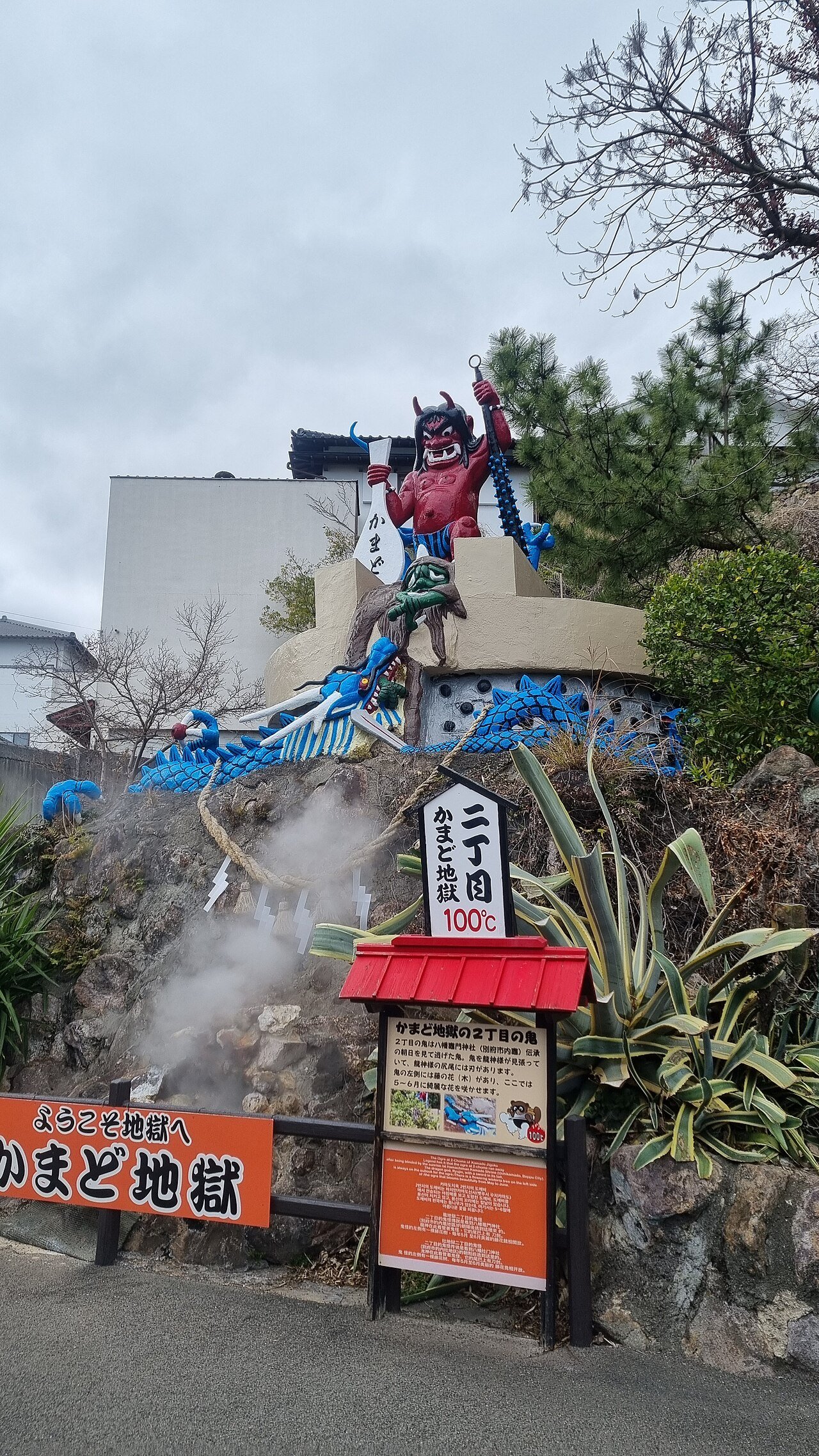
Steam rising from Kamado Jigoku hell in Kannawa district, Beppu — the turquoise-blue pool surrounded by dense white vapour District 1
Kannawa (鉄輪)
The atmospheric heart · Steam streets · Jigoku cluster

Water & vibe: Sodium-chloride spring water, mostly clear to pale blue, 80–95°C at the source. Steam vents line every alley. The townscape here is designated as a Japanese Cultural Landscape. Multiple jigoku (hell ponds) within walking distance, and jigoku-mushi steam kitchens are part of the neighbourhood experience.
Best for: Anyone on a first visit. Especially couples wanting a ryokan stay right inside the steam atmosphere.
Price range: 15,000–31,400+ yen per person per night with meals.
Access: Kamenoi Bus lines 16/26 from Beppu Station ~25 min. Taxi ~15 min.
🏯 Kannawaen — 4-star ryokan, 45,000 sqm garden, cobalt-blue pools, kaiseki 9.4
All sights in Kannawa →
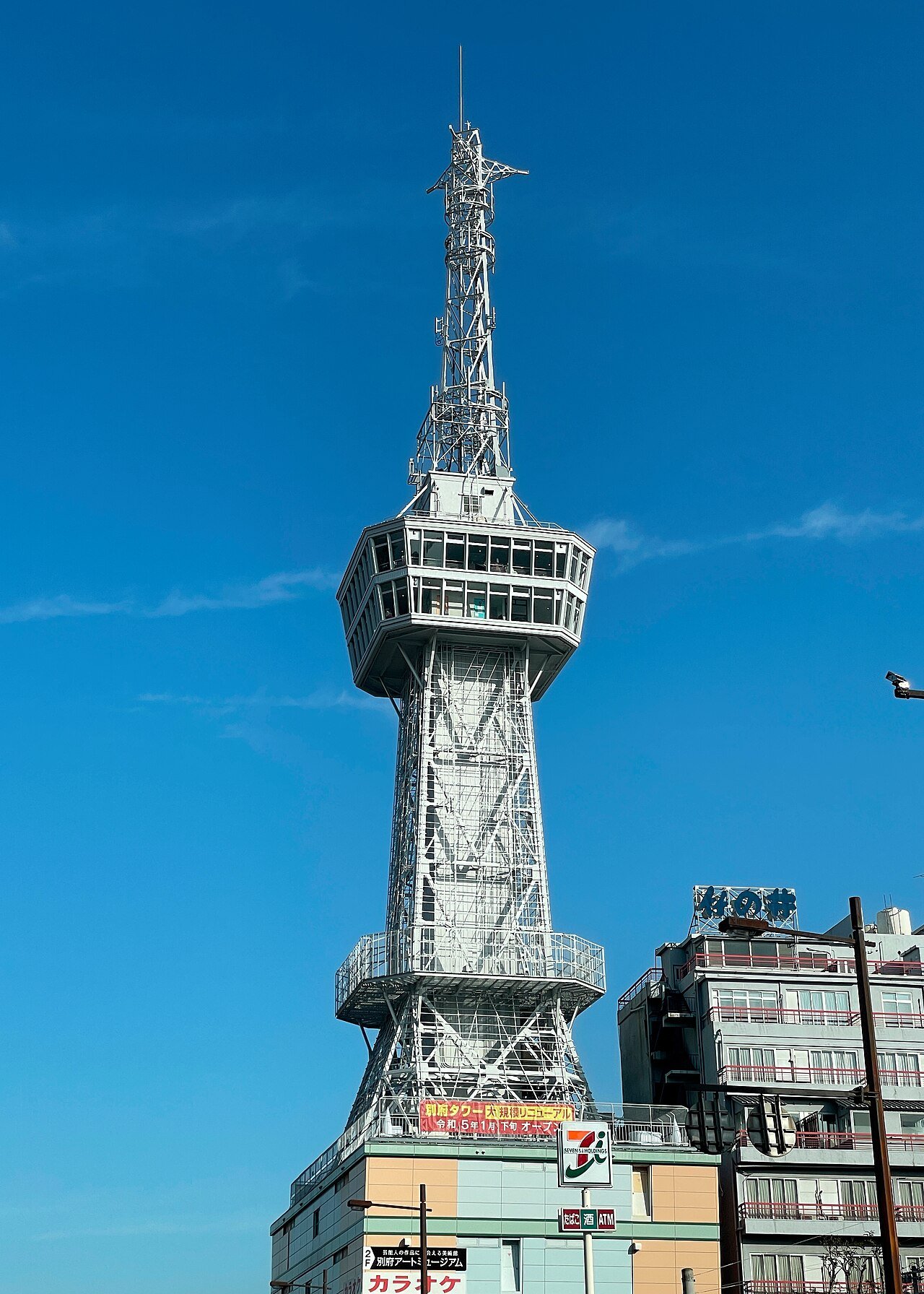
Beppu Bay panorama from a high vantage point — blue sea, the city spreading along the coast, clear afternoon sky District 2
Beppu Station / Kitahama
別府駅 / 北浜 · Most convenient · Bayside

Water & vibe: Urban hub with hotel onsen in-building. Sodium bicarbonate water — soft and gentle on skin. Easy access to restaurants, shopping, ferries, and the rest of the city.
Best for: First-timers wanting ease, short 1–2 night trips, solo travellers, families who want to spend their first evening near food options rather than a remote hillside.
Price range: 3,000–15,000 yen per night — the widest range in the city.
Access: Walk 5–15 min directly from JR Beppu Station. No bus needed.
🏨 Multiple business hotels + Dormy Inn Beppu with rooftop onsen 8.5+
Search Beppu Station hotels on Agoda →
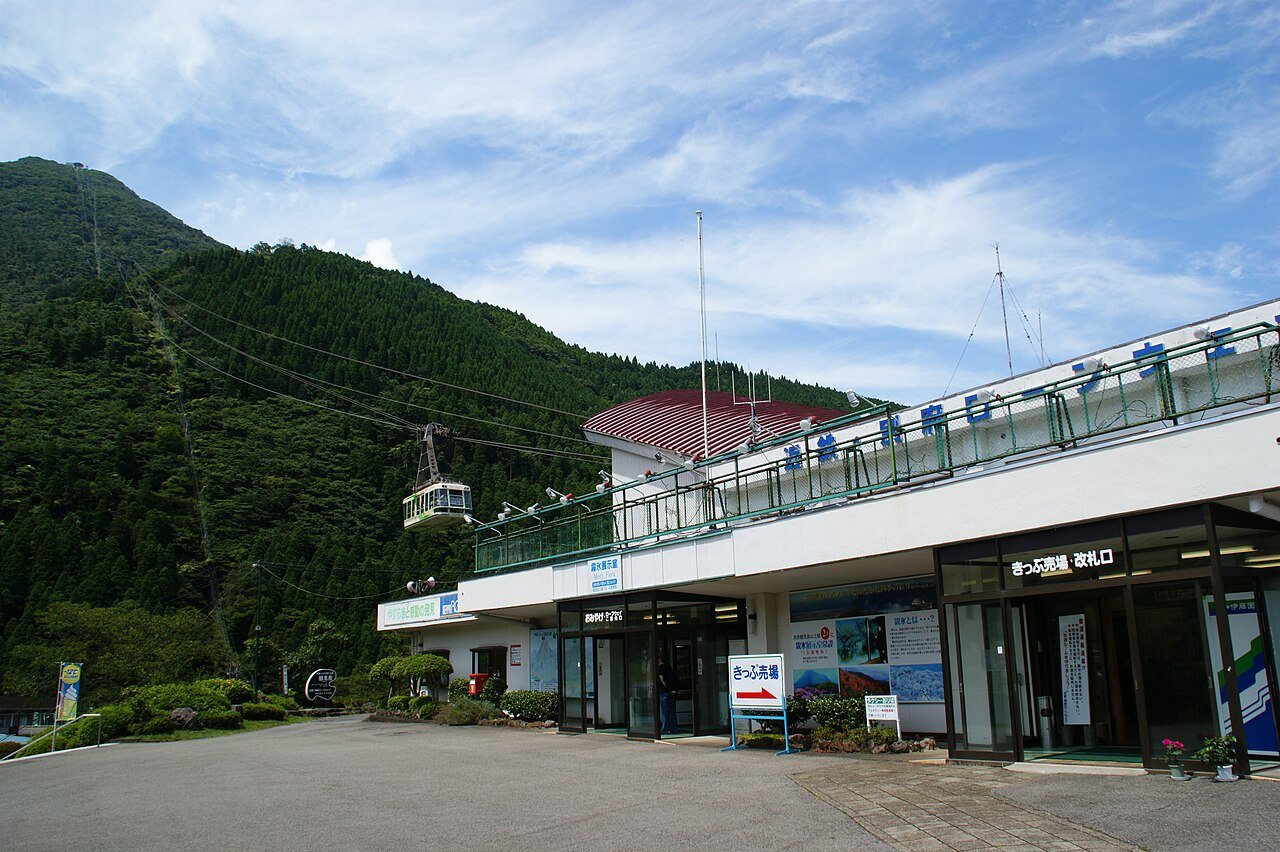
View from Mount Tsurumi above Beppu — the city and bay spread below under a clear blue sky District 3
Kankaiji / Hilltop Resorts
観海寺 · Bay views · Large resort complexes

Water & vibe: Elevated on the hillside above town with Beppu Bay laid out below. Sodium-chloride and bicarbonate blend — soft, warming. Home to Suginoi Hotel (5-floor Tanayu bath, Aqua Garden) and ANA InterContinental (infinity pool, HARNN spa). Full resort facilities rather than intimate ryokan character.
Best for: Couples wanting views, families, anyone who prefers resort amenities alongside genuine hot springs at a reasonable price.
Price range: 18,000–35,000+ yen per night.
Access: Suginoi and ANA run free shuttles from JR Beppu Station. Taxi ~10 min.
🏨 Suginoi Hotel — 4-star resort, 5-floor Tanayu bath + Aqua Garden 8.9
🏨 ANA InterContinental Beppu — 5-star, Infinity Pool + HARNN Spa 9.5
Read the Suginoi Hotel review →
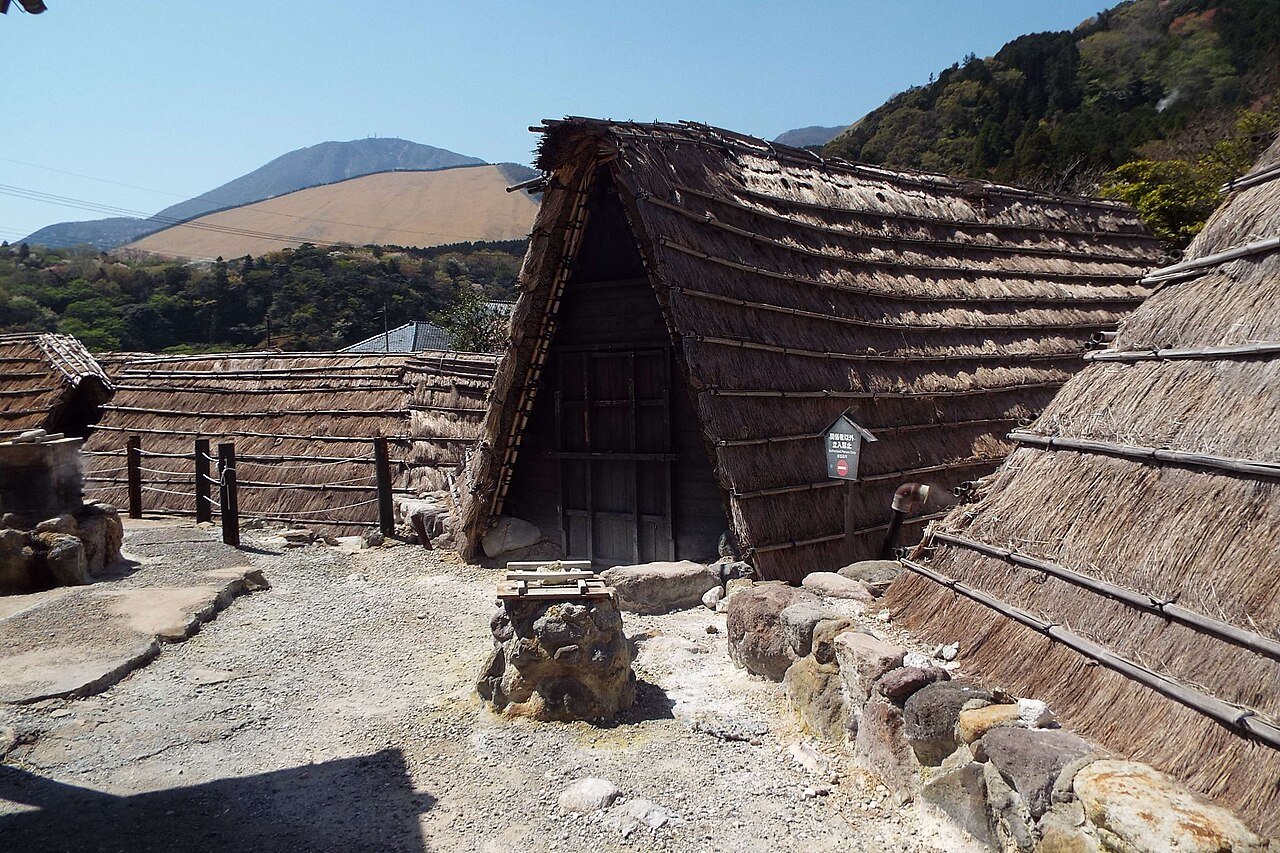
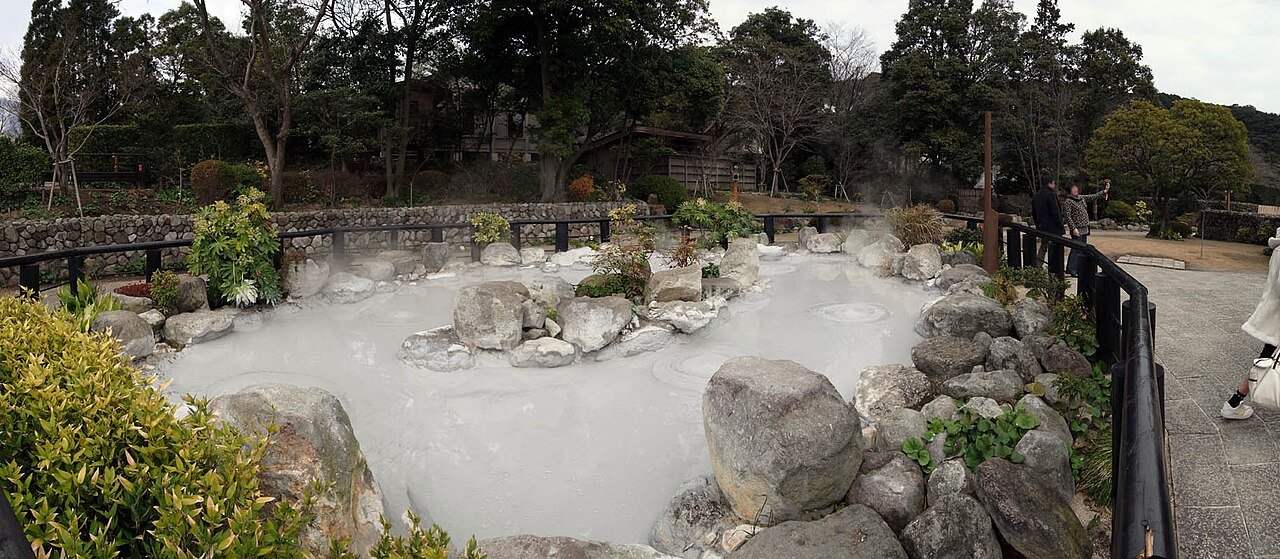
Traditional thatched yunohana huts at Myoban, Beppu — sulphur steam drifts around the small wooden structures used to collect natural alum crystals District 4
Myoban (明礬)
Yunohana huts · Sulphur · Milky mud baths · Hillside

Water & vibe: Famous for yunohana (湯の花) — natural sulphur crystals that form inside traditional thatched huts. The production method is a designated Japanese cultural heritage. Sulphur spring water (白濁, milky white). Skin feels noticeably smooth after bathing. The district sits uphill, quiet, unhurried.
Best for: Travellers wanting something beyond the postcard. People who care about craftsmanship and genuine onsen culture. Couples seeking calm over crowd.
Price range: 12,000–22,000 yen per person per night (small ryokan).
Access: Kamenoi Bus lines 5/16 from Beppu Station ~35 min. Taxi ~20 min.
♨️ Myoban Outdoor Mud Bath — 700 yen, open 10:00–21:00
Search Myoban accommodation on Trip.com →
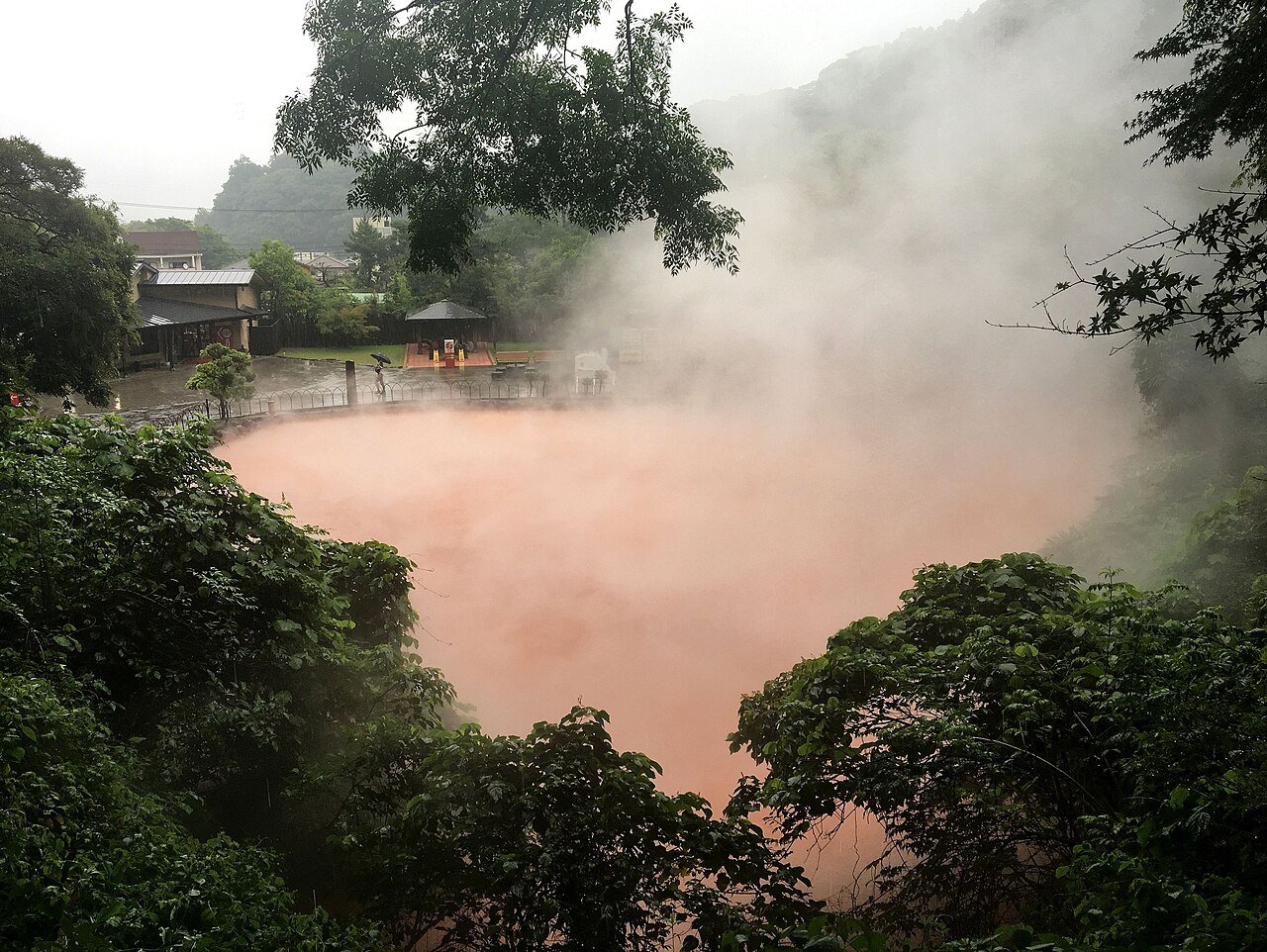
Chinoike Jigoku Blood Pond Hell in Shibaseki district — vivid red water with white steam rising in bright sunlight District 5
Shibaseki (柴石)
Northern hells · Chinoike + Tatsumaki · Pine forest · Quiet

Water & vibe: Northern outpost of Beppu, wrapped in pine forest. Home to Chinoike Jigoku (Blood Pond Hell — iron-oxide red water) and Tatsumaki Geyser (erupts every 30–40 minutes). Historical records note imperial court visits for therapeutic bathing since ancient times. Walking trails combine well with a soak here.
Best for: People who have done the Kannawa hells and want to push further. Anyone who likes walking mixed with onsen.
Price range: Most visitors day-trip from Kannawa or Beppu Station.
Access: Kamenoi Bus line 16 from Kannawa ~5 min. From Beppu Station ~30 min.
🔴 Chinoike Jigoku — 450 yen entry, open 08:00–17:00
Full Beppu hells tour plan →
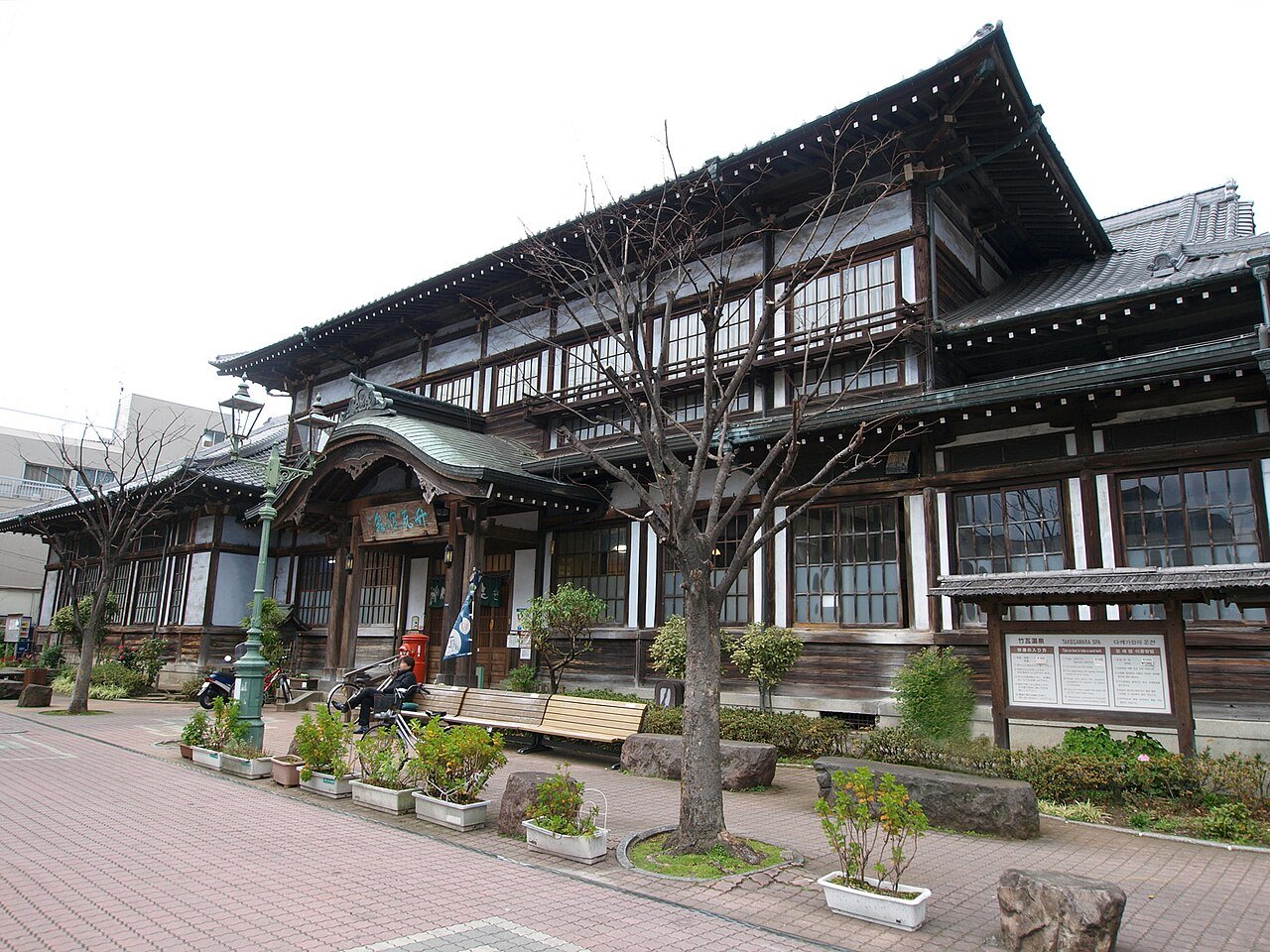
Takegawara Onsen building in Beppu — a Meiji-era wooden bathhouse with traditional latticed windows and dark timber facade District 6
Hamawaki (浜脇)
Historic district · Meiji-Taisho era · Cheap public baths

Water & vibe: Once the city centre before development shifted to the station area. Remnants of the Meiji and Taisho entertainment quarter survive: old timber bathhouses, neighbourhood sento, and the original street layout. Sodium-chloride water at quality public baths for as little as 110 yen — some of the best-value bathing in Beppu.
Best for: History and architecture enthusiasts. Photographers. Anyone who wants a genuine neighbourhood bath without tourist pricing.
Price range: No large hotels. Stay at the station and come for a half-day.
Access: 15–20 min walk from JR Beppu Station. Local bus 1 stop.
🏛️ Hamawaki Public Bath — 110 yen, open 06:30–22:30
All Beppu sightseeing →
Sand bath in Beppu — bathers in white yukata buried up to their necks in geothermally heated black sand on the beach District 7
Kamegawa (亀川)
Sand baths · Coastal · Northern shore

Water & vibe: Northern coastal district with the city's best sand baths on the beach — lie down and let attendants bury you in geothermally warmed black sand. Clear sodium-chloride mineral water in the indoor baths. Historically served as an entry point for tired travellers arriving from northern Kyushu by sea.
Best for: Anyone who specifically wants the sand bath experience. Convenient if you are visiting Umitamago Aquarium.
Price range: Small hotels and guesthouses from 5,000–12,000 yen per night.
Access: JR Nippo Line from Beppu Station ~10 min (Kamegawa Station).
🏖️ Kamegawa Sand Bath — 1,500 yen, open 09:00–17:00 (closed Tue)
Full Beppu trip plan →
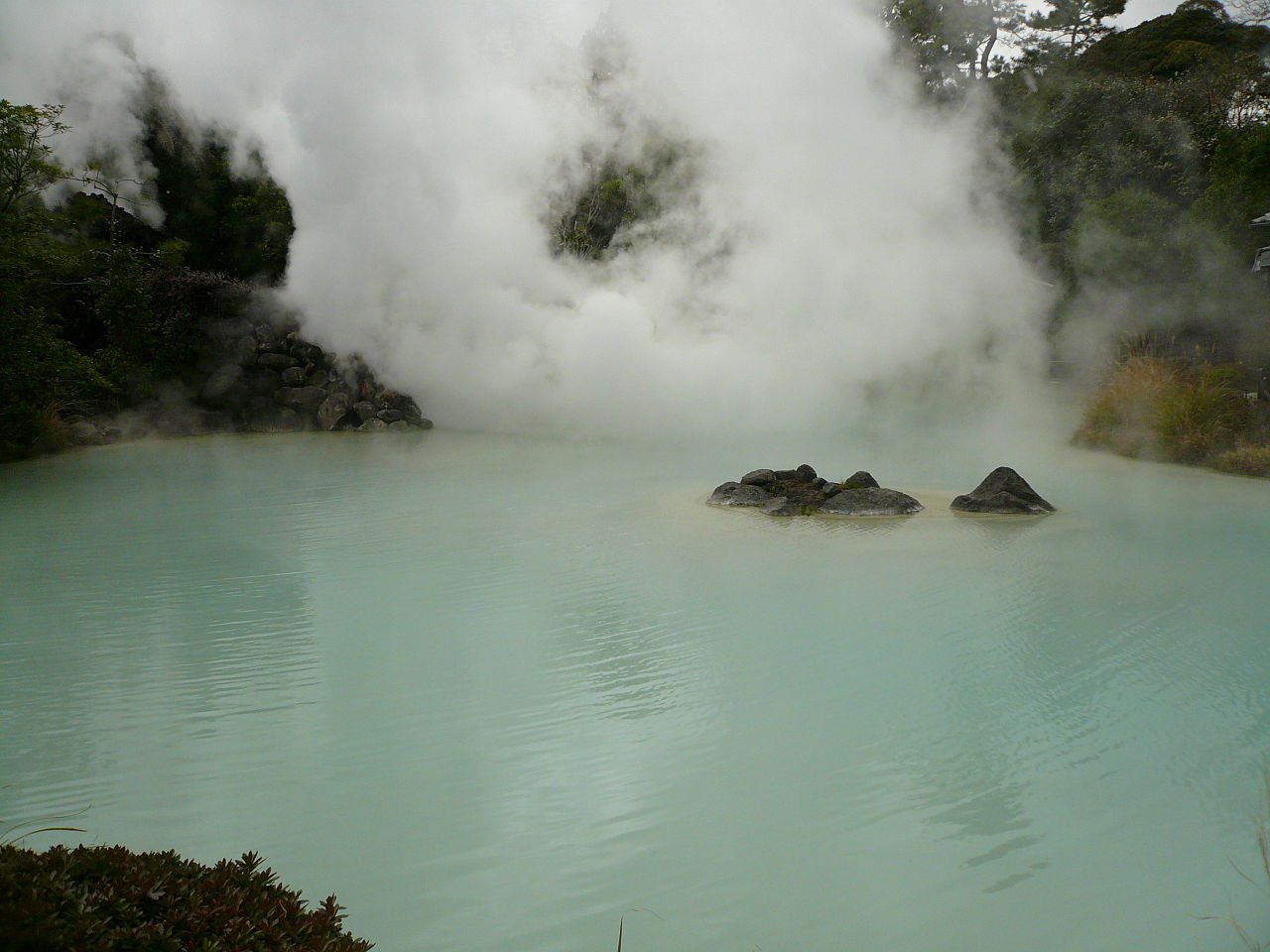
Shiraike Jigoku White Pond Hell — opaque white mineral water with steam rising from the surface, Beppu District 8
Horita (堀田)
Furthest from town · Recuperation · Quietest

Water & vibe: The most remote of the eight, developed since the Edo period as a recovery destination for travellers arriving worn out from long journeys. Abundant sodium-chloride springs, slightly lower temperature than Kannawa — well suited to extended, unhurried soaking. No crowds, no tour buses.
Best for: People who genuinely want to disconnect. Slower-paced itineraries of 3+ nights. Recuperation after illness or fatigue.
Price range: Small ryokan from 10,000–20,000 yen per person per night.

Access: Taxi from Beppu Station ~20–25 min. Buses exist but infrequent.
♨️ Horita Public Bath — 100 yen, open 06:00–22:00
Search Beppu accommodation on Trip.com →
Hotels with Full Reviews

Three Hotels, Three Very Different Trips

Matching the property to the trip

If you want bay views, a 5-star IHG spa, and an infinity pool above the rooftops, ANA InterContinental Beppu (9.5/10 · from 35,000 yen/night) is the answer. For the classic ryokan-kaiseki-private-onsen experience inside the steam district, Kannawaen (9.4/10 · from 31,400 yen/person including meals) is hard to beat. If you want a large resort where children can hop between multiple onsen pools and an Aqua Garden, Suginoi Hotel (8.9/10 · from 18,000 yen/night) covers that.

Food in Beppu

Onsen alone is not the whole story. Beppu's local specialities include Toriten (chicken tempura unique to Oita), jigoku-mushi steam-cooked vegetables and eggs, and fugu (puffer fish) in season. The full breakdown is at Beppu Food Guide.

FAQ

Questions People Ask Before Booking

Which Beppu district is best for first-time visitors?
For convenience and easy access, the Beppu Station / Kitahama area is the safest starting point — buses fan out to every hot-spring district, restaurants and supermarkets are on your doorstep. If you want the full atmospheric experience, stay in Kannawa instead: steam rising from drains and rooftops, jigoku-mushi steam kitchens at every corner, and ryokan within walking distance of the hells.
Which district should I choose for a traditional ryokan stay?
Kannawa is the answer. Kannawaen ryokan (9.4/10) sits in a 45,000 sq m garden with private cobalt-blue onsen pools fed by two natural springs, kaiseki dinner included, and the jigoku atmosphere just outside the gate. If budget allows, Myoban also has small quiet ryokan with milky sulphur water you will not find anywhere else.
Can day-trippers still enjoy Beppu's onsen?
Absolutely. Beppu has dozens of public soto-yu baths priced from 100–500 yen — no overnight stay required. A solid day plan: morning hells tour in Kannawa, lunch at a jigoku-mushi steam kitchen, afternoon sand or mud bath at Takegawara or Myoban, evening train home. See the full itinerary at Beppu Attractions.
What is the tattoo policy at Beppu onsen?
Most communal baths still prohibit visible tattoos, but Beppu is more relaxed than many Japanese onsen towns. Large resorts like Suginoi Hotel and ANA InterContinental typically offer private bathing rooms (kashikiri-buro) rentable by the hour with no tattoo restrictions. Always check the individual property's website or call ahead.
What is the difference between a sand bath and a mud bath in Beppu?
A sand bath (sunaburo) involves lying down and being buried to the neck in geothermally heated sand at around 45°C. The pressure and warmth ease muscle and joint pain. Best at Kamegawa and Takegawara (around 1,500 yen). A mud bath (doro-yu) means soaking in naturally opaque mineral-rich mud at a lower temperature (~38–42°C). High sulphur content prized for skin care. Best at Myoban outdoor pools. Both require a rinse before and after.
Agoda · Book Beppu Hotels & Ryokan

Find Your Beppu Stay — Compare All Districts

Kannawa · Kankaiji · Beppu Station · Myoban — search and compare ryokan, resort, and hotel options across every district in one place.

Search Beppu on Agoda →
Wherebest is an affiliate partner of Agoda — we may earn a commission when you book via our link, at no extra cost to you.