The neighbourhood that puts a Song-dynasty golden roof directly across the road from a Cartier boutique — and somehow makes it work. Quiet lanes, M50's art warehouses, Plaza 66's luxury floors, and Metro Line 2 running straight from the airport to your doorstep.
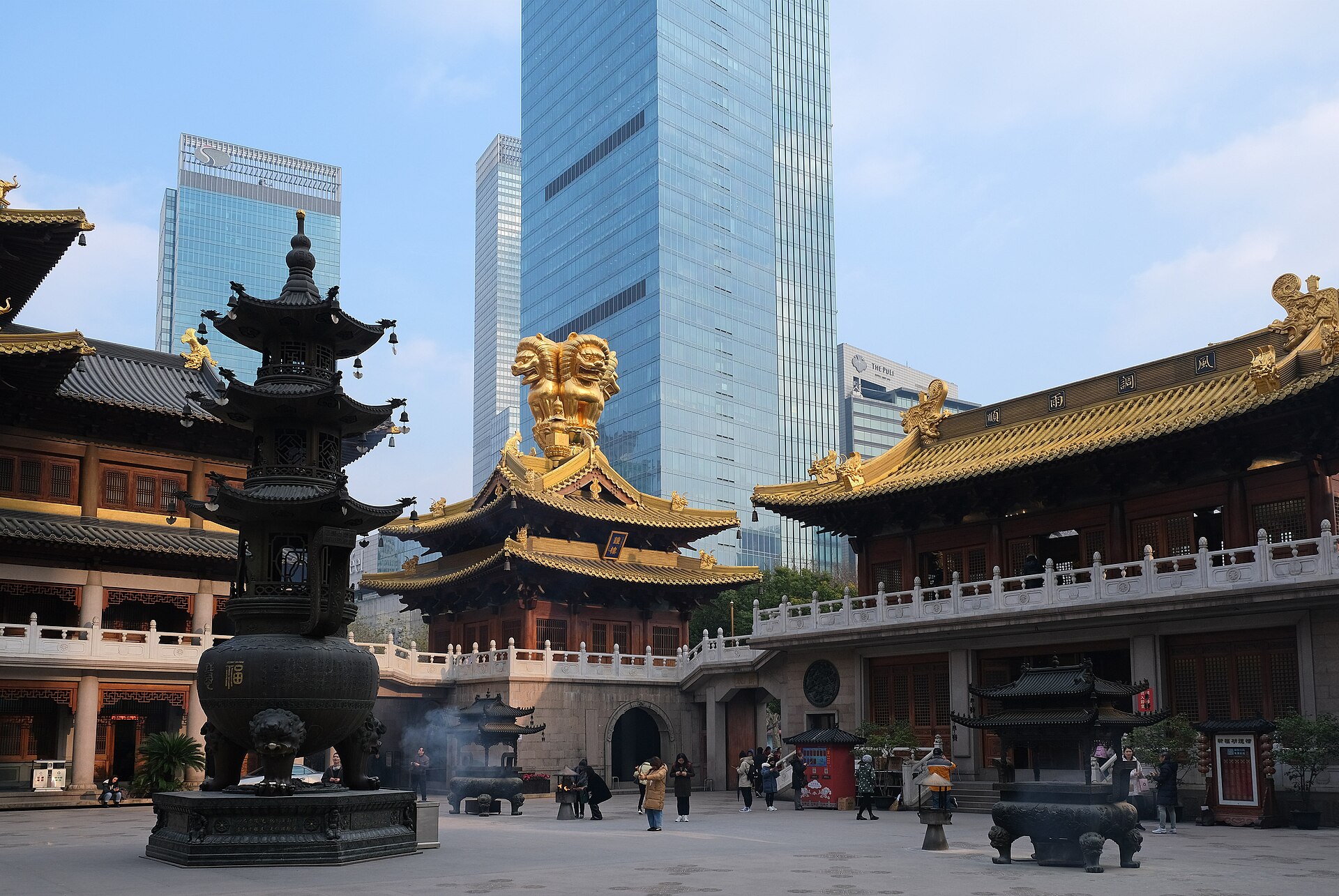
Picture a Buddhist temple with a documented history stretching back to 247 AD, its golden Song-dynasty rooftops catching the morning light — and directly behind it, the glass curtain wall of a forty-storey office tower. Cross the street and you are in the lobby of Plaza 66, where Cartier, Bulgari and IWC sit in a row. Turn down a side street and you find a café in an old lane-house, quiet enough to hear the sparrows. That is Jing'an (静安区): a neighbourhood that holds more contrasts in a walkable radius than almost anywhere else in Shanghai.
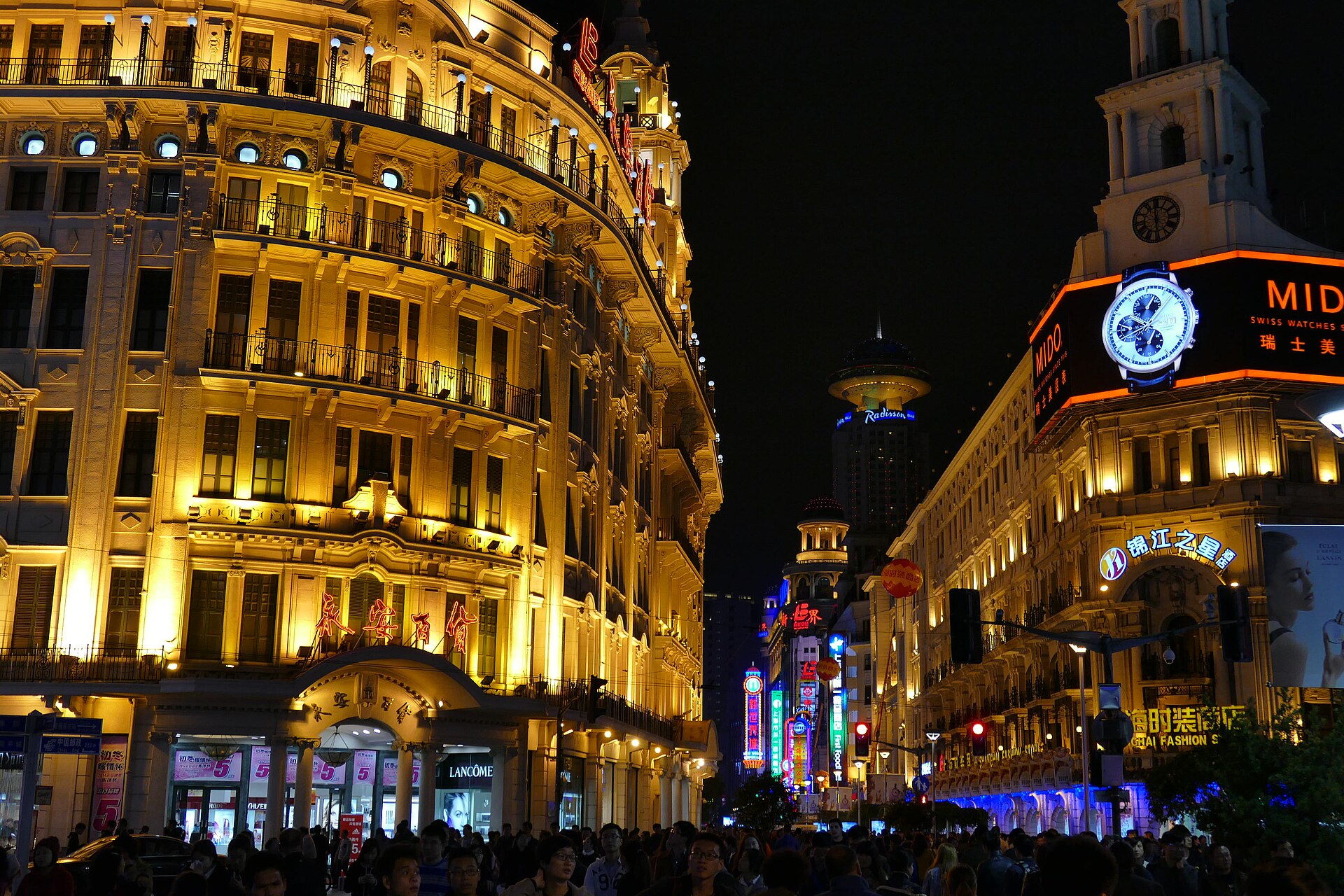
The main east–west spine is West Nanjing Road (南京西路), running west from People's Square through the heart of the district. Flanking it on either side are the flagship stores of the luxury retail economy: Plaza 66 (恒隆广场), Réel Mall, CITIC Square and Kerry Centre. But step off West Nanjing Road and the city quickly becomes residential — narrower streets, older buildings, independent cafés where the clientele is mostly local, and the particular quietness that comes from being surrounded by people who live here rather than visiting. Further north, the old cotton-mill district around Moganshan Road has been colonised by artists and galleries since the 1990s, forming what is now known as M50.
What makes Jing'an consistently useful for visitors — as well as genuinely rewarding to explore — is Metro Line 2. The line runs east–west through the neighbourhood, connecting Jing'an Temple directly to People's Square (two stops), Lujiazui in Pudong (five stops), and Pudong Airport at its eastern terminus. You can be at the temple for morning prayers, in Lujiazui for the skyline by mid-morning, and back for lunch — all without a taxi.
Jing'an is not as slow as the Former French Concession and not as overwhelming as the Bund. It occupies a middle ground that most visitors end up preferring once they spend a day here.
The neighbourhood's character comes from density of variety: within five minutes on foot you can move from incense smoke at the temple gates to the air-conditioned calm of a five-star hotel lobby, then into a side street where a woman is watering plants on a second-floor balcony above a lunch spot that has been open since 1987. The transitions happen without any obvious seam, which is part of what makes walking here engaging rather than exhausting.
The image that defines Jing'an — golden temple rooftop with reflective tower glass behind it — is one of the more photographed compositions in Shanghai. It works best in the morning, before the crowds arrive, when the temple bells are audible over the street noise. Jing'an Park, directly opposite the temple, gives you a clean foreground for the shot and a place to sit once you have taken it.
West Nanjing Road is the luxury retail spine of Puxi. Plaza 66 (恒隆广场) anchors the western end with Chanel, Louis Vuitton and the watch brands; Réel and CITIC Square fill the eastern stretch. Kerry Centre, attached to the Kerry Pudong hotel, adds a supermarket and food hall that functions well as a lunch option. The metro station sits underneath — enter the shops from below without touching the weather.
Zhangyuan (张园) reopened around 2022 after years of restoration, turning a late-1800s shikumen compound near Weihai Road into a heritage retail destination. The architecture is better preserved than Xintiandi in the French Concession, and the crowds are thinner. If you want to see what a Qing-dynasty Shanghai lane-house really looked like — from the inside — this is the most accessible place in the city to do it.
M50 on Moganshan Road started as an artist squat in the 1990s when painters and sculptors moved into derelict cotton-mill buildings. Today more than a hundred galleries and studios occupy the complex, most of them free to walk into. Weekday mornings are the best time — the galleries are open, the staff are unhurried, and the industrial spaces have a quality of light that photographic reproductions do not convey. It is at the northern edge of Jing'an, about fifteen minutes on foot from the temple or a short taxi ride.
The temple's documented history traces to 247 AD, which makes it one of the oldest Buddhist establishments in Shanghai, though it moved to its current Nanjing Road location around the 13th century. The Song and Burmese-influenced golden rooftops that define its appearance today are the result of a modern restoration — but that does not diminish the experience of standing inside a courtyard that has been a place of worship for nearly eighteen hundred years, surrounded by the noise of one of the world's most modern cities outside the gate.
Admission is around ¥50 (~฿250). Open approximately 07:30–17:00 daily. Metro: Jing'an Temple, Lines 2 / 7 / 14, exit directly opposite the temple entrance. Full details at the Jing'an Temple complete guide.
A compact public park directly opposite the temple, free to enter at all hours. In the early morning it belongs to the neighbourhood — residents come for Tai Chi, badminton against a wall, walking laps, and the particular kind of unhurried conversation that Shanghai parks seem to specialise in. The autumn foliage is worth timing for if you visit between October and November. After the temple, ten minutes here costs nothing and gives the morning a different quality than going straight to the next sight.
West Nanjing Road runs from People's Square westward through Jing'an, becoming progressively upscale as it goes. The section between Jing'an Temple station and West Nanjing Road station holds the main mall cluster: Plaza 66 (恒隆广场 — Cartier, Bulgari, IWC, Chanel), Réel Mall, CITIC Square and Kerry Centre. The pedestrian access between them is mostly underground, so even on a wet day the circuit is comfortable. Metro: West Nanjing Road, Lines 2 / 12 / 13. For the full street context, see the Nanjing Road complete guide.
Shanghai's largest surviving shikumen complex, dating to the 1880s — originally a private garden estate built by a Cantonese merchant, later opened as a public pleasure garden, then left to decay across much of the 20th century before a careful restoration that concluded around 2022. Today Zhangyuan is open as a heritage destination with upscale retail and dining installed in the restored buildings. Located on Weihai Road near West Nanjing Road. More intimate than Xintiandi, less aggressively polished, and genuinely worth an hour.
A short pedestrianised food street close to West Nanjing Road, functioning as a casual mid-range alternative to the mall restaurants. Good for a quick lunch between the temple and the galleries. Prices at the local restaurants on and around Wujiang Road run approximately ¥40–80 (~฿200–400) per person — considerably less than dining inside Plaza 66. Try the local Shanghainese snacks: shengjian bao (pan-fried pork dumplings) are sold at street-side stalls in the morning, and several of the older restaurants on the street do a proper benbang lunch.
A cluster of former cotton-mill buildings on Moganshan Road at the northern edge of Jing'an, converted into art studios and galleries from the late 1990s onward. Over a hundred spaces now operate in the complex, ranging from established commercial galleries to working artists' studios that occasionally open to the public. Most are free to enter. The industrial architecture — raw concrete, high ceilings, original factory fittings — is part of the appeal. A weekday morning visit gives you the best combination of access and atmosphere. A short taxi from the temple or a fifteen-minute walk along Changshu Road and north.
A striking piece of Soviet-era architecture — the former Sino-Soviet Friendship Building, built in the early 1950s when Shanghai was briefly the showcase for Chinese-Soviet cooperation. The towering central spire topped with a red star remains visible from some distance. Today it functions as a trade exhibition venue; when no fair is running, the exterior courtyard and grand facade are accessible without charge and constitute a genuinely unusual landmark for anyone interested in 20th-century political history made manifest in concrete and gilt.
Jing'an has one of the more varied food landscapes in Shanghai — from ¥12 shengjian bao at a roadside griddle to multi-course tasting menus in hotel restaurants that require weeks of advance booking.
Jing'an's café scene is quieter than the Former French Concession but more consistently good. The independent cafés here are found in the side streets behind West Nanjing Road — in converted lane-houses between Jing'an Temple Road and Weihai Road, or in the residential blocks south toward Changshu Road. Coffee typically runs ¥35–65 (~฿175–325). Avoid the brand-name chain outlets on the main road and look for places where the clientele is mostly local residents — that is the reliable indicator in this part of Shanghai.
Wujiang Road (吴江路) near West Nanjing Road functions as the neighbourhood's casual food street. It is significantly cheaper than eating in the malls and considerably more characterful. For a proper Shanghainese lunch, look for places serving benbang cai (本帮菜) — the sweet-savoury cooking style particular to Shanghai: hongshaorou (red-braised pork in soy and sugar), sweet-and-sour whole fish, or sixi kaofu (braised gluten). Street-level shengjian bao stalls operate in the mornings from around 07:30 and rarely last past 10:00 before selling out — if temple timing and breakfast timing coincide, so much the better.
Full guides: Shanghai food guide · Benbang cuisine — what Shanghai actually eats
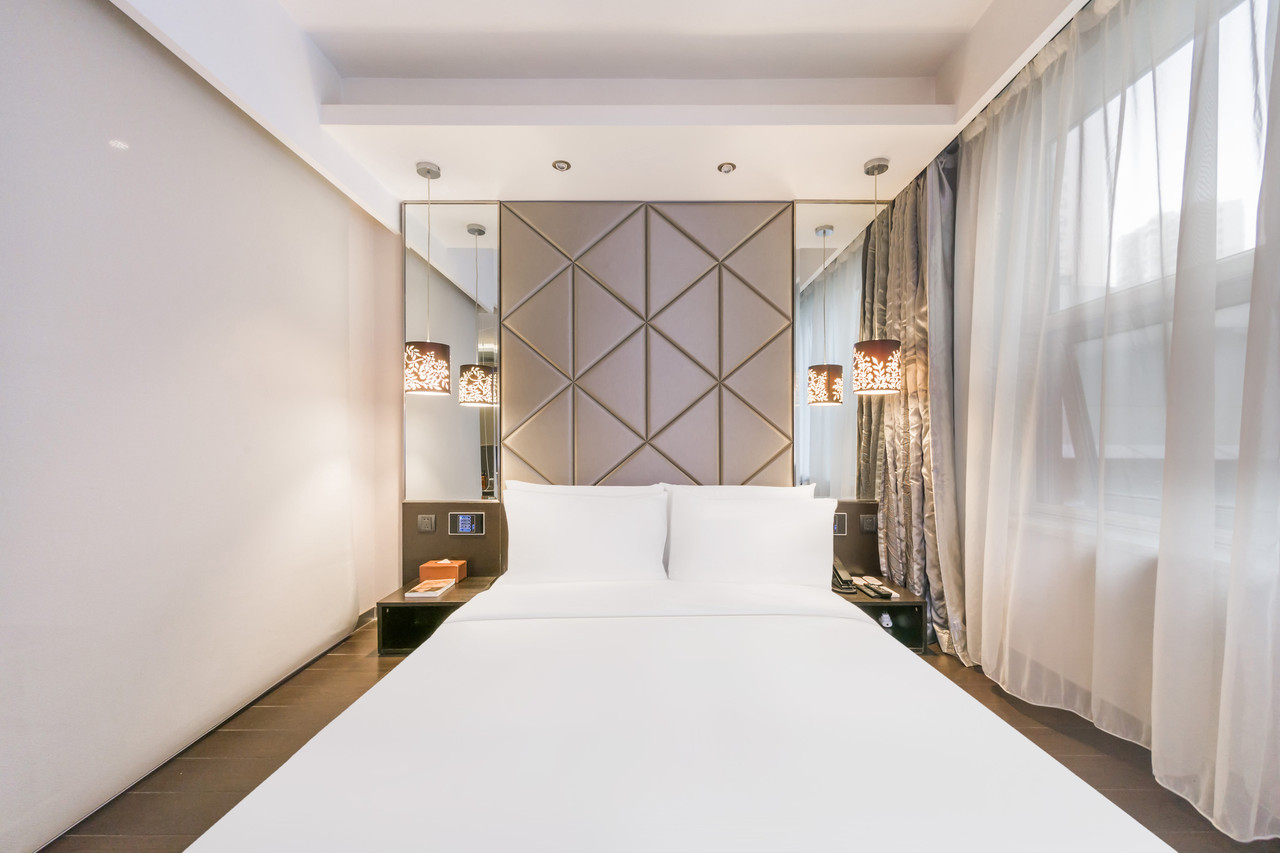
The best-connected neighbourhood in Puxi for airport arrivals — and a strong hotel line-up across every price point.
The strongest argument for basing yourself in Jing'an is the Metro Line 2 connection. It runs non-stop from Pudong Airport to Jing'an Temple station — no transfers, no decisions, approximately 50–60 minutes, ¥7–8. In the other direction, the same line takes you to Lujiazui (five stops) and People's Square (two stops). For a first-time visitor to Shanghai who wants a straightforward logistics base, it is hard to argue against this location.
The honest comparison with the Former French Concession: Jing'an is more urban in character — wider roads, more traffic, less of the slow residential atmosphere that makes the Concession popular with certain travellers. If your priority is waking up and walking out into something quiet and atmospheric, the French Concession delivers that more consistently. But for transit convenience and proximity to luxury hotels, Jing'an holds a clear advantage.
Or read the individual hotel reviews for properties in the area:
Three metro stations cover the neighbourhood well. Choose based on where you want to start — all are within a few minutes' walk of the main sights.
08:00 — Arrive at Jing'an Temple (Metro Jing'an Temple, Line 2). Buy admission (¥50) and spend about forty minutes inside. The morning quiet is genuine — incense, the low sound of chanting, and minimal tourist pressure before 09:30.
09:00 — Cross to Jing'an Park, free. Ten to fifteen minutes watching the morning tai chi is time well spent and costs nothing.
09:30 — Walk east along West Nanjing Road. The ground-floor windows of Plaza 66 are worth a few minutes even if you are not buying. Continue to Kerry Centre for a coffee in the food hall.
10:30 — Drop down to Wujiang Road for a mid-morning snack — shengjian bao from one of the griddle stalls if they are still running.
11:15 — A short walk to Zhangyuan on Weihai Road. Wander the restored shikumen courtyards without the Xintiandi crowds.
Follow the half-day route above through to lunchtime, then continue:
13:00 — Lunch in the neighbourhood — a proper Shanghainese benbang meal or one of the international restaurants in the side streets behind West Nanjing Road.
14:00 — Head north to M50 Art District on Moganshan Road (fifteen minutes on foot or a short taxi). Allow ninety minutes to walk through the galleries at your own pace — there is no obvious circuit, so turning into whichever space looks interesting works fine.
16:00 — Return to Jing'an. Evening options: browse more of the luxury mall strip, or walk twenty minutes south into the Former French Concession for dinner at a more neighbourhood price point.
18:30 — Dinner. The restaurants in and around Xintiandi or Anfu Road in the French Concession are both reachable by foot; Jing'an's own restaurant scene around West Nanjing Road tends toward the expensive side of the spectrum.
For the broader city picture, see Shanghai's top attractions and the complete Shanghai city guide.