Home Shanghai China Shanghai Hotels About
Home  ›  China  ›  Shanghai  ›  Attractions  ›  Jing'an Temple
Shanghai · Attraction Guide

Jing'an Temple (静安寺)
Golden rooftops in the shadow of skyscrapers — 1,800 years in the heart of the CBD

One of Shanghai's oldest Buddhist temples, founded in 247 AD, its gilded Song-dynasty halls rising directly against a wall of glass office towers — a juxtaposition so sharp it barely looks real.

What it is

A temple older than the city — and why the image still stops people

Stand on West Nanjing Road and look across at Jing'an Temple. The foreground is all gold: glazed roof tiles catching the morning sun, a bell tower rising from a courtyard of incense smoke. Then look up. Behind it — framed by the temple's eaves as if placed deliberately — a row of glass-and-steel office towers climbs forty or fifty storeys into the sky. The contrast is so abrupt it takes a moment to process. This is the photograph that makes Jing'an one of Shanghai's most-visited temples, and also one of its most quietly absorbing places.

Jing'an Temple (静安寺, Jìng'ān Sì) means "Temple of Peace and Tranquility." Its founding is traced to 247 AD during the Three Kingdoms period, in the state of Wu — making it considerably older than the city around it. It was relocated to its present site on West Nanjing Road during the Song dynasty, around 1216. The current complex is a careful modern reconstruction in a Song-dynasty style with Burmese Buddhist architectural influences: the result is an unusually warm, golden palette that reads as ancient even though most of what you see was built or rebuilt in recent decades.

It is also a functioning place of Chan (Zen) Buddhist worship. Every morning monks chant in the main hall. Local residents come before work to light incense and make offerings. There is a quality of daily life here that most Shanghai tourist attractions have long since lost. You are a visitor in an active temple, not a ticket-holder in a heritage site — and that distinction matters.
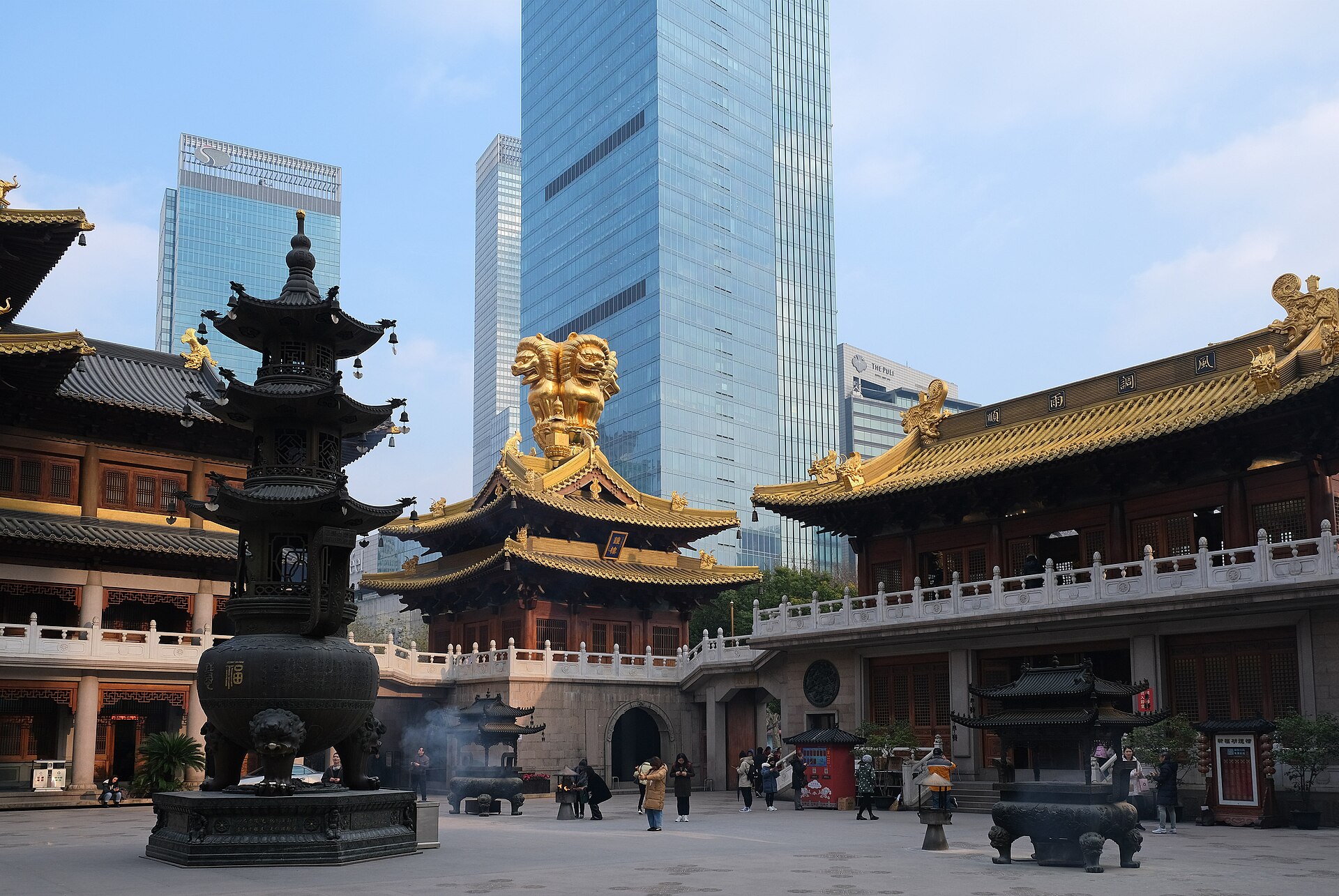
Jing'an Temple, Shanghai — gilded Song-dynasty rooftops against the glass office towers of the Jing'an CBD
Jing'an Temple — the gilded roofline set directly against Shanghai's CBD skyline
🎫
Admission
~¥50 (~฿250)
Higher on major Buddhist festival days
🕢
Opening hours
07:30–17:00
Open daily, no weekly closure
🚇
Metro
Jing'an Temple Station
Lines 2/7/14 · exit at the temple door
⏱️
Time needed
45–60 minutes
Compact grounds; everything visible in one visit
🌅
Best time
07:30–09:00
Morning light on the gold roof, thin crowds
🛍️
Nearby
West Nanjing Road
Plaza 66, Reel Mall — straight out the gate
What to see inside

4 things to look for inside Jing'an Temple

The grounds are compact — here is how to make the most of the time you have.

Photography and atmosphere

Getting the shot — and what the temple actually feels like

📸 The old-meets-new photograph

The image that circulates most widely — golden roof against glass towers — can be made from two positions. The first is from the pavement on West Nanjing Road before you enter, looking over the temple gate: you get the full layering of gate, roof tiles and towers behind. The second is from inside the main courtyard, framing the bell tower with the CBD high-rises filling the sky above. Both versions work; the courtyard shot tends to be cleaner because you can eliminate street-level clutter.

The 07:30–09:00 window gives you the best light. The morning sun approaches from the east-southeast and falls directly onto the south-facing roof tiles, making them glow. By mid-morning the light is flatter. Late afternoon around 15:00–16:30 produces a second usable window as the sun moves west — but the temple is considerably busier by then.

🕌 Beyond the photograph — the temple as it functions

Jing'an Temple is not a museum in temple clothing. On any weekday morning you will find monks performing ceremonies in the main hall, elderly residents burning incense at the smaller shrines, and occasional devotional gatherings that fill the courtyard with chanting. This is the quality that sets the temple apart from purely commercial heritage sites: the religion is still running.

During major Buddhist observances — full-moon days, temple anniversaries, Chinese New Year — the atmosphere intensifies significantly and the crowds grow. Entry may be slightly more expensive. If you have any interest in the practice of Chan Buddhism rather than just the architecture, these occasions are genuinely worth attending, provided you are prepared for the density of people.

Tip: Pair Jing'an Temple with Jing'an Park directly across the street — a free public park where Shanghai residents exercise and practise Tai Chi in the morning. Arrive at the temple for opening at 07:30, spend an hour, then cross to the park for a coffee from one of the cafés on its perimeter before the Nanjing Road shops open. The whole sequence takes about two hours and covers an unusually broad slice of Shanghai daily life.
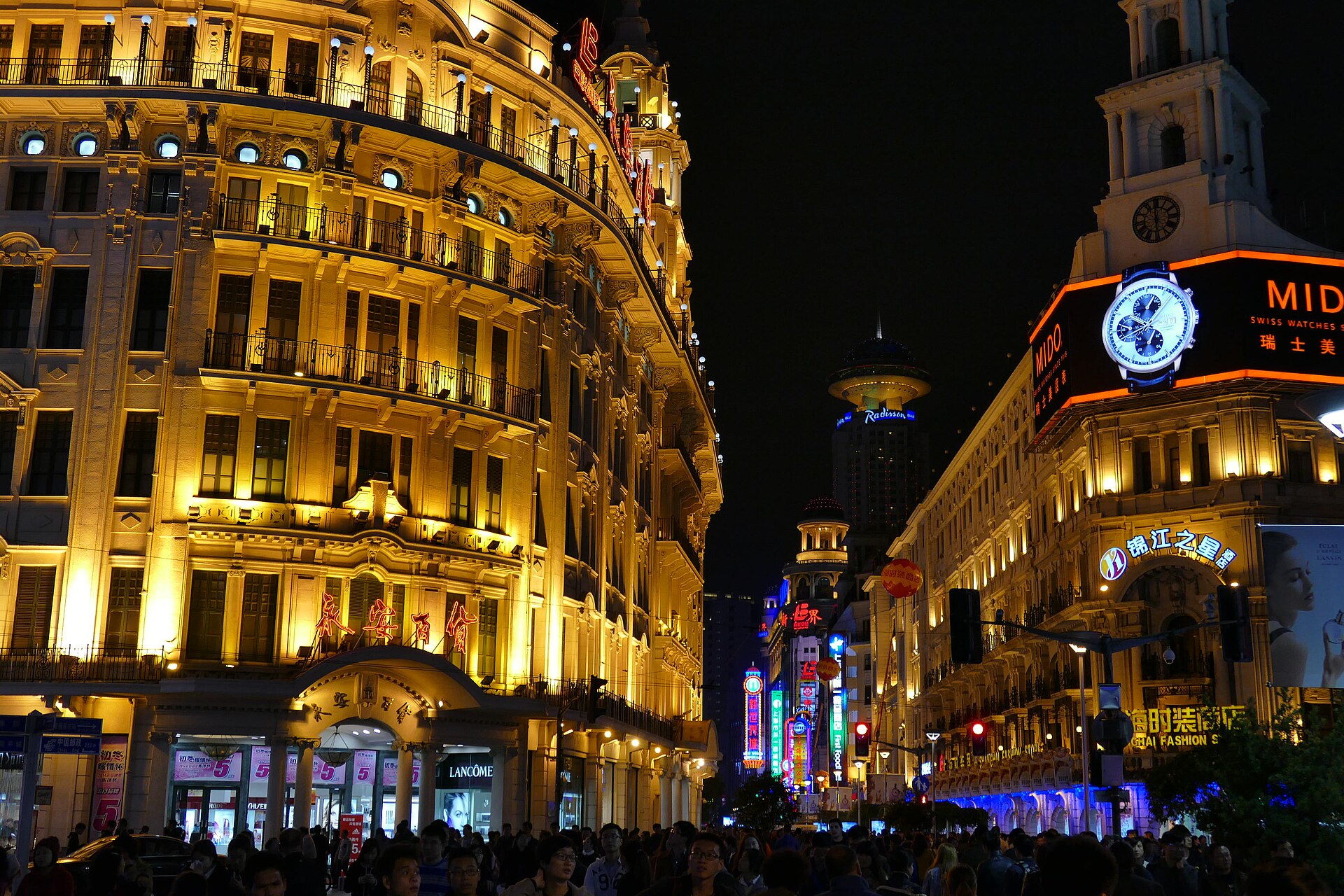
West Nanjing Road, Shanghai — the upscale shopping street running directly past Jing'an Temple, with Plaza 66 and Reel Mall
West Nanjing Road runs directly past the temple gate — Plaza 66 and Reel Mall are within a five-minute walk

🌳 Jing'an Park — across the street

Jing'an Park (静安公园) sits directly opposite the temple on West Nanjing Road. It is an urban park in the proper Shanghai sense: residents come early for Tai Chi and badminton, dogs are walked, and chess is played under the trees. Free to enter, no booking required. After an hour in the incense and gold of the temple, twenty minutes in the park provides useful contrast — and a grounding sense of what the neighbourhood actually is on an ordinary morning.

Getting there

How to reach Jing'an Temple

Jing'an Temple is one of the easiest landmark arrivals on the entire Shanghai Metro system — the station is named after the temple and exits directly at the gate.

🚇
Metro Lines 2 / 7 / 14
Jing'an Temple Station (静安寺站)
Station exits are at the temple gate — less than 3 minutes from platform to entrance. The most direct route from anywhere on the metro network.
🚶
From East Nanjing Road area
One stop west on Line 2, or a 20-minute walk
West Nanjing Road runs continuously between The Bund area and Jing'an — walkable if you want to combine both neighbourhoods on foot
🚕
Taxi / DiDi
~¥20–40 (~฿100–200) from city centre
Tell the driver 静安寺 (Jìng'ān Sì) or type the address in DiDi: 1686 West Nanjing Road
Combining sights in one day: Jing'an Temple pairs naturally with West Nanjing Road shopping — visit the temple at opening, then walk east along Nanjing Road through the morning. By afternoon you can continue on Line 2 to The Bund and end the day watching the Pudong skyline light up at dusk. All three connect on Lines 2 and 10 without backtracking.
Etiquette

Visiting respectfully — an active place of worship, not a theme park

👘 What to wear

There is no strict written dress code at the entrance, but Jing'an Temple is genuinely in use as a place of worship every day. Cover your shoulders and knees — this matters more inside the individual halls than in the courtyard. In summer, a light scarf or shawl carried in your bag is enough: put it on when entering halls, remove it outside. Avoid sleeveless tops and very short shorts if you intend to go into the main buildings.

🙏 Inside the halls

Remove hats before entering any of the main halls. Keep your voice low — the halls are used for active chanting and meditation, not simply for sightseeing. If monks are in the middle of a ceremony when you enter, step quietly to one side and observe from a distance rather than walking through the middle of the proceedings.

Photography is generally permitted in the courtyard and on the exterior. Some individual shrines have "no photography" signs — follow them. Avoid pointing your camera directly at monks or worshippers unless they have clearly indicated they do not mind. Buying incense or a small offering from the stalls inside the temple is a standard way to participate and directly supports the temple's running costs.

Where to stay nearby

Hotels in the Jing'an district

The Jing'an neighbourhood is central Shanghai — connected to everything, with some of the city's most interesting hotels within walking distance of the temple.

Frequently asked

FAQ · Jing'an Temple practical

How much does Jing'an Temple cost to enter?
Admission is approximately ¥50 per person (~฿250 / roughly $7 USD). On major Buddhist festival days the price may be slightly higher. The temple is open daily from 07:30 to 17:00, with no weekly closure day.
Which metro line goes to Jing'an Temple?
Take Metro Line 2, 7 or 14 to Jing'an Temple Station (静安寺站). The station is named after the temple and its exits open directly at the temple gate — less than a 3-minute walk. It is one of the most straightforward landmark arrivals on the entire Shanghai Metro network.
How long do you need at Jing'an Temple?
The temple grounds are compact. Allow 45 to 60 minutes to visit all the main halls at an unhurried pace. If you want to observe a morning ceremony, photograph the rooftop-against-skyscrapers from several angles, or simply sit in the courtyard and absorb the atmosphere, budget up to 90 minutes.
What is the best time to visit Jing'an Temple?
Early morning, 07:30 to 09:00, is the best time: the low morning sun catches the golden roof tiles directly, the courtyard is not yet crowded, and you can hear the monks chanting inside the main hall. By 10:00 the temple fills with visitors, particularly on weekends. Avoid the Golden Week national holiday (first week of October) and Chinese New Year if you dislike dense crowds.
What should you wear to Jing'an Temple?
Dress respectfully: cover your shoulders and knees. Remove hats before entering any of the main halls. Speak quietly and do not photograph monks or worshippers during ceremonies. Photography in the main courtyard is generally permitted; follow any no-photography signs posted inside individual shrines. A light scarf or shawl in your bag is all you need to comply in summer.
Klook · Shanghai activities

Jing'an walking tours, Shanghai Tower tickets and river cruises — book ahead, skip the queues

Walking tours of the Jing'an and French Concession district, skip-the-line tickets for Shanghai Tower, Huangpu River night cruises and more — booking through Klook in advance is considerably more practical than buying at the door on a busy day.

Browse Shanghai activities on Klook →
Wherebest is an affiliate partner of Klook — we may earn a commission when you book through our links, at no extra cost to you.