If you want to understand why the rest of China envies Chengdu's pace, spend an afternoon in a bamboo chair at the Heming Teahouse here. Free to enter, and there is no reason to rush.
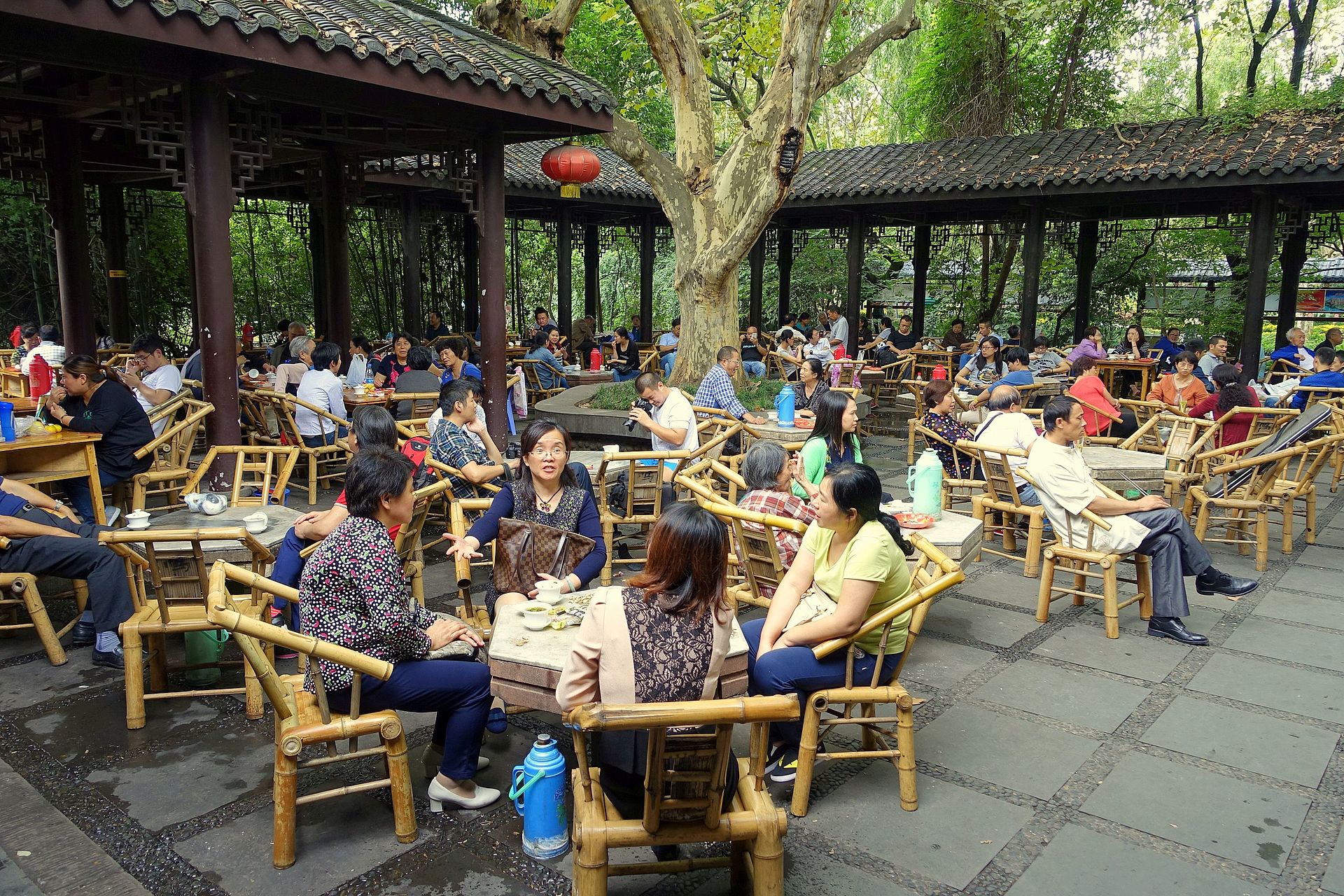
Picture a weekday afternoon: you are in a low bamboo chair under a leafy tree by the lake. A server sets down a gaiwan tea set — a lidded bowl, a saucer, a second bowl — and pours hot water from a long-spouted copper kettle with practised accuracy. Around you, locals are playing mahjong, chatting, dozing, while an ear-cleaning specialist drifts between tables, the tuning fork in his hand ringing softly to announce himself. None of this is staged for tourists. It is simply how Chengdu has spent its afternoons for a hundred years.
This is People's Park (Renmin Park / 人民公园) — Chengdu's first public park, opened in 1911, right in the centre of the city in Qingyang District. Inside you will find the century-old Heming Teahouse (鹤鸣茶社), a boating lake, a bonsai garden, an orchid garden, and the Monument to the Martyrs of the Railway Protection Movement, which marks one of the sparks that fed China's 1911 revolution.
What sets the park apart from Chengdu's other sights is simple: it is the real window into the city's famous slow pace. Not pandas, not a restored old street — just the unhurried daily rhythm that earned Chengdu its reputation as the most relaxed city in China. And it is free.
From the lakeside teahouse to the marriage corner that fills up every weekend.
The heart of the park. Thousands of bamboo chairs spread out under the trees beside the lake. Order a gaiwan of tea (from ~¥16, typically ¥20–30) and you can stay the entire afternoon — servers keep coming round to top up the hot water from long copper kettles. Jasmine is the classic pour. This is where you can most clearly watch Chengdu's pace in action.
A traditional service you will struggle to find elsewhere. The specialist uses tiny tools — feather brushes, picks and a vibrating tuning fork that rings as they walk — to clean your ears while you sit with your tea. It sounds odd, but locals swear it is deeply relaxing, and it is one of the sights first-time visitors most often stop to watch in disbelief.
An open area where parents post sheets advertising their single adult children — age, height, education, income, zodiac sign — to find them a partner. It is a genuine, fascinating window into modern Chinese family life. Free to walk through; just photograph discreetly, because plenty of the people there are doing this in earnest.
A tall obelisk near the park's main gate, raised to honour the 1911 Railway Protection Movement — the Sichuan protests against the Qing government handing rail rights to foreign powers. That unrest became one of the sparks of the Xinhai Revolution that toppled the Qing dynasty. It is a quiet piece of history that many visitors pass without realising its weight.
The central lake rents out rowing boats — a good change of pace if you are with family or have had enough of sitting still. Shaded paths circle the water, passing the bonsai and orchid gardens, and in October and November the park's chrysanthemum show is especially worth catching.
Walk in, find an empty bamboo chair near the lake, sit down and wait for a server to take your order. Tea comes in a gaiwan — a lidded bowl with a saucer, known as the "Three Treasures" set. Jasmine is the most popular choice. Prices start at about ¥16 and average ¥20–30 a cup (~฿100–150), refills included.
How to drink it: use the lid to brush the floating tea leaves aside, then sip from the rim of the bowl without lifting the lid off completely. Servers will keep refilling the hot water without being asked, and you can stay as long as you like — locals sit out the whole afternoon, and so should you.
As you sit with your tea, ear-cleaning specialists drift past, the tuning fork in hand ringing to announce them. Wave one over if you are curious. Using small feather brushes and picks, they clean your ears gently while you stay in your chair. It costs roughly ¥30–100 depending on the package — a local experience that is hard to find anywhere else. And if you are not brave enough, watching someone else go through it is half the fun.
If you come on a Saturday or Sunday afternoon, do not miss the marriage market (相亲角) — an open area where hundreds of parents post profiles of their single children in search of a match. Some clip the details to an open umbrella; others sit and wait for someone to ask. It is a portrait of modern Chinese society that is by turns sweet, intriguing and thought-provoking. Free to see — just be respectful of the people who are there in earnest.
The park sits right in the city centre, and the easiest way in is the metro — the station is at the corner of the park.
Central neighbourhoods around People's Park and Kuanzhai Alley — easy to explore on foot.