Home Chengdu China Chengdu Hotels About
Home  ›  Asia  ›  China  ›  Chengdu  ›  Kuanzhai Alley
Chengdu Old Lanes · Attraction Guide

Kuanzhai Alley (宽窄巷子)
A Qing-era Manchu garrison that became Chengdu's teahouse heart

Three parallel lanes under old grey-brick walls — one for sipping tea under bamboo awnings, one alive with the smell of Sichuan snacks, and one given over to contemporary art. Free to enter, walkable day or night.

Why it matters

The lanes where Chengdu still lives at its own pace

Step out of the metro into the usual city crush, turn into a lane paved with grey flagstones, and the noise drops away. On either side are old brick walls and the timber gates of Qing-era courtyards. Mahjong tiles click somewhere out of sight; hot water hisses into teacups; an old man reclines in a bamboo chair while an ear-cleaner works with a slim silver pick. This is Kuanzhai Alley (宽窄巷子 Kuanzhai Xiangzi), a restored old quarter that has become shorthand for the unhurried Chengdu pace the rest of China envies.

The site dates to 1718, when it was laid out as part of a Qing-dynasty Manchu garrison — an Eight Banners encampment in the district known as Shaocheng. After the 1911 Revolution the garrison walls came down and the barracks slowly turned into family homes, leaving a rare pocket of Qing courtyard housing inside a major city. A large-scale restoration opened the quarter as a pedestrian district in 2008, and the result is old courtyards and modern shopfronts living side by side.

Honest take: this is touristy, and it gets crowded — the Narrow Alley on a weekend afternoon means walking shoulder to shoulder. It is still worth your time. This is where you see Chengdu's teahouse culture up close, graze on Sichuan snacks one bite at a time, and walk past Qing-era courtyard architecture that is hard to find elsewhere. The trick is simple: come early or come at dusk, and you get a far calmer version of the same place.

How to walk it

Three lanes, and what to look for in each

The lanes run parallel but feel completely different — walk them left to right and you will see the lot in one loop.
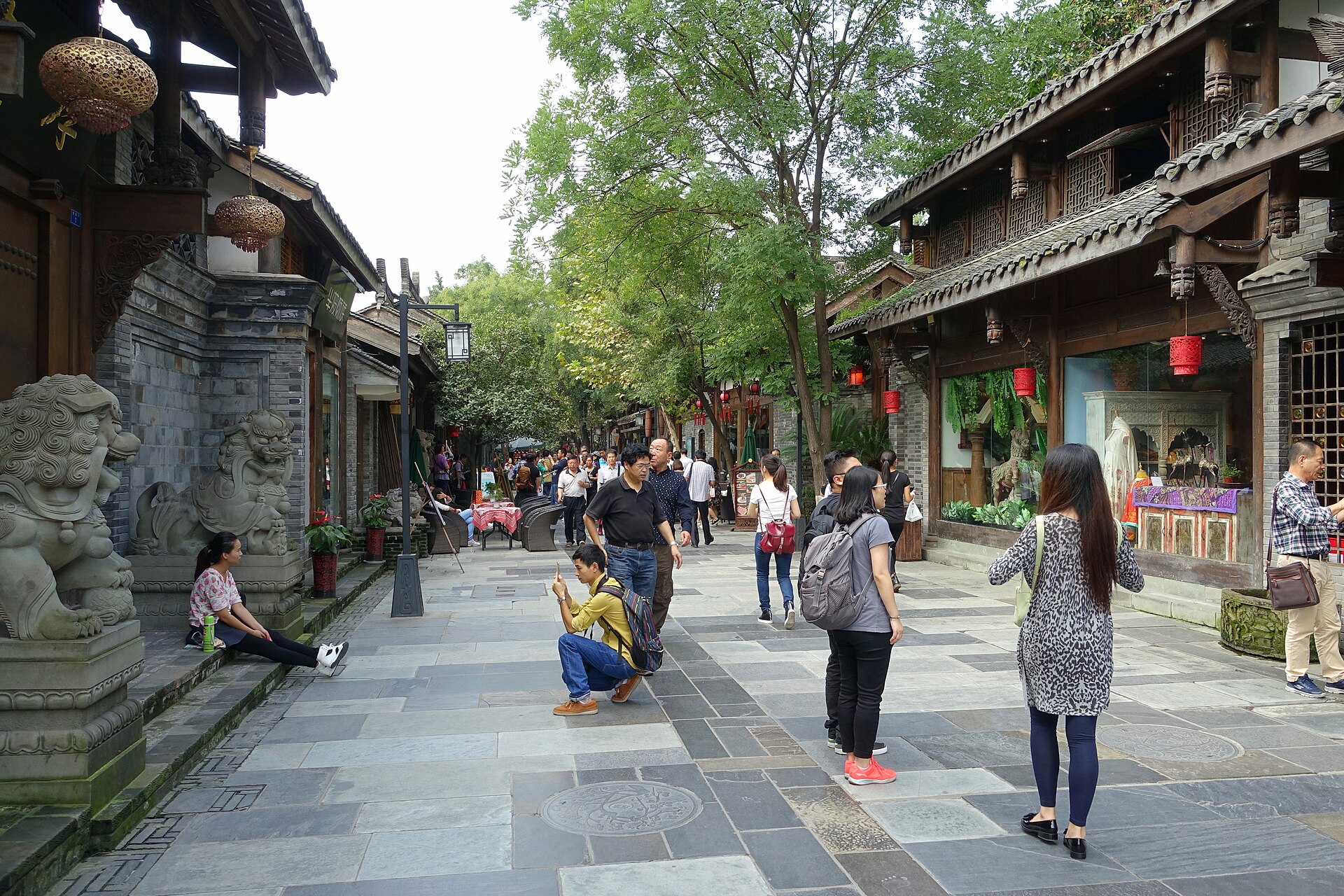
Kuanzhai Alley, Chengdu — a grey flagstone lane between old Qing-era brick walls and timber courtyard gates, hung with red lanterns 1
Wide Alley (宽巷子 Kuān Xiàngzi)
The lane of tea and slow afternoons · best-preserved Qing courtyards

Wide Alley keeps the best-preserved Qing-era courtyard houses — more than twenty restored courtyards in all — and it carries the slowest, most relaxed mood of the three. Several teahouses set out bamboo tables in open courtyards where you can nurse a single pot of tea for an entire afternoon for a few dozen yuan, with staff topping up your hot water as you go. Some offer the classic Sichuan ear-cleaning service (掏耳朵). Take a table, order tea, and watch Chengdu drift past.
Known for: Courtyard teahouses · Qing-era houses · ear-cleaning
Best time: Late afternoon, settled in over a long pot of tea
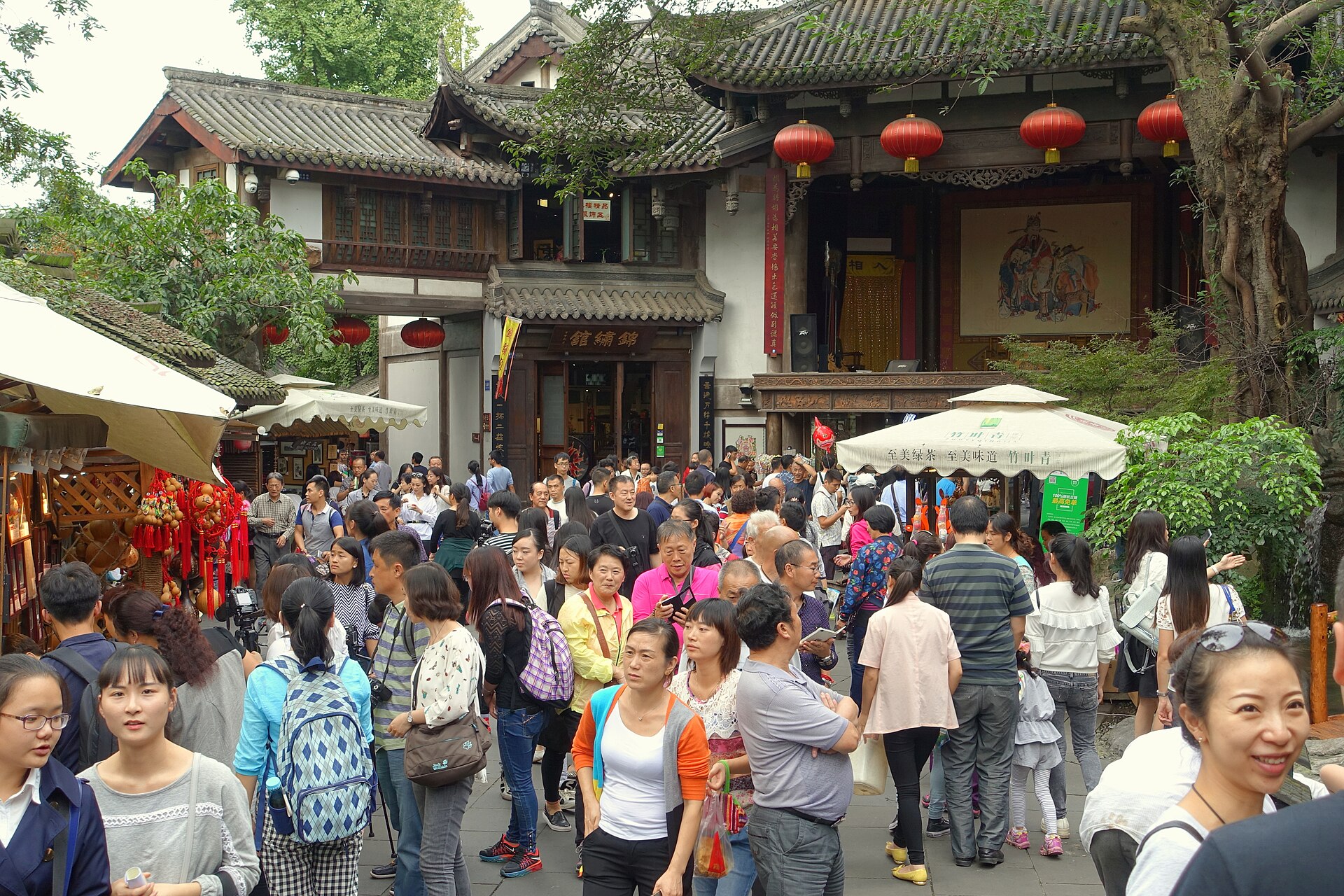
A lantern-lit old lane in Chengdu at night, food and souvenir shops lining both sides and crowds strolling — the lively mood of the Narrow Alley 2
Narrow Alley (窄巷子 Zhǎi Xiàngzi)
The lane of food and cafés · the liveliest of the three

Narrow Alley is the busiest and most energetic lane. Both sides are packed with snack stalls, cafés, bars and Western restaurants tucked into late-Qing and early-Republic buildings. Sichuan street snacks run around 4–6 yuan — grilled corn cakes, danhonggao egg cakes, sticky rice — and grazing your way along is half the fun. Just be warned: weekend afternoons here are genuinely shoulder to shoulder, so a morning visit is far more comfortable.

Known for: Street snacks · cafés · restaurants in old buildings
Heads-up: This is the most crowded lane on weekend afternoons — come early
🎨3
Well Alley (井巷子 Jǐng Xiàngzi)
The lane of contemporary art · a brick museum wall of Chengdu's history

Well Alley is the third and most modern of the lanes, mixing contemporary art, bars and exhibition space. Its signature feature is the brick museum wall (砖文化墙), which assembles old bricks from different dynasties into a wall that narrates Chengdu's history from the past to the present. Walk it slowly and read the panels and the whole quarter starts to make more sense. By evening this lane takes on a relaxed bar-and-lights atmosphere.

Known for: Brick museum wall · art installations · evening bars
Best time: Early evening, when the lighting and mood are at their best
🍵4
Teahouse culture & ear-cleaning
The heart of the Chengdu pace · settle in for the afternoon

If you are in Chengdu, sit in a teahouse at least once. Kuanzhai Alley has several to choose from: order a single pot and you can stay for hours while staff keep refilling the hot water. Chengdu locals genuinely spend their time this way — nobody is in a hurry. The other thing to try is ear-cleaning (掏耳朵), where a practitioner uses a small kit of tools to clean your ears with surprising delicacy. It sounds strange and feels oddly relaxing — plenty of visitors get hooked. To go deeper on the tea tradition, read about Heming Teahouse in People's Park.

Price: Tea from about ¥20–40 (~฿100–200), stay all afternoon
Ear-cleaning: Around ¥30–60 per session · agree the price first
🏮5
Evening atmosphere & souvenirs
Red lanterns lit · pandas, embroidery, snacks to take home

From around 5 pm the red lanterns strung along both sides of the lanes come on, and the warm light against the grey brick makes for far better photos than midday. The crowds thin out, too, as tour groups head off. For souvenirs, you will find panda plush toys, Sichuan embroidery, cured meats and hotpot base to take home, with trinkets starting at a few yuan. For a proper meal, though, walk on — try the Chengdu street food scene or a real Sichuan hotpot.

Best light: After 5 pm, once the lanterns are lit
Souvenirs: Panda plush from about ¥15 · plenty of edible gifts to take home
🎭6
Sichuan opera face-changing (变脸)
Masks switched in the blink of an eye · at Shufeng Yayun nearby

Close to Kuanzhai Alley, inside Chengdu Culture Park, is the Shufeng Yayun (蜀风雅韵) theatre, which stages Sichuan opera including its signature face-changing act (变脸 Bian Lian) — performers swapping painted silk masks in a fraction of a second, fast enough to look like sleight of hand. It is an art form you can really only see in Sichuan. Shows are usually in the evening and you can book ahead; see the Klook card below. It makes a natural cap to an evening spent walking the lanes.

Location: Shufeng Yayun, Chengdu Culture Park — a short walk from Wide Alley
Showtimes: Mostly evenings · check the schedule and book ahead
Before you go

Hours, costs and how to get there

Everything you actually need to know, in one place.

Admission
Free — all three lanes
No entry ticket for the area. You only pay for tea, food or items you buy at individual shops.
Opening hours
Lanes open 24 hrs · shops approx. 10 am–10 pm
You can walk the lanes any time, but most shops, teahouses and restaurants open late morning and close around 10 pm.
Metro
Line 4 — Kuanzhai Alley station (宽窄巷子), Exit B
Or take Line 2 to Tonghuimen station (通惠门) and walk about 5 minutes.
Time needed
1.5–2.5 hours
Comfortable to walk all three lanes in 1.5 hours. Add time if you sit for tea, try ear-cleaning or graze on snacks.
Best time to visit
Before 10 am or after 5 pm
Mornings are quiet and good for photos · evenings bring the lanterns on as tour groups leave.
When to avoid
Weekend afternoons & Golden Week
Golden Week (1–7 October) and long holidays are the most crowded of the year, especially in the Narrow Alley.
Worth knowing: Come at opening (around 10 am), walk all three lanes while it is quiet, then circle back for tea in the afternoon — or do the reverse, arriving at dusk for the lanterns and finishing with a face-changing opera show. Either way you get the calm version of the quarter, not the midday crush.
Getting there

By metro from anywhere in Chengdu

Kuanzhai Alley sits in central Chengdu, near People's Park and Tianfu Square, and is easy to reach by metro:

Metro Line 4 (most direct)
Kuanzhai Alley station · Exit B

Take Line 4 to Kuanzhai Alley station (宽窄巷子) — named after the quarter itself — and leave by Exit B, which brings you out right at the entrance. This is the simplest, least confusing way in.

Metro fare: ¥2–5 · From the station: a few minutes' walk
From People's Park
About a 15-minute walk

People's Park and the Heming Teahouse are roughly a 15-minute walk from Kuanzhai Alley, so the two pair naturally into one morning-and-afternoon outing. Start with tea in the park, then walk over to the lanes.

Walk: ~15 min · Pair with: People's Park
Metro Line 2
Tonghuimen station (通惠门), then a 5-min walk

If Line 2 is more convenient for your route, get off at Tonghuimen station and walk about 5 minutes to reach one end of the quarter. Handy if you are staying or sightseeing along the Line 2 corridor.

From the station: ~5 min · Metro fare: ¥2–5
Half-day Old Town plan
People's Park + lanes + snacks + show

With a free half-day: tea at People's Park in the morning, then walk over and do all three lanes, grazing on snacks and sitting for a pot of tea. Come evening, catch the lanterns and finish with a Sichuan opera face-changing show nearby — culture and food in one neighbourhood.

Total time: half a day · Budget: ¥80–200 per person including tea and snacks
Where to stay nearby

Hotels close to central Chengdu

The central districts around People's Park and Tianfu Square are close together, and hotels in this radius are within a short walk or metro ride of Kuanzhai Alley. Here are the hotels we have reviewed:

Frequently asked

FAQ · Before you visit Kuanzhai Alley

Is Kuanzhai Alley free to enter and what are the opening hours?
Yes, Kuanzhai Alley is completely free to enter — there is no admission ticket for the area. The lanes themselves are open 24 hours, while most shops, teahouses and restaurants run roughly 10 am to 10 pm. You only pay for the tea, food or items you buy at individual shops.
How do I get to Kuanzhai Alley by metro?
Take Chengdu Metro Line 4 to Kuanzhai Alley station (宽窄巷子) and leave by Exit B, which brings you out at the entrance. Alternatively, take Line 2 to Tonghuimen station (通惠门) and walk about 5 minutes. People's Park is roughly a 15-minute walk away, so the two pair well together.
What is the best time to visit Kuanzhai Alley and how long should I spend?
Plan about 1.5 to 2.5 hours to walk all three lanes at a relaxed pace. The quietest, most photogenic times are before 10 am or after 5 pm, when the red lanterns come on. Weekend afternoons and Chinese holiday periods get very crowded, especially in the Narrow Alley — avoid Golden Week (1–7 October) if you can.
What is the difference between the Wide, Narrow and Well alleys?
Wide Alley (宽巷子) has the best-preserved Qing-era courtyards and is focused on teahouses and the slow, traditional Chengdu pace. Narrow Alley (窄巷子) is livelier, lined with snack stalls, cafés and Western restaurants. Well Alley (井巷子) is the most modern, with contemporary art and a brick museum wall telling Chengdu's history.
What is good to eat and buy at Kuanzhai Alley?
Sichuan street snacks cost around 4–6 yuan — things like grilled corn cakes, danhonggao egg cakes and sticky rice. You will also find cured meats and hotpot base to take home, plus panda plush toys and Sichuan embroidery as souvenirs. For a proper meal, walk on to the Chengdu street food scene or a Sichuan hotpot; Kuanzhai is better suited to grazing and tea than a full sit-down dinner.
Klook · Sichuan Opera Face-Changing

End the evening with a face-changing show — book ahead

The lanes themselves are free, but if you want to round off the evening with an art form you can only really see in Sichuan, the face-changing opera (变脸) at the theatre near Kuanzhai Alley is the move — book ahead on Klook to secure a seat.

See Sichuan opera shows on Klook →
Wherebest is an affiliate partner of Klook — we may earn a commission when you book through our links, at no extra cost to you.