Home Chengdu China Chengdu Hotels About
Home  ›  China  ›  Chengdu  ›  Food Guide
Chengdu Food Guide · 2026

What to eat in Chengdu
11 Sichuan dishes before you leave

The tofu that makes your lips buzz. The dry noodles you toss yourself before the first bite. The chicken that's sweet-sour before it's hot. Chengdu is China's first UNESCO City of Gastronomy — here is exactly where to start eating.

Why eat here

The capital of málà

If you've ever thought Sichuan food just means "spicy," Chengdu will teach you a better word: málà (麻辣). It isn't only the chili burn — it's the numbing, tingling buzz of Sichuan peppercorn (花椒, huājiāo) that makes your lips and the tip of your tongue prickle like a faint electric current. It catches everyone off guard the first time. Eat a few more bites and you start to understand why a whole city is devoted to it.

Chengdu is the capital of Sichuan province and the real birthplace of dishes you already know from Chinese restaurants the world over — mapo tofu, kung pao chicken and fish-fragrant pork were all invented here before they travelled. In 2010 the city was named a UNESCO City of Gastronomy, the first in Asia to hold the title. We picked 11 dishes that tell Chengdu's story best, from the legends with century-old shops to the snacks you eat standing in a lane.

The essential dishes

11 things to eat before you leave Chengdu

Ranked by how unmistakably Chengdu they are — dishes the city does better than anywhere, because this is where they began.
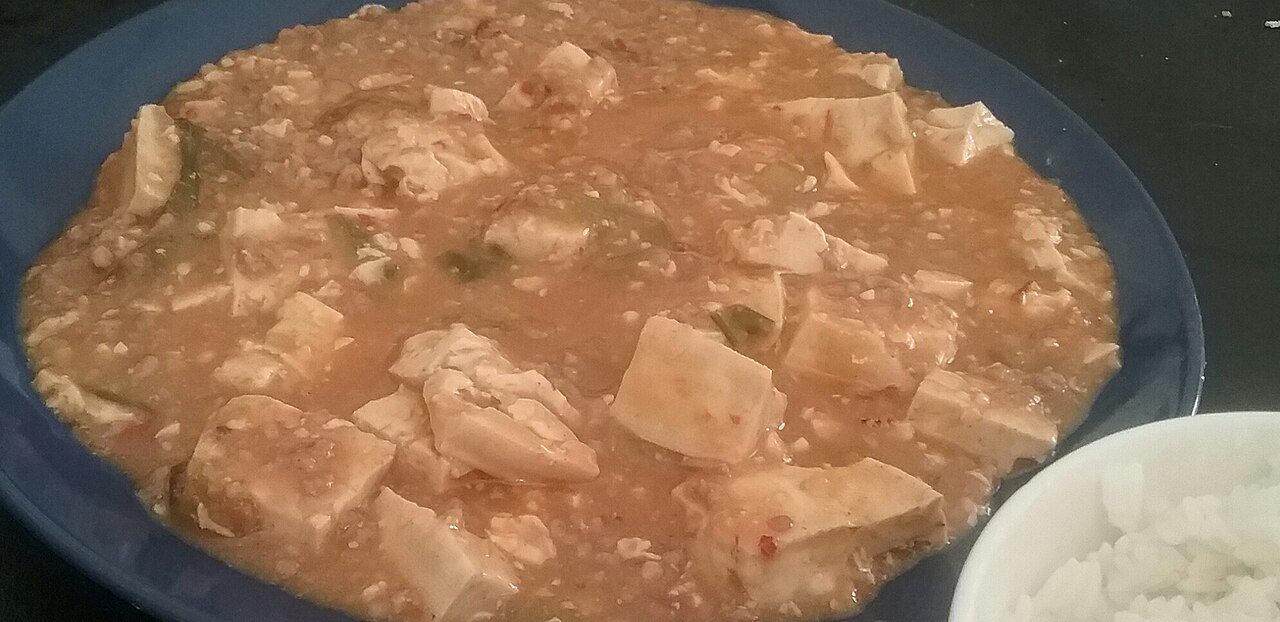
Mapo tofu — soft white tofu cubes in dark red numbing-spicy sauce with minced meat and green garlic, served with a bowl of rice 1
Mapo Tofu
麻婆豆腐 · silky tofu in numbing-spicy sauce

Born in Chengdu in 1862, supposedly by an elderly woman the neighbourhood called "Pockmarked Granny Chen." Soft tofu sits in a deep-red sauce of Pixian chili-bean paste and minced pork or beef, finished with a snow of ground Sichuan peppercorn that sets your tongue buzzing. Locals say the real version has to hit eight notes at once — numbing, spicy, hot, tender, crisp, fragrant, fresh and smooth. The original Chen Mapo Tofu shop is still open today.
Where: Chen Mapo Tofu (陈麻婆豆腐 · flagship on Qinghua Rd, near the Sichuan Museum) · branches across the city
Price: ¥25–40 a plate (about ฿125–200)
Tip: Always order plain rice alongside — the sauce over rice is the whole point
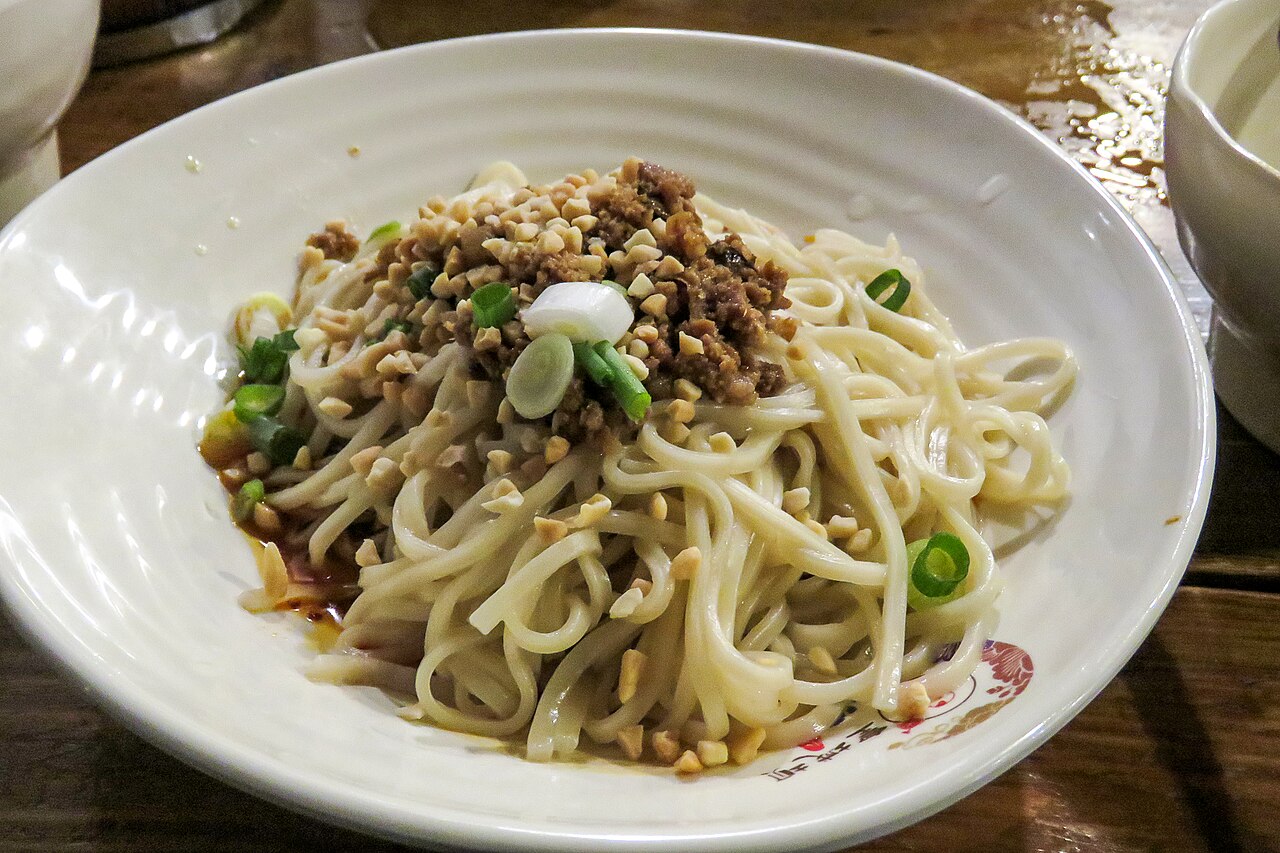
Dan dan noodles — thin wheat noodles topped with crispy minced pork, crushed peanuts and chopped scallion, with dark chili oil pooled at the bottom 2
Dan Dan Noodles
担担面 · the dry Chengdu original, no soup

Here's the thing: real Chengdu dan dan noodles have no soup. They come dry, in a small bowl, and you toss them yourself. Hidden at the bottom is a concentrated sauce of Sichuan peppercorn, sesame and chili oil, crowned with dry-fried minced pork and yacai (preserved mustard greens from Yibin). Stir until every strand is coated and you'll understand why a tiny ¥10 bowl keeps people coming back every morning. The name comes from the carrying pole — the dàn — that old street vendors used to balance their noodle pots through the lanes.

Where: noodle shops citywide · the lanes of Kuanzhai Alley · old-town snack spots
Price: ¥10–18 a bowl (about ฿50–90)
Tip: Toss it thoroughly before eating — otherwise the top noodles taste plain
🥜3
Kung Pao Chicken
宫保鸡丁 · lychee-flavour, sweet-sour-numbing

If you're shy about heat, this dish is your friend. Diced chicken is stir-fried with dried chilies, Sichuan peppercorn and roasted peanuts in what Sichuan cooks call "lychee flavour" (荔枝味) — sweet and sour first, with a gentle numbing warmth behind it. Legend ties the name to Ding Baozhen, a late-Qing governor of Sichuan whose private chef created it. The Chengdu original skips the heap of vegetables you'll find in overseas versions — it's just chicken, chilies, peanuts and scallion.
Where: Chen Mapo Tofu (on the menu) · classic Sichuan restaurants citywide
Price: ¥30–55 a plate (about ฿150–275)
Tip: A great first dish for beginners — the mildest on this list
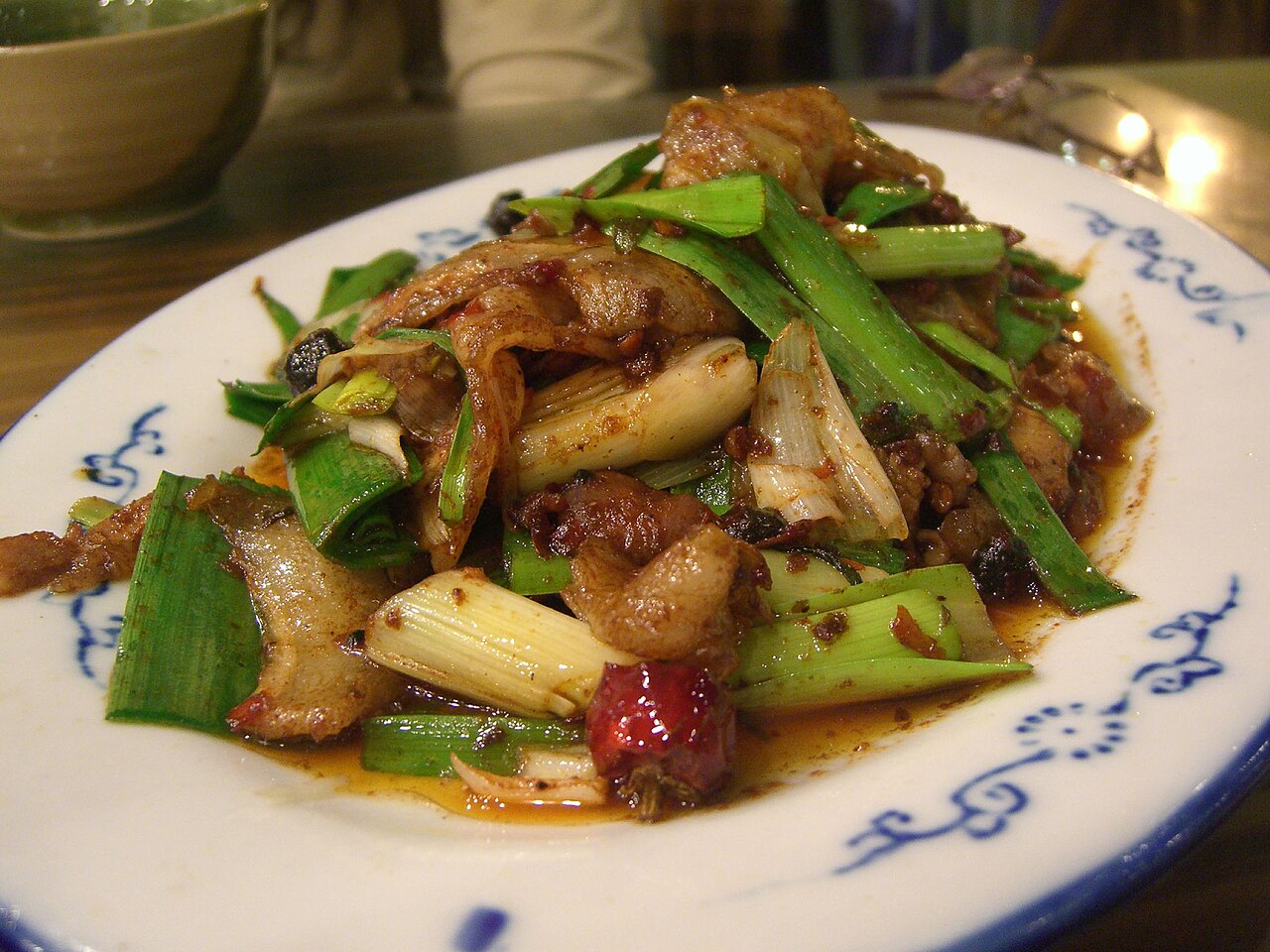
Twice-cooked pork — curled slices of pork belly stir-fried with green garlic stalks in a glossy chili-bean sauce on a blue-and-white plate 4
Twice-Cooked Pork
回锅肉 · the "king of Sichuan dishes," as locals call it

The name means "meat that goes back into the wok." A whole piece of pork belly is simmered until cooked, sliced thin, then returned to a screaming-hot wok where the edges curl into little cups. It's tossed with Pixian chili-bean paste (郫县豆瓣) and green garlic until the fat glistens and the sauce turns fragrant and deep. Sichuan cooks crown it the king of their cuisine — and over a bowl of hot rice, it's the most homely pleasure in Chengdu.

Where: nearly every local Sichuan restaurant · the real-deal "fly restaurants" (苍蝇馆子)
Price: ¥30–48 a plate (about ฿150–240)
Tip: Look for the curled pork edges — the sign it hit the right heat
🐷5
Fish-Fragrant Pork
鱼香肉丝 · the name says fish; there's none

The most misleading name on a Sichuan menu — "fish fragrant" (鱼香) comes not from fish but from the seasoning Sichuan cooks traditionally used for fish: pickled chilies (泡辣椒), ginger, garlic, sugar and vinegar. Shredded pork is flash-fried with wood-ear mushroom and bamboo shoot, landing sour, sweet, spicy and savoury all in one mouthful. It's a weeknight staple in Sichuan homes, and another dish that's easy on spice-shy palates.

Where: home-style Sichuan restaurants citywide (a household standard)
Price: ¥28–45 a plate (about ฿140–225)
Pair with: plain rice — the sweet-sour sauce loves it
🌶️6
Mao Xue Wang
毛血旺 · duck blood and offal in a bubbling red broth

For when you want to push your limits — a bubbling red pot loaded with jelly-soft duck blood, beef tripe, intestine and chicken gizzard, all afloat in chili oil and Sichuan peppercorn. The magic is in the contrast of textures in one bowl: the blood slips, the tripe is crunchy, the gizzard is chewy. It started in neighbouring Chongqing but it's beloved in Chengdu too. Seriously spicy and seriously rich — pace yourself.
Where: Sichuan-Chongqing restaurants citywide · many hotpot places serve it as a single dish
Price: ¥48–88 a pot (about ฿240–440 · feeds 2–3)
Tip: Order plenty of rice and an iced chrysanthemum tea to cool the burn
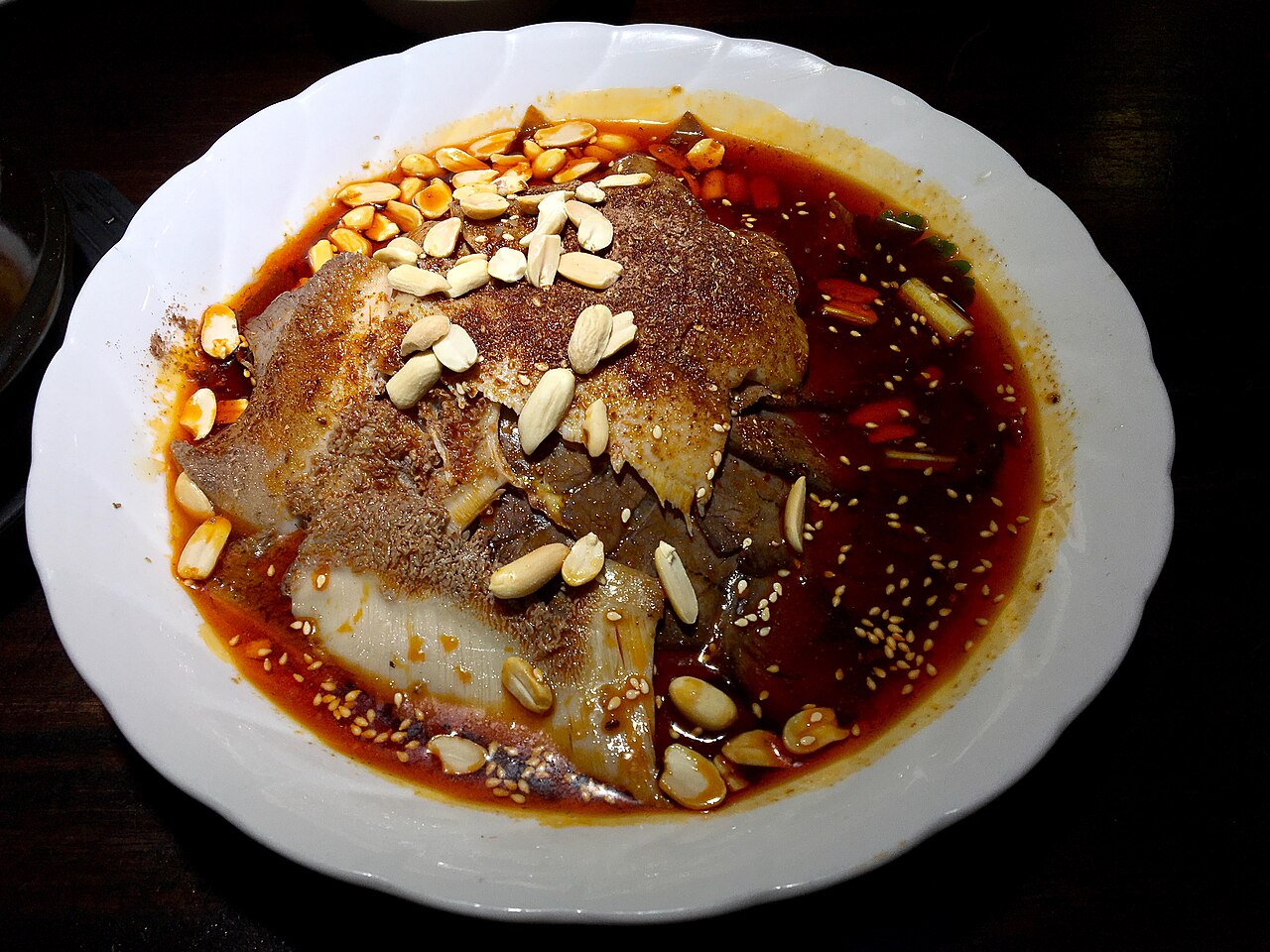
Fuqi feipian — thin slices of beef and offal drenched in red chili oil, topped with peanuts and sesame seeds, served cold 7
Fuqi Feipian
夫妻肺片 · sliced beef in chili oil, the "husband-and-wife" dish

The name translates, oddly, to "husband-and-wife lung slices" — it comes from a real 1930s Chengdu couple, Guo Zhaohua and Zhang Tianzheng, who got famous selling cold beef slices on the street. Beef and offal (tongue, tripe, heart) are braised, sliced wafer-thin, then bathed in fragrant chili oil and soy and showered with crushed peanuts and toasted sesame. Served cold as an appetiser, it's numbing, fragrant and rich. The word "offal" scares people off — until they taste it and order a second plate.

Where: classic Sichuan restaurants citywide · old-town snack shops
Price: ¥25–48 a plate (about ฿125–240)
Tip: Order it first — it's a cold starter before the hot dishes arrive
🥟8
Zhong Dumplings
钟水饺 · pork dumplings in sweet chili soy

Half-moon boiled dumplings named after Mr Zhong, who created the recipe in 1893. His twist was an all-pork filling with no vegetables — unusual at the time — dressed in a special sweetened soy sauce, fragrant chili oil and minced garlic. The result is sweet, spicy and garlicky in one bite, and not fiercely hot, so they suit just about everyone, kids included. Zhong dumplings are one of Chengdu's "three famous snacks" alongside long chao shou and lai tangyuan, and a recognised Sichuan intangible cultural heritage.

Where: Chengdu's old-school snack houses · around Chunxi Road and the old town
Price: ¥15–25 a plate (about ฿75–125)
Tip: A safe pick for spice-shy eaters — sweet and fragrant, not searing
🍜9
Long Chao Shou
龙抄手 · "dragon wontons" in a fiery red broth

In Sichuan, wontons are called chao shou (抄手), and "long" means dragon. Thin-skinned wontons wrap a soft pork filling and float in a red málà broth — or a clear soup, your choice. The original Long Chao Shou shop has been going since 1941, moved to Chunxi Road in the 1960s, and is still the legendary stop tourists seek out. Order them in clear soup (清汤) if you're not in the mood for heat, or red oil (红油) if you are. Another of the city's famous snacks.

Where: Long Chao Shou (龙抄手 · flagship on Chunxi Road) · snack houses citywide
Price: ¥15–28 a bowl (about ฿75–140)
Tip: Go for clear soup (清汤) if you've already eaten a lot of chili that day
🍝10
Tian Shui Mian
甜水面 · thick chewy noodles in sweet-spicy soy

"Sweet water noodles" actually have no broth at all. They're thick, chopstick-width strands — locals call them gungunmian (棍棍面) — chewy like udon, tossed with a soy sauce cooked down with brown sugar and spices until syrupy, plus fragrant chili oil and ground sesame. Sweet first, then a slow chili buzz and a nutty finish. It's a genuine Chengdu snack you'll rarely find outside the province — those bouncy, sauce-slicked noodles are worth seeking out once.
Where: old-town snack noodle shops · stalls in Kuanzhai Alley
Price: ¥10–18 a bowl (about ฿50–90)
Tip: Usually served small — easy to slot in as a between-meals snack
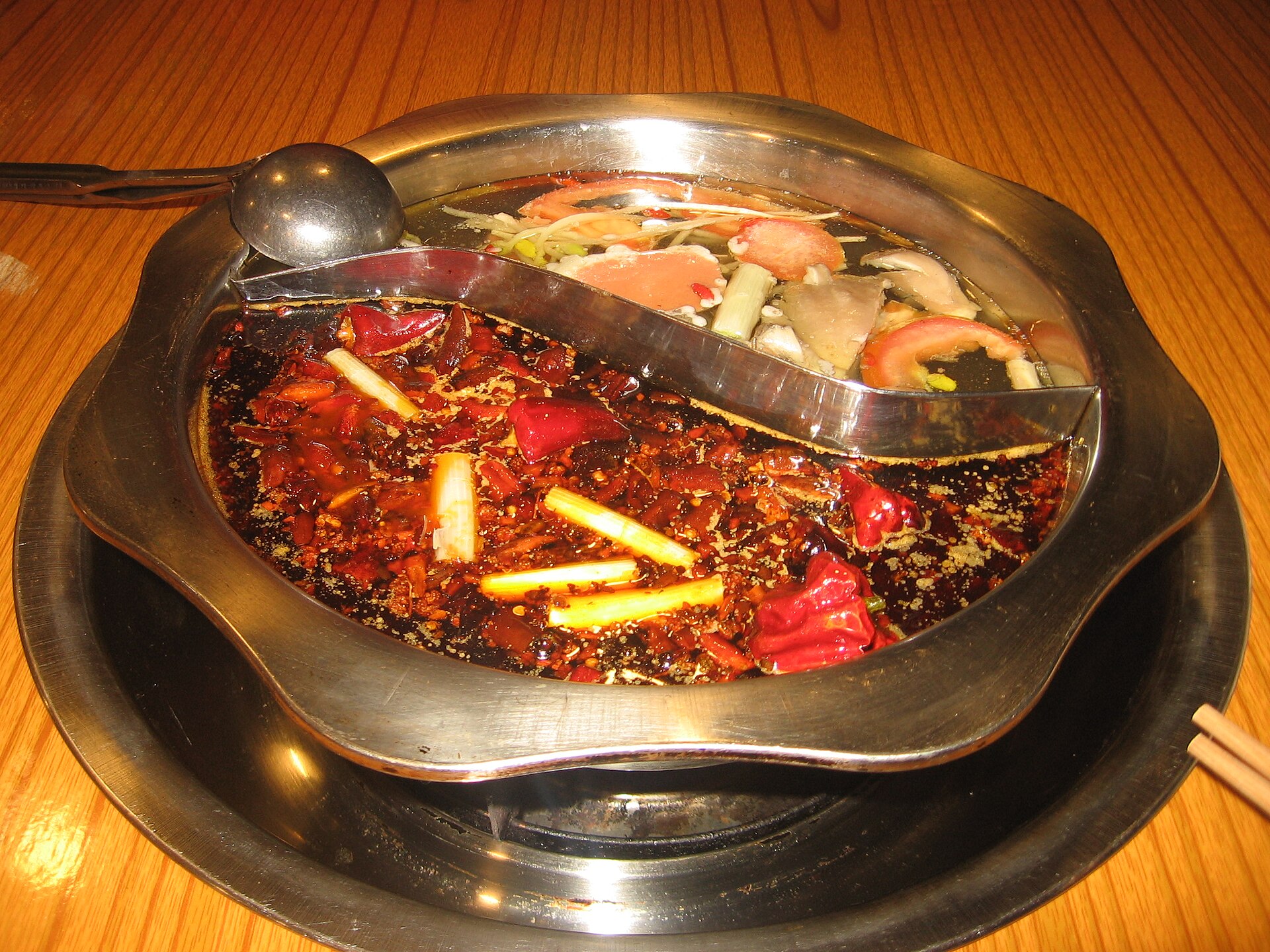
A bubbling red Sichuan hotpot full of dried chilies and Sichuan peppercorns, representing Chengdu's hotpot and chuan chuan skewer culture 11
Chuan Chuan Xiang
串串香 · Chengdu's skewer hotpot

Picture a Sichuan hotpot, except everything arrives pre-threaded onto skewers — meat, vegetables, mushrooms, tofu, meatballs — which you dunk into the bubbling red málà pot yourself. When you're done they tally the bill by counting your sticks. Chuan chuan was born in Chengdu in the mid-1980s from street vendors, and it's now the city's way of eating late: gathered around a table, dipping skewers, talking for hours. For the full Sichuan hotpot experience, read our dedicated hotpot guide.
Where: chuan chuan joints in the Yulin (玉林) district and citywide · Full Chengdu hotpot guide →
Price: ¥1–3 a skewer · a full meal ¥60–120 per person (about ฿300–600)
Tip: Keep your finished skewers — that's how the bill is counted
Where to eat

Pick the right district for the mood

Chengdu eats around the clock — know what each district does best before you set out.

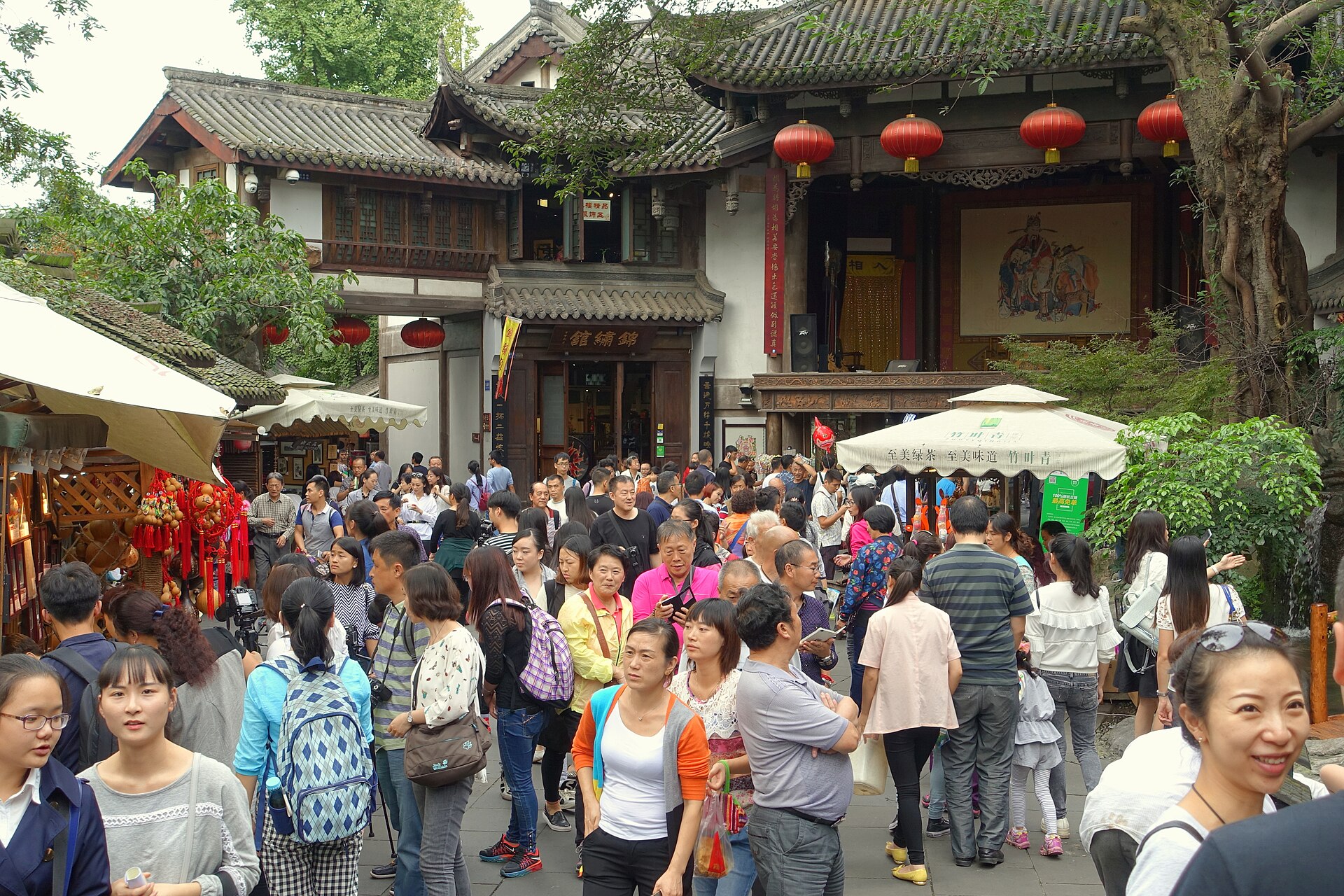
Kuanzhai Alley
宽窄巷子 · Metro Line 4, Kuanzhaixiangzi station

Three restored old lanes packed with Chengdu snacks in one place — dan dan noodles, tian shui mian, the san da pao rice balls that smack the tray with a bang, and even spicy rabbit head for the brave. It's touristy and prices run higher than neighbourhood shops, but it's a fine place to graze several things in one go.

Best for: snacks · noodles · old-style sweets · Hours: 10:00–22:00
Jinli Ancient Street
锦里 · beside Wuhou Shrine, Metro Line 3/5

A lantern-lit pedestrian street beside Wuhou Shrine, lined with stalls of Sichuan snacks and street food — chili-dressed dumplings, meat-stuffed buns, fried bites and local sweets. It's at its most beautiful after dark when the red lanterns glow. Lively and made for grazing, and even as a tourist street there's genuinely good food to find.

Best for: street food · small bites · sweets · Hours: 11:00–22:00
Yulin
玉林 · the locals' night-eats district

Where Chengdu people actually go after dark — wall-to-wall chuan chuan joints, hotpot places and little beer-and-snack spots with tables spilling onto the pavement. Prices are friendlier than the tourist streets and the mood is relaxed and local. Perfect if you want to settle in over a long string of skewers with a cold beer on a night you're in no rush.

Best for: chuan chuan · hotpot · long evenings · Hours: 18:00–late
Chunxi Road & Taikoo Li
春熙路 / 太古里 · Metro Line 2/3, Chunxi Road station

The city centre, where the legendary snack houses sit beside designer malls and modern cafés — the original Long Chao Shou and Zhong dumpling shops are around here, while Taikoo Li is full of good-looking restaurants and cafés. Ideal if you want local snacks at lunch and a café to rest in through the afternoon.

Best for: heritage snack shops · cafés · mall dining · Hours: 10:00–22:00
Go deeper

Want to eat deeper than this

The 11 dishes above are the starting line — we've written separate guides to Chengdu's hotpot, street food, teahouses and cafés.

The legends

Shops you shouldn't miss

Old institutions Chengdu has recommended to each other for decades — pencil them into your plan.

1
Chen Mapo Tofu (陈麻婆豆腐)
The birthplace of mapo tofu · trading since 1862

The shop the whole world's mapo tofu traces back to, named after Granny Chen, who created the recipe in the Qing dynasty. The flagship is on Qinghua Road near the Sichuan Museum, and its mapo tofu is properly málà — your tongue really does buzz. Its kung pao chicken and fuqi feipian are standouts too, at ¥25–40 a plate. Come outside the lunch and dinner rush to dodge the queue.

Address: No.10 Qinghua Rd, Qingyang District (flagship)
Hours: 10:30–21:00 · Signature: mapo tofu ¥25–40 · WeChat Pay / Alipay
2
Long Chao Shou (龙抄手)
Legendary dragon wontons · since 1941 · Chunxi Road

A Chengdu snack institution that's been going for over 80 years, with its famous branch on Chunxi Road in the city centre. Beyond the wontons (red oil or clear soup) it does a combination snack platter, so you can sample a clutch of local specialties in one sitting — handy when you don't want to hunt them down shop by shop. Busy, with a picture menu that's easy to point at.

Address: Chunxi Road (春熙路) · Metro Line 2/3, Chunxi Road station
Hours: ~10:00–21:00 · Signature: snack platter · red-oil wontons · cards and WeChat Pay
3
"Fly Restaurants" (苍蝇馆子)
Chengdu's no-frills local diners · all over the city

Not one shop but a whole category — the tiny, unglamorous Sichuan diners with plastic stools and handwritten menus that Chengdu people rate above any mall restaurant. Twice-cooked pork, fish-fragrant pork and home-style stir-fries here often hit harder and truer than the polished places, for less money. Ask your hotel or a local where their favourite one is — this is the real Chengdu.

Address: scattered citywide (ask a local or your hotel)
Hours: lunch and dinner · Price: ¥40–80 per person · mostly WeChat Pay only
4
Yulin Night Eats (玉林夜市)
Chuan chuan and hotpot after dark · a locals' district

If you want to eat the way Chengdu people do at night, Yulin is the answer — wall-to-wall chuan chuan joints where you pick and dunk your own skewers and pay by the stick, beef-tallow hotpot spots, and little places with tables on the pavement. It's relaxed, well-priced and not a tourist zone, ideal for a long evening of talking with friends over a cold beer.

Address: Yulin (玉林) district · Wuhou District
Hours: 18:00–late · Signature: chuan chuan ¥1–3/skewer · hotpot · WeChat Pay / Alipay
Frequently asked

FAQ · what people ask before they go eat

How much does a meal cost in Chengdu?
Chengdu is one of the cheapest great-eating cities in China. A small bowl of dan dan noodles or tian shui mian costs ¥10–18 (about ฿50–90). Zhong dumplings or long chao shou run ¥15–25. A local sit-down meal shared across a table works out to roughly ¥40–80 per person (about ฿200–400). A full hotpot or chuan chuan spread is ¥80–150 per person. Even the legendary Chen Mapo Tofu charges just ¥25–40 a plate.
Is Sichuan food very spicy, and can I order it mild?
It's genuinely hot, and hot in a way you won't have met before. Málà (麻辣) is the chili burn plus a numbing, tingling buzz from Sichuan peppercorn (花椒, huājiāo) that local food elsewhere doesn't have. You can ask for it milder — say wēi là (微辣, lightly spicy) or bù là (不辣, not spicy) — but truly mild dishes are hard to find in Chengdu. Safer bets for spice-shy eaters are kung pao chicken (sweet-sour first), fish-fragrant pork and zhong dumplings. Mapo tofu, mao xue wang and chuan chuan are the fiery end of the menu.
What is Sichuan peppercorn, and why does it numb my tongue?
Sichuan peppercorn — huājiāo (花椒) — isn't pepper at all. It's the dried husk of a citrus-family berry, with a fragrance like lemon peel and a compound that makes your tongue and lips tingle and buzz, almost like a mild electric current. The Chinese call this sensation má (麻). Combined with the chili heat (là, 辣) it becomes málà, the signature flavour of Sichuan cooking. It startles most people the first time — and then a lot of them are hooked.
Do Chengdu restaurants accept credit cards, or do I need cash?
Street stalls and small local spots in Chengdu mostly accept WeChat Pay or Alipay only — some won't even take cash. The easiest fix for visitors is to download Alipay before you arrive and link a foreign Visa or Mastercard via its international mode. Mall restaurants around Taikoo Li and Chunxi Road, and most mid-range and upscale places, generally accept foreign credit cards.
How is Chengdu food different from generic Sichuan food?
Chengdu is the capital of Sichuan and the actual birthplace of many classic dishes you know — mapo tofu, kung pao chicken, fish-fragrant pork and zhong dumplings all started here. The Chengdu style leans into fragrance and layered seasoning rather than raw heat alone, in contrast to neighbouring Chongqing, which is famous for its punchy beef-tallow hotpot. Chengdu was named a UNESCO City of Gastronomy back in 2010 — the first city in Asia to earn the title.
What are the adventurous things to try in Chengdu?
Chengdu has its acquired tastes: spicy rabbit head (兔头 tù tóu), which locals snack on like sweets; pig brain (脑花 nǎo huā) cooked in hotpot; and duck intestine and beef tripe in the bubbling pot. If you want to ease in before the adventurous stuff, start with dan dan noodles, dumplings and twice-cooked pork, then try a rabbit head when you're out exploring the night markets.
Klook · Food tours

Chengdu Food Tour — eat the right places, with someone who knows

A Chengdu food tour with a local guide who walks you through the snack lanes — mapo tofu, dan dan noodles, chuan chuan and rabbit head for the brave. Real tastings, no language worries.

See Chengdu food tours on Klook →
Wherebest is a Klook affiliate partner — we may earn a commission when you book through our link, at no extra cost to you.