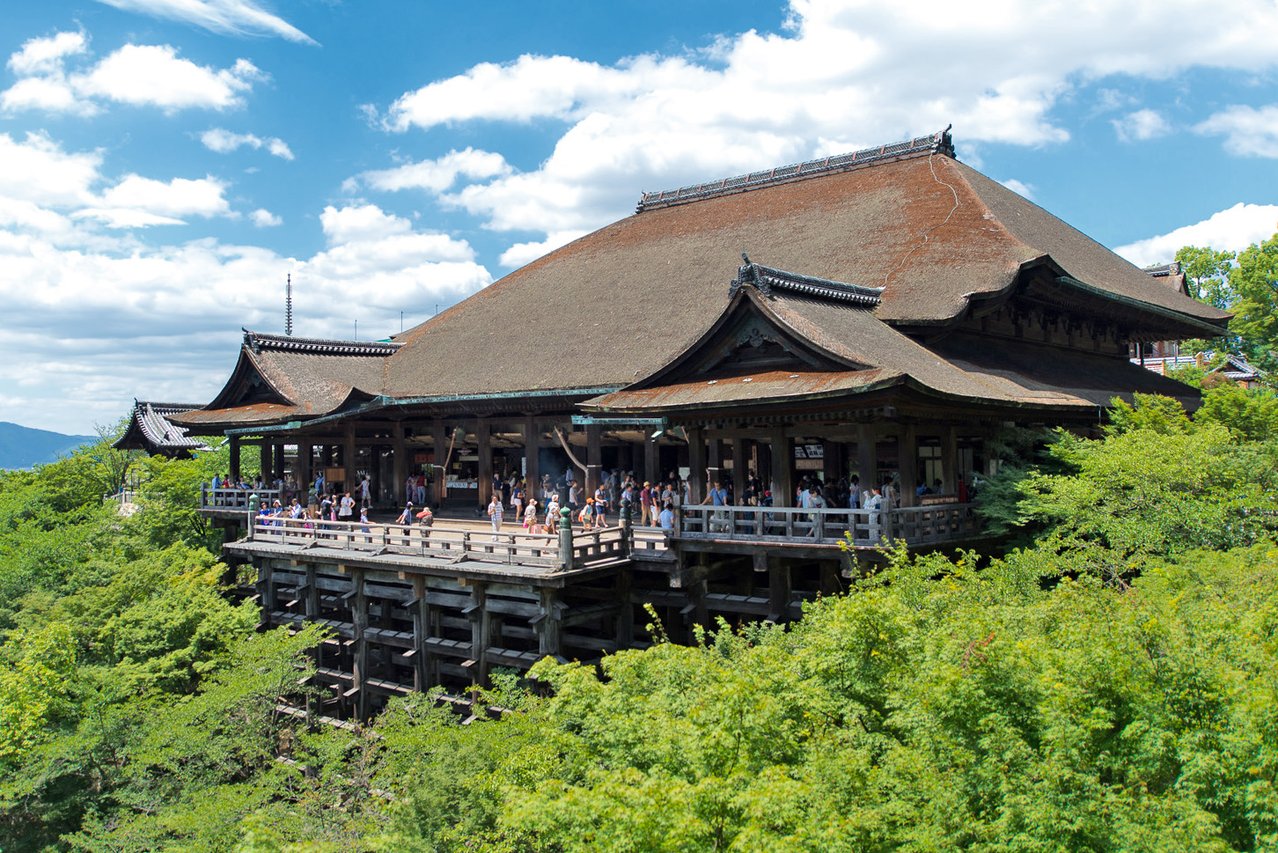
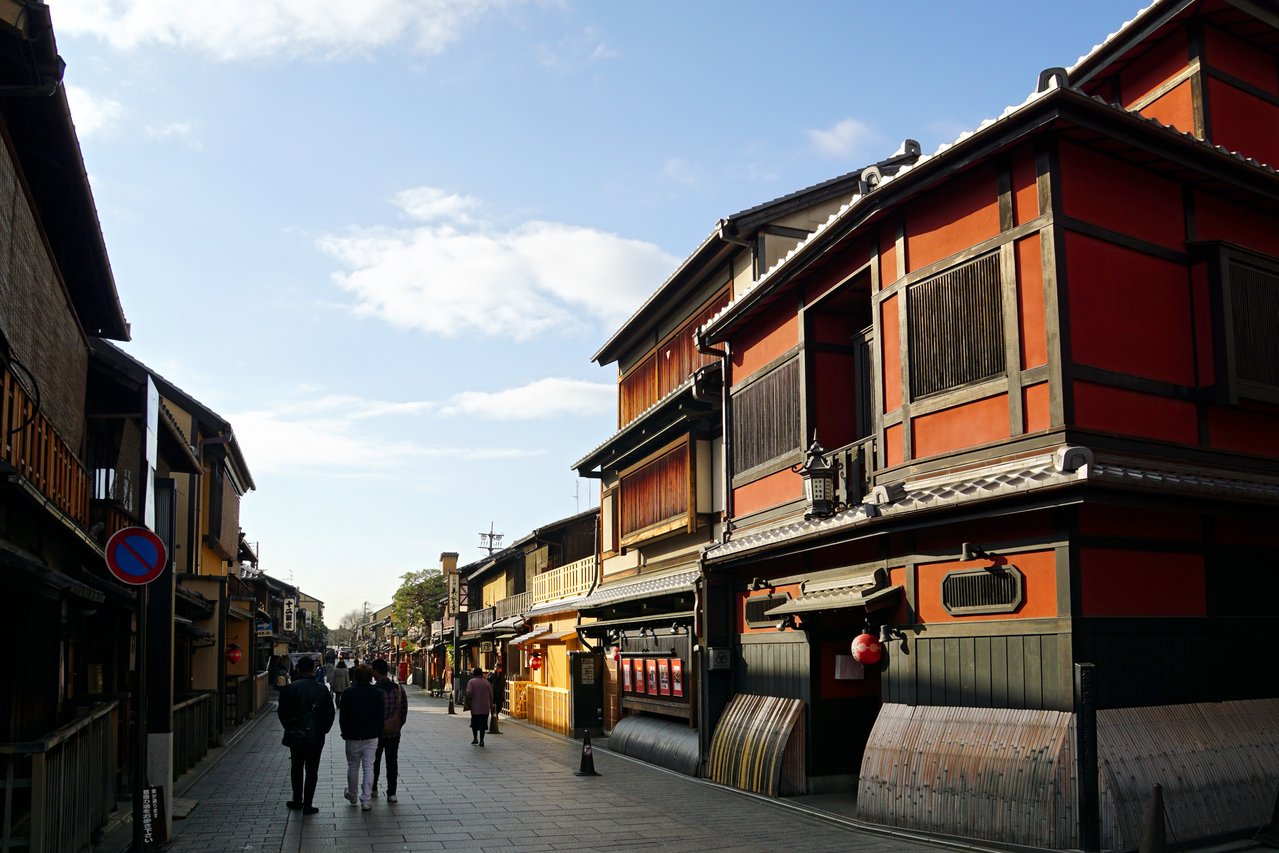
If you only have half a day to walk in Kyoto, walk here — Kiyomizu-dera on its wooden stage, the Ninenzaka–Sannenzaka stone lanes, Yasaka Pagoda at the end of the alley, lantern-lit shrines, and the slope down into Gion. This is the Kyoto everyone pictures in their head.
Picture a steep stone lane, low wooden houses leaning in on both sides, a five-story wooden pagoda rising at the end of the alley, and people strolling past in kimono — this is Higashiyama, the foothill quarter on the eastern edge of Kyoto that holds the face of the old capital better than anywhere else. It runs from Kiyomizu-dera, a World Heritage temple on its enormous wooden stage, down the Ninenzaka–Sannenzaka lanes that have been preserved for over 400 years, finishing at Yasaka Shrine and Maruyama Park, which spill straight into Gion.
Honestly, you could walk Higashiyama all day and not get bored. But if your time in Kyoto is tight, this is the first quarter we'd send you to. This guide walks you through it point by point, from Kiyomizu-dera down to Gion — with admission, opening hours, the nearest stations, the best photo spots, and the one timing trick that makes your trip feel completely different from everyone else's.
Higashiyama climbs a hillside, so the trick is to "start at the top and walk down" — begin at Kiyomizu-dera, which sits highest, then drift down the stone lanes from there. Your legs will thank you compared with climbing up.
Ordered as you walk downhill — starting at the top with Kiyomizu-dera, drifting down the stone lanes past the pagoda, the shrines and the park, finishing at the entrance to Gion. Doable in a half-day to a full day.
⛩️ World Heritage1
The highlight of the quarter and of Kyoto itself — a giant wooden stage projecting off the cliff above the treetops, with a view over the whole city. It's built from interlocking wooden beams without a single nail. Below it, the three streams of the Otowa Waterfall are there to drink from, said to grant blessings for long life, success in study, and love (pick just one stream).
All Kyoto Attractions →Two steep stone lanes below Kiyomizu-dera, the approach to the temple for over 400 years. Today both sides are wooden machiya houses, tea shops, Kyoto sweet shops and souvenir stores — easy walking, but every corner is photogenic. The most photographed spot is the Starbucks inside a tatami-floored townhouse (Yasaka Chaya), the first in the world with tatami seating.
Kyoto Food →
📸 Photo Spot3
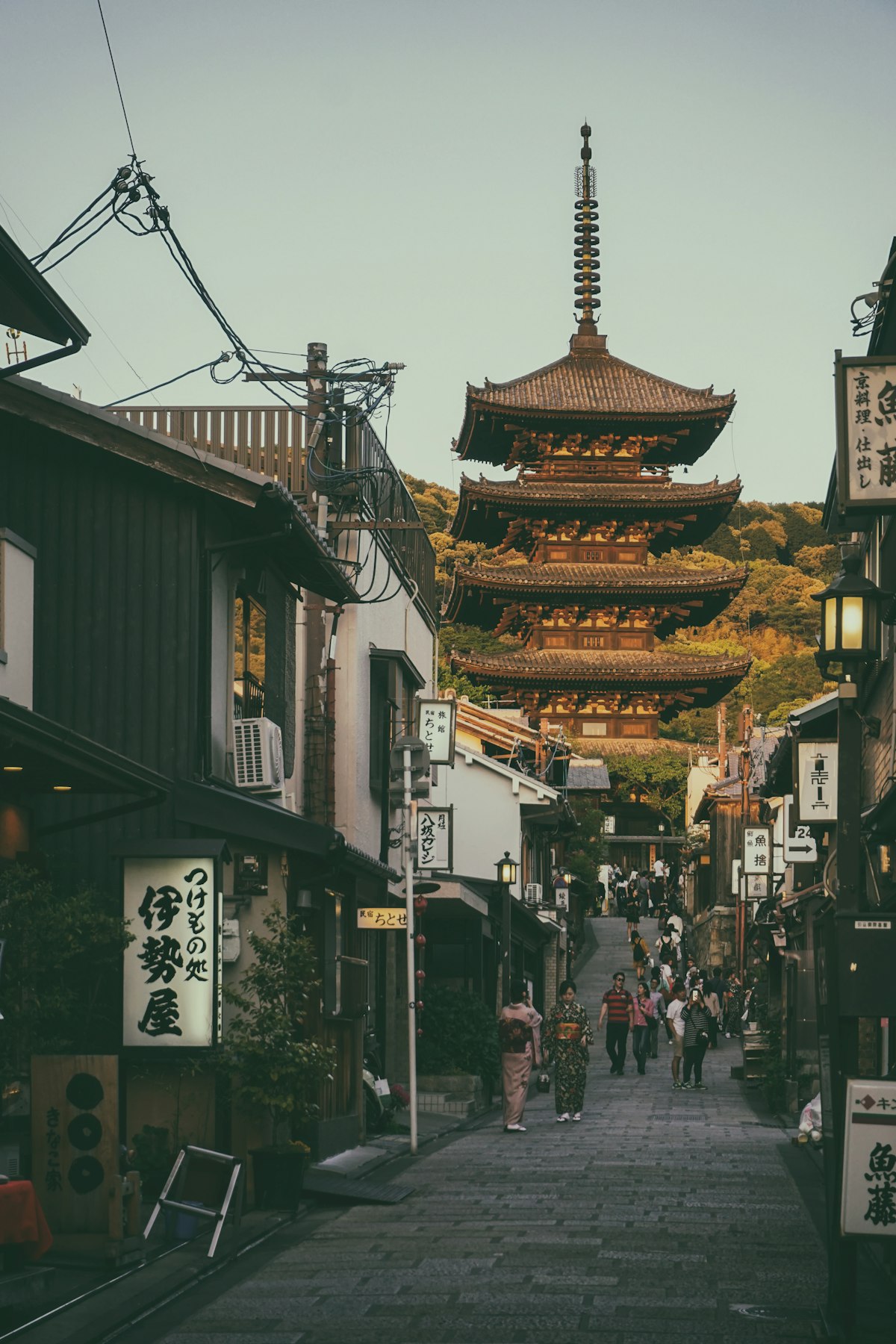
The most photographed five-story wooden pagoda in Kyoto. The classic angle is standing in the middle of the sloping Yasaka-dori, looking up so the pagoda rises perfectly at the end of the lane, framed by wooden houses on either side — the image that lands on postcards and travel feeds more than any other in this quarter. The pagoda belongs to Hokan-ji temple and dates back centuries.
Walk On Into Gion →The vermilion-gated shrine that sits exactly on the line between Higashiyama and Gion. Inside, rows of hanging lanterns are beautifully lit after dark. It's the host of the Gion Matsuri, Kyoto's most famous festival, held through July. Entry is free, it's open around the clock, and locals drop by to pray as a matter of course.
Gion District Guide →A quiet Zen temple most people walk straight past on their way to Kiyomizu — but the rock garden and the wooded grounds here are gorgeous, especially during the autumn leaves in late November. The real draw is the evening illumination in leaf season, when red maples reflect off the Garyo-chi pond alongside a projection-mapping show on the sand garden — a sight you rarely get to see.
Kyoto Attractions →The public park behind Yasaka Shrine — a place to rest your legs and the link between Higashiyama and Gion. It has a pond, paths and big shady trees, and locals love to sit out here. The star is the giant weeping cherry (shidarezakura) at its centre, which fills the whole park with people in spring; off-season it's simply a good place for a stroll. Free to enter.
Kyoto City Guide →The real charm of this quarter isn't any single spot — it's the walk itself, through the lanes and alleys of old wooden machiya between the big sights. Plenty of people rent a kimono from a shop near Kiyomizu or Gion first thing and spend the whole day taking photos. Rental starts around 3,000–6,000 yen per outfit (including hair styling), and it makes those shots on the stone streets and at Yasaka Pagoda look like stepping back in time.
More Around Kyoto →Higashiyama is full of tea houses, Kyoto sweet shops and street snacks. You don't need much of a plan — just stop at whatever looks good as you walk. But these three are the ones people always make a point of trying.
Staying around Higashiyama-Gion gives you the most atmospheric old-Kyoto setting there is — you can wake up and walk Kiyomizu before the crowds with ease. The trade-off is higher prices and trains that don't reach every corner. If you're on a budget or want easy transport, basing yourself near Kyoto Station or in downtown Kawaramachi and taking a bus or the Keihan into Higashiyama works just as well — it's only a 10–15 minute trip.
Worth knowing: no train runs right up to Kiyomizu-dera. You either walk up the hill from the nearest station, or take one of the two main city-bus lines that stop right at the foot of the slope.
From in front of Kyoto Station, take bus line 100 or 206, get off at Gojo-zaka or Kiyomizu-michi, then walk up the hill ~10 minutes to Kiyomizu-dera · a flat fare of around 230 yen · buses are slow and packed at peak hours, so leave extra time.
On the Keihan line, get off at Kiyomizu-Gojo (~12-min walk uphill to Kiyomizu) or Gion-Shijo (~5-min walk to Yasaka Shrine and Gion) · ideal if you're coming from Osaka or the Kamo River side, and it beats the bus for dodging traffic.
On the Tozai subway line, get off at Higashiyama Station for the northern end of the quarter (Kodai-ji / Maruyama / Gion) · if you're starting at Kiyomizu, the bus or Keihan is closer · either way, the whole quarter is an easy walk downhill.
Higashiyama and Gion are sister quarters, easily done together in one day, separated only by Yasaka Shrine — walk down from Kiyomizu by late afternoon and arrive in Gion as the lights come on, the best moment of all.
See clearly how the main stops line up — Kiyomizu-dera sits at the top, running down to Yasaka Pagoda and Yasaka Shrine, all walkable on a single route.
The geisha quarter next to Higashiyama — Hanamikoji street, the tea houses, and the etiquette of visiting Gion.
Gion Guide →An overview of the whole city's sights — temples, shrines and old quarters, with links into each guide.
Kyoto Attractions →The shrine with thousands of red torii gates climbing the mountain, Kyoto's icon for photos — pairs well with Higashiyama.
Fushimi Inari Guide →The bamboo grove, the Togetsukyo bridge and the valley temples on Kyoto's western edge — a good half-day.
Arashiyama Guide →Kaiseki, obanzai, udon, matcha and Kyoto souvenirs — what to eat in the old capital.
Kyoto Food →Standout locations across Higashiyama-Gion, Kyoto Station and downtown, with booking links.
See Kyoto Hotels →Open the Kyoto city guide for all the sights, food and neighbourhoods, or start with the hotels we've picked by area — so you can wake up and walk Kiyomizu before the crowds.