🌏 Destinations · All 🇯🇵 Japan · full guide Tokyo Tokyo Attractions Shibuya 🌃 Shinjuku 🧭 Travel Prep About Contact 🇹🇭 ไทย🇬🇧 English🇨🇳 中文🇪🇸 Español🇫🇷 Français
🌃 Shinjuku · Tokyo

Shinjuku — Tokyo's One Neighbourhood That Has Everything

Kabukicho's neon, the Golden Gai drinking alleys, the yakitori smoke of Omoide Yokocho, a sprawling garden, luxury department stores, and a free view high above the city — all clustered around the busiest railway station on Earth. We'll walk you through it all, day and night, on one page.

Start Here

If You Could Only Pick One Tokyo Neighbourhood —Shinjuku Has Everything

Picture this: you step out of the station at noon, ride a free lift to stand 200 metres above the city with Mount Fuji on the horizon, then come back down to wander a garden so quiet you forget you're in the middle of the metropolis. Come nightfall, the whole of Kabukicho lights up in neon, a giant Godzilla head looms over a rooftop, and a few steps further you slip into a tiny lane called Golden Gai — around 200 miniature bars crammed into alleys barely wide enough to pass another person. All of it sits in the same neighbourhood, all of it within walking distance — this is Shinjuku in a single district.

Shinjuku is the big hub on Tokyo's west side, packing every personality into one place: skyscraper offices in Nishi-Shinjuku, luxury department stores like Isetan and Lumine, Japan's liveliest nightlife district, and retro drinking lanes that still carry the scent of postwar Tokyo. This page walks you through it all — what to do, where to eat and drink, which area to stay in, and how to survive the busiest station in the world.

🌃 Straight up, before anything else: Shinjuku is fun all day, but its two faces couldn't be more different — daytime (free views, the garden, shopping — great for everyone, families included) and nighttime (Kabukicho, Golden Gai, the yakitori alleys — for the night-owl crowd). If you only have one day, do the daytime views first and close it out with dinner in the alleys come evening, and you'll get both worlds in a single day.
🌃
Top-Tier Nightlife
Kabukicho + Golden Gai — Japan's most happening after-dark district.
🍶
A Food Lover's Heaven
Charcoal yakitori, ramen, sushi, tiny bars — every budget covered.
🚆
An Easy Travel Hub
The station links every line — to Fuji, the airports, and highway buses, all from one place.
🌇
Free Views + a Big Garden
The free observation deck at the Government Building plus Shinjuku Gyoen.
Get to Know the Area

Shinjuku Breaks Down Into 4 Zones — No Confusion

Shinjuku is so big and so busy it overwhelms first-timers, but it really splits into just four zones around the station. Know what's in each one and you can plan your walk on the spot.

ZoneWhich sideKnown forBest for
KabukichoKabukichoNortheastNightlife district · Godzilla head · Golden GaiNight owls · drinking
Nishi-ShinjukuWest sideWestSkyscrapers · free Government Building view · hotelsViews · relaxing
Around the station (South/East)South & East ExitSouth-EastIsetan · Lumine · restaurants · Omoide YokochoShopping · eating
Shinjuku GyoenTo the southSouthBig garden · green and quiet · 10-min walk from the stationChilling out · families
🧭 An easy plan: do the west side (free views) and Shinjuku Gyoen by day, then cross over to the Kabukicho side in the evening to eat and drink. Every zone is a 5–12 minute walk from Shinjuku Station — no extra trains needed.
8 Things To Do

What To Doin Shinjuku

From daytime to late night — free views over the city, a big garden, luxury department stores, all the way to the Kabukicho neon and the legendary drinking lanes. You can fit it all into one day if you plan your walk well.
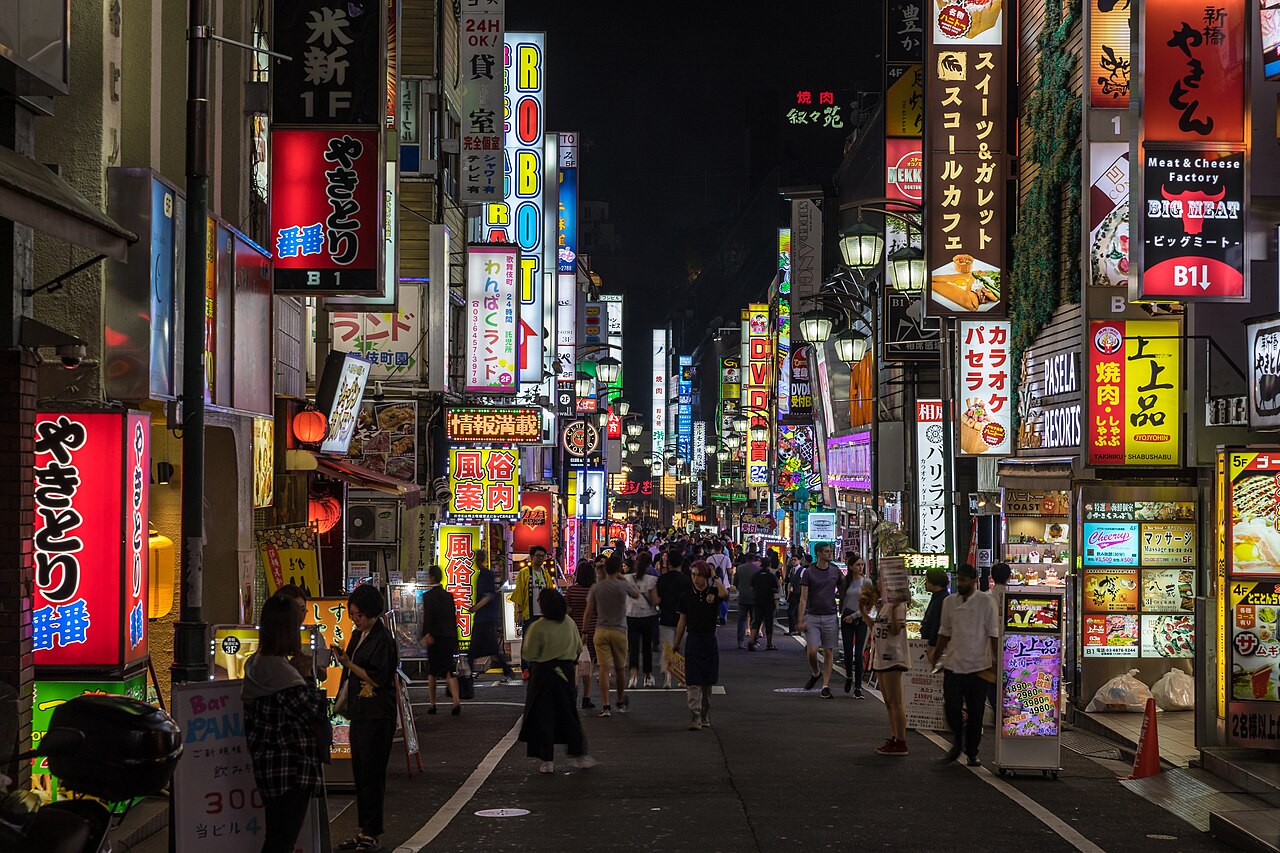
Neon signs at night in the Kabukicho district of Shinjuku, Tokyo 🌃 Night1
Kabukicho + the Godzilla Head
Kabukicho · Godzilla Head

Japan's busiest nightlife district, with neon blazing on every building in every direction. The highlight is the 12-metre Godzilla head peering over the 8th-floor terrace of the Gracery hotel — it roars, breathes smoke and lights up on the hour from 12:00–20:00. Photograph it for free from Godzilla Road below.

📍Location: Kabukicho · north of Shinjuku Station's east exit, ~5-min walk
🦖Godzilla head: roars + lights up on the hour, 12:00–20:00 (free to watch from the street)
🌙Best time: after sunset, when the neon is at full blast
💡Tip: Safe to walk through, but watch for touts (hosts/bars) — never follow a stranger into a building.
Tokyo Attractions →
🍶 🌃 Night2
Golden Gai
Shinjuku Golden Gai

The legendary drinking lanes behind Kabukicho — around 200 tiny bars packed into a web of six narrow alleys, some seating just 5–6 people. The postwar-Tokyo atmosphere here is something you won't find anywhere else, and every bar has its owner's own personality: one themed on film, another on punk music. Wander slowly and pick the one that calls to you.

📍Location: next to Kabukicho · ~7-min walk from Shinjuku Station
🕗Hours: most open around 7–8 pm until late (many close on Sundays)
💴Seat fee: many charge around 500–1,500 yen/person — check the sign at the door first
💡Tip: First-timers are more comfortable picking bars marked "English OK" or "no cover charge".
Izakaya Guide →
🍢 🍶 Eat & Drink3
Omoide Yokocho Alley
Omoide Yokocho · Memory Lane

A charcoal-grilled yakitori alley on the west side of the station, nicknamed "Memory Lane" — though plenty just call it "Piss Alley" or the smoky alley, because the yakitori smoke drifts down the whole lane. Tiny shops are packed in tight, your seat right beside the grill, the old-Tokyo atmosphere turned up to the maximum. Sipping a beer and eating grilled chicken skewer by skewer at dusk is an experience you have to try.

📍Location: west side of Shinjuku Station · ~3-min walk
🕔Hours: shops start opening around 17:00 · busiest from about 18:30 onwards
💴Budget: around 1,500–2,500 yen/person (yakitori + drinks) · many shops take cash
💡Tip: Come before 6 pm for an easier seat · have cash ready.
Japanese Food Guide →
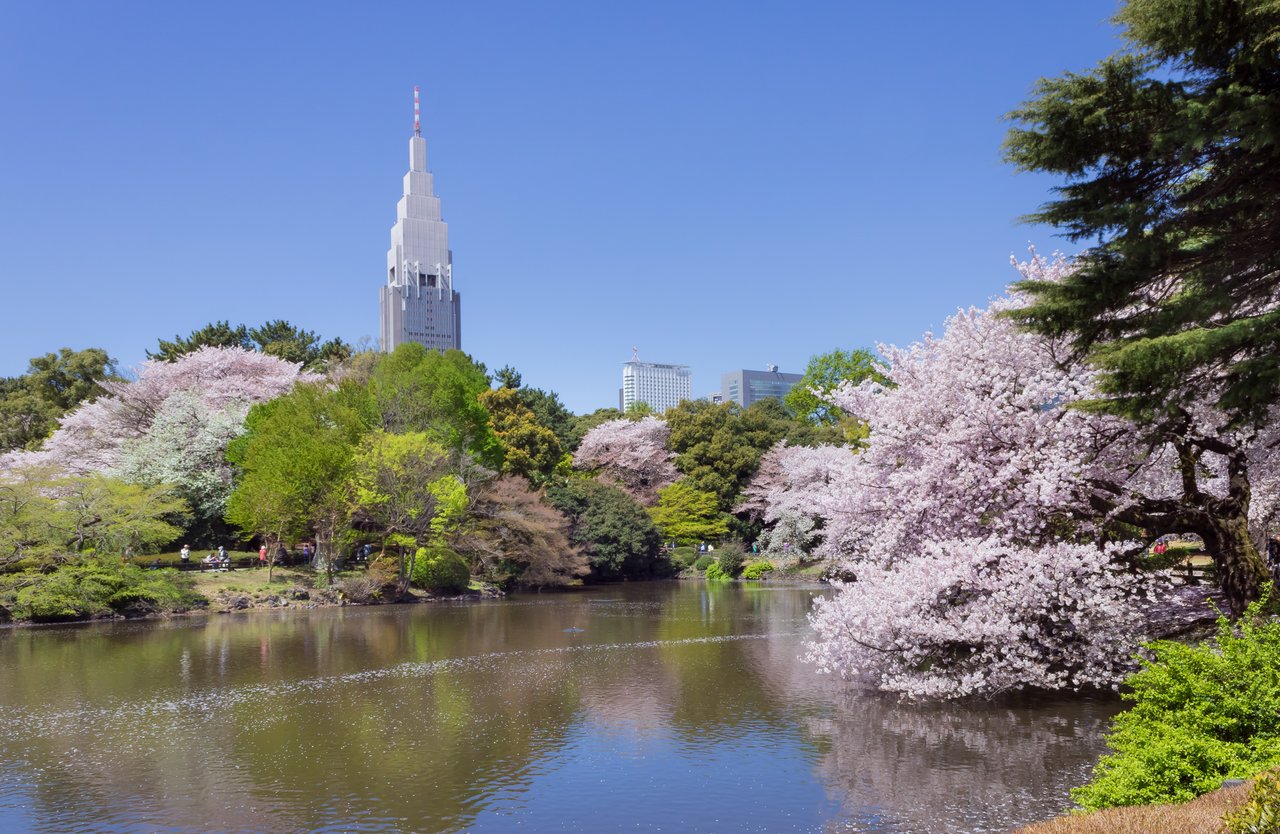
Shinjuku Gyoen garden with a pond and the NTT Docomo tower behind it, Tokyo 🌳 Day4
Shinjuku Gyoen
Shinjuku Gyoen

A large garden in the middle of the district so quiet you forget you're in Tokyo. It's divided into Japanese, English and French garden styles, with ponds, wide lawns to relax on and a tropical greenhouse. In spring it's a popular cherry blossom spot, and the autumn leaves are gorgeous too — the perfect place to rest your legs from the bustle of the neighbourhood.

📍Location: south of the station · ~10-min walk, or take the train to Shinjuku-gyoemmae
🎟️Entry: adults ~500 yen · students/seniors 250 · children free (2026 prices may change)
🕘Hours: ~9:00–16:30 · closed Mondays and over New Year
💡Tip: No alcohol inside · book ahead during cherry blossom season, when it overflows with people.
Tokyo Attractions →
🌇 🌳 Day5
Free Government Building View
Tokyo Metropolitan Gov. Building (Tocho)

A view over Tokyo from 202 metres up without spending a single yen — the observation deck is on the 45th floor of the Tokyo Metropolitan Government Building (Tocho) in Nishi-Shinjuku, a tower that stands 243 metres tall. On a clear day you can see Mount Fuji; at night, a whole sea of city lights. Far better value than paying for a ticket up another tower, and there's a café and souvenir shop on the deck too.

📍Location: Nishi-Shinjuku · ~10-min walk from the station's west exit, or Tocho-mae (Oedo Line)
🎟️Entry: free!
🕤Hours: south deck roughly 9:30–21:30 (check the latest · closed some days)
💡Tip: Go near sunset and you'll catch both the daytime view and the night lights in one visit.
Tokyo Attractions →
🛍️ 🛍️ Shopping6
Isetan + Lumine
Isetan · Lumine

Shinjuku is a shopper's heaven. The Isetan Shinjuku store is a 10-floor flagship, and its star is the basement (depachika) — one of the best food halls in Tokyo, where the sweets, desserts and ready-to-eat dishes are all beautiful. Lumine (run by JR East) is attached to the station itself and packed with fashion brands aimed at working professionals — you can shop without ever leaving the station.

📍Location: Isetan on the east side (Shinjuku-sanchome) · Lumine attached to the station's south/east side
🍰Don't miss: Isetan's B1 depachika · food so beautiful you'll lose yourself photographing it
🕙Hours: department stores generally ~10:00–20:00 (check the latest)
💡Tip: If it's raining or scorching, you can shop the station-connected stores all day without stepping into the sun.
Tokyo Travel Guide →
🎢 🌃 Night7
Tokyu Kabukicho Tower

An entertainment tower that opened in 2023 — 225 metres and 48 floors, the new landmark of Kabukicho. Inside it's all about entertainment: a cinema, a live theatre, an arcade, a Japanese-market-themed food hall on the 2nd floor (Shinjuku Kabuki Hall) and a hotel up top. A good place to duck out of the rain or find somewhere atmospheric to eat and drink before heading out into the night-time alleys.

📍Location: Kabukicho · ~7-min walk from Shinjuku Station's east exit
🍜Highlight: the Japanese-festival-themed food hall on the 2nd floor · restaurants on several floors
🎬Inside: a cinema · a live theatre · an arcade
💡Tip: A good starting point for first-timers who want a taste of Kabukicho without going deep into the alleys.
Tokyo Attractions →
🚉 🚆 Transport8
Shinjuku Station
Shinjuku Station

The station itself is an experience — it holds the Guinness World Record as the busiest railway station in the world, once reaching around 3.6 million passengers a day, with more than 35 platforms, dozens of exits, and several railway companies meeting in one place. Watching the orderly chaos of Japanese commuters is its own kind of fun, but first-timers get lost here very easily.

🚆Main lines: JR (incl. the Yamanote) · Keio · Odakyu · Toei Subway · Tokyo Metro
🚪Main exits: East / West / South — always know which exit you need first
⏱️Allow time: getting lost for 10–15 minutes is normal here — budget for it
💡Tip: Use Google Maps to set the exact "exit" you want, then follow the signs for that exit name — it makes everything far easier.
Japan Travel Prep →
Make the Most of One Day

Shinjuku in One Day — Morning to Midnight

Only have a day? This is the most comfortable order to walk it — catch the views and garden while the light's good, shop in the afternoon, then close out with dinner and proper Shinjuku night-time atmosphere.

MORNING–LATE MORNING
Free Views + Greenery

Start at the free Government Building observation deck in the late morning before the crowds build, then walk over to Shinjuku Gyoen while your legs are fresh. The two sit on opposite sides of the district but are within walking distance, and the morning light is best for photos and the clearest Fuji view.

AFTERNOON
Shopping + Food Halls

Head back to the station side and shop Isetan, dropping into the basement depachika for beautiful desserts, then move on to Lumine attached to the station. If the sun's harsh or it's raining, the station-connected stores keep you comfortable — rest your legs over a coffee before the night round.

EVENING–LATE NIGHT
Yakitori + Kabukicho Neon

Around 5 pm, make for Omoide Yokocho for charcoal-grilled yakitori before the shops fill up, then walk across to Kabukicho for the Godzilla head and the neon. Finish with a drink in one of the tiny bars at Golden Gai — both the food and the full night-time atmosphere, sorted.

Eating & Drinking in Shinjuku

What to Eat in Shinjuku

Shinjuku is one of Tokyo's top food-and-drink districts — everything from a few-hundred-yen yakitori skewer on the street to counter sushi and famous ramen shops. Pick by budget and by mood.

🍜 Where to eat, by zone: for old-Tokyo atmosphere, head to Omoide Yokocho (yakitori) or Golden Gai (bars) · for a relaxed, air-conditioned meal, go up to the restaurant floors of Lumine/Isetan or Tokyu Kabukicho Tower · for a late-night fix, Kabukicho is full of places open until the small hours.
🍢
Yakitori (Omoide Yokocho)
Charcoal-grilled chicken skewers in the smoky alley, atmosphere turned all the way up. Around 1,500–2,500 yen/person — bring cash.
🍜
Famous Ramen Shops
Shinjuku has plenty of celebrated ramen — shoyu, tonkotsu and tsukemen alike. Read up on how to order and the etiquette in our ramen guide.
🍣
Counter Sushi
Everything from budget conveyor-belt sushi to omakase counters. See the types and how to eat them in our sushi guide.
🍶
Izakaya + Tiny Bars
Drink with friends Japanese-style at an izakaya, or try one of the tiny bars in Golden Gai · start with our izakaya guide.
🍰
Depachika (Basement Food Hall)
Isetan's B1 is a heaven of desserts and ready-to-eat food — grab some to take back to your hotel or picnic in the garden.
💴
Carry Cash
Many of the small alleys and traditional shops take cash only. Always keep some yen on you and you won't miss the best spots.
Stay Here + Map

Stay in Shinjuku — the Most Convenient Base in Tokyo

If easy travel is your priority, staying in Shinjuku is great value, because the station connects every train line — to Fuji-Kawaguchiko, highway buses, and both Narita and Haneda airports, all from one place. There's accommodation at every level.

🏨 Choose your stay zone by style: for a quiet rest, pick the Nishi-Shinjuku side (skyscraper hotels, near the observation deck) · to be in the middle of the night-time buzz, choose the area around Kabukicho · see a ranked list of places to stay here in the 10 best hotels near Shinjuku Station, or get the city overview in the Tokyo travel guide.
How to Get There + Tips

How to Reach Shinjuku and Tips So You Don't Get Lost

Getting to Shinjuku is easy because nearly every train line passes through, but the station is so big it's easy to get lost. Here's how to get there plus the survival tips you'll want.

🚆
The Yamanote Line Is Easiest
From Shibuya, Harajuku, Ueno or Tokyo Station, take the JR Yamanote Line straight to Shinjuku — the way that's hardest for first-timers to get wrong.
✈️
Direct from the Airports
There are limousine buses and trains running direct from Narita/Haneda to Shinjuku (the Narita Express stops here) — ideal as the first base of your trip.
🗻
A Base for Fuji-Kawaguchiko
Highway buses and trains to Fuji-Kawaguchiko depart from Shinjuku (the Shinjuku Expressway Bus Terminal) — very handy for a Fuji trip.
🚪
Know Your Exit Before You Walk
The station has dozens of exits. Know which side you're heading to (East/West/South) and follow the signs for that exit name — don't wander, and allow 10–15 minutes in case you get lost.
📶
Set Up an eSIM Before You Fly
Having Google Maps in hand helps enormously for navigating the station and finding shops — switch on an eSIM the moment you land · see our eSIM/WiFi guide.
🍶
Learn the Etiquette Before the Alleys
Some tiny bars have their own rules (no photos / regulars only) — respect the signs at the door · read up on Japan travel etiquette.
Related Guides

Keep Exploring Tokyo — Other Districts, Sights, and Food

🚦

Shibuya

The world's busiest crossing, the Hachiko statue, Shibuya Sky, and Tokyo's youth-fashion district.

Shibuya Guide →
⛩️

Asakusa

Old Tokyo still alive — Senso-ji temple, the Kaminarimon gate, Nakamise street, and the Skytree.

Asakusa Guide →
🛍️

Ginza

The luxury district and fine food — high-end department stores, top sushi counters, and the Kabuki theatre.

Ginza Guide →
🗼

Tokyo Attractions

Every top sight across Tokyo, from temples and towers to gardens and shopping districts, on one page.

Tokyo Attractions →
🗓️

5-Day Japan Itinerary

A ready-made 5-day Japan trip — Tokyo, Kyoto and Osaka, sequenced so you don't waste time.

5-Day Plan →
🍜

Japanese Food Guide

Ramen, sushi, yakitori, izakaya — get to know Japanese food and how to order before you hit the Shinjuku shops.

Japanese Food Guide →
Frequently Asked Questions

Questions AboutVisiting Shinjuku

What is there to do in Shinjuku?
Shinjuku has it all, day and night. By day, take in the free view from the Tokyo Metropolitan Government Building (Tocho), stroll Shinjuku Gyoen, and shop the Isetan and Lumine department stores. By night, walk Kabukicho to see the Godzilla head on the Gracery hotel, sip a drink in the Golden Gai alleys (around 200 tiny bars), and eat charcoal-grilled yakitori in Omoide Yokocho — everything is within walking distance of Shinjuku Station.
What is Golden Gai, and can tourists go in?
Golden Gai is a warren of around 200 tiny bars across six narrow lanes behind Kabukicho. The bars are minuscule — some seat just 5–6 people — with a retro, postwar-Tokyo feel. Most open from around 7–8 pm until late, and many charge a seat fee (roughly 500–1,500 yen). Tourists are welcome; for an easier first visit, look for bars with an "English OK" or "no cover" sign, and always check the prices posted at the door.
Where is the free observation deck at the Tokyo Metropolitan Government Building, and what are its hours?
The observation deck is on the 45th floor (about 202 metres up) of the Tokyo Metropolitan Government Building (Tocho) in Nishi-Shinjuku. Entry is completely free. It's about a 10-minute walk from the west exit of Shinjuku Station, or take the Oedo Line to Tocho-mae directly beneath the building. The south deck opens roughly 9:30 am–9:30 pm (hours can differ on holidays, so check before you go). On a clear day you can see Mount Fuji.
How much is Shinjuku Gyoen, and what are its hours?
Adult entry is about 500 yen, students and seniors 250 yen, and children under junior-high age are free (2026 prices may change). It opens roughly 9:00 am–4:30 pm and closes on Mondays and over the New Year period. During cherry blossom season you need to book ahead because it gets very busy. Alcohol is not allowed inside, which makes it a calmer, more relaxed picnic spot than the typical free parks.
Is Shinjuku a good area to stay, and who is it best for?
It's excellent if you want a convenient base, because Shinjuku Station connects JR lines (including the Yamanote Line), trains to Fuji-Kawaguchiko, highway buses, and both Narita and Haneda airports. There's accommodation at every level, from hostels to luxury hotels. Nishi-Shinjuku is quieter and good for resting, while the Kabukicho side is lively at night — pick whichever suits your style.
Why is Shinjuku Station known as the world's busiest?
Shinjuku Station holds the Guinness World Record as the busiest railway station in the world, once reaching around 3.6 million passengers a day. It has more than 35 platforms, dozens of exits, and serves several railway operators (JR East, Keio, Odakyu, Toei, Tokyo Metro). First-timers get lost easily, so the trick is to remember which exit you need (e.g. East/West/South) and follow the signs for it — and allow an extra 10–15 minutes in case you take a wrong turn.
Ready to Take On Shinjuku

Pick a Well-Placed Base
Then Head Out, Day and Night

Shinjuku is the most convenient base in Tokyo. Lock in a hotel near the station first, then use it as your launchpad for both the neighbourhood and Fuji trips. Whenever you're ready, start your room search.

🔴 Search Tokyo Hotels Hotels near Shinjuku