One of the four sacred Buddhist mountains of China and a UNESCO site — a 3,099 m Golden Summit, a 48 m gilded Samantabhadra statue, a famous sea of clouds and a troop of cheeky wild monkeys. About 1.5 hours from Chengdu by high-speed train.
Picture this: you wake before dawn, ride a cable car to a peak at 3,099 metres, and stand in front of a golden temple hall and a gilded statue of Samantabhadra as tall as a ten-storey building. Around you, a white sea of clouds pours over the valleys below. When the first light hits, the whole cloud field turns gold and orange — the same scene Chinese pilgrims have crossed the country to witness for well over a thousand years.
This is Mount Emei (峨眉山 Emeishan) — one of the four sacred Buddhist mountains of China, in Sichuan Province, about 150 km southwest of Chengdu. It is a UNESCO World Heritage Site for both its culture and its nature (listed together with the Leshan Giant Buddha next door). More than thirty old Buddhist temples are scattered across its slopes, the forest is dense and ancient, and the summit is high enough to look down on the clouds.
What sets Emei apart from an ordinary tourist mountain is that it is a place of pilgrimage and a nature reserve at once: the golden temple and sea of clouds at the top, old temples and waterfalls along the way, and Baoguo Temple plus hot springs at the base to soak away the day's climbing. Most people stay one night to see it properly, and very often pair it with the Leshan Giant Buddha just down the road.
From the highest peak down to the base — each one has its own story.
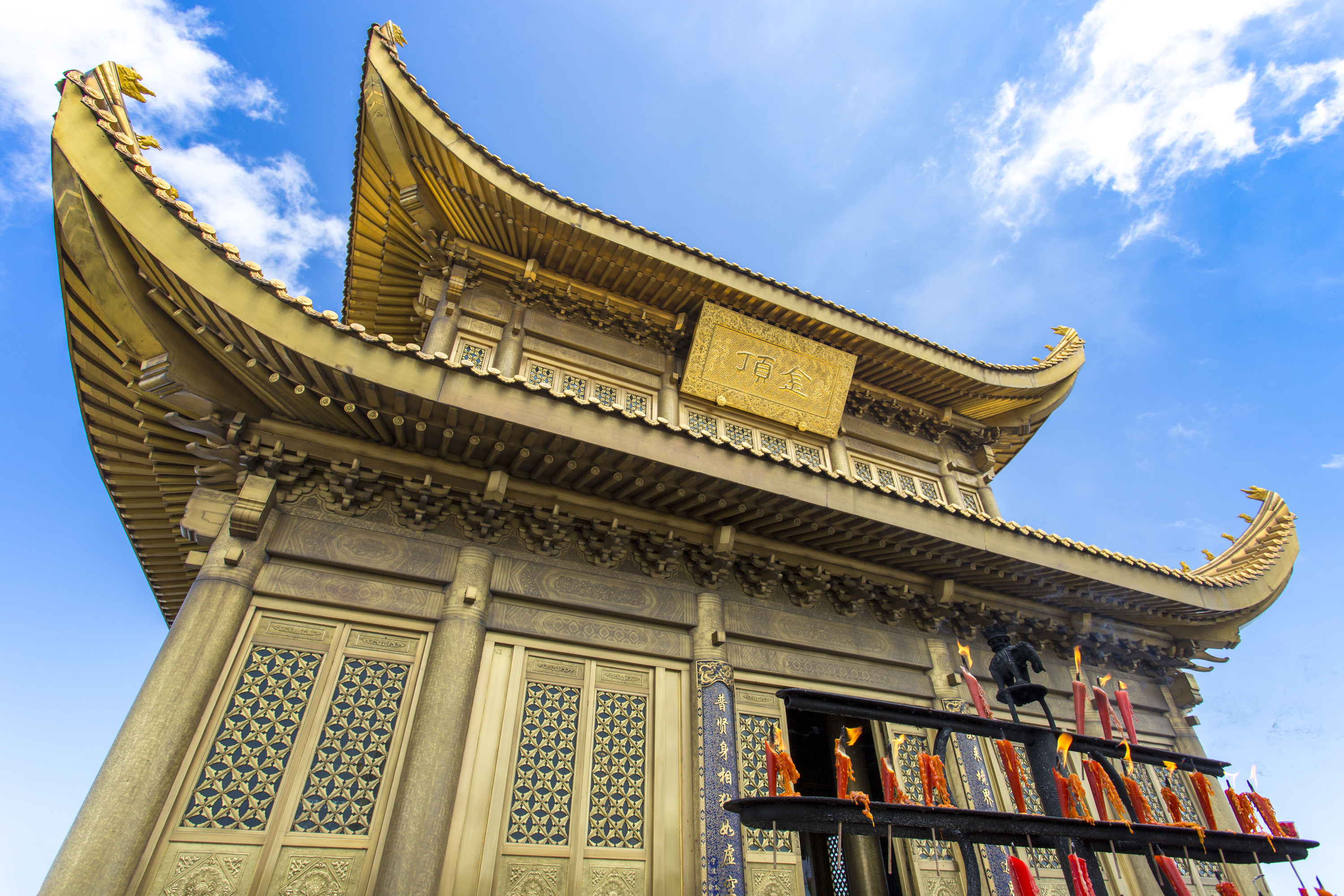
The heart of Mount Emei: a gilded bronze temple hall and a 48-metre statue of the bodhisattva Samantabhadra (普贤), weighing around 600 tonnes, completed in 2006 and standing on four elephants facing the four directions — the largest summit statue in China. This is where you watch the mountain's "four wonders": the sunrise, the sea of clouds, the Buddha's Light and the holy lamps at night. Reach it by cable car or on foot up the steps.
Because Emei sits on the edge of the Sichuan Basin, warm humid air from the south meets cooler air near the summit, and a sea of clouds frequently settles over the valleys below — most often after rain or at first light. People stay near the top to catch the sunrise above the clouds, but to be honest it is a matter of luck and weather: on some days the summit is wrapped in fog and you see nothing. Check the forecast before you go.
One of the things people remember most about Mount Emei is its troop of wild Tibetan macaques — habituated to people and frankly bold. They are expert at grabbing plastic bags, food and anything in your hands. The advice: don't carry visible food or plastic bags, keep valuables zipped away, don't make eye contact, don't feed them by hand, and walk past calmly. Fun if you are careful — a headache if you are not.
The largest temple at the foot of the mountain and the starting point for any Emei trip. Founded in the Ming dynasty, it is shaded by old trees and sits near the Emeishan Museum. It is a good place to pay respects and get your bearings before boarding the sightseeing bus up the mountain. The surrounding area has plenty of Sichuan restaurants and accommodation at every price level.
After a full day going up and down the mountain, the hot springs around the base (such as the Hongzhushan area) are a fitting reward. The warm mineral water eases legs tired from the steps, and several spots are resorts with both rooms and bathing pools in one place. Entry prices and hours vary by venue, so it is best to check before you go.
From Baoguo at the base, you first take the park's sightseeing bus up the mountain (this is compulsory — private cars cannot drive up). The bus takes you to Leidongping near the top, where you transfer to the Jinding cable car for a quick ride up to the Golden Summit — roughly ¥65 up / ¥55 down in high season (cheaper off-peak, around ¥30/¥20).
If you prefer to walk, you can climb the steps from Leidongping in about 1–2 hours, though it is hard work in the thin air at altitude. Most people take the cable car up to catch the morning view, then walk down at their own pace.
The mid-mountain stretch (around the Qingyin Pavilion to Wannian) is where you are most likely to meet the wild macaques. They are not afraid of people and they know that tourists carry snacks. The simple rules to remember: don't carry visible food or plastic bags, keep your phone, glasses and camera secured, don't stare at the monkeys, don't hold out food, and don't turn and run. Walk past calmly.
Travelling with small children? Hold hands the whole way and don't let them walk with snacks in hand. Many points have staff on watch and sticks to keep the monkeys at bay. If it really worries you, take the cable car straight up to the Golden Summit and skip the monkey zone altogether.
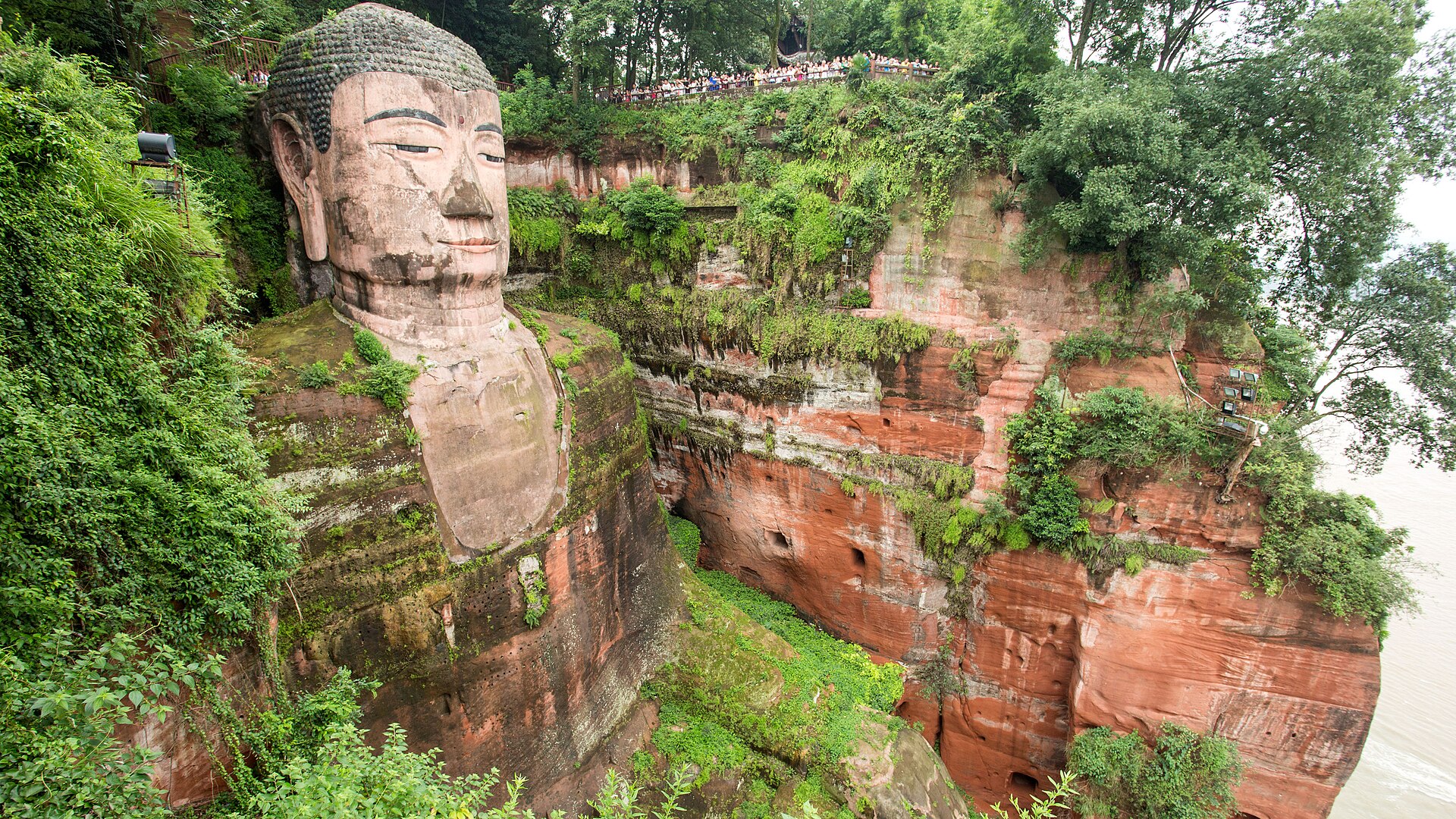
Mount Emei and the Leshan Giant Buddha are only about 30 km apart and share a single UNESCO World Heritage listing. The Chengdu–Leshan–Emeishan high-speed line passes both, so combining them is easy. The popular formula: Leshan in a half-day on the first day (the 71-metre Buddha carved into the cliff), then on to Emei for an overnight stay, and up to the Golden Summit early on the second morning for the sunrise and sea of clouds.
If you are genuinely short on time, pick one. Emei involves a lot of walking and sits at altitude, while Leshan is quicker to see and works well as a same-day return trip.
The easiest and fastest option is the high-speed train, which gets you from central Chengdu to the base of the mountain in just over an hour.
Stay near the summit or mid-mountain for the morning view, or use Chengdu as a base for a day trip.