A day-by-day 7–10 day plan that follows the bloom front as it rolls north each year — Tokyo · Fuji-Kawaguchiko · Kyoto · Osaka. It tells you exactly where to go each day, how to get there, which city to sleep in, and each city's 2026 bloom timing.
Ever planned the perfect sakura trip, booked your tickets six months out, and arrived to find every blossom already on the ground? It's the trap travellers fall into every single year, because cherry blossoms don't open across Japan at the same time — they roll slowly northward like a pink wave, starting in the south in late March and reaching Hokkaido around early May. The Japanese call this advancing line the "sakura zensen" (the cherry blossom front). A smart trip, then, doesn't pin itself to one city — it chases the bloom from south to north, so if one city is past peak, you simply shift on to the next one hitting its window.
This page is a day-by-day 7–10 day plan on the route that makes the most sense: start in Tokyo (blooms first) → swing by Fuji-Kawaguchiko for the pagoda-and-Fuji shot → head south to Kyoto, the old capital → finish in Osaka. If you have days to spare, continue north to Hirosaki, which blooms later. We cover the spots, how to get between them, and which city to sleep in each night.
Cities are ordered by their 2026 bloom timing (JMC forecast · full-bloom mankai shifts through the season) — Tokyo first because it blooms earliest, then down to Kansai and on north. With 9–10 days you can add a full Fuji day or continue to Hirosaki.
| Day | City / Base | Full bloom 2026 (approx.) | Highlights of the leg | Sleep at |
|---|---|---|---|---|
| D1–2 | TokyoTokyo · Kanto | ~Mar 27–28 | Meguro River · Ueno · Chidorigafuchi · Shinjuku Gyoen | Tokyo |
| D3 | Fuji-KawaguchikoFuji Five Lakes | ~early–mid Apr | Chureito Pagoda with Fuji · lakeside Oishi Park | Kawaguchiko / back to Tokyo |
| D4–5 | KyotoKyoto · Kansai | ~Mar 30–Apr 1 | Philosopher's Path · Maruyama Park · Arashiyama | Kyoto / Osaka |
| D6 | OsakaOsaka · Kansai | ~early Apr | Osaka Castle · Mint Bureau (open ~Apr 9–15) | Osaka |
| D7+ | Continue NorthHirosaki · Tohoku (optional) | ~Apr 22 | Hirosaki Castle + petal-carpeted moat (a second chance) | Hirosaki / Aomori |
Ordered the way that makes the most sense — start where it blooms first, then move on to the cities that bloom later. Each leg tells you what to do, which spots to hit, how to get there, and where to sleep. Shuffle the days to suit that year's real forecast.
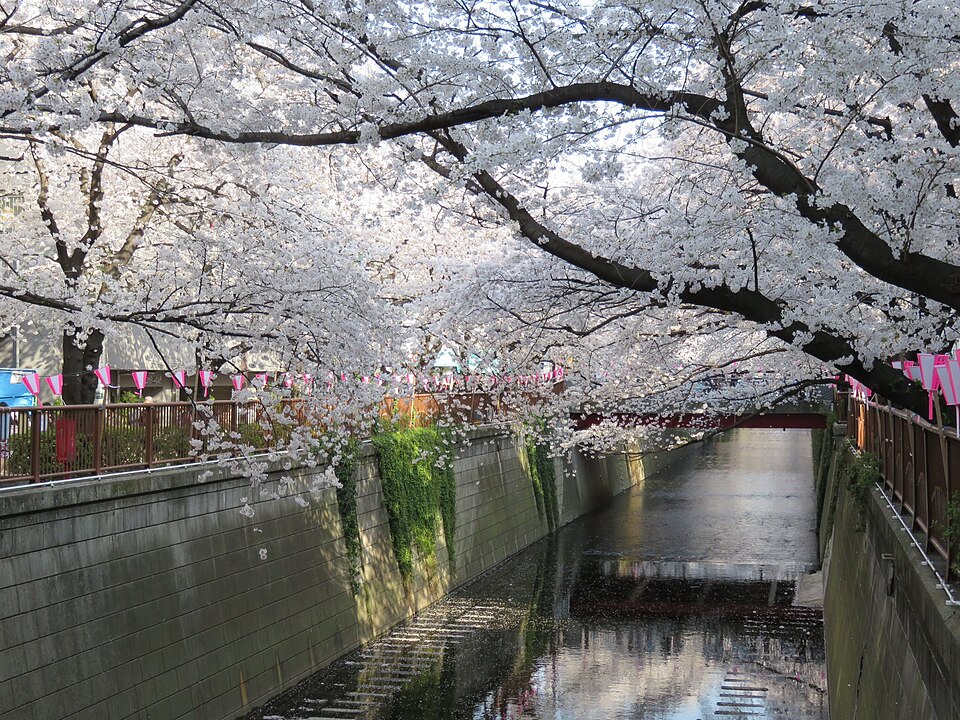
🗼 Tokyo1
Start in Tokyo because it blooms first on the route (peak ~late March). Two days here cover the three legendary spots — the Meguro River (Nakameguro), where around 800 trees arch into a tunnel over the canal, at its best after dark when the pink lanterns come on · Ueno Park, 1,000+ trees and a lively hanami atmosphere with food stalls · and Chidorigafuchi, the palace moat where you can rent a rowboat and drift beneath the blossoms. Close with Shinjuku Gyoen, a vast garden of many varieties that's perfect for sitting back and relaxing.
Tokyo Attractions →
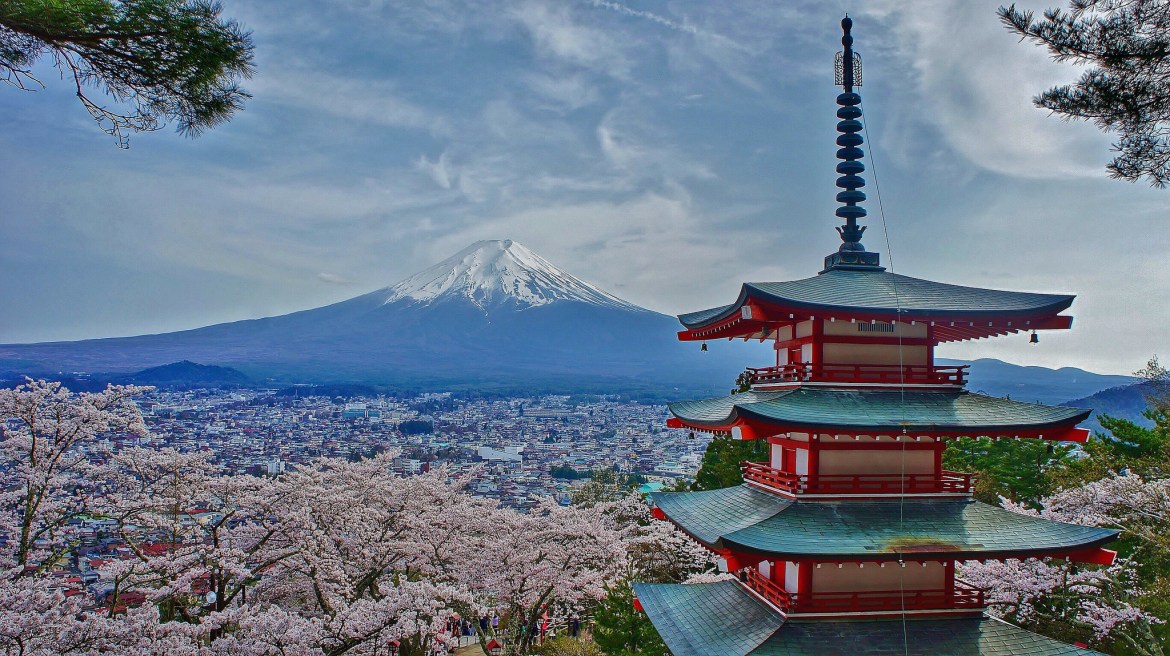
🗻 Fuji-Kawaguchiko2
Today is for Japan's most famous cherry blossom photograph — the Chureito Pagoda, a red five-story pagoda with sakura and snow-capped Fuji all in one frame (about 400 steps up, worth every one). In the afternoon, head down to the shore of Lake Kawaguchiko around Oishi Park, where Fuji is mirrored on the water. This area sits at higher elevation, so it blooms about a week later than Tokyo — which lines up perfectly if you come in early to mid-April.
Kawaguchiko (Fuji) Guide →
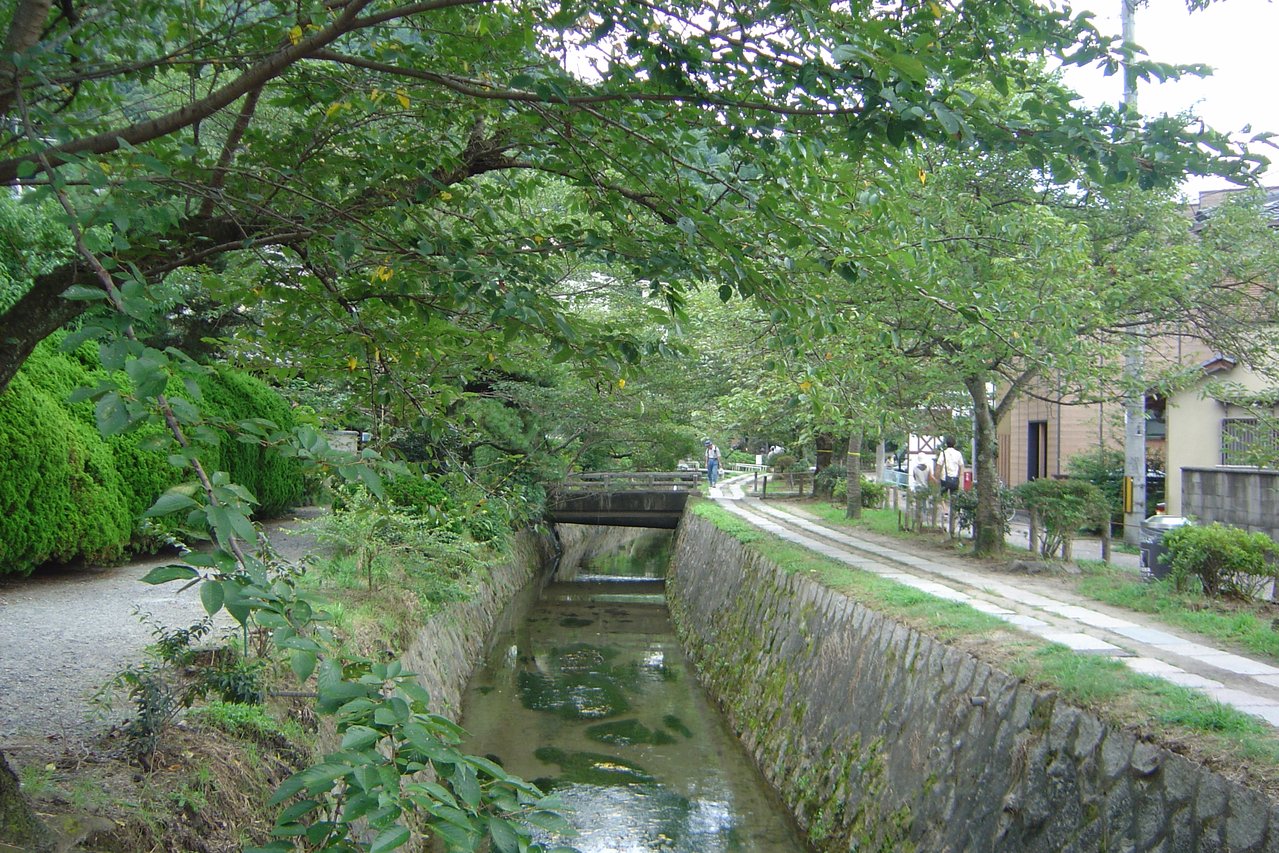
⛩️ Kyoto3
Take the shinkansen south to the old capital, where the blossoms peak just a few days behind Tokyo. Day one, walk the Philosopher's Path, roughly 2 km along a canal — at peak the petals drift on the water beautifully — then on to Maruyama Park, home to a giant shidarezakura (weeping cherry) lit up at night. Day two, head to Arashiyama (bamboo grove + riverside sakura) and the old temples of Higashiyama. If you like shrines, swing by Fushimi Inari.
Kyoto Attractions →Close out Kansai in Osaka (Kyoto→Osaka is just ~15 minutes by express). Morning, head to Osaka Castle, ringed by around 3,000 cherry trees and the Nishinomaru Garden (entry charged during the festival). If the timing lines up, try the Cherry Blossom Passage at Japan Mint (Sakura no Tohrinuke), a 600-metre walkway of around 330 rare cherry varieties open just one week a year. Spend the evening eating your way through Dotonbori.
Osaka Attractions →If you have 9–10 days and want to end the trip on full bloom, keep heading north to Hirosaki Castle, which blooms nearly three weeks after Kansai — a genuine "second chance" if central Japan has already dropped. The cherry blossom festival has over 2,600 trees, and the legendary sight is the moat where fallen petals carpet the surface until the water turns pink (hanaikada) — one of Japan's "three greatest cherry blossom spots".
Japan Travel Guide →
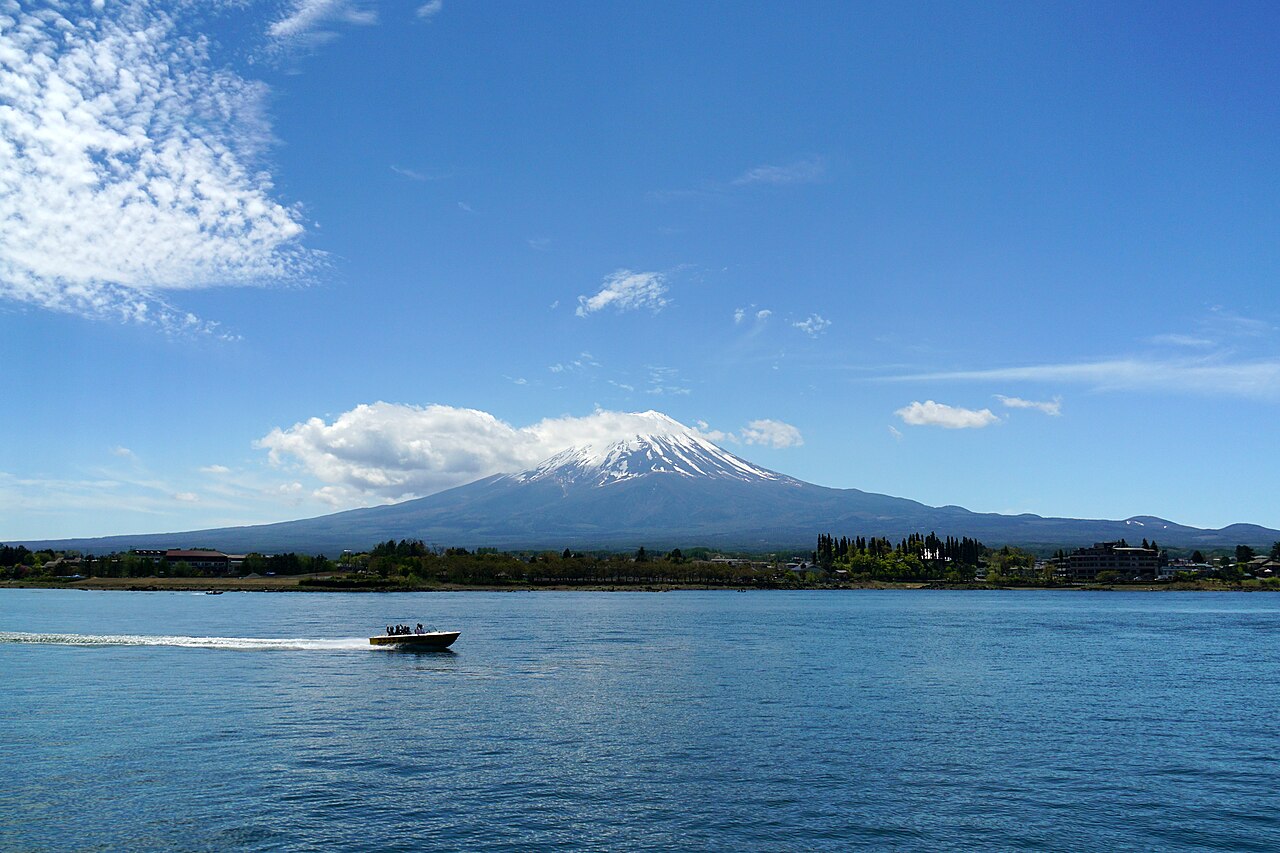
🧭 Flex the plan6
This is the trick that keeps a sakura trip from going wrong — don't treat the day order as fixed. As you get close (around 1–2 weeks out) the forecast gets far more accurate. If Tokyo is blooming early and will drop before you arrive, swap to Fuji or Kansai, which bloom later, then loop back. If everything is running late, push your days northward. Having a south-to-north route means you can slide in any direction.
Cherry Blossom Guide (read the forecast) →This route runs mostly on the shinkansen. Know these three things before you buy tickets and you'll save money and never miss the bloom window.
Tokyo–Kyoto–Osaka covers long distances, so a JR Pass can pay off if you ride between several cities — but it can't be used on Nozomi/Mizuho; you take Hikari/Sakura instead (slightly slower). Run the numbers against single tickets with a JR Pass calculator before you decide.
The Fuji Excursion runs direct from Shinjuku to Kawaguchiko in ~1 hr 55 min, and every seat is reserved — there are no non-reserved cars. The JR Pass covers only the Shinjuku–Otsuki section; the Fujikyu portion is about ¥1,770 extra. Book ahead in sakura season, as it sells out fast.
Warm weather speeds the bloom; rain and wind drop petals fast. A warm year like 2026 can run 3–7 days earlier than average. The safe move is to cover a 7–10 day window with a buffer day, and pack a warm layer because late March–April is still cool.
In sakura season rooms sell out fast and hit their highest prices of the year — book 3–5 months ahead and pick somewhere near a main train station so you can move easily. Open each city guide from the cards for full hotel and sights picks.
Tokyo → Fuji-Kawaguchiko → Kyoto → Osaka — you can see clearly how the route loops down into Kansai and can continue north, following the bloom front from the cities that flower first to those that flower later.
"Hanami" (花見) — spreading a mat for a picnic under the cherry trees — is the heart of the season, but there's etiquette the Japanese take seriously. Know it and you'll relax into it without putting a foot wrong.
A deeper dive into reading the 2026 bloom forecast city by city, timing kaika/mankai, and the best viewing spots nationwide.
Cherry Blossom Guide →Check whether buying a JR Pass beats single tickets on the Tokyo–Kyoto–Osaka route.
Calculate JR Pass →The classic golden route — Tokyo–Fuji–Kyoto–Osaka, day by day, easy to adapt to a sakura trip.
7-Day Itinerary →Want the autumn colours instead? A route that chases the koyo from north to south — the seasonal flip side of sakura.
Autumn Itinerary →The base for sakura framed with Mount Fuji — Chureito Pagoda, the lakeside, Fuji-view hotels, and how to get there from Tokyo.
Kawaguchiko Guide →Every region and city, with links into city guides, hotels, and attractions across Japan.
Japan Guide →Read the cherry blossom guide to pin down the 2026 bloom forecast city by city, then start hunting for rooms near the viewing spots early — before prices hit their yearly peak.