🌏 Destinations · All 🇯🇵 Japan · Full guide Tokyo Kyoto Kawaguchiko (Fuji) 🌸 Cherry Blossom Guide 🧭 Travel Prep Guide About Contact 🇹🇭 ไทย🇬🇧 English🇨🇳 中文🇪🇸 Español🇫🇷 Français
🌸 Sakura-Chasing Itinerary · 7–10 Days

Japan Cherry Blossom Itinerary — Chasing the Bloom South to North

A day-by-day 7–10 day plan that follows the bloom front as it rolls north each year — Tokyo · Fuji-Kawaguchiko · Kyoto · Osaka. It tells you exactly where to go each day, how to get there, which city to sleep in, and each city's 2026 bloom timing.

Route Overview

This Trip Isn't Just About Seeing Sakura —It's About Chasing the Bloom, City by City

Ever planned the perfect sakura trip, booked your tickets six months out, and arrived to find every blossom already on the ground? It's the trap travellers fall into every single year, because cherry blossoms don't open across Japan at the same time — they roll slowly northward like a pink wave, starting in the south in late March and reaching Hokkaido around early May. The Japanese call this advancing line the "sakura zensen" (the cherry blossom front). A smart trip, then, doesn't pin itself to one city — it chases the bloom from south to north, so if one city is past peak, you simply shift on to the next one hitting its window.

This page is a day-by-day 7–10 day plan on the route that makes the most sense: start in Tokyo (blooms first) → swing by Fuji-Kawaguchiko for the pagoda-and-Fuji shot → head south to Kyoto, the old capital → finish in Osaka. If you have days to spare, continue north to Hirosaki, which blooms later. We cover the spots, how to get between them, and which city to sleep in each night.

🌸 Straight up, before anything else: bloom dates change every year with the weather. The figures on this page are the official Japan Meteorological Corporation (JMC) forecast for 2026 (likely earlier than average this year thanks to a warm February). Use them as a planning framework, but before you lock in real tickets, always double-check the latest forecast on an official source (JMC, japan-guide, and JNTO all update weekly through the early part of the year).
🗼
D1–2 · Tokyo
Blooms first, ~late Mar. Meguro River · Ueno · Chidorigafuchi.
🗻
D3 · Fuji-Kawaguchiko
Chureito Pagoda with Fuji. Later than the cities, ~early–mid Apr.
⛩️
D4–5 · Kyoto
Philosopher's Path · Maruyama · Arashiyama. ~late Mar–early Apr.
🏯
D6+ · Osaka / North
Castle · Mint Bureau · on to Hirosaki ~mid-Apr.
The Whole Trip on One Screen

A 7-Day Route ThatChases the Bloom City by City

Cities are ordered by their 2026 bloom timing (JMC forecast · full-bloom mankai shifts through the season) — Tokyo first because it blooms earliest, then down to Kansai and on north. With 9–10 days you can add a full Fuji day or continue to Hirosaki.

DayCity / BaseFull bloom 2026 (approx.)Highlights of the legSleep at
D1–2TokyoTokyo · Kanto~Mar 27–28Meguro River · Ueno · Chidorigafuchi · Shinjuku GyoenTokyo
D3Fuji-KawaguchikoFuji Five Lakes~early–mid AprChureito Pagoda with Fuji · lakeside Oishi ParkKawaguchiko / back to Tokyo
D4–5KyotoKyoto · Kansai~Mar 30–Apr 1Philosopher's Path · Maruyama Park · ArashiyamaKyoto / Osaka
D6OsakaOsaka · Kansai~early AprOsaka Castle · Mint Bureau (open ~Apr 9–15)Osaka
D7+Continue NorthHirosaki · Tohoku (optional)~Apr 22Hirosaki Castle + petal-carpeted moat (a second chance)Hirosaki / Aomori
📅 How to read the table: a sakura trip should always have a buffer day, because the real bloom date can shift by 2–3 days — if Tokyo has dropped by the time you arrive, switch to Fuji or Kansai, which bloom later, or shuffle the day order if it's running early. With 9–10 days, leave 1–2 spare days rather than packing every single one; it rides out the weather far better.
Day by Day

7 Days, Chasing Sakura City by City

Ordered the way that makes the most sense — start where it blooms first, then move on to the cities that bloom later. Each leg tells you what to do, which spots to hit, how to get there, and where to sleep. Shuffle the days to suit that year's real forecast.
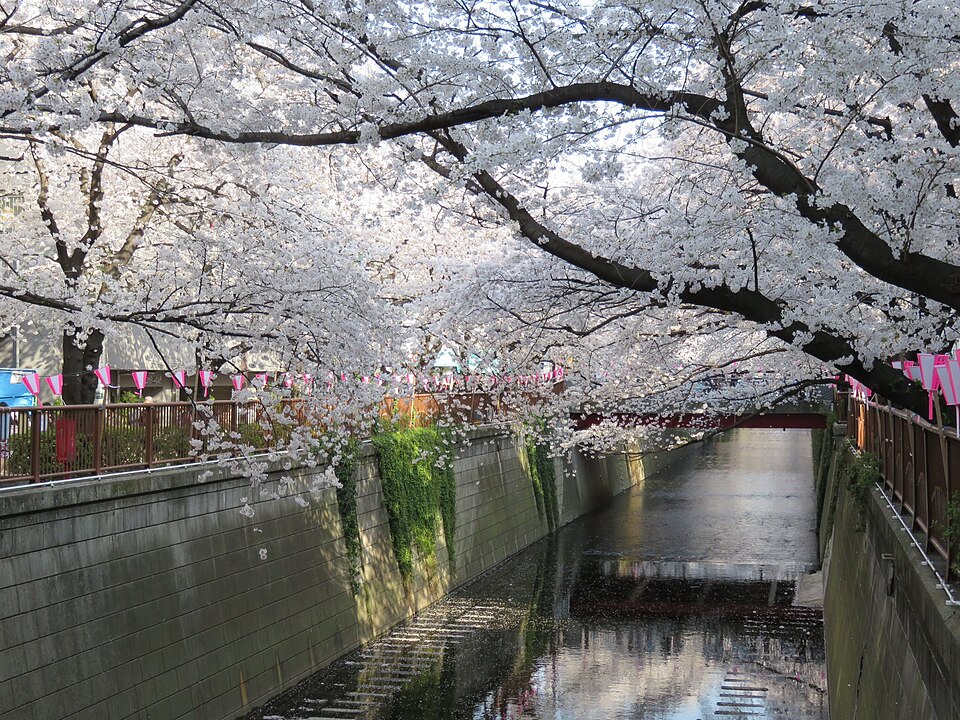
Cherry blossoms forming a tunnel along the Meguro River in Nakameguro, Tokyo, with pink lanterns on both banks of the canal 🗼 Tokyo1
Day 1–2 · Tokyo
Day 1–2 · Tokyo

Start in Tokyo because it blooms first on the route (peak ~late March). Two days here cover the three legendary spots — the Meguro River (Nakameguro), where around 800 trees arch into a tunnel over the canal, at its best after dark when the pink lanterns come on · Ueno Park, 1,000+ trees and a lively hanami atmosphere with food stalls · and Chidorigafuchi, the palace moat where you can rent a rowboat and drift beneath the blossoms. Close with Shinjuku Gyoen, a vast garden of many varieties that's perfect for sitting back and relaxing.

🌸Full bloom 2026: around Mar 27–28 (check the latest · peak lasts only a few days)
🚣Don't miss: renting a boat at Chidorigafuchi ~¥800/30 min (check that year's price)
🌃At night: Meguro lights its lanterns · Shinjuku Gyoen has a ~¥500 entry and bans alcohol
💡Tip: Walk the Meguro River away from Nakameguro Station — the crowds thin out and the photos are better.
Tokyo Attractions →
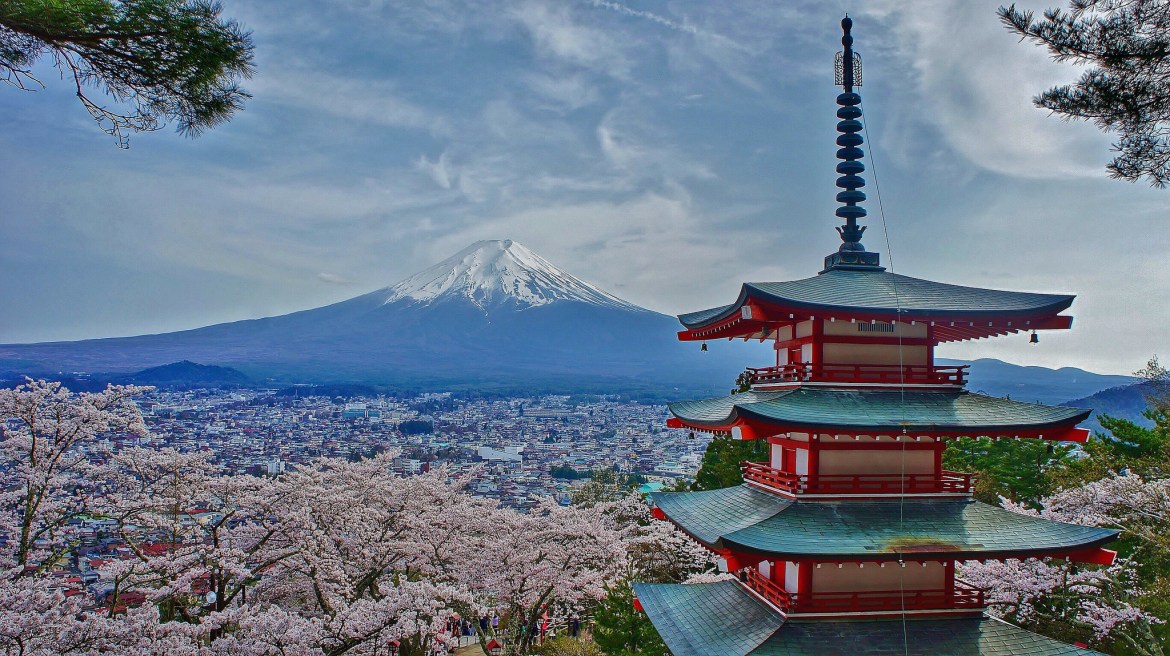
The five-story red Chureito Pagoda framed with snow-capped Mount Fuji and cherry blossoms in Fujiyoshida, near Kawaguchiko 🗻 Fuji-Kawaguchiko2
Day 3 · Fuji-Kawaguchiko
Day 3 · Fuji–Kawaguchiko

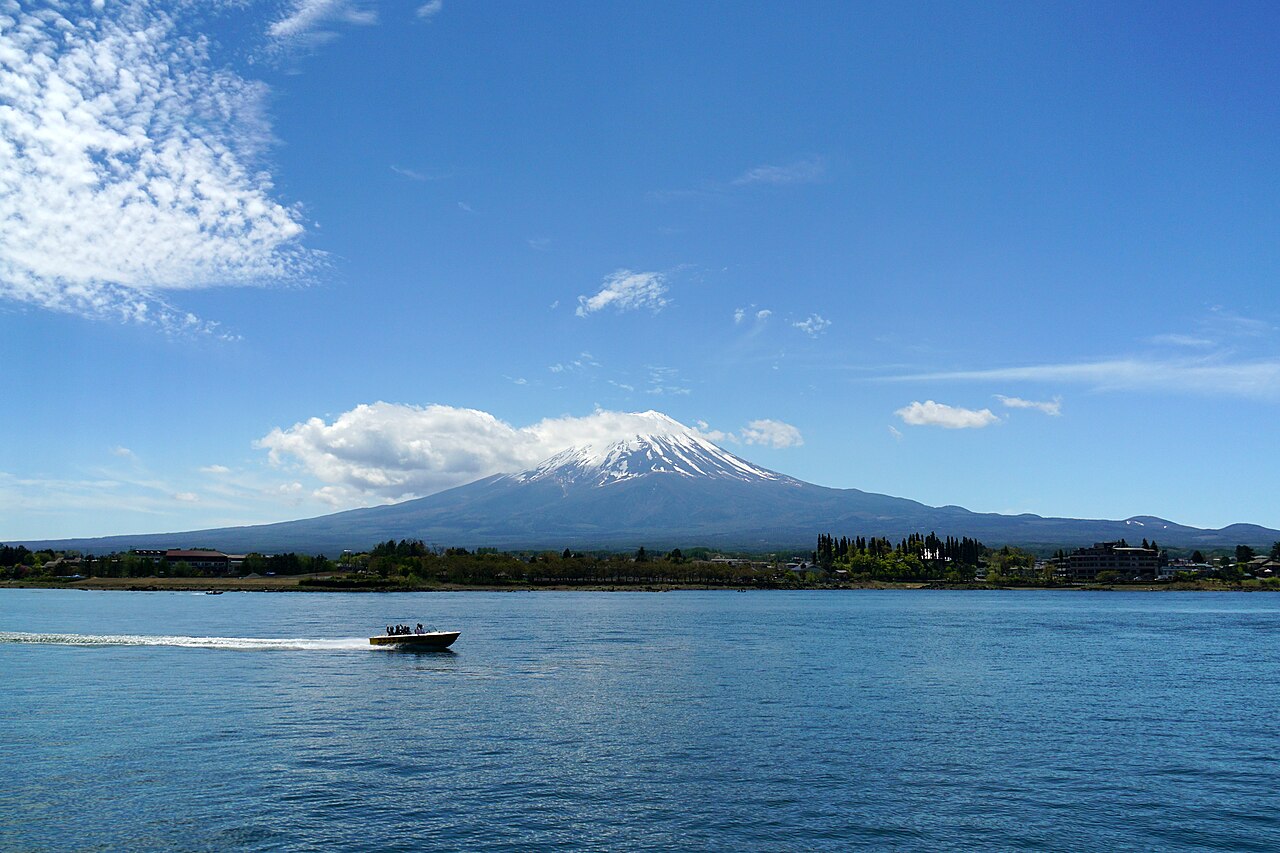
Today is for Japan's most famous cherry blossom photograph — the Chureito Pagoda, a red five-story pagoda with sakura and snow-capped Fuji all in one frame (about 400 steps up, worth every one). In the afternoon, head down to the shore of Lake Kawaguchiko around Oishi Park, where Fuji is mirrored on the water. This area sits at higher elevation, so it blooms about a week later than Tokyo — which lines up perfectly if you come in early to mid-April.

🌸Full bloom 2026: around early–mid Apr (higher up · later than the cities · check the latest)
🚆Getting there: Fuji Excursion direct from Shinjuku ~1 hr 55 min (all seats reserved)
🎫JR Pass: covers only the Shinjuku–Otsuki section · the Fujikyu portion is ~¥1,770 extra
💡Tip: Fuji is clearest at dawn and hides on cloudy days. Stay a night at Kawaguchiko to bet on a clear morning.
Kawaguchiko (Fuji) Guide →
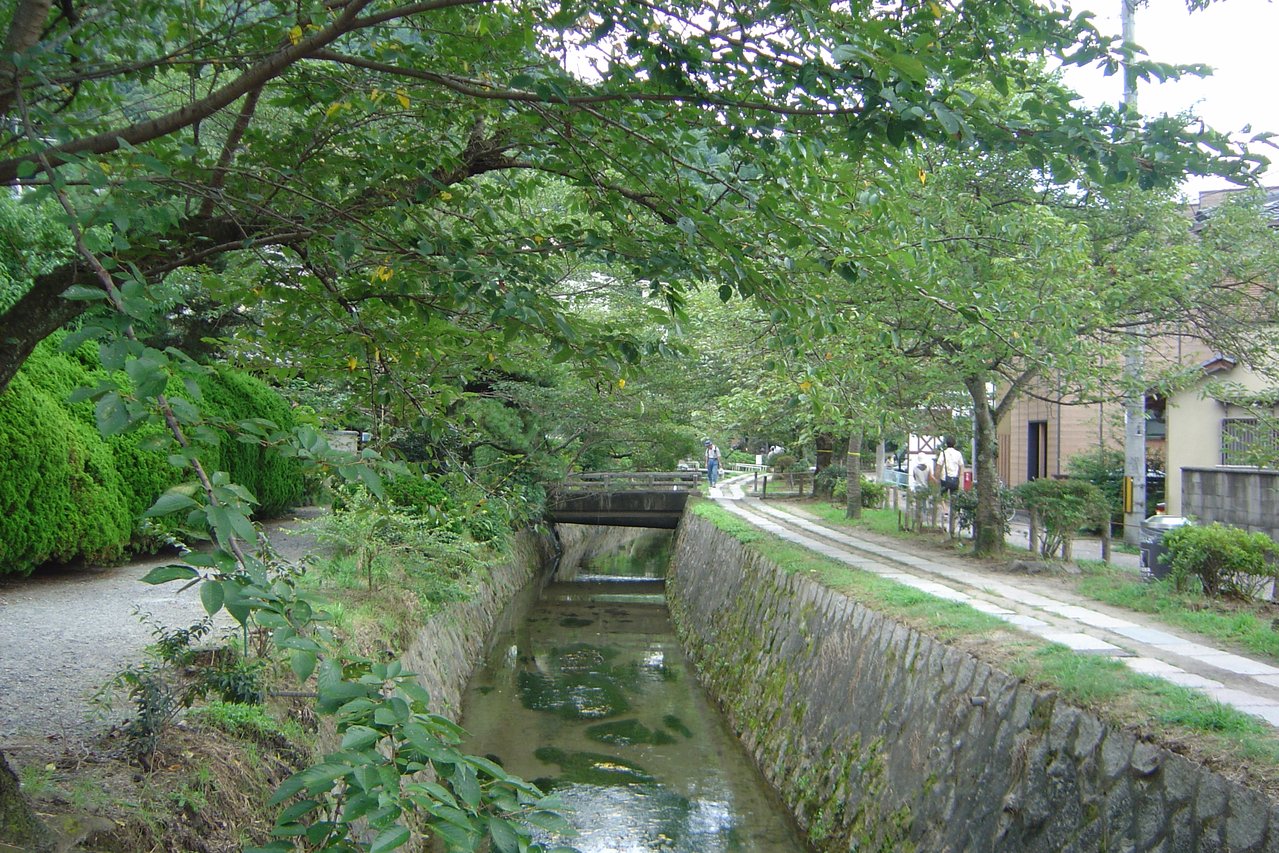
The Philosopher's Path in Kyoto, a walkway alongside a small canal lined with trees and stone walls in the Higashiyama district ⛩️ Kyoto3
Day 4–5 · Kyoto
Day 4–5 · Kyoto

Take the shinkansen south to the old capital, where the blossoms peak just a few days behind Tokyo. Day one, walk the Philosopher's Path, roughly 2 km along a canal — at peak the petals drift on the water beautifully — then on to Maruyama Park, home to a giant shidarezakura (weeping cherry) lit up at night. Day two, head to Arashiyama (bamboo grove + riverside sakura) and the old temples of Higashiyama. If you like shrines, swing by Fushimi Inari.

🌸Full bloom 2026: around Mar 30–Apr 1 (check the latest)
🚄Getting there: shinkansen Tokyo→Kyoto ~2 hr 15 min (with a JR Pass take Hikari, not Nozomi)
🌃At night: Maruyama and many temples hold illuminations (yozakura) · check that year's dates
💡Tip: Arrive very early at the Philosopher's Path and Arashiyama — far fewer people than at midday.
Kyoto Attractions →
🏯 🌸 Osaka4
Day 6 · Osaka
Day 6 · Osaka

Close out Kansai in Osaka (Kyoto→Osaka is just ~15 minutes by express). Morning, head to Osaka Castle, ringed by around 3,000 cherry trees and the Nishinomaru Garden (entry charged during the festival). If the timing lines up, try the Cherry Blossom Passage at Japan Mint (Sakura no Tohrinuke), a 600-metre walkway of around 330 rare cherry varieties open just one week a year. Spend the evening eating your way through Dotonbori.

🌸Full bloom 2026: around early Apr (check the latest)
🎫Mint Bureau: 2026 opens ~Apr 9–15 · requires advance online registration for a timed slot
🚆Getting there: Kyoto→Osaka express ~15 min · you can base in Osaka from D5
💡Tip: The Mint event runs at the tail of the season (mid-Apr) and may miss your dates — treat it as a bonus, not the main event.
Osaka Attractions →
🏯 🌸 Aomori (North)5
Day 7+ · Continue North to Hirosaki
Day 7+ · Hirosaki (extension)

If you have 9–10 days and want to end the trip on full bloom, keep heading north to Hirosaki Castle, which blooms nearly three weeks after Kansai — a genuine "second chance" if central Japan has already dropped. The cherry blossom festival has over 2,600 trees, and the legendary sight is the moat where fallen petals carpet the surface until the water turns pink (hanaikada) — one of Japan's "three greatest cherry blossom spots".

🌸Full bloom 2026: around Apr 22 · festival ~Apr 18–May 5 (check the latest)
🚄Getting there: shinkansen Tokyo→Shin-Aomori, transfer to JR for Hirosaki, then a ~15-min bus
🌃At night: the castle is lit with reflections on the moat — a completely different mood from daytime
🧥Tip: The north is still cold in mid-April — pack a warm jacket.
Japan Travel Guide →
Lake Kawaguchiko with snow-capped Mount Fuji behind and a boat crossing the lake on a clear day 🧭 Flex the plan6
Reorder the Days to the Real Bloom
Flex the route to the bloom

This is the trick that keeps a sakura trip from going wrong — don't treat the day order as fixed. As you get close (around 1–2 weeks out) the forecast gets far more accurate. If Tokyo is blooming early and will drop before you arrive, swap to Fuji or Kansai, which bloom later, then loop back. If everything is running late, push your days northward. Having a south-to-north route means you can slide in any direction.

📲Check live: JMC · japan-guide · JNTO update weekly through the early part of the year
🎟️Stay safe: choose free-cancellation rooms + flexible shinkansen tickets
🗺️The principle: city already dropped = move north · blooming late = swap a southern day in first
💡Tip: Leave a 1–2 day buffer on a 9–10 day trip rather than packing every day full.
Cherry Blossom Guide (read the forecast) →
Transport + Season

How to Move Between CitiesCheaply and Still Catch the Bloom

This route runs mostly on the shinkansen. Know these three things before you buy tickets and you'll save money and never miss the bloom window.

THING 1
Is the JR Pass Worth It?

Tokyo–Kyoto–Osaka covers long distances, so a JR Pass can pay off if you ride between several cities — but it can't be used on Nozomi/Mizuho; you take Hikari/Sakura instead (slightly slower). Run the numbers against single tickets with a JR Pass calculator before you decide.

THING 2
Reserve Seats for Fuji

The Fuji Excursion runs direct from Shinjuku to Kawaguchiko in ~1 hr 55 min, and every seat is reserved — there are no non-reserved cars. The JR Pass covers only the Shinjuku–Otsuki section; the Fujikyu portion is about ¥1,770 extra. Book ahead in sakura season, as it sells out fast.

THING 3
Allow for Season Swings

Warm weather speeds the bloom; rain and wind drop petals fast. A warm year like 2026 can run 3–7 days earlier than average. The safe move is to cover a 7–10 day window with a buffer day, and pack a warm layer because late March–April is still cool.

Where to Stay

Match Your Baseto Each Leg of the Trip

In sakura season rooms sell out fast and hit their highest prices of the year — book 3–5 months ahead and pick somewhere near a main train station so you can move easily. Open each city guide from the cards for full hotel and sights picks.

🗼
D1–2 Stay in Tokyo
Pick the Shinjuku/Shibuya area — easy to get around and close to the trains for Kawaguchiko · Tokyo Guide →
🗻
D3 Overnight at Kawaguchiko (if you can)
Sleep lakeside for one night to bet on a clear Fuji morning — rooms here sell out very fast · Kawaguchiko Guide →
⛩️
D4–5 Stay in Kyoto
Around Kyoto Station or Gion for easy temple-hopping on foot · Kyoto Guide →
🌸
Kyoto Full = Stay in Osaka
Osaka has more rooms and cheaper rates, with Kyoto just ~15 minutes by train. Book at Osaka hotels →
📅
Book 3–5 Months Ahead
Tokyo and Kyoto sell out fast and peak in price in late March–early April. Book late and you'll pay more or find nothing.
🎟️
Choose Free Cancellation
The real bloom date can land 2–3 days off. Book refundable rooms first, then lock it in once the forecast firms up · Tokyo hotels →
Route Map

This Trip's Routeon One Map

Tokyo → Fuji-Kawaguchiko → Kyoto → Osaka — you can see clearly how the route loops down into Kansai and can continue north, following the bloom front from the cities that flower first to those that flower later.

On-the-Trip Tips

Hanami Etiquette + the Little Things That Keep the Trip Smooth

"Hanami" (花見) — spreading a mat for a picnic under the cherry trees — is the heart of the season, but there's etiquette the Japanese take seriously. Know it and you'll relax into it without putting a foot wrong.

📐
Reserve Only What You Need
Lay out a mat the size of your group, don't claim large areas and leave them empty for hours, and never block park paths with your mat.
🌳
No Climbing, Pulling Branches, or Roots
Never climb trees or pull branches down for photos, and don't lay your mat over a cherry tree's roots — it's disrespectful and damages the tree.
🗑️
Carry Your Rubbish Out + Check Alcohol Rules
Bins are scarce this time of year, so bring bags to take it home, and check the signs first for whether the park allows alcohol — some have started banning it.
🌃
Don't Miss the Yozakura (at Night)
Many parks light the trees after dark — Maruyama, the Meguro River, Hirosaki Castle. The evening mood is completely different from daytime.
📶
Get an eSIM Before You Fly
The forecast shifts daily in season — you'll want live bloom updates and Google Maps to whichever park is peaking right now.
🧥
Pack a Warm Layer
Late March–April is still cool, especially in the north (Hirosaki) and at night. Bring a jacket along.
Keep Planning

Guides and Tools to Lock In This Trip

🌸

Japan Cherry Blossom Guide

A deeper dive into reading the 2026 bloom forecast city by city, timing kaika/mankai, and the best viewing spots nationwide.

Cherry Blossom Guide →
🎫

JR Pass Calculator

Check whether buying a JR Pass beats single tickets on the Tokyo–Kyoto–Osaka route.

Calculate JR Pass →
🗓️

Japan 7-Day Itinerary

The classic golden route — Tokyo–Fuji–Kyoto–Osaka, day by day, easy to adapt to a sakura trip.

7-Day Itinerary →
🍁

Japan Autumn Leaves Itinerary

Want the autumn colours instead? A route that chases the koyo from north to south — the seasonal flip side of sakura.

Autumn Itinerary →
🗻

Kawaguchiko (Fuji) Guide

The base for sakura framed with Mount Fuji — Chureito Pagoda, the lakeside, Fuji-view hotels, and how to get there from Tokyo.

Kawaguchiko Guide →
🇯🇵

Full Japan Travel Guide

Every region and city, with links into city guides, hotels, and attractions across Japan.

Japan Guide →
Frequently Asked Questions

Questions About theSakura-Chasing Trip

How many days do you need for a cherry blossom itinerary?
The core Tokyo–Fuji-Kawaguchiko–Kyoto–Osaka route works beautifully in 7 days. With 9–10 days it gets far more comfortable, giving you a buffer day for when the blossoms drop early or it rains, plus the option to continue north to Hirosaki (Aomori), which blooms later. Having a spare day is the heart of any sakura trip, because the real bloom date can always shift by 2–3 days.
Why follow the cherry blossoms from south to north?
Because cherry blossoms don't open all at once across Japan — they roll slowly northward like a wave (the Japanese call this line the sakura zensen, or cherry blossom front), starting in the south in late March and reaching Hokkaido by early May. Planning along this line means that if one city is past peak, you can shift north to a city that is blooming right then — and catch several cities in a single trip.
According to the 2026 forecast, when does each city bloom?
The official Japan Meteorological Corporation (JMC) forecast for 2026 expects Tokyo to flower (kaika) around Mar 19 with full bloom (mankai) around Mar 27 · Kyoto to flower Mar 23 with full bloom Apr 1 · Osaka to flower around Mar 24 with full bloom in early April · Fuji-Kawaguchiko and Hirosaki run later, into mid-to-late April. The 2026 season is likely earlier than average because of a warm February, and the figures are revised through the season — always check the latest forecast before you travel.
Is the JR Pass worth it for this trip?
The Tokyo–Kyoto–Osaka legs cover long distances by shinkansen, so a JR Pass can pay off if you ride between several cities, but two things to know: one, the JR Pass cannot be used on the fastest Nozomi/Mizuho trains — you take Hikari/Sakura instead · two, on the Kawaguchiko leg the Fuji Excursion only covers the Shinjuku–Otsuki section, while the Fujikyu portion costs roughly 1,770 yen extra. Compare it against single tickets with a JR Pass calculator before you decide.
Do you need to book the Osaka Mint Cherry Blossom Passage in advance?
Yes. Japan Mint's Sakura no Tohrinuke opens for just one week a year (around Apr 9–15 in 2026, check the latest), with about 330 rare cherry trees along a 600-metre passage. In recent years you have to register online in advance for a timed entry slot (booking opens around mid-March), and visitors who haven't booked may not be admitted, so confirm that year's rules on the official Japan Mint site first.
How far ahead should I book accommodation for cherry blossom season?
Book at least 3–5 months ahead, especially in Tokyo and Kyoto, which sell out fast and hit their highest prices of the year in late March to early April. If you book late, stay in Osaka and take the train into Kyoto (about 15 minutes), and choose free-cancellation rooms first — because the real bloom date can land 2–3 days off your booking, so you can adjust your plan once the forecast firms up.
Ready to Chase the Blossoms?

Nail the Bloom Timing
Then Book Before It Fills Up

Read the cherry blossom guide to pin down the 2026 bloom forecast city by city, then start hunting for rooms near the viewing spots early — before prices hit their yearly peak.

🔴 Search Sakura Hotels Japan Guide