A cluster of tiny islands in the Seto Inland Sea where the entire landscape has become an open-air museum — Yayoi Kusama's polka-dot pumpkins by the water, Tadao Ando's concrete galleries buried underground, and the Setouchi Triennale that art lovers fly in for. We'll help you plan it, from boarding the ferry to deciding whether to stay the night.
Picture a handful of small islands out in the sea where, decades ago, the young people had moved away to the big cities and the place was sliding toward becoming a ghost island. Then someone decided to bring contemporary art and world-leading architecture here — old wooden houses became artworks, museums were sunk into the hillsides to blend in with the land, and a giant polka-dot pumpkin went and sat at the end of a stone jetty over the water. This is the real story of Naoshima and the islands around it in the Seto Inland Sea.
Be honest with yourself: this isn't a stroll-around-and-you're-done kind of place — it's a trip you have to plan around ferry schedules, museum opening and closing days, and booking tickets ahead. So this page walks you through each island in turn: what's there, how to get to it, whether to cycle or take the bus, and whether to make it a day trip or stay over — so you don't arrive to find the museums shut.
Before we go island by island, here's the overview — what each one is known for, where you catch the boat from, and what kind of trip it suits. Travel times and ferry frequencies shift with the season, so check the latest timetable before you go.
| Island | Size | Known for | Ferry from | Best for |
|---|---|---|---|---|
| NaoshimaNaoshima · Kagawa | Main island | Kusama's pumpkins · Chichu · Benesse House · Art House | Uno ~20–40 min · Takamatsu ~30–50 min | First-timers · doable as a day trip |
| TeshimaTeshima · Kagawa | Smaller | Water-drop Teshima Art Museum · quiet rural feel | Naoshima/Uno/Takamatsu, then transfer | Slow travel · avoiding crowds |
| InujimaInujima · Okayama | Smallest | Seirensho museum inside a ruined copper smelter | Limited sailings, via Teshima ~few/day | The adventurous · with time to spare |
| OkayamaOkayama · Honshu | Honshu gateway | Base city, train on to Uno Port · Korakuen Garden | Shinkansen from Osaka/Hiroshima | Base on the Honshu side |
| TakamatsuTakamatsu · Shikoku | Shikoku gateway | Port city, ferries to several islands · Ritsurin Garden | Train across the Seto Ohashi bridge | Base on the Shikoku side |
Just the places people keep talking about after they get back — the main island of Naoshima, the legendary museums like Chichu and Benesse House, the quieter islands of Teshima and Inujima, and the big Setouchi Triennale festival.
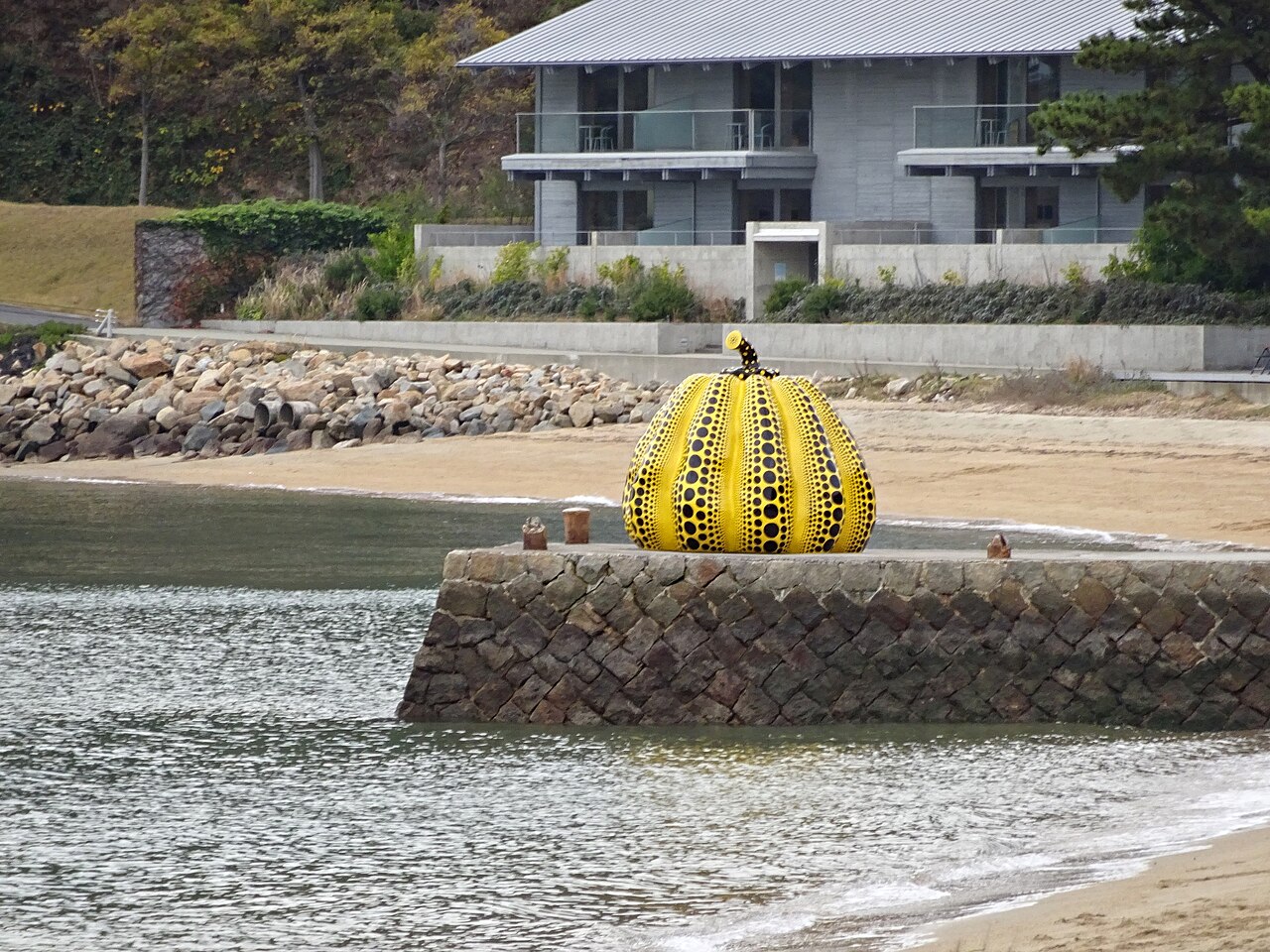
🎃 Main island1
The most famous of the art islands and where everyone begins — its symbol is Yayoi Kusama's polka-dot pumpkins, the yellow one perched on a stone jetty reaching into the sea, the red one at Miyanoura Port. The whole island is scattered with museums, outdoor art, and old houses turned into installations. You can cover it in a day by bike or by bus.
Hiroshima Guide (a nearby base) →Tadao Ando designed this museum to be almost entirely underground, with natural light drawn down into bare concrete rooms. The highlights are a chamber displaying Monet's water-lily paintings and installations by James Turrell and Walter De Maria — few works, but each one meant to be taken slowly, room by room. People say with one voice that it's the highlight of the whole trip.
Japan Travel Guide →Benesse House (designed by Tadao Ando, opened in 1992) is a museum that's also a hotel, set on a hillside overlooking the Seto Inland Sea — stay here and you get free museum entry and after-hours access to some buildings. Over in Honmura village, the Art House Project turns old wooden houses into artworks, like Minamidera, which Ando rebuilt around a James Turrell light installation inside.
2-Week Japan Itinerary →One work, but you won't forget it — a concrete shell shaped like a water drop about to land, without a single supporting column. It's a collaboration between artist Rei Naito and architect Ryue Nishizawa, and inside, tiny beads of water seep up from the floor and trickle together all day, while openings let in wind, light, and birdsong. People go in and sit silently watching the water for an hour. Teshima is much quieter and more rural than Naoshima.
Plan Your Japan Trip →The smallest island in the group, and the strangest — the star is the Inujima Seirensho Art Museum, built on the ruins of a 1909 copper smelter that ran for only about ten years before being abandoned. Architect Hiroshi Sambuichi designed it to use the original chimneys, slag brick, and natural energy instead of air conditioning, paired with work by Yukinori Yanagi. Walking through industrial ruins turned into art feels like slipping into another world.
2-Week Japan Itinerary →A contemporary art festival held every three years, spreading works across the islands of the Seto Inland Sea (more than a dozen sites including Naoshima, Teshima, Inujima, Shodoshima, and the port towns of Takamatsu and Uno). It runs in three seasonal sessions (spring/summer/autumn) for roughly 100 days, and the most recent edition was the sixth, in 2025 — during the festival the islands buzz and far more works open than usual, though the crowds grow to match.
Japan Travel Guide →The islands sit out in the Seto Inland Sea — no trains cross over, so everything runs on ferries. Get these three things straight and the planning stops being confusing. Sailings and travel times shift with the season, so always check the latest timetable before you go.
Two main approaches — from the Honshu side, take a train to Okayama, then transfer to JR for Uno Port (about 45 min) · from the Shikoku side, use Takamatsu Port, which you can walk to from the train station. Pick the port that matches where your trip already is.
Boats arrive mainly at Miyanoura Port on Naoshima — about 20–40 minutes from Uno, 30–50 minutes from Takamatsu (there are both fast boats and regular ferries, at different prices). For Teshima/Inujima you transfer to inter-island ferries, which run less often, so check the ferry company schedule (such as Shikoku Kisen) ahead.
Naoshima has a public bus linking the port, Honmura, and the Benesse zone, plus a shuttle within the museum area. Many people prefer to rent a bicycle to explore the coastal art freely, but the island is hilly, so an electric bike is far more comfortable. Reserve ahead when it's busy.
Be honest — people trip up on this one for the same few reasons every time: museums closed, tickets not booked, or ferry timings miscalculated. Get these six things right and the trip runs a lot smoother.
See clearly where each island sits relative to the Okayama/Uno ports (Honshu side) and Takamatsu (Shikoku side) — it makes planning your ferry route a lot easier.
The big city to the west near Setouchi — the Peace Memorial Park, Miyajima Shrine, and a handy base for the train into Okayama.
Hiroshima Guide →String several cities into one trip — the art islands slot neatly between Kansai and Hiroshima.
See the 2-Week Plan →The corners travellers haven't reached yet — valleys, sand dunes, pilgrim trails, and quiet islands off the main route.
Japan's Hidden Gems →Ancient forests, the Japan Alps, and UNESCO sites for hikers and nature lovers.
Japan's Nature →Every region and city, with links into city guides, hotels, and attractions across Japan.
Japan Guide →Visa · eSIM · IC Card · JR Pass · yen · power plugs · etiquette — everything before you fly.
Travel Prep →The art islands slot easily into a Kansai–Hiroshima trip — open the Japan travel guide to thread the whole route together, or start looking for a place to stay in the port cities of Okayama/Takamatsu early, because rooms on the islands are very limited.