Home Hakodate Hokkaido Japan About
Home  ›  Asia  ›  Japan  ›  Hakodate  ›  Travel Tips
🚃 Before You Go · Hakodate 2026

Hakodate Travel Tips
Vintage trams, hairy crab and the first snow

Which Shinkansen station do you actually get off at? Is the tram day pass worth buying? When does the hairy crab taste best? Everything you should know before you land in one of Japan's most atmospheric port cities.

Getting There

How to reach Hakodate — pick the route that fits

Hakodate sits at the southern tip of Hokkaido. You can arrive by Shinkansen from Tokyo, limited express from Sapporo, or fly direct into HKD Airport.

🚄
Shinkansen from Tokyo — Hokkaido Shinkansen Hayabusa
Tokyo → Shin-Hakodate-Hokuto → Hakodate · The main trunk-line option

The Hayabusa departs Tokyo Station, dives through the world's longest undersea tunnel (Seikan Tunnel, 53.85 km), and pulls into Shin-Hakodate-Hokuto Station in roughly 4 hours. From there, the Hakodate Liner train completes the final 18 km to Hakodate Station in 19 minutes (¥360). Trains run about once an hour from Tokyo. The JR Pass covers the full journey. One thing worth knowing upfront: Shin-Hakodate-Hokuto is not in the city — it is a separate interchange station. Every visitor needs to connect.

~4 hrs + 19 min (Liner) ~¥23,000–26,000 Tokyo → Shin-HH JR Pass covers everything
Best for: Travellers on a multi-city Japan trip with a JR Pass · Anyone who wants to ride through an undersea tunnel · Those who prefer not to deal with airport security.
🚂
Limited Express Hokuto from Sapporo
Sapporo → Hakodate · The natural Hokkaido route

If you are already in Sapporo, the Limited Express Hokuto is the go-to. It runs direct from Sapporo Station to Hakodate Station in about 3 hours 50 minutes. A reserved seat costs ¥9,770. Book the Toku-da-ne 14 advance ticket (14 days out) for up to 30 % off. The JR Hokkaido Pass and full JR Pass both cover this route. The coastal scenery between Oshamanbe and Hakodate — mountains dropping to the sea — is genuinely good.

~3 hrs 50 min ~¥9,770 reserved JR Pass / JR Hokkaido Pass
Best for: Anyone doing a Sapporo-first Hokkaido itinerary · Scenic rail fans · JR Pass holders who want to maximise value.
Fly into Hakodate Airport (HKD)
Direct from Tokyo Haneda / Osaka / Nagoya · Fastest point-to-point

Hakodate Airport (HKD) is 8 km from Hakodate Station. The Airport Limousine Bus runs every 20 minutes to Hakodate Station in 20 minutes, costing ¥500. The regular Hakodate Bus takes 30 minutes for ¥340. JAL and ANA both operate multiple daily flights from Haneda; promotional fares can be as low as ¥8,000–15,000 one-way. No direct international flights — connecting via Tokyo or Osaka is the norm.

HKD → Station 20 min ¥500 (Limousine) / ¥340 (city bus) Bus every 20 min
Best for: Visitors making Hakodate the main destination · Those who grab cheap promotional airfares · Short trips.
🚌
Long-distance Bus from Sapporo
The budget option from Hokkaido

Highway buses run from Sapporo to Hakodate in about 5 hours 30 minutes. Fares range from ¥3,820 to ¥5,360 depending on the calendar pricing period. Useful if you have more time than money, or cannot get a reserved Hokuto seat during peak season. Overnight buses from Honshu exist but are very long and not the standard choice for most travellers.
¥3,820–5,360 from Sapporo ~5 hrs 30 min
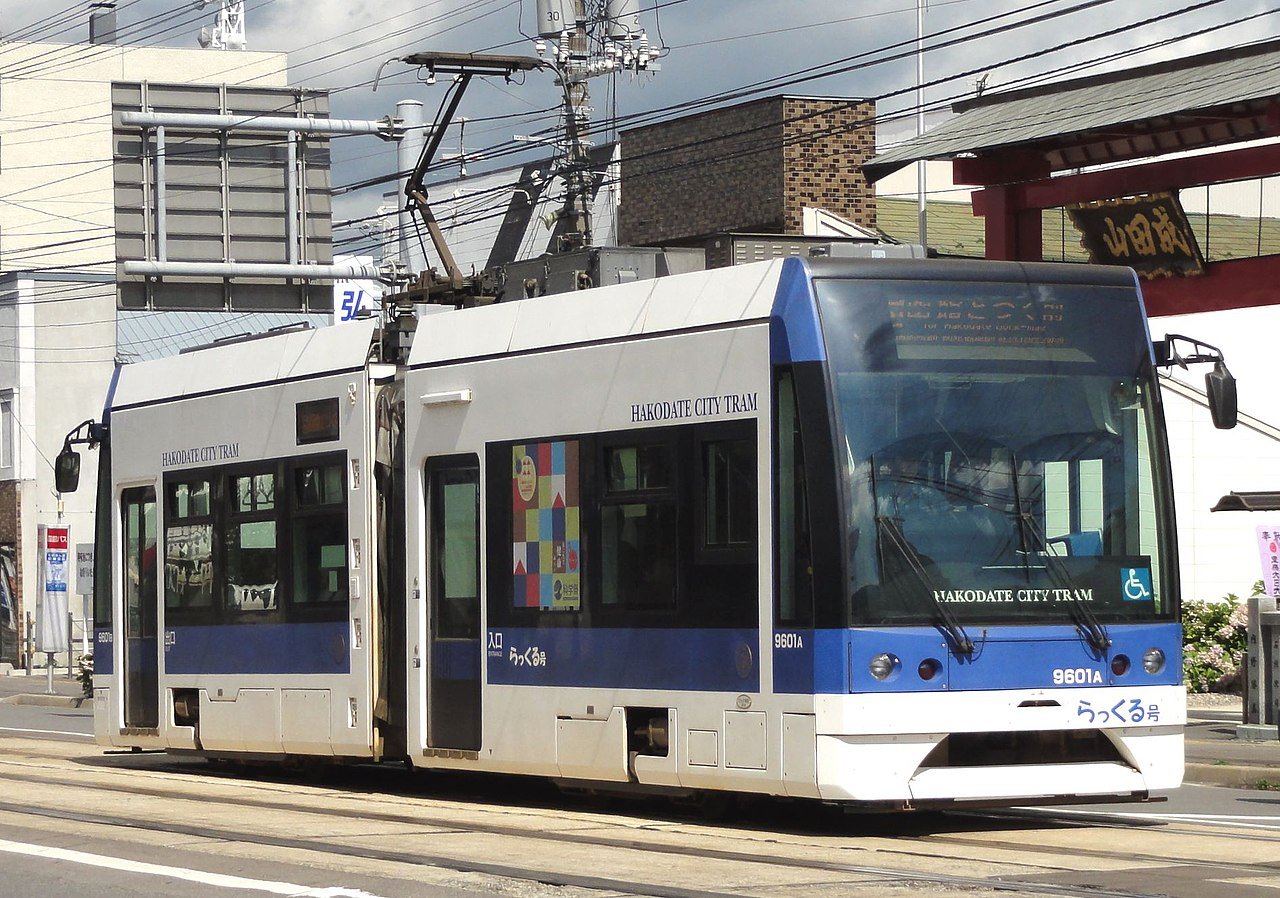
A vintage Hakodate City Tram in reddish-brown livery running along a street lined with historic buildings
Hakodate City Tram — operating since 1913, one of the few remaining streetcar systems in Japan
Getting Around

The City Tram — Hakodate's golden ticket

Almost every highlight in Hakodate sits on or near the tram lines. Understand two or three routes and you have the whole city covered.

Here is the simple truth: you do not need a car in Hakodate. The tram connects the red-brick Kanemori waterfront, Hakodate Station and the morning market, the western hill district of Motomachi, and the Yunokawa hot-spring town to the east — all on the same network. The ropeway up Mount Hakodate is a short taxi or walk from the tram terminal at Jujigai.

City Tram 1-Day Pass — ¥600

Unlimited tram rides for one calendar day. Adults ¥600, children ¥300. Since single fares run ¥210–260 per ride, three journeys recoup the pass price. Available from the Tourist Information Center near Hakodate Station or from the driver. A smartphone digital version is also available.

Price: ¥600 adult / ¥300 child · Buy at: Tourist Info near station, or on board
Tram + Bus Combined Pass

If your itinerary includes Hakodate Bus routes beyond the tram lines, the combined 1-day pass (¥1,400) or 2-day pass (¥2,400) adds Hakodate Bus services. Useful for reaching Trappistine Convent, Lake Onuma area, or deeper parts of Yunokawa. Does not cover the Airport Limousine Bus.

Price: 1-day ¥1,400 / 2-day ¥2,400 · IC Card: Suica / Pasmo / ICOCA / ICAS nimoca accepted
Route 5 (Blue) — East to Yunokawa

Route 5 runs from Yunokawa (hot-spring district, eastern terminus) through Hakodate-Ekimae (the station stop) and on to Hakodate-Dokkumae in the west. It covers the morning market and most of the old town sights. Yunokawa Onsen is about 25 minutes from the station on this line.

Yunokawa → Hakodate Station: ~25 min · Frequency: every 6–10 min
Taxis and Rental Cars

Taxis are convenient for groups or late nights. The flag-fall is around ¥680 for the first 1.4 km. Ranks at the station are reliably staffed. Car rental makes sense if you plan to reach Onuma Quasi-National Park, the Seikan Tunnel Memorial museum, or other points outside the tram network.

Station → Ropeway base: ~¥1,000–1,200 · Car rental: available at station and airport
How the tram fare system works: Tap your IC card at the rear-door sensor when boarding, then tap again at the front-of-car sensor when alighting. Paying cash? The fare is distance-based (¥210–260). Drop exact change or smaller notes into the fare box at the front — there is a coin-change machine on board if you need it.
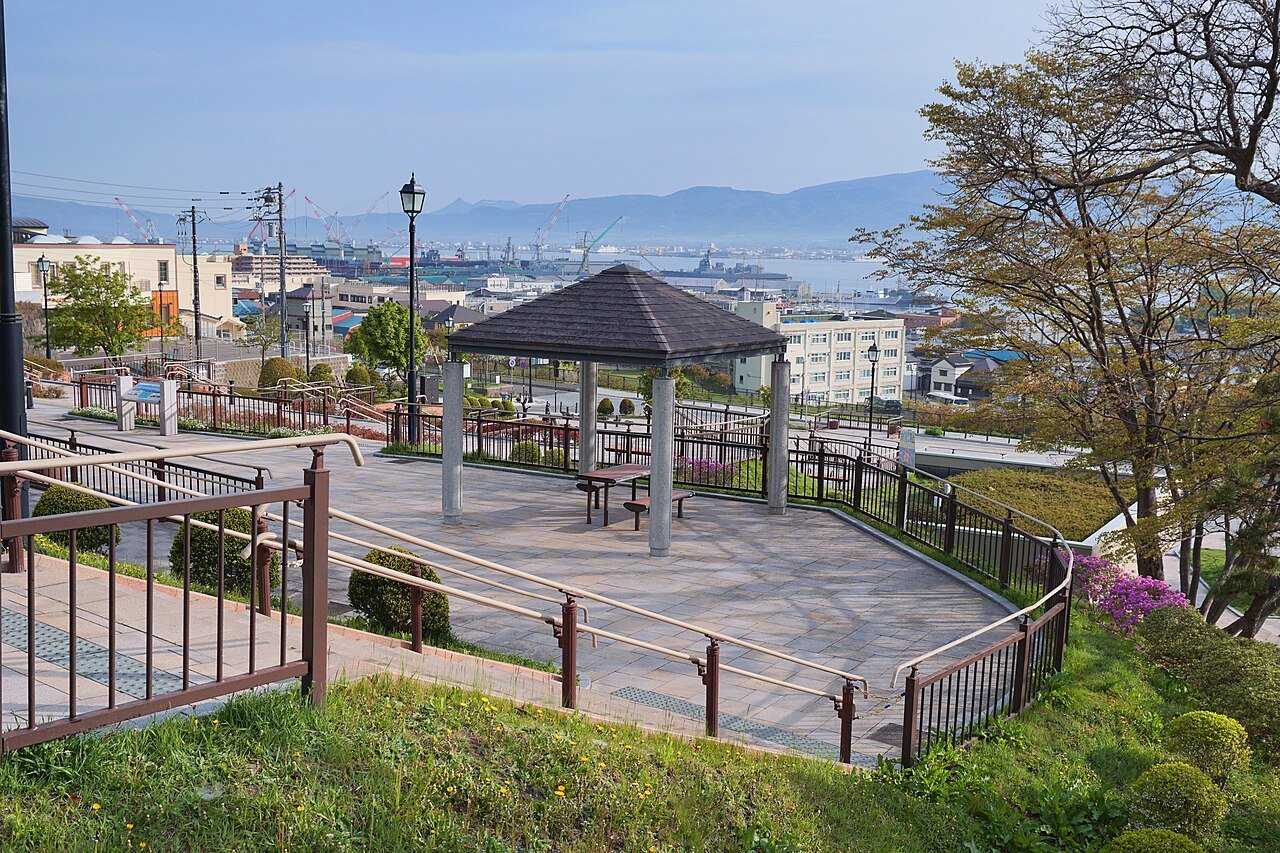
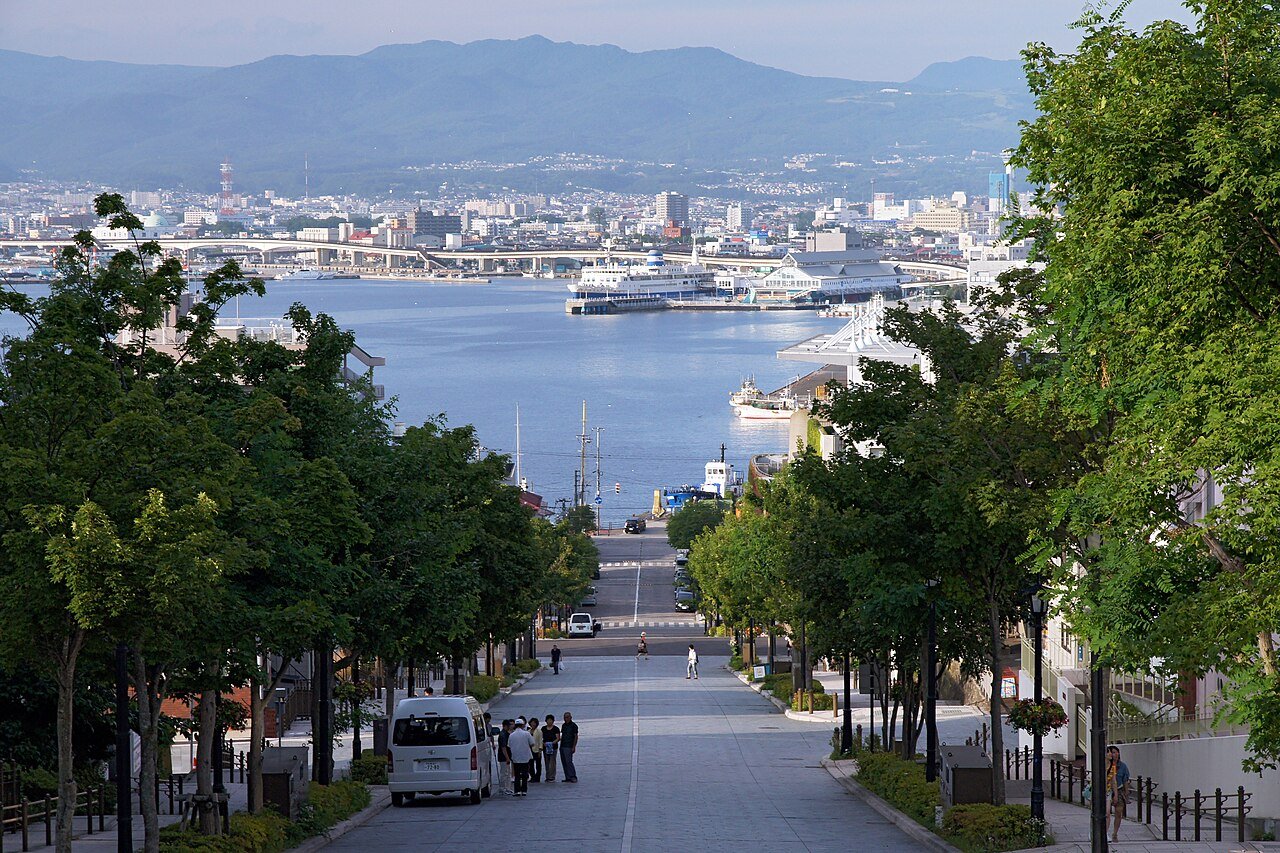
Hachimanzaka slope in Hakodate, a steep cobblestone street leading down to the bay with a clear harbour view at the bottom
Hachimanzaka — one of Hakodate's iconic slopes, with the harbour visible at the foot of the hill. Walk up from the tram stop at Suehirocho.
Yunokawa Onsen

Hakodate's hot springs — what you need to know before you soak

Yunokawa is Hakodate's main onsen district, 25 minutes east on the tram. Plan a morning market breakfast followed by an afternoon soak and you have a perfect day sorted.

Good to know: Hakodate also has free foot baths (足湯 ashiyu) scattered around the Yunokawa district — a civilised way to dip in without the full undress procedure, or to refresh between attractions. Look for the small covered wooden benches near the waterfront.
Hakodate Bay at sunset with the red-brick Kanemori warehouse complex in the foreground and a warm golden reflection across the water
Kanemori Red Brick Warehouses on Hakodate Bay — five minutes from the station on the tram, and one of the best sunset views in the city
Best Time to Visit

Hakodate rewards every season differently

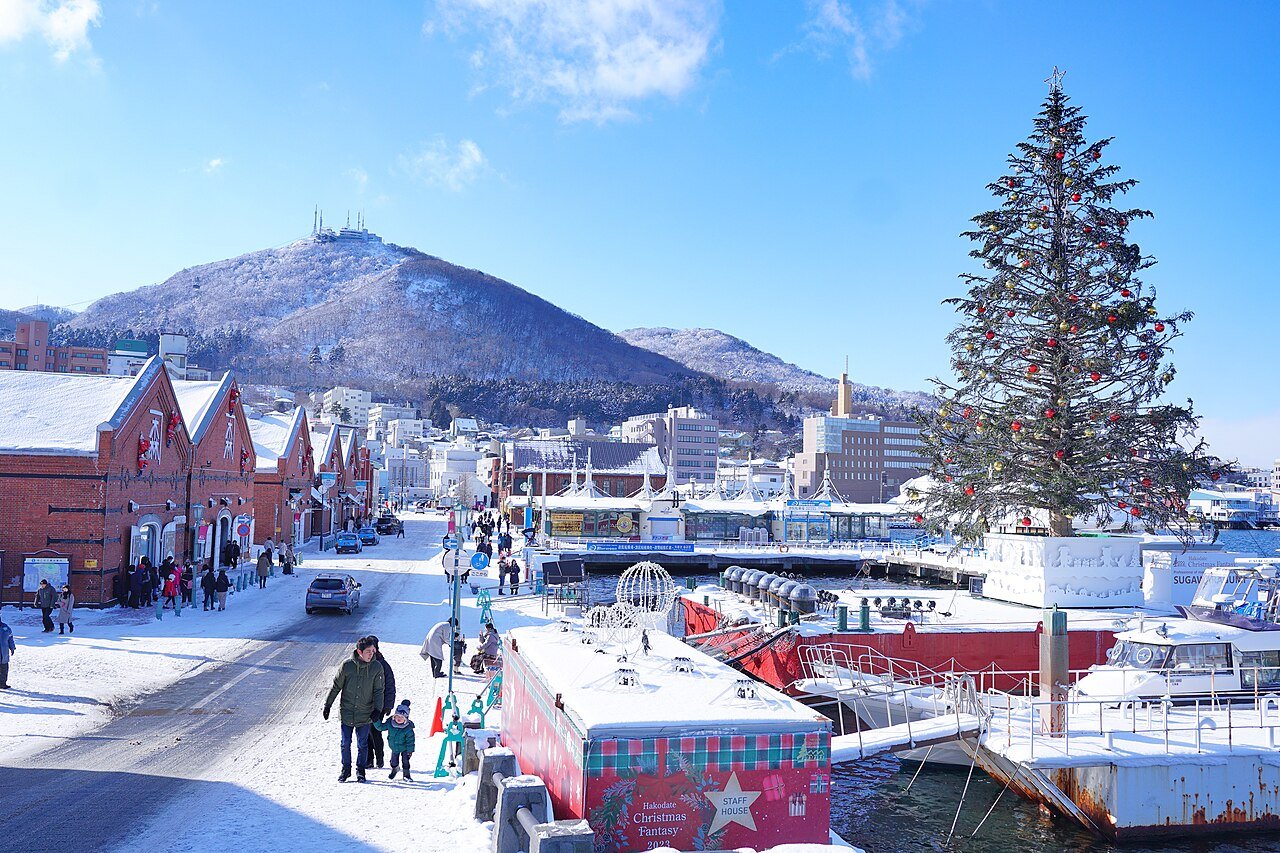
Cherry blossoms at the star fort · fresh squid in summer · fiery autumn leaves · hairy crab and first snow in winter

Spring (late April – May) — Highly recommended

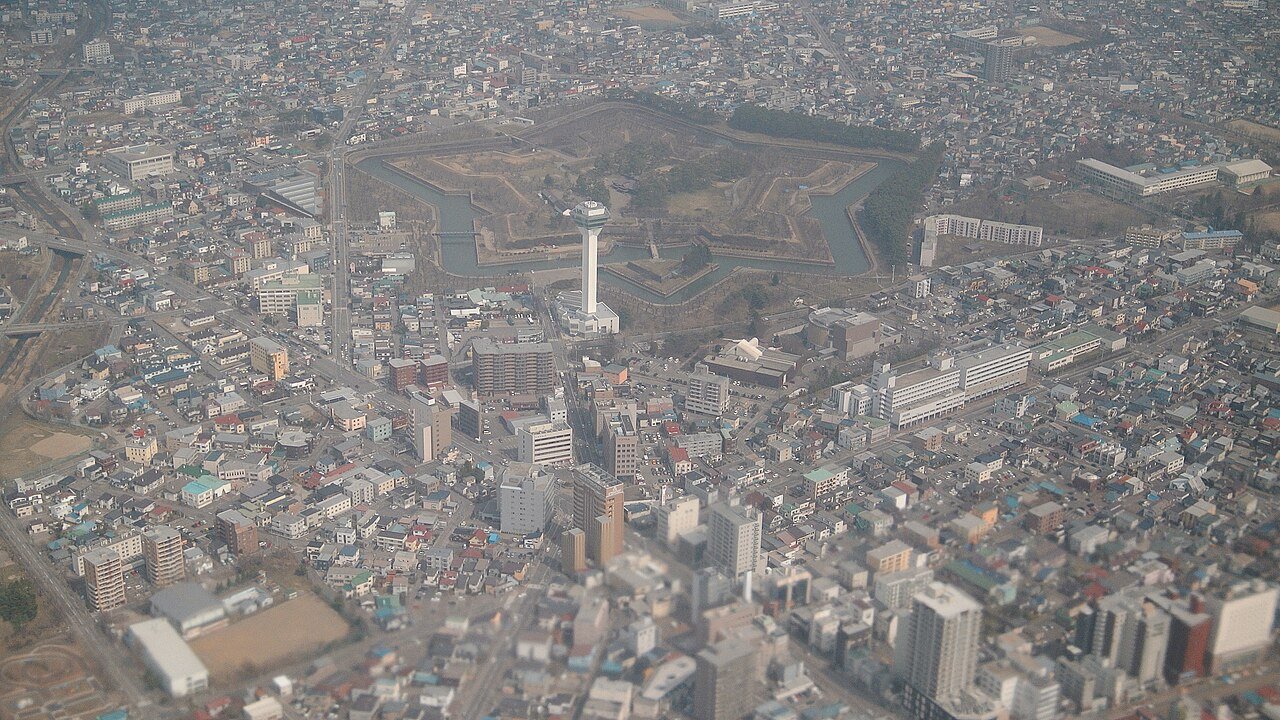
Cherry blossoms bloom at Goryokaku Park from late April into early May — 1,600 trees ringing the star-shaped 1864 fort. This is arguably the finest hanami spot in all of Hokkaido. The Goryokaku Tower observation deck gives a perfect aerial view. Temperatures run 8–15 °C; a light jacket is still needed at night.

Summer (July – August)

Hakodate escapes the muggy heat of mainland Japan. Highs stay at 20–25 °C. Fresh squid (ika) reaches peak season — the live squid fishing pond at the morning market runs from June, peaking July to October. The night view from Mount Hakodate is enhanced by the string-of-lights from squid-fishing boats far out at sea.

Autumn (October – November)

Foliage turns at Goryokaku and Onuma Quasi-National Park. Fewer tourists than cherry-blossom season, prices are calmer, and the 8–16 °C weather is perfect for walking the Motomachi and Hachimanzaka slopes. Hairy crab starts coming into condition towards late autumn.

Winter (December – March) — Crab season

Hairy crab (ke-gani) is richest January through April — dense white flesh, full roe sac. Luminance Hakodate illuminations run November through February. The night panorama from Mount Hakodate in snow is genuinely stunning. Pack serious layers: -5 to 3 °C with wind. Hotel prices spike around New Year and early February.

Aerial view of Goryokaku star-shaped fort in Hakodate surrounded by cherry blossom trees in full pink bloom
Goryokaku in cherry-blossom season — 1,600 trees inside the 1864 star fort, best viewed from Goryokaku Tower
Periods to plan around: Golden Week (late April – early May) and the Obon holiday (mid-August) see Japanese domestic travel spike sharply. Hotels fill 1–2 months in advance and prices rise. If you must travel then, book accommodation early and check tram crowds during peak hours.
Daily Budget

Hakodate — how much does a day actually cost?

A rough breakdown for planning. Excludes intercity travel to get here. Prices tend to rise during Golden Week, Obon and winter peak season.

Item Budget Mid-range Comfortable
Accommodation (per night / per person) ¥3,500–5,000 (hostel / business hotel) ¥7,000–12,000 (mid-range hotel) ¥18,000+ (ryokan with dinner)
Food (3 meals) ¥1,500–2,500 (morning market + convenience store) ¥3,000–6,000 (seafood restaurant) ¥8,000+ (whole hairy crab / premium kaisen-don)
Getting around ¥600 (Tram Day Pass) ¥1,400 (Tram + Bus Pass) ¥2,000–3,000 (taxi for comfort)
Hakodate Ropeway (return) ¥1,500 per person — the same at all budget levels
Onsen (1–2 soaks) ¥400–800 (public bath in Yunokawa) ¥1,000–2,500 (hotel bath or spa) ¥3,000+ (private rental bath)
Sights (Goryokaku Tower etc.) ¥500–800 ¥1,000–1,500 ¥2,000+
Rough total per day ~¥8,000–11,000 ~¥15,000–22,000 ¥30,000+
Money-saving tip: The Hakodate Morning Market (函館朝市) opens at 5 am (6 am January–April) and closes around 2 pm, right next to JR Hakodate Station. A kaisen-don (seafood-over-rice bowl) with fresh crab, sea urchin and salmon runs ¥1,500–3,000 — outstanding value compared with a sit-down dinner. Arrive before 8 am for the best selection and before the crowds arrive from cruise ships. See the Hakodate city guide for recommended stalls.
Before You Go

What to pack and practical know-how

Packing by season

All seasons: Small towel for onsen · hair tie · comfortable walking shoes (Motomachi slopes are steep) · cash (local onsen and small stalls rarely accept cards). Winter: Thermal base layers · gloves · warm hat — temperatures reach -5 to 3 °C with wind-chill. Spring and summer: A light jacket for evenings; even Hokkaido summer mornings can be fresh.

SIM / Wi-Fi: eSIM kiosk at HKD Airport · free Wi-Fi at JR Hakodate Station
Morning Market and live squid

The morning market (朝市) is a 3-minute walk from Hakodate Station. Open daily. The live squid fishing pond — catch your own and watch a chef turn it into sashimi in minutes — runs June through October for around ¥1,800. It is one of those experiences that sounds gimmicky and turns out to be genuinely memorable. Arrive early; by 9 am it can get crowded, especially when cruise ships are docked.

Hours: 5:00–14:00 (6:00 Jan–Apr) · Squid fishing: June–October best
Language and navigation

Hakodate is well set up for international visitors. Major signs are bilingual. Google Maps is accurate for tram timings and walking routes. The Google Translate camera function handles menus and shop signs well. Onsen staff at local public baths may not speak English, but the process is simple once you know the routine (as described above).

Recommended apps: Google Maps · Jorudan (rail and tram times) · Google Translate (camera)
Money and payments

Local onsen, morning-market stalls and small restaurants often operate cash only. The best ATMs for foreign cards are at 7-Eleven convenience stores (several near Hakodate Station) and Japan Post offices. Load your Suica or ICAS nimoca card at station machines — it covers tram fares, convenience stores and vending machines throughout the city.

Currency: Yen (¥) · ATM: 7-Eleven near the station · IC Card: works on trams, convenience stores and vending machines
Hakodate's Motomachi hillside neighbourhood with Western-style historic buildings and a Japanese temple visible, the bay in the background
Motomachi — the old foreign-settlement neighbourhood where French, Russian and Orthodox churches stand within a few streets of Shinto shrines and Buddhist temples
Travelling with children: Goryokaku Tower (lift-accessible, dramatic bird's-eye view of the star fort) is a firm favourite. The Hakodate Tropical Botanical Garden has a free onsen for Japanese macaque monkeys in winter — the photo opportunity is extraordinary. The live squid fishing at the morning market is a genuine hit with kids. And the slow tram ride itself, clanging through old streets, is something most children love.
Frequently Asked Questions

FAQ · Before you visit Hakodate

Can I take the Shinkansen from Tokyo to Hakodate?
Yes. The Hokkaido Shinkansen Hayabusa runs from Tokyo Station to Shin-Hakodate-Hokuto Station in approximately 4 hours (around ¥23,000–26,000 reserved). Then the Hakodate Liner train takes 19 minutes and ¥360 to reach Hakodate Station — fully covered by the JR Pass. The key point to remember: Shin-Hakodate-Hokuto is not in the city. You always need to take the Liner connection. See the Hakodate city guide for hotel picks near the station.
Does Hakodate's tram accept IC cards like Suica?
Yes. Hakodate City Tram accepts Suica, Pasmo, ICOCA, Kitaca and the local ICAS nimoca card. Tap at the rear-door sensor when boarding, then tap at the front-of-car sensor when getting off. Single fares are ¥210–260. If you plan three or more journeys in a day, buy the Tram 1-Day Pass (¥600) — it pays for itself quickly.
When is the best time to eat hairy crab in Hakodate?
Hairy crab (ke-gani, 毛ガニ) is available year-round in Hakodate's morning market and restaurants, but the prime window for dense, roe-packed crabs is January through April. Prices are higher during this period. Crab outside the prime season is still worth eating — just less roe. Fresh squid (ika) is best June to October, when the live-catch fishing experience also operates at the morning market.
What is the best time of year to visit Hakodate?
It depends on what you are after. Late April to May: the finest cherry blossoms in Hokkaido at Goryokaku — worth the trip on its own. July to August: cool Hokkaido summer, fresh squid, and the famous night view glittering with squid-boat lights. October to November: autumn colour, smaller crowds. December to March: hairy crab in season, Luminance illuminations, and steaming onsen in crisp winter air. If one window stands out, most regulars pick late April to early May.
How much does a day in Hakodate cost?
Budget travellers spend roughly ¥8,000–11,000 per day (hostel + morning-market meals + tram day pass). Mid-range is ¥15,000–22,000 per day (comfortable hotel + fresh seafood restaurant + ropeway + onsen). A splurge day — ryokan dinner, whole hairy crab, private bath — runs ¥30,000 or more. Hotel prices spike during Golden Week and New Year; book 1–2 months ahead for those periods.