Chengdu has four distinct seasons — yellow rape-flower fields in spring, thunderstorm afternoons in summer, and steaming hotpot with lively pandas in winter. But there is one thing to know first: Chengdu is famously overcast almost year-round. Here is the honest version of when to go and what you get.
If you can only pick one month, pick mid-to-late October. Temperatures sit comfortably around 15–22°C, the summer rains have eased, and the pandas are far more active than in the summer heat. One catch: skip the first week (National Day, 1–7 October), when the entire country travels at once and the Panda Base and Jinli Street fill to a crawl.
If the yellow rape-flower fields in the countryside are the draw, go in March–April. And if you want the liveliest pandas, keepers agree that winter (Dec–Feb) is when the cool air brings them out to tumble and play — the cutest they get all year. The one thing to make peace with: Chengdu sees very little sun, and grey skies are the norm. Pack an umbrella and layers and keep your expectations realistic.
The weather, what it delivers, and what you are trading for it — told straight.
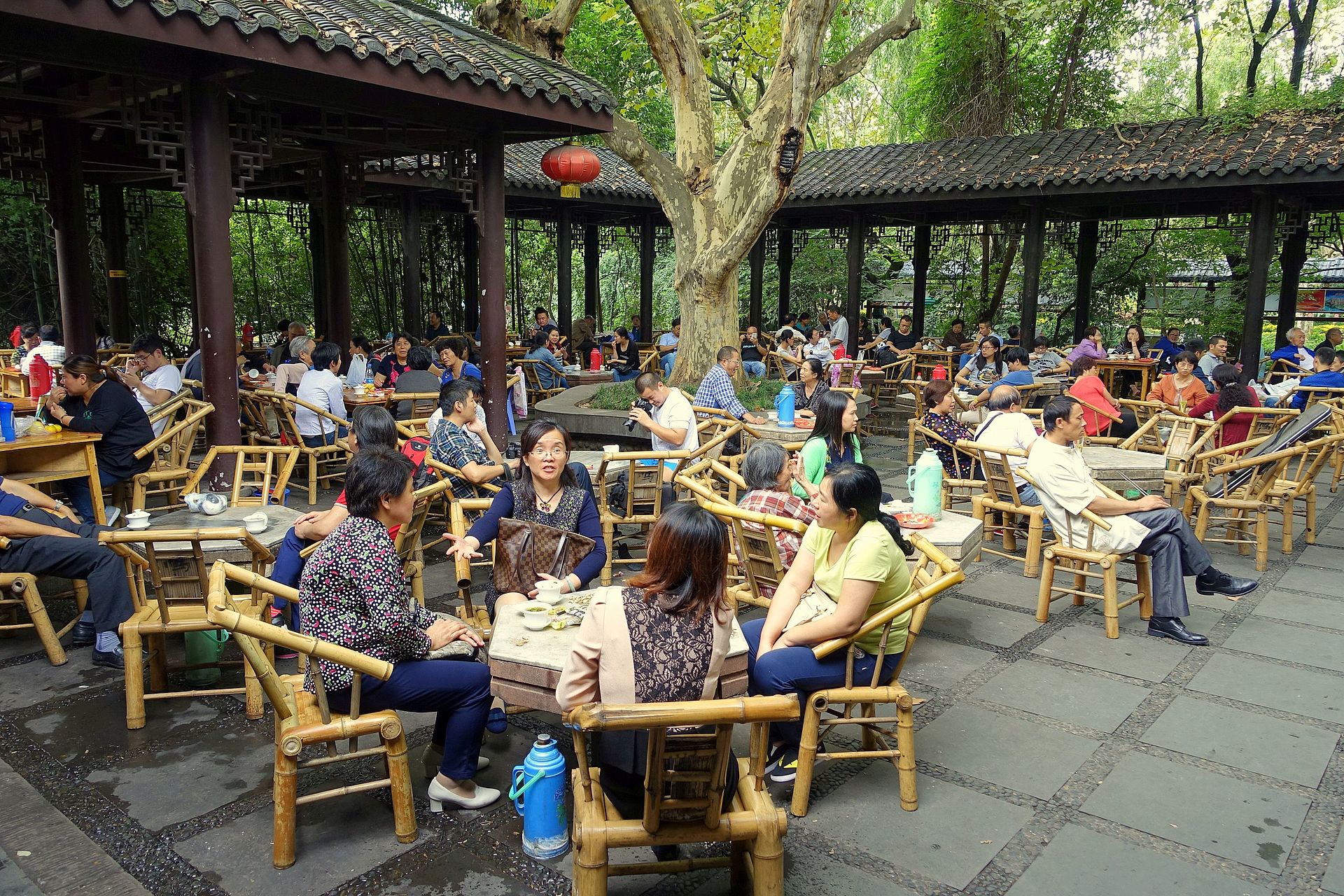
People's Park · Spring
Great
Spring is many people's favourite: mild temperatures, the city greening up, and occasional drizzle rather than heavy rain. The yellow rape-flower fields (canola blossom) carpet the countryside around Chengdu in March and April — a lovely sight on the way out to Dujiangyan or Mount Qingcheng. It is also a season when the pandas come out to play, since the air has not yet turned hot.
May warms up to 20–25°C and stays pleasant for walking, though the Labour Day holiday (1–5 May) brings a domestic travel surge. Plan around it or book ahead.
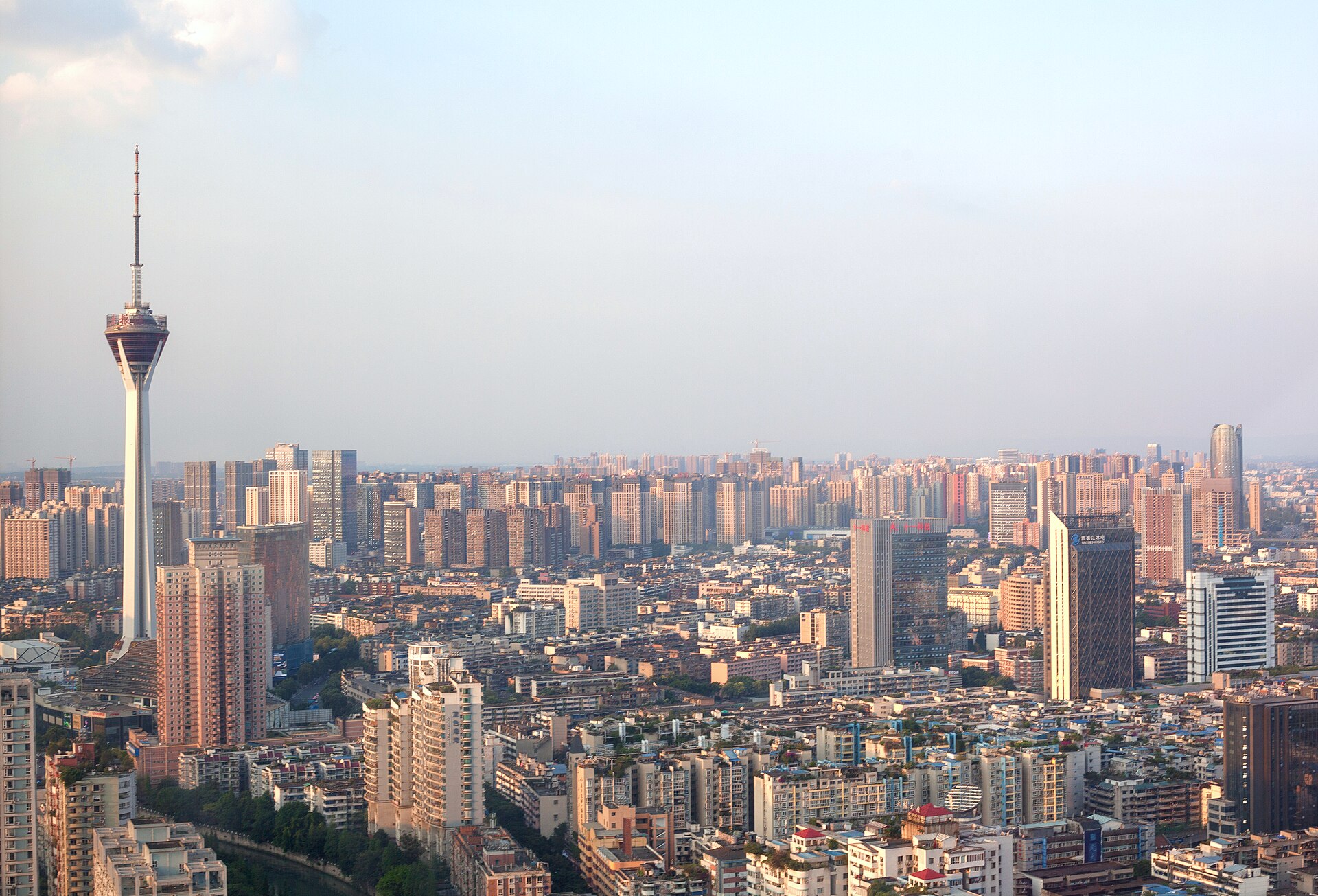
Chengdu skyline · Summer
Come prepared
Chengdu in summer is hot, humid and wet. July is the rainiest month of the year (around 210 mm), and the rain mostly arrives as afternoon or overnight thunderstorms rather than all-day downpours. The humidity makes it feel muggier than the thermometer reads. The one upside: summer is the sunniest stretch (April–August), so the sky is brighter than the grey winter.
Worth knowing — in the summer heat the pandas retreat to air-conditioned indoor enclosures, so they are harder to spot than in cooler months. If pandas are your main reason for coming, summer is not the ideal window; go as early in the day as you possibly can.
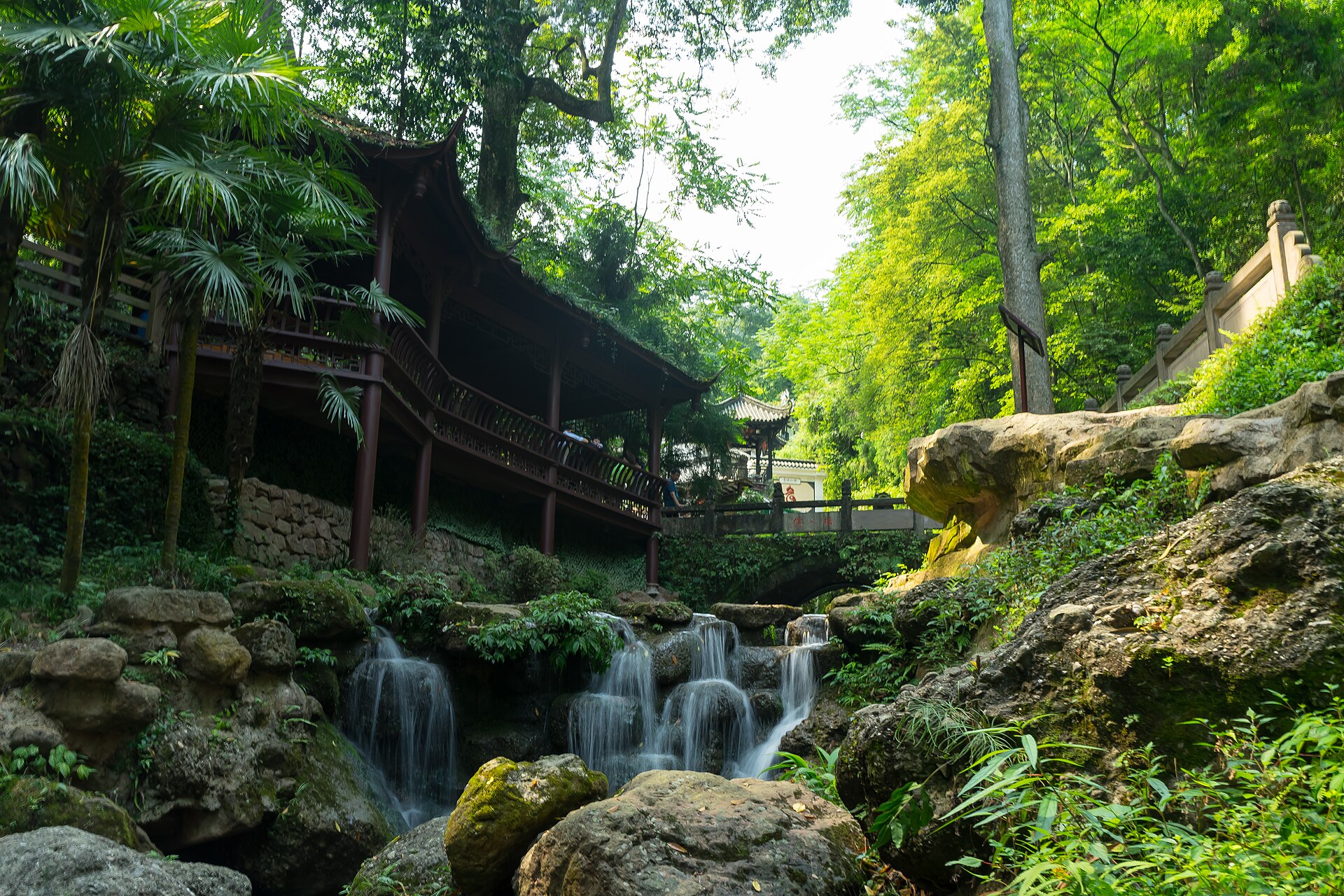
Mount Qingcheng · Autumn
The best
The other answer to the question of when Chengdu is at its best. The air turns cool and comfortable, the summer rains ease off, and temperatures settle between 10 and 25°C — easy walking all day. By late October and November the leaves begin to turn, and the mountains around the city, like Qingcheng and Emei, are especially beautiful. The cool air also brings the pandas back outdoors.
The only thing to plan around is the first week of October (National Day, 1–7 Oct), when the whole country is on the move. Avoid that week and mid-to-late October is as good as it gets here.
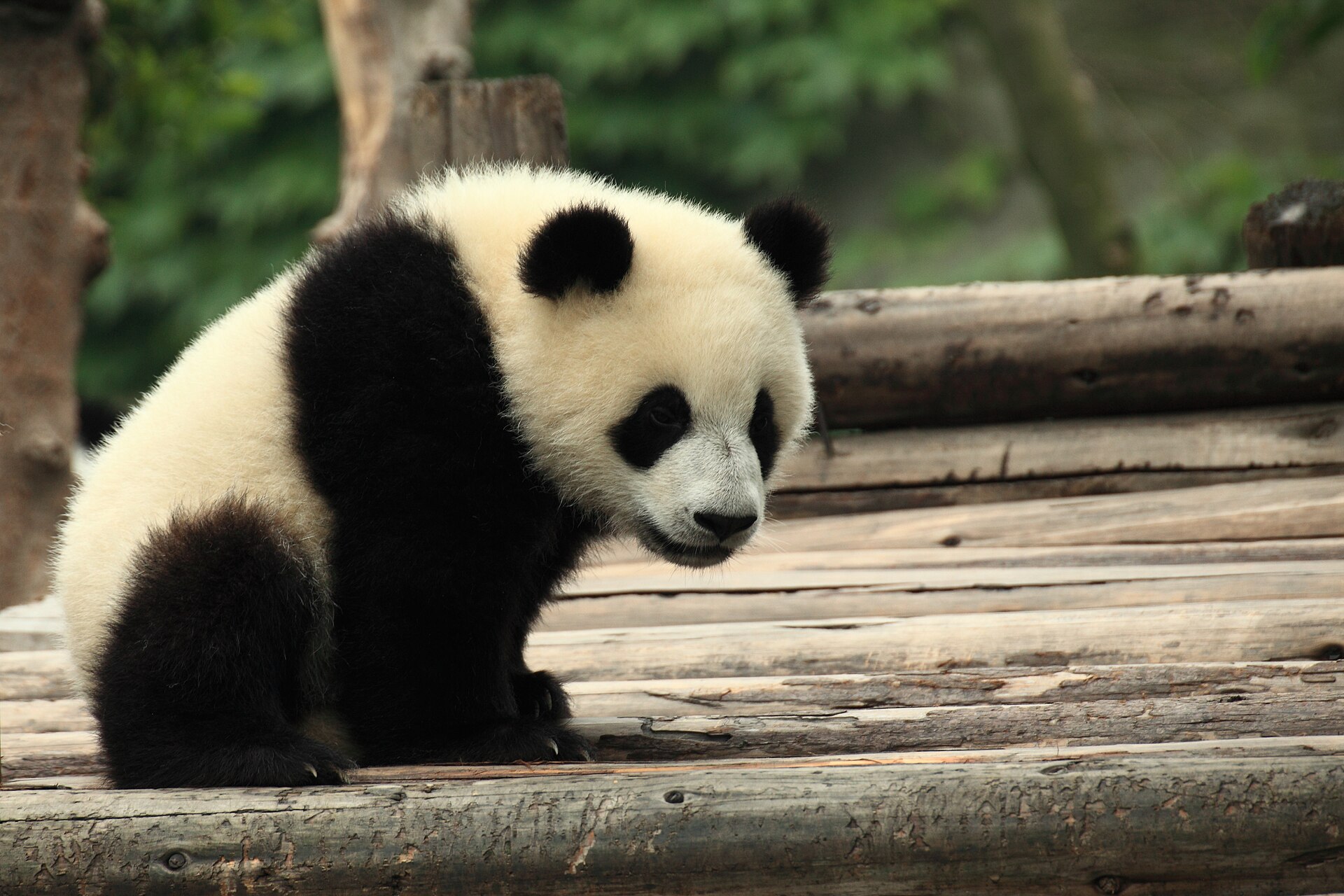
Giant panda · Winter
Pandas at their cutest
Chengdu's winter is not bitterly cold — average temperatures run around 3–11°C — but high humidity and an overcast sky make it feel colder than the numbers suggest. Snow is rare. The headline draw is the pandas: winter is when they are at their liveliest all year. Keepers will tell you the cool weather brings them out to tumble and roll around their enclosures, playful and impossible to photograph fast enough. It is also the season of steaming Sichuan hotpot, which has never tasted better.
Chinese New Year (late January or February) is festive, with a Grand Temple Fair at Wuhou Shrine and Jinli Street. But many small restaurants close for one to two weeks, and the major sights are packed. Outside of Chinese New Year, winter is the quietest and cheapest season by a wide margin.
Temperature, rainfall and crowd levels — in one table for easy comparison.
| Month | Temperature | Rain | Crowds | Notes |
|---|---|---|---|---|
| January | 3–10°C | Very low | Low | Coldest, greyest · lively pandas · cheapest hotels |
| February | 5–12°C | Low | High (CNY) | Chinese New Year — temple fair · some shops close |
| March | 8–17°C | Moderate | Moderate | Rape-flower fields begin · pleasant weather |
| April | 13–22°C | Moderate | Moderate | One of the best months · sun starts to appear |
| May | 17–26°C | Moderate | High (Labour Day) | 1–5 May: crowds and price spike |
| June | 20–28°C | Heavy | Moderate | Rain picks up · afternoon thunderstorms |
| July | 23–32°C | Heaviest | High (holidays) | Hottest, wettest · pandas indoors |
| August | 23–32°C | Heavy | High (holidays) | Still hot · the sunniest month |
| September | 19–27°C | Moderate–heavy | Moderate | Rain easing · weather improving |
| October | 15–22°C | Low | High (National Day) | 1–7 Oct: peak crowds · after 8th: best of the year |
| November | 9–18°C | Low | Moderate | Cool and pleasant · autumn foliage · active pandas |
| December | 5–11°C | Very low | Low | Driest but grey · low prices · hotpot season |
China's national holidays generate the largest annual human movements on Earth. Here is what that means for your trip.
China's largest holiday. Hundreds of millions of people travel home and to tourist destinations at once. In Chengdu, a 15-day Grand Temple Fair runs at Wuhou Shrine and Jinli Street, with Sichuan folk art, face-changing opera, street food and lanterns — genuinely festive. But hotel prices spike, high-speed rail tickets are hard to book, and many small restaurants close for 7–14 days. If you want to experience the festival itself, plan everything well in advance. If you want a normal trip, pick a different time.
China's second major holiday window. Domestic tourism surges; the Panda Base, Jinli Street and Wuhou Shrine become difficult to walk through. Hotels fill and prices rise by 30–60%. If you must travel during this period, book accommodation a couple of months ahead and reserve your Panda Base entry tickets online in advance — they sell out fast over the holiday.
The largest Golden Week of the year, with hundreds of millions of domestic trips in a single week. Chengdu is one of the top destinations. The Panda Base and major sights become extremely crowded, Panda Base tickets sell out days ahead, and hotel prices hit their annual peak. The weather, though, is excellent — so if you book early and can tolerate crowds, it is doable. The cleaner workaround: come 8–31 October instead. The weather is just as good but the crowds thin noticeably.
These are reasons to time your visit, not reasons to avoid it.
Chengdu's biggest annual celebration, held at Wuhou Shrine and Jinli Street every Spring Festival. Expect Sichuan folk art, face-changing opera performances, local snacks and lanterns strung throughout the grounds. If your trip happens to land over Chinese New Year, this is an unmissable highlight — just be ready for serious crowds.
The Spring Festival period closes with the Lantern Festival, which Chengdu stages on a grand scale at Tazishan Park in the east of the city. Enormous themed lantern installations are lit up alongside Sichuan opera and acrobatics. It is beautiful after dark — an authentic slice of Chinese tradition that is hard to find in many other cities.
Beyond Chinese New Year, Wenshu Monastery and Qingyang Palace hold temple fairs and events tied to the Buddhist and Taoist calendars all year. Look for Sichuan snacks, calligraphy, paper-cutting and fortune-telling. Wenshu Monastery also has a peaceful in-temple teahouse — a perfect place to sip tea on a typically grey Chengdu afternoon.
Not exhaustive — just the things that actually matter for Chengdu.
Whatever month you arrive, there is something worth seeing.