Home Beijing China Beijing Hotels About
Home  ›  China  ›  Beijing  ›  Attractions  ›  798 Art District
Beijing · Attraction Guide

798 Art District (798艺术区)
A Bauhaus factory turned Beijing's biggest contemporary-art quarter

Red-brick lanes between abandoned 1950s workshops that artists made their own — dozens of galleries, outdoor sculptures, a tall factory chimney and cafés, out in Chaoyang District. The open-air area is free to wander.

What it is

An abandoned factory that became Beijing's art heart

Picture this: you walk into a lane flanked by red-brick buildings with saw-tooth roofs and tall factory windows. On some walls, big red Maoist-era slogans are still painted, untouched. Old steel pipes run overhead, a steam locomotive sits parked as if it were an exhibit, and a large contemporary sculpture stands in the middle of a courtyard. All of this was once Factory 718, a 1950s state electronics complex built in East-German Bauhaus industrial style — practical, light-filled and, decades later, accidentally perfect for showing art.

This is 798 Art District, known to locals as Dashanzi (大山子), in the Jiuxianqiao area of Chaoyang District, in Beijing's northeast. Artists began renting the cheap, high-ceilinged workshops around 2002, and bit by bit the place became the largest and most important contemporary-art district in Beijing.

Today it holds dozens of galleries, artist studios, design shops, independent bookstores, cafés and restaurants, all tucked among the original industrial relics. The anchor institution is UCCA (Ullens Center for Contemporary Art). What sets 798 apart from every other Beijing sight is simple: the open-air lanes are free to wander, there is no ticket queue, and the mix of old factory and new art is something you will not find anywhere else in the city.
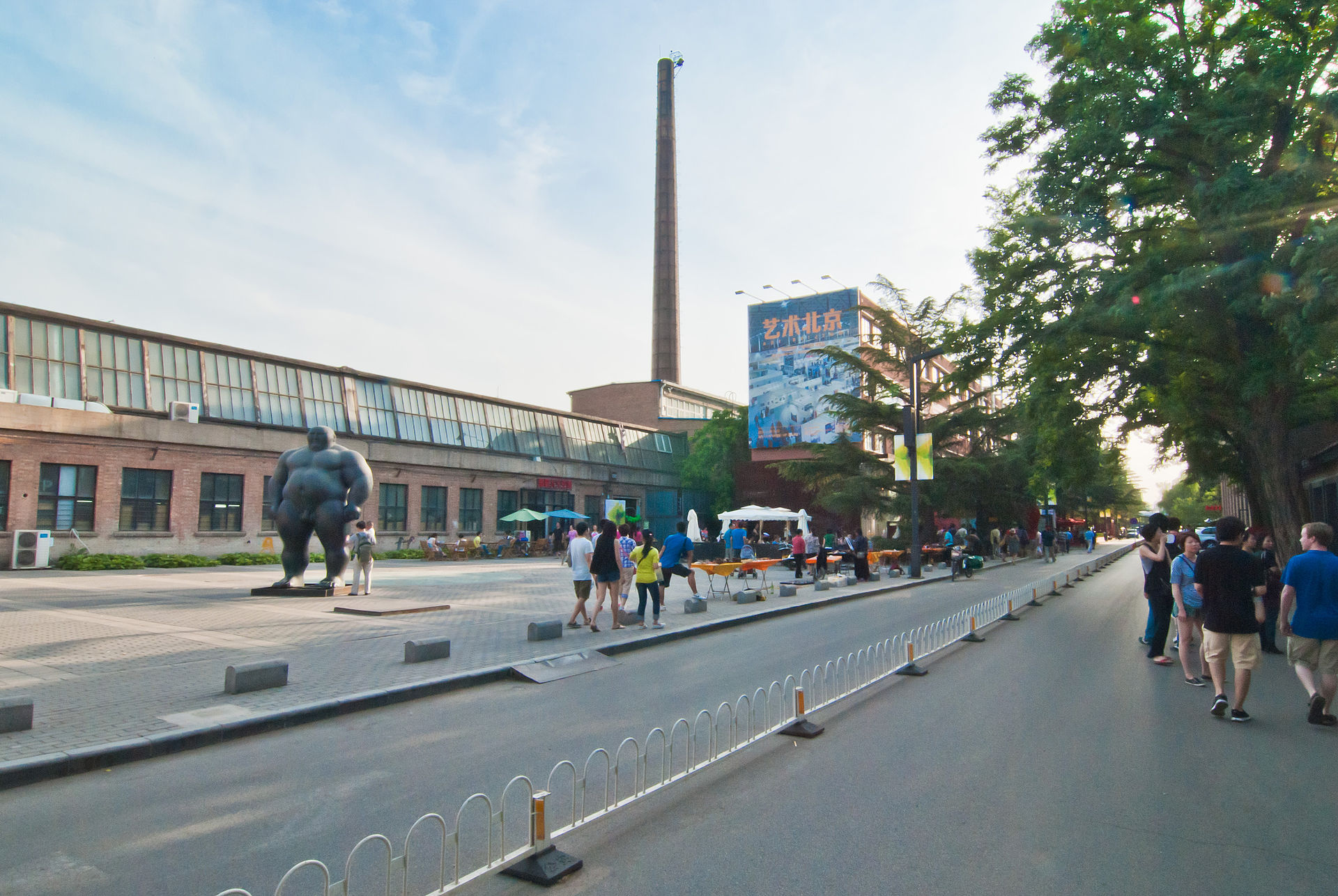
798 Art District, Beijing — long red-brick Bauhaus factory with a tall chimney, an outdoor bronze sculpture, an Art Beijing billboard and visitors walking the main courtyard
The main courtyard of 798 — a former Bauhaus factory, the tall chimney, and contemporary sculpture in the open air
🎫
Entry
Free to wander
Some galleries charge (e.g. UCCA)
🕙
Hours
Galleries ~10am–6pm
Many close Mondays · check first
🚇
Metro
Line 14 → Gaojiayuan
Walk in via Jiuxianqiao Rd · or DiDi, easier
⏱️
Time needed
Half-day (2–4 hrs)
Art lovers can fill a whole day
📅
Best day
A clear weekday
Avoid Mondays (many galleries shut)
🏭
Combine with
751 D·Park
Former gasworks-turned-design-park, next door
What you'll find

5 things that tell 798's story

Wander the lanes — each of these has something behind it.

What to do here

See the art, drink the coffee — and shoot the old factory

🚶 Walking the lanes and galleries

The best way to do 798 is to let yourself get a little lost in the lanes rather than over-plan. Walk from the main courtyard into the side alleys, step into whichever galleries look interesting (many are free; some charge), read the signboards to see what is showing, and pick only the ones you genuinely want to see.

If time is tight, start with UCCA, then circle the outdoor sculptures and street-art walls around it, and finish by walking into 751 D·Park next door. That adds up to a comfortable half-day.

☕ Café-hopping in the old workshops

798 is one of the more enjoyable café districts in Beijing. Most of the coffee shops sit inside converted factory units with high, open ceilings, and some have outdoor seating facing the sculptures. They make good leg-rest stops between galleries — or somewhere to settle in and read for a couple of hours on a rainy or too-hot afternoon.

Tip: If you are into coffee, read our Beijing café guide before you go so you know which spots to aim for. Beijing café guide →
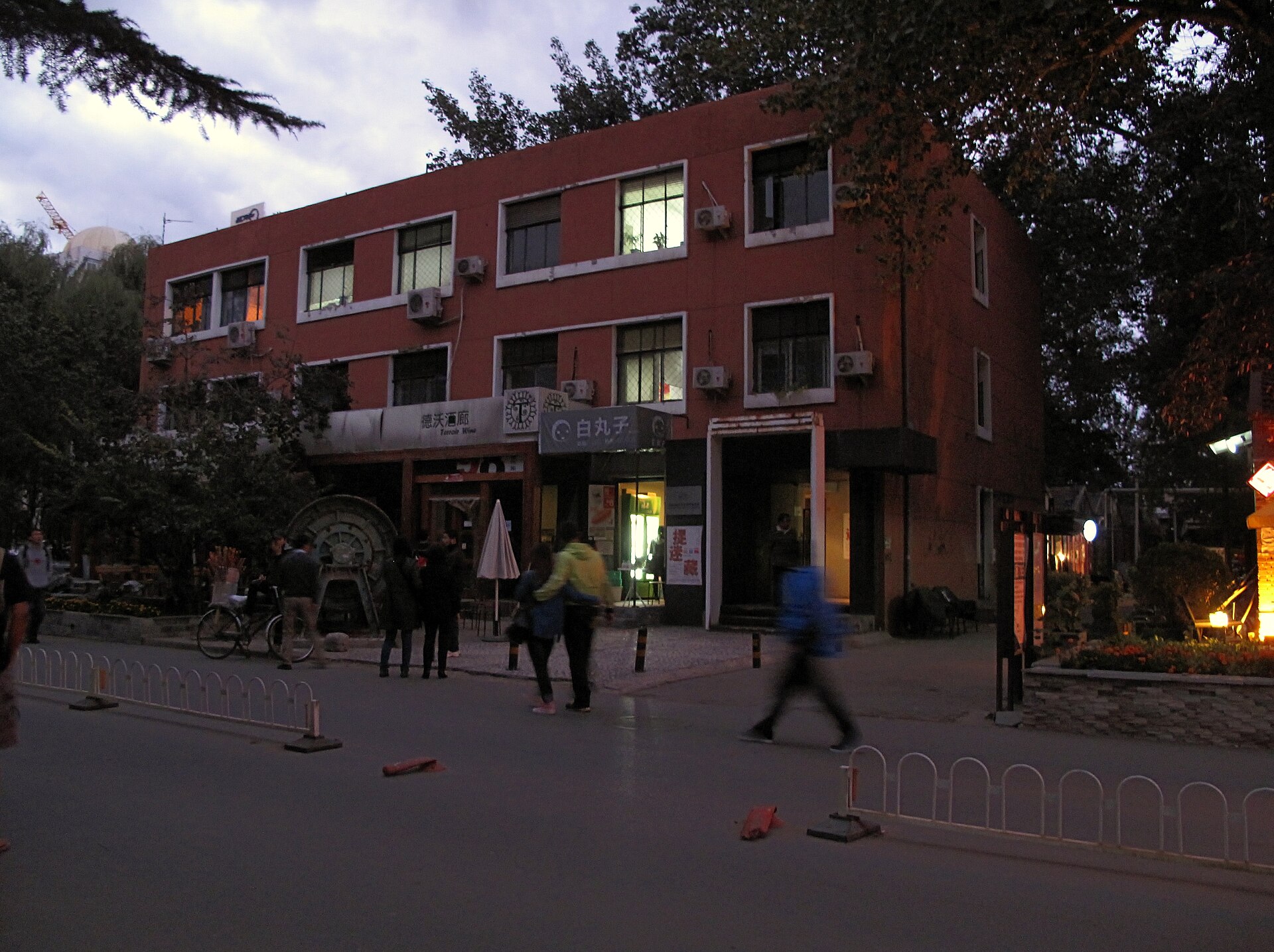
A lane in 798 Beijing at dusk — orange-brick gallery buildings, art-shop signs, and people walking as the shop lights come on
A 798 gallery lane at dusk — studios and shops lighting up as the mood shifts again

📸 Photography — when and where

798's signature angles are the spots where the tall factory chimney cuts against the sky and the red-brick walls carrying old Maoist slogans, plus the big contemporary sculptures in the courtyards. On a clear day you get a strong contrast between old industry and new art.

Honestly, 798 is heavily used for social-media photos, and some spots have a small queue of people waiting their turn, especially on weekends. For fewer people in the frame, come on a weekday morning right as the galleries open around 10am — the light is still soft and the crowds have not built up.

Getting there

How to reach 798

798 sits in the northeast, a little outside the centre, so getting there is not as direct as the inner-city sights — choose between metro-plus-a-walk or a DiDi straight to the gate.

🚕
DiDi / taxi (recommended)
Destination: "798 艺术区"
The simplest option · 15–25 min from Sanlitun or the CBD · give Jiuxianqiao Road as well
🚇
Metro Line 14 (and Line 12)
Gaojiayuan station (高家园)
Exit and walk along Jiuxianqiao Road to the 798 gate — the station now serves both Line 12 and Line 14
🚌
Bus
Get off at Dashanzi
Several routes pass (401/403/418/909), but for visitors a DiDi is far easier
Planning your day: Because 798 is in the same Chaoyang District as Sanlitun, many people slot 798 into the afternoon and follow it with dinner or shopping at Sanlitun in the evening — they are close, and the DiDi between them is short. It makes for a neat day if you like art, coffee and city life.
Where to stay

Hotels near 798 and Chaoyang

798 is in Chaoyang District, the same area as Sanlitun and the CBD — stay around here and the DiDi to 798 is short.

Frequently asked

FAQ · 798 practical

Is 798 Art District free to visit?
Wandering the open-air lanes, sculptures and old industrial relics is free — there is no admission charge for the district itself. Costs only apply when you enter specific galleries or exhibitions that sell tickets. UCCA (Ullens Center for Contemporary Art), the anchor institution, runs roughly ¥60–150 (~฿300–750) depending on the show. Check prices at each gallery before you go.
How do you get to 798 Art District by metro?
Take Metro Line 14 to Gaojiayuan station (高家园) and walk along Jiuxianqiao Road toward the 798 gate; Line 12 now serves the same station too. That said, the simplest option for most visitors is a taxi or DiDi — just give the destination as "798 艺术区, Jiuxianqiao Road". 798 sits in the northeast, a little outside the centre, so a taxi from Sanlitun or the CBD takes about 15–25 minutes.
What are 798's opening hours and is it closed on Mondays?
The open-air area can be walked from daytime into the evening, but the galleries and shops mostly open around 10:00–18:00, and many close on Mondays. If your main reason for coming is to see exhibitions inside the galleries, avoid Mondays and check the opening hours of any specific gallery you want to visit beforehand.
How long should you spend at 798?
A half-day, roughly 2–4 hours, is about right — enough to walk the main lanes, step into two or three galleries, photograph the sculptures and street-art walls, and sit down for a coffee. Serious art lovers with a big exhibition on can easily fill a whole day, and it is easy to continue into 751 D·Park, the former gasworks-turned-design-park right next door.
Is 798 still worth visiting, or has it become too touristy?
Honestly, 798 has become quite commercial and Instagram-driven — there are as many photo spots, souvenir shops and cafés as there are serious galleries. But the Bauhaus factory architecture, the outdoor sculptures and galleries like UCCA still make the trip out worthwhile. The trick is to check what exhibitions are on before you go: if there is a show worth seeing, a half-day here pays off.
Klook · Beijing tours & tickets

Make the most of Beijing — Great Wall, Forbidden City and city tours, booked ahead to skip the queue

Book Beijing tickets and tours in advance through Klook — the Mutianyu Great Wall, the Forbidden City and in-city tours — and skip the on-site ticket lines.

Browse Beijing activities on Klook →
Wherebest is an affiliate partner of Klook — we may earn a commission when you book through our links, at no extra cost to you.