Around 980 buildings, 24 emperors, deep red walls and a moat at the centre of Beijing — the most complete imperial palace surviving anywhere. Here is the route that does it justice, the tickets and the strict booking rule, and the photo spot everyone passes on by word of mouth.
You walk through a gate of deep vermilion as tall as a six-storey building, cross a stone courtyard that runs to the edge of sight, and the golden-roofed throne halls reveal themselves one at a time. This is where the emperors of China ruled for nearly five hundred years, and where ordinary people simply could not enter — which is how it earned the name the Forbidden City.
The Forbidden City (故宫 Gùgōng) was completed in 1420 under the Yongle Emperor of the Ming dynasty, and served as the home and seat of government for 24 emperors across the Ming and Qing. Across roughly 72 hectares it holds more than 980 buildings and close to 9,000 rooms, making it the largest and most complete wooden palace complex in the world. Today it is the Palace Museum, home to over a million imperial artefacts, and a UNESCO World Heritage Site since 1987.
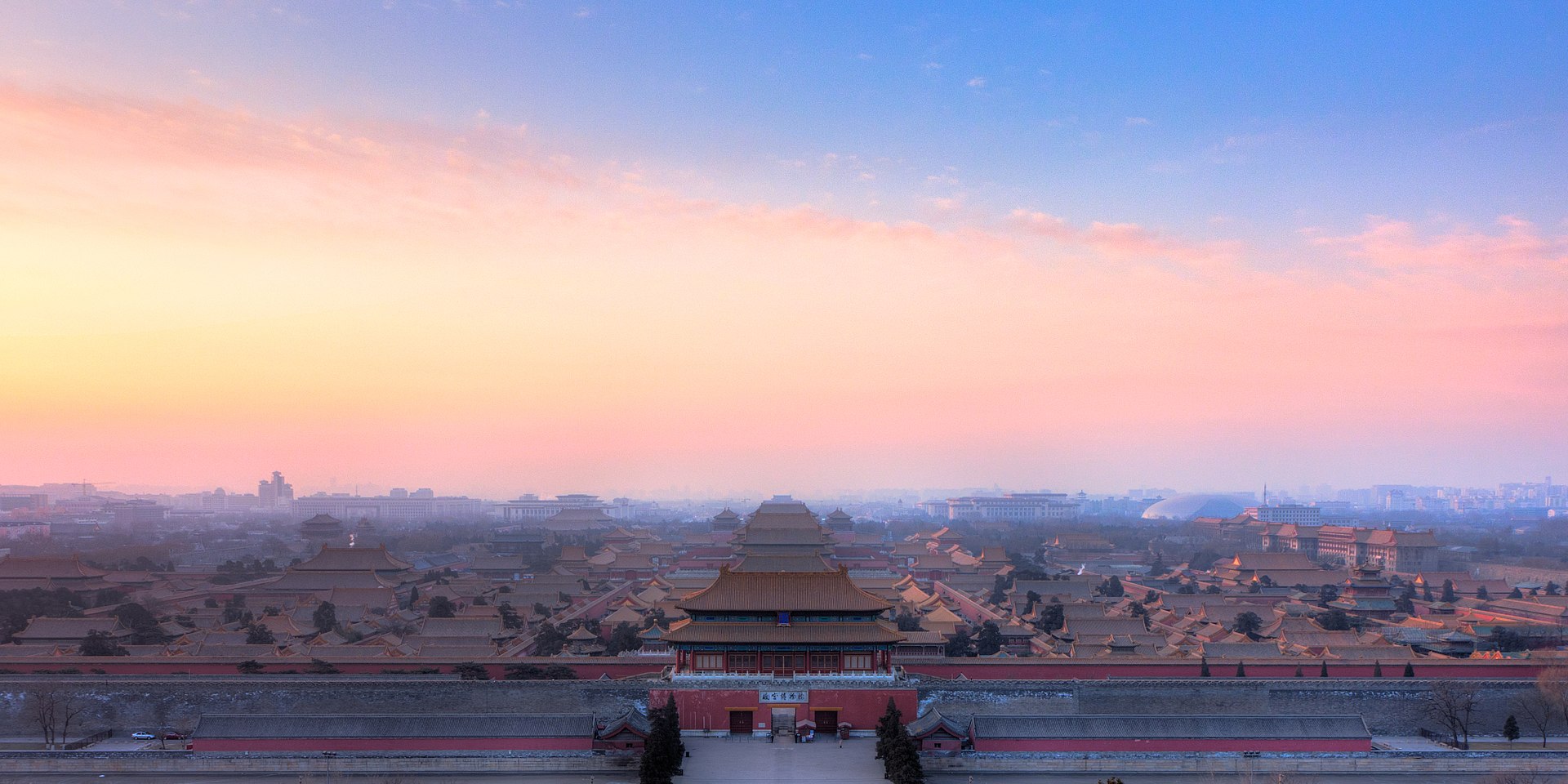
The whole plan follows a strict north–south central axis, divided into two main parts: the Outer Court, used for ceremonies and affairs of state, with its three great halls lined up along the axis, and the Inner Court, the private residence of the emperor, empress and concubines. The key practical point is that everyone moves one way, south to north — you enter only through the Meridian Gate in the south and leave only through the Gate of Divine Prowess in the north.
Walk them south to north in this order — you get both the scale and the detail.
1
You enter through the Meridian Gate on the south side — a vast U-shaped gate, around 38 metres tall, from which emperors once reviewed troops and announced major edicts. Standing at the threshold looking in, you start to feel how the architecture is designed to make a person small. Just inside, the Golden Water River curves in the shape of a bow across the first courtyard, crossed by five white marble bridges.
Beyond the Gate of Supreme Harmony lies the largest courtyard in the palace, able to hold tens of thousands. At its far end stands the Hall of Supreme Harmony (太和殿), the largest wooden building in the complex, raised on a three-tiered marble terrace — the setting for the most important ceremonies, including coronations and imperial weddings. Behind it, the Hall of Central Harmony (中和殿) and the Hall of Preserving Harmony (保和殿) continue along the axis. Look up at the small procession of mythical animal figures running down each roof ridge: the more important the building, the more of them there are.
Past the Hall of Preserving Harmony you cross into the private residential quarter, where the buildings shrink and the mood turns more intimate. The Palace of Heavenly Purity (乾清宫) was the emperor's residence and working quarters, followed by the Hall of Union and the Palace of Earthly Tranquility, used by the empress. This is where the real life of the court played out — its politics, its rituals and the palace intrigues that have since filled countless television dramas. Smaller residences of the imperial consorts line the eastern and western flanks.
Near the northern end sits the Imperial Garden, a green, shaded retreat the court used to rest in — pavilions, ancient cypresses several hundred years old, strangely shaped ornamental rocks and a small artificial hill, all in deliberate contrast to the hard geometry of the rest of the palace. It is the best place to rest your legs before walking out the north gate, and the most relaxed corner of the whole complex to photograph.
In the Palace of Tranquil Longevity area on the eastern side, two exhibition galleries require a separate ticket — and they are well worth it. The Treasure Gallery (珍宝馆) displays the court's gold, jade, gemstones and ceremonial finery, while the Clock Gallery (钟表馆) shows the jewelled mechanical clocks emperors collected from around the world, several of which still run and are demonstrated at set times. This same zone also contains the magnificent glazed-ceramic Nine-Dragon Wall.
6
The only way out is the Gate of Divine Prowess on the north side. Once you step out, do not leave straight away — across the road is Jingshan Park (景山公园), an artificial hill built from the earth dug out of the palace moat. Walk up to the summit pavilion, about 10 minutes, and you look straight down the central axis over the entire sea of golden palace rooftops. This is the postcard photo everyone wants, and the best possible way to close the visit.
The single most important thing here is that you must book ahead — read this before you plan anything.
The Forbidden City sits right at the centre of Beijing and is easy to reach by subway — but remember it is enter from the south, exit to the north, so your way in and your way out are on opposite sides of the palace.
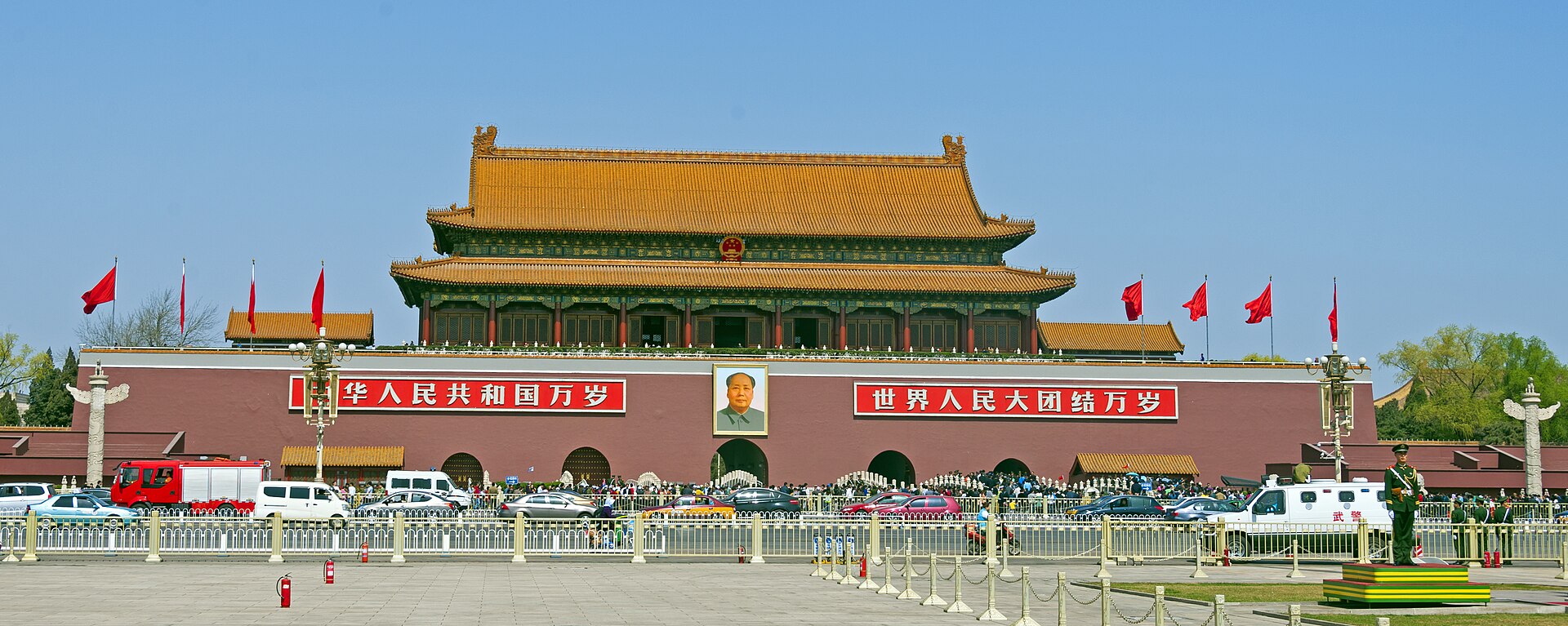
Alight at Tiananmen East or West and walk across Tiananmen Square, through Tiananmen Gate itself, to reach the Meridian Gate in about 10–15 minutes. You scan your passport at the Meridian Gate — and remember this is the only way in.
You exit by the Gate of Divine Prowess in the north. There is no subway station right outside this gate — the best move is to cross the road and go up Jingshan for the view, then catch a taxi or DiDi, or walk to the nearest subway station.
Since the way in already takes you across Tiananmen Square, start your morning at the square — one of the largest in the world — catch the flag-raising ceremony if you arrive in time, then carry straight on into the palace. That covers both in your first half-day.
With a full day: Tiananmen Square in the morning, the palace from late morning into the afternoon, out the north gate and up Jingshan as the light softens, then down into the old hutong lanes (Nanluoguxiang is close by), finishing the day over a Peking duck dinner.
Staying in Wangfujing or Qianmen puts you a walk or a few subway stops from the palace gate. Some travellers prefer a traditional hutong courtyard house in the surrounding lanes, so they can reach the palace early before the crowds build. Here are the hotels we have reviewed in the area: