Home Yokohama Kanagawa Japan About
Home  ›  Asia  ›  Japan  ›  Yokohama  ›  Itinerary
🗓️ Yokohama Itinerary · 1–2 Days · 2026

Yokohama in
1 Day or 2 — Here Is How

From the Cup Noodles Museum beside the harbour in the morning to steamed pork buns in Japan's largest Chinatown at night — this plan shows you the Yokohama that still surprises even regular Tokyo visitors.

Before You Go

Yokohama Is Its Own City

Plenty of visitors treat Yokohama as an hour-long add-on to a Tokyo trip — walk through Minato Mirai, snap a photo with Cosmo Clock 21 and head back. That is completely fine, but it does miss the point. Yokohama has been Japan's gateway port since 1859, and that history left real marks: Western-style residences on Yamate hill, a 160-year-old Chinatown that dwarfs every other in Japan, a harbour lined with converted brick warehouses, and an ancient garden that rivals anything in Kyoto.

The 1-day plan on this page is designed for day-trippers from Tokyo — it covers all the key stops in Minato Mirai and Chinatown without feeling rushed. The 2-day plan adds Sankeien Garden (an 18-hectare traditional garden most Tokyo residents have never been to) and the Motomachi shopping street, which has a European flavour unlike anything in central Tokyo. Every stop connects via the Minatomirai Line — one private subway line that links the whole harbour district.

One important note for 2026 visitors: Landmark Tower's 69th-floor Sky Garden observatory is temporarily closed for renovation (expected to reopen in late 2026 or early 2027). Cosmo Clock 21, Marine Tower and the free rooftop of Osanbashi Pier all remain open and offer excellent views.

Day One

Minato Mirai and Chinatown

Design your own cup noodles in the morning · walk Red Brick Warehouse in the afternoon · eat your way through Chinatown at night — the day that changes how you think about Yokohama.
01
Day 1
Minato Mirai · Red Brick · Chinatown
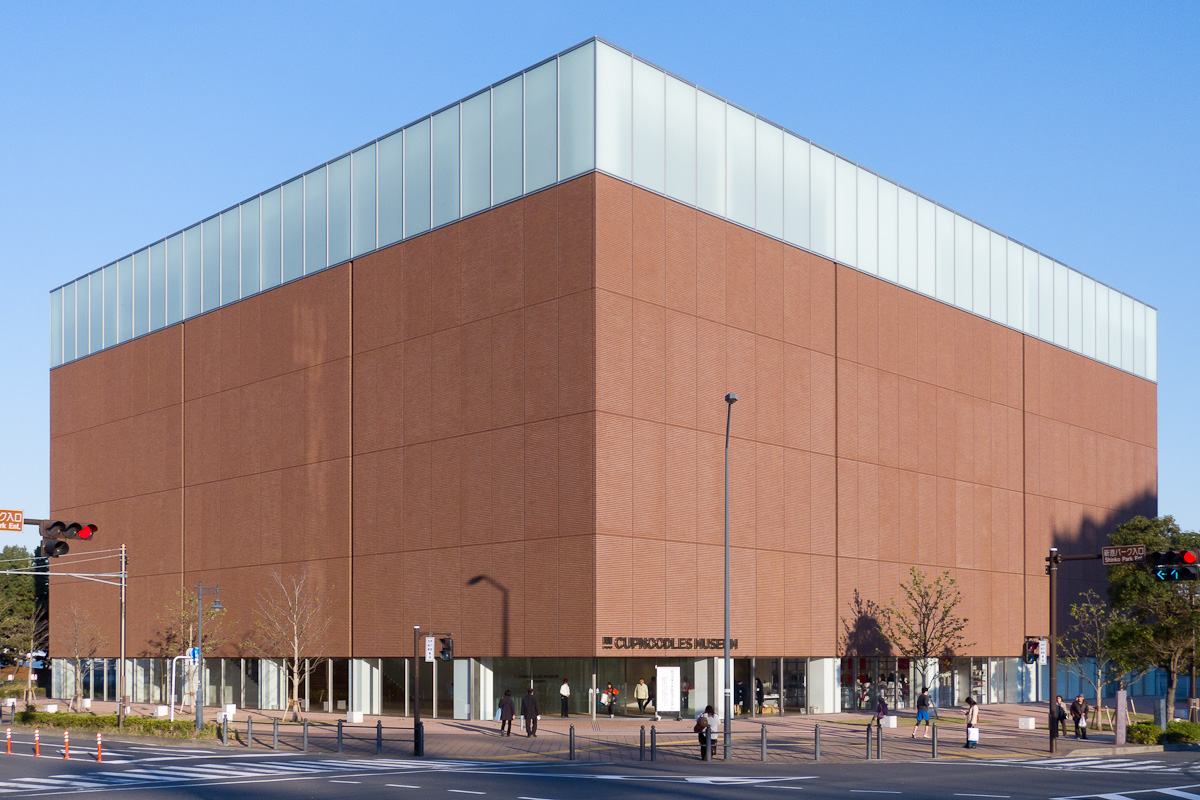
Cup Noodles Museum Yokohama — blue building on the Minato Mirai waterfront
Morning · 10:00–12:30 (~2.5 hours)
Cup Noodles Museum + Cosmo World

Start at the Cup Noodles Museum right at 10:00 when it opens, before tour groups arrive around 11:00. The Nissin-run museum is more interactive than you might expect: the main draw is the My Cup Noodles Factory (¥500 — you paint your own cup, choose a broth and four toppings, and leave with a sealed souvenir; about 45 minutes; book online in advance) and the Chicken Ramen Factory (¥500 — hand-mix and cut real Chicken Ramen noodles; advance booking essential). Even without a workshop booking, the Instant Noodle History Cube wall and the global packaging collection are genuinely fascinating and included in the ¥500 admission.

After the museum, follow the waterfront north for about ten minutes to Yokohama Cosmo World. The amusement park itself is free to enter; you pay per ride. The main event is Cosmo Clock 21, the 112.5-metre Ferris wheel that has been a Minato Mirai icon since the 1989 World Exposition. One ride takes about 15 minutes and costs ¥900. On a clear day you see Landmark Tower, the Bay Bridge and, if conditions allow, Mount Fuji on the western horizon.

Train: Minatomirai Line to Minatomirai Station (~8-min walk) or JR Keihin-Tohoku/Negishi Line to Sakuragicho (~12-min walk)
Cup Noodles Museum: ¥500 adults · Open 10:00–18:00 (last entry 17:00) · Closed Tuesdays · Workshop booking: cupnoodles-museum.jp
Cosmo Clock 21: ¥900 adults · Open 11:00–21:00 (10:00 on holidays) · Cosmo World entry free
Tip: If you want to take home a personalised cup noodle, book the My Cup Noodles Factory slot online before you travel. Weekday morning slots fill up much more slowly than weekends.
Afternoon · 13:00–17:00 (~4 hours)
Red Brick Warehouse + Osanbashi Pier + Yamashita Park

After lunch near Cosmo World, walk south for about ten minutes to the Red Brick Warehouse (赤レンガ倉庫). Built in 1911 as customs warehouses, the two brick buildings now house shops, craft-beer bars and restaurants. Admission is free. The ground-floor interiors have a relaxed, non-touristy feel — local brands, Yokohama-specific souvenirs, seasonal outdoor markets on the forecourt facing the bay. The waterfront promenade in front is particularly good in the late afternoon when the light hits the brick facade.

Continue east along the waterfront for another fifteen minutes to reach Osanbashi International Passenger Terminal (大さん橋). The undulating wooden-decked roof is a free, open-air observation space with one of the best 360-degree views in Yokohama — Landmark Tower to your left, Bay Bridge to your right, and large cruise liners sometimes docked right beside you. From Osanbashi walk south along the waterfront for about ten minutes to Yamashita Park (山下公園), a 750-metre linear park where the SS Hikawa Maru — a retired 1930 passenger liner — is permanently moored and open for tours (¥400).

Red Brick Warehouse: Free admission · Open 10:00–19:00 (restaurants until 22:00)
Osanbashi Pier: Free, open 24 hours (shops ~09:00–21:00)
Yamashita Park: Free, always open · Hikawa Maru ¥400 · Open 09:30–17:00 (closed Mondays)
Best photo window: Osanbashi rooftop between 16:00 and 17:00 — afternoon light catches Landmark Tower on your left and Bay Bridge on your right in the same frame. Far fewer people than during golden hour.
Evening · 17:30–21:00 (~3.5 hours)
Yokohama Chinatown (横浜中華街)

From Yamashita Park it is a short walk or one stop on the Minatomirai Line to Motomachi-Chukagai Station. Exit toward Chukagai and you are two minutes from the red-and-gold gateway arch of Yokohama Chinatown — Japan's largest, with more than 600 shops and restaurants packed into four main streets and dozens of alleyways. It has been here for over 160 years, which gives it a depth and authenticity that no other Chinatown in Japan can match.

What to eat here: steamed nikuman (pork buns) from a street-front window at Heichinrou or Manchinrou (¥180–250 each, eaten standing) are the essential snack. If you want a sit-down dinner, Cantonese dim sum and duck are the specialities, or look for Taiwanese-style hotpot and beef steak sets. Budget around ¥1,500–3,000 per person for a proper meal. The atmosphere peaks between 18:00 and 20:00 when the paper lanterns and neon signs glow.
Train: Minatomirai Line to Motomachi-Chukagai Station, Chukagai exit (~2-min walk to the main gate)
Chinatown: Always open · most restaurants 11:00–21:00
Steamed buns: ¥180–250 each · sit-down dinner ¥1,500–3,000/person
Day Two

Sankeien Garden and Motomachi

An ancient garden that surprises even long-time Tokyo residents · a shopping street with genuine European character · Osanbashi one more time in the evening light — Day 2 shows you why Yokohama deserves more than a day trip.

02
Day 2
Sankeien Garden · Motomachi · Chinatown dinner
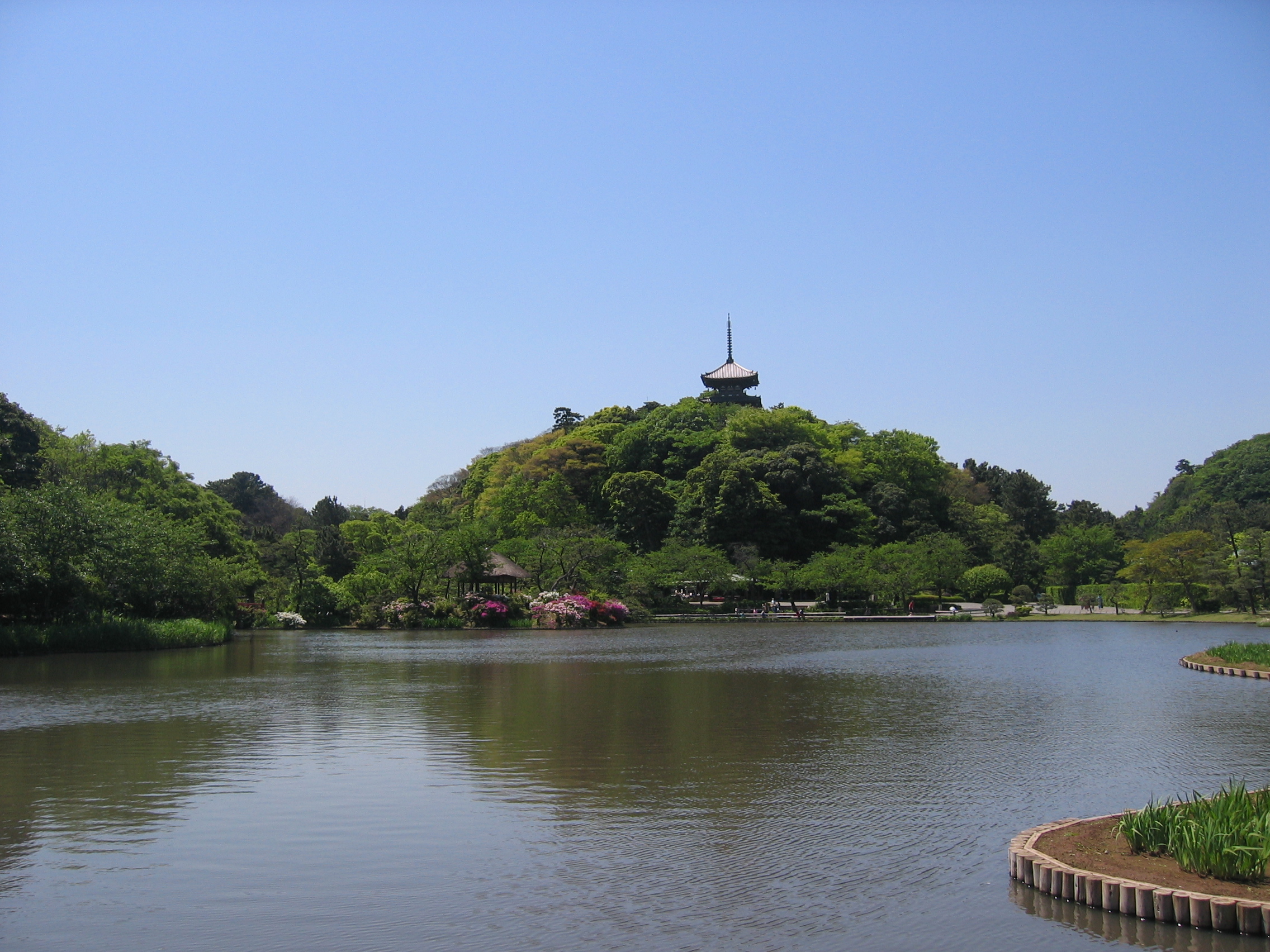
Sankeien Garden Yokohama — three-storey pagoda reflected in a still pond surrounded by green trees
Morning · 09:00–12:00 (~3 hours)
Sankeien Garden (三渓園)

Arrive at Sankeien Garden when it opens at 09:00, before school groups arrive mid-morning. The garden was assembled by Tomitaro Hara, a silk merchant of the Meiji era, who spent decades relocating more than 17 historic wooden structures from across Japan onto an 18-hectare site in southern Yokohama. Among them: the three-storey Tomyo-ji Pagoda from 1457, the Rinshunkaku villa from 1649, a thatched farmhouse from the mountains of Gifu, and several teahouses from the Muromachi period. The result is unlike any single period garden — it reads like a curated anthology of Japanese architecture across four centuries.

The inner garden takes about 90 minutes to walk at a comfortable pace. The iconic view is the three-storey pagoda reflected in the central pond — in cherry blossom season (late March to early April) or autumn foliage (mid-November) the scene is extraordinary. Outside those seasons the garden is still very much worth visiting: the filtered light through old pine and maple canopy, the sound of gravel underfoot, and the near-total quiet make it one of the most peaceful places within reach of central Tokyo.

Bus: From Yokohama Station, Kanagawa Chuo Bus line 8 or 58, alight at Honmoku Sankeien-mae (~25 min) · or taxi from Motomachi-Chukagai (~10 min)
Admission: ¥700 adults · Open 09:00–17:00 (outer garden until 17:30) · Verify Monday closures on the official site
Walking time: Inner garden ~90 min · outer garden ~45 min · combined ~2–2.5 hours
Best seasons: Cherry blossom (late March–early April) and autumn foliage (mid-November) are the visual peaks. In winter the garden hosts a light-up event. All seasons are rewarding.
Afternoon · 13:00–17:00 (~4 hours)
Motomachi Shopping Street + Yamashita Park

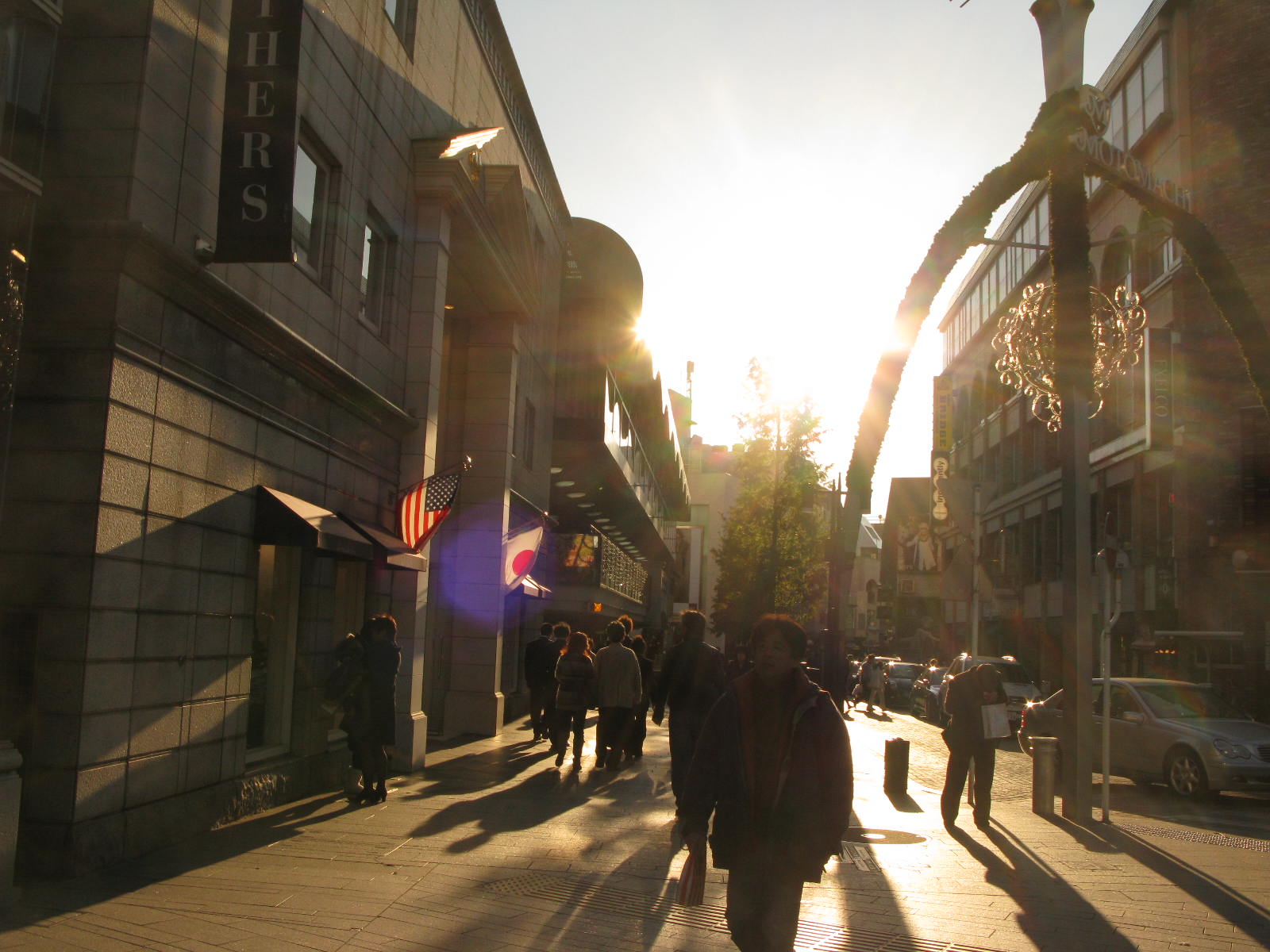
Return to Motomachi-Chukagai by bus or taxi and enter Motomachi Shopping Street (元町通り), a 600-metre pedestrian street that has carried a reputation as Yokohama's most stylish shopping address since the 1950s. The shops are almost entirely local independents — Yokohama-based fashion labels, long-running confectionery stores, jewellers and coffee houses that have been here for 50 to 100 years. There is no Starbucks or major chain on this street, which gives it a time-capsule quality at odds with the polished facades. The street runs parallel to the Nakamura River on one side, with the slope of Yamate Hill visible above.

In the mid-afternoon, make your way down to Yamashita Park again. This time, if the weather is fair, consider going up Marine Tower (横浜マリンタワー), the 106-metre white spire directly beside the park. The 29th-floor observation deck (¥1,000) gives a different angle to Landmark Tower's old Sky Garden — you look down onto Osanbashi Pier and across the bay toward Minato Mirai.

Motomachi Street: 2-min walk from Motomachi-Chukagai Station (Motomachi exit) · most shops open 10:00–20:00
Marine Tower: ¥1,000 adults · Open 10:00–22:00 (last entry 21:30)
Evening · 17:30–20:00 (~2.5 hours)
Chinatown dinner + return to Tokyo

Close out your Yokohama stay with a proper dinner in Chinatown. On Day 2 you have time to sit down properly — Cantonese roasted duck, dim sum, or a Taiwanese beef noodle bowl are all available from dedicated restaurants. Expect ¥1,500–3,500 per person for a full meal at a mid-range restaurant. After dinner, walk back to Motomachi-Chukagai Station, take the Minatomirai Line back to Yokohama Station (8 minutes), and board the Tokyu Toyoko Line Limited Express back to Shibuya in about 25 minutes.

Return train: Minatomirai Line from Motomachi-Chukagai → Yokohama Station (~8 min) · Tokyu Toyoko Limited Express → Shibuya (~25 min)
Chinatown dinner: ¥1,500–3,500/person at a sit-down restaurant
🚢
Extend to Day 3?
Yamate Western residences + Hakkeijima Sea Paradise aquarium
Full Yokohama guide →
Day Three (Optional)

Yamate + Hakkeijima

Victorian-era residences on a breezy hill that most visitors miss · a world-class aquarium on an artificial island — for those who want another side of Yokohama entirely.

03
Day 3 · Optional
Yamate Hill · Hakkeijima Sea Paradise
Motomachi shopping street Yokohama — European-style boulevard with shops on both sides
Morning · 09:30–12:00 (~2.5 hours)
Yamate Hill (山手) — Western Residences

When Yokohama opened its port in 1859, British, American, French and German merchants settled on the breezy hill above Chinatown that the Japanese named Yamate (literally "above the mountain"). Several of their residences have survived earthquakes and wars, been carefully restored, and are open to the public free of charge: Bluff No. 18, the British House, Eris-tei Villa, and the Foreigners' Cemetery (Gaijin Bochi), where more than 4,000 foreign nationals are buried in one of Japan's most atmospheric graveyards. A comfortable walking circuit of the main houses takes about two hours. The hill is ten minutes on foot from Motomachi-Chukagai Station via the Yamate exit.

Train: Minatomirai Line to Motomachi-Chukagai Station, Yamate exit (~10-min uphill walk)
Houses: Most open 09:30–17:00, free admission (some close on Thursdays)
Afternoon · 13:00–17:30 (~4.5 hours)
Hakkeijima Sea Paradise (八景島シーパラダイス)

Take the JR Keihin-Tohoku Line from Yokohama to Shin-Sugita, then the Kanazawa Seaside Line out to Hakkeijima Sea Paradise — a combined aquarium and amusement park on an artificial island at the southern tip of Yokohama Bay. The aquarium (¥2,700 adults for aquarium only; ¥4,300 to include rides) is one of the best in the Greater Tokyo area. It houses beluga whales, sea otters, dolphins and fur seals, with a walk-through 360-degree Dolphin Fantasy tunnel that reliably impresses both children and adults. Particularly recommended for families or anyone with a strong interest in marine life — less essential if neither applies.

Train: JR Keihin-Tohoku Line to Shin-Sugita → Kanazawa Seaside Line to Hakkeijima (~25 min total)
Admission: Aquarium ¥2,700 · Aquarium + rides ¥4,300 · Open 10:00–17:00 (until 20:00 on holidays in season)
For families: Hakkeijima is worth the journey if you have children under 12. The Dolphin Fantasy tunnel and touch pools are consistently among the best-reviewed experiences in the region.
Practical Information

Getting Around · Where to Stay · Budget

🚃
Getting from Tokyo

The fastest and cheapest option is the Tokyu Toyoko Line Limited Express from Shibuya to Yokohama Station — about 25 minutes, ¥280. From Yokohama, continue on the Minatomirai Line to Minatomirai Station (Cup Noodles, Red Brick) or Motomachi-Chukagai (Chinatown, Motomachi, Yamashita Park). JR Pass holders can use the JR Keihin-Tohoku/Negishi Line to Sakuragicho, a 10-minute walk from Minato Mirai. Note: the Minatomirai Line is a private line not covered by the JR Pass.

🏨
Where to Stay

If you are spending one or two nights in Yokohama, the Minatomirai or Sakuragicho area puts you within walking distance of Red Brick Warehouse and Cup Noodles Museum. Three-to-four star hotels typically run ¥8,000–15,000 per night. If you are staying in Tokyo and day-tripping, there is no need to book a Yokohama hotel — the round trip is fast enough for a comfortable full day. See our Yokohama city guide for hotel picks.

🎟️
Transport Passes

A Minatomirai Line 1-Day Pass costs ¥700 and pays off if you make four or more trips in a day. For two or three stops a single-journey SUICA/PASMO tap is cheaper. The JR Pass does not cover the Minatomirai Line, but it does cover the JR Negishi Line to Sakuragicho and the Keihin-Tohoku Line to Shin-Sugita (for Hakkeijima). A SUICA or PASMO IC card loaded with a few thousand yen is the most flexible option.

Budget

Estimated Daily Costs Per Person

Item Budget Mid-range Comfortable
Shibuya–Yokohama return train ¥560
(~$3.70)
¥560
(same)
¥560
(same)
Minatomirai Line (in city) ¥360–540
(2–3 trips)
¥700
(Day Pass)
¥700
(Day Pass)
Attractions (Day 1) ¥500
(Cup Noodles only)
¥1,400
(+ Cosmo Clock ¥900)
¥2,400
(+ Marine Tower ¥1,000)
Food (3 meals) ¥1,500–2,000
(ramen + Chinatown buns)
¥2,500–4,000
(sit-down + snacks)
¥4,000–7,000
(fine dining options)
Total per day (approx.) ¥2,920–3,600
(~$19–24)
¥5,160–7,660
(~$34–50)
¥7,660–11,660
(~$50–76)

Exchange reference: ¥150 ≈ $1 USD · Accommodation not included for day-trippers from Tokyo · Prices approximate, subject to seasonal variation.

Frequently Asked Questions

FAQ · Yokohama Itinerary

Is 1 day enough for Yokohama?
One full day covers the main highlights well — Cup Noodles Museum, Red Brick Warehouse, Cosmo Clock 21, Chinatown and Yamashita Park are all within walking distance or two Minatomirai Line stops of each other. You need to start early from Tokyo and keep a reasonable pace. With 2 days you can add Sankeien Garden and Motomachi Shopping Street comfortably.
How do I get from Tokyo to Yokohama?
The easiest route is the Tokyu Toyoko Line Limited Express from Shibuya Station — about 25 minutes to Yokohama Station for ¥280. From Yokohama, transfer to the Minatomirai Line for Minatomirai Station (near Cup Noodles Museum and Red Brick) or Motomachi-Chukagai Station (near Chinatown, Motomachi and Yamashita Park). Alternatively, JR Keihin-Tohoku Line to Sakuragicho Station puts you at the edge of Minato Mirai with a 10-minute walk.
When is the best time to visit Yokohama Chinatown?
Yokohama Chinatown is open around the clock, but the atmosphere peaks between 17:00 and 20:00 when the red and gold lantern lights come on. The most crowded times are weekend lunchtimes. For a more relaxed sit-down meal, weekday afternoons between 14:00 and 16:00 work well.
What is Sankeien Garden and is it worth visiting?
Sankeien (三渓園) is an 18-hectare traditional Japanese garden assembled by silk merchant Tomitaro Hara in the early 20th century. He relocated more than 17 historic wooden buildings from across Japan — including a three-storey pagoda from 1457 and a Muromachi-era teahouse — onto a single estate. It is one of the finest gardens in the Kanto region and admission is ¥700. Open daily 09:00–17:00; check in advance on Mondays as occasional closures occur.
How many days should I spend in Yokohama?
Two days is the sweet spot for a first visit — Day 1 for Minato Mirai and Chinatown, Day 2 for Sankeien and Motomachi. If you only have one day, focus on Minato Mirai and Chinatown and skip Sankeien. For three days, add the Yamate Western residences and Hakkeijima Sea Paradise. Yokohama also works perfectly as a day trip from Tokyo.