Home Takayama Gifu Japan About
Home  ›  Asia  ›  Japan  ›  Takayama  ›  Travel Tips
🏔 Before You Go · Takayama 2026

Takayama Travel Tips:
The Town Where Time Slows Down

Old timber lanes, 300-year-old sake breweries, morning markets beside a clear river — Takayama rewards the prepared traveller. Here is everything you need to know before you step off the Hida Express.

Getting There

Multiple Ways In — Which Route Suits You

Takayama sits in a valley in Gifu Prefecture, deep in the Japanese Alps. There is no local airport — the town is served by the JR Hida limited express and Nohi highway buses.

🚄
JR Hida Limited Express — from Nagoya (Easiest)
Nagoya → Takayama · The most common route for international visitors

Fly into Chubu Centrair International Airport (NGO) and connect to the JR Hida Limited Express from Nagoya Station. The train reaches Takayama in about 2 hours 25 minutes. A reserved seat costs approximately ¥5,610. Trains run every 1–2 hours throughout the day. Both the JR Pass and JR Central Pass cover the full route. During the spring and autumn festival weekends, seat reservations fill up fast — book at least a few weeks ahead.

~2 hrs 25 min ~¥5,610 reserved JR Pass valid
Best if: Flying into Nagoya, or coming from Tokyo via Shinkansen to Nagoya first · Already holding a JR Pass (essentially free)
🚌
Nohi Bus — from Osaka or Nagoya
Osaka / Nagoya → Takayama · Cheaper, with mountain scenery

Nohi Bus runs direct highway coaches from Osaka (Umeda Bus Terminal) to Takayama, taking around 4.5–5 hours. Fares are approximately ¥4,500–5,000 depending on the departure time. The ride winds through the Hida mountains, which is scenic but long. For those flying into Osaka (KIX or ITM), adding the airport transit time makes this route considerably longer than flying into Nagoya instead. Buses have power outlets and comfortable seating.

~4.5–5 hrs from Osaka ~¥4,500–5,000 Book in advance
Best if: Flying into Osaka and not using a JR Pass · Prioritising cost over travel time
🏔
Nohi Bus via Shirakawa-go — from Kanazawa
Kanazawa → Shirakawa-go → Takayama · The most scenic route

Nohi Bus runs directly from Kanazawa Station to Takayama, passing through the UNESCO World Heritage village of Shirakawa-go along the way. Total journey time is about 2 hours 30 minutes to 3 hours, costing approximately ¥4,200. If you are combining Kanazawa and Takayama in one trip, this route makes a natural stop-off at Shirakawa-go at no extra cost. Buses run every 1–2 hours during the tourist season; book ahead for peak periods.

~2.5–3 hrs from Kanazawa ~¥4,200 Via Shirakawa-go
Best if: Building a Kanazawa + Shirakawa-go + Takayama itinerary · The Takayama-Hokuriku Area Pass covers this bus
🗼
From Tokyo — Shinkansen to Nagoya, then Hida
Tokyo → Nagoya (Shinkansen) → Takayama (Hida) · No direct service

There is no Shinkansen to Takayama. The fastest connection from Tokyo is to ride the Nozomi Shinkansen to Nagoya (about 1 hour 40 minutes), then transfer to the Hida Limited Express. Total travel time is around 4 hours, costing approximately ¥15,000–17,000 without a pass. A JR Pass covers everything. Alternatively, taking the Shinkansen north to Toyama then the Hida back south is another option, though check current service status on that line — a bridge repair closure affected part of the Takayama–Toyama route in early 2026.

~4 hrs combined ~¥15,000–17,000 JR Pass covers all
Best if: On a longer trip combining Tokyo–Takayama–Osaka and holding a JR Pass
Takayama-Hokuriku Area Tourist Pass (¥19,800 / 5 days): Covers unlimited use of JR trains between Nagoya, Takayama and Toyama, plus Nohi buses between Takayama, Shirakawa-go, Kanazawa and Toyama. Excellent value if your route spans the full Chubu–Hokuriku corridor. Buy at major JR ticket offices or online before departure.
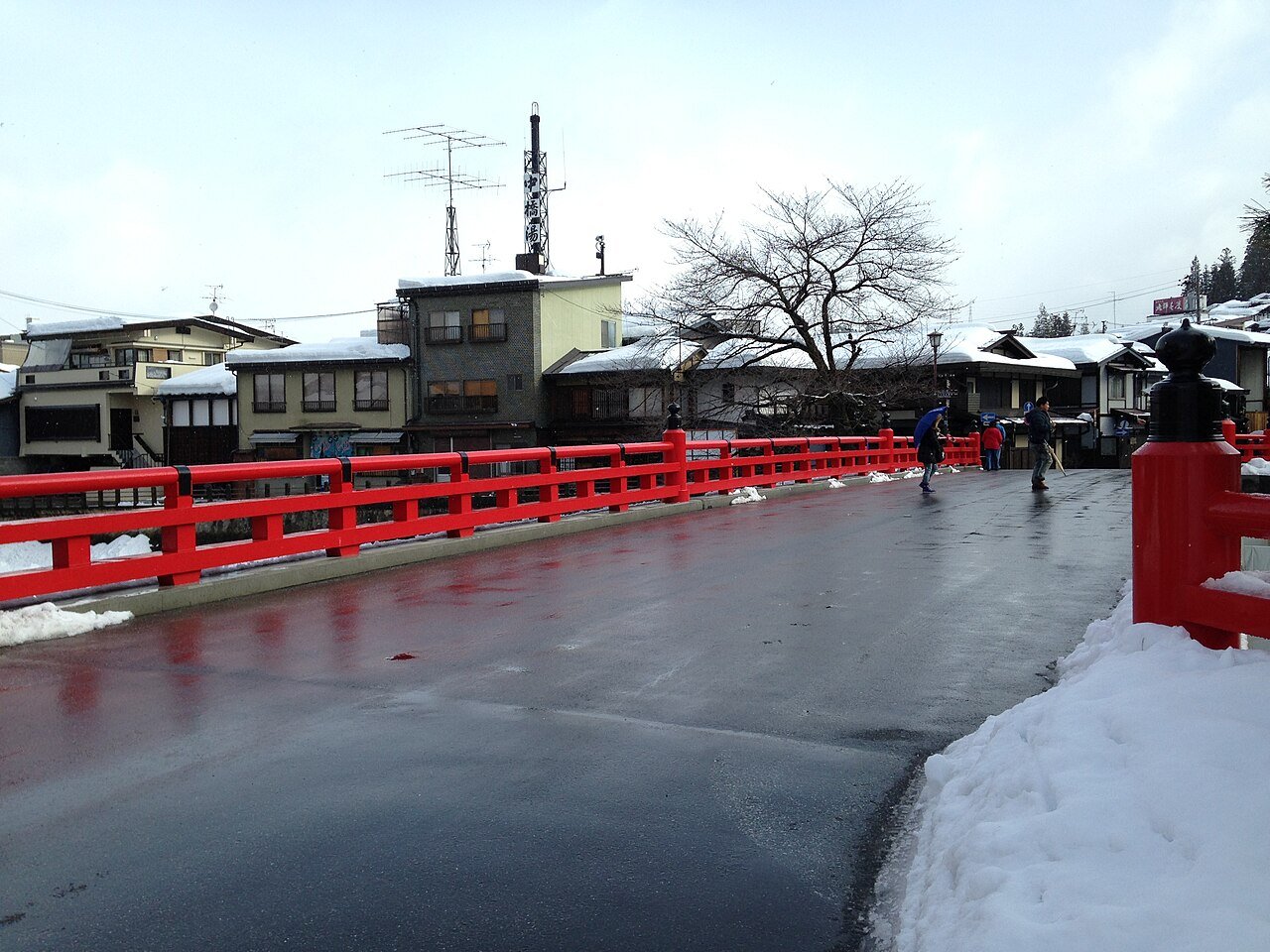
The red Nakabashi Bridge spanning the Miyagawa River in Takayama, with traditional wooden townhouses lining the far bank
Nakabashi Bridge — Takayama's most photographed landmark, less than 10 minutes' walk from the train station
Getting Around

The Sarubobo Bus and Getting Around Town

The old town and morning markets are walkable — Hida Folk Village needs a bus or bicycle

One thing that surprises many visitors: Sanmachi Suji, both morning markets, Takayama Jinya and Sakurayama Hachimangu shrine are all within easy walking distance of each other. From the train station to the Jinya-mae Morning Market is about 10 minutes on foot. Hida Folk Village (Hida no Sato), however, is roughly 4 km to the southwest — you will need a bus, taxi or bicycle to get there.

Sarubobo Bus (Tourist Circular)

The cheerful red mini-bus named after Takayama's famous sarubobo cloth monkey charm runs from the station to Hida Folk Village every 30 minutes. Fare is ¥100 per ride — one of the best-value buses in Japan. Combine with the Machinami Bus for a full one-day pass at just ¥500.

Fare: ¥100/ride · Day pass: ¥500 (all city lines) · Frequency: every 30 min
Machinami Bus (Old Town Loop)

Runs through the eastern old town district, connecting the station with Sanmachi Suji, Jinya and Hachimangu. Fare ¥100 per ride. The ¥500 day pass covers this line too. Useful when the afternoon sun makes walking the historic streets feel long.

Key stops: Station → Sanmachi → Jinya → Hachimangu · Combined day pass with Sarubobo: ¥500
Bicycle Rental

A favourite option for independent travellers. Rental shops cluster around the station exit. Standard bikes run ¥700–1,000 per day; electric bikes ¥1,500–2,000 if the thought of hills puts you off. The town is flat enough for cycling, and Hida Folk Village is a comfortable 15–20 minute ride from the centre.

Cost: ¥700–1,000/day standard · ¥1,500–2,000/day e-bike · Where: multiple shops near station
On Foot and Taxis

The old town, both morning markets and Jinya are all within a 20-minute walk of each other and of the station. Taxis queue outside the station for groups or rainy days; the flag-fall is ¥670. Walking through Sanmachi at dusk, after the tour groups have gone, is one of the best free experiences Takayama offers.

Walking times from station: Jinya-mae Market ~10 min · Sanmachi Suji ~12 min · Miyagawa Market ~8 min
Tip: The ¥500 one-day bus pass (Sarubobo + Machinami + Takanegou lines) pays for itself the moment you factor in a Hida Folk Village visit on the same day as exploring the old town. Buy it on board the first bus or at the tourist information desk just outside the station.
Sanmachi Suji old town street in Takayama lined with dark-timbered Edo-period merchant houses, visitors strolling in morning light
Sanmachi Suji — three preserved streets of Edo-period merchant townhouses, roughly 12 minutes' walk from the station
Etiquette & Practical Tips

What to Know Before You Walk Takayama

None of this is complicated — but knowing it in advance makes the visit far smoother

Rail service note: A section of the Hida Line between Takayama and Toyama was closed for bridge repairs in early 2026. Check the JR Central website for the current status before travel. Nohi Bus operates replacement services when the line is closed.
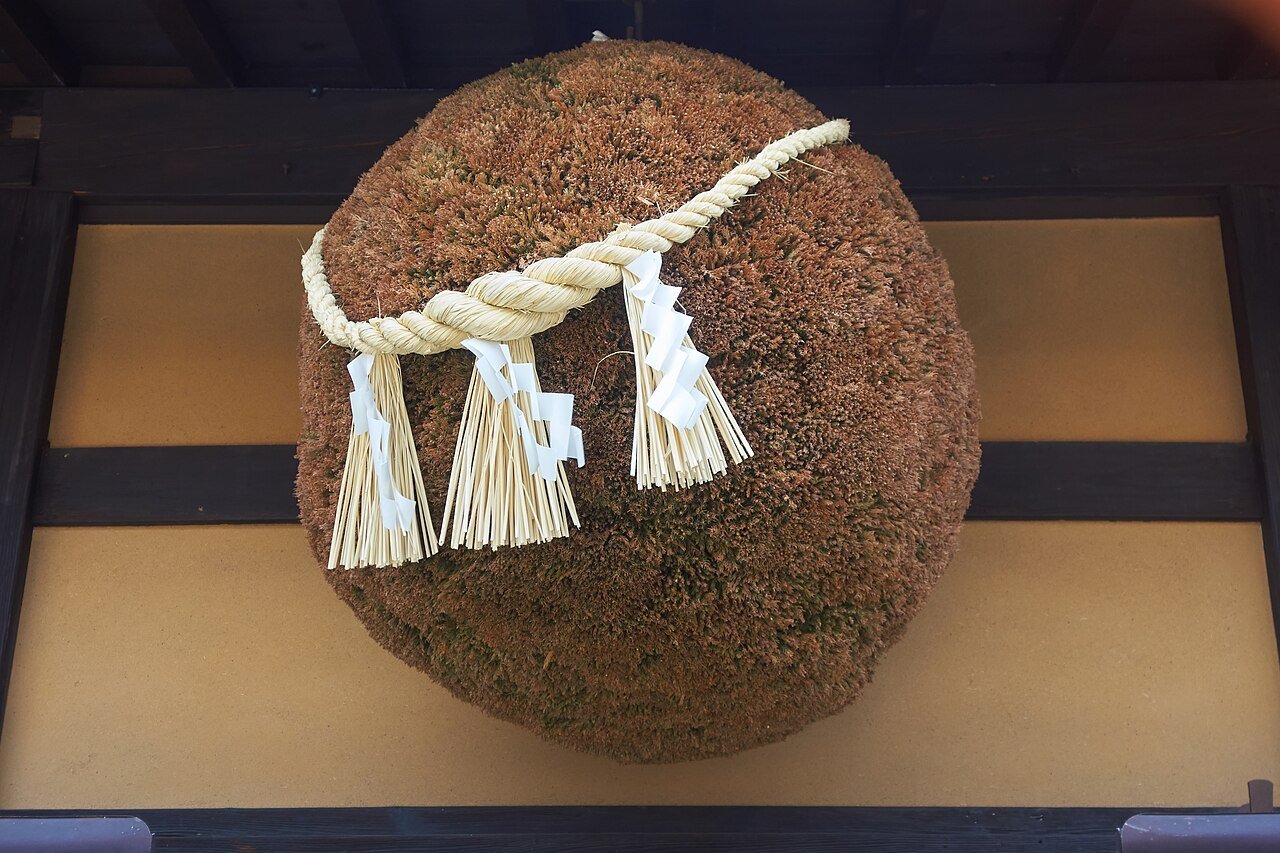
A brown sugidama cedar ball hanging above a sake brewery entrance in Sanmachi Suji, Takayama — the traditional sign that new sake is ready
The sugidama cedar ball — when green, the new season's sake is freshly pressed; brown means it has matured. Six breweries in Sanmachi, all offering free tastes.
Best Time to Visit

Takayama Looks Different Every Season

Each season has a distinct character — choose what you want to experience

Spring (mid-March – May) — Most Popular

Cherry blossoms arrive in Takayama 3–4 weeks later than Tokyo or Kyoto, typically landing in mid-to-late April. That timing often coincides perfectly with the Sanno Matsuri (April 14–15) — golden floats, sakura petals, old town streets. Temperatures reach 8–18°C. Crowded and pricey, but worth it if you plan ahead.

Summer (June – August)

Warmer than you might expect at altitude, with daytime temperatures of 28–33°C. The Alps are intensely green, and Shinhotaka Ropeway views across the peaks are spectacular. June brings some rain during tsuyu (rainy season). Fewer crowds than spring or autumn, and accommodation prices drop noticeably.

Autumn (October – November) — Most Beautiful

The surrounding mountains ignite with reds, oranges and golds from mid-October. The Hachiman Matsuri (October 9–10) adds another procession of lacquered floats against a backdrop of early autumn colour. Temperatures are 10–20°C by day, with cold mornings and evenings. Layer up. Accommodation books out as fast as spring.

Winter (December – February) — Quietest

Snow settles on the thatched rooftops of Sanmachi and softens every edge of the old town. Visitor numbers are at their lowest, prices reflect that, and the atmosphere is genuinely peaceful. Temperatures drop to -5–5°C; a warm coat, gloves and non-slip shoes are non-negotiable. One of Japan's most photogenic winter destinations.

Avoid Golden Week (April 29 – May 5): Japan's extended public holiday brings heavy domestic tourism to Takayama. Accommodation prices spike and every queue gets long. If you must travel during this window, book the moment reservations open and arrive early on each day.
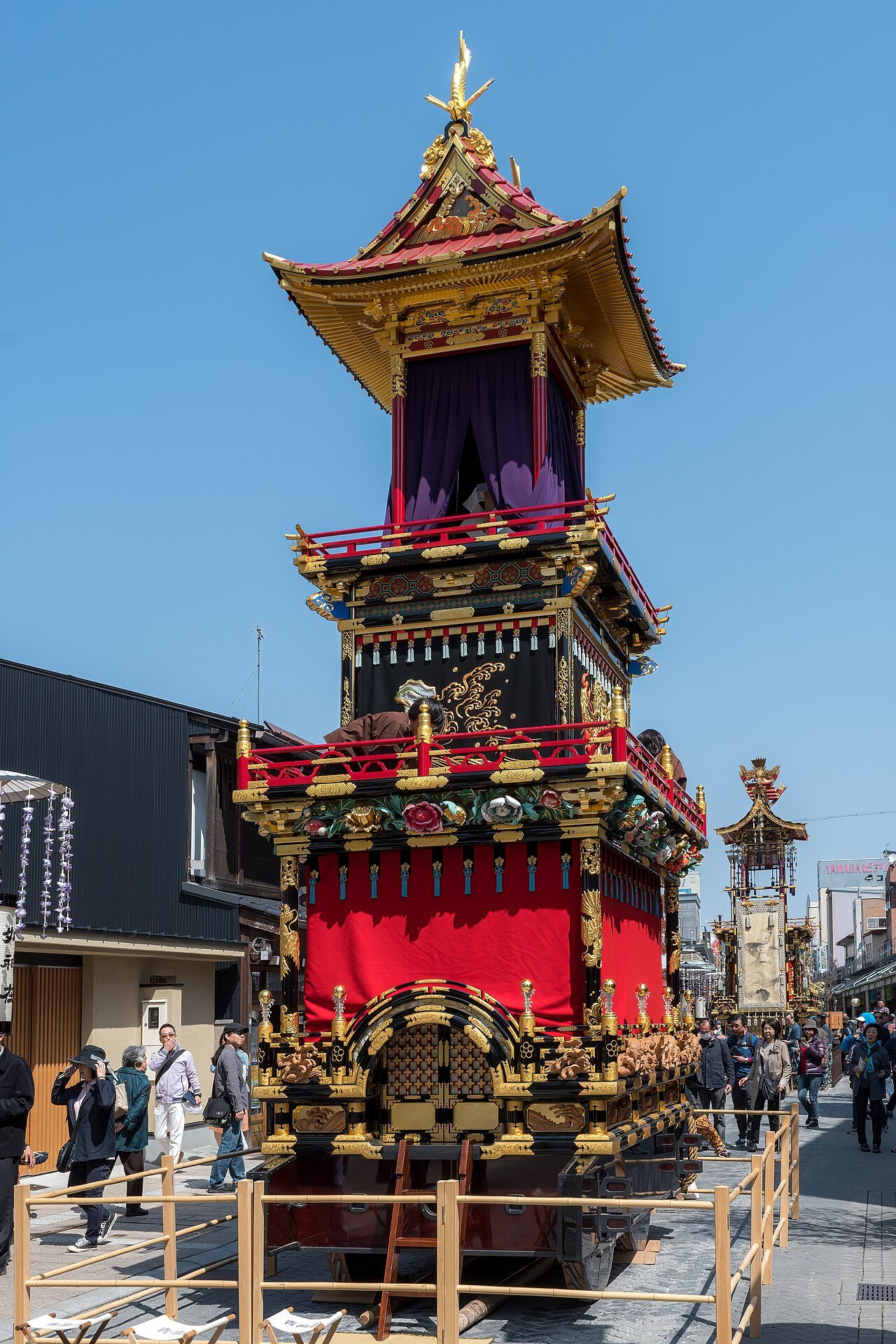
Ornate gilded Yatai festival float being paraded through Takayama's old streets during the Takayama Matsuri, crowds watching from both sides
The Yatai floats of Takayama Matsuri — gilded, elaborately crafted, and paraded twice a year through streets that have seen them for centuries
Daily Budget

How Much Does Takayama Actually Cost

Rough figures for planning — adjust for your travel style

Category Budget Mid-range Comfortable
Accommodation (per person/night) ¥3,500–5,500 (hostel / guesthouse) ¥8,000–15,000 (mid-range ryokan) ¥18,000+ (ryokan with meals)
Food (3 meals) ¥1,500–2,500 (local spots + market) ¥3,500–6,000 (sit-down restaurants) ¥8,000+ (Hida beef or kaiseki dinner)
Sightseeing ¥400–800 (Takayama Jinya is free) ¥1,500–3,000 (Jinya + Folk Village) ¥4,000+ (multiple sites + Shinhotaka)
Local transport ¥0–300 (walking) ¥500 (one-day bus pass) ¥1,000–2,000 (bicycle or taxi)
Shopping / snacks ¥500–1,000 ¥1,500–3,000 ¥5,000+ (Hida beef to take home)
Daily total (estimated) ~¥8,000–12,000 ~¥16,000–25,000 ¥35,000+
Easy ways to save: Start each morning at the Jinya-mae market with mitarashi dango skewers (¥200–300) and green tea. Sake tastings at the six Sanmachi breweries are free. Takayama Jinya historic government building is free entry (maintained by the national government). Hida Folk Village is ¥700. A day trip itinerary built around those four saves several thousand yen compared to paying for multiple ticketed attractions.
What to Pack

Essentials and Practical Information

Clothing by Season

Takayama sits at 573 metres elevation and is always cooler than Japan's major cities. Winters regularly drop to -5°C; pack a serious coat, gloves and a scarf. In spring and autumn, mornings and evenings turn cold fast — moisture-wicking base layers plus a windproof mid-layer work for almost any day. Summers are warm (28–33°C) but not oppressive.

Winter must-haves: Heavy coat, gloves, scarf, non-slip soles · Spring/Autumn: Layering system + windbreaker
Footwear

Takayama involves a lot of walking, including on old cobbled paths in Sanmachi that can be slippery when wet or icy. Comfortable flat-soled shoes that slip on and off easily are ideal — you will be removing them at temples, some restaurants and ryokan constantly. High heels and lace-up dress shoes will make your day needlessly difficult.

Avoid: High heels, complex lace-up boots · Recommended: Low-profile trainers or slip-on shoes with rubber soles
Cash and Payments

Larger shops and restaurants in Sanmachi Suji generally take credit cards, but both morning markets, street food stalls and some sake breweries remain cash-only. Carry ¥10,000–15,000 per day as a comfortable buffer. 7-Eleven and Japan Post ATMs in town accept international bank cards reliably.

Currency: Yen (¥) · Recommended cash: ¥10,000–15,000/day · ATMs: 7-Eleven and Japan Post in town
SIM, eSIM and Navigation

4G/5G coverage is solid throughout central Takayama. Signal can fade at higher elevations near Shinhotaka Ropeway. A Japan eSIM set up before departure is the simplest option. Google Maps is excellent for navigating Japan; Navitime handles local bus timetables well; Google Translate's camera mode is genuinely useful for menus and signage written only in Japanese.

Recommended apps: Google Maps · Navitime · Google Translate · Airalo eSIM
Staying in a ryokan: Most ryokan provide a yukata (lightweight cotton robe) for your stay — you will probably wear it from check-in through dinner. In winter, most also provide a tanzen, a padded outer robe you layer over the yukata. Pack light: ryokan stays need less luggage than you think. If your package includes dinner and breakfast (the standard "2 meals" plan), factor that into your food budget for the day.
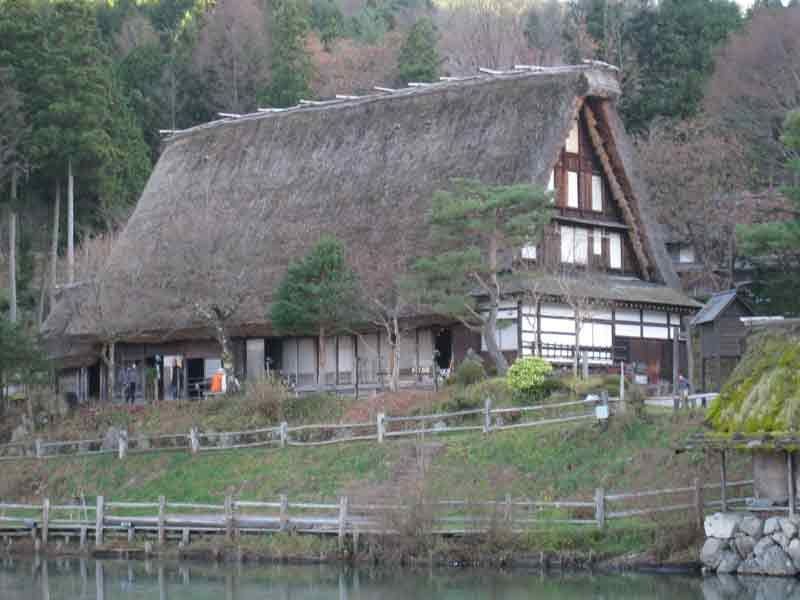
Hida Folk Village open-air museum in Takayama showing steep-roofed gassho-zukuri farmhouses surrounded by forested hills
Hida Folk Village (Hida no Sato) — an open-air museum of gassho-zukuri thatched farmhouses relocated from across the Hida region
Frequently Asked Questions

FAQ — Before You Visit Takayama

How do I get to Takayama from Nagoya?
The most direct route is the JR Hida Limited Express from Nagoya Station. The train takes approximately 2 hours 25 minutes and a reserved seat costs around ¥5,610. Both the JR Pass and JR Central Pass cover the route. Trains run every 1–2 hours all day. During festival season (April 14–15 and October 9–10) seat reservations sell out quickly — book a few weeks ahead via the JR Central website or at any JR ticket office.
Is the Takayama-Hokuriku Area Tourist Pass worth buying?
The pass is worth it if your itinerary spans the route Nagoya → Takayama → Shirakawa-go → Kanazawa → Toyama. At ¥19,800 for 5 days, it covers JR trains and Nohi buses between all major stops on that corridor. Buying individual tickets for every leg would cost significantly more. If you are only doing a Nagoya–Takayama return, individual tickets are cheaper. Purchase at major JR stations or online before your Japan trip.
How much is the Sarubobo Bus in Takayama?
The Sarubobo Bus charges ¥100 per ride, departing from Takayama Station every 30 minutes toward Hida Folk Village and other sights in the western part of town. If you plan to use the bus more than five times in a day, the ¥500 one-day unlimited pass (covering all city lines including the Machinami Bus) is better value. Buy it on the bus or at the tourist information centre outside the station.
When is the best time to visit Takayama?
Takayama reaches its most celebrated peaks twice a year: mid-April, when cherry blossoms align with the Sanno Matsuri (April 14–15), and early October, when autumn foliage meets the Hachiman Matsuri (October 9–10). Both periods see accommodation sell out months in advance. For the same beauty with far fewer crowds, winter (December–February) is exceptional — snow on the old timber streets and no queues anywhere. See our Takayama city guide for a full breakdown.
Do shops in Takayama accept credit cards or only cash?
Larger retailers and restaurants along Sanmachi Suji generally accept Visa and Mastercard. However, both morning markets, street food stalls and some sake breweries remain cash-only. Carrying ¥10,000–15,000 per day is a safe buffer. 7-Eleven and Japan Post ATMs in Takayama reliably accept international bank cards without issues.