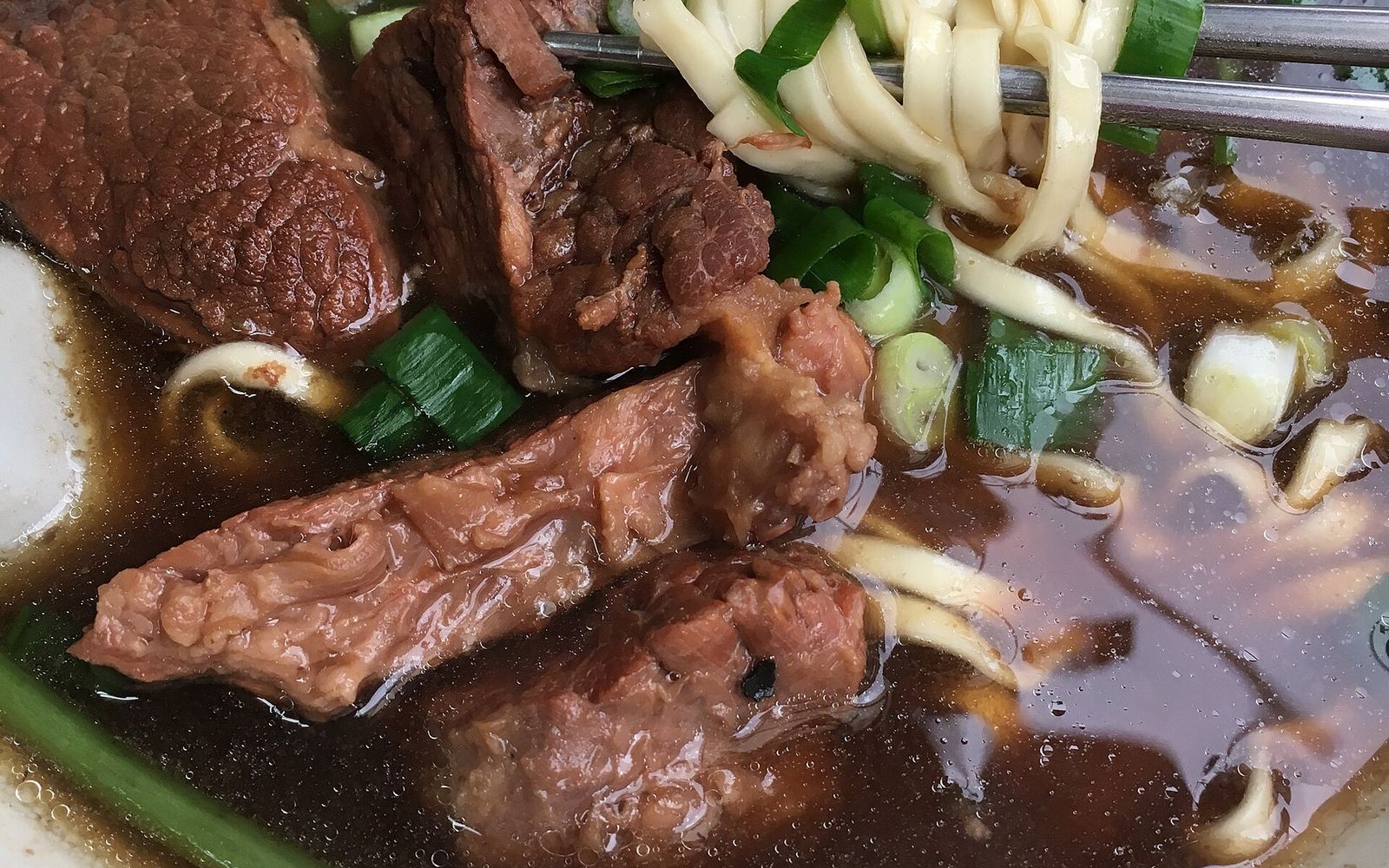
A deep brown-red broth simmering in the bowl, steam carrying star anise and slow-cooked soy, a first bite of silky translucent tendon — this is Taiwan's national dish. We unpack what it is, how the styles differ, how to order like a local, and where the city's 10 legendary shops are hiding.
Ask ten Taiwanese people which dish counts as the "national dish" and nearly all of them will give the same answer — beef noodle soup, or niu rou mian (牛肉麵). It isn't simply a delicious meal; it's the story of the whole island in a bowl. After 1949, when millions of soldiers and their families fled mainland China for Taiwan, they brought their home recipes with them. Veterans from Sichuan province who settled near Kaohsiung blended fiery doubanjiang chilli-bean paste with beef and noodles, creating a deep red broth that had never existed on the mainland. Beef noodle soup is therefore a dish that was genuinely born in Taiwan — not imported, but forged here on the island.
Today beef noodle soup is everywhere in Taipei, from tiny shophouses with four tables to decades-old institutions with a queue stretching to the corner. The city is so proud of it that it hosts the Taipei International Beef Noodle Festival every October to crown the most delicious bowl of the year. This guide walks you through the heart of the dish — the two broth styles you need to know, the components that set one bowl apart from another, how to order like a local, and 10 legendary shops you can actually travel to and slurp.
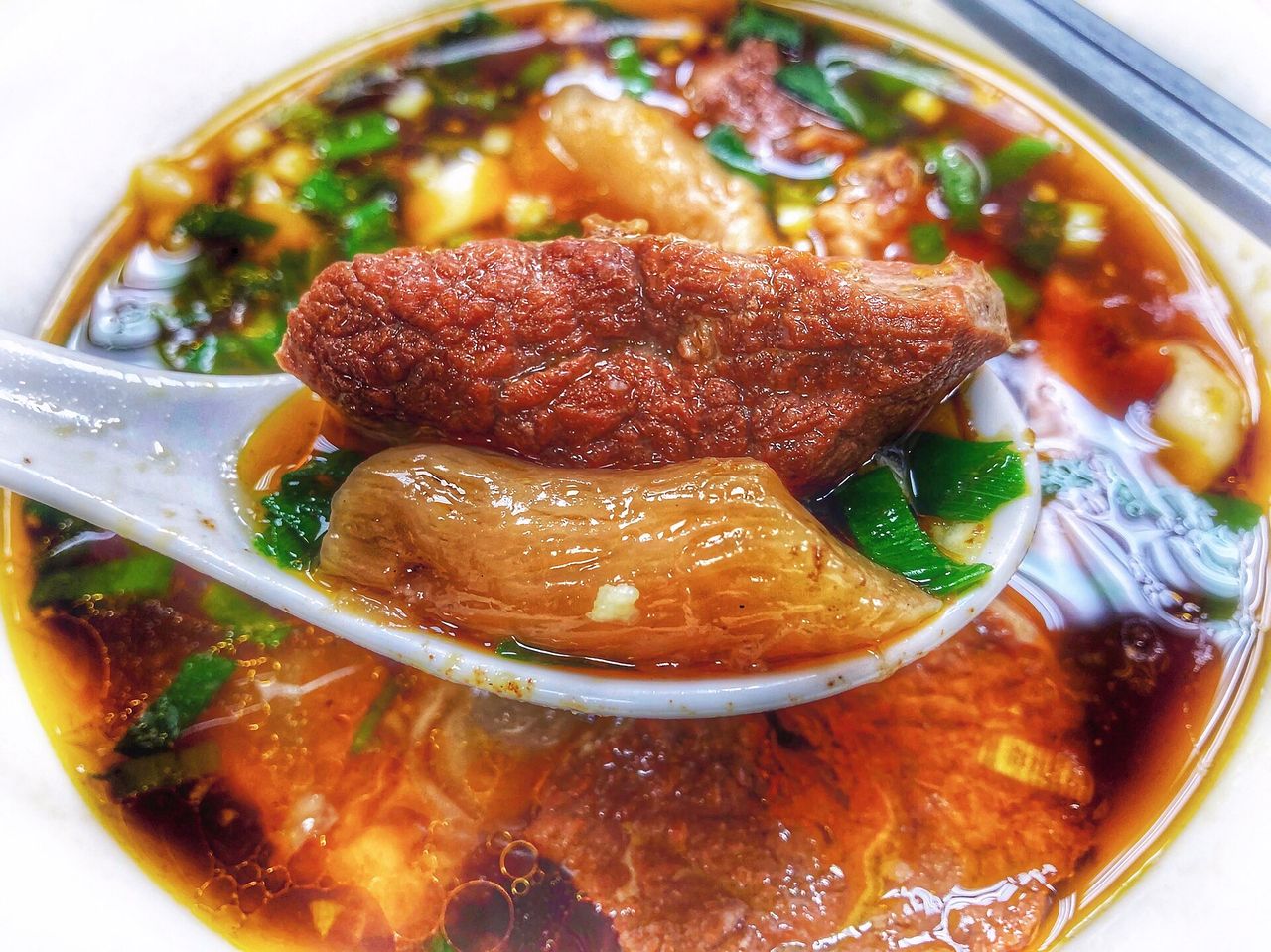
So what makes a great bowl? The heart of it is the broth, simmered for hours from beef bones and meat until it reaches a profound depth. Then comes the beef, stewed until meltingly tender; the noodles, springy and never mushy; and the pickled mustard greens (suan cai), sharp and salty, which you add yourself to cut the richness of the broth.
That little dish of pickled greens on the table isn't a meaningless garnish — it's the seasoning Taiwanese diners use to "tune" their own bowl. Add a small spoonful, stir it through, taste, and you'll understand why a dish this simple sparks endless debate over which shop does it best.
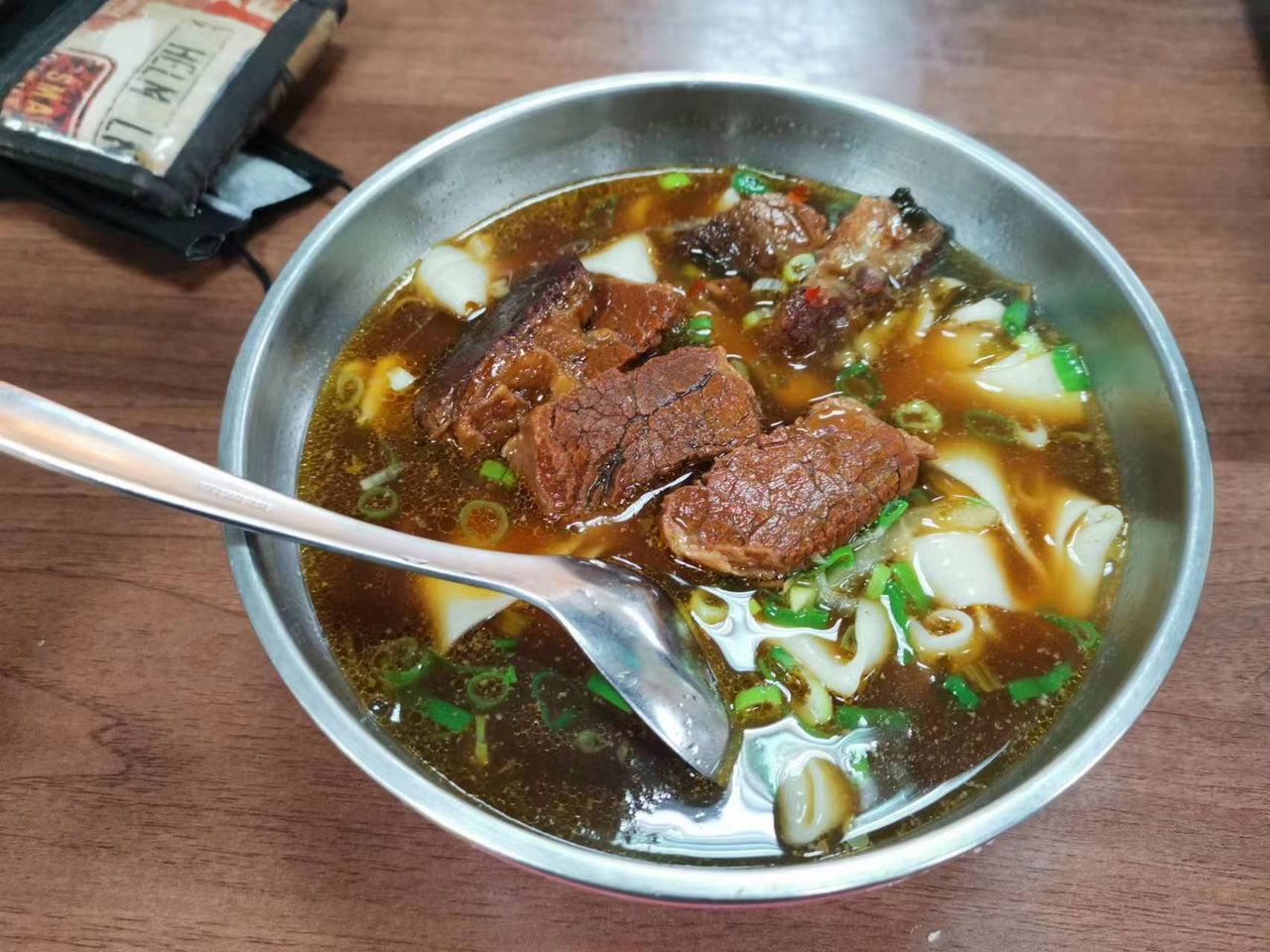
Before you step into a shop, get to know these two broths — it's the first decision you'll have to make.

The most famous style and the defining image of Taiwanese beef noodle soup — a broth simmered from beef bones, soy sauce and Sichuan doubanjiang chilli-bean paste (豆瓣醬), seasoned with Chinese spices such as star anise, cinnamon and fragrant chillies until it turns deep brown-red and bold. Some shops float a spicy "beef-chilli oil" on top for extra aroma and heat. If this is the first beef noodle soup of your life — order hong shao.

The connoisseur's choice — beef bones and meat stewed with ginger and Chinese herbs but no soy sauce, producing a pale, crystal-clean broth that's gentle and rounded, showcasing the natural sweetness of the beef with nothing to mask it. A shop that does qing dun well has to be confident in its ingredients, because there's no soy sauce to hide any flaw. Perfect for those who prefer a delicate flavour or a lighter meal.
Many famous shops have menus in Chinese only — but learn a handful of terms and you'll order like a pro.
Shank (牛腱) is tender with pretty marbled sinew · tendon (牛筋) is translucent and silky — the highlight · tripe (牛肚) is springy. Order 半筋半肉 for half tendon, half meat in one bowl.
Thick round noodles (粗麵) are chewy and satisfying · thin noodles (細麵) soak up the broth well · some shops offer wide flat or hand-pulled noodles — ask what the shop is known for.
Bowls come small (小) and large (大), roughly NT$30–60 apart. If you plan to shop-hop several places in a day, order small so you have room for more.
The dish of suan cai (酸菜) on the table is free seasoning — add a little to cut the richness of the broth. Spoon it in gradually and taste; don't dump it all at once.
Almost every shop has a "xiao cai" (小菜) counter — dried tofu, seaweed, blanched tripe, soy-braised eggs. Pick a small plate to set beside your bowl and round out the meal.
Most old-school shops are cash only, and many run split lunch and dinner service. Check opening hours before you go, and always have a backup shop in mind.
We've picked 10 shops that local eaters and food guides mention again and again — each with its style, neighbourhood, nearest MRT and rough price.
If Taipei eaters had to vote for one shop, this name lands near the top almost every time. The red broth is rich, layered and intensely aromatic with spice, and the beef tendon is stewed until it turns translucent and melts in the mouth. The shop has moved to a roomier, more comfortable home — but the lunchtime queue is as long as ever. Many people treat this bowl as the benchmark for Taipei beef noodle soup.
An institution dating back to 1963 on Yongkang Street, and the shop most tourists know best. It has appeared in the Michelin Guide. The red broth is bold with a gentle Sichuan-style heat, and the stewed beef is so tender it almost falls apart at the touch of a chopstick. The location sits in the Yongkang district — a foodie quarter where you can wander on to mango shaved ice and other treats. Expect a queue and prices a touch above average.
A Shandong-style shophouse in an alley near Taipei Main Station, with a Michelin Bib Gourmand and a loyal following among local office workers. The standout is the thick, round hand-made noodles in the Shandong tradition, distinctively chewy and springy. Both red and clear broths are available. The atmosphere is plain and genuinely local, and it's one of the most affordable bowls on this list — open mainly for lunch and known to sell out fast.
A halal restaurant that has appeared in the Michelin Guide for several years running — ideal for Muslim travellers. The broth is prepared to halal standards and comes in both red and clear versions. Another speciality is the Dongbei-style flatbread, which pairs beautifully with the soup. It sits near the Sun Yat-sen Memorial Hall, an easy walk from the MRT, in a clean and welcoming room.
A small but seriously skilled shop in the Wanhua district that has held a Michelin Bib Gourmand. It's known for a meticulously crafted clear qing dun broth — clean and deep in a way that's genuinely hard to find. The beef is carefully selected, and this bowl is proof that "clear" never means "bland". Seating is limited and the queue is long, so arrive before opening — it's a destination for anyone who wants to understand the appeal of qing dun.
A roughly half-century-old shop carrying a Michelin Bib Gourmand. Its signature move is selecting the fore shank — one of the leaner cuts — then simmering it with a huge quantity of beef bones and fat to build a rounded, profoundly deep broth. The beef arrives firm but never dry. It's a bowl that older Taipei eaters have been devoted to for a very long time.
An old-timer that locals love for its no-holds-barred boldness. The red broth is rich and deep with a clear, fragrant Sichuan-style heat — ideal for anyone who wants a robust, full-flavoured bowl. The xiao cai counter is excellent too. It delivers the atmosphere of a traditional Taipei beef noodle shop: not fancy, but filling, satisfying and full of flavour.
Tao Yuan Street was once Taipei's legendary "beef noodle street", lined with dozens of beef noodle shops. Today the shops that still carry the name keep the original red-braised recipe alive — a bold broth in the style that older Taipei diners grew up with. Eating here is tasting a slice of the dish's history; the street name itself became a style of beef noodle soup that the whole island recognises.
A branch tucked inside the Wannian Building in the heart of Ximending, with a lineage stretching back to the 1949 era. Many regard it as the most "genuinely local" beef noodle experience in Taipei. The red broth is classic — not flashy, but rounded and dependable — and the hand-made noodles are properly chewy. The location is hugely convenient for visitors: drop in before or after a Ximending shopping run.
The late-night eater's favourite — open 24 hours with no break in service, and a genuinely local atmosphere tourists rarely stumble onto. Prices are friendly, starting in the low hundreds, and both red and clear broths are on offer. The standard bowl is rounded and unfussy. Perfect if your flight lands late, or you're hungry at 2am after a night-market crawl — this place is always open and waiting.
Nothing proves Taipei's love for this dish better than the fact that the city stages a Taipei International Beef Noodle Festival every single year, usually in October at the expo park near Yuanshan. The event runs two competition categories — a Freshly Made category, where famous shops go head to head before judges and crowds, and a Pre-packaged (ready-to-eat) category — to crown the "Best Beef Noodle of the Year" in each.
If you're planning a Taipei trip in October, check the city's festival calendar — you can taste bowls from many shops in one place, wrapped in the buzz of a food festival the whole city is proud of. It's one of the most enjoyable ways to get to know Taiwan's national dish.
Beef noodle soup is your first meal — Taipei has plenty more waiting.
Soup dumplings, braised pork rice, stinky tofu, bubble tea — the full Taipei eater's guide.
Open the 25-dish guide →8 night markets — which market does what best, the nearest MRT and the best time to go.
Open the night-market guide →Taipei 101, Longshan Temple, Ximending — sightseeing by day before a dinner crawl.
See Taipei attractions →Open our full Taipei travel guide to plan every meal, or start booking a stay in a neighbourhood within easy reach of the legendary shops and the night markets.