Home Shanghai Must-Eat Dishes China About
Home  ›  China  ›  Shanghai  ›  Food Streets
China · Shanghai Food Guide · 2026

Shanghai's Best Food Streets
Where to Go — and What's Actually Still There

Plenty of guides list the same seven streets. Some of them barely exist anymore. This one tells you which are genuinely worth the trip, which got redeveloped, and exactly where to plant yourself for dumplings, fried buns, and crayfish at 10 pm.

Before You Go

The honest version of where to eat

Shanghai changes fast. Streets that were legendary ten years ago have been levelled and rebuilt as sleek pedestrian malls, or quietly gone dark as the surrounding blocks got redeveloped. A few of the city's famous food streets are thriving in 2026; others survive as pale shadows of their former selves. We've done the research so you don't wander up a dark, empty lane expecting a full night market.

This guide is organised by place — the streets, markets, and neighbourhoods where you go to eat — not by individual dishes. For the dishes themselves (xiaolongbao, shengjianbao, hongshaorou and more), head over to our Shanghai must-eat dishes guide. The two pages work best read together.

7 Food Destinations

Street by street, honest and current

Ordered roughly by ease of access from central Shanghai
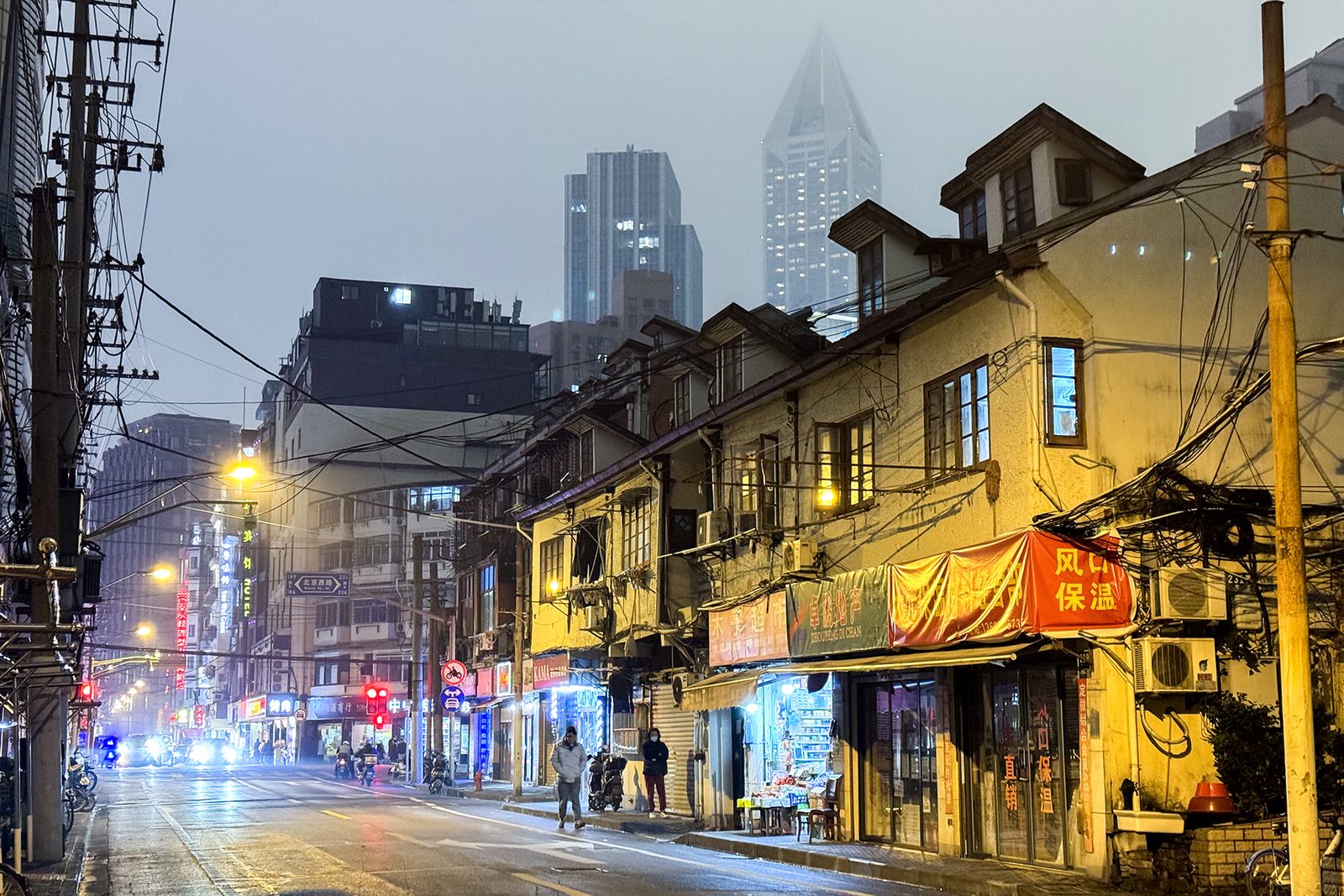
Huanghe Road (黄河路) Shanghai at night — old low-rise buildings lit by restaurant signs, the city skyline visible beyond 1
Locals + Tourists · Currently Very Hot
Huanghe Road — The Blossoms Strip
黄河路 · Beside People's Square · Metro Lines 1/2/8, People's Square Station

This is Shanghai's most talked-about food street right now, and it earned that status twice over — once in the 1990s as the city's original restaurant row, and again in 2024 when the hit TV series Blossoms Shanghai (繁花) used it as a primary setting and sent crowds flooding back looking for nostalgia.

The street runs a few hundred metres through Huangpu District and is lined on both sides with old-Shanghai canteen-style restaurants, sesame-oil shops, and vendors selling handmade dumplings from bamboo steamers. International Hotel Bakery (国际饭店西饼屋) bakes a limited daily batch of butterfly puff pastries — flaky, butter-rich, gone by noon. Xiao Yang Shengjian (小杨生煎) serves pan-fried buns with seared-gold bottoms and a squirt of hot soup when you bite in; arrive before 7 pm if you want a spot at a table. Jia Jia Tangbao (佳家汤包) wraps soup dumplings so thin you can see the broth inside before you've taken a bite.
Metro: Lines 1/2/8, People's Square, Exit 13
Cost: ¥5–25 per snack · ¥40–80 for a satisfying round
Best time: 5–9 pm on weekdays for atmosphere
Payment: WeChat Pay / Alipay / cash RMB
Heads up: The Blossoms effect is real. Weekend evenings and Chinese public holidays pack this street uncomfortably tight. Go on a Tuesday or Wednesday evening for the same atmosphere with room to breathe.
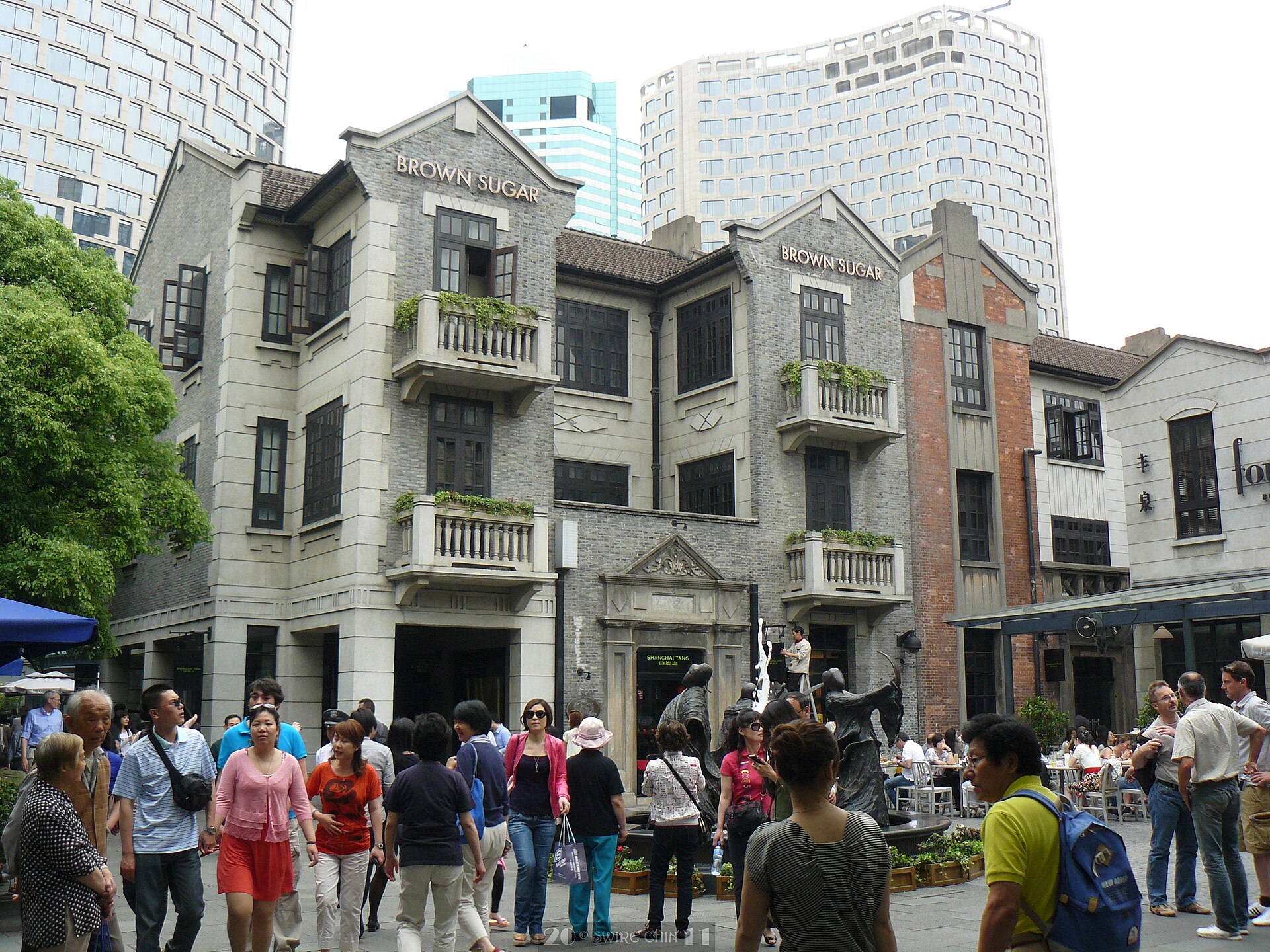
A pedestrian street in Shanghai with renovated lane houses, shopfronts and crowds — representative of the city's modernised walking districts 2
Modernised Pedestrian Street
Wujiang Road — West Nanjing Rd Snack Lane
吴江路 · Jing'an District · Metro Lines 2/12/13, West Nanjing Road Station

Here's the honest picture: the original Wujiang Road snack street — the chaotic, crowded little lane that food blogs waxed lyrical about — was demolished and replaced with a clean, tree-lined pedestrian shopping street. The rebuilt version is pleasant and comfortable, with plenty of cafés, chain bubble-tea shops like Lelecha, and a smattering of sit-down restaurants. It is not a traditional street-food experience.

That said, it's one metro stop from West Nanjing Road, the main shopping artery, so if you've been walking all day and want to sit down somewhere decent without trekking across the city, it works well. The eastern stretch (east of Shimen 2nd Road) is calmer and retains more of a neighbourhood feel than the western section. Some halal-friendly and Hong Kong-style canteens operate along here too.
Metro: Lines 2/12/13, West Nanjing Road, 2–5 min walk
Cost: ¥15–60 per item · mostly mid-range sit-down
Hours: 10 am – 10 pm (some stalls until midnight)
Payment: All methods including international cards
Straight talk: Don't come here expecting the old snack street. That is gone. What's here now is a tidy, modern pedestrian mall — fine for a pit stop, not the authentic street-food adventure some older guides describe.
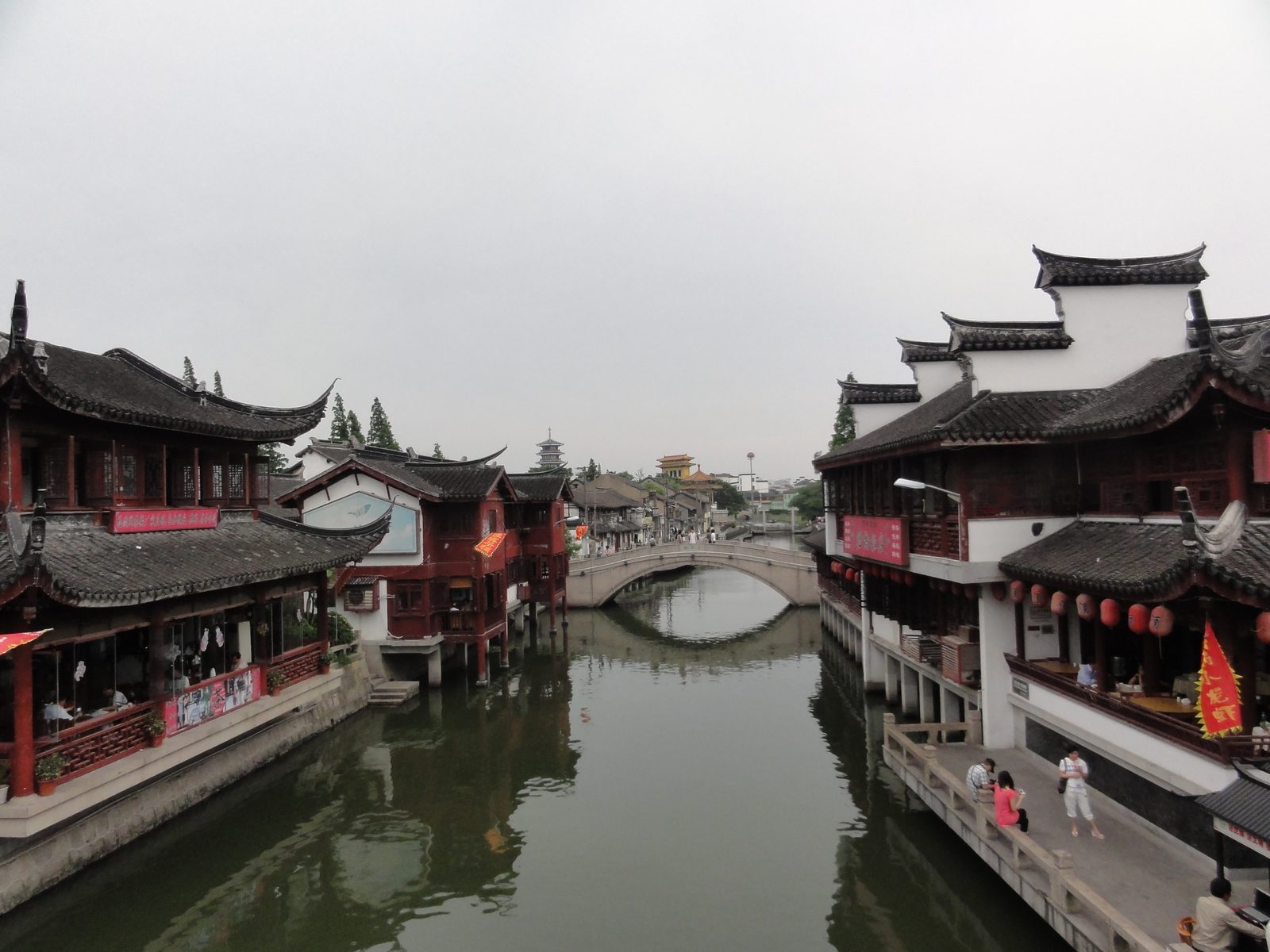
Qibao Old Street (七宝老街) — a jiangnan water town with traditional timber-frame buildings flanking a canal, stone arch bridge in the distance 3
Local Families · Excellent Value
Qibao Old Street — Water-Town Snack Heaven
七宝老街 · Southwest Shanghai · Metro Line 9, Qibao Station

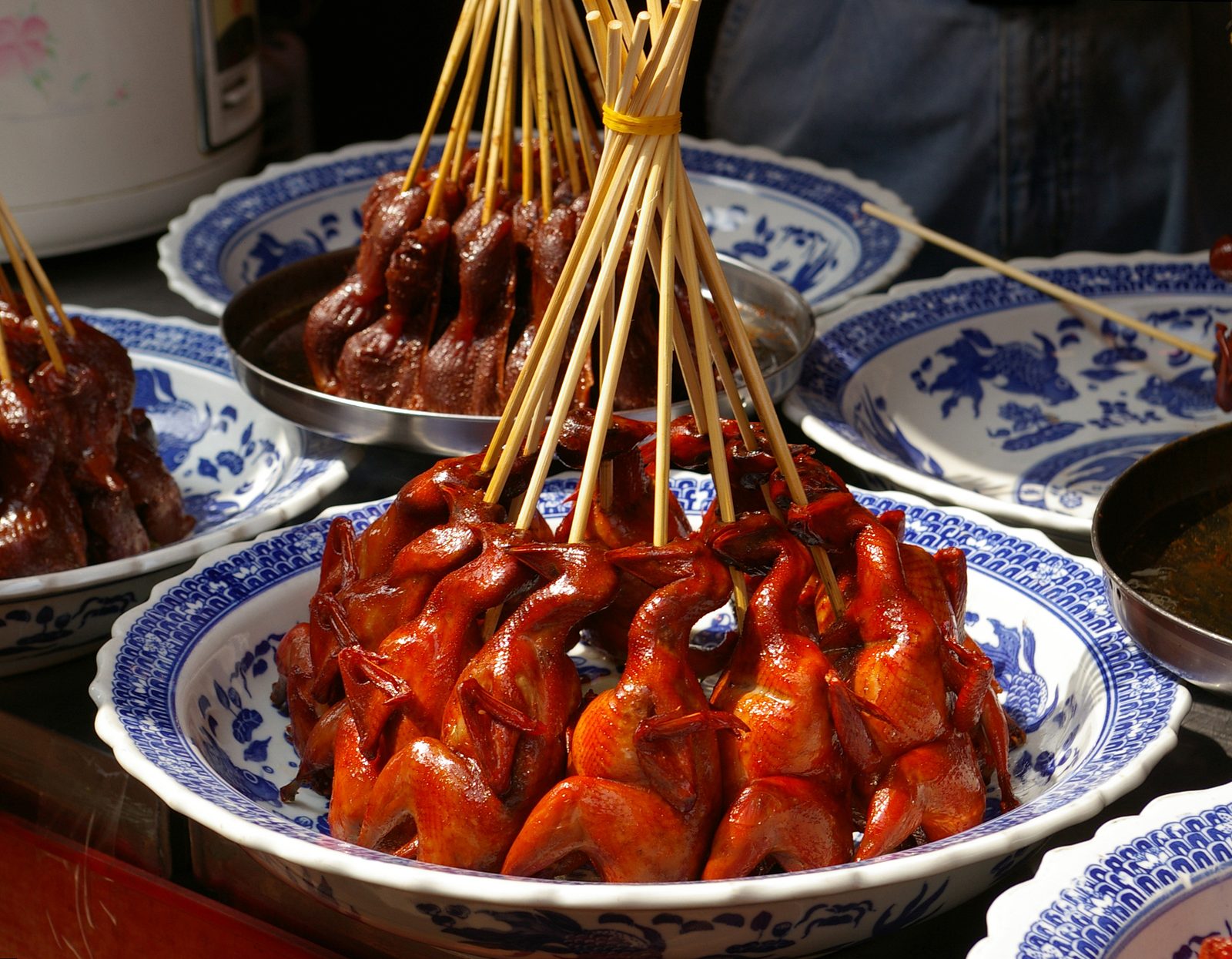
This is the one that earns its place on every list. Qibao is a genuine jiangnan water town — traditional wooden buildings over a canal, arched stone bridges, red paper lanterns strung between eaves — and practically every other stall is selling something delicious for under ¥15. Shanghainese families come here on weekends specifically to eat their way down South Street.

What to eat: Qibao fanggao (七宝方糕) — squares of steamed glutinous rice cake filled with red bean paste or jujube. This is the town's signature; buy from a dedicated shop rather than a souvenir counter and you'll taste why. Baiqie yangroui (白切羊肉) — poached lamb, sliced thin, dipped in a dark soy-and-ginger sauce. Surprisingly clean and mild. Crab-shell cakes (蟹壳黄) — sesame-coated pastry stuffed with spring onion and lard or minced meat, baked in a clay oven. Stinky tofu (臭豆腐) — the smell stops you at thirty paces, but the contrast of crispy crust and pillowy interior is worth the leap of faith.
Metro: Line 9, Qibao Station, Exit 2 · 5–10 min walk
Cost: ¥5–20 per snack · ¥30–60 for a full exploration
Hours: 9 am – 9 pm daily
Payment: WeChat Pay / cash (smaller stalls often cash-only)
Timing tip: Weekday mornings (9–11 am) before the tour groups arrive are ideal. Weekend afternoons are genuinely crowded but still fun. South Street is free to enter; the northern heritage zone charges a small admission fee — you don't need it if eating is your goal.
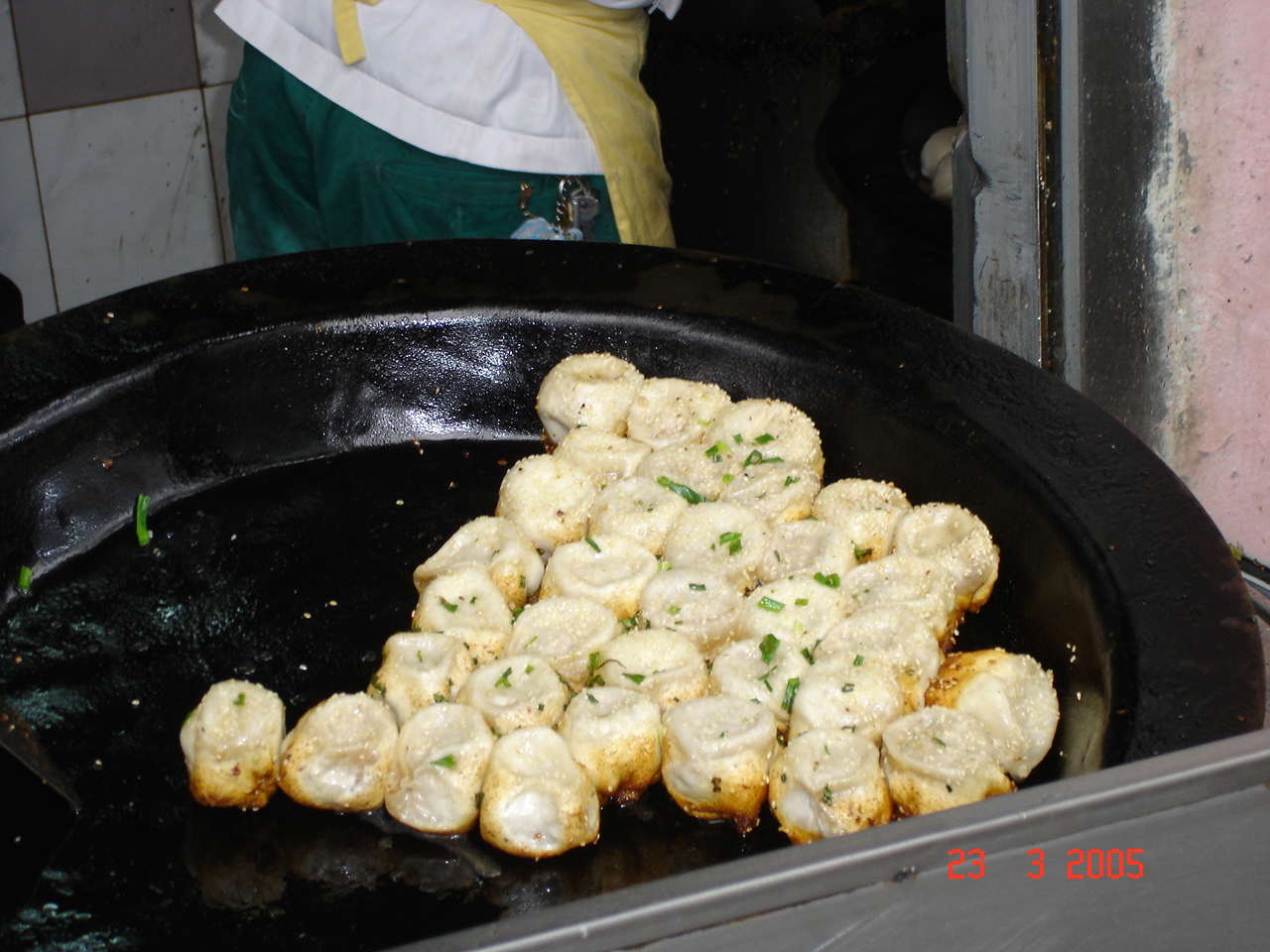
Shengjian bao (pan-fried pork buns) searing in a massive cast-iron wok, bottoms golden, topped with sesame seeds and spring onion 4
A Legend Largely Redeveloped
Yunnan South Road — The One to Verify First
云南南路 · Huangpu District · Metro Line 1, Huangpi South Road Station

This needs an honest caveat upfront. Yunnan South Road was once Shanghai's most venerable food street — a dense 250-metre strip that had been feeding the city since the 1940s, home to restaurants that had cooked the same dishes for three or four generations. Urban redevelopment has taken most of it. A visitor in June 2024 reported walking the street at 9 pm and finding it completely dark and empty.

A small number of century-old establishments reportedly survive. De Xing Guan (德兴馆), founded 1878, is one of the oldest Shanghainese restaurants still operating anywhere in the city — its braised yellow croaker in oil (红烧目鱼) and sliced eel sizzled in sesame oil are the dishes to order. Xiao Shaoxing (小绍兴), est. 1943, specialises in white-cut chicken the Zhejiang way: poached whole, sliced cold, eaten with a soy-ginger dipping sauce.
Metro: Line 1, Huangpi South Road, Exit 4
Cost: ¥60–150 per head at a proper sit-down restaurant
Hours: Variable — call ahead
Payment: Cash or WeChat Pay at most remaining restaurants
Our recommendation: Unless you specifically want to eat at De Xing Guan or Xiao Shaoxing (both worth tracking down for history buffs), spend your evening at Huanghe Road or Qibao instead. Yunnan South Road is no longer a street you can wander and discover.
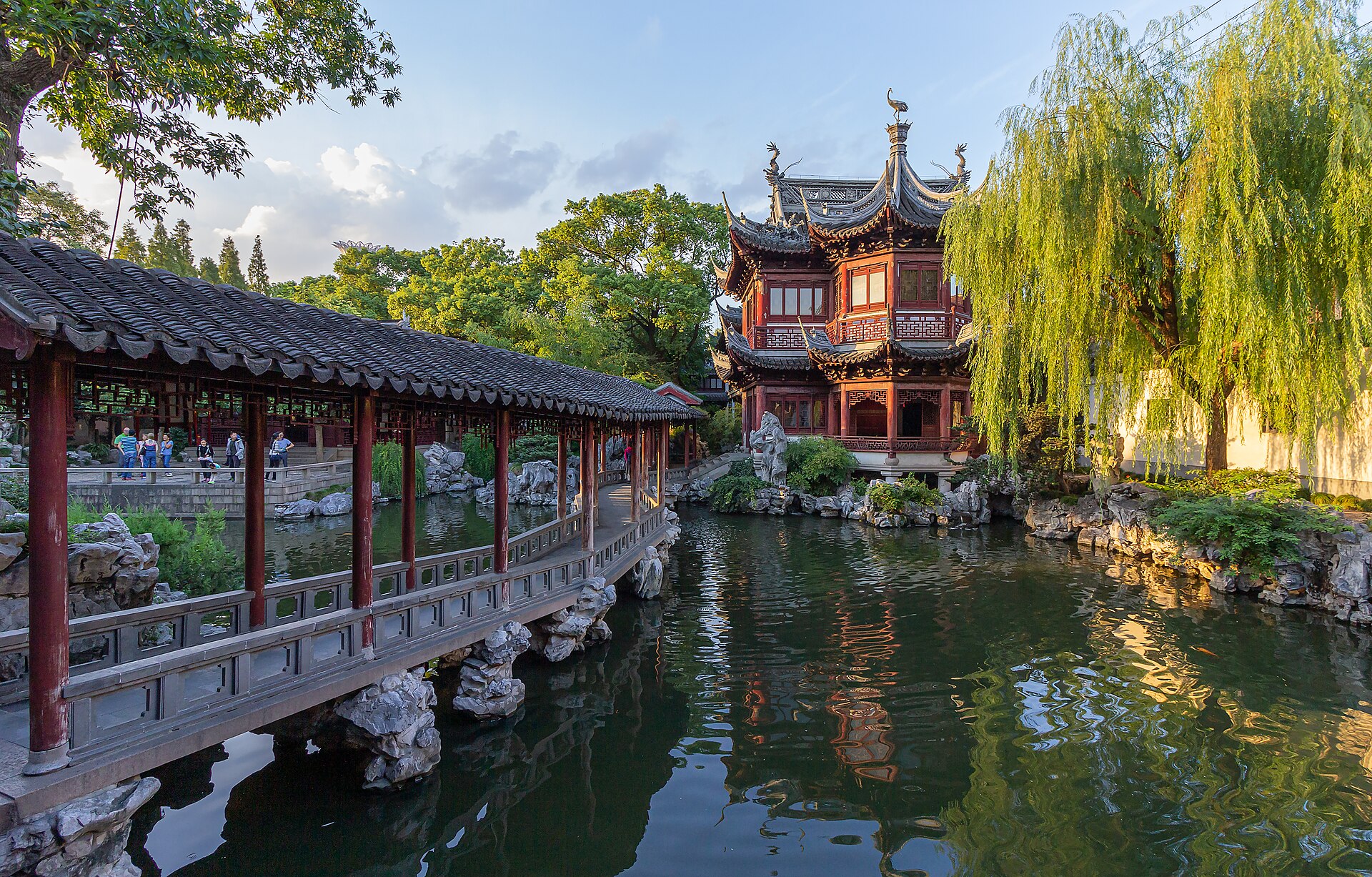
Yu Garden (豫园) Shanghai — a Ming Dynasty classical garden with a red pavilion reflected in a still pond, weeping willows overhead 5
Touristy — But Skip at Your Peril
Chenghuangmiao / Yu Garden Bazaar
城隍庙 · Old City · Metro Line 10, Yuyuan Garden Station

Yes, the Yu Garden Bazaar is packed with tourists, and yes, a lot of what's for sale in the ornate wooden stalls is overpriced souvenir tat. But it also contains Nanxiang Mantou Dian (南翔馒头店) — possibly the most argued-about xiaolongbao in Shanghai — and a handful of genuinely old restaurants that most travellers walk straight past.

The ground floor counter at Nanxiang does takeaway baskets for ¥25–55 (pork, pork-and-crab, truffle versions). Cash only. The queue runs 30–60 minutes on weekends; arrive before 9 am or after 2 pm to shorten it. Floors two and three offer table service at roughly twice the price with half the wait. Also worth finding: Da Hu Chun (大壶春) for thick-skinned, generously filled shengjian; Songyue Lou (松月楼) for vegetarian Shanghainese food since 1910; and the five-spice bean (五香豆) vendors scattered through the lanes — ¥8 a bag, addictive on a walk.
Metro: Line 10, Yuyuan Garden Station, Exit 1
Cost: ¥5–55 (street snacks) · ¥100–250 (sit-down restaurants)
Best time: Before 10 am, before tour groups arrive
Payment: Nanxiang ground floor = cash only; elsewhere all methods
Navigation tip: The most interesting eating is in the narrow lanes on the outer edge of the bazaar, not in the large flagship restaurants facing the main square. Follow locals rather than signage.
Skewered roasted quail street food at Qibao, Shanghai — glazed birds on bamboo sticks arranged in blue-and-white ceramic bowls at a market stall 6
Seasonal · Verify Status Before Going
Shouning Road — Shanghai's Crayfish Night Street
寿宁路 · Huangpu District · Metro Line 1, Huangpi South Road Station

On a humid Shanghai night in July, Shouning Road at its best was one of the great experiences of the city: a narrow street with restaurant tables spilling onto the pavement, cold beers sweating on plastic tablecloths, mountains of scarlet xiaolongxia (小龙虾, Chinese freshwater crayfish) in woks of garlic oil or spiced broth, and the collective sound of a few hundred people cracking shells with methodical satisfaction.

Crayfish season runs June through September, when the crustaceans are fattest. The classic preparations are garlic-butter (蒜泥小龙虾), spicy Sichuan-style (麻辣小龙虾), and plain steamed. At ¥60–120 per jin (500g), a two-person feast with beer runs around ¥200.
Metro: Line 1, Huangpi South Road, Exit 4
Cost: ¥60–120 per 500g · ¥180–250 for two with drinks
Season: June–September (peak July–August)
Payment: Cash or WeChat Pay at most stalls
Important caveat: The current status of Shouning Road is uncertain. A Foursquare listing marks it "Now Closed" and there have been periodic regulatory crackdowns on unlicensed vendors. Some 2025 sources still describe it as operating. We recommend checking recent reports on local Shanghai expat forums (SmartShanghai, That's Shanghai) before making a dedicated trip. If it has closed or shrunk, alternatives for xiaolongxia include seafood restaurants in Jing'an District and summer night markets near Zhongshan Park.
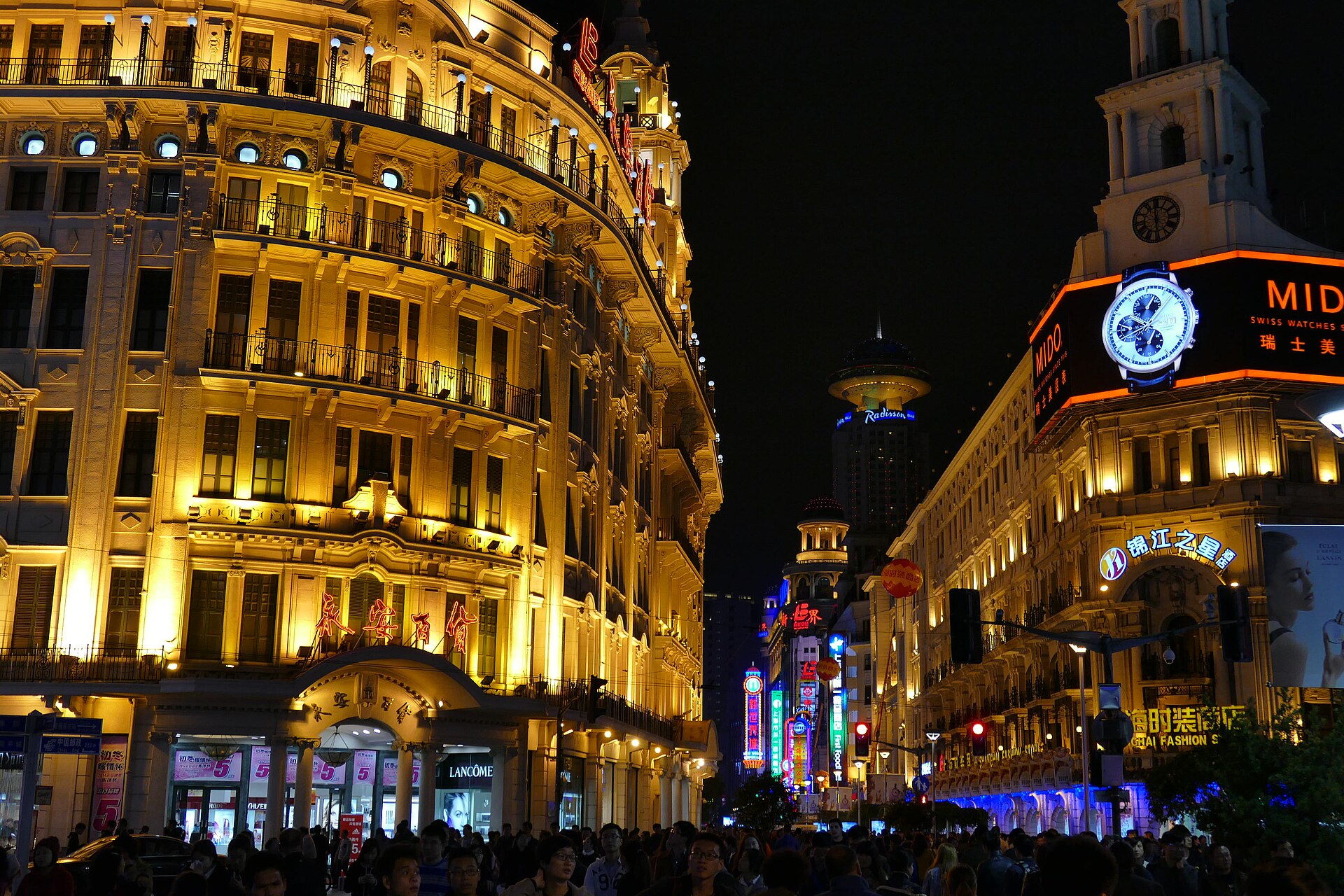
Nanjing Road (南京路) Shanghai at night — grand Beaux-Arts buildings in gold floodlight, neon signs, and dense crowds 7
Indoor · Air-Conditioned · All-Weather
Mall Food Halls — The Locals' Backup Plan
IAPM · Raffles City · K11 · City Mart North Bund

Shanghai is genuinely hot and humid from May through September, with afternoon thunderstorms that arrive without warning. The city's food hall culture is not a tourist consolation prize — it's how Shanghainese actually eat on the nights when the streets are unbearable.

IAPM Mall (Line 1, South Huangpi Road): floors 5 and 6 have an excellent mix of Shanghainese restaurants, quality ramen, and Din Tai Fung — book the latter ahead, even here. Raffles City Shanghai (Lines 1/2/8, People's Square): the sixth-floor food court is described by regulars as the most authentically Chinese food court in central Shanghai, with Sichuan, Cantonese, Hunan, and Shanghainese options. The newer Raffles City North Bund has a basement concept called City Mart — a designed recreation of old-Shanghai street food vendors, nostalgia-laden and fun, with prices around ¥30–80. K11 Art Mall (Line 9, Xujiahui): food options lean creative and independent.

IAPM: Line 1, South Huangpi Road, Exit 2
Raffles City (central): Lines 1/2/8, People's Square
Cost: ¥40–180 per person depending on restaurant
Payment: All methods, including international cards
Local's tip: Mall food halls are significantly cheaper in the late afternoon than dinner service (some kitchens offer set lunches until 3 pm). Also worth noting: most branches of Din Tai Fung and similarly popular chains have a WeChat-based waitlist system — join it before you arrive to skip physical queuing.
Quick Tips

Know before you walk out the door

📱
Set up WeChat Pay before you leave the hotel
Since 2023, foreign visitors can link a Visa or Mastercard directly to WeChat Pay. Do it before your first meal — small food stalls often don't accept cards and may not have change for large notes.
🌡
Summer is genuinely brutal
May–September is hot and humid. Street food walking between 11 am and 3 pm is uncomfortable. The best eating hours are 8–10 am and 5–9 pm. Plan mall or restaurant time for the afternoon heat.
🗣
Very little English at street level
Most food stalls have Chinese-only menus and no English-speaking staff. Google Translate's camera mode (point at the menu) works well. Having a photo of what you want to order also goes a long way.
🕐
Weekdays beat weekends significantly
Shanghai's food streets fill up hard on Saturday and Sunday evenings. A Tuesday visit to Huanghe Road at 6 pm is a fundamentally different experience from Saturday at 7 pm — same food, a tenth of the crowd.
🥟
The Nanxiang queue is real
Ground-floor takeaway at Nanxiang Mantou Dian (Yu Garden) queues 30–60 minutes on weekend afternoons. Arrive before 9 am or after 2 pm for a shorter wait. Worth it either way.
🎫
Qibao South Street is free to enter
The outdoor South Street — where all the food is — has no entry fee. Only the heritage buildings in North Street charge admission. Skip the ticket queue entirely if eating is your purpose.
Frequently Asked

Questions people ask before they eat

How much does a meal cost on Shanghai's food streets?
Street snacks on Huanghe Road or Wujiang Road run ¥5–25 per item; a satisfying round of snacks per person comes to ¥40–80. Sit-down Shanghainese restaurants average ¥60–150 per head. Qibao is the best value — you can eat very well for ¥30–60. Mall food halls and nicer restaurants start around ¥150–200 per person.
Is Yunnan South Road food street still open?
Largely gone. Urban redevelopment has closed most of the historic restaurants that made Yunnan South Road famous. A visitor in mid-2024 found the street nearly empty at 9 pm. A handful of century-old establishments — De Xing Guan (est. 1878), Xiao Shaoxing (est. 1943) — reportedly survive, but call ahead to confirm hours. Huanghe Road is a much safer bet for old-Shanghai atmosphere today.
Do I need cash in Shanghai or does WeChat Pay work?
Most vendors accept WeChat Pay and Alipay. Since 2023, foreign visitors can link a Visa or Mastercard directly to WeChat Pay or Alipay — set this up before leaving your hotel. Cash RMB always works as a fallback. One notable exception: Nanxiang Mantou Dian's ground-floor counter at Yu Garden is cash only.
What is the best time of day to visit Shanghai food streets?
The sweet spot is 6–9 pm, especially for Huanghe Road and Wujiang Road, when the light is warm and the atmosphere peaks. Qibao and Yu Garden Bazaar work well from morning through early evening. Weekdays are significantly quieter than weekends, and Chinese national holidays (Spring Festival, Golden Week) should be avoided if crowds aren't your thing.
How do I get to Qibao Old Street from central Shanghai?
Take Metro Line 9 to Qibao Station, Exit 2, then walk 5–10 minutes to the main entrance. From People's Square it's about 30–35 minutes with no transfers. South Street (the food area) has no entry fee.
Is there vegetarian food on Shanghai's food streets?
Yes, if you know where to look. Songyue Lou (松月楼) near Yu Garden Bazaar has been serving vegetarian Shanghainese food since 1910. Qibao's fanggao rice cakes with red bean paste are meat-free and among the town's best snacks. Mall food halls usually have clearly labelled vegetarian and vegan options. Street stalls are trickier — some use lard in dough, so it's worth asking or pointing at a translation.
Klook

Shanghai Food Walking Tours
with a local guide who knows the back lanes

Skip the guesswork and the dead ends. Local food tours cover the old French Concession, Huanghe Road's century restaurants, and the market stalls that don't have English signs — from around ¥200–350 per person.

Browse Shanghai Food Tours on Klook →
Wherebest is a Klook affiliate partner — we may earn a commission when you book through our links, at no extra cost to you.