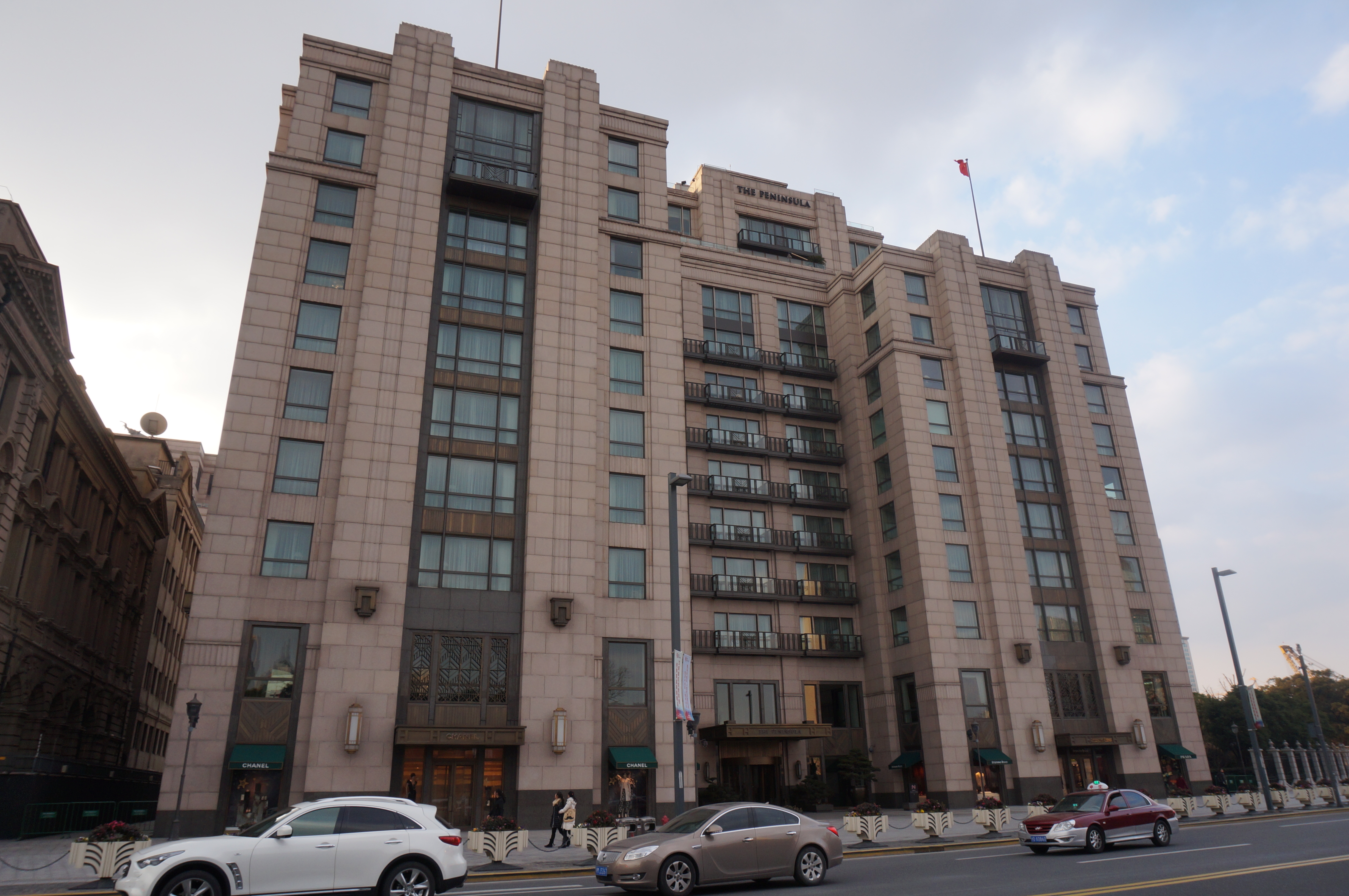
Peninsula vs The Middle House. Waldorf Astoria vs URBN. A real breakdown before you book.
Picture the moment you open a booking app and see The Peninsula Shanghai at ¥5,000 a night and URBN Hotel at ¥2,200. The obvious question is what that ¥2,800 difference actually buys. The honest answer is: it is more complicated than it looks. Because in Shanghai, the best design hotels do not just cost less — they deliver experiences that a luxury chain with 200 branches cannot replicate, even at twice the price.
This article does not declare a winner. It helps you figure out which type of traveller you are — and therefore which type of hotel will make that particular stay worth remembering. Classic luxury hotels (Peninsula, Bvlgari, Waldorf Astoria on the Bund, Mandarin Oriental, Ritz-Carlton) versus character-driven design hotels (The Middle House, The Yangtze Boutique, URBN, Okura Garden) — the two groups have genuinely different strengths.
One clarification before we start: this is not a geography question (see Puxi vs Pudong for that) and it is not a neighbourhood question (see where to stay in Shanghai). This is purely about the luxury versus design axis — what each camp delivers and who belongs in each.
Shanghai's classic luxury hotels have something design hotels cannot buy: a Bund address. The Peninsula stands at the most coveted corner on the waterfront. The Waldorf Astoria occupies the 1910 Shanghai Club building. Mandarin Oriental Pudong has river-facing rooms looking directly back at The Bund — these are positions that cannot be replicated, because the city was built around them a century ago.
Beyond location, the luxury tier delivers service consistency at the highest level — butler service in certain room categories, concierge staff who know your name before check-in, award-winning spas, restaurants that Michelin inspectors visit regularly. If you are coming to Shanghai for a significant occasion — honeymoon, anniversary, a celebration — the luxury hotel group knows how to make a stay feel genuinely memorable, in a way that smaller properties with leaner staff ratios simply cannot.
The honest caveat is the price: rooms start around ¥3,500–6,000 per night, and the suites or river-facing rooms you are really here for cost more than that. The question is whether the experience you get back justifies the premium — and for a certain kind of traveller, and a certain kind of trip, the answer is unambiguously yes.
The most coveted address on The Bund. The 1906 Beaux-Arts building sits exactly where Nanjing Road East meets the river — three minutes' walk to the waterfront, two minutes to Nanjing Road. Peninsula service is what it is: people who have stayed once tend to be very specific about where they stay when they come back.
Read full review →Not on The Bund but in the quieter Jing'an district — which gives it a more intimate feel than the waterfront flagships. Antonio Citterio designed the interiors in the deep blacks and warm golds of the Bvlgari aesthetic. Il Ristorante is the kind of restaurant Shanghai residents book for anniversaries, not just hotel guests at breakfast.
Read full review →The building started life as the Shanghai Club in 1910 — a British gentlemen's club whose Long Bar, at 34 metres, was once the longest bar in Asia. If the weight of that colonial trading-city history matters to you more than the Beaux-Arts grandeur of the Peninsula, this is the right call. The Waldorf renovation preserved the bones of the building rather than hollowing it out.
Read full review →If waking up to The Bund in your window is the specific thing you want from this trip, Mandarin Oriental Pudong is the most direct way to get it. River-facing rooms looking west toward the Art Deco waterfront are what the hotel is known for — and guests say consistently that they deliver. The spa and dining are strong as well.
Read full review →Rooms start on the 53rd floor, which means almost every window in the building has a view most hotels would call a penthouse suite. The rooftop bar Flair on floor 58 is one of the most-discussed drinks experiences in the city. The hotel to book if you want to spend a few nights genuinely above everything — in both senses.
Read full review →Shanghai's best design hotels are not competing with the Peninsula by spending more on the same things — they have made entirely different choices about what matters. The Middle House, designed by Piero Lissoni, has a coherence of lobby, bar and room that a luxury chain with 200 branches cannot achieve; the design is made for this building, not exported to it. URBN Hotel uses reclaimed materials because they carry a history, not because it is fashionable.
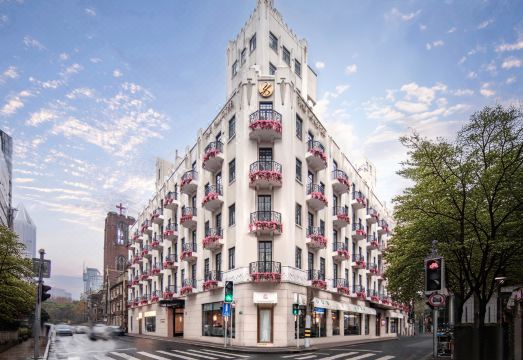
The numbers support the case too. Okura Garden Hotel scores 9.3. The Middle House scores 9.2. The Yangtze Boutique scores 9.0. These are higher than many branded five-star chains at comparable prices. Good service is about attentiveness, not scale — and smaller properties with staff who know returning guests by name can outperform a 400-room five-star on the metrics that actually matter to most travellers.
The honest limits: if you need a ballroom for a corporate event, an Olympic-length pool, or a floor-lounge for business travel — the larger luxury chains do these things and design hotels at this scale generally do not pretend to. These are real trade-offs, not failures.
The hotel that architects, designers and the creative industry in Shanghai tend to choose. Piero Lissoni designed everything from the lobby to the corridors — clean, warm and specific to the building rather than generic luxury. The Sui Tang Chinese restaurant is good enough that non-guests book it. Metro access in Jing'an is easy.
Read full review →The 1934 Art Deco building — the original Yangtze Hotel — sits in People's Square, directly above three metro lines. For travellers who want the texture of 1930s Shanghai without paying Peninsula rates, this is the most direct answer. The bones of the building are real; the Art Deco proportions are not a renovation-era imitation.
Read full review →Twenty-six rooms in Jing'an, opened in 2007 as the first carbon-neutral hotel in China. Every surface is reclaimed — salvaged factory materials, old beams, repurposed industrial hardware — which gives the interiors a texture you cannot buy from a catalogue. The bar is better than a hotel this size should be able to pull off. The people here chose it deliberately.
Read full review →The main building was the Cercle Sportif Francais — the French community's social club, built in 1926 during the Concession era. Okura Hotel Japan took over management in 1990 and kept the architecture and its surrounding 30,000-square-metre garden intact. Staying here is not "staying in a hotel that looks old" — it is staying in a building that genuinely is old, in the best possible sense.
Read full review →| Factor | Classic Luxury | Design Hotels |
|---|---|---|
| Starting price | From ¥3,500–6,000/night (approx. £380–650) | From ¥1,800–3,200/night (approx. £195–345) |
| Bund location | Peninsula, Waldorf Astoria and Fairmont Peace sit directly on the waterfront | Most are in Jing'an or the French Concession — no Bund-facing rooms |
| Hotel identity | Consistent to brand standards — recognisable in the same way in any city | Specific to this building, this address — cannot be replicated or franchised |
| Scale and amenities | Large — full-size pools, complete spas, ballrooms and conference facilities | Smaller — spa and pool may be compact or absent depending on the property |
| Service style | Formal and consistent — butler service, high staff-to-guest ratios | Personal and warm — staff know returning guests by name, less procedural |
| In-house dining | Michelin-level or close — Bvlgari Il Ristorante, Waldorf Long Bar | Genuine and well-regarded — Middle House Sui Tang, URBN bar, Okura's garden restaurant |
| Loyalty programmes | Yes — Marriott Bonvoy, IHG Rewards, Hilton Honors, World of Hyatt | No (except Okura, which has its own programme) |
| Best for | Special occasions / business travel / honeymoon / Bund address matters | Slow travel / creative travellers / prefer a hotel that feels built for Shanghai |