Home Sendai Japan Miyagi About
Home  ›  Asia  ›  Japan  ›  Sendai  ›  Sendai Food Guide
🇯🇵 Sendai Food Guide · 2026

What to Eat in Sendai
6 dishes you need before you leave

Sendai is Japan's beef-tongue capital — thick-cut gyutan charcoal-grilled over binchotan coals, paired with nutty barley rice and rich oxtail broth. Add zunda mochi in vivid green edamame paste, Matsushima oysters in the shell, and a bowl of the city's own miso ramen, and you have one of Tohoku's great eating days.

Why eat here

Sendai's food scene is unlike anywhere else in Japan

Ask any Japanese person what Sendai is famous for and the answer comes without hesitation: gyutan (牛たん), grilled beef tongue. The story begins in 1948 when Keishiro Sano, founder of Aji Tasuke, took beef tongues discarded by American military personnel and turned them — through careful seasoning and patient charcoal grilling — into something that changed the city's culinary identity forever. Today people board the Shinkansen from Tokyo specifically to eat it.

But Sendai's kitchen is deeper than one ingredient. Zunda — a bright-green paste of crushed edamame barely sweetened — coats mochi and fills shakes that have become a symbol of the city. Sasa kamaboko, bamboo-leaf-shaped fish cakes pressed from fresh white fish, date to the Meiji era when flounder gluts drove fishermen to preserve their catch in a new form. And the cold waters of Matsushima Bay produce oysters that food writers return for every autumn. We picked six dishes and experiences that together tell Sendai's story most honestly.

The essentials

6 dishes to eat before leaving Sendai

Ranked by how uniquely Sendai they are — dishes that exist elsewhere but taste best right here.
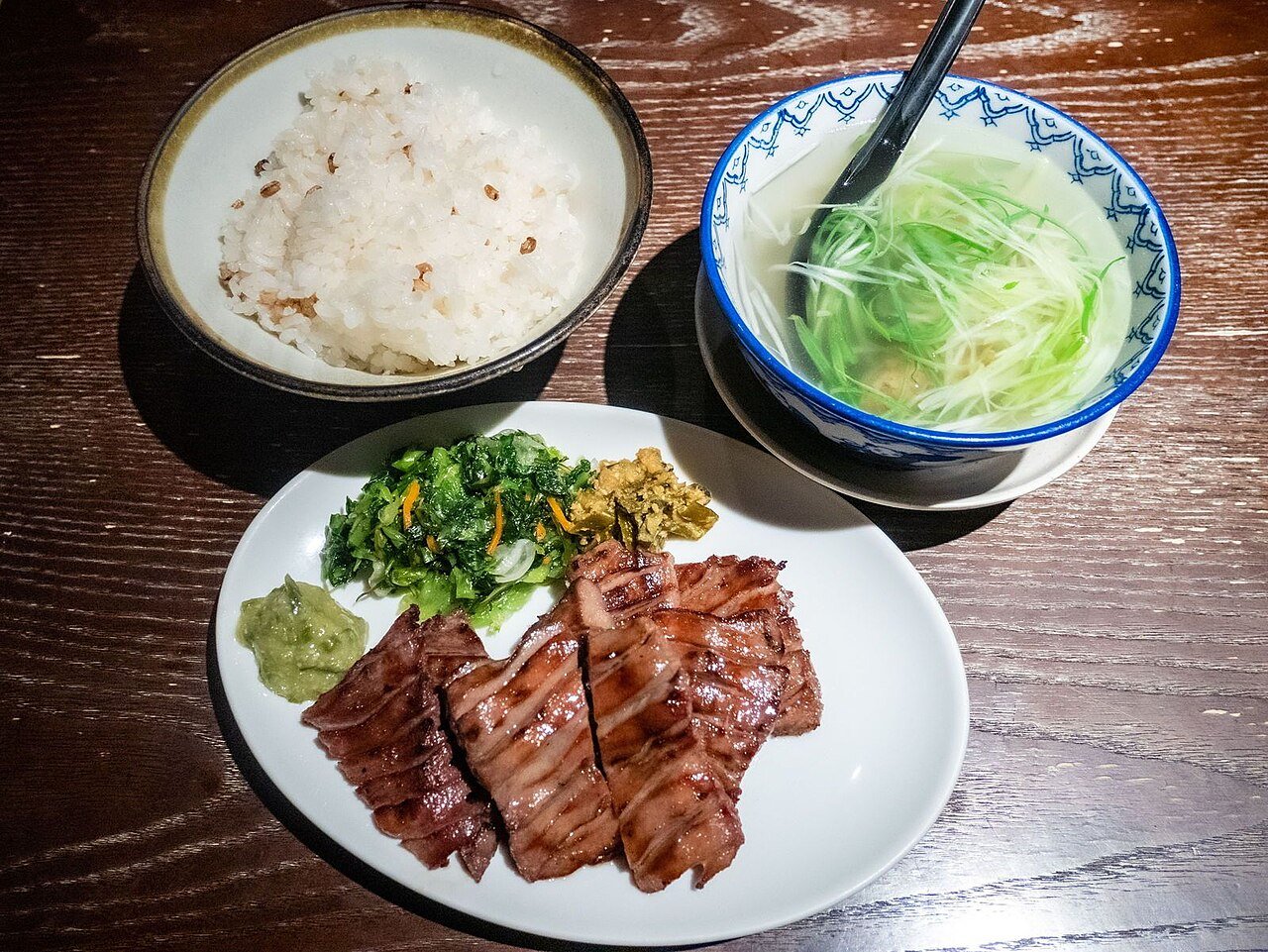
Sendai gyutan set: three thick slices of charcoal-grilled beef tongue on a white plate beside a bowl of barley rice and oxtail broth soup with spring onion 1
Gyutan (Beef Tongue)
牛たん · The dish Sendai invented — and owns

Sendai-style gyutan is not what you find at a generic yakiniku chain. The tongue is sliced thick — around 8 to 10 millimetres — then salted and seasoned for hours before going onto very hot binchotan charcoal. The outside sears and chars at the edges; the inside stays juicy and tender, with none of the rubbery quality you might associate with offal. The standard set (teishoku) pairs it with barley rice (mugi-meshi), whose slightly nutty chew complements the richness of the tongue, a bowl of oxtail soup (tekka-jiru) with leeks, and a few house pickles. Simple, confident cooking at its most satisfying.
Where to go: Aji Tasuke (味太助 · Kokubuncho · original since 1948) · Gyutan Street, 3F JR Sendai Station (Kisuke, Rikyu, Date no Gyutan — all reliable)
Price: ¥1,500–2,500 per set · order a 1.5-portion if you want more tongue
Tip: Sip the oxtail broth before touching the tongue — it primes the palate.
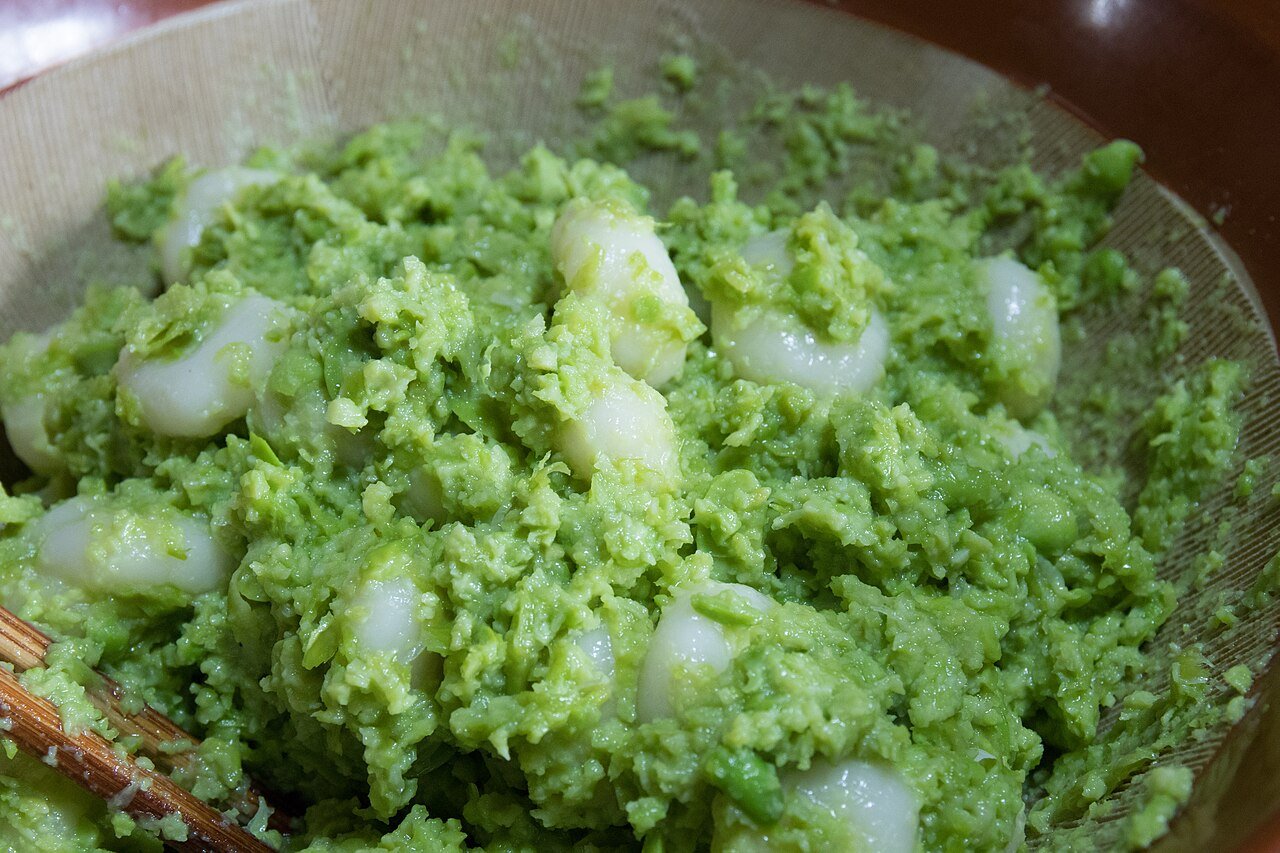
Zunda mochi: five soft white rice cakes arranged in a bamboo tray, coated generously in a vivid green edamame paste with a slightly textured, creamy consistency 2
Zunda Mochi
ずんだ餅 · Soft rice cakes in vivid green edamame paste

The colour is the first thing: an almost electric green that looks too vivid to be natural, but is — it comes from fresh edamame beans pounded and sweetened with just enough sugar to take the edge off the slight bitterness. The paste coats chewy mochi rice cakes in a thick layer; one bite delivers both textures at once, with a clean, lightly sweet, faintly nutty finish. Zunda mochi has been made in Sendai for centuries, but in the past fifteen years a newer format — the zunda shake, a cold thick milkshake flavoured with the same paste — has become one of the most photographed foods in Tohoku. Zunda Saryo, which pioneered the shake, now has branches across Japan, but the best versions are still in Sendai.

Where to go: Zunda Saryo (ずんだ茶寮 · Zunda Komichi, B1 JR Sendai Station · shake ¥540) · Endo Mochi-ten (遠藤もち店 · Miyamachi · traditional mochi shop)
Price: 3-piece mochi ¥280–400 · small shake ¥540
Souvenir: Vacuum-packed frozen zunda mochi keep for several weeks and travel well.
🐟3
Sasa Kamaboko
笹かまぼこ · Bamboo-leaf fish cake, a Meiji-era Sendai invention

In the Meiji era, flatfish (hirame) were so plentiful in Matsushima Bay that the price collapsed. Local fishermen responded by grinding the white flesh, kneading it with salt into a smooth paste, pressing it into the shape of a bamboo leaf (sasa) on a bamboo stick, and steaming it. The result was a fish cake — firm, springy, faintly sweet — that kept far longer than raw fish and packed easily. Today sasa kamaboko is one of Sendai's most-loved souvenirs and snacks. Eaten plain, it tastes clean and oceanic. Lightly grilled over a wire rack until golden-brown on the outside, it develops a gentle smokiness that makes it genuinely hard to stop eating.
Where to go: Kanezaki Sasakamakan (かねざき · Matsushima Town · watch it made fresh) · Abe Kamaboko Store (阿部蒲鉾店 · central Sendai · multiple branches)
Price: ¥80–200 per piece · gift box of 10: ¥800–1,200
Try: Ask for the grilled version (yaki-sasakama) — a different experience from the steamed.
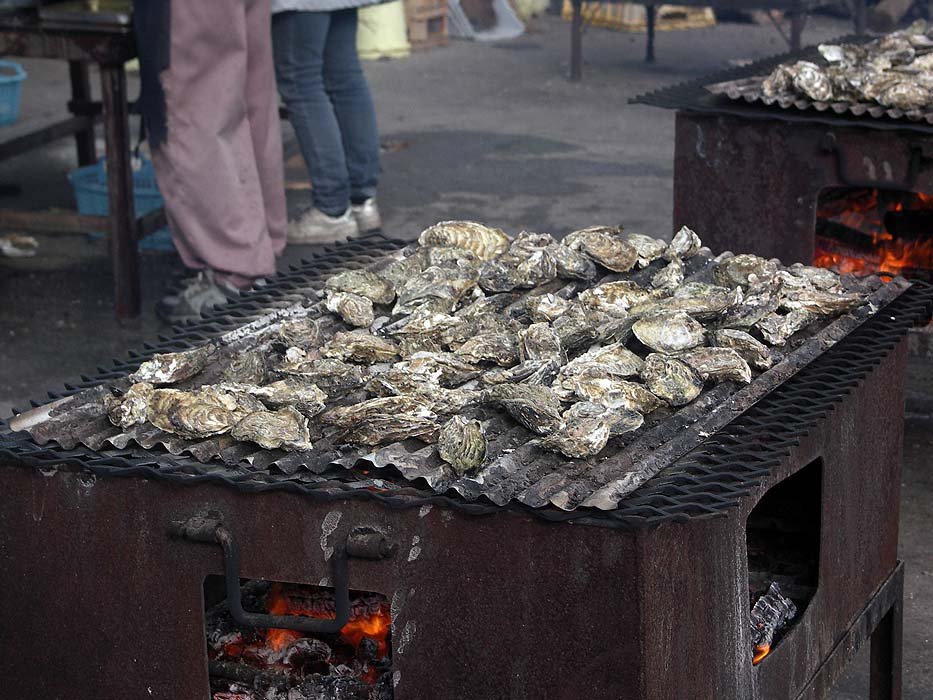
Fresh oysters in the shell piled on a large iron charcoal grill with smoke rising around them, at an outdoor seafood stall near Matsushima Bay 4
Matsushima Kaki (Bay Oysters)
松島牡蠣 · Charcoal-grilled in the shell, Oct–Mar

Matsushima Bay has been producing oysters for centuries, and the conditions are still as good as ever: cold, nutrient-rich water from multiple river inflows, and a sheltered bay that protects the beds from rough seas. The oysters grown here are notably plump with a deep, clean brininess and a sweetness at the finish that you don't always find in Pacific oysters. The most memorable way to eat them is at one of the rustic roadside charcoal stalls that line the waterfront by Matsushima Town — shells laid directly on the hot grate, watched until they crack open and steam pours out, then prised open and eaten on the spot with a squeeze of lemon. The flavour, straight from the sea with nothing added, is hard to improve on.

Where to go: Charcoal stalls by Matsushima Town waterfront · Matsushima Fish Market · Shiogama Seafood Wholesale Market (Shiogama City)
Price: ¥300–500 for 3 oysters at roadside stalls · ¥500–800 per plate at restaurants
Season: October–March for the best quality
Seasonal note: Outside October–March, fresh oysters are scarce and most waterfront stalls close for the off-season. In summer, ask for mussels or Sanriku crab instead.
🍜5
Sendai Miso Ramen
仙台味噌ラーメン · Tohoku-style thick miso broth

Miyagi Prefecture produces its own miso — fermented from locally grown soybeans and wheat — with a flavour profile that is richer and more savoury-sweet than the familiar Hokkaido variety. When used as the base for ramen broth, combined with pork bones and a generous pour of aromatic lard or chicken oil, the result is a bowl with a shimmering layer of fat on top, an intensely savoury first sip, and a slow-building sweetness underneath. Noodles are medium-thick and wavy, clinging to the broth well. Standard toppings are chashu pork, spring onion, bamboo shoots, and sometimes sweetcorn. At under ¥1,100 a bowl almost everywhere, it is one of the best-value serious ramen styles in Japan.

Where to go: Ramen Genryu (near Sendai Station · miso-focused · recommended by locals) · Machida Shoten (Hirose-dori · busy lunchtime crowd) · Miso Ichi (multiple branches)
Price: ¥900–1,100 per bowl
Note: Some shops are lunch-only — call ahead if visiting in the evening.
🌾6
Hitomebore Rice + Sendai Pickles
ひとめぼれ · Miyagi's prized short-grain rice and its pickled companions

It may sound modest, but the rice and pickles in a gyutan set are things Sendai residents talk about with real pride. Hitomebore is a short-grain variety bred specifically to thrive in Tohoku's cold climate — slightly stickier than Koshihikari, with a gentle fragrance and a clean sweetness that makes it one of the most beloved everyday rices in Japan. In the gyutan set, it often comes mixed with barley (mugi-meshi), adding a nutty chew that cuts through the richness of the tongue. The pickles — usually miso-pickled daikon or sliced cucumber — are made in-house by the better gyutan shops and refreshed daily. They do the same work a good palate-cleanser always does: reset you so the next bite tastes just as good as the first.

Where to find it: Comes with every gyutan set · Hitomebore rice bags (2 kg, ¥900–1,400) sold at supermarkets and Sendai Asaichi Market
Take home: A bag of Hitomebore makes an excellent, light, genuinely local souvenir.
Tip: In the gyutan set, eat the pickles between bites of meat — not all at once at the end.
One-day eating plan

A day of eating in Sendai

Hit every dish in a single day without excessive distances — this route works.

08:00
Breakfast — Zunda shake at Zunda Saryo, Sendai Station Start at Zunda Komichi on the B1 level of JR Sendai Station. A small zunda shake costs ¥540 — sip it while waiting for the train. Add a plate of three zunda mochi (¥320) if you need more fuel.
09:30
Matsushima by train — sasa kamaboko demonstration stop JR Senseki Line from Sendai to Matsushima-kaigan takes about 40 minutes (¥410). Walk along the bay, stop at Kanezaki Sasakamakan to watch the fish cakes being pressed and steamed, and eat one grilled fresh on the spot (¥100–150).
11:00
Lunch — charcoal-grilled oysters by the Matsushima waterfront Three oysters from a roadside charcoal stall: ¥300–500. Eat them immediately in the shell with lemon. October to March only — in summer, try the seafood restaurants near Shiogama instead.
13:30
Back in Sendai — afternoon bowl of miso ramen A bowl at Ramen Genryu or Machida Shoten: ¥900–1,100. The rich miso broth warms you after the bay wind.
18:30
Dinner — full gyutan set at Aji Tasuke or Gyutan Street The centrepiece of the day: gyutan set with barley rice, oxtail soup, and house pickles, ¥1,800–2,200. Eat slowly. This is why people take the Shinkansen from Tokyo.
Where to stay

Hotels in Sendai for food-focused visitors

Three options placed close to the city's best eating — from central Sendai to Matsushima Bay.

1
Sendai Kokusai Hotel
Classic central Sendai hotel · 10 minutes' walk to Kokubuncho gyutan restaurants

A longstanding city-centre property in the best location for evening gyutan — Aji Tasuke, Kisuke, and most of the major restaurants are within a ten-minute walk. The in-house Japanese restaurant serves local dishes including gyutan for guests who don't want to venture out on a rainy evening.

Distance: 10 min walk from JR Sendai Station · More: Full Sendai city guide →
2
Daiwa Roynet Hotel Sendai Ichibancho
Modern business hotel · beside Ichibancho covered shopping arcade

The best base if you plan several restaurant stops in one day — Ichibancho arcade runs directly outside and is dense with ramen shops, cafes, and a morning fresh market. Hirose-dori Station (two minutes' walk) makes the day trip to Matsushima straightforward.

Distance: 5 min walk from JR Sendai Station
3
Matsushima Ichinobo
Traditional ryokan on Matsushima Bay · fresh-seafood breakfast daily

If waking up and walking directly to a charcoal oyster stall by the sea sounds right, stay here. Ichinobo is a traditional Japanese inn on the waterfront at Matsushima, serving a multi-course breakfast of local seafood every morning. The view from the room looks out over the pine-covered islands of the bay. The 40-minute JR train back to Sendai runs frequently.

Location: Matsushima waterfront · 40 min by JR from Sendai
FAQ

Questions visitors ask before eating in Sendai

Where can I find the best gyutan (beef tongue) in Sendai?
The most-cited original is Aji Tasuke (味太助) in the Kokubuncho district, which invented Sendai-style grilled tongue in 1948. If you'd rather not leave the station area, Gyutan Street (牛たん通り) on the third floor of JR Sendai Station brings Kisuke, Rikyu, and Date no Gyutan together in one spot, all opening from 10:00. Set meals (teishoku with barley rice and oxtail soup) run ¥1,500–2,500 per person.
What is the difference between zunda mochi and the zunda shake?
Zunda mochi is the traditional form — soft chewy rice cakes coated in a lightly sweetened paste of crushed edamame, with a clean, gently nutty flavour. The zunda shake is a more recent creation by Zunda Saryo: a thick cold milkshake flavoured with edamame paste, now one of the most popular to-go items in Tohoku. Both are available at Zunda Komichi, B1 of JR Sendai Station. Three-piece mochi costs ¥280–400; a small shake is ¥540. For souvenirs, vacuum-packed frozen zunda mochi keep for several weeks.
When is the best season for Matsushima oysters?
Matsushima Bay oysters are at peak quality from October through March. The cold winter water makes them plump, sweet, and deeply briny with no muddy aftertaste. From April to September, fresh oysters become scarce and most of the charcoal roadside stalls close for the season. If you visit in summer, the Sanriku coast still offers excellent seasonal alternatives: mussels, sea urchin (uni), and fresh flatfish (hirame) are available year-round.
How is Sendai miso ramen different from Hokkaido miso ramen?
Sendai miso is made from locally grown soybeans and wheat, producing a richer, more savoury-sweet profile than lighter Hokkaido miso. Combined with pork-bone broth and aromatic lard, the bowl's surface has a characteristic shimmering oil layer and a deep, lingering umami. Noodles are medium-thick and wavy. A bowl typically costs ¥900–1,100. Ramen Genryu, near Sendai Station, is a reliable choice recommended by local food writers.
How do you eat sasa kamaboko and where can you buy it as a souvenir?
Sasa kamaboko can be eaten straight from the wrapper — the firm, springy fish cake is clean-tasting with a subtle natural sweetness and no fishiness. For more flavour, grill it lightly on a wire rack until the surface turns golden-brown. The best place to watch it being made fresh and to sample it on the spot is Kanezaki Sasakamakan in Matsushima Town. Abe Kamaboko Store in central Sendai has multiple branches. Vacuum-packed gift boxes of ten pieces (¥800–1,200) keep for one to two weeks and are one of Sendai's most practical souvenirs.