🌏 Destinations · All 🇯🇵 Japan · Full guide Sapporo Sapporo Attractions Sapporo Snow Festival Best Time to Visit Japan ❄️ Sapporo in Winter 🧭 Travel Guide About Contact 🇹🇭 ไทย🇬🇧 English🇨🇳 中文🇪🇸 Español🇫🇷 Français
❄️ A Beginner's Snow Guide · Updated 2026

Sapporo in Winter:
What to Wear & What to Pack

Your first real snow, your first real sub-zero — Sapporo is a trip you prepare for differently from any other part of Japan. It drops to -7°C, snow falls almost daily, and the icy ground is slipperier than you'd think. We walk you through the weather month by month, how to layer, how to walk on snow without falling, and a checklist of what warm-climate travellers always forget.

Start Here

Colder Than Most Warm-Climate Travellers Have Felt —this is real snow, real sub-zero

Honestly, if you're coming from a tropical city where winter is still 25–32°C and you fly into Sapporo between December and March, you're about to meet a roughly 30-degree temperature drop. Sapporo's winter sits around -7 to 0°C, water freezes, and snow falls almost every day — it's one of the snowiest cities on earth, with around 5 metres of snow over the season. This is not "a bit chilly, one jacket will do," like Tokyo in early winter. It's cold you genuinely prepare for.

The good news is that Sapporo isn't scary if you pack right — in fact winter is when the city is at its most beautiful, with a world-famous snow festival, skiing minutes from town, open-air hot springs in the snow, and the best crab and Hokkaido seafood of the year. On this page we cover everything: the weather month by month · how to layer · footwear and walking on ice · what to pack · and where to buy winter gear, plus the winter activities you shouldn't miss.

🌡️
Weather · -7 to 0°C
Below freezing most of the season, January coldest on average, snow nearly daily.
🧥
Dress · 3 Layers
Heattech base + fleece/sweater mid + a down or wind-proof outer shell.
👢
Ground · Snow & Ice
Grippy boots matter most — short steps, the so-called penguin walk.
Highlight · Snow Festival
Sapporo Snow Festival in early Feb, plus skiing, onsen, and winter crab.

⚡ Updated for 2026

The figures here are based on Sapporo's climate averages. Temperatures and snowfall vary year to year. In 2026 the Sapporo Snow Festival runs 4–11 February. Before you travel, re-check the forecast and snow conditions close to your flight, and build in buffer for heavy-snow days when trains and flights can be delayed.

Four Things to Know

Getting a Sapporo Winter Right —these four decide whether the trip is fun or miserable

Each card sums up what to expect, what to prepare, and where people slip up most.

🌡️ 🌡️ Weather Dec–Mar
Weather — below freezing nearly all season
Weather · December–March

Temperatures hover around -7 to 0°C. January is the coldest on average (about -5°C); February has the deepest snowpack (65–75 cm on the ground). On windy days it feels colder than the numbers — nearly 30 degrees below a tropical winter.

📅Deep snow: late Nov through early Apr
❄️Snowfall: almost daily, ~5 metres over the season
🌬️Watch: wind chill and the odd snowstorm, low visibility
👍Coldest: Jan–early Feb (pack heavier layers)
🧥 🧥 Dress 3 Layers
Dress — layering is the whole game
Layering · 3 Layers

A thermal base (Heattech) holds warmth, a mid layer (fleece/sweater) traps air, and a wind- and snow-proof outer shell (down/coat) blocks the cold. Add gloves, an ear-covering hat, and a scarf — and dress so you can strip off indoors.

🩲Base: Heattech/thermal top + thick socks
🧶Mid: a sweater or fleece
🧥Shell: a down jacket or wind/snow-proof coat
🧤Don't forget: gloves, ear-covering hat, scarf
👢 👢 Slippery Most Important
Footwear — where first-timers slip up most
Footwear & Ice · Most Important

Sapporo's winter ground is packed snow over ice, and flat sneakers are dangerously slippery. Use waterproof boots with deep rubber treads, or slip grip covers over your shoes — and walk in short steps.

👟Choose: waterproof, deep-tread, ankle-high boots
🔗Add: slip-on grip covers (snow spikes)
🐧Walk: short, slow, flat-footed penguin steps
⚠️Watch: black ice, slopes, station mouths, tiles
⛄ Highlights Early Feb
Highlights — winter is Sapporo at its best
Winter Highlights · Early Feb

The Snow Festival in early February (4–11 in 2026) is the star, joined by skiing near the city, sledding, open-air onsen in the snow, and winter crab and hot miso ramen.

Snow Festival: Odori Park + Susukino + Tsudome
🎿Snow: ski, snowboard, sled near the city
♨️Onsen: Jozankei, Noboribetsu — soak in the snow
🦀Eat: crab, miso ramen, soup curry, seafood
Month by Month

Sapporo's Winter Month by Month —weather, snow, what to wear, and highlights

Temperatures are Sapporo averages (daytime–nighttime). "Snow" describes the typical ground condition — use it to judge how grippy your boots and how heavy your layers need to be.

MonthWeather (Sapporo)Snow / GroundWhat to wear / Highlights
NovemberTurning cold ~3 to -1°CFirst snow late monthLayers + coat · first snow arrives late Season starts
DecemberCold ~-1 to -7°CFrequent snow, ground whitensFull layers + grippy boots · White Illumination lights Getting pretty
JanuaryColdest on average ~-1 to -7°CDeep snow, very slipperyHeavier layers, heat packs · ski slopes in full swing Coldest
FebruaryStill freezing ~0 to -8°CDeepest snowpack 65–75 cmFull layers + windproof · ⛄ Snow Festival 4–11 Feb Peak · busy
MarchEasing ~4 to -3°CSnow starts melting, slushyLayers + waterproof shoes · still skiable, fewer crowds Cheaper
AprilLate winter ~11 to 1°CSnow lingers on the mountainsLight winter jacket + layers · spring begins Quiet

📌 How to read the table

The "Snow / Ground" column tells you how slippery it is — Dec–Feb the city is packed snow and ice, so grippy boots are a must. March's melting snow turns to half-icy slush that's just as slippery and far wetter, so waterproof shoes matter. These are averages; the real feel depends on wind and snowstorms too.

Topic 1

How to Layer So You Stay Warm —one rule: three layers, all removable
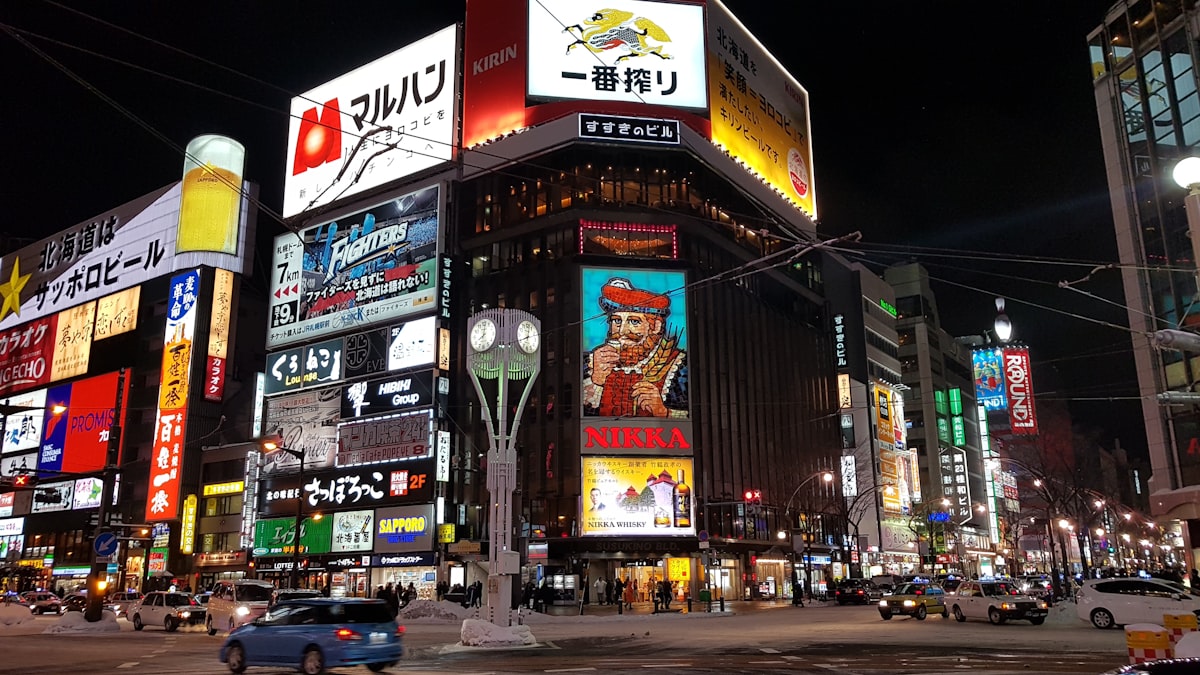
The Susukino district of Sapporo on a winter night with snow piled along the pavements and bright neon signs
Susukino in winter — sub-zero outside, but the moment you step into a shop or the subway it's hot enough to peel off a layer.
Layering · Every day in Sapporo

The three layers that keep you warm but not stifled

A classic mistake warm-climate travellers make is buying one thick coat and assuming that's enough. Then you step into a shop or train running its heating hot, sweat through everything, and freeze again outside in a damp shirt. The whole trick is layers you can take off.

  • Base layer: a Heattech top and bottoms (or close-fitting thermals) + thick socks
  • Mid layer: a wool sweater or a fleece to trap a cushion of warm air
  • Outer shell: a down jacket or a long wind- and snow-proof coat, ideally with a hood
  • Extremities: gloves, an ear-covering hat, a scarf — most heat escapes through your head and hands
  • Indoors: shed the outer shell immediately, or you'll overheat and sweat

💡 A note on your phone and battery in the cold

Severe cold drains phone batteries fast and can shut your phone off entirely. Keep your phone in an inner pocket warmed by your body, carry a power bank, and use touchscreen-compatible gloves so you can take photos without bare hands going numb.
Topic 2

Walking on Snow and Ice Without Falling —right boots + the penguin walk

Footwear & Walking · The most common mistake

Wrong shoes = a fall on day one

This is where first-timers slip up most — literally. Many arrive in flat sneakers or hard-soled leather shoes and fall the moment they leave the airport. Sapporo's winter ground is packed snow topped with ice, and it's far more slippery than it looks.

  • The right shoes: ankle-high, waterproof boots with deep rubber treads and good grip (snow or waterproof hiking boots)
  • If your soles are smooth: buy slip-on grip covers (snow spikes) at a 100-yen shop or gear store
  • Penguin walk: short, slow steps, planting your whole foot, knees slightly bent, weight centered
  • Hands out of pockets: for balance, and to catch yourself if you slip
  • Slipperiest spots: black ice (clear ice that looks like a wet patch), slopes, crosswalks, station entrances, tiled shopfronts

Take special care stepping from a dry indoor floor straight onto ice outside, and on stairs — always hold the handrail. Fresh snow is soft and easier to walk on; the most dangerous days are when melted snow refreezes the following cold night.

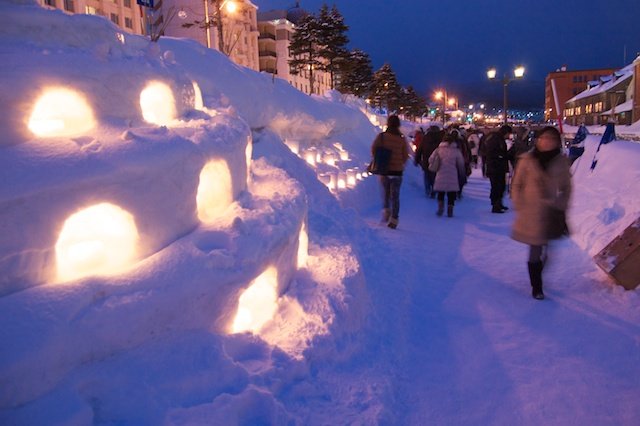
A snow-lit pathway lined with glowing snow lanterns at a Hokkaido winter festival, people walking over packed snow
Packed snow by night — beautiful, but slick. Take short steps and keep those grippy boots on.
Packing Checklist

Pack These Before You Fly —the things people forget most

You can buy winter clothes in Sapporo, but these six are worth bringing from home so you're ready from the moment you leave the airport.

👢
Grippy shoes / grip covers
The most-forgotten and most-important item — deep-tread waterproof boots, or snow spikes to slip over your existing shoes.
💄
Lip balm + moisturiser
The very dry air chaps lips and dries out skin and hands — lip balm and a face/hand cream help a lot.
🔥
Heat packs (kairo)
Stick them on your back, drop them in pockets, or stick-on toe warmers — hours of warmth. Easy to restock at convenience stores.
🧤
Gloves + hat + scarf
Touchscreen gloves make photos easy; an ear-covering hat blocks the wind. Most heat escapes through your head.
🔋
Power bank
Phone batteries drain fast in the cold and may shut off — keep your phone in a warm inner pocket and carry a backup.
🕶️
Sunglasses + sunscreen
Snow reflects strong glare that can hurt your eyes, and sunscreen still matters even in the cold.

❄️ If heavy snow delays trains or flights

On heavy-snow or snowstorm days, JR trains and flights can be delayed or cancelled. Allow extra time for connections, don't pack your schedule too tight — especially your departure day — and check train and flight status ahead. If you do go out in a storm, cover up well, cut your time outdoors, and switch to indoor spots like malls, museums, or cafés.

Travel Light

You Can Buy Winter Gear in Sapporo —fly in light, shop when you land

Many travellers fly in wearing light clothes and buy Heattech and a down jacket in Sapporo — cheaper and lighter to carry. Here's where to go.

🛍️
Uniqlo / GU
Heattech, Ultra Light Down jackets, thick socks at good prices — branches around Sapporo Station and in the big downtown malls.
⛰️
Mont-bell / outdoor shops
Serious cold-weather coats, grippy snow boots, grip covers, and snow-grade gloves — ideal if you're heading to the slopes.
🏬
Tanukikoji / Susukino
Covered downtown shopping streets with clothing stores and 100-yen shops (kairo, grip covers, gloves) all in one place.

💡 What to buy there vs. bring from home

Buy in Sapporo: Heattech, down jackets, sweaters, heat packs, grip covers (cheap and good there) · Bring from home, ready from the moment you land: grippy waterproof shoes, gloves, hat, scarf, and lip balm — because there's snow the second you leave the airport, so you'll want to be warm and steady from the first step.

Winter Activities

Winter Is When Sapporo Is Most Fun —snow festival, skiing, onsen, and crab

Once you're prepared, here's what makes braving the snow worth it.

Sapporo Snow Festival
Early Feb (4–11 in 2026): giant snow sculptures at Odori Park, ice sculptures in Susukino, and a family site at Tsudome.
🎿
Ski / snowboard / sled
Slopes near the city like Sapporo Teine and Okurayama are a short trip away, with world-famous powder snow.
♨️
Onsen in the snow
Soak in open-air hot springs amid the snow at Jozankei (near Sapporo) or Noboribetsu — bliss in the cold.
🦀
Winter crab
King crab, hairy crab, and snow crab are at their sweetest in winter — Sapporo has plenty of crab restaurants.
🍜
Miso ramen + soup curry
Sapporo's signature hot miso ramen and warming soup curry are the perfect food for a snowy day.
💡
Illuminations + Otaru Canal
The White Illumination downtown and the Otaru Snow Light Path (an easy day trip) are stunning after dark.
Related Guides

Now You're Prepared —plan the rest of your Sapporo trip

🏙️

Sapporo Travel Guide

Areas, stays, itineraries, and everything to know before flying to Hokkaido's capital.

Sapporo guide →

Sapporo Snow Festival

Dates, the three main sites, the snow and ice sculptures, and how to do the festival right.

Snow Festival →
📸

Sapporo Attractions

The Clock Tower · Odori Park · Mt. Moiwa · the morning market — the must-sees on one page.

Sapporo attractions →
🍜

What to Eat in Sapporo

Miso ramen · soup curry · winter crab · Genghis Khan grilled lamb — the city's best dishes.

Sapporo food guide →
🌸

Best Time to Visit Japan

The nationwide 4-season picture — cherry blossoms, autumn leaves, snow, and which periods to avoid.

Best time to visit →
🏨

Find Sapporo Hotels

Compare prices for downtown hotels and stays near Sapporo Station for winter.

Search stays →
Frequently Asked

Questions About Visiting Sapporo in Winter & What to Wear

How cold does Sapporo get in winter?
Sapporo's winter (December–March) hovers around -7 to 0°C, with January the coldest month on average (around -5°C) and February the deepest snowpack (roughly 65–75 cm on the ground). Some days drop to about -10°C. If you're coming from a warm or tropical place where winter is still 25–32°C, that's nearly a 30-degree difference — cold enough that water freezes and snow falls almost daily. First-timers should pack real layered winter clothing, not just a single jacket.
What should I wear in Sapporo in winter to stay warm?
The key is dressing in three layers — a thermal base layer (Heattech or close-fitting thermals) to hold warmth, a mid layer (sweater or fleece) to trap air, and an outer shell (a down jacket or a wind- and snow-proof coat). Add gloves, an ear-covering hat, a scarf, and thick socks. Most important of all are grippy, waterproof boots, because the ground is snow and ice. Remember that shops, trains, and malls run their heating hot, so dress in layers you can easily take off to avoid getting sweaty indoors.
What kind of shoes won't slip on the snow in Sapporo?
Choose ankle-high, waterproof boots with deep rubber treads and good grip (snow boots or waterproof hiking boots work well). Avoid flat-soled sneakers or hard-soled leather shoes — they're very slippery on ice. If your shoes have smooth soles, you can buy slip-on grip covers (called snow spikes or ice grippers — rubber bands with studs that slip over your shoes) at convenience stores, 100-yen shops, or gear shops in Sapporo for a few hundred yen. They help enormously, especially when ice forms on the pavements.
How do I walk on ice and snow without falling?
Take short, slow steps, planting your whole foot flat — the so-called penguin walk — instead of long strides, and don't rush. Bend your knees slightly and keep your weight centered over your body. Take your hands out of your pockets to help with balance. The slipperiest spots are usually clear ice that looks like a wet patch (black ice), slopes, crosswalks, station entrances, and tiled shopfront floors. Be extra careful on stairs and when stepping from a dry indoor floor straight onto ice outside.
What do tropical travellers most often forget to pack for a Sapporo winter?
The most-forgotten items are grippy shoes (or slip-on grip covers), lip balm and moisturiser for skin and hands (the air is very dry and chaps lips and skin), adhesive heat packs (kairo) for your back and pockets, touchscreen-friendly gloves, sunscreen (snow reflects strong glare), a power bank (phone batteries drain fast in the cold), and a thermal base layer like Heattech. Many people pack only the outer coat and forget the base layer, then feel cold anyway.
Can I buy winter clothes in Sapporo instead of bringing them?
Easily. Sapporo has plenty of winter-clothing shops, including Uniqlo (Heattech, Ultra Light Down jackets) and GU around Sapporo Station and in the big downtown malls, plus outdoor and snow-gear shops like Mont-bell and stores in the Tanukikoji and Susukino areas. Many travellers fly in wearing light clothes and buy Heattech and a down jacket there — cheaper and lighter to carry. But pack your grip covers, gloves, and lip balm from home so you're warm and steady from the moment you leave the airport.
What is there to do in Sapporo in winter?
The highlight is the Sapporo Snow Festival in early February at Odori Park — in 2026 it runs 4–11 February — with giant snow and ice sculptures. Beyond that you can ski and snowboard at slopes near the city, go sledding, soak in open-air onsen amid the snow (Jozankei and Noboribetsu), see the winter illuminations and skating rinks, and eat winter crab, hot miso ramen, soup curry, and Hokkaido seafood that's at its best this time of year.
Ready for the Snow

Packed Right, Boots On —
start planning your Sapporo winter trip

Open the Sapporo travel guide for areas, stays, and sights, or start finding a downtown hotel for the winter dates you have in mind.

🔴 Book Sapporo Hotels Sapporo Guide