Home Sapporo Japan About
Home  ›  Japan  ›  Sapporo  ›  Sapporo Ramen Guide
🍜 Sapporo Ramen Guide · 2026

The City That
Invented Miso Ramen

Rich miso broth, thick curly noodles, a pat of butter and sweet corn, and a lard layer that keeps the bowl scalding through a minus-10 winter. Here's where to eat Sapporo ramen — and what makes it different from anywhere else in Japan.

Why it matters

Miso Ramen Was Born Here

Here's the thing — before Sapporo, ramen in Japan meant a clear soy or salt broth. Then, in the 1950s, a little shop called Aji no Sanpei in Susukino started stirring miso paste into the soup, frying garlic and pork and vegetables into it, and ladling the result over noodles. It caught on, food magazines wrote it up, and that's how the bowl the whole world now calls "miso ramen" began — right here in the capital of Hokkaido.

A proper Sapporo bowl has a personality you can taste in one mouthful. The broth is heavier and sweeter than Tokyo ramen, the noodles are thick and curly so they cling to that rich soup, and there's a thin film of melted lard floating on top that traps the heat. Add a pat of butter, sweet Hokkaido corn, crunchy beansprouts and stir-fried ground pork, and you've got a bowl built for a city that's buried in snow half the year.

This guide walks you through what makes Sapporo ramen Sapporo ramen — the broth, the toppings, the legendary shops worth queuing for, and the alleys in Susukino where you eat it standing-room-tight. We'll also point out how it differs from Hakodate's salt ramen and Asahikawa's soy ramen, so you can taste your way across Hokkaido.

Anatomy of the bowl

What makes Sapporo ramen special

The parts that come together in one bowl — plus the two Hokkaido rivals you should taste alongside it
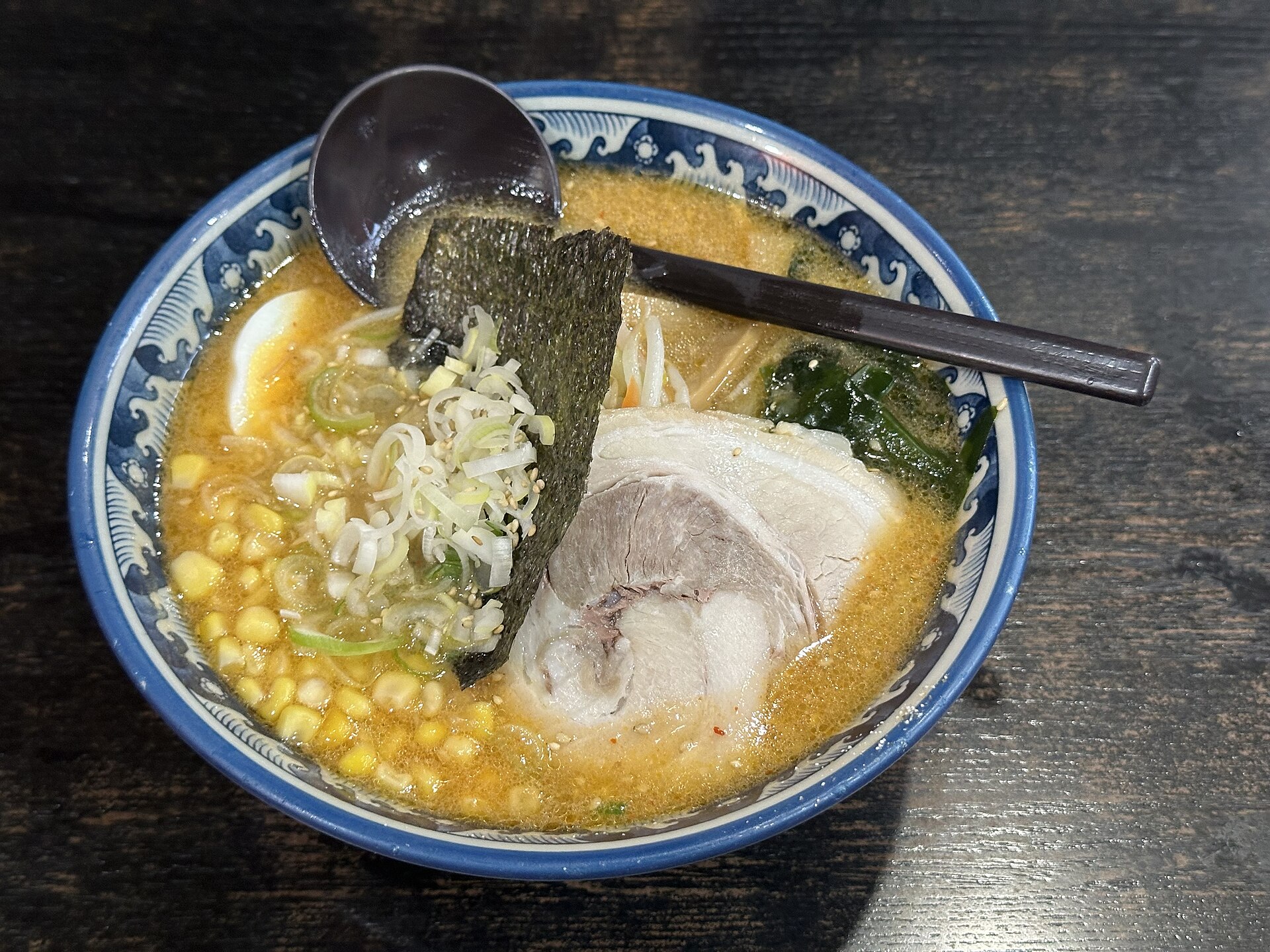
Sapporo miso ramen — rich miso broth with thick curly noodles, butter, corn and beansprouts
Sapporo Miso Ramen
味噌ラーメン · Miso Ramen

The original, and still the one to seek out first. Miso paste is whisked into a pork-and-chicken stock, then garlic, ground pork and vegetables are stir-fried hot and tipped in, giving the soup a deep, savoury-sweet body unlike anything in Tokyo. Aji no Sanpei is where it began in the 1950s. Eat it in a tiny Ramen Alley shop with steam fogging the window and you'll understand why this city is a ramen pilgrimage.

Recommended shops: Aji no Sanpei (味の三平) · Sumire · the 17 shops in Ganso Ramen Yokocho (Susukino)
Price: ¥900–1,400 / bowl
🌽2
Butter Corn Miso Ramen
バターコーンラーメン · Butter Corn Ramen

Sapporo's most beloved variation: the same miso broth, but crowned with a pat of butter that melts slowly into the soup and a heap of sweet Hokkaido corn. With every spoonful the broth turns rounder and richer as the butter blends through. Hokkaido corn is its own local treasure — bred for the cold and noticeably sweeter than southern varieties. Order a large and finish it before the butter cools.

Where to eat: most Ramen Alley shops serve it · Shirakaba Sansou is a local favourite for the butter-corn version
Price: ¥1,050–1,500 / bowl
🍜3
Thick Curly Noodles
縮れ麺 · Chijiremen

The noodle is half the reason Sapporo ramen works. They're thick, springy and tightly curled (chijiremen), and that crinkle is deliberate — it traps the heavy miso soup so every strand carries flavour up to your mouth. Most shops make them fresh; the famous Nishiyama Seimen noodle factory in Sapporo supplies many of the alley shops. They hold their bite even as the bowl sits, which matters when you're eating slowly in the cold.

Good to know: ask for "katame" if you like them firmer · Nishiyama noodles are a Sapporo staple
Price: included in the bowl
🔥4
The Lard Layer
脂の膜 · Abura no Maku

Look closely at a Sapporo bowl and you'll see a thin, glossy film floating on the surface. That's a layer of pork fat, and it's there on purpose — it seals in the heat so the soup stays scalding right to the last sip. In a city where it can hit minus 10 outside, that detail is the difference between a comforting bowl and a lukewarm one. It also carries the stir-fried garlic aroma straight to your nose.

Good to know: the richer, lard-heavy style is what Sumire and Junren are famous for
Price: part of the bowl
🥬5
Ground Pork, Beansprouts & Veg
挽き肉・もやし · Toppings

The classic Sapporo topping isn't sliced chashu but stir-fried ground pork (hikiniku), tumbled in the wok with garlic, onion, cabbage and beansprouts before it goes into the soup. That wok-fry is what gives the broth its smoky-savoury edge. Crunchy beansprouts add texture, and many shops finish with a scatter of green onion. It eats like a hearty, full meal rather than a delicate bowl.

Where to eat: standard across Susukino's miso shops · ask for extra beansprouts at no charge in many places
Price: part of the bowl · extra chashu ¥200–350
🧂6
Hakodate Shio Ramen
函館塩ラーメン · Shio Ramen

The first of Sapporo's two great rivals. Down on the southern coast, Hakodate built its ramen on shio (salt) — a clear, pale, almost delicate broth from pork bones and chicken that lets the natural sweetness of the stock come through. It's the lightest of Hokkaido's three styles, the opposite end of the spectrum from Sapporo's rich miso. Worth a bowl if your trip runs south to Hakodate.

Where to eat: Hakodate (3–4 hours from Sapporo) — not in Sapporo proper, but the classic Hokkaido comparison
Price: ¥750–1,100 / bowl
🥢7
Asahikawa Shoyu Ramen
旭川醤油ラーメン · Shoyu Ramen

The second rival, from Asahikawa in central Hokkaido. It's a soy-based (shoyu) broth — darker and deeper than Hakodate's salt soup — and, like Sapporo, it gets a layer of lard on top to fight the cold. The noodles here are thinner and wavy. Together, Sapporo (miso), Hakodate (shio) and Asahikawa (shoyu) form Hokkaido's famous ramen trio, each a different answer to the same brutal winter.

Where to eat: Asahikawa (about 1.5 hours from Sapporo by train) · Asahikawa shops also appear at Shin-Chitose Airport's Ramen Republic
Price: ¥800–1,200 / bowl
✈️8
Ramen Republic (Airport)
札幌ら~めん共和国 · Sapporo Ramen Republic

Short on time? On the 10th floor of the building above Sapporo Station, Sapporo Ramen Republic gathers around eight Hokkaido ramen shops under one retro-Showa themed roof — miso, shio and shoyu all in one place. There's also a Ramen Republic at New Chitose Airport, which means you can grab one last proper Hokkaido bowl before your flight home. Not as atmospheric as the alleys, but genuinely good shops.

Where to eat: ESTA building 10F above Sapporo Station · also at New Chitose Airport
Price: ¥900–1,400 / bowl
Where to slurp

Ramen alleys & districts

The Susukino alleys where ramen shops sit shoulder to shoulder — plus the other spots worth a detour

Ganso Ramen Yokocho
元祖さっぽろラーメン横丁 · the original alley

The original Sapporo Ramen Alley, running since 1951 — a narrow 42-metre lane in Susukino packed with around 17 tiny ramen shops, most seating only a handful of people at a counter. Steam fogs the windows, broth pots rattle, and you squeeze past diners to find a stool. This is the atmospheric heart of Sapporo ramen; many shops here serve until 2–3am, so it's the classic stop after a night out.

Getting there: short walk from Susukino Station (Nanboku Line) · Hours: most shops 11:00 until late night
Shin-Ramen Yokocho
新ラーメン横丁 · the newer alley

The "new" ramen alley sits a block from the original, opened to handle the overflow of ramen-hunters. It's a touch roomier and a little less cramped, with its own line-up of miso, shio and shoyu shops. If the original Yokocho has a 30-minute queue at every counter, this is where locals slip over for a quicker seat — same Susukino energy, fewer elbows.

Getting there: near Susukino Station, beside the original alley · Hours: evening until late
Susukino at large
すすきの · the nightlife district

Beyond the two named alleys, Susukino is the biggest nightlife district north of Tokyo, and ramen shops are scattered through every block of it — counter joints, late-night specialists, and shops that exist to serve "shime" (the bowl you eat to close out a night of drinking). The Sapporo habit of finishing a night with ramen means many of these stay open until the early hours.

Getting there: Susukino Station (Nanboku Line) · Hours: many shops open until 2–4am
Ramen Republic (ESTA 10F)
札幌ら~めん共和国 · the ramen theme floor

A curated floor of around eight Hokkaido ramen shops on the 10th floor of the ESTA building right above Sapporo Station — styled like a retro Showa-era street, with shops covering miso, shio and shoyu so you can compare styles in one trip. It's the most convenient ramen stop in the city if you're arriving or leaving by train and don't want to trek to Susukino.

Getting there: directly above Sapporo Station (JR / Nanboku Line) · Hours: 11:00–22:00 daily
Shiroishi (Menya Saimi)
白石区 · the destination shop

A residential ward east of the centre that wouldn't be on a tourist map — except it's home to Menya Saimi, the miso shop that's earned Michelin recognition and that many locals call the best in the city. Worth the subway ride out on the Toho Line if you're a serious ramen pilgrim and don't mind eating in a quiet neighbourhood rather than a buzzing alley.

Getting there: Higashi-Sapporo Station (Toho Line), short walk · Hours: daytime only — go early, it sells out
New Chitose Airport
新千歳空港 · last bowl before the flight

The airport has its own Ramen Republic-style food zone, gathering Hokkaido shops so you can have one final bowl before flying out. Prices are a hair higher than in town and the atmosphere is, naturally, an airport — but the shops are real Hokkaido names, not generic chains. A smart move if you didn't get enough miso ramen in the city itself.

Getting there: inside New Chitose Airport (40 min from Sapporo by JR) · Hours: roughly 10:00–20:45
Legendary shops

Shops worth the queue

The names ramen pilgrims plan their day around — pin them on the map before you go

1
Aji no Sanpei — Birthplace of Miso Ramen
味の三平 · opened in the 1950s

The shop that invented miso ramen. First-generation owner Morito Omiya blended miso into the broth with garlic and stir-fried pork and vegetables in the 1950s, and after food magazines published it, Sapporo miso ramen became famous across Japan. The shop still runs in the Susukino area, the recipe largely unchanged. Come before opening or expect a queue — this is the bowl everything else descends from.

Address: Minami 4-jo Nishi 3-chome · Susukino, Sapporo (in the Daimaru Fujii building)
Hours: roughly 11:00–18:30 (closed Mondays) · Signature: Miso ramen ~¥900–1,000 · long lunchtime queues
2
Sumire — The Rich Lard-Heavy Miso
すみれ · the glossy, intense bowl

If Aji no Sanpei is the historic root, Sumire is the shop many travellers crown as the best miso bowl they've ever had. The soup is thick, glossy and intensely savoury, sealed under a heavy lard layer that keeps it scalding to the bottom. The main shop is in Nakanoshima, a little south of the centre, and there's a more central branch too. Expect a wait at peak hours — it's that popular.

Address: Main shop — Nakanoshima, Toyohira-ku, Sapporo · central branch in Susukino
Hours: 11:00–15:00 · 16:00–21:00 (varies by branch) · Signature: Miso ramen ~¥900–1,100 · 30–60 min queues at peak
3
Junren — Sumire's Sister Shop
純連 · the original lineage

Junren shares its roots with Sumire — the two shops descend from the same family and the same rich, lard-forward miso lineage, and ramen fans love to debate which bowl edges the other. Junren's broth is dense and deeply savoury, the noodles thick and curly. The main shop sits south of the centre in Toyohira. If you're tasting your way through Sapporo's miso greats, doing Sumire and Junren back to back is the connoisseur's move.

Address: Toyohira-ku, Sapporo (south of the city centre)
Hours: roughly 11:00–21:00 · Signature: Miso ramen ~¥900–1,100 · queues common
4
Menya Saimi — Michelin-Recognised Miso
麺屋 彩未

Out in the Shiroishi ward, away from the tourist alleys, Menya Saimi serves a more refined take on Sapporo miso — a balanced, aromatic bowl with a ginger note and beautifully cooked noodles — and has been recognised in the Michelin guide. Locals routinely name it the best ramen in the city. It's daytime-only and sells out, so go early. The trek east is the price of admission for one of Sapporo's finest bowls.

Address: Misono, Toyohira-ku, near Higashi-Sapporo Station (Toho Line)
Hours: daytime, lunch into early afternoon (closed Mondays) · Signature: Miso ramen ~¥900 · arrive before opening
5
Shirakaba Sansou — Butter Corn Champion
白樺山荘

A local-favourite chain born in Hokkaido, Shirakaba Sansou is the shop people point to for the classic Sapporo butter-corn miso bowl — generous corn, a melting pat of butter, and free boiled eggs on the counter to help yourself. It's friendlier to a queue than the boutique greats and has a branch at Ramen Republic above Sapporo Station, making it an easy, reliable introduction to the Sapporo style.

Address: branches across Sapporo including Ramen Republic (ESTA 10F, above Sapporo Station)
Hours: 11:00–22:00 (Ramen Republic branch) · Signature: Butter corn miso ramen ~¥950–1,200 · free eggs on the counter
Frequently asked questions

FAQ · things people ask

Where was miso ramen invented?
In Sapporo. Aji no Sanpei, run by first-generation owner Morito Omiya, is credited with creating the miso-broth bowl in the 1950s — he blended miso paste with garlic and stir-fried pork and vegetables, then ladled it over noodles. Food magazines picked it up and Sapporo miso ramen spread across Japan from there. The shop still runs in the Susukino area with the recipe largely unchanged.
What makes Sapporo miso ramen different from Tokyo ramen?
Three things. The broth is miso-based — heavier, sweeter and more savoury than Tokyo's clear shoyu soup. The noodles are thick and curly (chijiremen) so they grab the rich soup. And there's a thin layer of melted lard floating on top that traps the heat, which matters when it's minus 10 outside. Sapporo bowls also lean on butter, sweet Hokkaido corn, beansprouts and stir-fried ground pork as toppings.
Where is Ramen Alley in Sapporo?
In Susukino. The original is Ganso Sapporo Ramen Yokocho, a narrow 42-metre alley with around 17 tiny ramen shops that has run since 1951 — find it a short walk from Susukino Station on the Nanboku subway line. A second, newer alley called Shin-Ramen Yokocho sits nearby with more shops. Both are best at night; many shops stay open until 2–3am, so it's an easy stop after drinks.
Which Sapporo ramen shops are worth queuing for?
Aji no Sanpei for the historic original miso bowl, Sumire and its sister shop Junren for the thick, glossy lard-rich miso style, Menya Saimi out east in Shiroishi for a refined miso bowl that earned Michelin recognition, and Shirakaba Sansou for a butter-corn miso loved by locals. Menya Saimi and Sumire often draw 30–60 minute queues at peak times — go before opening or mid-afternoon.
How is Sapporo ramen different from Hakodate and Asahikawa ramen?
These are Hokkaido's three classic ramen towns, each built on a different broth. Sapporo is miso — rich and warming. Hakodate is shio (salt) — a clear, light, almost delicate soup that lets the pork-and-chicken stock shine. Asahikawa is shoyu (soy) — a darker soy broth often topped with a lard layer to fight the cold, with thinner noodles. If you tour Hokkaido, trying all three back to back is the fun part.
How much does a bowl of ramen cost in Sapporo?
A standard bowl of miso ramen runs ¥900–1,200; a butter-corn version adds about ¥150–250. Toppings like extra chashu pork or a soft egg push it to ¥1,300–1,600. The Ramen Alley shops in Susukino sit in the ¥1,000–1,300 range. It's cash-friendly territory, though many shops now take IC cards — carry some yen just in case.
🟠 Klook

🍜 Sapporo Ramen & Susukino Food Tour on Klook
Miso ramen · alley crawl · Hokkaido crab

Walk Susukino's ramen alleys with a local guide — taste original miso ramen, then add a Hokkaido crab or izakaya stop. From ~¥7,500/person · best paired with a winter visit during the Snow Festival

🛒 See Sapporo tours on Klook →
Wherebest is an affiliate partner of Klook — we may earn a commission when you book through our links, at no extra cost to you.