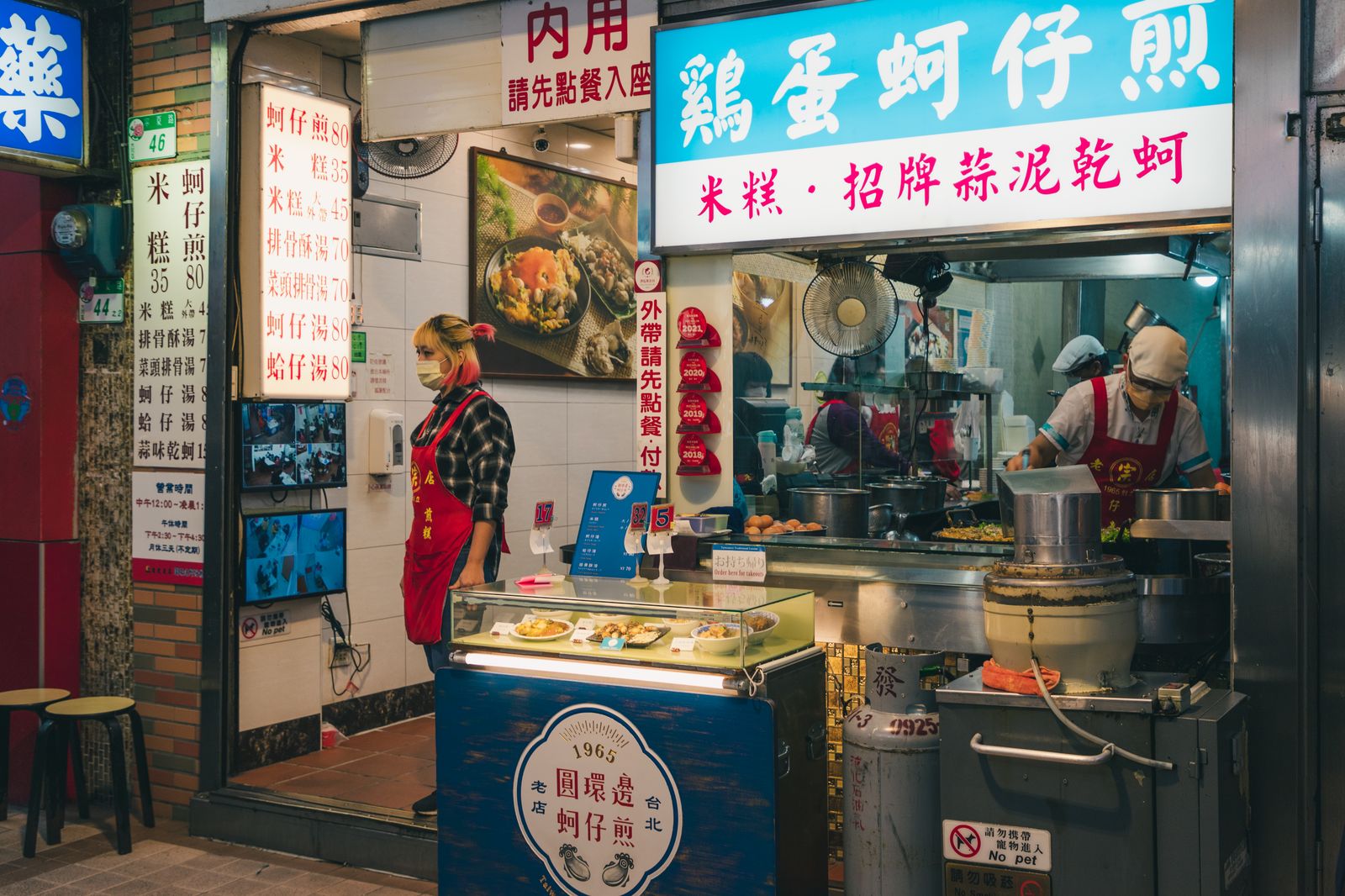
No clothing racks, no claw machines — just classic dishes cooked the way grandparents cooked them: crackly taro croquettes fried to order, clear pork-liver soup steaming hot, sesame-oil chicken scenting the whole lane. We walk you down the one short street that Taipei's serious eaters quietly call the city's most food-focused market.
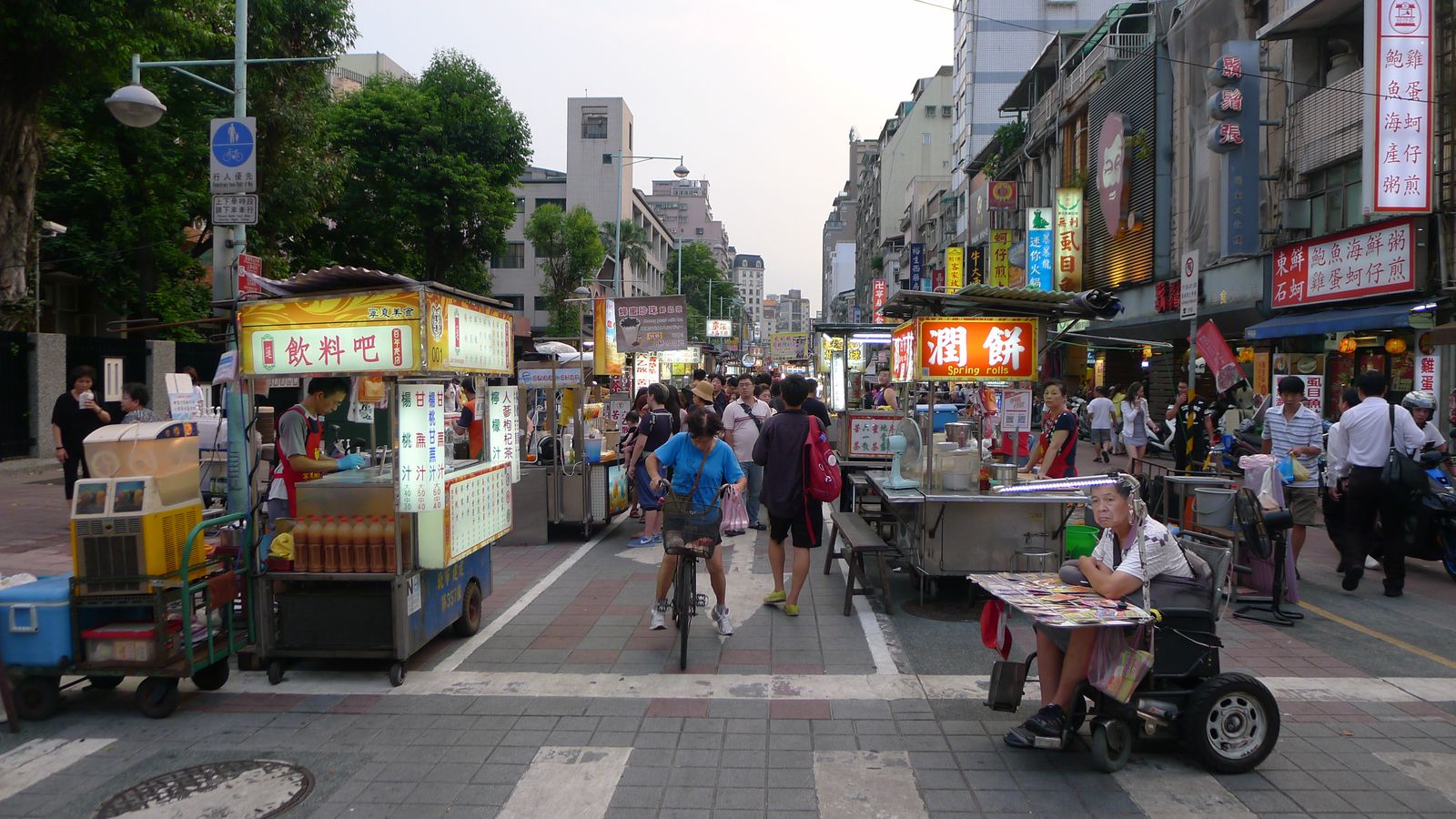
If Shilin is the night market the tourists flock to by the million, Ningxia (寧夏夜市) is the one Taipei keeps for itself — short, old, and serious about food in a way that lets nothing distract from it. The whole market is a single street barely 170 metres long, with stalls lined up in two parallel rows and a narrow pedestrian aisle running between them. You can walk from one end to the other in under ten minutes — yet packed into that short stretch are nearly 200 food stalls, many of them cooking the same recipes for over half a century.
Ningxia sits in Dadaocheng (Datong District), the riverside trading quarter that was once the most prosperous part of old Taipei, right next to Dihua Street with its dried goods and Chinese herbs. The market's roots reach back to the Japanese colonial era, when street vendors gathered at the Jiancheng Traffic Circle — the legendary "Yuanhuan" or Round Circle market. After fires damaged the circle and it was demolished in 2001, the evening stalls regrouped along Ningxia Road, where you find them today — still serving the traditional Taiwanese flavours that earned the market its affectionate nickname, "the stomach of the Taipei people."
Ningxia is right in the centre and reachable from several stations — but the narrow lane fills up fast, so timing it well makes the crawl far more fun.
Eater's tip: Ningxia is short, so the smart move is to walk the whole lane once first — note which stalls have long queues, which look promising — then double back to eat for real. That way you won't fill up at the first stall and miss the gems at the far end.
Ningxia has none of Shilin's tangle of alleys — it is one straight street. But understanding the layout still helps you eat your way through smoothly and completely.
The heart of the market is Ningxia Road itself, closed to traffic, with stalls in two parallel rows. Every stall is numbered — even numbers on the left, odd on the right — so the famous spots you noted from reviews are easy to find. It runs about 170 metres from the north end (near Shuanglian) to the south.
The south end of the market is where the old "Yuanhuan" traffic circle stood. Today it is a small park where you can still see the exposed remains of a WWII water cistern — a slice of history that explains where the whole market began.
Ningxia's famous stalls are scattered along the numbered addresses — Liu Yu Zi taro (#91), Rong's Pork Liver (#10), Fang's Chicken Rice (#60). Note the numbers and follow them and you'll find each one easily. Expect to queue behind the stall at the busiest ones.
Seating at Ningxia is limited — many stalls have only a few plastic stools alongside. Most dishes suit eating as you walk or taking away. The market is well known for pushing vendors to use reusable stainless-steel tableware instead of styrofoam, cutting waste in earnest.
Hand-picked signature dishes with approximate prices, plus the stall names and numbers so you find them — prices may shift with ingredients and season.
Taro from Kaohsiung, steamed and mashed silky-smooth, wrapped around pork floss and salted duck egg yolk, then deep-fried until the shell shatters into flakes and the inside stays soft and nutty — Ningxia's single most famous stall. Plain taro balls are available too.
Fresh pork liver sliced thin and poached in a clear broth to the exact point of doneness — tender, never gamey — over a sweet bone stock. A nourishing dish Taiwanese have eaten for generations. Pair it with an offal soup.
A bowl of hot rice topped with tender shredded chicken and a drizzle of fragrant chicken oil — the simple, addictive Chiayi-city style. Add a braised tofu and some blanched greens for a full, gentle-priced meal.
Egg griddled with starch into a chewy, glossy pancake, studded with small fresh oysters from Tainan, finished with a sweet-tart orange-red sauce — a classic that Ningxia's oldest stalls cook with real depth.
Chicken simmered in a broth of black sesame oil, ginger and rice wine — its aroma drifts the length of the lane. The soup is rich and warming, at its best on a cool night. Add rice noodles to make it a meal.
Chicken breast pounded flat, battered and deep-fried crisp, dusted with chilli and pepper — choose spicy, lemon and other flavours. One bite crackles right across the cutlet. The walking snack of every Taiwanese market.
Pick your own pork offal, tofu, eggs, vegetables, meatballs and noodles into a basket and the vendor braises them in a fragrant spiced master stock — served warm, mixing protein and greens. An easy, build-your-own meal.
Soft, chewy mochi warmed on the griddle and tumbled in sweet peanut and black-sesame powder — some stalls serve it over shaved ice. A dessert to finish on, pleasantly chewy and never cloying.
Papaya blended fresh with milk into a sweet, soft cooler — a Taiwanese classic — and douhua, silky soybean pudding in ginger syrup with red beans, glutinous rice balls or barley. A light way to close the meal.
See the other night markets, open the full city guide, or pair it with a daytime sight or two.
Compare 8 of Taipei's night markets — which to pick, what to eat, when to dodge the crowds, all on one page.
See the night markets guide →Another eaters' favourite — a single 600-metre street, famous Fuzhou pepper buns and Michelin-listed herbal soup.
Read the Raohe guide →Taipei's biggest and most famous market — giant fried chicken, an underground food court and shopping zones.
Read the Shilin guide →Pick a hotel near Taipei Main Station, Zhongshan or Dadaocheng — all an easy walk from Ningxia. Open the full Taipei travel guide to plan every meal, or start booking your stay now.