Home Nikko Japan Tochigi About Read in Thai
Home  ›  Japan  ›  Nikko  ›  Food Guide
🇯🇵 Nikko Food Guide · 2026

What to Eat in Nikko
6 dishes shaped by the mountains and the shrines

There is more to Nikko than bowing at Toshogu Shrine — silky yuba once offered to the gods, soba pressed from cold mountain water, Tochigi wagyu that melts on the tongue, and hot fried yuba manju sold in the lanes outside the shrine gate.

Why eat here

Nikko's food was born of mountains and faith

Here's something most visitors never realise: Nikko is a genuinely good food town. Most people come to pay respects at Toshogu Shrine, the mausoleum of shogun Tokugawa Ieyasu, and then leave. But the food here is deeply tied to the shrines and temples on the mountain. Monks and ascetics who trained up here were not permitted to eat meat, so they leaned on soybean protein instead — and that is the origin of yuba (湯波), the tofu skin that has become the town's defining dish.

The water flowing down from the Nikko mountains is clear and cold, ideal for soba — so much so that this small town has more than 100 soba restaurants. Add the premium Tochigi wagyu raised in the same prefecture, plus sweets like yuba manju and yokan that have been sold to pilgrims for two hundred years, and you have a real food destination. We've picked the 6 foods and experiences that capture this sacred town best.

The dishes

6 foods to try before you leave Nikko

Ordered by how distinctive they are — dishes you won't taste the same anywhere else.
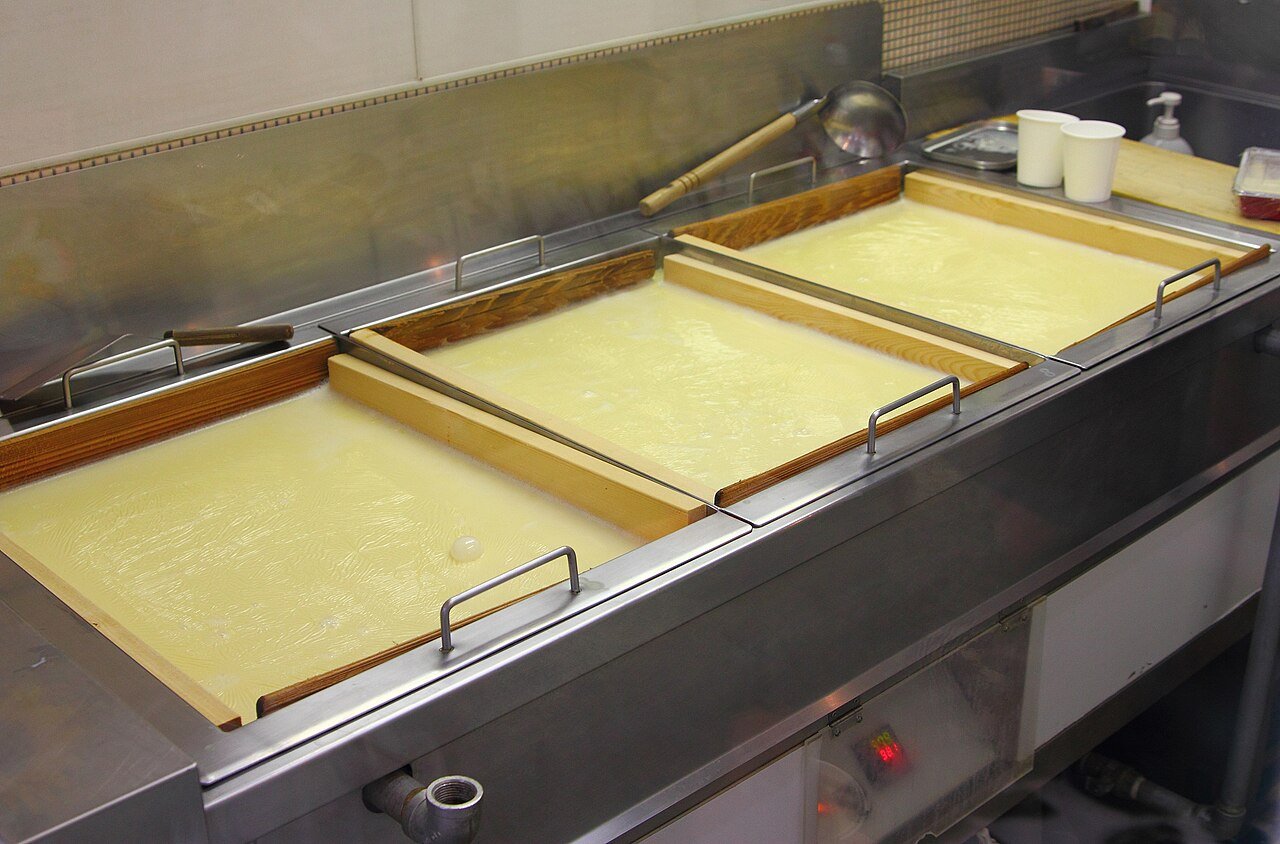
Nikko yuba, cream-coloured tofu skin sheets forming in wooden trays over simmering soy milk, being lifted off in soft thin layers 1
Yuba (Tofu Skin)
湯波 · Nikko's signature dish

This is what Nikko is remembered for. Yuba is the thin film that forms on the surface of simmering soy milk; lifted off, it becomes a soft, silky, cream-coloured sheet. Nikko folds the rising film into two layers (Kyoto uses a single layer), giving a thicker bite and a deeper soy flavour. You'll meet it many ways — sashimi yuba eaten fresh with a tiny dab of wasabi and barely any soy sauce; agemaki yuba, rolled and deep-fried then simmered in dashi, which you tear apart bite by bite so the broth bursts out. Subtle, but more layered than it first looks.

Where: Tsuruya (Nikko's best-known yuba restaurant) · yuba restaurants around Tobu Nikko Station and the road up to the shrine
Price: a single yuba dish ¥600–1,200 · full set, see #2
Tip: go easy on the soy sauce with sashimi yuba — it drowns the delicate soy-milk flavour that is the whole point
🍱2
Yuba Gozen (Set Meal)
湯波御膳 · many styles of yuba in one tray

If you want to understand yuba properly in a single sitting, order a Yuba Gozen — a set meal that presents yuba prepared several ways on one tray, from fresh sashimi yuba to yuba simmered in dashi, crisp fried yuba and yuba rolled with vegetables, served with rice, miso soup and small sides. Think of it as a compact kaiseki with soybean as the star. It's ideal for first-timers who don't yet know which style of yuba they like, because you get to taste them all at once.
Where: Yuba Gozen San Field · Tsuruya · traditional yuba restaurants near Tobu Nikko Station
Price: sets from ¥2,200 · with extra dishes and drinks budget ¥3,000–4,000 / person
Tip: most yuba sets are almost entirely vegetarian — great for non-meat eaters
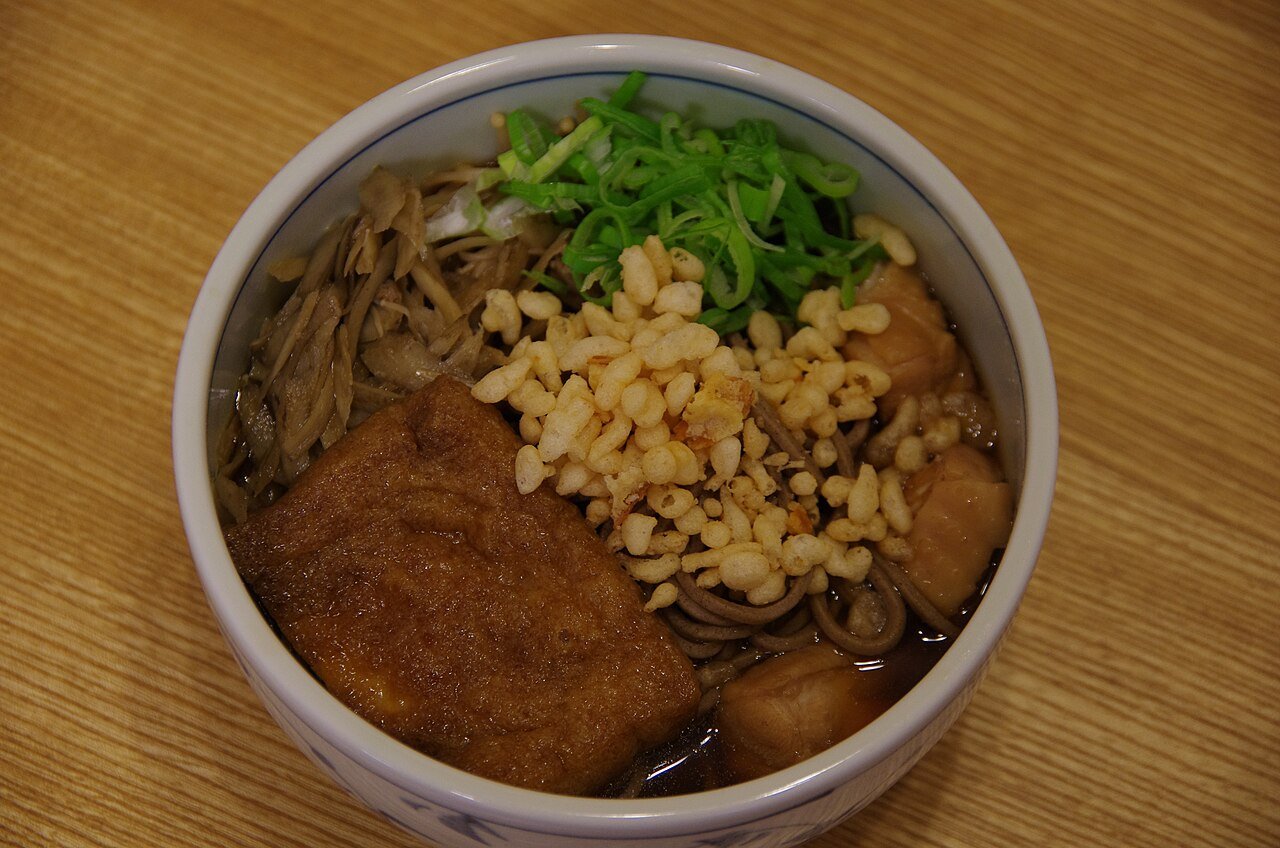
Nikko soba, brown buckwheat noodles in hot broth topped with wild mountain vegetables, fried tofu, tempura crumbs and green onion in a blue-and-white bowl 3
Nikko Soba
日光蕎麦 · fragrant mountain-water buckwheat noodles

Nikko's cold, clear mountain water makes the soba here especially fragrant and firm. Many traditional shops follow the "santate" (三たて) principle — freshly milled, freshly kneaded and freshly boiled, all on the same day — so the noodles carry a clear buckwheat aroma with a satisfying chew. You can have them hot (kake soba) or cold with dipping sauce (zaru soba). Plenty of Nikko shops add wild mountain vegetables (sansai), fried tofu and yuba — turning a single bowl into a roundup of the town's best. This is the classic lunch after walking the shrine grounds.

Where: Santate Soba Nagahataan (strict mill-knead-boil same day) · 100+ soba shops across town
Price: ¥900–1,500 / bowl (a little more with yuba or tempura)
Hours: most soba shops open midday 11:00–15:00 · some sell out by mid-afternoon
🥩4
Tochigi Wagyu
とちぎ和牛 · premium local beef on a hot plate

Tochigi Prefecture, where Nikko sits, raises a high-grade wagyu called Tochigi Wagyu — beautifully marbled, with fat so fine it melts on the tongue from the first bite. A renowned spot like Guruman's Wagyu serves its steak on a sizzling iron plate, so you hear the meat and catch the aroma before it ever reaches your mouth. It's tender enough that you barely need to chew. This is a splurge meal, no question — but if you want excellent wagyu in the quiet of a mountain town, here's your chance.
Where: Guruman's Wagyu (renowned wagyu restaurant, slightly outside the town centre) · steak and yakiniku spots in town
Price: hot-plate sets from ¥5,000, up into five figures for premium courses
Tip: Guruman's only takes cards on bills over ¥20,000 — bring enough cash
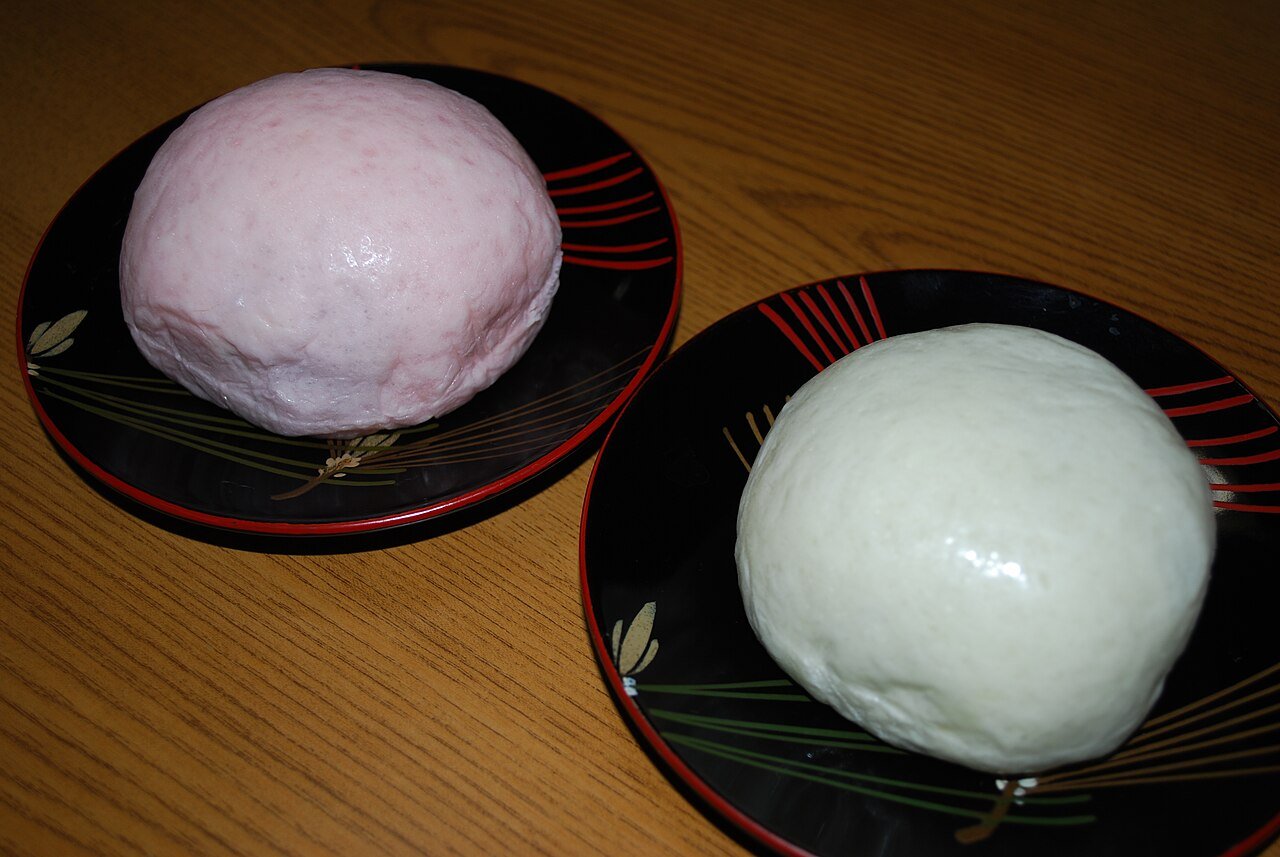
Nikko manju, two steamed buns — one pink and one white — resting on black lacquer plates with copper-coloured trim, a traditional sweet and souvenir 5
Yuba Manju & Yokan
ゆばまんじゅう・羊羹 · the pilgrims' legendary sweets

Walk near the shrine and you'll catch the smell of something hot and freshly fried — that's yuba manju from Sakaeya, a red-bean bun with yuba kneaded into the dough and then deep-fried, crisp outside and soft within, with just-right sweet red-bean paste. Eating it hot as you walk is the best way. Yokan (sweet bean jelly) has been a Nikko souvenir since the pilgrim era because it keeps so well; Mitsuyama has been making it with Nikko spring water since 1895, while Watahan offers a salted yokan (shio yokan) whose sweet-salty balance is quietly addictive.

Where: Sakaeya (fried yuba manju, made fresh out front) · Mitsuyama Yokan Honpo (since 1895) · Watahan (salted yokan since 1787)
Price: yuba manju ¥150–250 each · a souvenir yokan bar ¥600–1,500
Tip: eat yuba manju hot at the shop rather than taking it away — fresh from the fryer is the whole point
🍜6
Yuba Ramen & Nikko Izakaya
湯波ラーメン・居酒屋 · an easy local-style dinner

Most soba and Yuba Gozen restaurants close in the afternoon, so come evening the locals wrap up the day at a ramen shop or izakaya instead. Yuba ramen is a clear-broth ramen with soft sheets of yuba floating on top, soaking up the soup until they melt in the mouth — a warm, light bowl after a full day of walking. An izakaya like Hippari-dako, near the shrine, serves yakitori, ramen and small plates at friendly prices, perfect for a group ordering lots to share — and exactly the kind of place where you end up chatting with locals and the owner.

Where: Hippari-dako (izakaya near the shrine entrance, popular with travellers) · ramen shops around Tobu Nikko Station
Price: yuba ramen ¥900–1,300 · izakaya small plates ¥400–900 each
Hours: izakaya and many ramen shops stay open into the evening — a solid dinner option
A note on timing: Nikko is a mountain town and many restaurants close earlier than in big cities — the good soba and yuba spots tend to open only at lunch and sell out by mid-afternoon. Plan your main meal for midday and save ramen and izakaya for dinner, and you'll be on the safe side.
What to eat in a day

A meal-by-meal Nikko day

Hit all the highlights in one day — paced to fit your shrine sightseeing.

08:30
Breakfast — a hot soy-milk yuba pot Start gently with a soy-milk hotpot where you scoop fresh yuba layer by layer (¥600) and a grilled rice ball (¥300) at a yuba shop near the station. Fuel up before heading up to the shrine.
10:30
While exploring Toshogu Shrine — fried yuba manju Stop at Sakaeya near the entrance for a hot fried yuba manju at ¥150–250 each, eaten as you walk — the same snack pilgrims have enjoyed for a century.
12:30
Lunch — Yuba Gozen or Nikko soba The main meal of the day. Choose a full Yuba Gozen set (from ¥2,200) or a mountain soba bowl with yuba and wild vegetables (¥900–1,500) — both are the heart of Nikko's cuisine.
15:30
Afternoon sweet — yokan with green tea Drop by a long-established yokan shop like Mitsuyama or Watahan, try the sweet-salty shio yokan at ¥600–1,500, and pick some up as a souvenir to take home.
18:30
Dinner — yuba ramen or Tochigi wagyu Wind down with a warm bowl of yuba ramen (¥900–1,300), or share lots of small plates at Hippari-dako izakaya — and if you're celebrating, book a Tochigi wagyu hot-plate table (¥5,000+).
The legends

The places not to miss

The spots locals and travellers have passed along for years — put them in your plan before you go.

1
Tsuruya (鶴屋)
Nikko's best-known yuba restaurant

If you only pick one place for a full yuba experience, Tsuruya is the name that comes up most. From classics like fried yuba and yuba in soup, all the way to the unexpected — yuba curry and yuba custard — it shows you just how far yuba can travel. Ideal for lunch after walking the shrine grounds.

Known for: varied yuba sets · yuba curry · yuba custard
Hours: mainly lunch · Price: ¥1,000–3,000 / person
2
Santate Soba Nagahataan (長畑庵)
Santate soba — milled, kneaded and boiled the same day

A soba shop foodies hold up as the model of the "santate" principle — the soba is milled from fresh grain, kneaded and boiled all on the same day, which is considered the peak condition for soba. The noodles carry a clear buckwheat aroma and a springy chew. It's a little out of the centre, but people happily make the trip for the quality.

Known for: fresh zaru soba · wild-vegetable tempura
Hours: lunch · sells out by mid-afternoon · Price: ¥1,000–1,800 / person
3
Sakaeya (さかえや)
Fried yuba manju, made fresh out front · Nikko's most popular snack

A small shop near the shrine entrance that fries yuba manju one at a time — dough with yuba kneaded into it, wrapped around sweet red-bean paste and fried until crisp outside and soft within. It's frequently ranked the number-one souvenir in Nikko, and eating it hot in front of the shop is the best way to enjoy it. Don't let it go cold.

Location: near the Toshogu Shrine entrance
Known for: fried yuba manju ¥150–250 each · Pay: mostly cash
4
Guruman's Wagyu (グルマンズ和牛)
Tochigi wagyu steak on a hot plate · the town's special-occasion meal

A wagyu restaurant people travel out of the town centre for, to taste real Tochigi beef — steak served on a sizzling iron plate, the sound and aroma arriving before the food does, the marbled meat melting in the mouth. Sets run from ¥5,000 up to ¥25,000 for the premium courses. Booking ahead is wise, and bring cash, since cards are only taken on larger bills.

Location: outside the Nikko town centre (check the route first)
Price: sets ¥5,000–25,000 · Pay: cards only on bills over ¥20,000 — bring cash
5
Mitsuyama Yokan Honpo (三ツ山羊羹本舗)
Nikko yokan since 1895 · made entirely with Nikko spring water

A long-established yokan maker open since 1895, using domestic red beans, agar and nothing but Nikko spring water. The result is dense, smooth and gently sweet — a souvenir that keeps well and reflects the town's pilgrim heritage. For a sweet-salty contrast, also drop by Watahan, which has been making salted yokan since 1787.

Known for: red-bean yokan · (Watahan: salted shio yokan)
Price: ¥600–1,500 / bar · Great as: a souvenir that keeps
Frequently asked

FAQ · what people ask before heading out to eat

What is yuba, and how is Nikko's different from Kyoto's?
Yuba is the delicate film that forms on the surface of soy milk as it simmers; it's lifted off in soft, silky sheets. The difference is in the technique — Kyoto yuba is lifted as a single thin layer, while Nikko folds the rising film into two layers (which is why it's written with the kanji 湯波 rather than Kyoto's 湯葉), giving it a thicker, more toothsome texture and a deeper soy flavour. In Nikko, yuba dates back to its use as a temple and shrine offering, since it was a protein that monks were permitted to eat.
How much does a meal in Nikko cost?
Nikko works on many budgets. A hot fried yuba manju from a roadside shop is ¥150–250 each. A bowl of soba or yuba ramen runs ¥900–1,500. A full Yuba Gozen set starts at ¥2,200, and with extra dishes and drinks budget ¥3,000–4,000 per person. A Tochigi wagyu hot-plate set starts around ¥5,000 and climbs into five figures for premium courses.
Do Nikko restaurants take credit cards, or should I bring cash?
Nikko is a small mountain town, and many traditional soba shops, roadside stalls and family-run places still accept cash only. Even an upscale wagyu restaurant like Guruman's Wagyu only takes cards on bills over ¥20,000. Bring enough yen, especially if you plan to eat at small shops or buy souvenirs in the shopping lanes.
What can vegetarians eat in Nikko?
Nikko is one of the easiest towns in Japan for vegetarians, because yuba is a pure soybean protein with roots in temple cuisine. At many restaurants the Yuba Gozen set is almost entirely vegetarian — sashimi yuba, simmered yuba and fried yuba. Soba is pure buckwheat; just ask for it without fish-based broth, or check the dashi first. Sweets like yuba manju and yokan contain no meat either.
When is the best time of day to eat Nikko soba and yuba?
Most soba and yuba restaurants in Nikko are open mainly at lunchtime (roughly 11:00–15:00), and many close early or sell out by mid-afternoon. Plan your Yuba Gozen set or soba as a lunch after visiting Toshogu Shrine. Roadside yuba manju can be eaten any time as you walk, and save the evening for yuba ramen or an izakaya that stays open late.
Klook · Nikko tours & trips

Do Nikko the easy way — book tours and passes ahead

Day tours from Tokyo, rail passes and shrine trips — booked in advance, no language or route worries, so you've got time left to sit down to all the yuba and soba you want.

See Nikko trips on Klook →
Wherebest is a Klook affiliate partner — we may earn a commission when you book through our links, at no extra cost to you.