Home Nagasaki Japan Nagasaki Prefecture About
Home  ›  Japan  ›  Nagasaki  ›  Nagasaki Food Guide
🇯🇵 Nagasaki Food Guide · 2026

What to Eat in Nagasaki
6 Dishes With Two Continents in the Bowl

The city where Portuguese traders left behind sponge cake in the 1500s, a Chinese restaurateur invented a warming noodle soup in 1899, and every visitor leaves a piece of their heart at a street-side pork bun stall.

Why Eat Here

Nagasaki Food Is Unlike Anywhere in Japan

Picture a port city that was Japan's only gateway to the outside world for over two centuries. While the rest of the country stayed closed, Nagasaki absorbed traders, Chinese settlers, Christian missionaries and Dutch merchants — along with their flavours. The result is a food culture that no other Japanese city can replicate.

Champon — the creamy white bone-broth noodle soup born in a Chinese restaurant for poor students — became the city's signature dish. Castella cake, brought by Portuguese traders in the late 1500s, is still baked using the original recipe at bakeries open for four centuries. Shippoku ryori, a Japanese-Chinese-Dutch fusion banquet served at a red lacquer round table, exists nowhere else on earth. We picked the 6 dishes and experiences that tell Nagasaki's story best.

Star Dishes

6 Dishes to Try Before You Leave Nagasaki

Ranked by uniqueness — dishes you will not find done quite like this anywhere else.
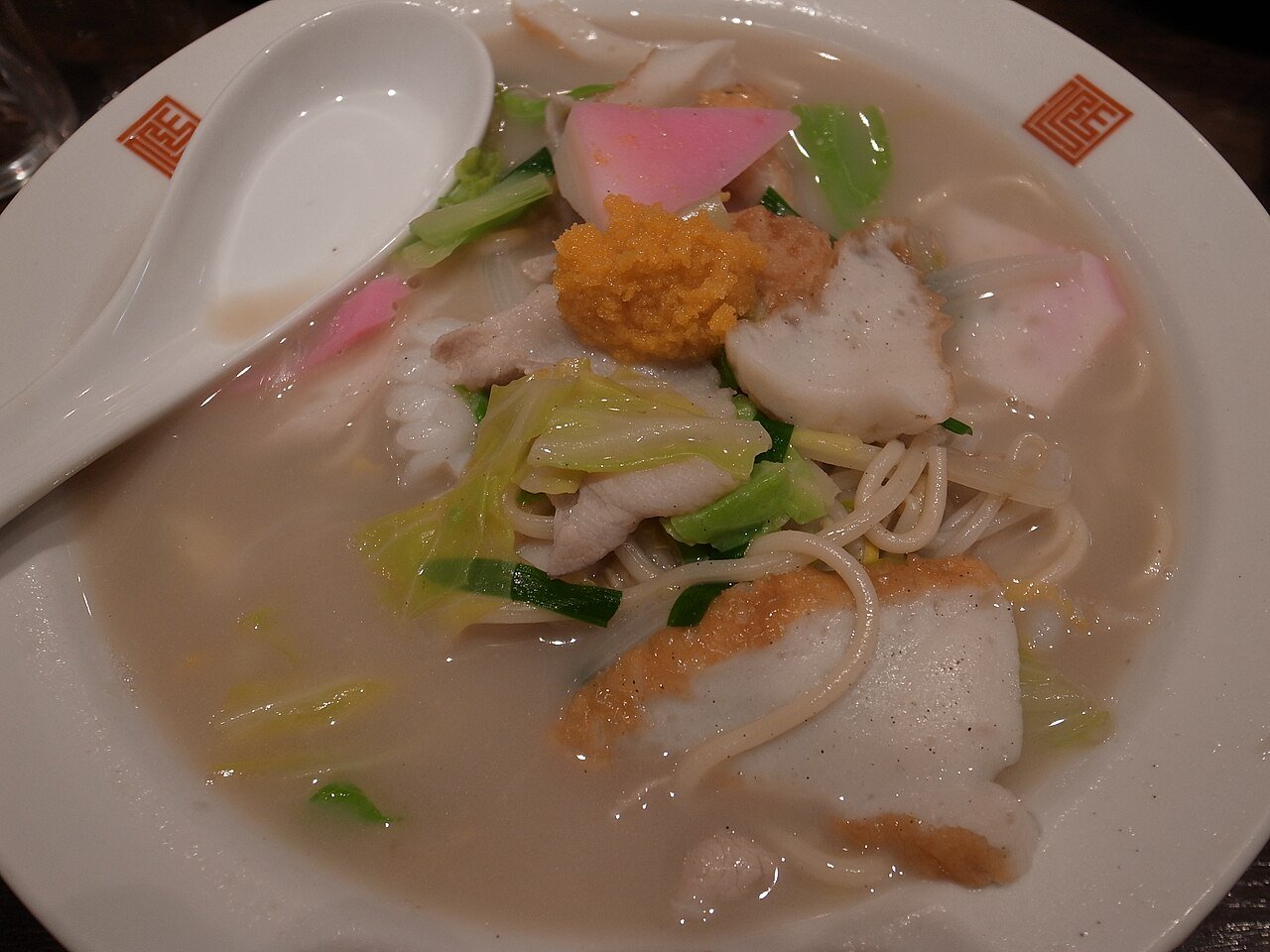
Nagasaki champon noodle soup in a wide bowl — milky white bone broth with thick noodles, pork, shrimp, squid, and vegetables 1
Champon (ちゃんぽん)
Nagasaki's soul food · born at Shikairou restaurant in 1899

In 1899, Chen Pingshun — owner of the Chinese restaurant Shikairou on Nagasaki harbour — created an affordable, filling meal for Chinese students struggling on tight budgets. He simmered pork and chicken bones into a rich white broth, cooked thick wheat noodles directly in it, and piled in pork, shrimp, squid, fish cake, cabbage, bean sprouts and more. The result: champon. The broth is creamy-white and mellow, never salty or spicy. One bowl is genuinely satisfying. Shikairou is still open, still serving the same dish, with a free Champon Museum on the second floor.
Where: Shikairou (四海楼 · 4-5 Matsugaemachi · harbour views on floors 4–5 · open 11:30–15:30 / 17:00–20:00) · Horaiken Bekkan (寶來軒別館 · a local favourite for a slightly different broth style) · champon restaurants throughout Chinatown
Price: ¥950–1,500 per bowl · Shikairou lunch set ¥1,650 (includes gyoza and miso soup)
Tip: At Shikairou, ask for a window seat facing the bay — on a clear day the view across Nagasaki harbour is unforgettable.
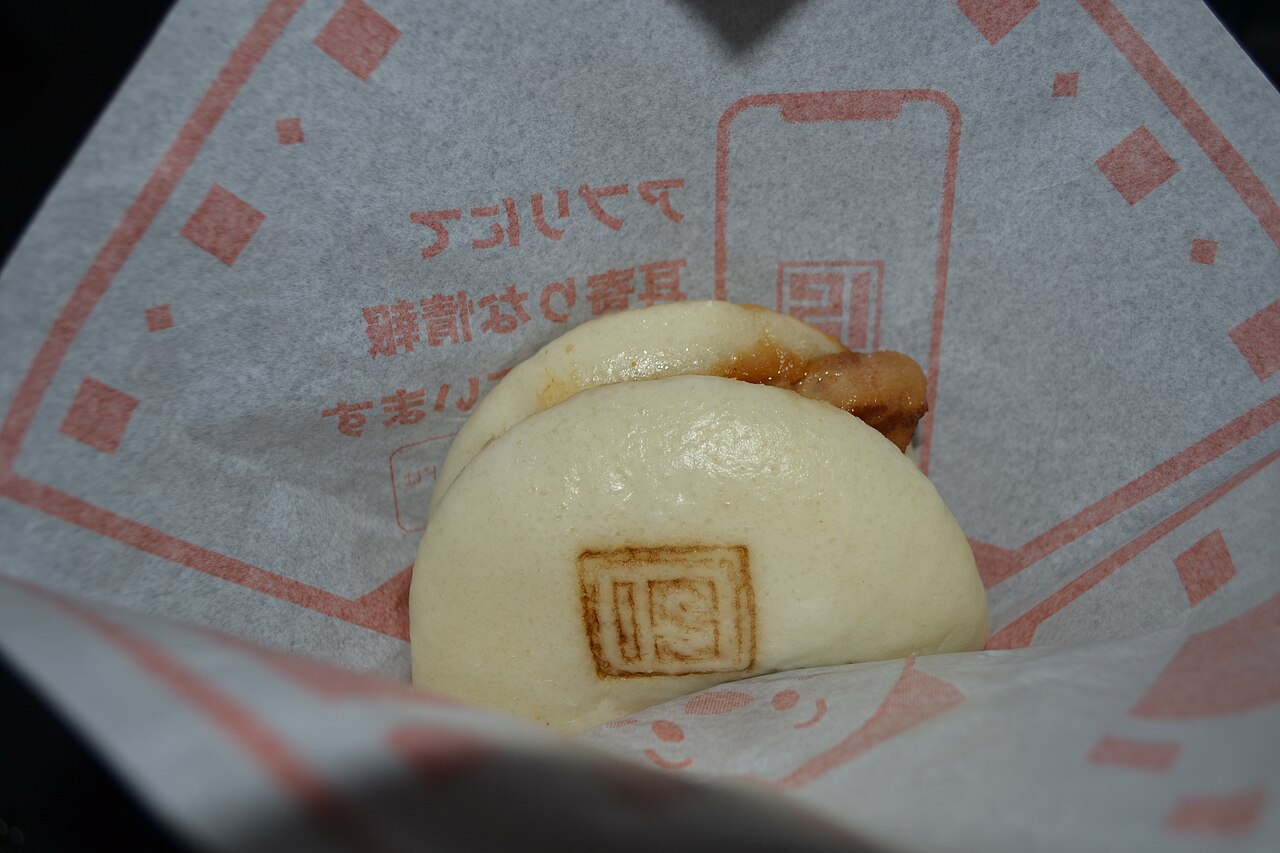
Nagasaki kakuni manju steamed pork belly bun from Iwasaki Honpo — soft white bun with a stamped logo, served warm in paper wrapper 2
Kakuni Manju (角煮まんじゅう)
Steamed pork belly bun · street food that stops you mid-stride

Walk past an Iwasaki Honpo stall in Nagasaki and the cloud of steam will stop you before your feet do. Inside the fluffy white steamed bun sits a thick slab of kakuni — pork belly braised for hours in soy sauce, sake, mirin and sugar until the fat turns translucent and the meat collapses at the lightest touch. Bite through the soft bun and a rush of savoury-sweet braising liquid follows. Eat it while the steam is still rising. This dish shows exactly how Nagasaki absorbed Chinese culinary influence and made it its own — the original is Chinese-style braised pork; the soft Japanese steamed bun made it a street icon.
Where: Iwasaki Honpo (岩崎本舗 · branch near Shinchi Chinatown tram stop · Glover Garden branch · Nagasaki Airport) · other vendors inside Chinatown
Price: ¥250–350 per bun · souvenir boxes ¥650–1,200
Tip: Eat fresh and hot. The bun stiffens as it cools. If you are buying to take home, reheat in a steamer or a low oven — the microwave will do the job but the texture suffers.
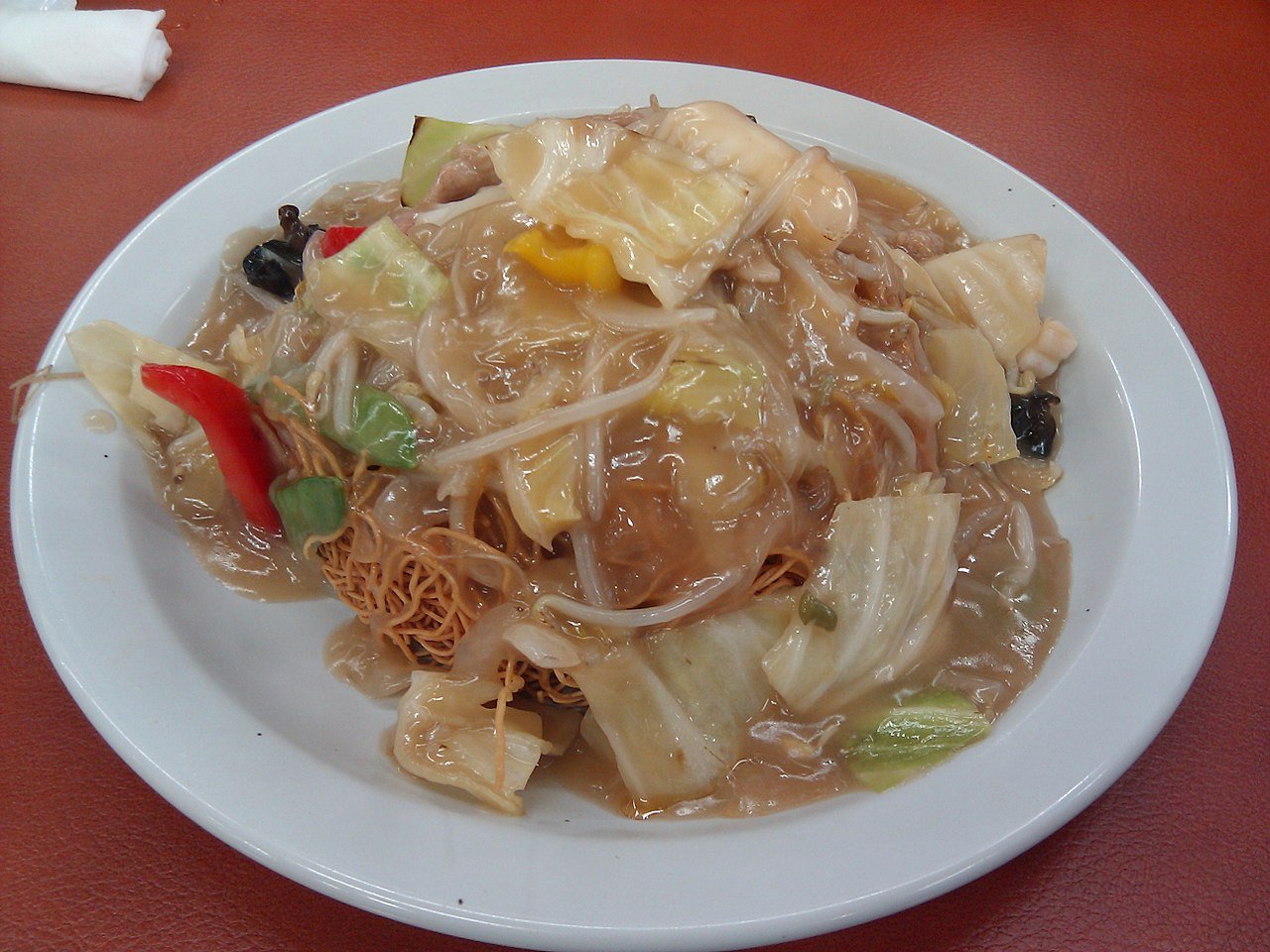
Nagasaki sara udon — crispy golden fried noodles on a white plate, topped with stir-fried seafood, vegetables and thick sauce 3
Sara Udon (皿うどん)
Crispy noodle plate · champon's underrated sibling

If champon is the famous older sibling, sara udon is the one that rewards those who look closer. Thin noodles deep-fried to a shattering gold (or thick noodles stir-fried soft, depending on the shop) are arranged on a plate, then crowned with a glossy stir-fry of seafood, pork, cabbage, bean sprouts and root vegetables in a thick, savoury sauce. The sound of the first chopstick strike tells you whether the kitchen fried the noodles fresh. Eat quickly — the noodles begin absorbing the sauce immediately, softening from the bottom up. Both textures are good, but starting with the crunch is the point.
Where: Shikairou (on the menu alongside champon) · Yosso (吉宗 · old restaurant in Hamacho · traditional thick-noodle style) · most champon restaurants in Nagasaki
Price: ¥900–1,200 per plate
Tip: Ask for extra sauce if you want the noodles soaked through — but order it when you are ready to eat, not ten minutes before.
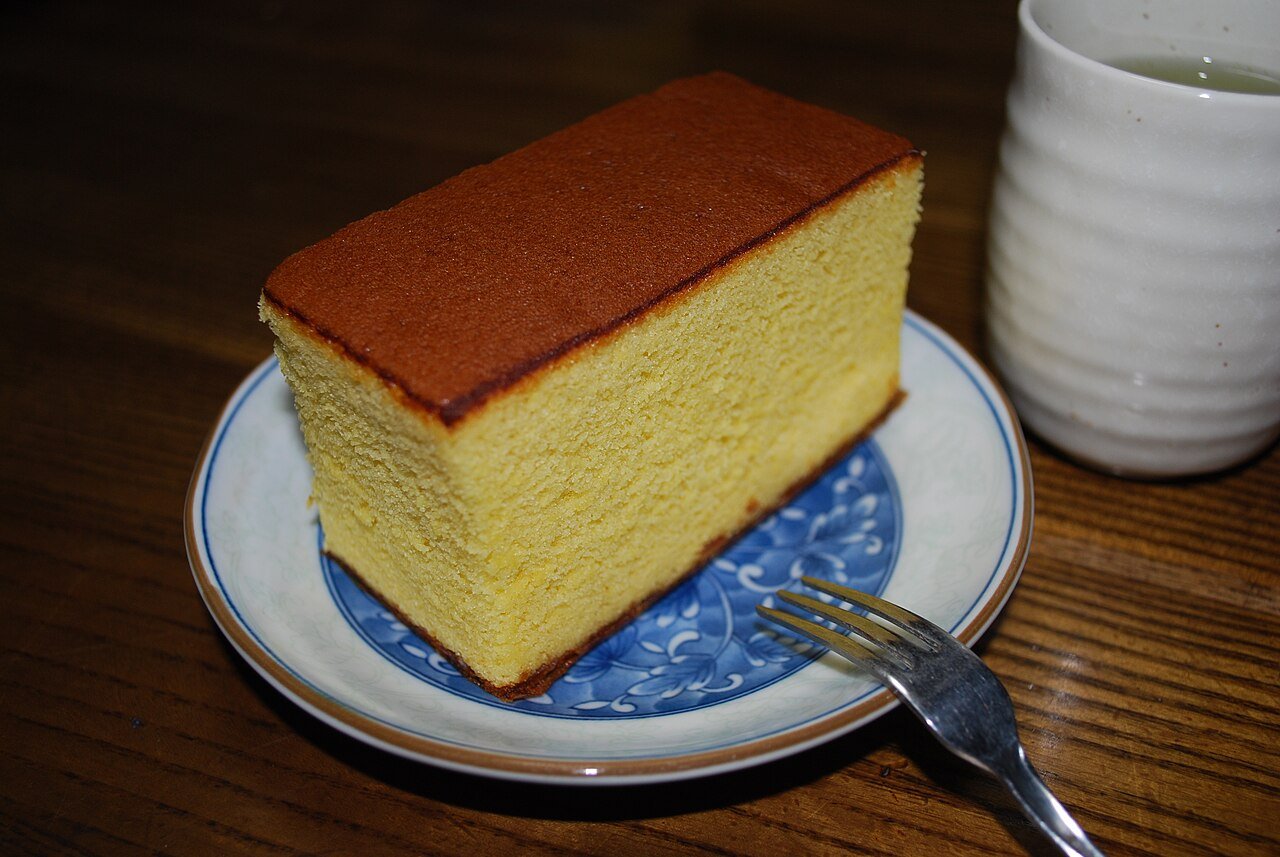
Nagasaki castella sponge cake — dense golden-yellow slices in a wooden box showing the fine crumb and coarse sugar crust on the bottom 4
Castella (カステラ)
Portuguese sponge cake · preserved in Nagasaki for over 400 years

In the late sixteenth century, Portuguese missionaries and traders brought a cake called "Pão de Castela" (bread of Castile) to the port of Nagasaki. Japan did not merely adopt the recipe — it refined it into something the original country never achieved. Generous eggs, cane sugar, wheat flour and a starch syrup; no butter, no leavening agent. The result is a dense, moist yellow sponge with a deep caramelised top crust. The defining signature: coarse sugar crystals pressed into the bottom, which crunch between the teeth on the very last bite. Fukusaya, founded in 1624, still bakes the same recipe in the same style. The smell drifting from the open shop front makes it impossible to walk past.

Main brands: Fukusaya (福砂屋 · est. 1624 · most traditional · coarse-sugar base) · Shooken (松翁軒 · est. 1681 · slightly less sweet) · Bunmeido (文明堂 · est. 1900 · the most widely sold in Japan)
Price: ¥1,800–3,500 per box depending on size and brand
Tip: Buy at the flagship store, not the airport. Freshness matters — and some flavours are only sold in town.
🍱5
Shippoku Ryori (卓袱料理)
Japan-China-Dutch fusion banquet · served at a red lacquer round table

Shippoku ryori translates loosely as "table cooking" — but the experience is far more layered than the name suggests. Fifteen to twenty dishes arrive on a round red lacquer table in the Chinese style: clear ohire soup made from sea bream and mushroom in the Japanese tradition; braised pork belly (toubani); sashimi; tempura with Nagasaki's own seasoning; and a "basti" lattice pastry inherited from Dutch traders. No head of the table, no foot — everyone seated equally, sharing from communal plates. This communal format reflects Nagasaki's four-century tradition of welcoming strangers from every direction. It is expensive, but for a special meal it has no equal in Japan.
Where: Kagetsu (花月 · 2-1 Maruyama-machi · est. 1642 · advance booking required) · Hamakatsu (浜勝 · more accessible price point)
Price: ¥5,500–8,000 per person (standard) · ¥10,000–20,000 per person (premium)
Note: Reservations are always required. Book one to two weeks ahead during peak season or Golden Week.
Nagasaki Chinatown entrance gate in red and gold, with restaurant signs lining both sides of the narrow pedestrian street 6
Fresh Seafood & Chinatown Snacks
長崎中華街 · Japan's oldest Chinatown + daily catch from Nagasaki Bay

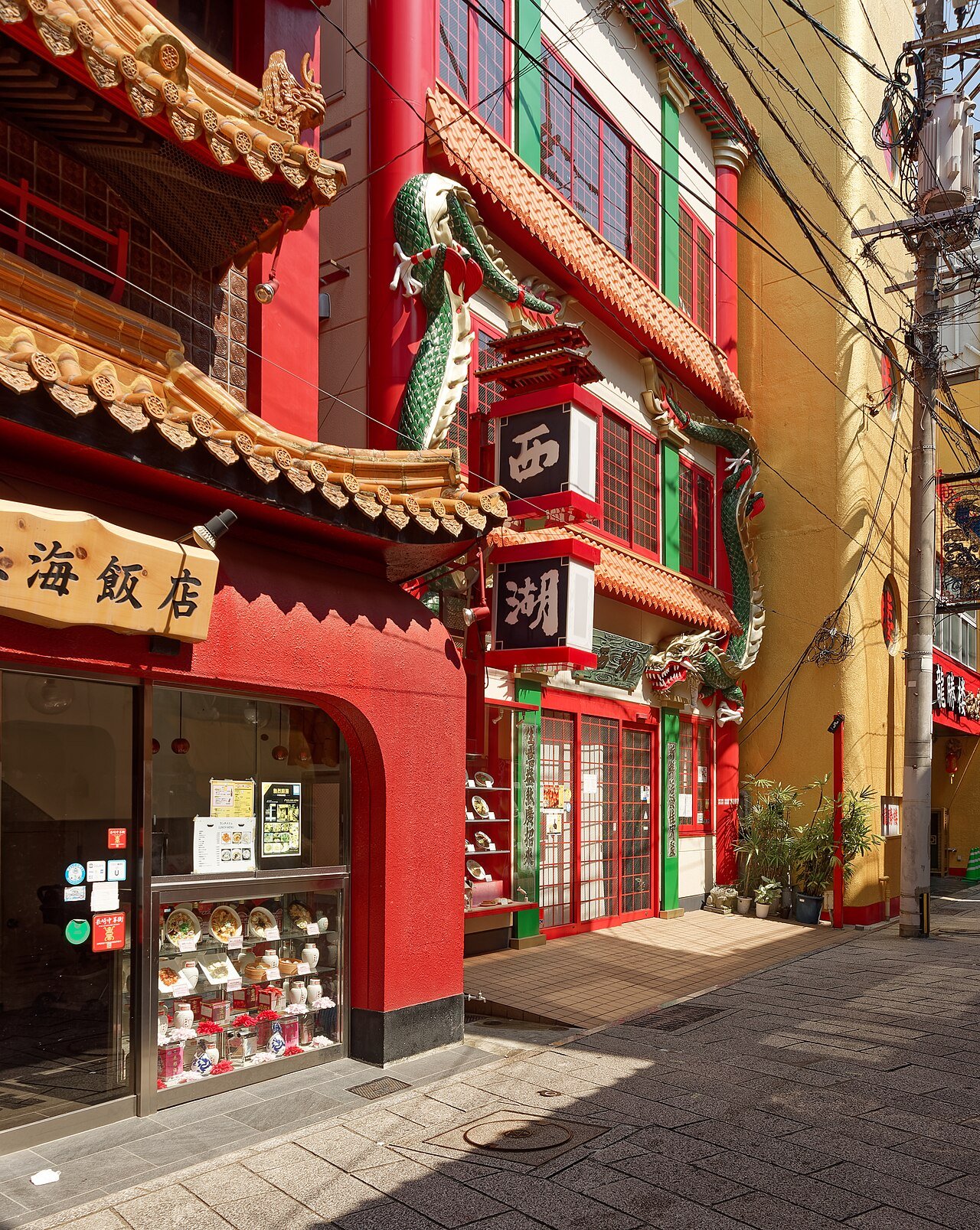
Nagasaki is flanked by ocean on nearly every side, and the daily seafood at izakaya restaurants in the Hamamachi district reflects that. Look for aji (horse mackerel) sashimi, soft-shell crab Nagasaki-style, and whole squid grilled over charcoal — nothing is frozen, everything is briny-sweet. Nagasaki Chinatown, the oldest in Japan, runs along just two short streets, but the stalls and shops pack in more flavour per metre than almost anywhere. Try the oversized pan-fried gyoza, battered and deep-fried shrimp parcels, and Chinese-Japanese hybrid sweets you will not find in any other Chinatown in the country.

Seafood: Hamamachi izakaya district, evenings — ¥1,500–4,000 per person
Chinatown: Tram to Shinchi Chinatown stop · open daily approx. 10:00–21:00
Price: Street snacks ¥150–600 per piece · sit-down meals ¥1,200–2,500 per person
Food Neighbourhoods

Where to Go Based on What You Want

Nagasaki is compact and tram-friendly — knowing each area's strength lets you plan meals without backtracking.

Chinatown (新地中華街)
Tram lines 1/5 · Shinchi Chinatown stop · 2 min walk

Japan's oldest Chinatown — two short streets packed with restaurants, pastry shops and street food stalls. Iwasaki Honpo's flagship kakuni manju is here, and several classic champon restaurants are within a five-minute walk. Best as a morning or midday food walk.

Best for: Kakuni manju · champon · Chinatown snacks · Hours: 10:00–20:00
Hamamachi (浜の町)
Tram lines 1/3 · Hamacho stop · shopping and dining district

The main shopping and eating street of central Nagasaki. Yosso, a long-running restaurant famous for sara udon and classic Japanese food, is here. Izakaya restaurants line the side streets with fresh daily seafood on the board. Best for dinner and browsing souvenir shops.

Best for: Sara udon · fresh seafood · evening izakaya · Hours: Dinner 18:00–23:00
Glover Garden Area (グラバー園)
Tram line 5 · Ouratenshudoshita stop · 10 min uphill walk

The hillside Western-heritage district where Shikairou sits just below Glover Garden. The harbour views from Shikairou's upper floors over a champon lunch are among the best in the city. Castella shops and souvenir stalls line the pedestrian slope all the way up.

Best for: Champon at Shikairou · castella · Hours: Lunch 11:30–15:30
Maruyama (丸山)
Near Hamacho · historic entertainment and dining quarter

Nagasaki's old entertainment district from the Edo period. Kagetsu, one of the oldest surviving shippoku ryori restaurants in the world, is here. The setting — a traditional ryotei with wooden corridors and garden views — puts you as close as possible to the feeling of dining as an Edo-era merchant at Dejima.

Best for: Shippoku ryori · traditional ryotei atmosphere · Hours: Advance booking required
One-Day Eating Route

How to Eat Nagasaki in a Single Day

Hit all six dishes without covering more than a few tram stops — this route covers the whole city by evening.

08:30
Morning — First slice of castella Head to Fukusaya or Bunmeido when they open. Try a single slice with tea (¥200–350). Look for the coarse sugar crystals at the base — that is what separates the original from every imitation.
10:30
Mid-morning snack — Hot kakuni manju at Iwasaki Honpo Walk to the Iwasaki Honpo branch near Chinatown. Order one bun (¥280) and eat standing in front of the steamer. Ask for the pickled vegetable — the sharp crunch cuts through the rich pork perfectly.
12:00
Lunch — Champon at Shikairou with a harbour view Tram to Ouratenshudoshita, then walk down to Shikairou. Request a window seat. Order the champon lunch set (¥1,650 with gyoza and soup). On a clear day the view across Nagasaki Bay is free with every bowl.
15:00
Afternoon — Chinatown street food loop Stroll Chinatown. Graze on pan-fried gyoza (¥200), battered shrimp parcels (¥300) or whatever the stalls are making. Keep it light — dinner is coming.
18:30
Dinner — Sara udon and fresh seafood at an izakaya Walk into any izakaya in the Hamamachi district. Order sara udon (¥1,000) and whatever fresh seafood is written on the board. Nagasaki izakaya stay lively well into the night — no need to rush.
Iconic Shops

Places Worth Queuing For

Restaurants and shops that Nagasaki has recommended to visitors for centuries.

1
Shikairou (四海楼)
The birthplace of Nagasaki champon · open since 1899

This is less a restaurant than a living museum. The free Champon Museum on the second floor traces the dish's origins and the city's culinary history. Floors four and five are the dining room, with floor-to-ceiling windows over Nagasaki Bay. Both champon and sara udon are on the menu, with English-language menus available. Go on a clear day for the view.

Address: 4-5 Matsugaemachi, Nagasaki · Tram to Ouratenshudoshita, 5 min walk
Hours: 11:30–15:30 / 17:00–20:00 · Price: ¥950–1,650 · Credit cards accepted
2
Iwasaki Honpo (岩崎本舗)
The name for kakuni manju in Nagasaki · near Chinatown entrance

Ask any local where to get kakuni manju and the answer is Iwasaki Honpo. The braised pork belly is cooked for hours, the buns steamed fresh throughout the day. Branches across the city — including one at Glover Garden and one at the airport — but the freshest product comes from the in-city stores. Available as ready-to-eat or souvenir gift boxes.

Main branches: Near Shinchi Chinatown tram stop · Glover Garden · Nagasaki Airport
Hours: approx. 09:00–18:00 · Price: ¥250–350 per bun · PayPay and cards accepted
3
Fukusaya (福砂屋)
The most traditional castella recipe · founded 1624

If you are only buying castella from one place, make it Fukusaya. The recipe has not changed in four hundred years. The coarse sugar crystals pressed into the base are their trademark — other shops cannot replicate it. The cake is moister and less sweet than modern competitors. Keep at room temperature for up to five days.

Flagship: 3-1 Funairi-machi, Nagasaki · Tram to Niishima stop, 2 min walk
Hours: 08:30–18:00 · Price: ¥1,836–3,240 per box depending on size
FAQ

Questions Visitors Ask Before They Eat

What is the difference between champon and sara udon?
Champon is a hot soup — thick wheat noodles cooked in a milky white broth made from pork and chicken bones, loaded with pork, seafood and vegetables. Sara udon is a dry plate dish: the noodles are either deep-fried until crispy (thin sara udon, the most popular) or stir-fried soft (thick sara udon), then topped with a stir-fry of seafood, meat and vegetables in a thick glossy sauce. Both originate from Chinese cuisine in Nagasaki. Prices are similar at ¥900–1,300 per serving. Most restaurants that serve one also serve the other — trying both in the same meal is very reasonable.
Where can I buy kakuni manju in Nagasaki?
The most recommended shop is Iwasaki Honpo (岩崎本舗), with branches near the Shinchi Chinatown tram stop (about 2 minutes on foot), inside Glover Garden, and at Nagasaki Airport. Price is around ¥250–350 per bun. Other stalls in Chinatown also sell them, often straight from bamboo steamers. Eat fresh and hot — the fluffy bun loses its texture once it cools down.
Which castella brand is best in Nagasaki?
The three historic brands locals recommend are Fukusaya (founded 1624, the most traditional recipe — look for the coarse sugar crystals on the bottom), Shooken (founded 1681, slightly less sweet and softer crumb), and Bunmeido (founded 1900, the most widely distributed nationally). Prices range from ¥1,800–3,500 per box. Buying at the flagship store gives you fresher cake than airport branches, and some flavours are only sold in-store.
How much does shippoku ryori cost and do I need to book in advance?
Shippoku ryori is a ceremonial feast served on a red lacquer round table. Standard sets start at around ¥5,500–8,000 per person; premium courses run ¥10,000–20,000. Advance reservations are always required. Well-known venues include Kagetsu (花月, est. 1642), regarded as one of the oldest surviving shippoku restaurants, and Hamakatsu for a more accessible entry price. During cherry blossom or Golden Week, book one to two weeks ahead.
Do Nagasaki restaurants accept credit cards, or do I need cash?
Street stalls and small vendors in Chinatown are mostly cash only. Iwasaki Honpo and Shikairou now accept credit cards and PayPay. Mid-range and upscale restaurants, including shippoku ryori venues, generally accept international Visa and Mastercard. Carrying ¥3,000–5,000 in cash is wise for Chinatown snacks and small sweets shops throughout the day.