From the black castle reflected in its moat at first light, to a steaming bowl of buckwheat soba in a 200-year-old kura warehouse, and an alpine valley so clear the water looks painted — this plan works whether you have one full day or two.
Here's the honest answer: one full day is genuinely enough to see Matsumoto's main attractions without feeling rushed — the castle, Nawate frog street, Nakamachi kura district, Kaichi School, and a proper Shinshu soba lunch. You will not be scrambling.
But Matsumoto has a secret: it sits within an hour and a half of two of Japan's most spectacular day-trip destinations. Kamikochi is a car-free alpine valley in the Japan Alps where the Azusa River runs emerald-green past glacier peaks. Daio Wasabi Farm in Azumino is the largest wasabi farm in Japan, fed by snowmelt channels cold enough to keep your hand in for only a few seconds. Either one justifies a second day.
Getting here from Tokyo: the Limited Express Azusa from Shinjuku Station takes around 2.5 hours and costs approximately ¥6,800. The views through the window become seriously good about 45 minutes before arrival. Budget travellers can take the overnight highway bus for ¥3,500–5,500, arriving early morning.
Golden morning light on the castle moat · the frog street · kura warehouses turned craft cafes · Shinshu buckwheat noodles for lunch — a day that earns its keep
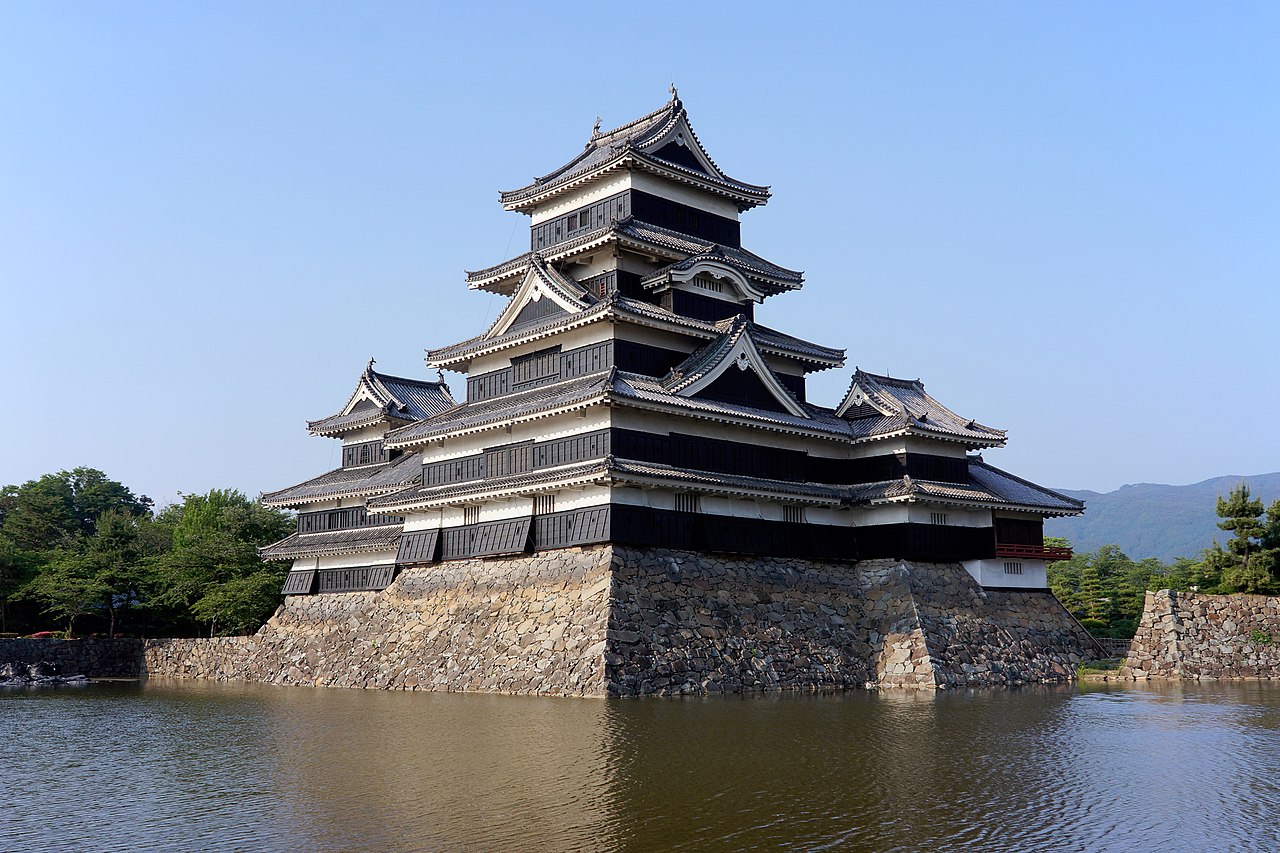
Arrive at the castle gates right when they open at 08:30, before the first tour buses from Nagoya and Tokyo pull in. Matsumoto Castle was built in 1504 and is the oldest surviving five-story, six-floor wooden castle in Japan. Its jet-black exterior against the moat and the white snow peaks behind has earned it the nickname "Karasu-jo" — the Crow Castle.
Remove your shoes before climbing the steep wooden stairs through all six floors. The top floor looks directly out over the Japan Alps in every direction; on a clear day the peaks are impossibly close. Allow 60–90 minutes inside. The moat reflection shot is best before 09:00 when the surface is still.
Walk south from the castle and cross the Metoba River to reach Nawate Street, a short pedestrian lane where every shop sign, souvenir and lucky charm features a frog. The legend: frogs living in the Metoba River once drove away a plague of snakes that threatened the town, so the frog became the city's guardian symbol. The street is relaxed, genuinely local, and free to wander. Good spot for a quick snack from one of the food stalls.
Lunch in Matsumoto means soba — specifically Shinshu soba (信州そば), made from buckwheat grown in the cold, clean air of Nagano Prefecture. The noodles are grey, firm, and earthy in a way that makes the version you get in a plastic packet taste like a different food. Well-regarded options include Nomugi, tucked down a side alley off Nakamachi Street, and Kobayashi Soba at 4-7-9 Nakamachi. Budget ¥900–1,500 per person, add ¥400–700 for a small tempura set.
After lunch, walk Nakamachi Street (中町通り) — a row of old kura storehouses with black-and-white plastered walls that were originally built to protect silk and goods from fire. Today they hold craft cafes, ceramics galleries, sake shops, and independent boutiques. The pace here is unhurried. No one is trying to sell you something loudly.
Walk about 10 minutes north of the castle to reach Kaichi School, one of Japan's first public primary schools, built in 1876. The building blends Western and Japanese architectural styles in a way that captures perfectly how Japan's Meiji era looked outward — a National Important Cultural Property and genuinely fascinating for what it says about a country in the middle of reinventing itself.
Nearby, the Matsumoto City Museum of Art houses a significant collection of work by Yayoi Kusama, the polka-dot artist who was born in Matsumoto. The yellow pumpkin sculpture outside the entrance is one of the most photographed spots in the city.
End the day at Asama Onsen, a small hot-spring district just 3 kilometres from Matsumoto Station. Take Bus Line 32 from the station's East Exit — about 20 minutes, ¥240 one way. The public bath Hot Plaza Asama is open 10:00 to midnight, costs ¥680 for adults, and you can soak as long as you like.
If you want to try the local specialty, basashi — thinly sliced raw horse meat served as sashimi — several restaurants in Asama and central Matsumoto serve it. The flavour is cleaner and lighter than beef sashimi, with a firm texture.
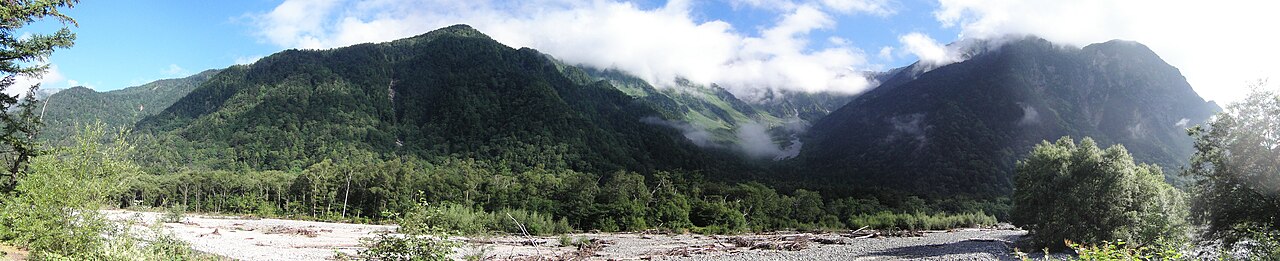
Emerald river water between white birch trees · glacial peaks in every direction · the sound of nothing but wind and water — many visitors say Day 2 in Kamikochi ends up being the best day of their entire Japan trip
Head to Matsumoto Station early and take the Matsumoto Electric Railway (Kamikochi Line) to the end of the line at Shin-Shimashima Station — 30 minutes, ¥700. From there, board the Alpico bus directly into Kamikochi, another 60 minutes, ¥1,600 one way. Total journey time is about 1.5 hours.
Important: Since 2025, every Alpico bus into Kamikochi requires advance seat reservations for both outbound and return trips. Book through the Alpico website or at the counter inside Matsumoto Station. Kamikochi is only accessible from late April to mid-November.
Step off the bus at Kamikochi Bus Terminal and breathe in — the air is noticeably cooler and cleaner than anywhere in the lowlands, typically 5–10 degrees colder than Matsumoto. Walk five minutes to Kappa-bashi bridge (河童橋), where the Azusa River flows beneath a wooden suspension bridge in a shade of green that looks artificially bright. Behind the bridge, Yake-dake volcano and Yari-ga-take peak frame the horizon.
Follow the Azusa River Promenade westward along the left bank — the path is completely flat and wide, no hiking experience needed. About 1.5 kilometres brings you to Lake Taisho (大正池), a still pool formed by a 1915 volcanic eruption that drowned a forest. Dead trees stand silver in the water against the mountains. The effect is genuinely otherworldly.
Take the opposite bank on the return for a slightly different view. Lunch is available at restaurants near Kappa-bashi — mountain soba or curry rice after a cold-air walk is a reliable choice.
Board your pre-booked return bus from Kamikochi Bus Terminal around 15:00–15:30. Transfer at Shin-Shimashima to the train back to Matsumoto, arriving around 17:30. That leaves a comfortable window for dinner in the city — another bowl of soba, or an izakaya for something more casual before your onward train.
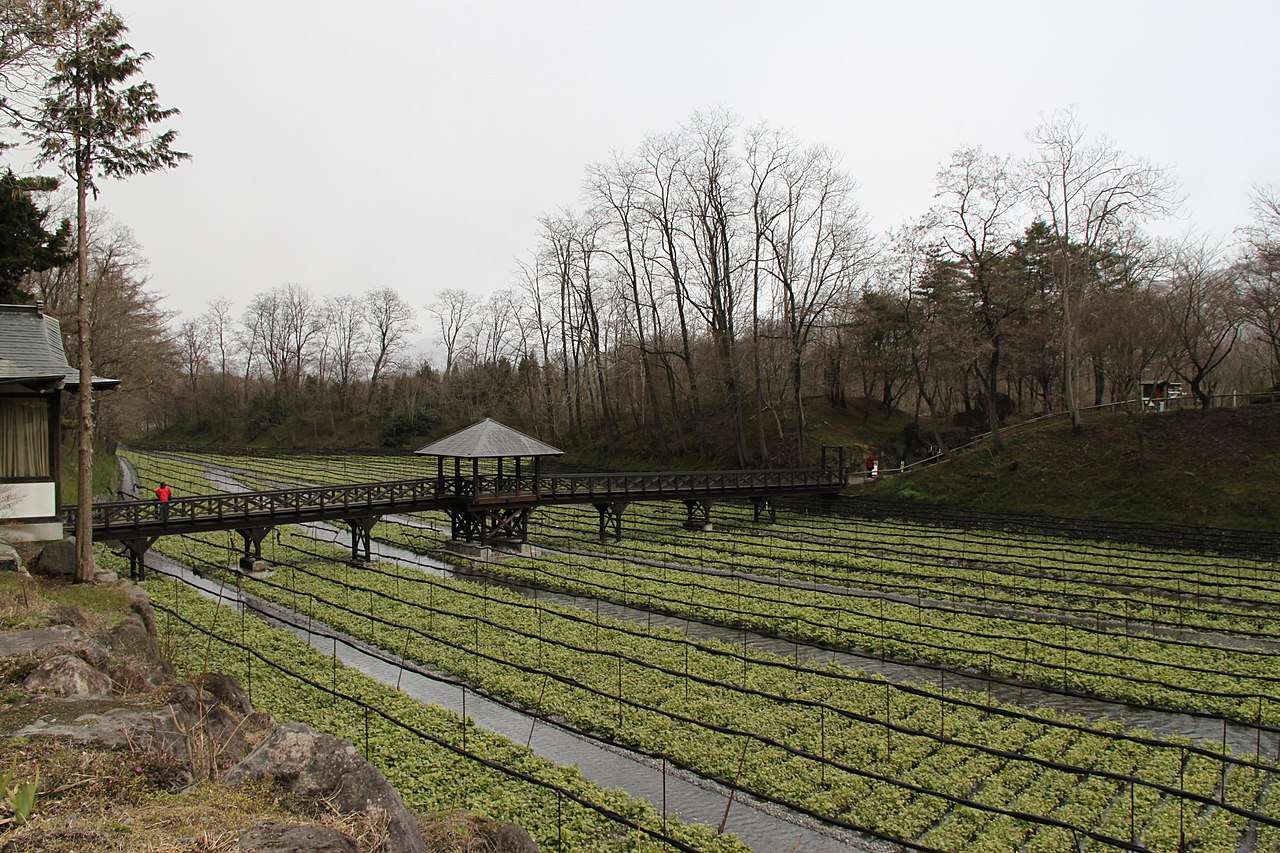
Ice-cold channels carrying snowmelt from the Alps · bright green wasabi plants growing in the current · a soft-serve ice cream that makes you think you've been eating fake wasabi your entire life · a gentler day, ideal if Kamikochi is closed or your legs need a rest
Board the JR Oito Line from Matsumoto Station to Hotaka Station (穂高駅) — about 30 minutes, ¥350. Trains run every 30–60 minutes. From Hotaka Station, the wasabi farm is a 10-minute taxi ride (approximately ¥2,000 one way). Between late April and early November, the Azumino Loop Bus connects Hotaka Station to the farm directly for ¥600 per ride, or ¥1,000 for an all-day pass.
Daio Wasabi Farm is the largest wasabi farm in Japan. Water from the Japan Alps filters through gravel to emerge at a constant 13°C year-round — the exact temperature wasabi requires to grow. Bright green wasabi plants carpet the channels in dense rows that look almost fluorescent against the black soil.
The entry is free. Walk the farm paths, watch workers harvesting rhizomes by hand, and stop at the farm shop to try things you cannot get anywhere else: wasabi soft-serve ice cream (sharp, fragrant, nothing like the paste), fresh wasabi grated tableside, wasabi soy sauce, and wasabi rice crackers. The flavour of real wasabi is bright and floral, fades quickly, and does not burn the way the fake version does.
The farm also has rowing boats for hire on the central pond, a small Shinto shrine, and riverside picnic areas. It is a genuinely peaceful place — popular in summer but never chaotic in the way city attractions get.
Return to Hotaka Station and take the JR Oito Line back to Matsumoto, arriving by about 15:30. That gives you a relaxed afternoon: a coffee in a Nakamachi kura cafe, a browse of dried soba and fresh wasabi rhizomes as gifts to take home, or one last soak at Asama Onsen before your evening train.
The area around Matsumoto Station is the most convenient base — everything in Day 1 is walkable or one bus ride away. Mid-range hotels run ¥7,000–14,000 per night. If you want to sleep in an onsen, Asama Onsen has traditional ryokan with private hot-spring baths, at ¥12,000–25,000 per night. See all accommodation options in the Matsumoto city guide.
The Town Sneaker Bus runs three loops around the main sightseeing areas. ¥200 per ride or ¥500 for a day-pass that also discounts castle admission by 10%. The central city is walkable from the station in about 15 minutes to the castle. Many hotels and guesthouses near the station rent bicycles for ¥500–1,000 per day — a great option for a dry day.
Limited Express Azusa from Shinjuku Station, Tokyo: ~2.5 hours, ~¥6,800. Trains run every 1–2 hours. Book in advance via Ekinet. From Nagoya: Limited Express Shinano, ~2 hours, ~¥5,500. Overnight highway bus from Shinjuku: ~3.5 hours, ¥3,500–5,500 — arrives early morning, frees up a day.
| Item | Budget | Mid-range | Comfortable |
|---|---|---|---|
| Hotel (per night) | ¥4,000–7,000 (~$27–47) |
¥8,000–14,000 (~$54–93) |
¥15,000–30,000+ (~$100–200+) |
| Food (3 meals) | ¥1,500–2,500 (~$10–17) |
¥3,000–5,000 (~$20–33) |
¥5,000–10,000 (~$33–67) |
| Admission tickets | ¥1,200 (castle only) |
¥2,000–3,000 (castle + school/museum) |
¥3,000–5,000 (+ onsen) |
| Local transport | ¥500–800 (Town Sneaker pass) |
¥700–1,200 (bus + occasional taxi) |
¥1,200–3,000 (+ bicycle rental) |
| Daily total (approx.) | ¥7,200–11,500 (~$48–77) |
¥13,700–23,200 (~$91–155) |
¥24,200–48,000+ (~$161–320+) |
Exchange rate reference: ¥150 ≈ US$1 · prices approximate for 2025–2026 · Day 2 Kamikochi: add ¥4,600 transport