Home Matsumoto Japan Nagano About
Home  ›  Asia  ›  Japan  ›  Matsumoto  ›  Attractions
🏯 Matsumoto Attractions · 2026

Matsumoto is Far More Than a Black Castle
Polka-dot gardens, an Alpine valley, frog-lined streets — snowmelt running through everything

Snowmelt from the Northern Alps runs through every corner of this city. The castle has never burned down and still carries its original timbers. The world's most recognisable living artist grew up here. Matsumoto rewards the visitor who stays longer than the castle queue.

Why Visit

A City Where Culture Runs as Deep as the Snowmelt

A lot of visitors treat Matsumoto as a stopover on the way to Kamikochi. That is understandable — but anyone who gives the city two full days tends to come away saying they understood Japan a little better than they did before. Consider what is here: a castle whose keep has stood since the late 16th century without being torn down or rebuilt, a garden that exists only because the artist Yayoi Kusama was born on a quiet Matsumoto street and went on to put her polka dots on everything, and a high Alpine valley that receives no private cars and is sealed by snow for five months of the year.

We have put together 9 experiences that cover Matsumoto honestly — what each one actually feels like, what it costs, how to get there, and a 1-day and 2-day route we have worked through rather than invented.

Top Sights

9 Experiences Worth Every Minute

Ordered by what visitors talk about most after they leave
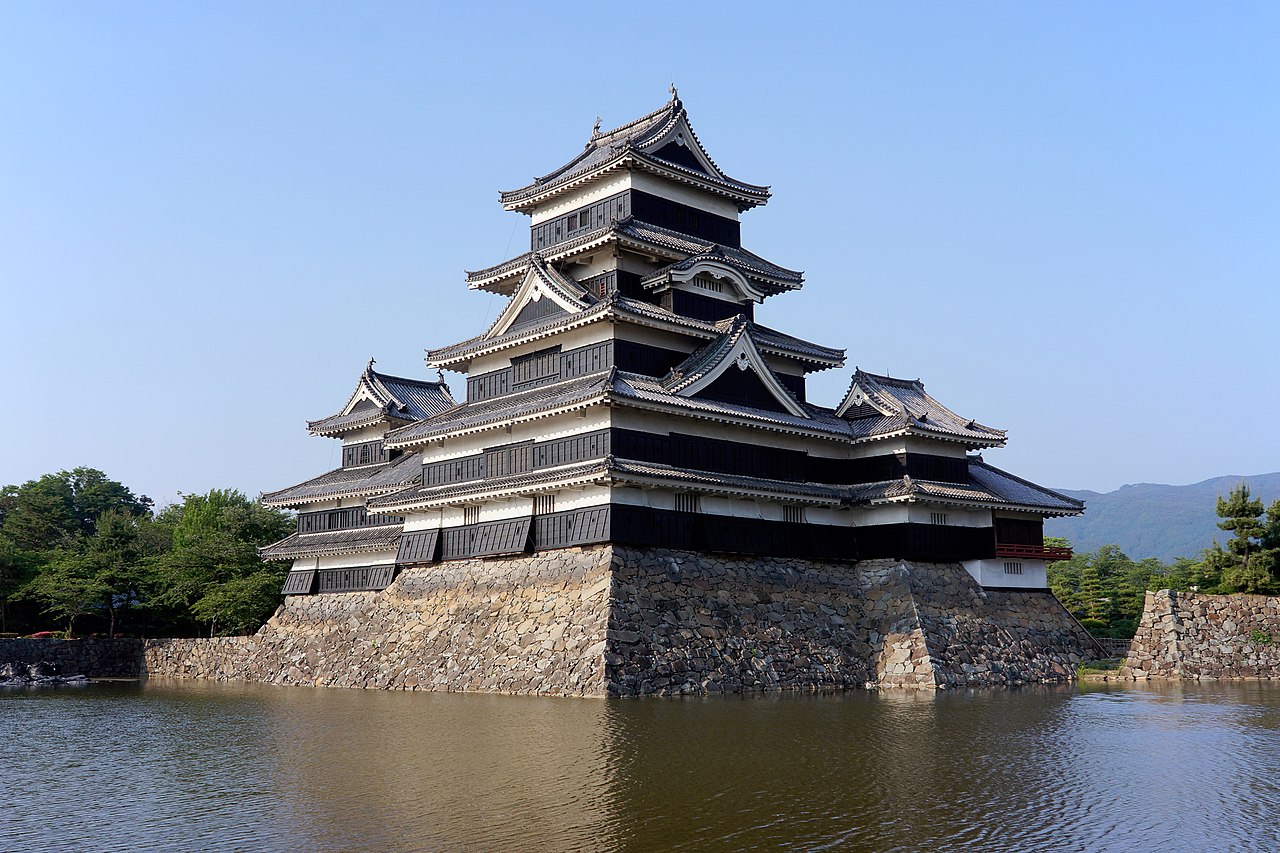
Matsumoto Castle National Treasure — six-storey black keep reflected in the clear moat, Northern Alps as backdrop 1
Matsumoto Castle (松本城) — National Treasure
One of only five National Treasure castles in Japan · Original timbers since the late 16th century

Japan has twelve original castle keeps still standing; five of those are designated National Treasures. Matsumoto is among them — and unusually, it has never been destroyed by fire, earthquake, or war. The keep's six storeys of black-lacquered wood and white plaster have stood since the Sengoku period, and the interior shows it: steep wooden stairs you grip with both hands, narrow gun-loops still faintly stained with old powder smoke, and a final observation floor where the Northern Alps fill three sides of every window. Outside, the moat holds swans and koi carp. The reflection of the black tower in still water on an early morning, with a faint mist, is one of those images that turns up in guidebooks because it genuinely looks like that.
Admission: ¥1,200 e-ticket · ¥1,300 at the gate · Children 6–15 discounted · Under 5 free
Hours: 8:30–17:00 (last entry 16:30) · Golden Week / Obon extended to 8:00–18:00
Access: 20-min walk from Matsumoto Station · Town Sneaker Bus ¥200 to Shiyakusho-mae
Tip: During Golden Week and Obon queues to enter the keep itself can hit two hours. Book an e-ticket in advance on Klook — you still queue for the keep, but you skip the ticket desk entirely — see tickets on Klook →
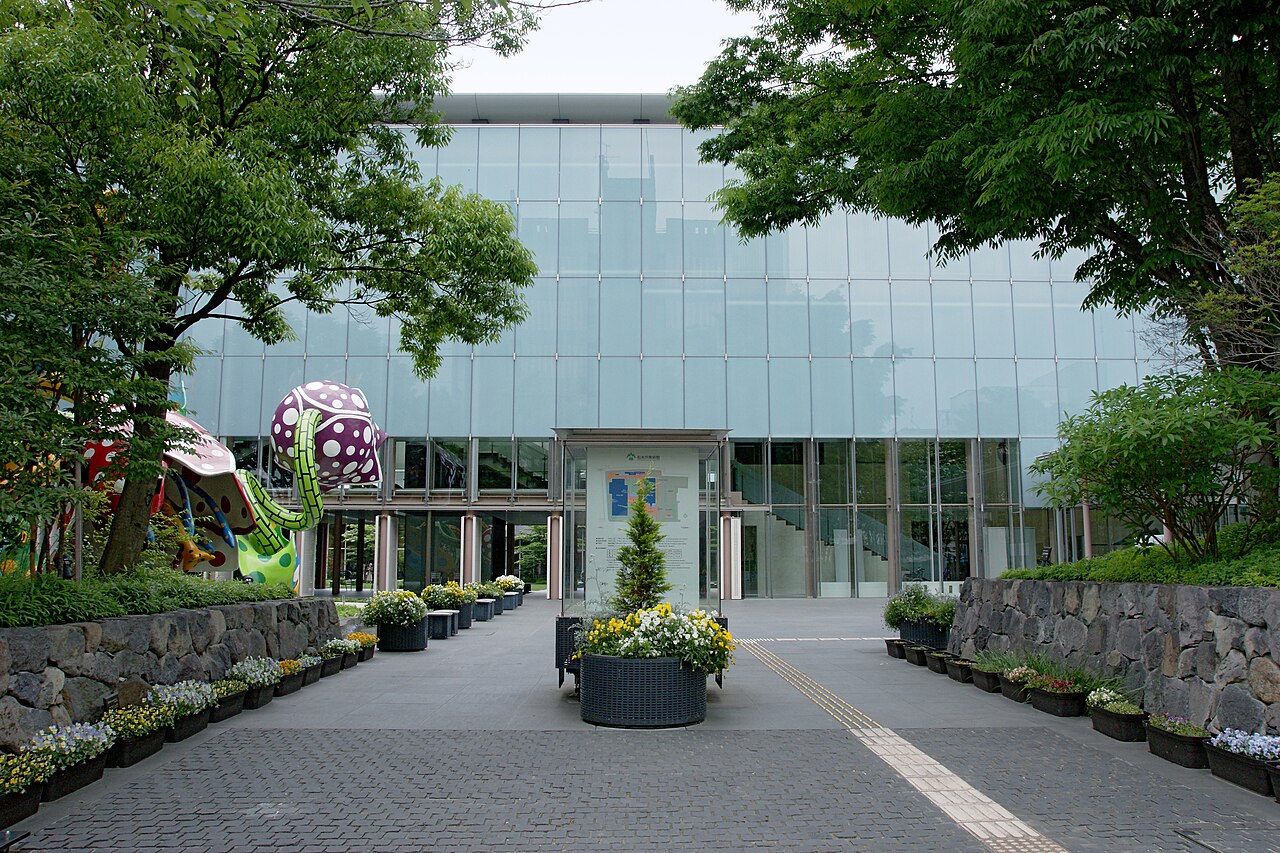
Matsumoto City Museum of Art — Yayoi Kusama's polka-dot pumpkin sculptures in the outdoor garden 2
Matsumoto City Museum of Art — Kusama's Polka-Dot Garden
Yayoi Kusama was born in Matsumoto · Permanent collection of her work plus rotating shows

The reason to see Kusama's work here rather than in Tokyo or New York is context. The museum sits in the city where she grew up, and the permanent collection tells the story of how a girl from a Matsumoto seed-merchant family started drawing dots as a child and eventually put them on everything from pumpkins to infinity rooms. The outdoor garden — oversized yellow dot pumpkins, orange polka-dot pillars, red polka-dot benches — can be admired from outside the fence without buying a ticket. Inside, the permanent Kusama galleries are supplemented by rotating exhibitions from other Shinano-born artists. The museum is 20 minutes on foot from the castle and makes a natural afternoon second stop.
Admission: ¥800 (¥700 online) · College students ¥400 · High school and under free
Hours: 9:00–17:00 (last entry 16:30) · Closed Mondays
Access: 20-min walk from Matsumoto Station · 5-min walk from the castle
Note: Check the museum's website for the current temporary exhibition before visiting — blockbuster shows draw much larger crowds than the permanent collection alone.
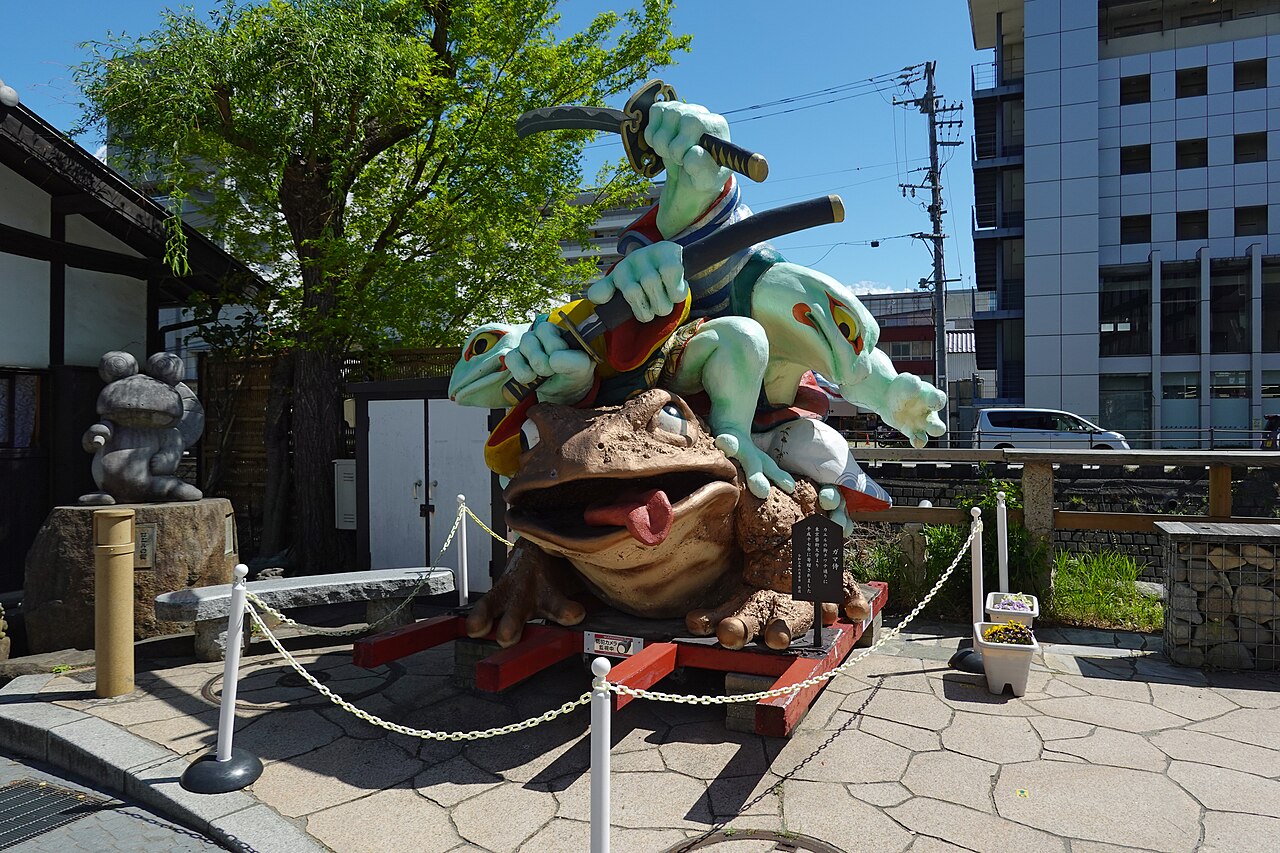
Nawate Street Matsumoto — Edo-era shopping lane lined with frog statues, snack stalls and traditional souvenir shops 3
Nawate Street (縄手通り) — The Frog-Guarded Lane
Edo-period shopping alley · Over 100 frog statues · Taiyaki, fresh udon, senbei rice crackers

Nawate runs parallel to the Metoba River between the station and the castle — about 150 metres of pedestrian lane lined with roughly 50 low-rise stalls and shops. The frog is the symbol of the street because the Metoba used to be full of them, and the locals decided to keep that association: frogs peer out from shop signs, sit on windowsills, and crouch on stone pedestals at regular intervals along the pavement. The merchandise is the kind that locals still buy rather than just visiting tourists: handmade wooden toys, traditional rice crackers, Nagano apple-based sweets, and freshly grilled taiyaki fish-shaped cakes. A bowl of handmade soba or udon costs under ¥1,000 at any of several small restaurants along the lane.
Admission: Free to walk · Most shops open 10:00–18:00
Location: Between Matsumoto Station and the castle · Nakamachi Street is directly across the Metoba bridge
Best time: Mid-morning 10:00–14:00 when most vendors are open
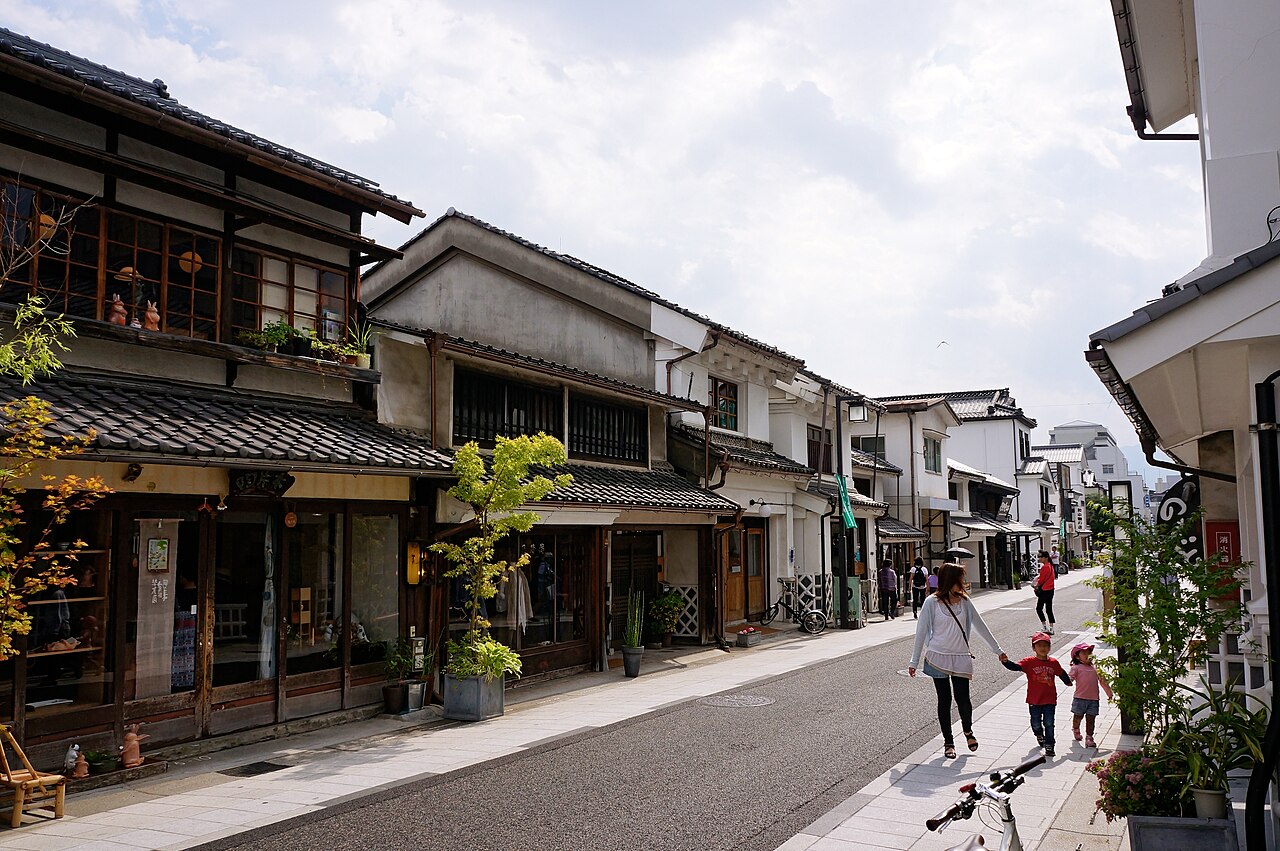
Nakamachi Street Matsumoto — black-and-white Kura warehouse district, converted to galleries and cafes 4
Nakamachi Street (中町通り) — Kura Warehouse District
Former Edo merchant quarter · Black-and-white Kura storehouses · Galleries, lacquerware and indie cafes

Cross the bridge from Nawate Street and the mood shifts. Nakamachi was the commercial centre of Edo-period Matsumoto, and the old storehouses — called Kura — were built with thick plaster walls and heavy wooden shutters to protect goods from fire. Today those same walls house gallery spaces for local craft, lacquerware shops selling Matsumoto temari (hand-wound silk-thread balls), quiet independent cafes with wooden interiors, and a handful of small museums. Where Nawate is lively and slightly carnival-ish, Nakamachi is slower and more considered — the kind of street where you notice details because the architecture asks you to look.
Admission: Free to walk · Shops generally open 10:00–18:00
Location: Across the Metoba River from Nawate · Close to the castle
Look for: Matsumoto temari — hand-wound silk-thread balls, a local craft unique to this city
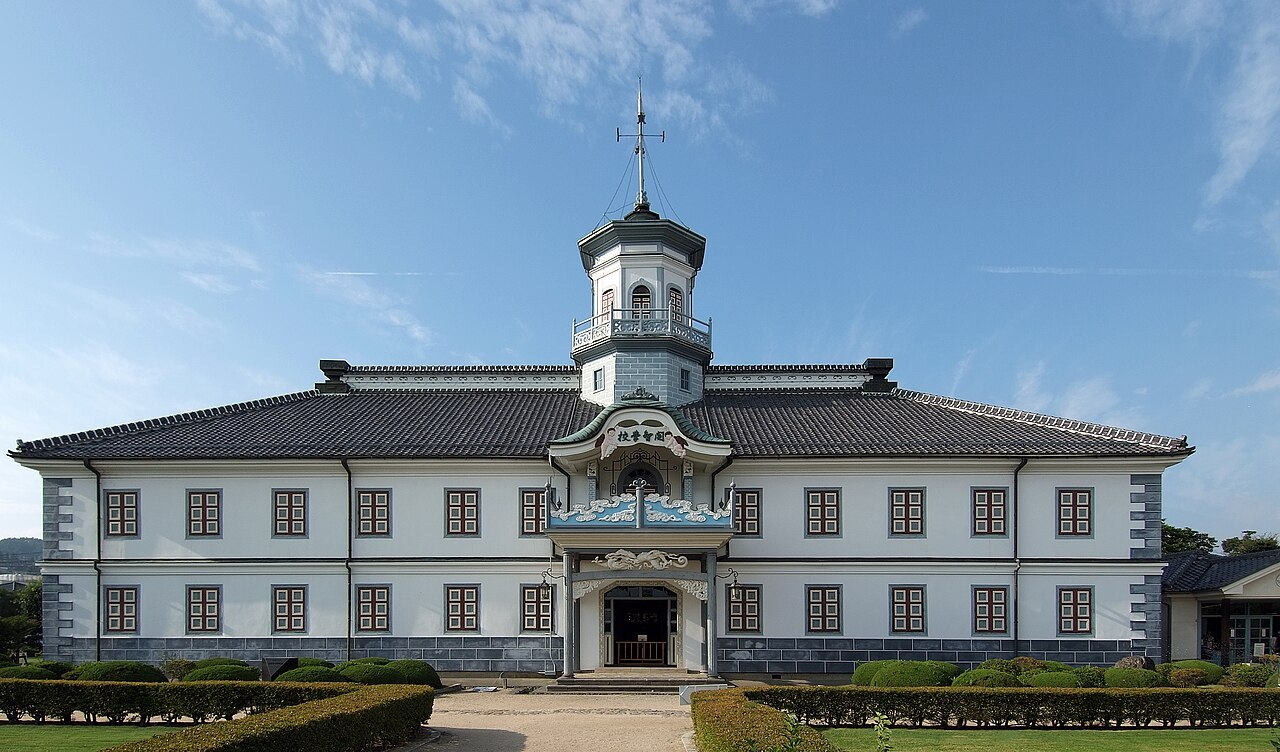
Former Kaichi School (Kaichi Gakko) Matsumoto — white Meiji-era school building with octagonal tower, Giyofu hybrid architecture 1876 5
Former Kaichi School (旧開智学校) — UNESCO World Heritage
Built 1876 · Giyōfū hybrid architecture · UNESCO World Cultural Heritage 2023

The carpenter Rihei Tatebe had never seen Western architecture in person when he designed this building in 1876. He worked from drawings and second-hand descriptions — and the result is entirely its own thing. The front facade carries Romanesque round windows, an octagonal tower, carved plaster angels with trumpets, and around the eaves, Japanese dragons. The building served as an elementary school for 90 years, until 1963. Stepping inside feels like looking at a moment when Japan was deciding what kind of country it wanted to become — rapidly absorbing a foreign visual language without quite completing the translation. The UNESCO designation in 2023 recognised that uniqueness. It is a 10-minute walk from the castle and pairs naturally with a visit.
Admission: ¥500 · Combo ticket with the castle and City Museum saves ¥200
Hours: 9:00–17:00 (last entry 16:30) · Closed Mondays
Access: 10-min walk from Matsumoto Castle
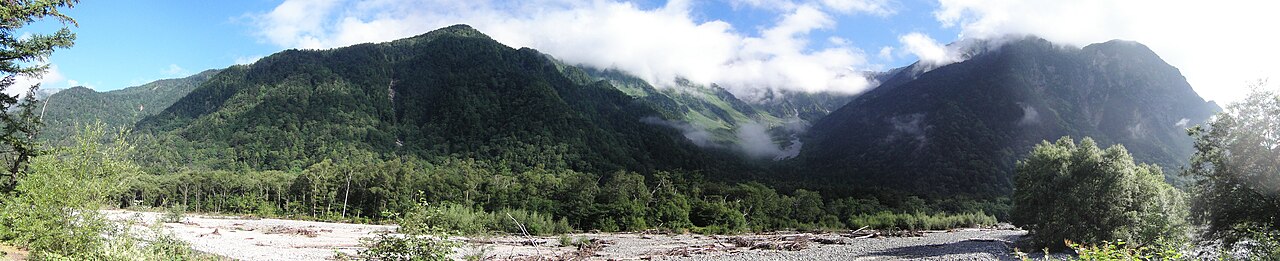
Kamikochi alpine valley (上高地) Chubu Sangaku National Park — Azusa River clear turquoise through the valley, snow-capped peaks 6
Kamikochi Valley (上高地) — Japanese Alps
Open mid-April to 15 November only · No private cars permitted · UNESCO Biosphere Reserve

Kamikochi sits at 1,500 metres inside Chubu Sangaku National Park and receives no private vehicles — the only way in is by reserved bus from Shin-Shimashima Station. The Azusa River runs glacier-turquoise through a wide flat valley floor flanked by peaks reaching 3,000 metres. The standard walk from Taisho Pond to Kappa Bridge and on to Myojin Pond covers roughly six kilometres across mostly flat terrain; it requires no hiking experience and gives you the full scale of the place. Taisho Pond, formed by a 1915 volcanic eruption, holds the drowned trunks of trees still standing — the reflection at dawn is extraordinary. Kappa Bridge is the most photographed spot, directly framing the Hotaka massif. The valley opens in mid-April with snowfields visible on the flanks above, and closes on 15 November each year.
Season: Mid-April to 15 November only · Fully closed in winter
Access: Alpico train Matsumoto → Shin-Shimashima ¥710 (30 min) + reserved bus → Kamikochi ¥3,100 (65 min) · Book buses in advance — mandatory since 2025
Entry: Environmental conservation fee ¥300/person at the checkpoint
Important: Since 2025 all buses require advance reservations in both directions. During Golden Week they sell out days ahead. Book at highway-buses.jp before you travel.
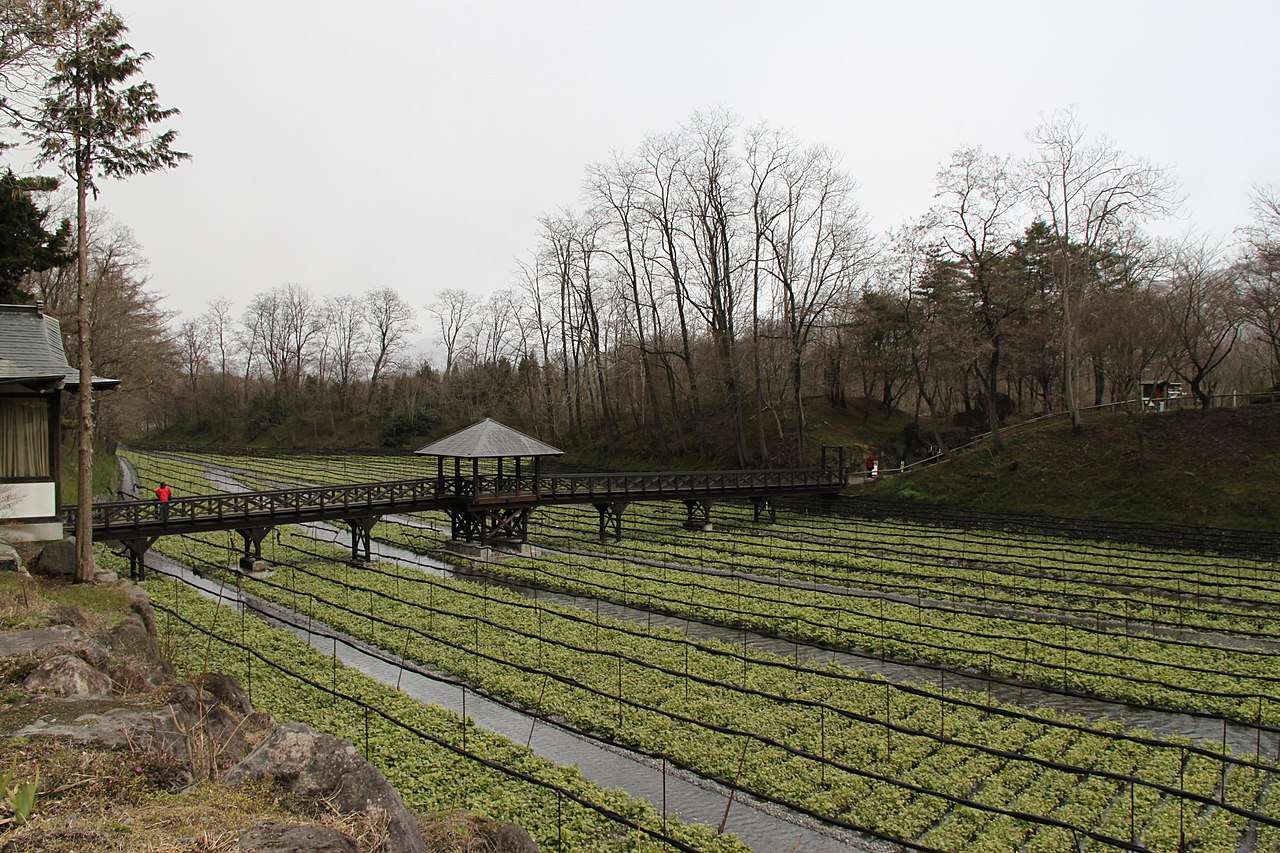
Daio Wasabi Farm Azumino — rows of wasabi paddies fed by snowmelt, wooden waterwheel on clear river, Kurosawa film location 7
Daio Wasabi Farm (大王わさび農場) — Japan's Largest Wasabi Farm
Snowmelt from the Northern Alps · Akira Kurosawa filmed here · Free entry · Wasabi soft-serve ¥350

Most people have no particular expectation when they decide to visit a wasabi farm. What they find at Daio — dense green paddies stretching along the Azusa River, wooden waterwheels turning in crystal-clear current straight off the Northern Alps, and the mountain wall rising behind — is not what they expected. The waterwheels in particular: they appear in Akira Kurosawa's 1990 anthology film "Yume" (Dreams) and have the quality of something that existed before photography. Entry is free. The farm shop sells wasabi in every conceivable form: soft-serve ice cream (sweet heat at ¥350), croquettes, sauces, chocolate, and wasabi shampoo if you want a souvenir. A grating demonstration where you use a traditional sharkskin grater on a fresh wasabi root costs about ¥500.
Admission: Free · Open daily 9:00–17:00
Access: JR Oito Line from Matsumoto to Hotaka Station ~30 min ¥510 · Then cycle (¥500/day rental) 15 min or taxi ~¥1,500
Don't miss: Wasabi soft-serve ¥350 · Fresh wasabi grating demonstration ¥500
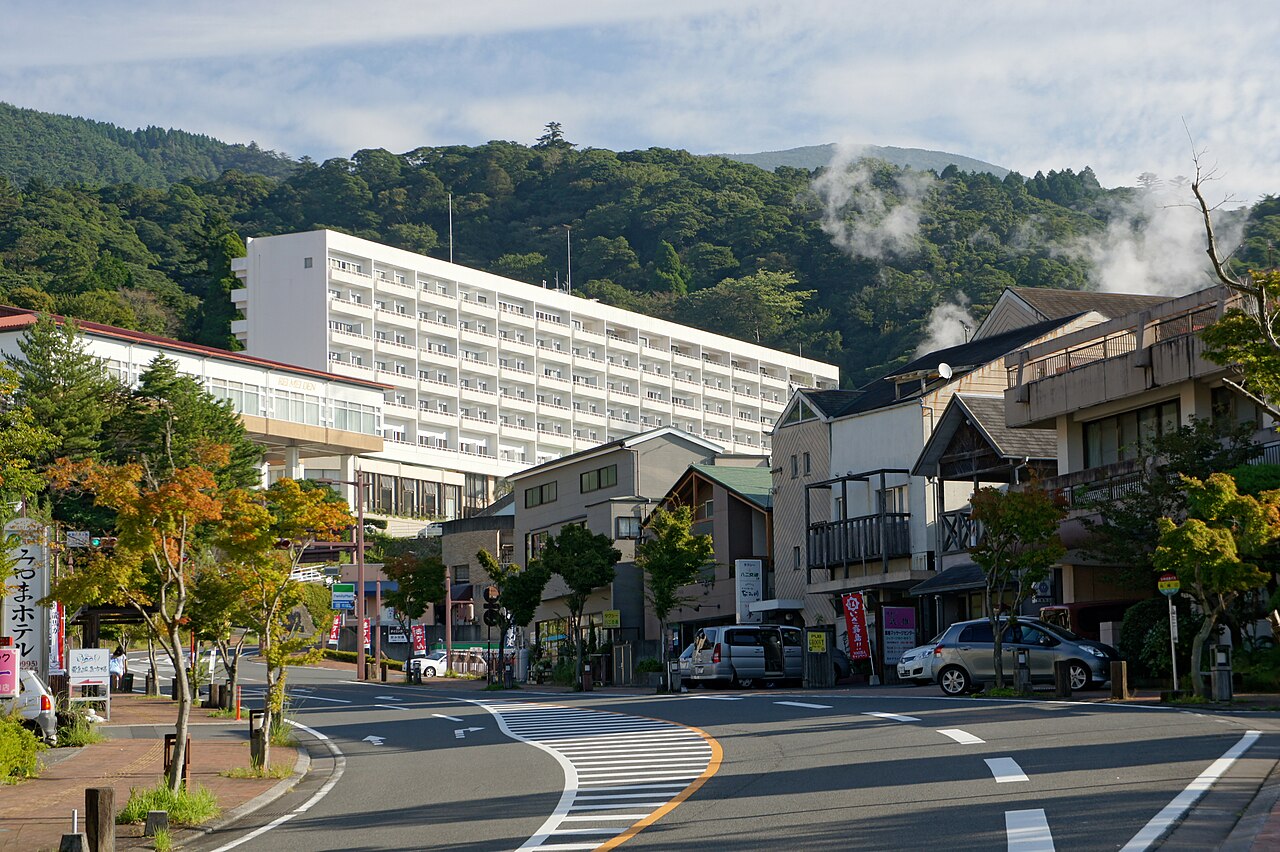
Asama Onsen (浅間温泉) Matsumoto — traditional hot-spring district with old bathhouses used since the Edo period 8
Asama Onsen (浅間温泉) — Samurai Hot Springs
1,300-year-old hot-spring district · 15 minutes from central Matsumoto · Public baths from ¥200

Asama Onsen sits on the lower slopes of the mountains immediately east of Matsumoto and has been in use for roughly 1,300 years. Edo-period records show that feudal lords and samurai came here to recover after campaigns. The water is alkaline and colourless, warmer than it looks, and has none of the sulphur smell common to more volcanic springs. The neighbourhood still functions as an active onsen district rather than a tourist showcase — there are local teenagers soaking after school in the public bathhouses, elderly residents doing their Thursday evening routine, and a few good traditional inns (ryokan) where you can stay overnight. Coming here after a full day walking the castle, the museum and the streets makes the end of the day feel earned.
Public baths: ¥200–500 per session · Generally open 6:00–22:00 (varies by bathhouse)
Access: Alpico bus from Matsumoto Station ~15 min ¥270
Best timing: Late afternoon after the city sights, or early morning before Kamikochi
Matsumoto at night — the city's warm evening atmosphere, lanterns and quiet streets after dark 9
Matsumoto Castle at Night — Free Projection Mapping
December–February each year · 18:00–22:00 · Free · Reflected in the moat

If you are in Matsumoto between December and February, come back to the castle after dark. The annual projection mapping show (2025–2026 runs December through mid-February) throws patterns of gold and Japanese floral motifs onto the black surface of the keep — and that surface then doubles itself in the moat, so the image you see is part castle, part reflection. There is no admission charge and no booking required; you simply walk into the castle park after 18:00. Even outside the projection-mapping season, the keep is lit all year round: the black tower against a dark-blue winter sky, with the moat reflecting it, is worth the walk back from wherever you are eating dinner.

Projection Mapping: December to mid-February each year · 18:00–22:00 · Free, no booking
Year-round: Floodlit keep every night · Best viewed from the eastern moat edge
Tip: The eastern side of the moat (along the road) gives a cleaner reflection than the main entrance side
Plan Your Visit

One Day or Two — How to Use Your Time

The city-centre sights are all walkable. Plan well and one day gets you surprisingly far.

1-Day Route — City Highlights
Start 8:30 · Finish around 18:00

8:30–10:00 Matsumoto Castle — go early to avoid the keep queue · 10:00–11:30 Walk to the City Museum of Art, see the polka-dot garden (free) and decide if you want to enter · 11:30–12:15 Short detour to the Former Kaichi School · 12:15–14:00 Lunch on Nawate Street — taiyaki, handmade udon or soba · 14:00–15:30 Cross the bridge to Nakamachi Street, browse the Kura warehouses, pick up Matsumoto temari as gifts · 16:00–17:00 Optional: Asama Onsen bus for a soak · 18:00+ Return to the castle moat and see it lit up (free)

Budget: ¥3,500–5,000/person (castle + museum + school + food + bus) · Combo ticket for all three sights saves ¥200
2-Day Route — Add the Mountains
Day 2: Kamikochi or the Wasabi Farm

Day 1 Follow the 1-Day Route above. Stay in the city centre. · Day 2 — Kamikochi option: Depart 7:00 from Matsumoto Station → Alpico train → Shin-Shimashima → reserved bus → Kamikochi. Walk Taisho Pond–Kappa Bridge–Myojin Pond loop (4–6 hours). Return by reserved bus in late afternoon. Total transport cost ~¥7,620 per person. · Day 2 — Wasabi Farm option: JR Oito Line to Hotaka Station, cycle to Daio Wasabi Farm, continue to Hotaka Shrine and Rokusansho Museum. Cheaper day (~¥2,000 total including bicycle rental) and gentler pace.

2-day budget: ¥8,000–15,000/person excluding accommodation · Kamikochi is more expensive but on a different scale entirely
Getting to Matsumoto
Train from Tokyo, Nagoya and Takayama

From Tokyo (Shinjuku): Azusa Limited Express direct, 2.5 hours, ¥6,720 (JR Pass valid) · From Nagoya: Shinano Limited Express, 2 hours, ¥5,720 (JR Pass valid) · From Takayama: Nohi Bus alpine route — 2.5–3 hours, ¥3,900 — beautiful mountain scenery · From the air: Matsumoto Airport has direct flights from Sapporo and Fukuoka; airport bus 20 min ¥500 to the station

JR Pass value: Good if you combine Matsumoto with Tokyo, Nagoya and Takayama within 7 days — saves ¥15,000+
Best Time to Visit
Each season gives a different Matsumoto

Spring (March–May): Cherry blossom around the castle moat, late March–early April. Kamikochi just opening with snowfields still visible above the valley floor. · Summer (June–August): Kamikochi at its greenest; noticeably cooler than Tokyo. · Autumn (October–November): Foliage in Kamikochi and on the mountain slopes — the most photogenic season. Kamikochi closes 15 November. · Winter (December–February): Snow on the black castle, projection mapping in the evenings, fewer crowds. · Avoid: Golden Week (late April–early May) and Obon (July–August) — accommodation books up weeks in advance and castle queues double.

Temperature: Summer 25–30°C · Winter -5 to 5°C (pack heavy layers) · Rainfall lower than Tokyo throughout the year
FAQ

Common Questions Before You Go

What are Matsumoto Castle's opening hours and admission prices?
Matsumoto Castle is open 8:30–17:00 (last entry 16:30). Admission is ¥1,200 for a digital e-ticket or ¥1,300 for a paper ticket at the gate (prices since April 2025). Children aged 6–15 receive a discount; under 5s enter free. During Golden Week (late April–early May) and Obon (July–August) hours extend to 8:00–18:00, but queues to enter the keep itself can reach two hours at peak times — an e-ticket skips the box office but not the keep queue.
When is Kamikochi open, and how do I get there from Matsumoto?
Kamikochi opens annually from mid-April to 15 November. Outside this season every facility closes and no transport runs to the valley. From Matsumoto: Alpico Electric Railway from Matsumoto Station to Shin-Shimashima Station (30 min, ¥710), then reserved Alpico bus to Kamikochi Terminal (65 min, ¥3,100). Round-trip per person is approximately ¥7,620. Since 2025 all buses require advance reservations for both outbound and return journeys.
What is at the Matsumoto City Museum of Art?
Open 9:00–17:00 (last entry 16:30), closed Mondays. General admission ¥800 (¥700 online); college students ¥400; high school and younger free. The permanent highlight is the body of work by Yayoi Kusama — the avant-garde artist born in Matsumoto, known for polka dots, Infinity Mirror Rooms and giant pumpkin sculptures. The outdoor polka-dot garden is visible from outside the fence for free, without a ticket.
What is the Former Kaichi School and is it worth visiting?
The Former Kaichi School (旧開智学校) was built in 1876 as a primary school in the Meiji era and was designated a UNESCO World Cultural Heritage site in 2023. Its carpenter designed it without ever seeing Western architecture in person, producing a hybrid of Romanesque windows, an octagonal tower, Japanese dragon carvings and plaster angels all on one facade — a style called Giyōfū. It served as a school until 1963 and is now a museum of Meiji-era education. Admission is ¥500; a 10-minute walk from the castle.
How far is the Daio Wasabi Farm from Matsumoto, and what is there to do?
The Daio Wasabi Farm is in Azumino city, roughly 30 minutes by JR Oito Line from Matsumoto to Hotaka Station, followed by a 15-minute cycle (¥500/day rental) or short taxi (~¥1,500). Entry is free and the farm is open daily. The main attractions are the vast wasabi paddies fed by Northern Alps snowmelt, the wooden waterwheels that appear in Akira Kurosawa's 1990 film "Yume" (Dreams), and the farm shop selling wasabi soft-serve ice cream at ¥350 and fresh-root grating demonstrations at ¥500.
Klook · Matsumoto Activities

Matsumoto Castle tickets, Kamikochi day tours and Nagano experiences — book ahead and skip the queue

E-tickets for Matsumoto Castle, day trips to Kamikochi from Tokyo, Hakuba ski tours and everything in Nagano — book on Klook online and skip the ticket desk on arrival.

See Matsumoto tours on Klook →
Wherebest is a Klook affiliate partner — we may earn a commission when you book via our links, at no extra cost to you.