Home Kanazawa Ishikawa Japan About
Home  ›  Asia  ›  Japan  ›  Kanazawa  ›  Travel Tips
🏯 Before You Go · Kanazawa 2026

Kanazawa Travel Tips —
the city that war never touched

One of Japan's most intact castle cities: a legendary garden, three geisha districts, gold leaf on everything from sushi to ice cream, and the freshest seafood this side of the Sea of Japan. Know how to get here, how to move around, and how to behave in the old quarters — and this city will give you far more than a beautiful Instagram feed.

Getting There

How to Reach Kanazawa — pick your best route

Kanazawa sits on the Sea of Japan coast in Ishikawa Prefecture. Since the Hokuriku Shinkansen opened, the journey from Tokyo has dropped to well under three hours.

🚄
Hokuriku Shinkansen from Tokyo — fastest
Tokyo Station → Kanazawa Station · direct, no transfer

The Kagayaki is the express service: Tokyo to Kanazawa in 2 hours 28 minutes with no intermediate stops. It runs reserved-seat only, so book ahead on the JR website or at any major station. If you miss a Kagayaki or prefer flexibility, take the Hakutaka instead — it takes about 40 minutes longer and has both reserved and unreserved carriages. Fare for both trains is approximately ¥21,740. The Japan Rail Pass covers both services in full.

Kagayaki ~2 hrs 28 min ~¥21,740 JR Pass valid
Best for: flying into Tokyo and continuing to Kanazawa · the Tokyo–Kanazawa–Kyoto/Osaka loop is one of Japan's great rail journeys and JR Pass covers it all.
🚂
Limited Express Thunderbird from Osaka/Kyoto
Osaka/Kyoto → Tsuruga → Kanazawa · connects via Hokuriku Shinkansen

If you are flying into Osaka (KIX or ITM) or are already in Kyoto, the Thunderbird is your train. It departs Osaka Station 24–25 times a day, stops at Kyoto, and runs to Kanazawa in about 2 hours 30–40 minutes at a fare of around ¥7,130. Since the Hokuriku Shinkansen extended to Tsuruga in 2024, travellers can now also ride the new shinkansen from Tsuruga onward if preferred. JR Pass covers the full journey either way.

~2 hrs 30–40 min ~¥7,130 (from Osaka) JR Pass valid
Best for: Osaka–Kyoto–Kanazawa itineraries · the classic Osaka→Kyoto→Kanazawa→Tokyo loop works beautifully with a JR Pass.
Komatsu Airport (KMQ) — closest airport
KMQ → Kanazawa Station · Hokuriku Railroad Airport Bus

Komatsu Airport is the nearest airport to Kanazawa, sitting about 30–35 km southwest of the city. A Hokuriku Railroad Airport Bus runs from the terminal directly to Kanazawa Station West Gate in roughly 45–50 minutes, departing in sync with arrivals and costing about ¥1,130. Komatsu handles domestic flights from Tokyo (Haneda), Osaka, Nagoya and a handful of international routes. Visitors flying from Southeast Asia typically connect via Tokyo or Osaka. Taxis from the airport run ¥8,000–10,000.

~45–50 min (Airport Bus) ~¥1,130 (Airport Bus) Taxi ~¥8,000–10,000
🚌
Highway Bus from Tokyo, Osaka or Nagoya
Willer Express / Japan Bus Lines · cheaper but slower

Long-distance highway buses connect Kanazawa to Tokyo (about 7–8 hours, ¥4,000–8,000), Osaka (5–6 hours, ¥3,000–6,000), and Nagoya (3–4 hours, ¥2,500–5,000). Overnight services have Premium Seat reclining options that effectively save you a night of accommodation cost. Good value if you have flexible timing and a tight budget, or if the shinkansen is booked out during peak season.
¥4,000–8,000 (from Tokyo) ~7–8 hours Overnight saves a hotel night
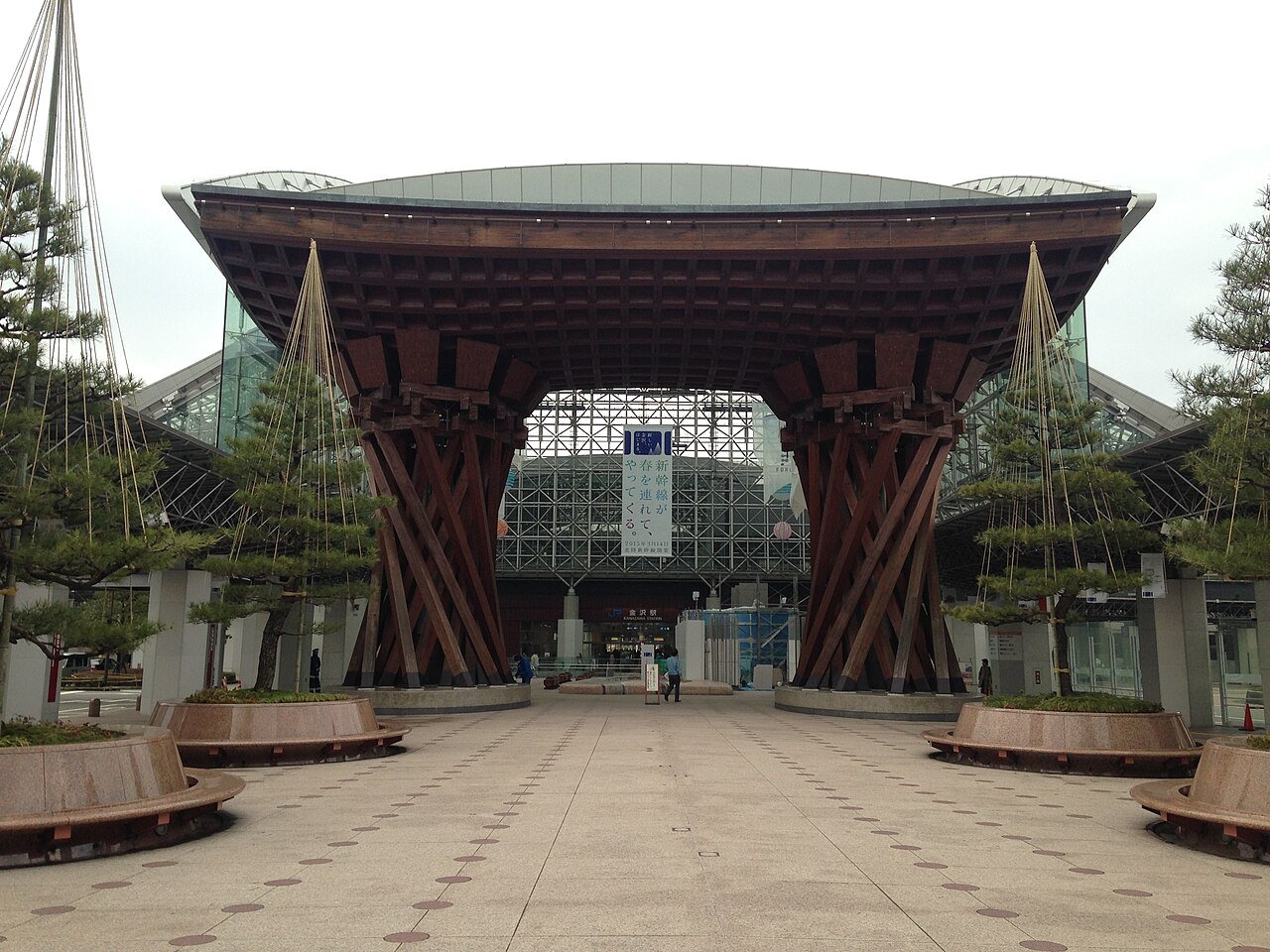
Kanazawa Station Tsuzumi-mon gate — a large wooden drum-shaped torii structure in front of the station entrance
The Tsuzumi-mon Gate at Kanazawa Station — designed by Nikken Sekkei to resemble the Tsuzumi hand drum used in Noh theatre, it is the first sight that greets you off the shinkansen.
Getting Around

The Loop Bus and how to move around the city

Kanazawa has no subway, but the Loop Bus and city bus network connect every major sightseeing district efficiently.

One thing many visitors do not know before arriving: Kanazawa has no subway system. The city is compact enough that it does not need one — the Kanazawa Loop Bus runs two circular routes (Right Loop and Left Loop) covering every major attraction from the station out to Higashi Chaya, Kenroku-en, Kanazawa Castle, Nagamachi and the 21st Century Museum.

Loop Bus One Day Pass — ¥800

Unlimited rides all day on both the Right Loop and Left Loop routes. Buses run every 15–20 minutes. Buy on board or at the tourist office near Kanazawa Station East Exit. Single fares are ¥200 — you break even after just four rides.

Price: ¥800 (All Day) · Single fare: ¥200 per ride · Where to buy: on the bus or tourist office near station
Right Loop vs Left Loop

The Right Loop is the one most visitors need: Station → Higashi Chaya → Kenroku-en → Kanazawa Castle → Omicho Market → Nagamachi → back to Station. The Left Loop heads in the opposite direction and passes Nishi Chaya and Myoryuji Temple (the so-called Ninja Temple), which are off the main tourist trail.

Right Loop: Higashi Chaya + Kenroku-en + Castle · Left Loop: Nishi Chaya + Myoryuji
Cycling — a delightful alternative

Kanazawa has good cycling infrastructure and relatively flat terrain near the city centre. Rent a bike at Ekichari or Kanazawa Machinas near the station for around ¥200–300 per hour or ¥1,000 per day. The Kenroku-en → Castle → Higashi Chaya → Omicho loop is about 5–6 km total and very pleasant to ride.

Rental: ~¥200–300/hr or ~¥1,000/day · Location: near East Exit, Kanazawa Station
Taxis

Taxis queue outside Kanazawa Station and are easy to flag down in the city centre. Useful for groups or if you have heavy luggage. Station to Kenroku-en is around ¥700–900. There is no Uber in Kanazawa; use the Japan Taxi app for ride-hailing.

Station → Kenroku-en: ~¥700–900 · App: Japan Taxi (iOS / Android)
Money-saving tip: Kenroku-en Garden has free-entry periods before 8:00 am in summer (June–August) and opens completely free during cherry blossom and autumn foliage seasons. Arriving at opening time not only saves ¥320 but gets you a near-empty garden with beautiful morning light — one of the best experiences in Kanazawa.
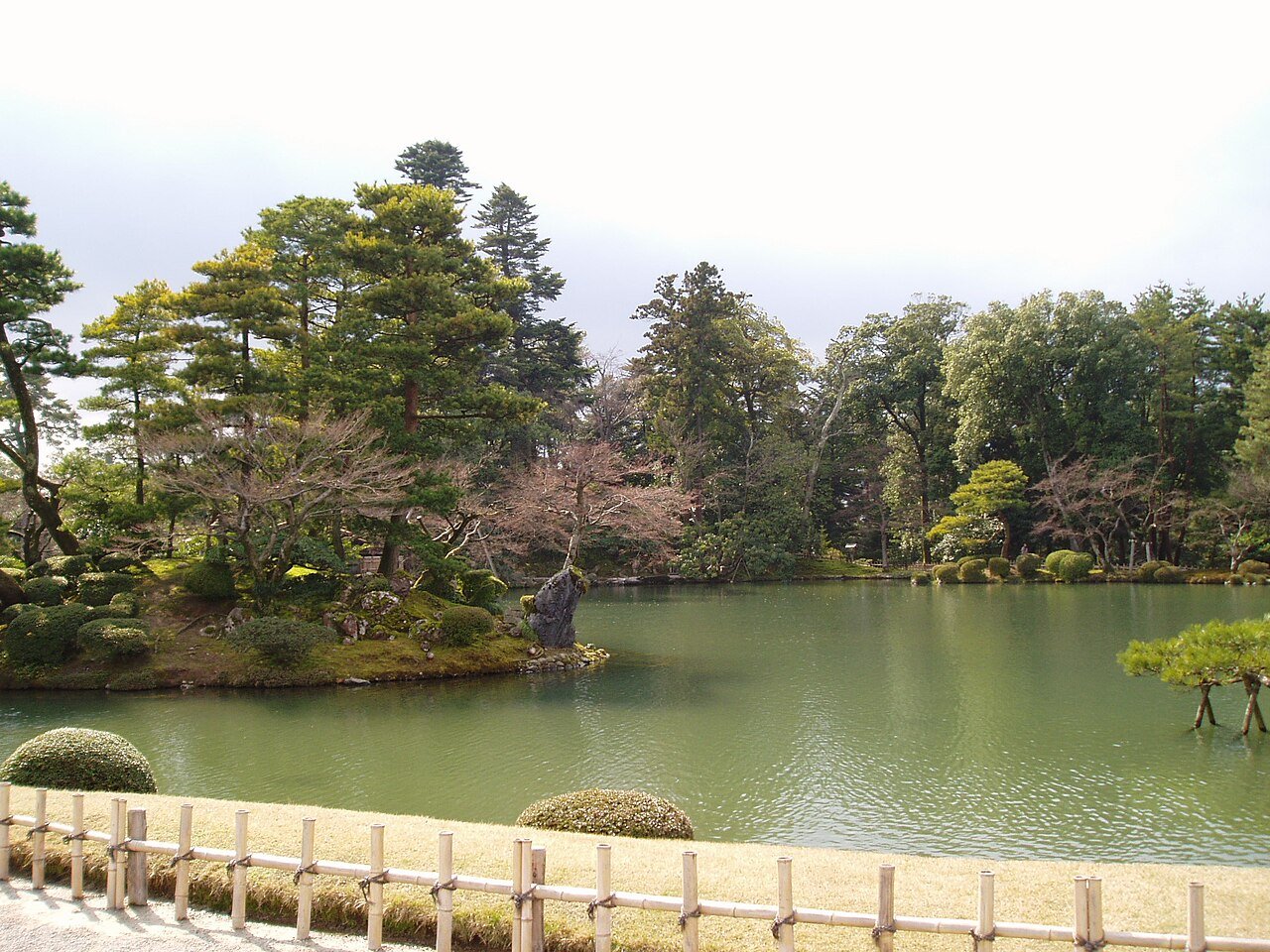
Kenroku-en Garden in Kanazawa — stone lantern reflected in a still pond surrounded by manicured pine trees
Kenroku-en (兼六園) — ranked one of Japan's three great landscape gardens. The Right Loop Bus stops right outside.
Etiquette & Culture

Kanazawa has its own living traditions

This is not a museum city — geiko still work in the Chaya districts, Noh theatre still performs, and craftspeople still make gold leaf in the same workshops their grandparents used.

Kanazawa escaped Allied bombing in World War II almost entirely, which means the city's heritage is genuinely old, not reconstructed. Treat the Chaya districts and Nagamachi as living neighbourhoods, not theme parks, and residents and business owners will be far warmer toward you.

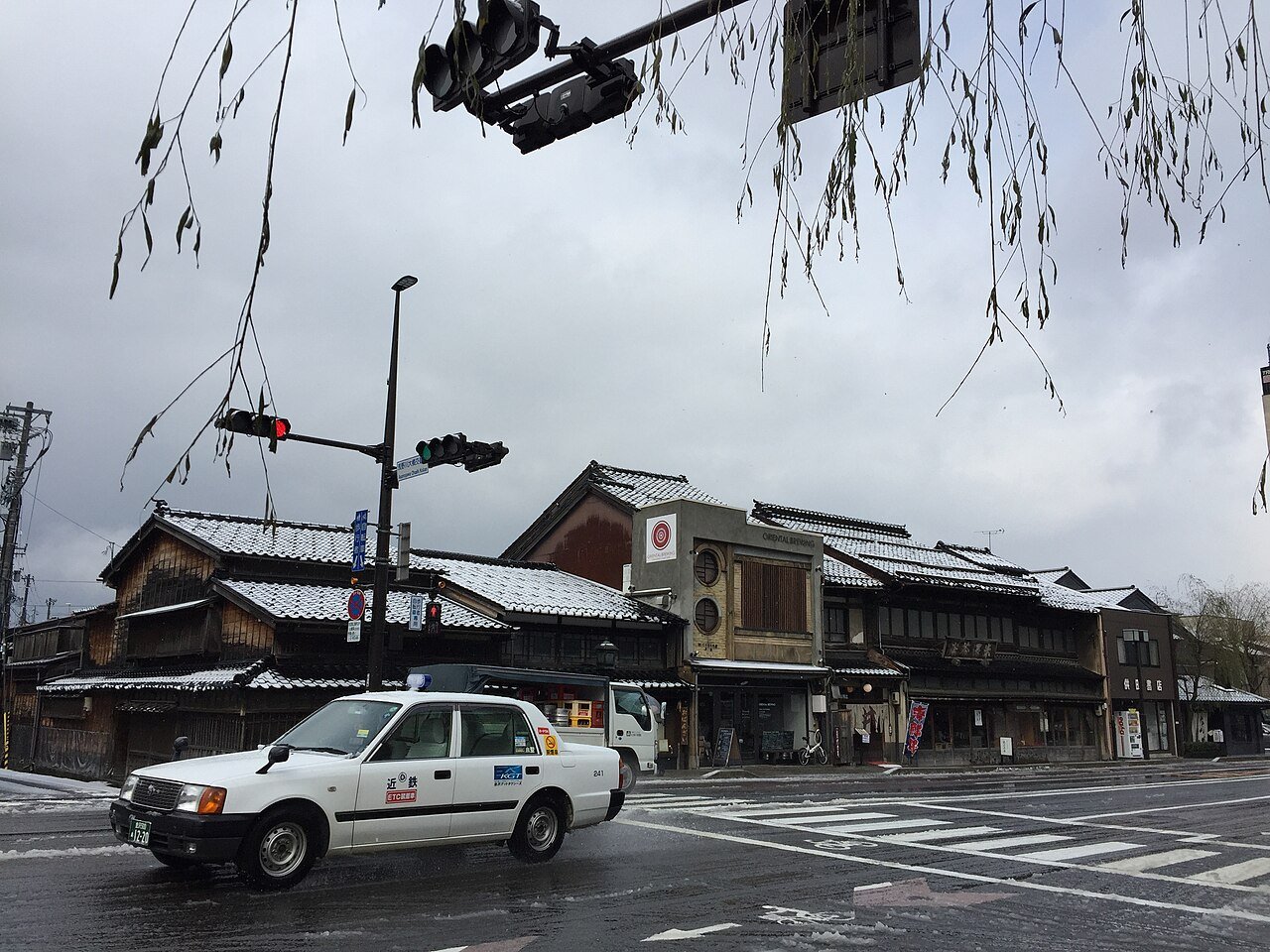
Higashi Chaya district in Kanazawa — a narrow preserved street lined with dark-latticed wooden teahouses
Higashi Chaya-gai (東茶屋街) — established in 1820 and designated a National Cultural Asset. The ochaya lattice facades are among the most photographed streetscapes in Japan.
Gold Leaf Experience

Kanazawa produces 99% of Japan's gold leaf

Kanazawa has dominated Japan's gold leaf production for centuries — the Maeda clan once banned gold leaf production everywhere in Japan except Edo (Tokyo) and Kanazawa, concentrating all the master craftspeople here. Today workshops in Higashi Chaya offer hands-on experiences where you apply real 24-karat gold leaf to lacquerware, bookmarks or phone cases. Sessions run roughly 30 minutes and cost around ¥1,500–3,000 per person, walk-ins welcome at most workshops.

Good to know: The edible gold leaf you see on sushi, ice cream and smoothies around Kanazawa is genuine 24-karat gold — it is safe to eat, has no taste, and no nutritional value. You are paying for the experience and the photo, which usually adds about 1.5–2x to the price of a regular item. That is fair — it is very Kanazawa.
Best Time to Visit

Kanazawa is beautiful in every season

The city is worth visiting year-round, but each season delivers a completely different atmosphere.

Spring (March–May) — most popular

Over 400 cherry trees bloom in Kenroku-en in late March to early April, with night illuminations (Yozakura) and free garden entry during the bloom period. Temperatures are a comfortable 12–20°C. The downside: hotels sell out months in advance and prices spike. Book 3–4 months ahead for cherry blossom dates.

Summer (June–August)

Early June brings the three-day Hyakumangoku Matsuri, Kanazawa's biggest annual festival, with a parade of nearly 1,000 participants in samurai and geisha costumes. Humid and warm at 25–32°C but cooler than Tokyo. Kenroku-en is free before 8 am daily. Fewer tourists than spring or autumn.

Autumn (October–November) — highly recommended

Red and gold maple leaves transform Kenroku-en from mid-November, with the iconic Kotoji lantern reflected in the pond against a backdrop of burning foliage. Free garden entry during peak foliage. Crisp walking weather at 10–18°C. Weekend hotels fill up, but weekdays are often fine without extreme advance planning.

Winter (December–February) — peaceful and cheap

Kanazawa receives heavy snowfall, especially in January. Snow-draped Kenroku-en with its famous Yukitsuri rope-supported pine trees is one of the most iconic winter images in Japan. Hotel rates drop significantly, crowds nearly vanish and you get the city to yourself. Temperatures 0–7°C — dress in proper layers.

The umbrella rule: Kanazawa is one of the wettest cities in Japan — locals say "you can forget your lunch box, but never forget your umbrella." Rain is possible any month, but especially November through March. Kanazawa Station's tourist information center lends free umbrellas and snow boots to visitors during the winter season — no reservation needed.
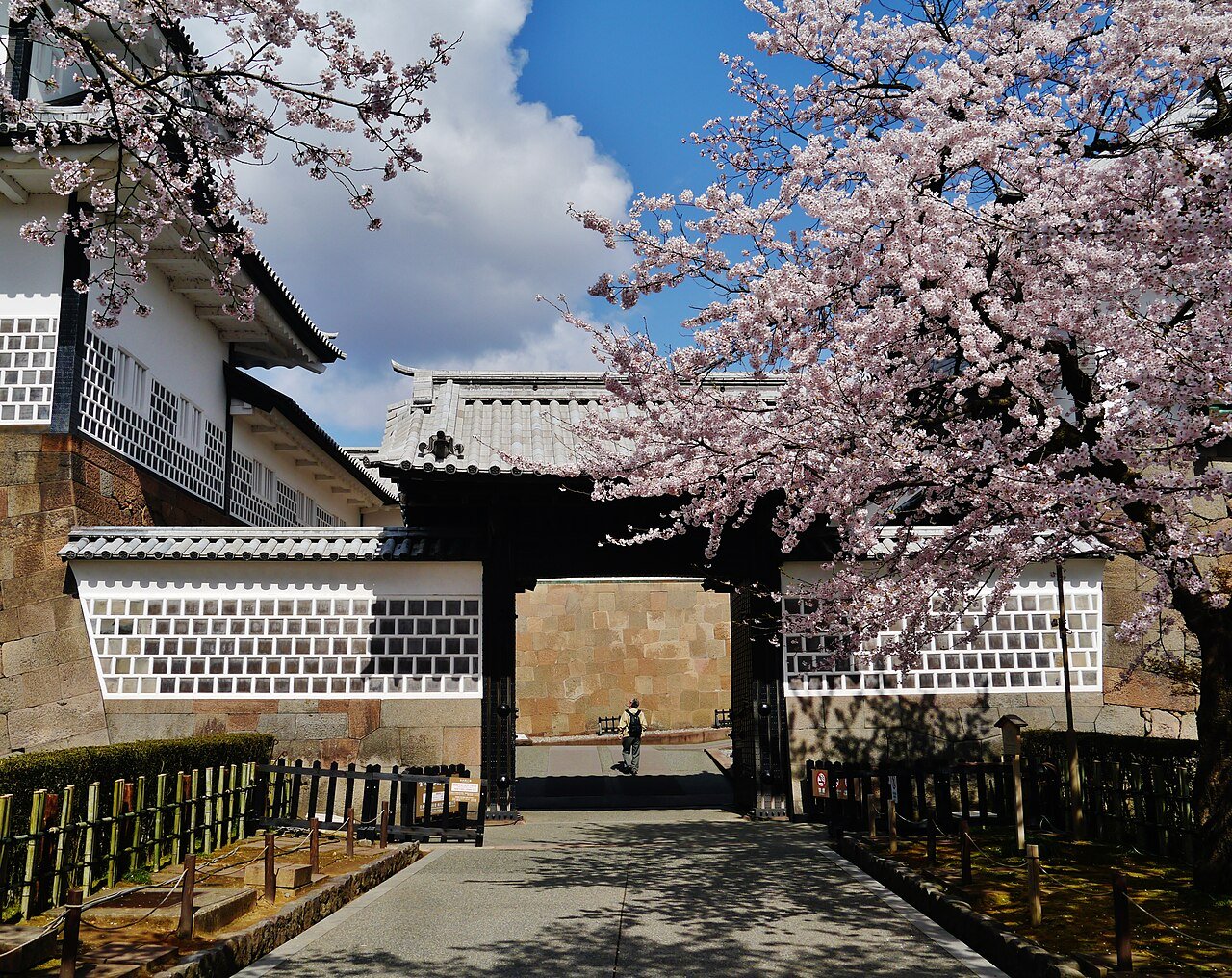
Kanazawa Castle white walls and dark tile rooflines surrounded by autumn trees
Kanazawa Castle (金沢城) — the white-plastered walls and lead-tiled roofs of Ishikawa-mon Gate are beautiful in every season.
Daily Budget

How much does a day in Kanazawa cost?

Kanazawa is noticeably cheaper than Tokyo and Kyoto — a rough guide for planning purposes.

Category Budget Mid-range Comfortable
Accommodation (per person/night) ¥3,000–5,000 (hostel / guesthouse) ¥7,000–12,000 (3-star hotel / ryokan) ¥18,000+ (ryokan with meals)
Food (3 meals) ¥1,500–2,500 (teishoku sets / convenience store) ¥3,000–5,000 (sushi / fresh seafood) ¥8,000+ (kaiseki / omakase sushi)
Kenroku-en Garden ¥320/adult (free during sakura, koyo season and before 8 am in summer)
21st Century Museum Free (public zones) ¥1,200–2,500 (special exhibitions) ¥1,200–2,500 (special exhibitions)
City transport ¥400–800 (walking / a few bus rides) ¥800 (Loop Bus One Day Pass) ¥2,000–4,000 (taxis)
Souvenirs / gold leaf activity ¥500–1,000 ¥2,000–5,000 ¥10,000+
Estimated daily total ~¥8,000–12,000 ~¥15,000–25,000 ¥35,000+
Best value meal: A bowl of fresh seafood rice (Kaisen-don) at Omicho Market typically costs ¥1,800–2,500 and delivers sashimi-grade fish from the Sea of Japan at roughly half the price of a restaurant. Come before noon for the best selection — the market opens around 8:00 am and the freshest fish goes first.
What to Pack

Packing for Kanazawa — season-specific essentials

Kanazawa's Sea of Japan climate is cooler and wetter than Japan's Pacific coast cities. Any time of year you visit, rain is a genuine possibility — and in winter, real snow. Packing correctly makes the difference between a comfortable stroll through Higashi Chaya and a soggy, frozen scramble.

Year-round essentials

Compact folding umbrella (rain is frequent in every season) · slip-on shoes or easy-off footwear (ochaya, tea rooms, temples) · cash ¥20,000–30,000 (many local spots are cash only) · portable charger (long walking days drain your phone fast) · reusable tote bag (great for Omicho Market shopping)

SIM / eSIM: buy online before departure (Airalo recommended) — Komatsu Airport and Kanazawa Station also sell SIM cards
Winter (Dec–Feb) — extra prep needed

Heavy coat · thermal base layers · hat, scarf and gloves · waterproof boots with grip (pavements can ice over) · hand warmers (kairo) — sold everywhere for about ¥100 each. Kanazawa Station Tourist Information lends snow boots free during winter snowfall periods.

Temperature: 0–7°C (Jan–Feb) · snowfall can reach 10–30 cm in a single day
Summer (Jun–Aug)

Light rain jacket or packable poncho (June–July is tsuyu rainy season with heavy downpours) · SPF 50+ sunscreen · refillable water bottle (vending machines everywhere, ¥100–150) · small hand fan or cooling towel

Temperature: 25–32°C · high humidity, especially in June
Language and navigation

English signage is good at major attractions and the station. The tourist information centre at Kanazawa Station has English-speaking staff. Small stalls in Omicho Market and traditional ochaya may have limited English — Google Translate's camera function works well for menus and signs in Japan.

Apps: Google Maps · Google Translate (camera mode) · Japan Official Travel App
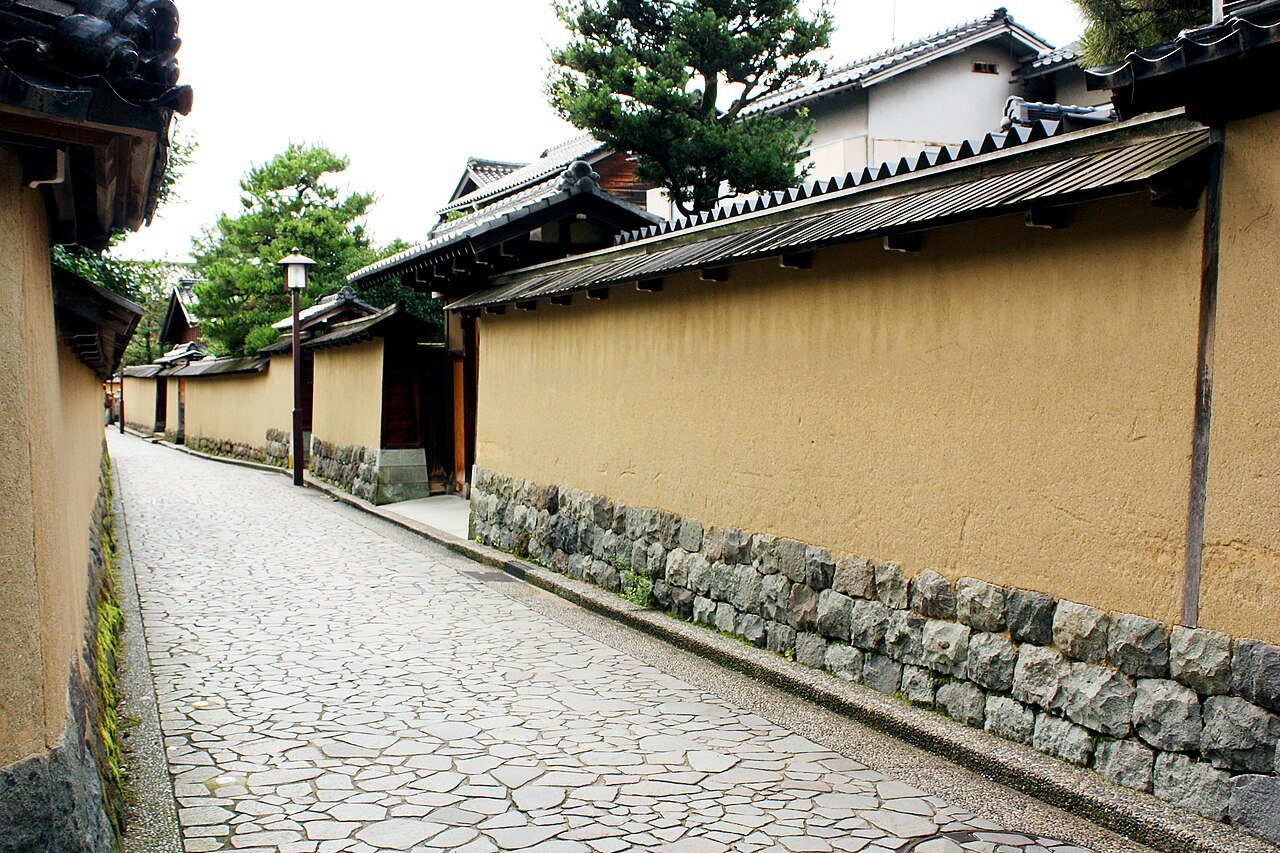
Nagamachi Samurai District in Kanazawa — earthen walls and clear water channels along a narrow lane
Nagamachi (長町武家屋敷跡) — the former samurai residential district. The earthen walls and water channels are well-preserved and people still live here.
Frequently Asked Questions

FAQ · Before You Go to Kanazawa

How do I get to Kanazawa from Tokyo?
The fastest option is the Hokuriku Shinkansen Kagayaki from Tokyo Station, arriving in Kanazawa in 2 hours 28 minutes for approximately ¥21,740. The Kagayaki is fully reserved-seat, so book in advance on the JR website or at any major station. If you cannot get a Kagayaki seat, the Hakutaka takes about 40 minutes longer but has unreserved carriages — no advance booking required. Both services are fully covered by the Japan Rail Pass.
Is the Kanazawa Loop Bus One Day Pass worth it?
Yes, for most visitors. The One Day Pass costs ¥800 and covers unlimited rides on the Right Loop and Left Loop all day. Single fares are ¥200 per trip, so you break even after four rides. If your plan covers Kenroku-en, Higashi Chaya, Omicho Market and at least one other district — that is easily four bus rides in a day. Buy the pass on the bus or at the tourist office by the East Exit of Kanazawa Station.
When is Kenroku-en Garden free to enter?
Kenroku-en has two main free-entry windows per year: cherry blossom season (late March to early April, roughly 2–3 weeks) and autumn foliage season (mid to late November, roughly 2–3 weeks). In summer (June–August), the garden opens free before 8:00 am every day. Normal admission is ¥320 for adults. Exact free-entry dates are announced each year at kenrokuen.or.jp.
What is the best time of year to visit Kanazawa?
It depends what you want to see. Cherry blossoms: late March to early April (book hotels 3–4 months ahead, this period is extremely popular). Autumn foliage: mid to late November — probably the single most beautiful time, with red maple against white castle walls. Budget and solitude: January–February, when snow covers Kenroku-en's famous Yukitsuri-pinned pine trees — the crowd and price pressure disappear. Festival atmosphere: early June, during the three-day Hyakumangoku Matsuri with its massive samurai procession.
What etiquette rules matter most in the Chaya districts and Nagamachi?
The Chaya districts (Higashi, Nishi, Kazuemachi) are active heritage areas. Do not photograph geiko without permission — they are walking to work appointments. Some ochaya welcome visitors as shops or tea rooms; others are private clubs. Check the door sign before stepping in. In Nagamachi, some narrow lanes are private residential paths rather than public throughways — if there is no welcome sign, do not enter. Loud noise and large tour groups moving fast are frowned upon in both areas.