Home Kanazawa Japan Ishikawa Prefecture About
Home  ›  Asia  ›  Japan  ›  Kanazawa  ›  Attractions
🇯🇵 Kanazawa Attractions · 2026

What to See in Kanazawa —
Garden, Castle, Geisha Quarter, Seafood Market

Kanazawa survived World War II intact — samurai streets, geisha districts and Edo-period gardens are all still here, still functioning. That alone sets it apart from almost every other Japanese city.

Why Come Here

A City Where History Is Still Lived In

People who visit Kanazawa tend to say the same thing: they came expecting a pleasant garden town and left wondering why nobody told them it was this good. The city escaped wartime bombing because it had no significant military industry, and that stroke of luck preserved something rare — an Edo-period urban landscape that never needed to be rebuilt from scratch.

Walk the earthen walls of Nagamachi and you are in an actual samurai neighbourhood, not a reconstruction. Stroll through Higashi Chaya at dusk and the teahouses lining the stone-paved street have been in continuous use since 1820. And woven through all of it is gold leaf — Kanazawa produces over 98% of Japan's entire output, which explains why you can eat it on ice cream, drink it in sake, and paste it yourself in a workshop before lunch. We have pulled together 10 sights that tell the city's story honestly.

Top Sights

10 Kanazawa Attractions Worth Your Time

Ordered by what local guides keep recommending — not just the most-photographed spots.
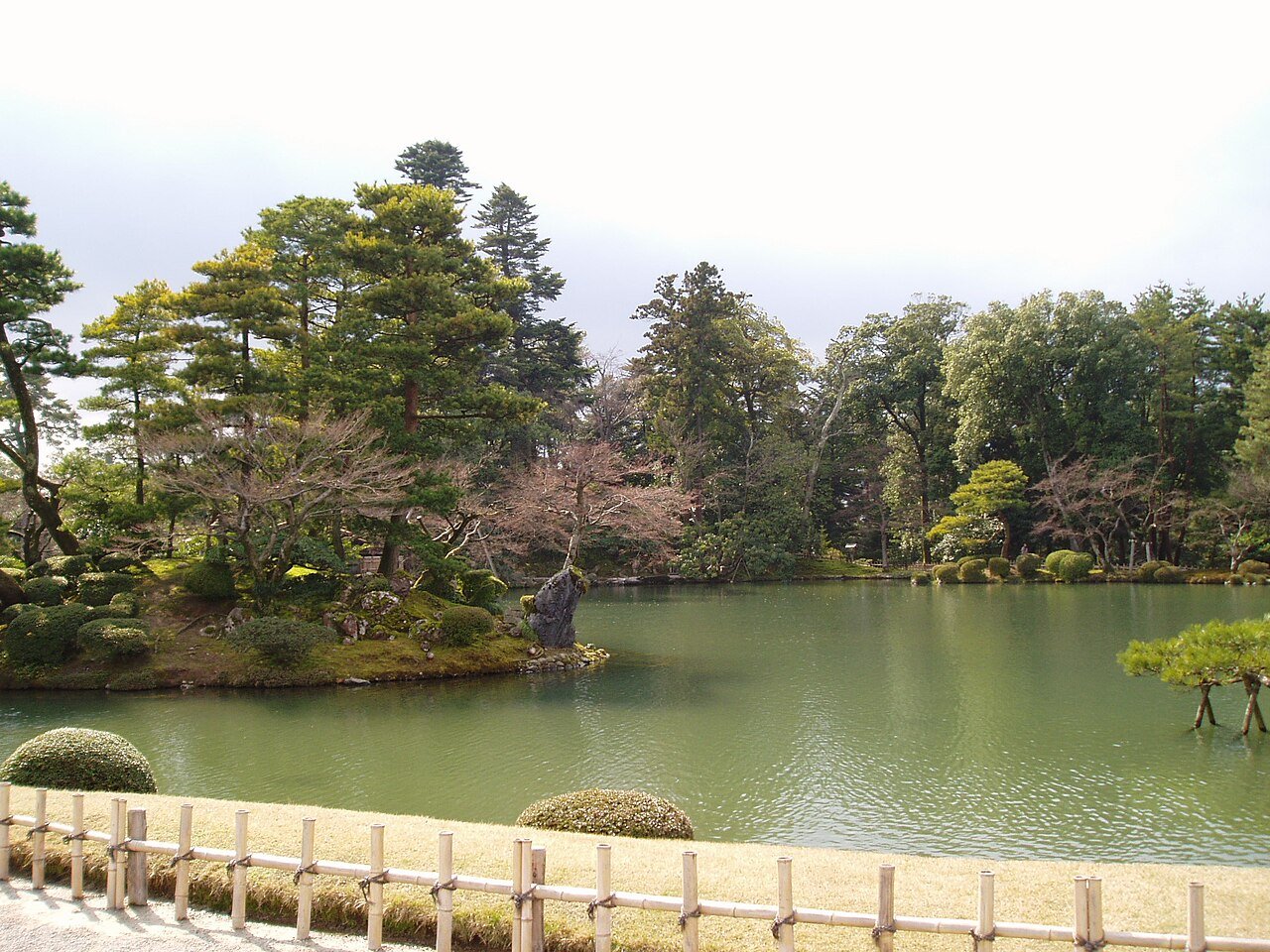
Kenroku-en Garden Kanazawa — Kasumigaike pond reflecting pine trees, Kotoji lantern, autumn foliage in gold and red 1
Kenroku-en Garden (兼六園)
ONE OF JAPAN'S THREE GREAT GARDENS · FREE BEFORE OFFICIAL OPENING

Picture arriving at six in the morning when mist hangs over Kasumigaike Pond and the only sound is water trickling through stone channels. The Kotoji stone lantern — Kanazawa's de facto emblem — stands in perfect stillness at the water's edge, and you have the entire garden to yourself. That is Kenroku-en before the crowds arrive. The name means "garden of six attributes" (spaciousness, seclusion, artifice, antiquity, water features, panoramic views), and it really does deliver all six. Autumn foliage here is among the finest in Ishikawa Prefecture, and winter brings Yukitsuri — the graceful rope structures propped under pine branches to prevent snow damage, which look extraordinary after a fresh snowfall.
Best time: Before official opening (before 7:00 / 8:00) for free entry and zero crowds
Hours: Mar–Oct 7:00–18:00 · Nov–Feb 8:00–17:00
Admission: Adults ¥310 · Children (6–18) ¥100 · Free before official opening via Mayumizaka or Katsurazaka gate
Tip: Winter visitors (December–March) should not miss the Yukitsuri snow-protection rope structures on the pine trees — a quietly stunning sight that exists nowhere else quite like this.
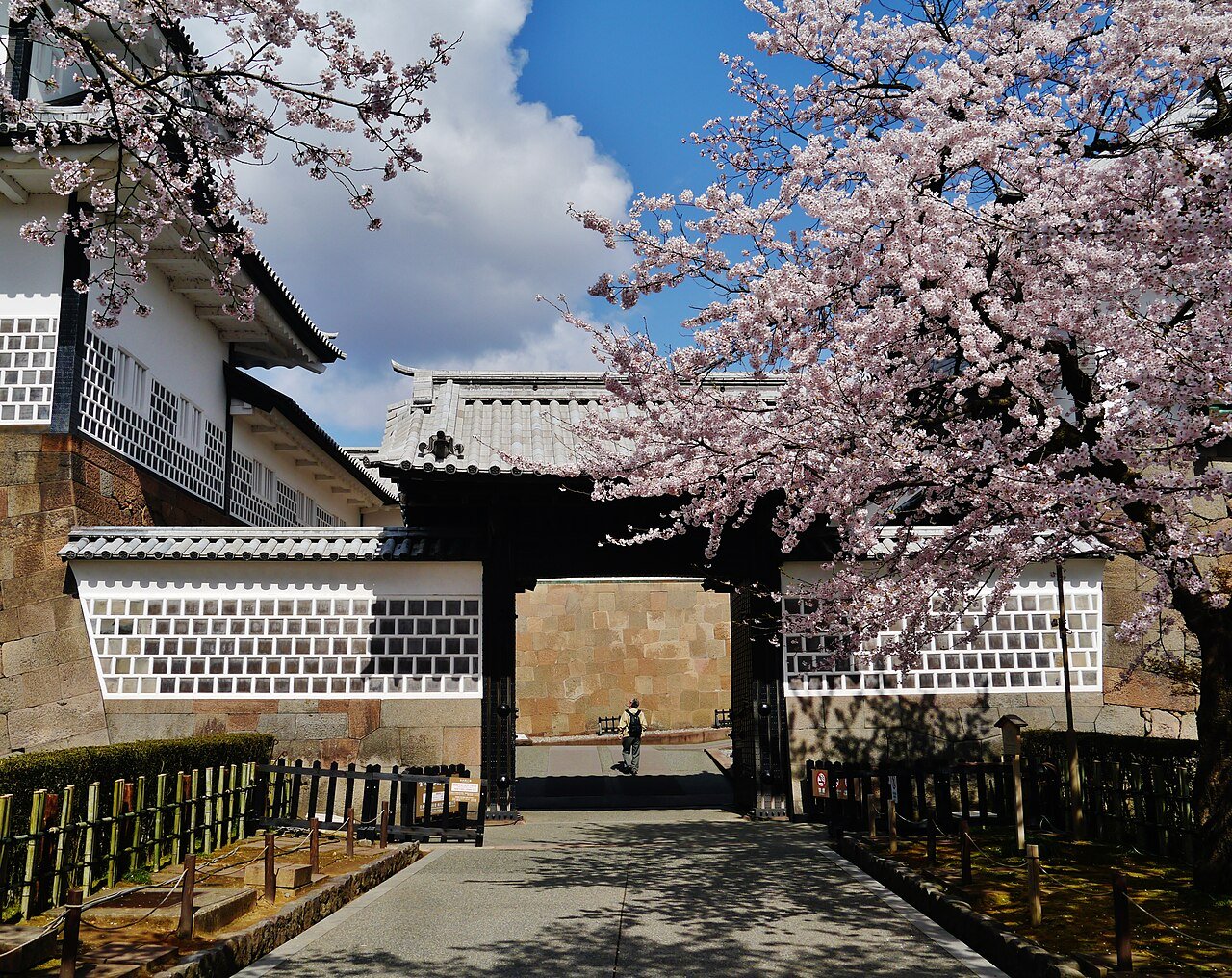
Kanazawa Castle Park — white Ishikawa-mon gate and ramparts of the Maeda clan, cherry blossom trees, blue sky 2
Kanazawa Castle Park (金沢城公園)
MAEDA CLAN FORTRESS · FREE PARK ENTRY · NEXT TO KENROKU-EN

Walk out of Kenroku-en's eastern gate and you are immediately face to face with the white walls of Kanazawa Castle Park — the two sites share a boundary and are naturally visited together. The castle was the seat of the Maeda clan, which ruled the Kaga domain and was the wealthiest feudal lord outside the Tokugawa shogunate itself. The main keep burned down multiple times over the centuries; what survives is the handsome Ishikawa-mon gatehouse and two large white storehouses reconstructed in 2001 using traditional carpentry techniques. Strolling the grounds is free; a separate ticket (¥320) covers the interior of the rebuilt turrets and the storehouses. The adjacent Gyokusen'inmaru Garden, restored in 2015, is another ¥320 and worth it.
Hours: Mar–Oct 7:00–18:00 · Nov–Feb 8:00–17:00
Admission: Park grounds free · Turrets & storehouses ¥320 · Gyokusen'inmaru Garden ¥320
Bus: Orange Loop Bus to Kenrokuen / Kanazawa-jo stop
Higashi Chaya District Kanazawa — machiami stone-paved street lined with two-storey Meiji-era teahouses, red paper lanterns 3
Higashi Chaya District (東茶屋街)
KANAZAWA'S LARGEST GEISHA QUARTER · GOLD-LEAF SHOPS · SHIMA TEAHOUSE

Higashi Chaya is the largest and most complete of Kanazawa's three chaya (teahouse) districts. The main street was laid out in 1820 under Tokugawa-era regulations and has barely changed since — two-storey wooden teahouses with latticed windows face each other across a narrow stone-paved lane, and some of them are still operating geisha establishments. Small plaques on certain doors quietly indicate which houses continue the tradition. Two are open for public tours: Shima Teahouse (1820, designated Important Cultural Property), which preserves geisha-era furniture and practice rooms intact; and Kaikaro Teahouse, the grandest building on the street. The rest of the lane is lined with gold-leaf shops, matcha cafes and craft boutiques. Come in the afternoon for golden light; stay into the evening when red paper lanterns come on.
Street: Open 24 hours, free to walk
Shima Teahouse: 9:30–17:30 (Dec–Feb until 17:00) · ¥500 admission
Kaikaro Teahouse: 10:00–17:00 · ¥750 admission
Do not miss: The gold-leaf soft-serve ice cream sold in front of Hakuza on the main street. It is as photogenic as every picture suggests — and genuinely delicious.
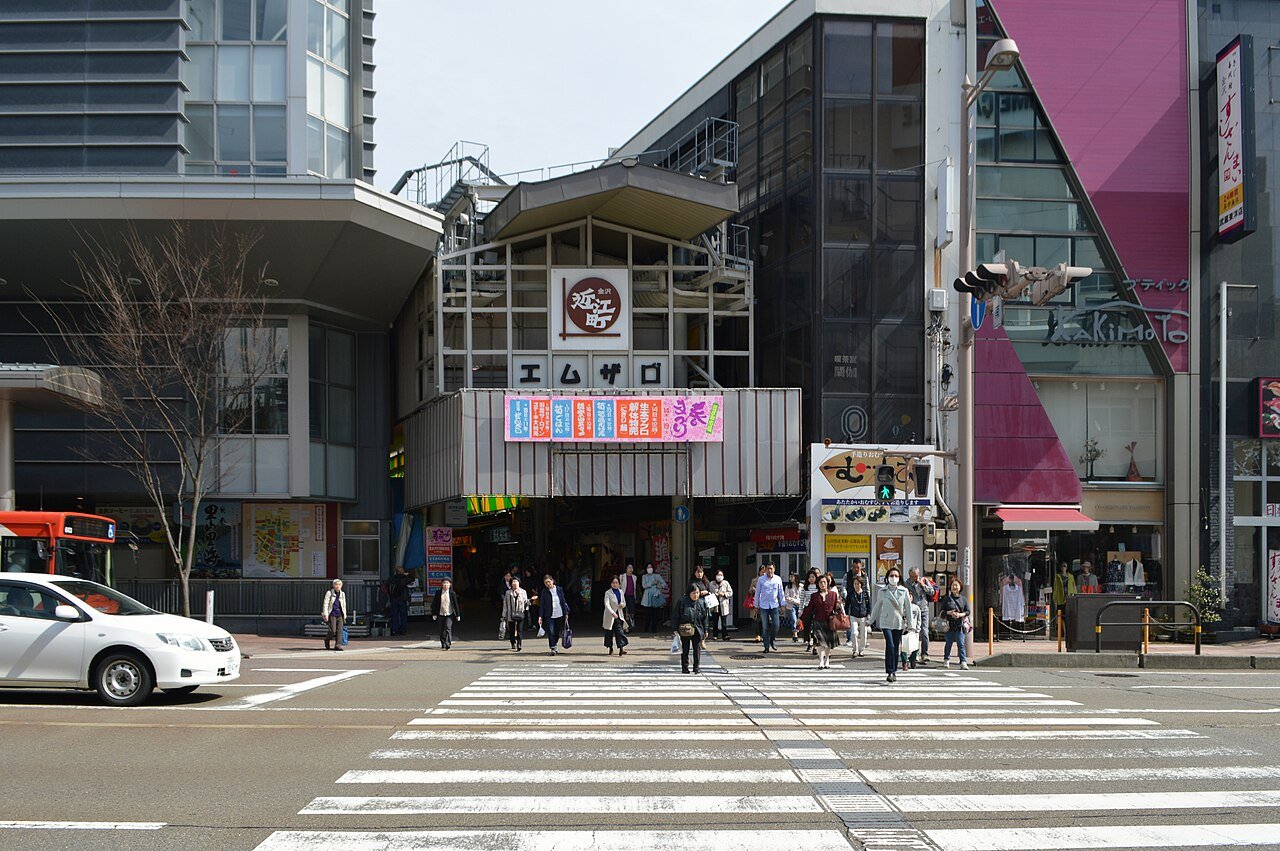
Omicho Market Kanazawa — stalls piled with zuwaigani snow crab, ama ebi shrimp, fresh seafood from the Japan Sea, covered market interior 4
Omicho Market (近江町市場)
300-YEAR-OLD SEAFOOD MARKET · "THE KITCHEN OF KANAZAWA"

Omicho has been feeding Kanazawa since 1721, which makes it one of the oldest continuously operating markets in Japan. The best stalls are the seafood vendors who receive deliveries directly from the Japan Sea every morning — zuwaigani snow crab in season (November–March), plump ama ebi sweet shrimp, sea urchin, and fish varieties you will not easily find elsewhere in the country. Several sushi restaurants inside the market open as early as 7:00, making this a legitimate and memorable breakfast destination. Outside crab season there is still an impressive spread of fresh seafood, local vegetables, Kanazawa-grown rice and pickled vegetables. Go early — stalls are fully stocked before 10:00 and lunchtime queues for popular sushi spots can be long.
Hours: Stalls ~9:00–17:00 · Several restaurants from 7:00
Admission: Free to enter · Spend as much or as little as you like
From station: 10-minute walk from Kanazawa Station
Tip: Arrive before 10:00 for full stalls and shorter sushi queues. By noon the most popular spots have 30-minute waits and the best fish has already sold.
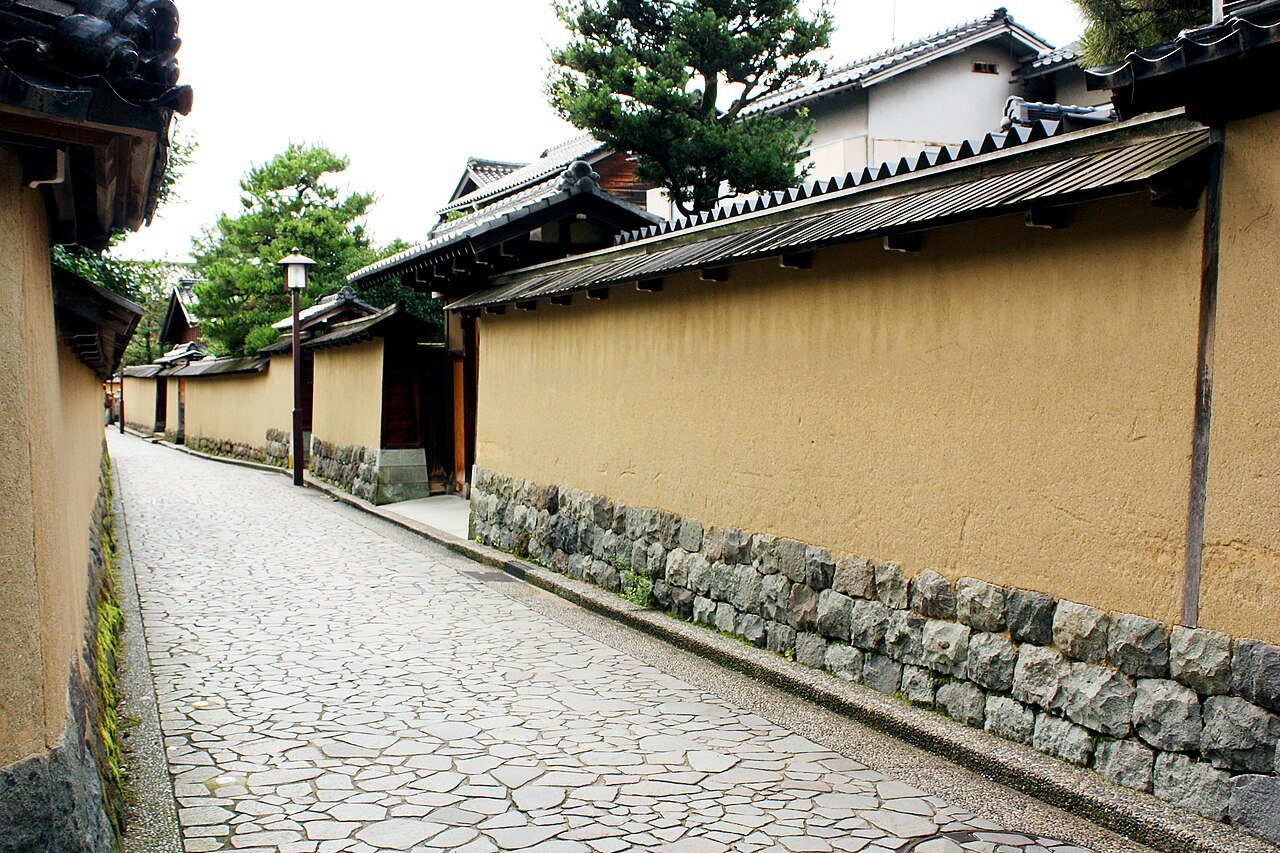
Nagamachi Samurai District Kanazawa — high earthen walls along narrow lane, small water canal, Edo-period samurai residence 5
Nagamachi Samurai District (長町武家屋敷)
EDO-PERIOD EARTHEN WALLS · WATER CANALS · NOMURA-KE SAMURAI RESIDENCE

Nagamachi answers the question most visitors do not think to ask: what did a samurai neighbourhood actually look like day to day? The answer is this — narrow lanes hemmed by tall earthen walls (dobei) in rust-red tones, small water channels running alongside the path, and private gates set into the walls at intervals. The scale is human and the atmosphere unhurried. Several samurai residences still stand; the most accessible is Nomura-ke, a well-preserved buke-yashiki (samurai house) with a beautiful garden viewed from tatami rooms, a display of samurai armour, and original lacquerware. Winter sees the earthen walls wrapped in straw mats (komo) to protect them from frost — an unusual sight that adds another layer of atmosphere.
District walk: Free, open 24 hours
Nomura-ke: 8:30–17:30 (Oct–Mar until 16:30) · ¥550 admission
Bus: Loop Bus to Korinbo or Nagamachi stop
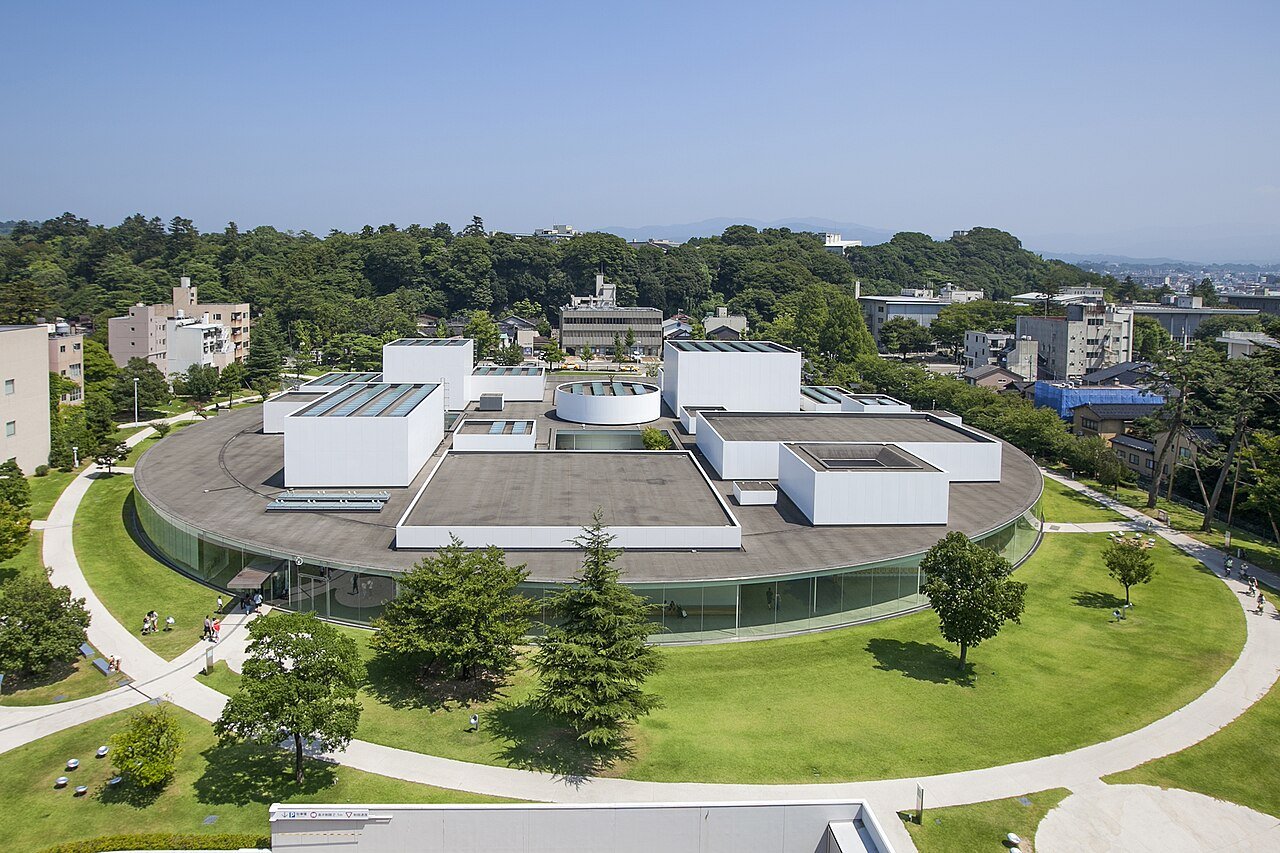
21st Century Museum of Contemporary Art Kanazawa — circular glass building, Leandro Erlich's Swimming Pool illusion artwork 6
21st Century Museum of Contemporary Art (21世紀美術館)
THE ILLUSION SWIMMING POOL · FREE EXCHANGE ZONE DAILY

The most disorienting artwork in Kanazawa does not hang on a wall. Leandro Erlich's "Swimming Pool" is a two-level installation built into the floor of the museum's free exchange zone — on the upper level, visitors stand on glass and look down through blue water at people apparently submerged below them; on the lower level, another group looks back up. Everyone involved looks exactly as though they are underwater. The piece has made this museum — designed by SANAA (Sejima and Nishizawa) as a perfectly circular glass building with no front entrance — one of the most visited contemporary art museums in Asia. The building itself, with its circular form and multiple entry points, is worth seeing even if you only visit the free zone. The paid exhibition spaces show ambitious international shows with contemporary artists.
Exchange Zone (free): Daily 9:00–22:00
Exhibition Zone (paid): Tue–Sun 10:00–18:00 (Fri–Sat until 20:00) · Closed Mon · ~¥1,400 per exhibition
Bus: Blue Loop Bus to Korinbo or Hirosaka stop
Note: The Swimming Pool sometimes requires advance online booking for timed entry — check the museum website before you go to avoid disappointment.
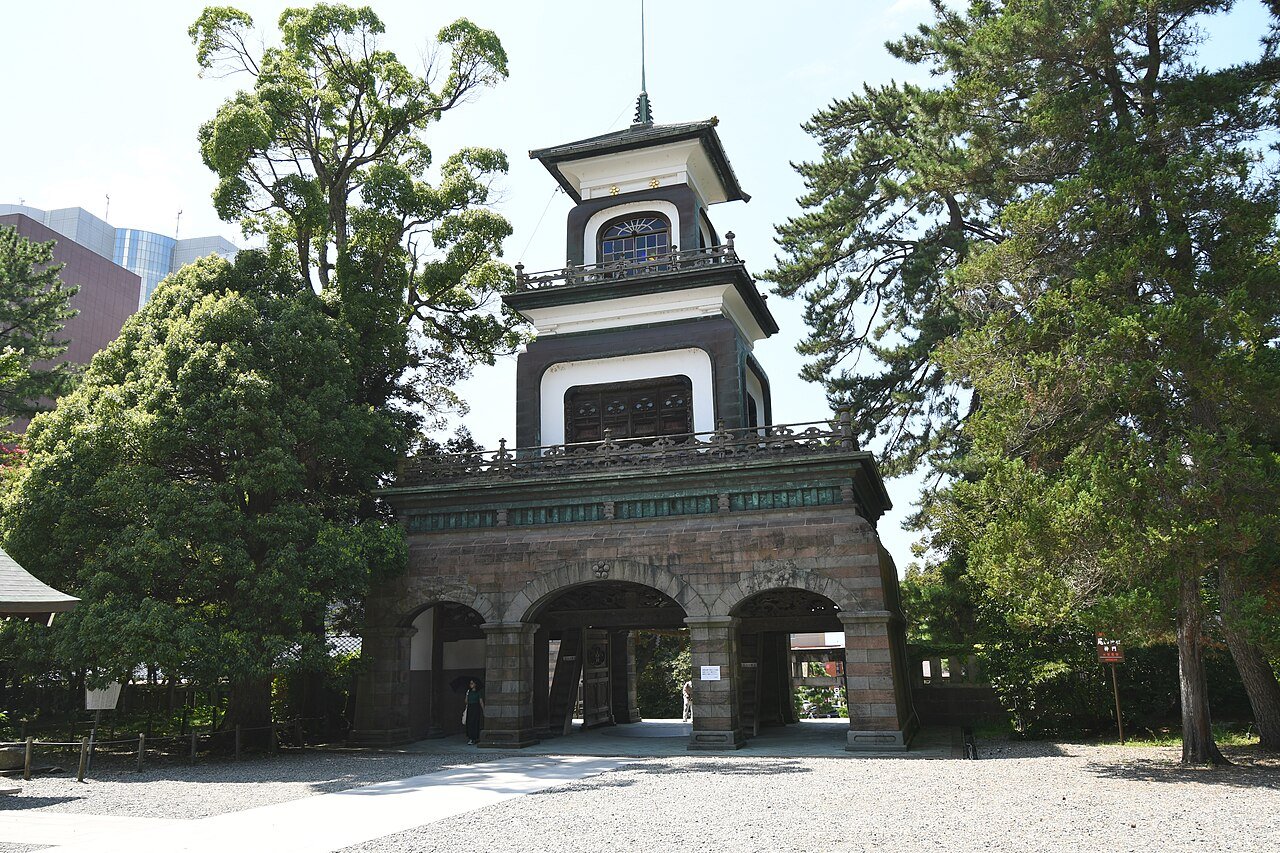
Oyama Shrine Kanazawa — three-storey Shinmon gate combining Japanese, Chinese and European Gothic stained-glass architecture, lit at night 7
Oyama Shrine (尾山神社)
SHINMON GATE FUSING THREE ARCHITECTURAL STYLES · JAPAN'S OLDEST LIGHTNING ROD

Oyama Shrine is dedicated to Maeda Toshiie, the founder of the Kaga domain and the man most responsible for making Kanazawa what it is. The shrine's main draw is the Shinmon gate, a three-storey structure that combines Japanese, Chinese and European architectural elements within a single facade — including stained-glass windows in Gothic style on the top level, which look extraordinary when backlit. The gate also carries Japan's oldest surviving lightning rod, installed in 1875. Behind the shrine is a small stroll garden designed around a central pond, a calm place to sit after the bustle of the nearby market. The gate is illuminated every evening until 10:00, making it one of Kanazawa's most atmospheric after-dark stops.
Hours: Grounds open 24 hours · Shrine office 9:00–17:00
Admission: Free · Illuminated until 22:00
Bus: Loop Bus to Musashigaoji, or 5-minute walk from Omicho Market
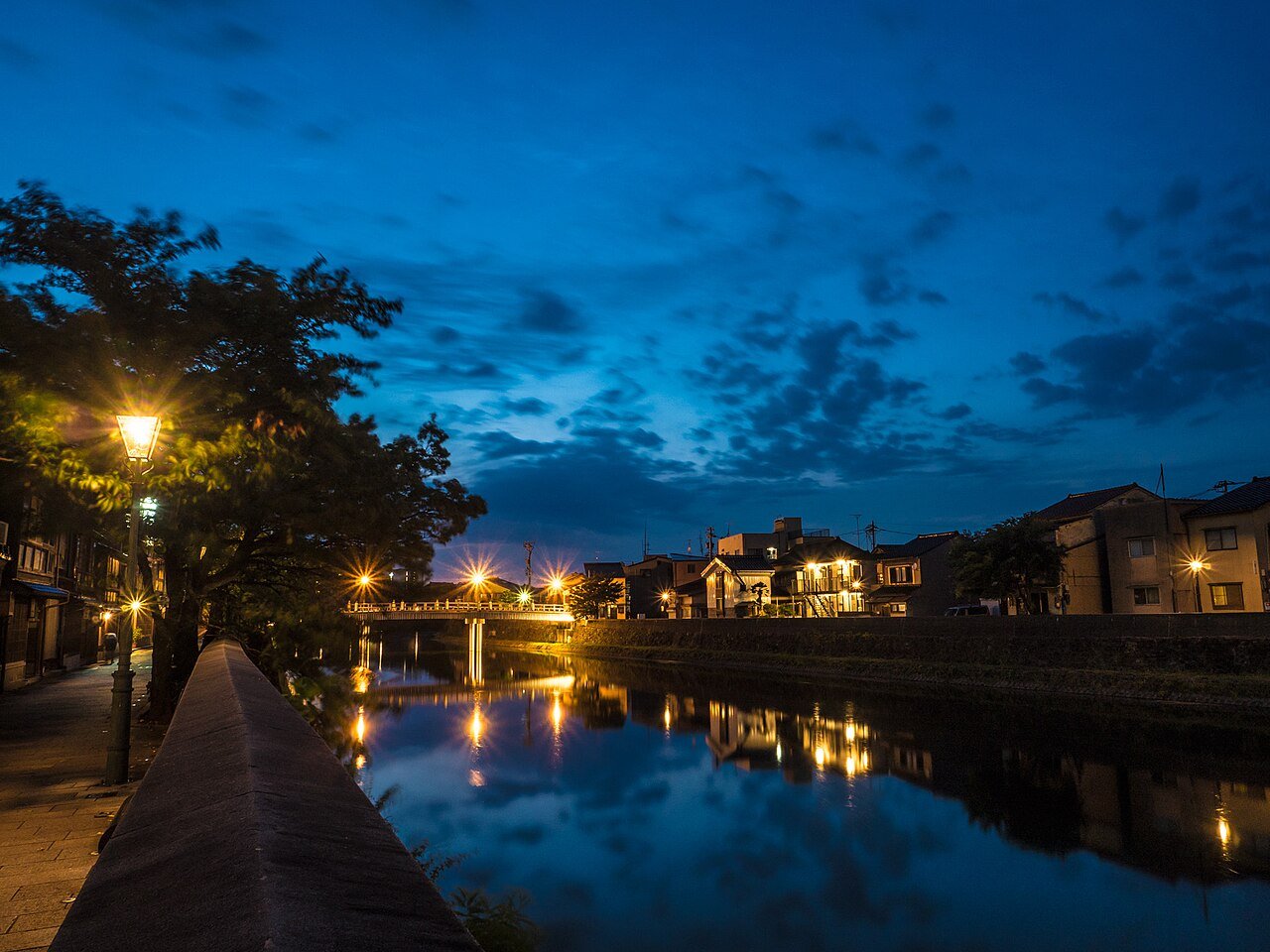
Kazuemachi Chaya District Kanazawa — Edo-period wooden teahouses along Asano River, orange paper lanterns glowing at dusk, reflections in water 8
Kazuemachi Chaya District (主計町茶屋街)
QUIET RIVERSIDE TEAHOUSE QUARTER · LANTERNS AT DUSK

If Higashi Chaya is the famous one, Kazuemachi is the one locals suggest when you tell them you want to see Kanazawa at its most quietly beautiful. The chaya street runs parallel to the Asano River, just a five-minute walk from Higashi Chaya across Nakanohashi Bridge. The wooden teahouses are narrower and the lane shorter, but there are no gold-leaf souvenir shops here — just old buildings with their original narrow windows, a handful of small restaurants, and a street that feels genuinely residential rather than arranged for tourists. Come in the evening when orange paper lanterns light the facades and the Asano River below carries their reflections. It is one of the most photographed spots in Kanazawa for good reason, and still far less crowded than its famous neighbour.
District walk: Free, open 24 hours
Best time: After 18:00 for lantern light, minimal crowds
From Higashi Chaya: 5-minute walk across Nakanohashi Bridge
Kanazawa gold leaf workshop — artisan applying paper-thin kinpaku gold leaf to lacquerware, glinting under studio light 9
Gold Leaf Experience (金箔体験)
KANAZAWA PRODUCES 98% OF JAPAN'S GOLD LEAF · TRY IT YOURSELF

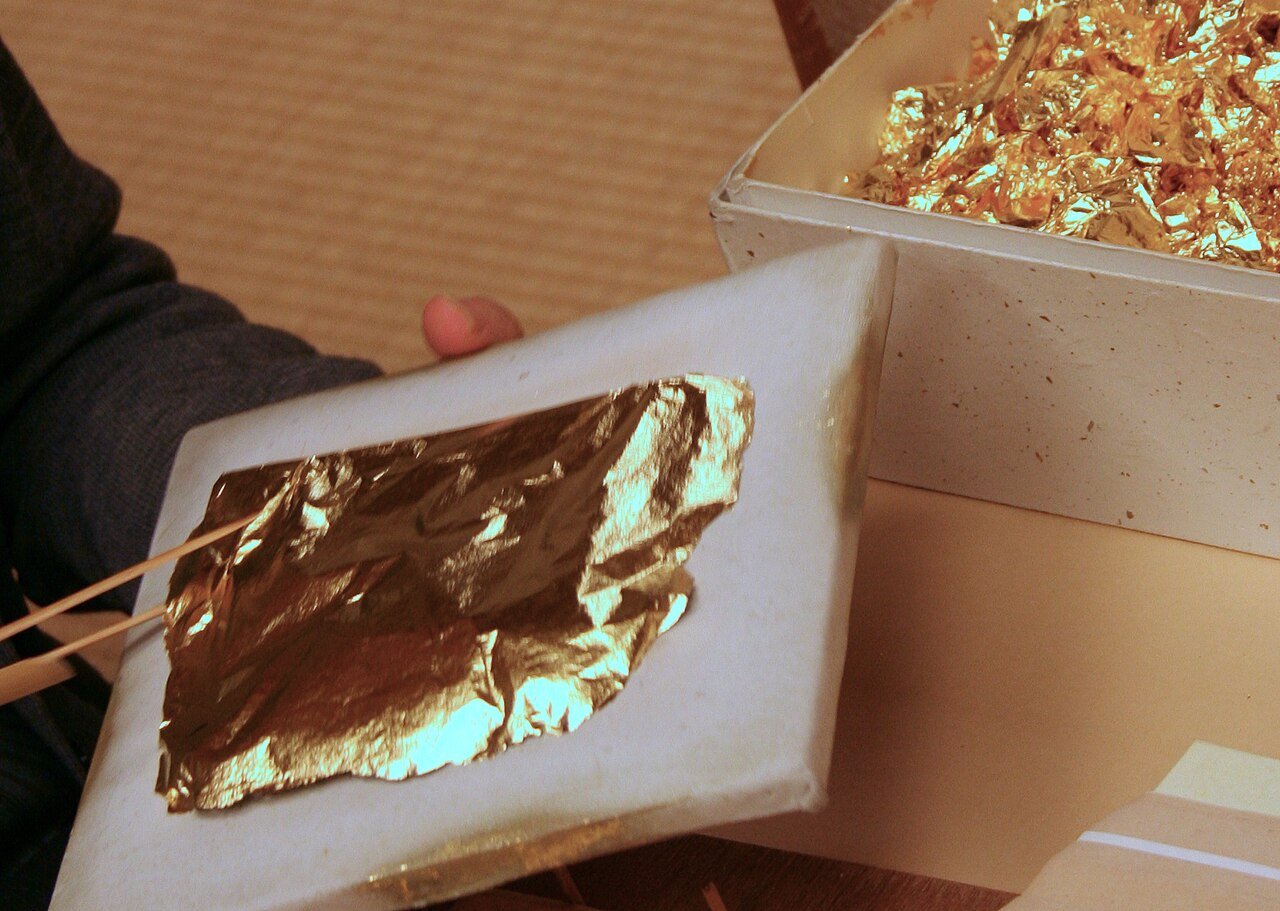
The gold leaf trade in Kanazawa dates back over 400 years, and the city still produces more than 98% of all kinpaku used in Japan — for lacquerware, ceramics, textiles, Buddhist altar fittings, cosmetics and, increasingly, food. Kanazawa Katani (near Omicho Market) and Hakuza (inside Higashi Chaya) both run visitor workshops where you choose a stencil design from over 60 options and apply real gold leaf to a dish, lacquer box, bookmark or phone case. The gold leaf you work with is beaten to 0.0001 millimetres thick — so thin it behaves like smoke in a breeze. Sessions take 30 to 60 minutes and the finished piece goes home with you. A memorable and genuinely hands-on souvenir.

Katani: Near Omicho Market · Workshops from ~¥1,500 · Advance booking recommended
Hakuza: Inside Higashi Chaya · Free gold-leaf museum attached
Klook: Package tours combining gold leaf, wagashi sweets and ninja stars available
Book on Klook: The Kanazawa Gold Leaf + Sweets + Ninja Stars package bundles three hands-on experiences with a local guide — often the most efficient way to combine them.
⛩️10
Nishi Chaya District + Myoryuji "Ninja Temple" (妙立寺)
QUIET WESTERN CHAYA QUARTER + TEMPLE WITH TRAP DOORS AND HIDDEN ROOMS

Myoryuji is not actually a ninja temple — no ninja ever lived here. But the nickname has stuck because the building is full of the kind of concealed architecture that makes every room feel like a puzzle box. From the outside it appears to be a modest two-storey structure; inside it has seven floors, hidden staircases, secret corridors, a hidden well for emergency escape, a room that drops open like a trapdoor, and compartments built into every ceiling. All of it was designed by the Maeda clan around 1643 as a fortified urban refuge in case the Tokugawa shogunate turned hostile. Entry is by guided tour only (Japanese language; book through the temple website or look for English-language guided tours on Klook). Nishi Chaya is a short walk away — a compact, genuinely peaceful chaya district with none of Higashi's tourist intensity, ideal for a quiet late-afternoon wander.

Myoryuji: Tours every 30 min, 9:00–16:30 · ¥1,000 · Advance booking essential
Nishi Chaya: Free to walk · Nishi Chaya Shiryokan museum free entry
Bus: Loop Bus to Hirokoji or Nishi Chayagai stop
English tours: The temple's own tours are Japanese only. For an English-language guided experience, check Klook Kanazawa tours or Magical Trip for options with bilingual local guides.
Planning Your Visit

How to Route Your Days Efficiently

Kanazawa is a compact city — the main sights cluster in three walkable zones connected by Loop Bus.

Zone 1 — Castle & Garden (Central Hill)
Recommended: morning of Day 1 · Loop Bus to Kenrokuen stop

Kenroku-en · Kanazawa Castle Park · 21st Century Museum of Contemporary Art. All three are within a 10-minute walk of each other. Arrive before 7:00 for free garden entry, then the castle, then the museum from mid-morning. Half to a full day depending on pace.

Time needed: Half to full day · Bus: Orange or blue Loop Bus
Zone 2 — Market & Shrine (Musashigaoji)
Recommended: early morning + lunch · 10-min walk from station

Omicho Market · Oyama Shrine · Korinbo shopping district. Come to the market for breakfast or a 7:00 sushi session, cross to Oyama Shrine, then browse Korinbo. A good two to three hours that naturally leads into Zone 3.

Time needed: 2–3 hours · Walk: ~10 min from Kanazawa Station
Zone 3 — Historic Quarters (Chayagai)
Recommended: afternoon into evening · Loop Bus to Higashiyama

Higashi Chaya District · Kazuemachi · Nagamachi Samurai District. Best visited from 15:00 onward when light turns golden. Stay into the evening for lanterns and a quieter atmosphere — crowds thin noticeably after sunset.

Time needed: 2–4 hours · Bus: To Higashiyama or Hashiba stop
Zone 4 — Nishi & Ninja Temple (West)
Recommended: afternoon of Day 2 · Loop Bus to Hirokoji

Myoryuji Ninja Temple (must book in advance) · Nishi Chaya District · Gold leaf workshop at Katani. Quieter side of the city — good for a second day when you want a slower pace. The temple tour runs about 50 minutes.

Time needed: 2–3 hours · Ninja Temple: Advance booking essential
Frequently Asked Questions

FAQ · Before You Go

How many days do you need in Kanazawa?
Two days and one night is comfortable for the main highlights: Day one morning — Kenroku-en (free dawn entry) and Kanazawa Castle, then Omicho Market for breakfast or lunch; Day one afternoon and evening — Nagamachi samurai district, Higashi Chaya at golden hour, Kazuemachi by lantern light; Day two — 21st Century Museum, Oyama Shrine, gold-leaf workshop, Nishi Chaya and Ninja Temple. With a third day you can add a day trip to Shirakawa-go UNESCO village (buses run year-round from Kanazawa Station). See the full Kanazawa city guide for hotel recommendations and transport details.
What are Kenroku-en's opening hours and admission fee?
March 1 through October 15: 7:00–18:00. October 16 through February: 8:00–17:00. Adults ¥310, children aged 6 to 18 ¥100. Before the official opening time every day there is a free early-morning entry period — enter through the Mayumizaka or Katsurazaka gate without buying a ticket. This early window is the best time to visit: the garden is atmospheric, uncrowded, and costs nothing.
How do you get around Kanazawa without a subway?
Kanazawa has no subway. The two Loop Buses — orange (Kenrokuen Route) and blue (Kanazawa Station East Exit Route) — cover every major sight for ¥200 per ride. A day pass costs ¥500–600 and pays off after three rides. The castle, Kenroku-en and the 21st Century Museum are within comfortable walking distance of each other. Omicho Market is 10 minutes' walk from Kanazawa Station. For Higashi Chaya take the Loop Bus to Higashiyama or Hashiba stop.
Is the 21st Century Museum of Contemporary Art free?
The Exchange Zone, which includes Leandro Erlich's famous Swimming Pool illusion and several outdoor installations, is free to enter and open 9:00 to 22:00 daily. The Exhibition Zone showing the main temporary exhibitions charges admission of roughly ¥1,400 depending on the current show. Exhibition Zone hours are Tuesday–Sunday 10:00–18:00, extended to 20:00 on Fridays and Saturdays; closed Mondays. The Swimming Pool sometimes requires advance timed-entry booking — check the museum website before visiting.
Where can you try a gold leaf workshop in Kanazawa?
The two most accessible workshops for visitors are Kanazawa Katani (between Omicho Market and Higashi Chaya, easy to combine with both) and Hakuza (inside Higashi Chaya district, with a free attached gold-leaf museum). Both let you choose a stencil from over 60 designs and apply real gold leaf to a lacquer dish, coaster or bookmark. Sessions run 30–60 minutes from roughly ¥1,500–2,500 depending on the piece. Book ahead, especially on weekends. You can also book a guided package on Klook that combines gold leaf with wagashi sweets and ninja star throwing.
Klook · Kanazawa Experiences

Kanazawa Tours & Activities — Skip the Guesswork, Book with a Local

Gold leaf workshop + wagashi sweets + ninja stars · Higashi Chaya guided walking tour · Kenroku-en & museum combo · Ninja Temple English-guided entry — book ahead on Klook, instant confirmation.

Browse Kanazawa on Klook →
Wherebest is an affiliate partner of Klook — we may earn a commission when you book through our links, at no extra cost to you.