Narrow stone lanes, grey-tiled old Chengdu rooftops, rows of red lanterns running into the distance, and the smell of san da pao and stinky tofu drifting between stalls — all of it next door to Wuhou Shrine, and all of it free to walk in.
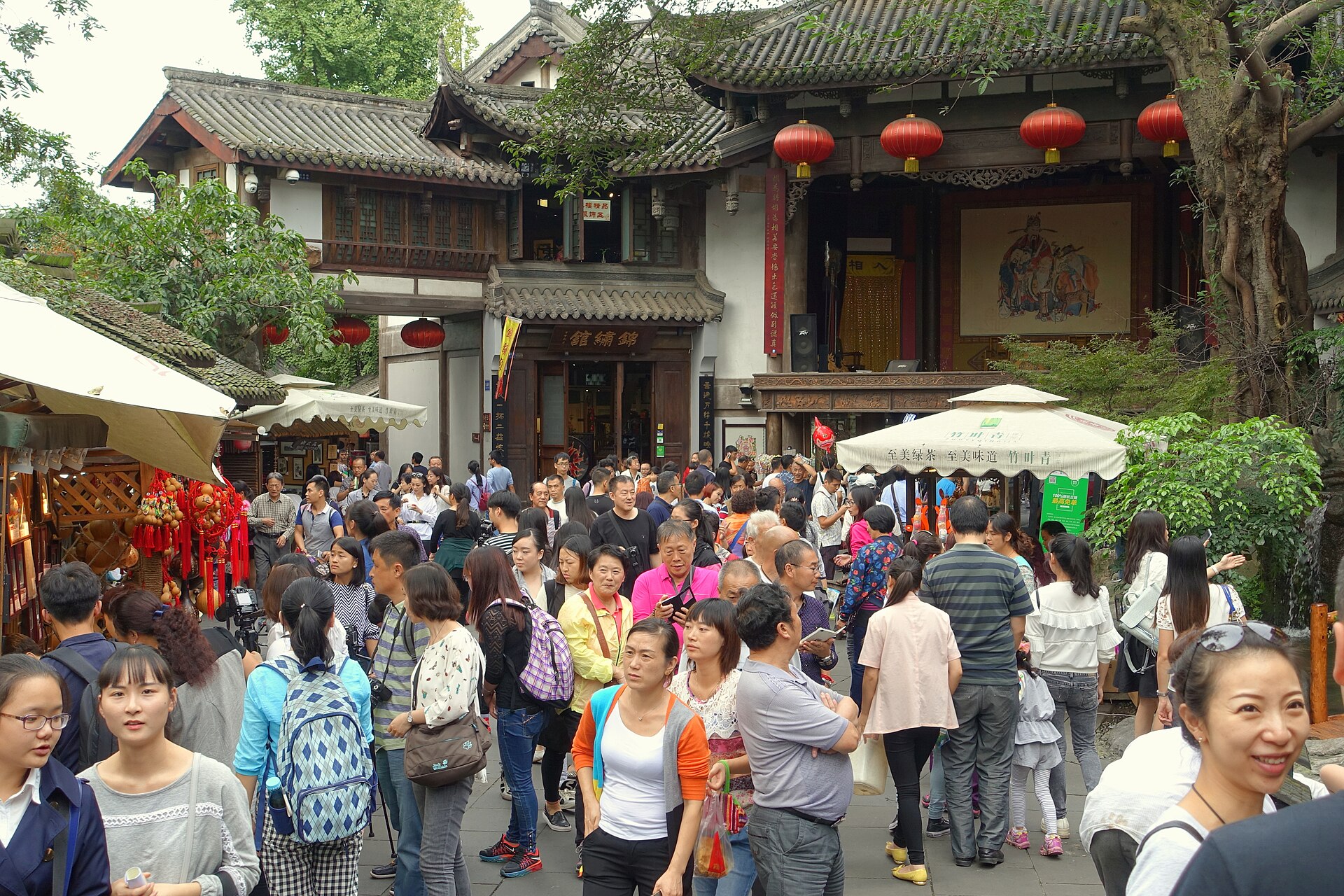
Picture a late afternoon. You walk out of the quiet, solemn halls of Wuhou Shrine, through a dark timber gate, and into a narrow stone lane — and the mood flips instantly. Grey-tiled timber buildings line both sides. Round red lanterns hang in long rows that vanish into the distance. Souvenir shops, teahouses and snack stalls press together, vendors call out for you to taste something, and the smell of brown sugar and toasted soybean drifts over from a san da pao stall where someone is slamming sticky rice onto a brass board with a loud bang. This is Jinli Ancient Street (锦里).
Jinli sits right beside Wuhou Shrine (武侯祠) in southern Chengdu. Historically, this area was one of the busiest commercial districts of the Shu Kingdom (蜀) during the Three Kingdoms period — earning it the nickname "First Street of Shu". What you see today is a pedestrian street rebuilt in Qing-dynasty architectural style, roughly 350 metres long, designed to flow naturally out of the Wuhou Shrine complex next door. Its whole theme and atmosphere are tied directly to the Three Kingdoms (三国) — Zhuge Liang, Liu Bei and the heroes of that era.
Let's be honest up front: Jinli is a full-blown tourist attraction. Many shops sell the same repeated souvenirs, and on weekends the crowds can be shoulder-to-shoulder. But is it beautiful and does it photograph well? Very much so — especially after dark when the lanterns all come on together. The appeal here is the atmosphere and the food, not the shopping. Come to soak up the setting and graze on Sichuan snacks one bite at a time, and you'll enjoy it for what it is.
Walk it slowly from one end to the other — each stretch has something different to see and eat.
This is the snack you genuinely come to Jinli for. The vendor shapes mashed sticky rice into balls and slams them hard onto a brass board three times — "bang, bang, bang", like three cannon shots, which is exactly where the name comes from. The rice balls bounce down into toasted, ground soybean and get drenched in brown sugar syrup. The result is chewy, warm and lightly sweet, best eaten straight away. Around ¥10–15 a portion, and watching the making is half the fun.
A round pastry stuffed with minced, Sichuan-spiced beef, then fried or baked until the outside turns crisp and golden-brown. Bite in and you get the crunch of the shell and a juicy, spice-laced filling — mildly hot, fragrant with chilli and Sichuan seasonings, and substantial enough to fill a gap. It pairs well with something sweet like san da pao to balance the heat. Stalls in Jinli make them fresh to order, so you wait a little but eat it hot, which is well worth it.
3
This is the main reason crowds pour in during the evening. Once the daylight softens, the round red lanterns strung along both sides of the street switch on together. The warm red glow reflects off the grey-tiled roofs and the stone lane, and the place becomes the picture-book old Chinese street so many people have in their heads. The sweet spot is dusk — around 6.30 to 7.30 pm — when the sky still holds a deep blue but the lanterns are already lit. That two-tone light photographs best. Walk slowly and look for an angle where the lanterns recede deep into a lane.
Jinli isn't only a food street — the Three Kingdoms story runs through the whole length of it, because it flows directly out of Wuhou Shrine, which honours Zhuge Liang and Liu Bei. As you walk you'll pass wall paintings, statues and decorative touches that reference characters and scenes from the Three Kingdoms. Some shops sell souvenirs themed on the Shu generals; some corners host a small opera stage or folk performance. If you've read the Three Kingdoms saga you'll enjoy spotting the references; if you haven't, the design and colour still carry the walk.
5
Keep walking past the food stalls to the far end and the mood gradually changes. The tail of Jinli has a cluster of small bars and drinking spots that stay open later than the rest of the street. The red lanterns are still there, now joined by bar lighting and music. It's a good place to rest your legs after a whole evening of walking — order a drink and watch the crowd pass by, a relaxed way to round off the night. Drinks cost a little more than outside the tourist zone, so glance at the menu before you order.
Everything you actually need to know, in one place.
Jinli sits in southern Chengdu, right beside Wuhou Shrine. It's easy to reach by metro or by DiDi:
The most common route is Line 3 or Line 5 to Gaoshengqiao. Take exit C or D and follow the signs toward Wuhou Shrine — about a 10-minute walk to the Jinli entrance. Double-check the current line and exit before you go, as Chengdu keeps expanding its metro network.
Line 10 has a Wuhou Shrine station that drops you closer — from there it's roughly a 200-metre walk to the Wuhou Shrine side, which connects straight into Jinli. This is the best option if you plan to visit the shrine first and continue into Jinli on the same trip.
From the Tianfu Square area or Chunxi Road, a taxi or DiDi to Jinli takes about 15–25 minutes depending on traffic. Tell the driver "Wuhou Ci" (武侯祠) to be dropped at the right spot. Evenings can be slow because of the crowds heading in, so allow a little extra time.
With a free half-day: start at Wuhou Shrine in the afternoon (2–4.30 pm), walk the red-wall bamboo path, then come out into Jinli at dusk as the lanterns light up. Try san da pao and beef pastry, and walk all the way down to the bar street at the far end to round off the evening.
Chengdu is easy to get around by metro, so staying central — near Tianfu Square or Chunxi Road — puts Jinli a short ride away. Here are the hotels we've reviewed in the city: