🌏 Destinations · All 🇯🇵 Japan · full guide Tokyo Osaka Fukuoka 🍜 Japanese Food Encyclopedia 🧭 Travel Prep Guide About Contact 🇹🇭 ไทย🇬🇧 English🇨🇳 中文🇪🇸 Español🇫🇷 Français
🍜 Ramen Guide · Japanese Food Encyclopedia

Japanese Ramen — Know the 6 Broth Styles + Regional Ramen

Ramen isn't one single dish — every city has its own style, from Hakata's milky-white tonkotsu to Sapporo's butter-topped miso. We decode all 6 broth styles, take you on a tasting tour of the regional bowls across the country, and show you how to order at the ticket machine without the panic — all on one page.

Start Here

Ramen Isn't One Single Dish —It's Regional Food Every City Writes Its Own Recipe For

Ever ordered a bowl of ramen and wondered why the one in Fukuoka was milky-white like cream, while the one in Hokkaido was deep brown and topped with a fat knob of butter? It's because Japanese ramen isn't a single nationwide dish — it's regional food, and each city has spent decades developing its own recipe, differing in broth base, noodles, and toppings. Japanese people will even travel across prefectures to eat at a legendary shop, like a little culinary pilgrimage.

This page is here to help you order ramen with confidence — we start by decoding all 6 broth styles so you know which bowl tastes like what, take you on a tour of the most famous regional ramen in each region, then walk you step by step through ordering at the ticket machine (the part beginners fear most) until you can slurp away with total ease.

🍜 Straight up, before anything else: prices and shop details change all the time. The numbers on this page are rough price ranges based on the latest information — a solid frame to work from, but the real in-store price may shift. And ramen is a dish where every shop is free to tweak its own recipe — what we describe is the general "regional style," not a fixed rule for every single shop.
🍜
4 Main Broth Bases
Shoyu (soy sauce) · shio (salt) · miso (fermented soybean) · tonkotsu (pork bone)
🗾
Every City Has a Style
Hakata, Sapporo, Kitakata, Kumamoto — different in both broth and noodles
🎫
Order at the Ticket Machine
Most ramen shops buy a ticket at the machine first — pick a bowl + toppings, then hand it to the staff
💴
Friendly Prices
A standard bowl runs about 700–1,200 yen, filling and good value, with kaedama noodle refills on top
Decode the Broth

6 Broth Stylesto Know Before You Order

Ramen splits broadly into 4 main broth bases (shoyu · shio · miso · tonkotsu) plus 2 popular eating styles (tsukemen · tantanmen). Get these 6 down and you can guess the flavour of any shop's menu.

StyleBaseCharacter / flavourHome / signature
ShoyuShoyu · soy sauceclearA clear golden-brown broth seasoned with soy sauce, rounded and fragrant. The classic style found all over the country.Tokyo · nationwide
ShioShio · saltlight clearThe clearest and palest of all, seasoned mainly with salt. Light and clean, with the bone/seafood flavour coming through clearly.Hakodate (Hokkaido)
MisoMiso · fermented soybeanrichA thick, sweet-umami broth from miso (fermented soybean paste), the richest in the group. Thick wavy noodles, often topped with corn and butter.Sapporo (Hokkaido)
TonkotsuTonkotsu · pork bonemilky-whitePork bones simmered for hours until the broth turns milky-white, rich and rounded. Paired with thin, straight noodles.Fukuoka · Kyushu
TsukemenTsukemen · dipping noodlesconcentrated brothNoodles served in a separate bowl, dipped into a concentrated, cooler-than-usual broth before eating. Thick chewy noodles, with a punchier broth than regular ramen.Tokyo · nationwide
TantanmenTantanmen · sesame-chillisesame-chilliA spicy, rich sesame (or chilli-oil) broth, adapted from Sichuan dan dan noodles into a Japanese style, with stir-fried spicy minced pork.adapted from China · nationwide
🍜 How to read the table: the first 4 rows (shoyu/shio/miso/tonkotsu) are the broth base a shop chooses, while tsukemen and tantanmen are eating styles / specific flavours that can sit on top of any of those bases · many shops offer more than one, so if you're not sure what to try, just go for the style that city is famous for first.
8 Regional Ramen

Regional RamenYou Have to Try

From the far north down to Kyushu — each bowl is the style its city developed into a signature. Wherever you go, try the local bowl at a local shop first.
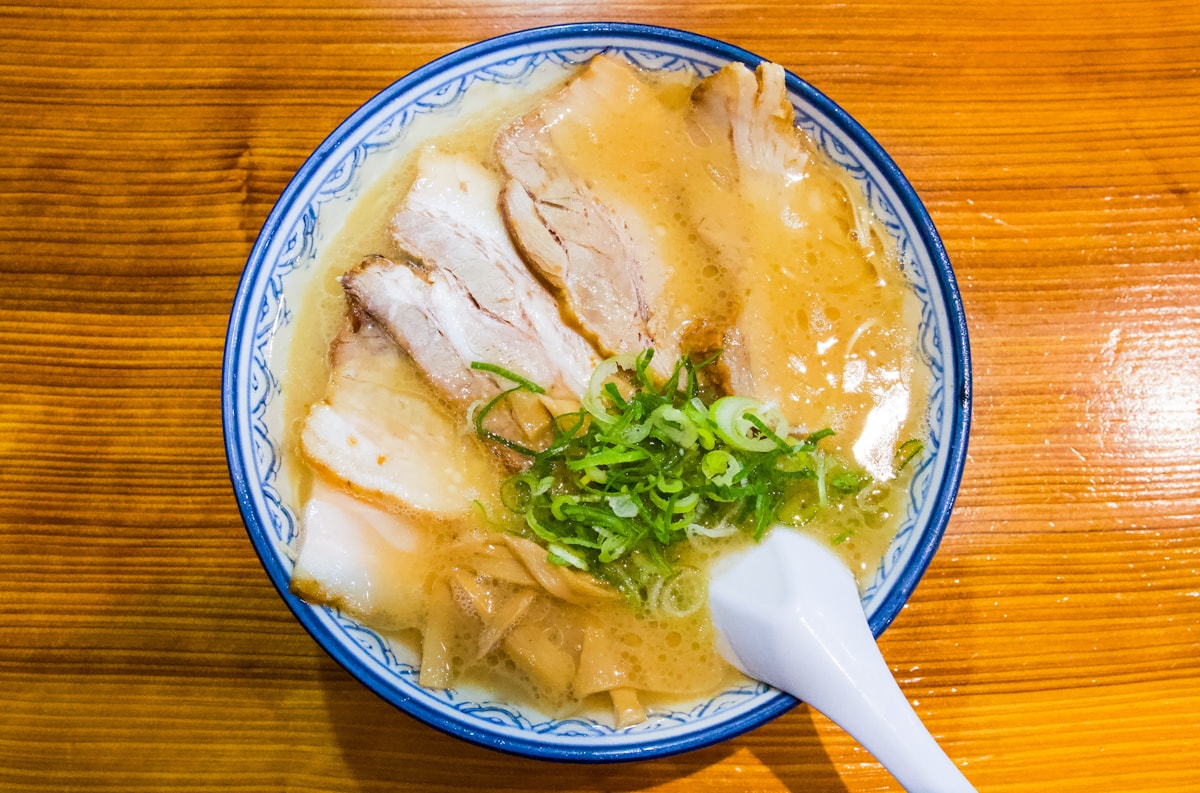
Hakata ramen from Fukuoka — milky-white tonkotsu broth with thin noodles 🍜 Fukuoka · Kyushu1
Hakata Tonkotsu
Hakata Tonkotsu · Fukuoka

This is probably the ramen most people picture first — a pork-bone broth simmered until it's milky-white, rich and rounded, paired with very thin, straight noodles that soften quickly. That's why people order fewer noodles first and top up with a kaedama later. You can choose your noodle firmness, from barikata (very firm) to yawa (soft).

🍜Broth: tonkotsu (pork bone), milky-white
Signature: thin straight noodles · kaedama refills · choose your noodle firmness
💴Rough price: bowl around 600–1,000 yen · kaedama ~100–200 yen (check the latest)
Fukuoka Food Guide →
🍜
❄️ Sapporo · Hokkaido2
Sapporo Miso
Sapporo Miso · Hokkaido

Miso ramen was born in Sapporo and was the first style to go nationwide back in the 1960s — a thick, sweet-umami broth from red miso, the richest in the group, paired with thick wavy yellow noodles. The classic Hokkaido toppings are sweet corn and a fat knob of butter; some shops add bean sprouts, minced pork, and local seafood. It warms you right through, perfect for winter.

🍜Broth: miso (fermented soybean), rich
Signature: thick wavy yellow noodles · corn & butter · rich and warming
💴Rough price: bowl around 800–1,200 yen (check the latest)
Sapporo Food Guide →
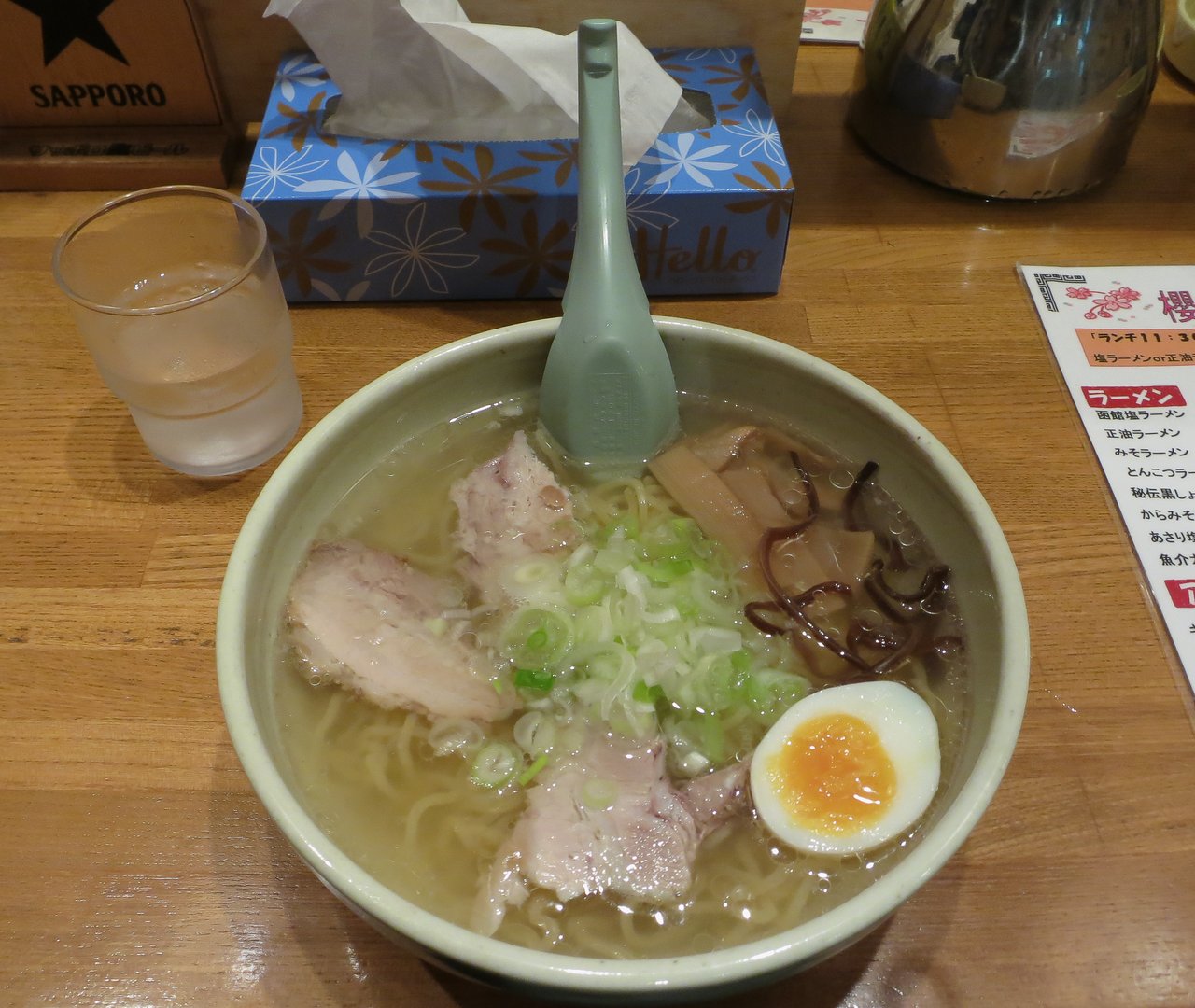
Hakodate shio ramen — clear salt broth, thin noodles, soft-boiled egg 🧂 Hakodate · Hokkaido3
Hakodate Shio
Hakodate Shio · Hokkaido

If Sapporo is rich miso, Hakodate in southern Hokkaido is the opposite pole — the clearest and lightest salt broth of any Japanese ramen. Made from pork and chicken bones seasoned mainly with salt, it gives a clean bone-stock flavour, paired with thin straight noodles. The toppings are simple — chashu, spring onion, menma — a clear bowl that's delicious without any tinkering.

🍜Broth: shio (salt), light and clear
Signature: the clearest of all ramen · clean bone flavour · thin noodles
💴Rough price: bowl around 700–1,100 yen (check the latest)
Hokkaido Food Guide →
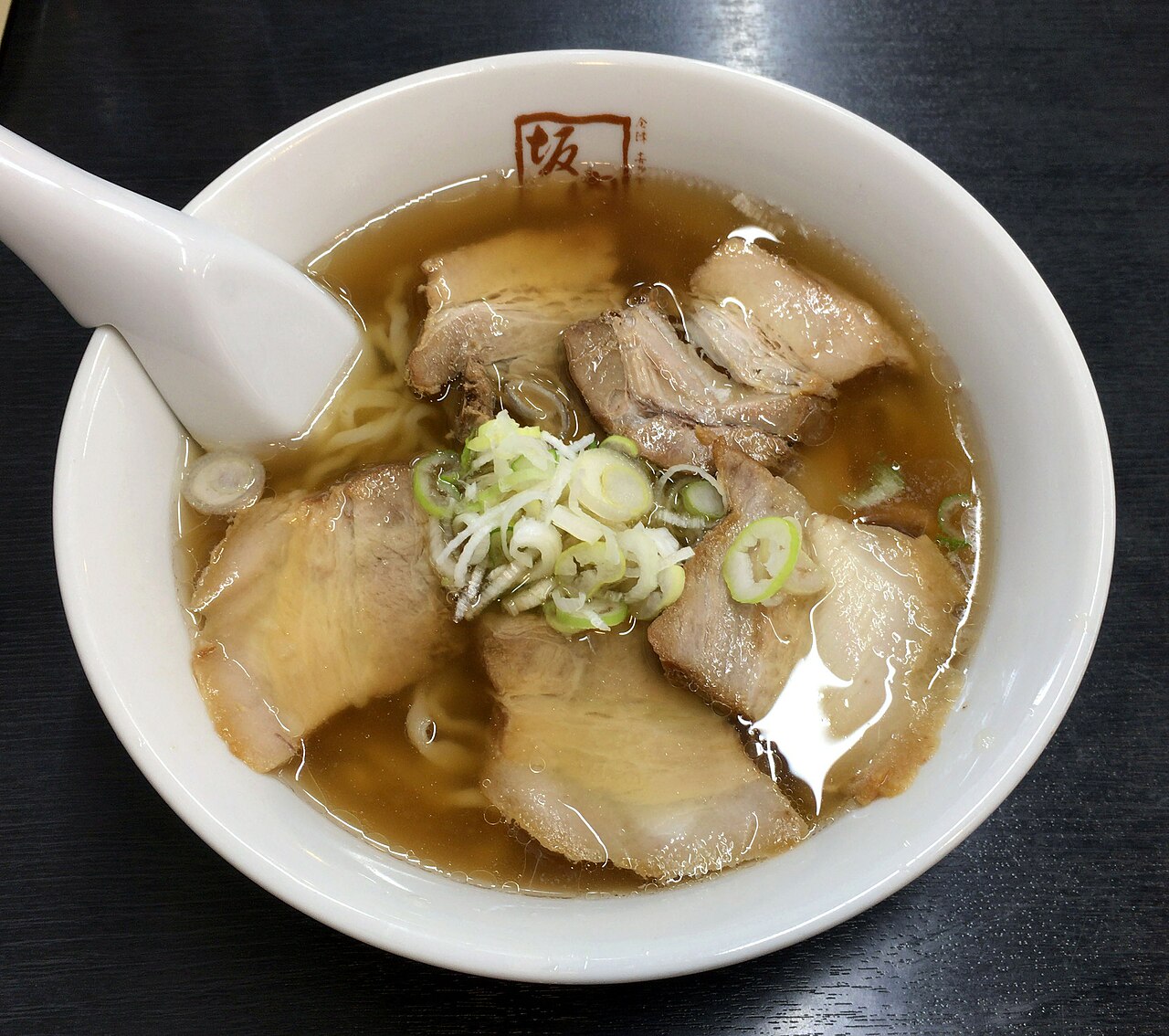
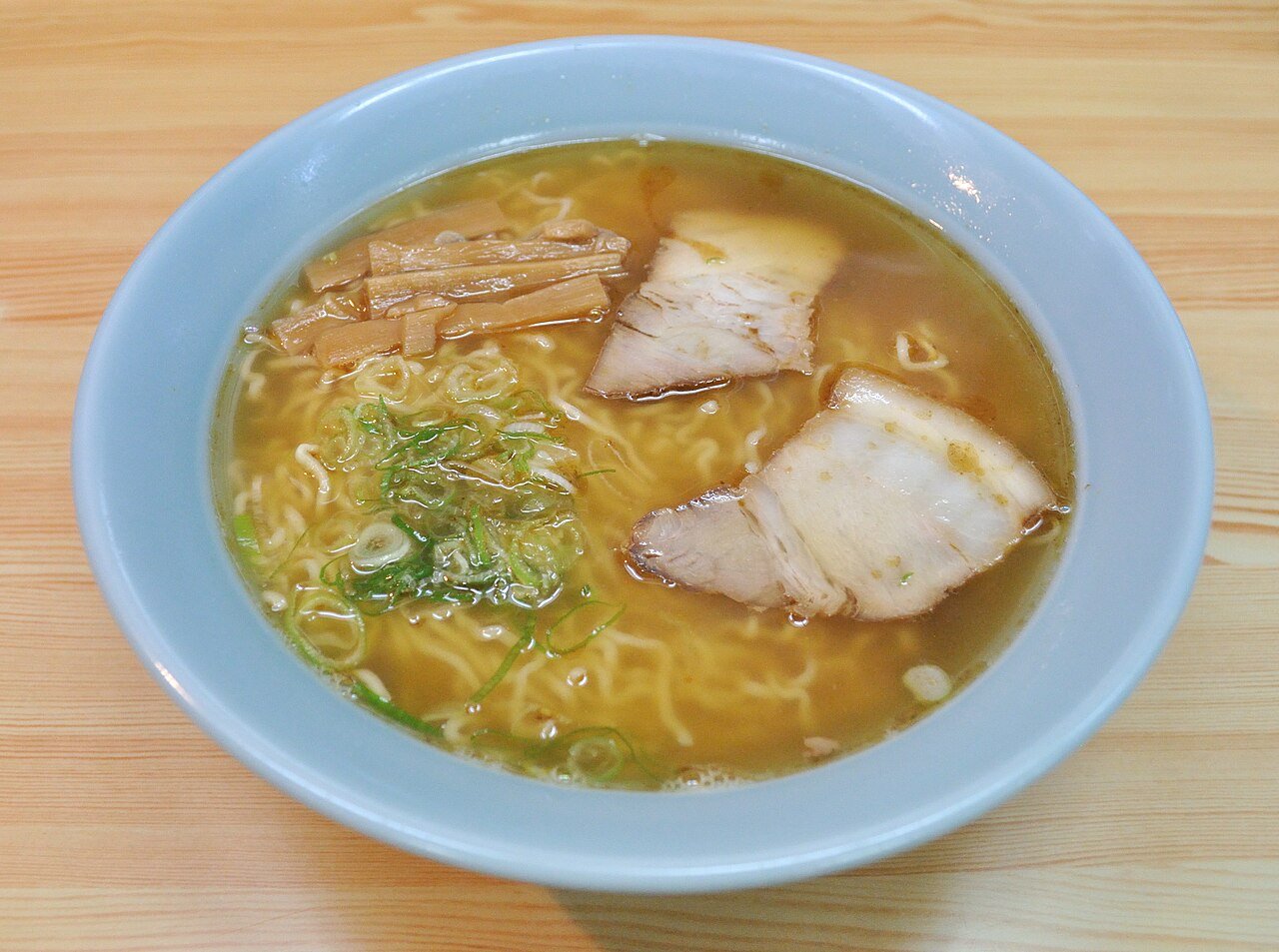
Kitakata ramen — clear soy-sauce broth, wide flat noodles, layered chashu 🍜 Kitakata · Fukushima4
Kitakata Shoyu
Kitakata Shoyu · Fukushima

A small town in Fukushima said to have the densest concentration of ramen shops per head in Japan. The signature is its wide, flat, wavy noodles — thicker and broader than anywhere else in the country — sitting in a clean, clear soy-sauce-and-pork-bone broth. It's topped with several slices of chashu, menma, and spring onion. Locals here even eat ramen for breakfast (asa-ra).

🍜Broth: shoyu (soy sauce)-pork bone, clear
Signature: the widest flat noodles in Japan · piled chashu · eaten for breakfast
💴Rough price: bowl around 700–1,000 yen (check the latest)
Japanese Food Encyclopedia →
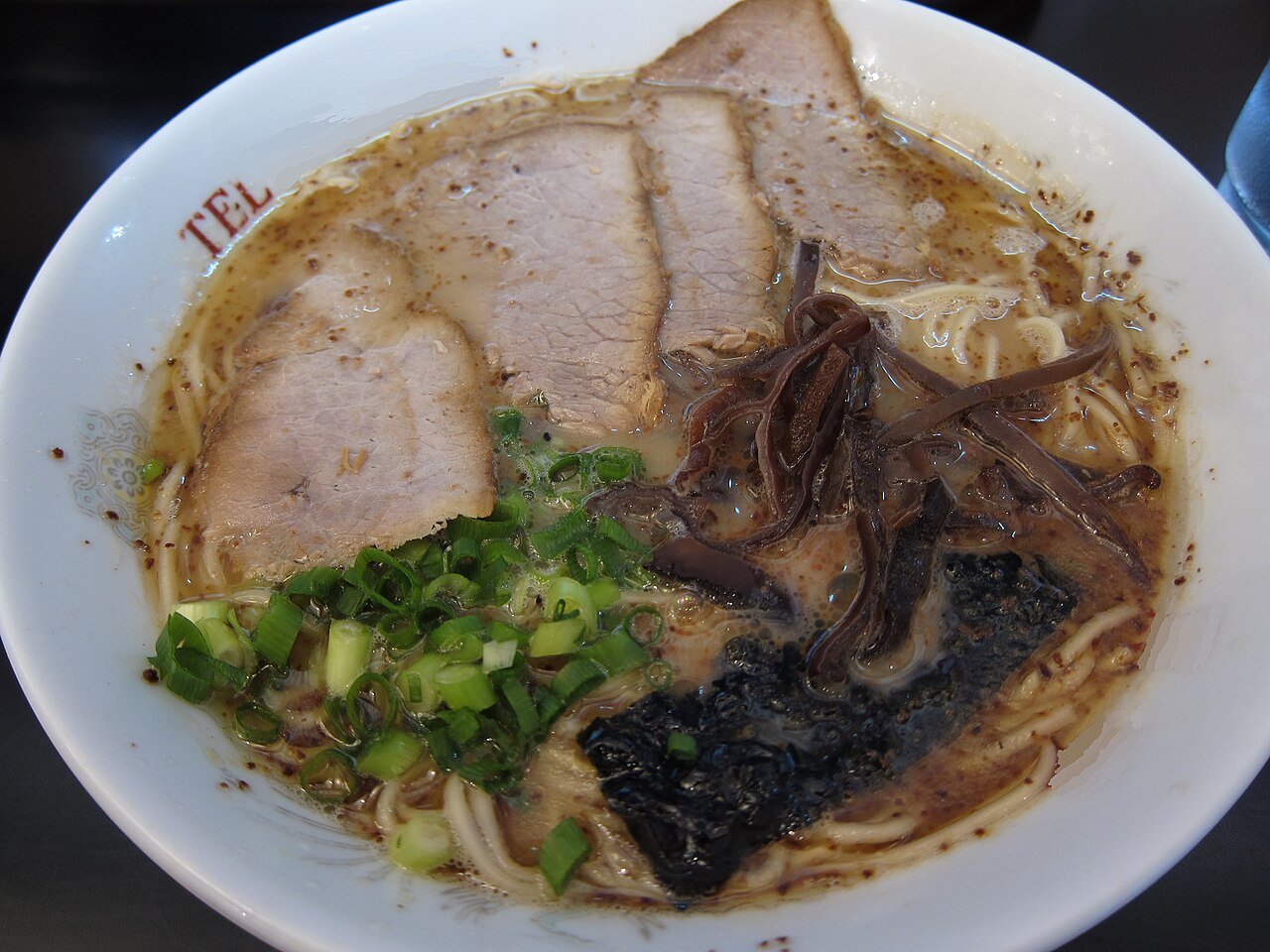
Kumamoto ramen — tonkotsu broth with mayu black garlic oil 🧄 Kumamoto · Kyushu5
Kumamoto Tonkotsu
Kumamoto Tonkotsu · Kyushu

A cousin of Hakata with its own character — a tonkotsu broth blended with chicken bones, making it thick yet more rounded. The thing you'll remember it by is mayu, the dark fried-garlic oil drizzled over the top, lending a toasty garlic aroma and a deeper flavour. The noodles here are a touch thicker than Hakata's, so the bowl is more filling.

🍜Broth: tonkotsu (pork + chicken) + mayu fried-garlic oil
Signature: toasty black garlic oil · noodles thicker than Hakata
💴Rough price: bowl around 700–1,100 yen (check the latest)
Kyushu Food Guide →
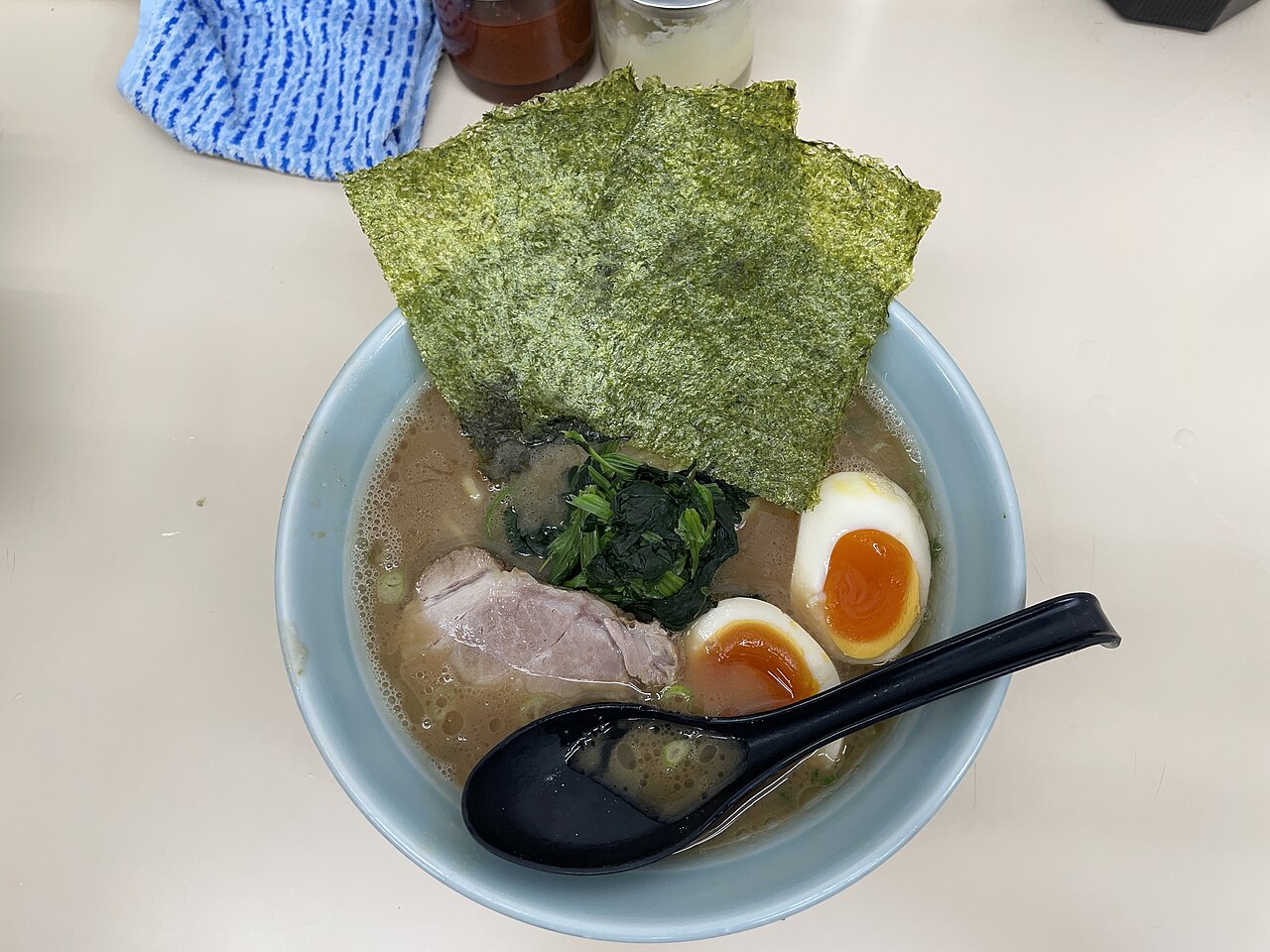
Iekei ramen from Yokohama — tonkotsu-shoyu broth, thick noodles, nori seaweed 🌊 Yokohama · Kanto6
Iekei Yokohama
Iekei · Yokohama

A style born in Yokohama and hugely popular with the younger crowd right now — a cross between tonkotsu and shoyu, a thick pork-bone broth blended with bold soy sauce, paired with thick straight noodles. The classic toppings are big sheets of nori, spinach, and chashu, eaten with a side of steamed rice for dipping in the broth. Many shops let you dial in the broth strength, the oil richness, and the noodle firmness.

🍜Broth: tonkotsu-shoyu (pork + soy sauce), thick
Signature: thick noodles · big nori sheets + spinach · adjust strength/oil/firmness
💴Rough price: bowl around 800–1,200 yen · rice often free/cheap (check the latest)
Japanese Food Encyclopedia →
Takayama ramen — clear soy-sauce broth, thin wavy noodles, menma and chashu 🏔️ Takayama · Gifu7
Takayama Shoyu
Takayama Shoyu · Gifu

The ramen of the old town in the Hida valley, which locals call "chuka soba" — a clear soy-sauce broth that's light yet fragrant and rounded. What sets it apart is that the broth and the soy seasoning are often simmered together in one pot (no separate tare), paired with thin wavy noodles. The toppings are simple — spring onion, menma, chashu — a tidy bowl that's easy to eat while strolling the old town.

🍜Broth: shoyu (soy sauce), clear and light
Signature: thin wavy noodles · rounded soy flavour · a compact bowl
💴Rough price: bowl around 700–1,000 yen (check the latest)
Japanese Food Encyclopedia →
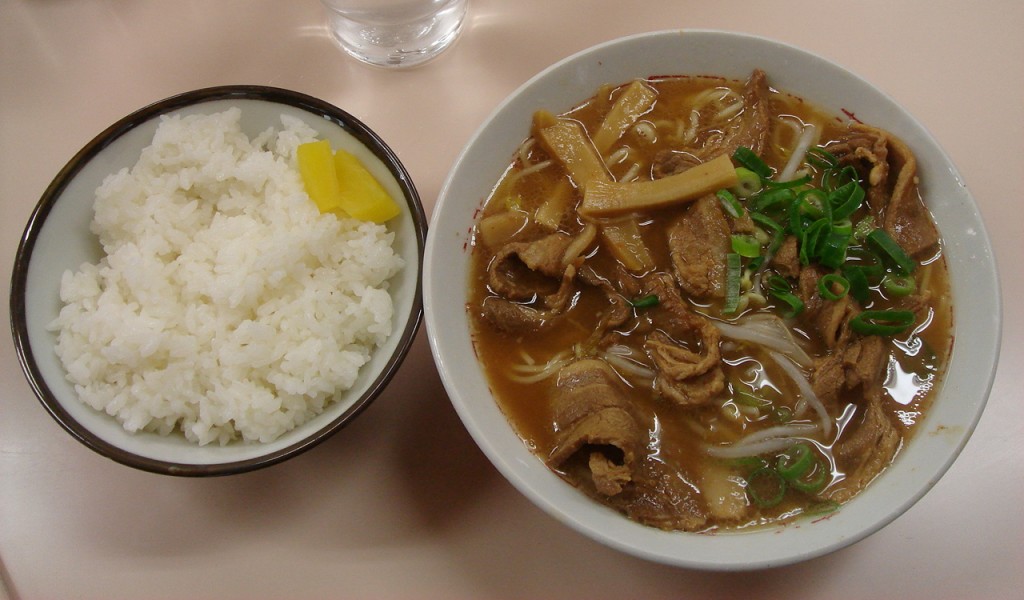
Tokushima ramen — dark brown broth, pork belly, served with a bowl of rice 🍚 Tokushima · Shikoku8
Tokushima Ramen
Tokushima Ramen · Shikoku

The ramen of Shikoku island that eats like a dish to go with rice — the most famous version is the "brown" one, a pork-bone broth seasoned with dark soy sauce until it turns sweet-savoury, topped with richly stewed pork belly, spring onion, and bean sprouts. Many people crack a raw egg in to mix through, and what makes it distinctive is that you eat it alongside a small bowl of steamed rice, treating the ramen as the side. Bold and satisfying.

🍜Broth: soy sauce-pork bone, rich sweet-savoury
Signature: richly seasoned pork belly · crack in a raw egg · eaten with rice
💴Rough price: bowl around 600–950 yen (check the latest)
Japanese Food Encyclopedia →
Order Ramen Without the Panic

Ordering at the Ticket MachineStep by Step

Most ramen shops use a ticket machine (券売機 / shokkenki) right at the entrance — it sounds intimidating but it's actually very easy. Follow these 6 steps and you'll order as smoothly as a local.

STEP 1
Buy a Ticket at the Machine

Drop in your coins or notes at the ticket machine first. The top-left button is usually the shop's main / most popular bowl — press to choose the one you want, then add any extra toppings. The machine spits out a ticket and your change. Many machines have photos, and some have an English-language button.

STEP 2
Hand Over the Ticket, Take a Seat

Walk in and sit down (often single counter seats), then place the ticket on the counter where the staff can see it, or hand it over when they come round. You don't have to say much. Some shops have self-serve water sitting right there.

STEP 3
Say Your Noodle Firmness

Tonkotsu shops (Hakata especially) often ask how firm you want your noodles. You can answer futsu (normal), kata (firm), barikata (very firm), or yawa (soft). For beginners, futsu or kata is a safe first choice.

STEP 4
Add Toppings If You Like

If you bought a topping ticket, hand it over together. Popular ones are ajitama (soft-boiled egg), nori (seaweed), negi (extra spring onion), and chashu (extra pork). On the table there's usually free grated garlic, pickled ginger, chilli, and sesame to add yourself.

STEP 5
Refill with Kaedama

Hakata-style tonkotsu shops only — when your noodles are nearly gone but you still have broth, say "kaedama" and a fresh portion of noodles arrives. It usually costs about 100–200 yen. Some shops have you pay at the machine first, or use a buzzer. If you're out of broth, no need to refill.

STEP 6
Slurp Away, Then Clear Up

Slurp the noodles loudly all you like (it's completely normal). Since you mostly paid at the machine, you can just get up and leave — no tipping. Some shops ask you to take your bowl/tray back to the counter. Leave your seat tidy, because the queue moves fast.

Ramen-Eating Tips

Eat RamenWell, and Without the Awkwardness

Ramen is easy to eat and there's not much ceremony to it, but knowing these 6 things makes it more fun and keeps you from accidentally breaking shop etiquette.

🍜
Slurp Loudly — It's Fine
Slurping (susuru) pulls in air with the noodles so you taste and smell the bowl more fully, and it cools the hot noodles so they don't scald your mouth. No need to be shy.
⏱️
Eat It Hot, Don't Let It Soften
Ramen is best before the noodles soften, especially tonkotsu's thin noodles — eat fairly quickly, and the counter seats turn over fast anyway.
Kaedama Is for Tonkotsu
The kaedama noodle refill is mainly a Hakata-style tonkotsu custom. Regular miso or soy-sauce shops usually don't have the system.
🚶
Allow Time to Queue at Famous Shops
Legendary shops can have hour-long lines, especially at lunch. Try going off-peak, or check whether you buy a ticket at the machine before joining the queue.
🥢
No Need to Finish the Broth
Finishing the noodles and toppings is good form, but leaving some broth isn't rude (tonkotsu is fairly salty and rich). Sip enough for the flavour and leave the rest.
🧄
Season It Yourself
The table usually has free grated garlic, pickled ginger (beni shoga), sesame, chilli, and chilli oil. Want it spicier or bolder? Add as much as you like.
Map

Regional RamenAcross Japan on One Map

See clearly which city each style comes from — from Hokkaido (miso/shio) in the far north, down through Kanto (iekei), to Kyushu (tonkotsu) in the south. Wherever you go, order the local bowl right there.

Good to Know Before You Go

Ramen TidbitsThat Make Ordering More Fun

🥟
Pair It with Gyoza
Lots of ramen shops offer gyoza and rice as an add-on set. Ordering them together as a full meal is hugely popular — you press it on the ticket machine the same way.
🍜
How to Eat Tsukemen
The noodles come in a separate bowl — dip them a bite at a time into the concentrated broth before eating. The broth is usually bolder and cooler. When the noodles are done, some shops will add hot broth (sup-wari) to thin the rest so you can drink it.
🌶️
Tantanmen Can Be Spicy
It's a Japanese-style sesame-chilli soup, milder than the original Chinese dan dan. Some shops let you set the heat level — if you don't love spice, start with the mild setting.
🈂️
No English Menu?
Many machines are Japanese only, but the top-left button is usually the main bowl. Use Google Translate's camera on the machine, or point at the photo / button the person ahead pressed.
🌙
Late-Night Ramen After Drinks
Japanese people love to cap off a night out with a bowl of ramen (shime). Plenty of shops stay open late or run 24 hours, especially in the nightlife districts.
🪙
Carry Cash / Coins
Some older ticket machines take only cash and give change in coins. Keeping small notes and 100–500 yen coins handy is convenient, though many shops now accept IC cards too.
Related Guides

Keep Eating Your Way Across Japan — the Food Encyclopedia and Foodie Cities

🍱

Japanese Food Encyclopedia

What to eat in Japan — the must-try dishes, how to order, and table manners, all gathered on one page.

Food Encyclopedia →
🍣

Japanese Sushi Guide

The types of sushi, how to eat it the proper way, and how to choose between conveyor-belt, counter, and takeaway.

Sushi Guide →
🍶

Izakaya Guide

A beginner's tour of the Japanese pub — otoshi, how to order, nomihodai, and drinking etiquette.

Izakaya Guide →
🍜

Fukuoka Food Guide

The tonkotsu capital — Hakata ramen, riverside yatai stalls, and the Kyushu food you can't miss.

Fukuoka Food Guide →
❄️

Sapporo Food Guide

Miso ramen, soup curry, Genghis Khan lamb, and Hokkaido seafood — the full winter foodie city.

Sapporo Food Guide →
🦪

Hiroshima Food Guide

Hiroshima-style okonomiyaki, oysters, and the local dishes you have to try when you visit.

Hiroshima Food Guide →
Frequently Asked Questions

Questions AboutJapanese Ramen

How many broth styles of Japanese ramen are there?
Broadly, ramen splits into 4 main broth bases: shoyu (clear, soy-sauce based), shio (salt, the lightest and palest), miso (rich and savoury, a Hokkaido specialty), and tonkotsu (pork bones simmered milky-white, from Kyushu). On top of that are two very popular eating styles — tsukemen (noodles served separately to dip in a concentrated broth) and tantanmen (a sesame-chilli soup, a Japanese take on Sichuan dan dan). Every shop also tweaks its own recipe.
What is Hakata (tonkotsu) ramen and how is it different?
Fukuoka's Hakata ramen uses a tonkotsu broth (pork bones simmered until milky-white) paired with very thin, straight noodles. The signatures are choosing your noodle firmness (e.g. barikata very firm, kata firm, futsu normal, yawa soft) and the kaedama system — a noodle refill for around 100–200 yen, because the thin noodles soften fast, so people order fewer noodles first and top up later. A bowl usually starts around 500–900 yen (check the latest).
What is kaedama and how do you order it?
kaedama (替え玉) means a refill of just the noodles into your remaining broth. It's common at Hakata-style tonkotsu shops where the thin noodles disappear quickly. When the noodles are nearly gone but you still have broth, tell the staff "kaedama" and a fresh portion of noodles arrives. It usually costs around 100–200 yen; some shops have a ticket or buzzer to order it. If you're out of broth, there's no need to refill.
Is it really okay to slurp ramen loudly?
Yes, and it's completely normal in Japan. Slurping (susuru) pulls in air along with the noodles, so you taste and smell the bowl more fully, and it cools the hot noodles so they don't scald your mouth. No need to be shy — but don't force it if it isn't your thing, just eat the way that's comfortable.
Do you have to finish all the broth?
Not at all. Finishing the noodles and toppings is good form, but whether you drink all the broth or leave some is up to you — it's not rude either way. Many people sip enough to enjoy the flavour and leave the rest (tonkotsu broth is fairly salty and rich). Counter seats turn over quickly, so getting up promptly when you're done so others can sit is good manners.
What are Japan's famous regional ramen styles?
The well-known ones include Hakata tonkotsu (Fukuoka), Sapporo miso (Hokkaido · with corn and butter), Hakodate shio (the clearest salt broth), Kitakata (soy sauce, wide flat noodles), Kumamoto tonkotsu (with mayu black garlic oil), Iekei (Yokohama · tonkotsu-shoyu, thick noodles), Takayama (clear soy sauce), and Tokushima (sweet-savoury soy sauce eaten with rice). Each city has its own style.
Ready to Go Ramen Hunting?

Start in the Tonkotsu Capital
Fukuoka — Then Find a Well-Placed Hotel

If you want to trace Hakata ramen back to the source, open the Fukuoka food guide for the famous shops and Kyushu eats, then lock in a hotel near the nightlife district early — it makes the whole trip far easier.

🔴 Fukuoka Hotels Fukuoka Food Guide