🌏 Destinations · All 🇯🇵 Japan · full guide Kagoshima (Yakushima) Nagano (Kamikochi) Wakayama (Kumano Kodo) 🏞️ Nature & World Heritage 🧭 Travel Prep About Contact 🇹🇭 ไทย🇬🇧 English🇨🇳 中文🇪🇸 Español🇫🇷 Français
🏞️ Nature & World Heritage · Japan Travel

Japan's Nature Escapes — Ancient Forests, Alps & World Heritage

Japan isn't only big cities and neon lights — step beyond the train stations and you'll find thousand-year-old cedar forests, soaring alpine valleys, marshlands that run to the horizon, and a jungle island with its own endemic wildcat. We've picked six nature and World Heritage spots, each with the best season to go, how to get there, and hiking tips.

Start Here

Tired of Crowds and Concrete? —This Is Japan's Other Side

Picture this: you've just stepped off a bus deep in a valley, the air cool and clear, an emerald-green river flowing past snow-topped peaks, no traffic noise, no neon signs — this is the side of Japan most people fly in and never see, because they stay glued to Tokyo, Osaka, and Kyoto. Straight up: Japan's nature is wilder and more pristine than many travellers imagine — thousand-year-old cedar forests, alpine ranges, marshlands stretching out of sight, all the way to a jungle island with its own endemic wildcat.

On this page we've picked six nature and World Heritage spots spread from the far southern islands up to Hokkaido — some are UNESCO sites, some take a boat across the sea to reach, and each one tells you exactly what it's known for, the best season to go, how to get there, and who it suits, so you can slot the right one into your trip.

🏞️ Straight up, first thing: many of the nature spots on this page open and close with the season, and some take several boat or bus transfers to reach (Kamikochi closes in winter; Yakushima and Iriomote need a ferry). Ticket prices, transport schedules, and opening dates all change, so always check the official park or ferry-company website before you lock in real plans.
🌲
Ancient Forests
Yakushima — cedars 2,000–7,200 years old · World Heritage.
⛰️
The Japan Alps
Kamikochi — a car-free valley, clear water, snowy peaks.
🐻
Wild Frontier
Shiretoko, Hokkaido · World Heritage, rich in wildlife.
🌾
Marshlands & Pilgrim Trails
Oze's boardwalks · the sacred Kumano Kodo forest.
Compare the 6 spots

The Big Picture First — What's Where, and When to Go

These six nature spots are scattered across Japan from the far north to the far south, and each has its own best season. Scroll the table to compare what they're known for, when to go, and who they suit — then read the full details in the cards below.

DestinationRegionKnown for / World HeritageBest seasonSuits
YakushimaYakushima · KyushuSouthAncient cedar forest · World Heritage 1993Mar–May · Oct–NovHikers / rainforest
KamikochiKamikochi · ChubuCentralThe Japan Alps · car-free valleyApr 17–Nov 15 (2026)Easy walks / families
ShiretokoShiretoko · HokkaidoFar NorthWild forest-and-sea · World Heritage 2005Jun–Oct · Feb–Mar (drift ice)Wildlife / adventure
OzeOze · Kanto-TohokuCentralHighland marshlands, boardwalksLate May–Jun · early OctEasy hiking / wildflowers
Kumano KodoKumano Kodo · KansaiCentralAncient pilgrimage trail · World Heritage 2004Mar–May · Oct–NovWalkers / spiritual
IriomoteIriomote · OkinawaFar SouthSubtropical jungle, mangroves · World Heritage 2021Warm year-round (avoid typhoons Aug–Sep)Kayak / diving / rainforest
🧭 How to choose: if it's your first trip and you don't want a slog, start with Kamikochi (easy walking, near Matsumoto) or the Kumano Kodo (you can walk a short stretch, and pair it with Kansai) · for the "real deep forest" go for Yakushima and Iriomote (both need a boat, so allow time) · for wildlife and drift ice, head to Shiretoko · and Oze is ideal if you love wildflower meadows and easy boardwalk strolls.
6 Nature Spots

Forest, Mountain, Sea — Pick the Nature That Fits

These are the places people come back from saying the same thing — worth the long trip. Each has a completely different feel, so read them all and choose the one that matches your style and the season of your trip.
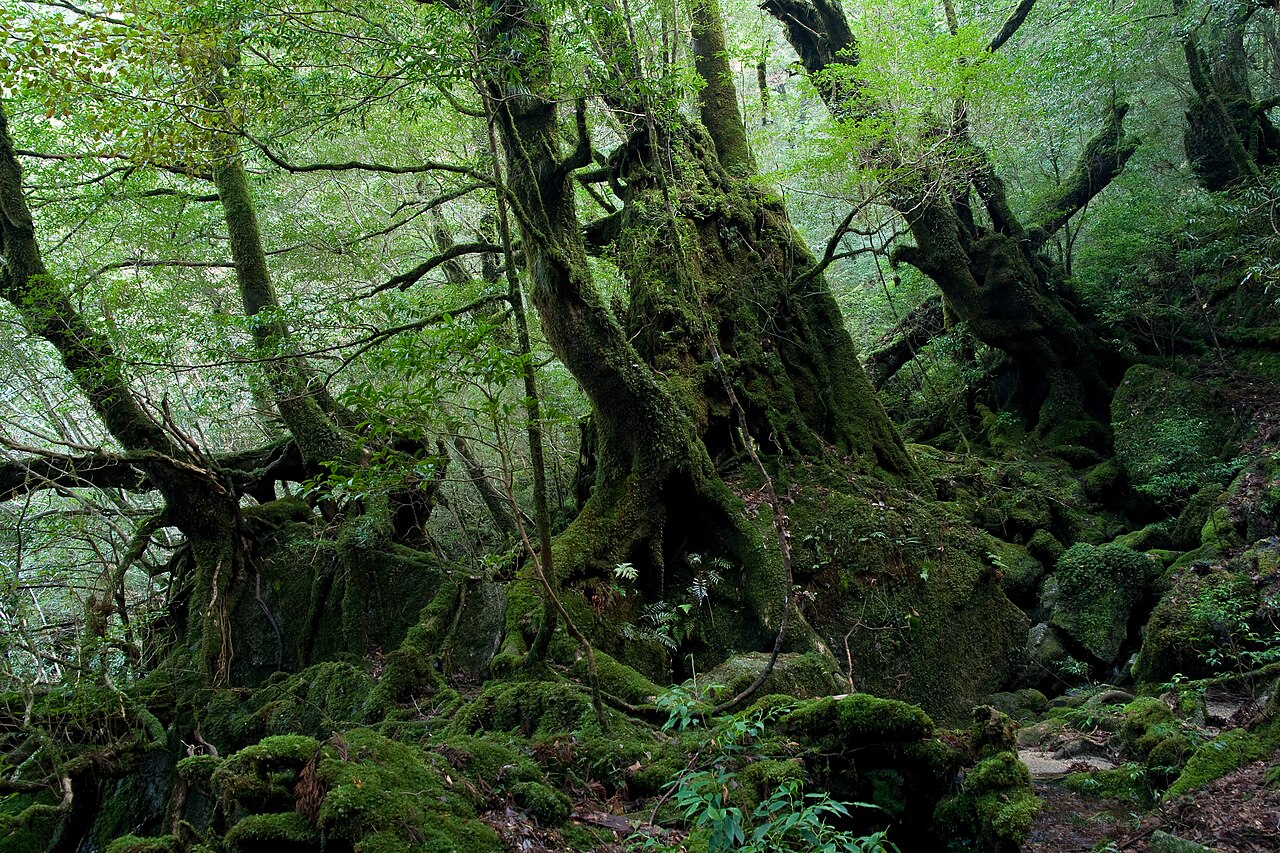
Moss-covered ancient cedar forest on Yakushima island, like a scene from the film Princess Mononoke 🌲 Kagoshima · Kyushu1
Yakushima
Yakushima · UNESCO 1993

A rainforest island off the far south that became one of Japan's first natural World Heritage Sites (1993). Its legend is "Jomon Sugi", a giant cedar said to be 2,000–7,200 years old, while the Shiratani Unsuikyo trail is the lush green moss forest that inspired the woodland scenes in Princess Mononoke — walking it feels like slipping into another world.

📍Location: An island off the coast of Kagoshima Prefecture · southern Kyushu
🌲Known for: The ancient Jomon Sugi cedar · the Shiratani Unsuikyo moss forest
⛴️Getting there: Toppy/Rocket fast ferry from Kagoshima (~2 hrs) or car ferry (~4 hrs); you can also fly into Yakushima Airport
💡Tip: It's one of the rainiest places in Japan — pack a rain jacket and grippy hiking shoes. The Jomon Sugi round trip is ~10 hours, so set out before dawn.
Kagoshima Guide →
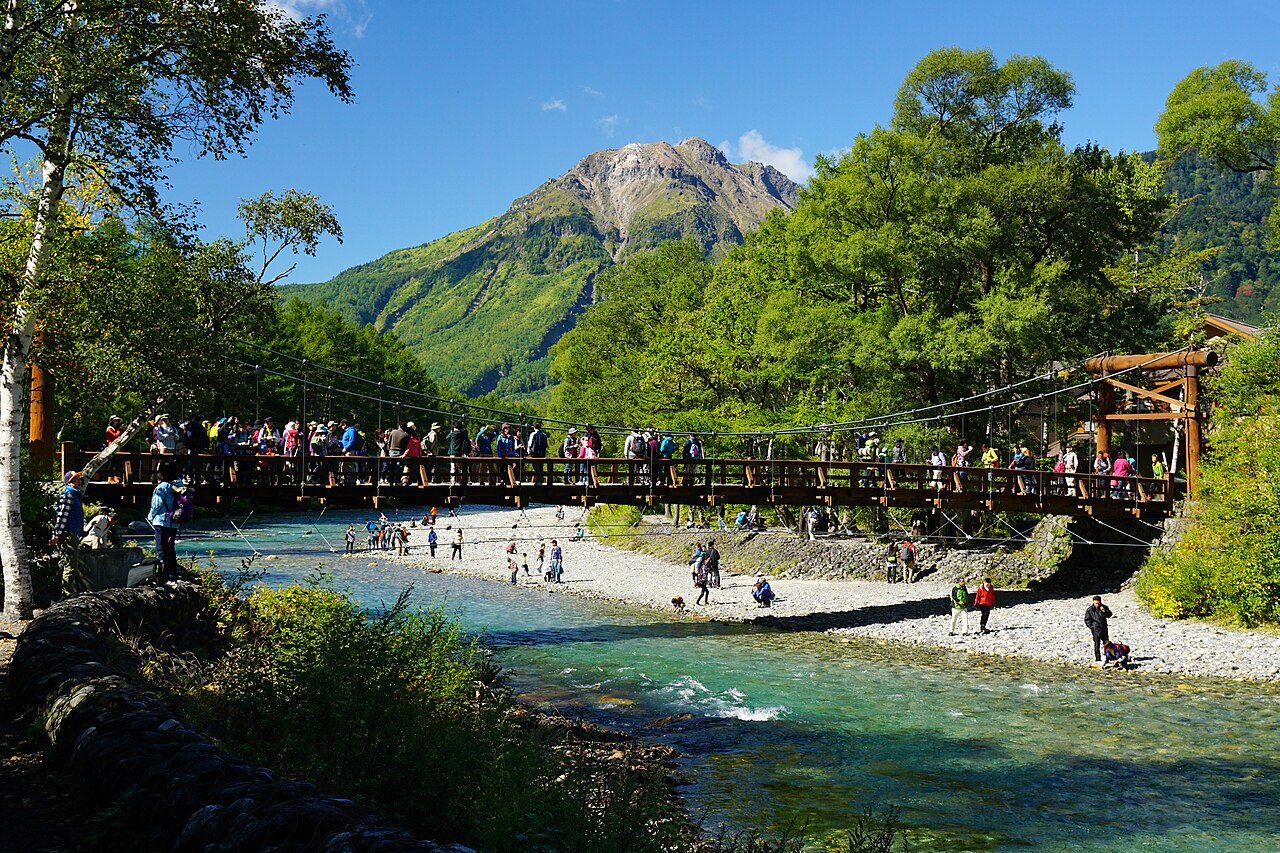
Kappabashi Bridge over the emerald Azusa River at Kamikochi, with the snow-capped Japan Alps behind ⛰️ Nagano · Chubu2
Kamikochi
Kamikochi · Japan Alps

A valley deep in the Japan Alps so beautiful it's nicknamed the "jewel of the mountains". The icon shot is Kappabashi Bridge crossing the clear green Azusa River, with the snow-dusted Hotaka peaks rising above. Private cars are banned, the riverside paths are flat and easy, and even half a day on foot gets you the best of the views.

📍Location: Chubu-Sangaku National Park, Nagano Prefecture
📅Open seasonally: roughly Apr 17–Nov 15, 2026 · closed in winter
🚌Getting there: From Matsumoto, train to Shin-Shimashima then bus, or enter from the Takayama/Hirayu side (private cars must transfer to a bus)
💡Tip: The Matsumoto–Kamikochi bus now requires advance seat reservations (rule changed in 2025), so book ahead. The valley is much colder than the city — pack a warm layer.
Nagano Guide →
🐻 Hokkaido3
Shiretoko
Shiretoko · UNESCO 2005

A peninsula on the far northeastern tip of Hokkaido, inscribed as a World Heritage Site in 2005 for having one of the most intact links between marine and land ecosystems anywhere. It has Japan's densest brown-bear population, Steller's sea eagles, and orcas. The highlight is the boardwalk loop around the "Shiretoko Five Lakes", and in winter drift ice floats in from the Sea of Okhotsk.

📍Location: Eastern Hokkaido · the base town is Utoro
🐻Known for: Brown bears · the Shiretoko Five Lakes · drift ice late Jan–early Apr
✈️Getting there: Fly into Memanbetsu Airport, then ~2 hrs by car (over 5 hrs from Sapporo)
💡Tip: During bear season (May–Jul), the Five Lakes walk requires a safety briefing or a guide — check the latest conditions at the park centre.
Hokkaido Guide →
🌾 Gunma-Fukushima4
Oze
Oze National Park

A highland marshland national park about 150 kilometres north of Tokyo, straddling four prefectures. The highlights are the Ozegahara marsh and Lake Ozenuma, both crossed by raised wooden boardwalks, so the walking is flat and easy. From late May to early June white skunk-cabbage (mizubasho) blooms across the wetlands, and by October the grasses turn a coppery gold — beautiful in a different way.

📍Location: Where Gunma, Fukushima and Niigata meet · ~150 km north of Tokyo
🌼Known for: White skunk-cabbage late May–Jun · summer lilies · golden grass in early Oct
🚌Getting there: Joetsu Shinkansen to Jomo-Kogen Station then bus to the trailhead, or a direct bus from Tokyo (~4 hrs)
💡Tip: Closed and deep in snow in winter · crossing the full marsh from one point to the next is ~6–8 hrs, so wear hiking shoes and bring your own water and food.
Gunma Guide →
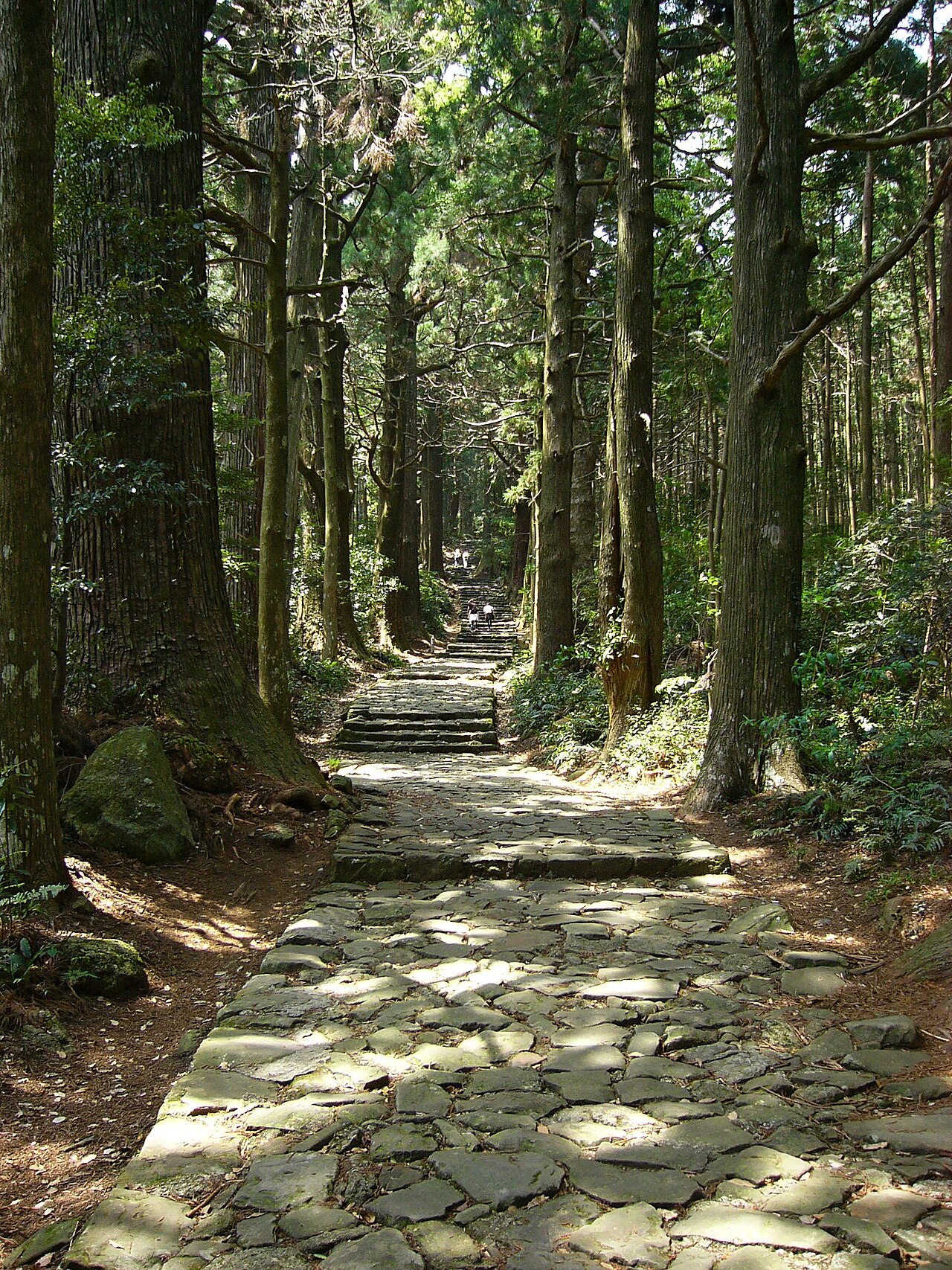
The ancient stone Kumano Kodo trail flanked by tall cedar trees in Wakayama Prefecture ⛩️ Wakayama · Kansai5
Kumano Kodo
Kumano Kodo · UNESCO 2004

A network of ancient pilgrimage trails across the Kii Peninsula, walked by pilgrims to the Kumano Sanzan shrines for over 1,000 years, inscribed as a cultural World Heritage Site in 2004. You walk through old cedar forest on moss-covered stone paths, ending at Kumano Nachi Taisha, which stands beside Nachi Waterfall and a three-storey pagoda — one of the most-photographed scenes in all of Japan.

📍Location: Kii Peninsula, Wakayama Prefecture · the base town is Tanabe
🥾Known for: The main Nakahechi route ~70 km (short sections possible) · the popular Daimon-zaka stretch up to Nachi
🚆Getting there: From Osaka/Kyoto/Nagoya, JR Kisei Line to Kii-Tanabe or Kii-Katsuura, then a bus
💡Tip: You don't have to walk the whole trail — pick a short section and stay overnight in a ryokan or minshuku along the way · avoid the rainy season May–Jul when the path gets slippery.
Wakayama Guide →
🛶 Okinawa6
Iriomote Island
Iriomote · UNESCO 2021

A subtropical jungle island in Okinawa's Yaeyama group, inscribed as a natural World Heritage Site in 2021 (Japan's fifth). Jungle and mangrove forest cover nearly 90% of the island, home to the endemic Iriomote wildcat — only around 100 remain. Everyone comes here to do the same things: kayak through the mangroves, hike up to a waterfall, and snorkel the clear coral seas.

📍Location: Yaeyama Islands, Okinawa Prefecture · the far south of Japan
🛶Known for: Mangrove kayaking · Pinaisara Falls · diving · the Iriomote wildcat
⛴️Getting there: Fly into Ishigaki, then a ferry to Uehara/Ohara port (~40 min)
💡Tip: Warm all year, but avoid typhoon season Aug–Sep · book kayak and hiking tours ahead; a local guide handles the tides for you.
Japan Travel Guide →
Pick the Right Season

When to Go — Japan's Nature Changes Through the Year

Most nature spots aren't beautiful in every season — some close in winter, some are spectacular only when the drift ice arrives. Understand these three windows and you can time your trip exactly right.

Window 1
Late Spring–Early Summer (May–Jun)

When the mountains and marshes wake up from the snow — Kamikochi has just reopened (mid-Apr) with fresh green leaves · Oze's white skunk-cabbage covers the wetlands from late May to early June. Watch for the rainy season (tsuyu) from late June into July, when trails turn slippery and views close in.

Window 2
Summer–Autumn (Jul–Oct)

The real hiking season — Shiretoko's Five Lakes walk is fully open (skip peak bear season if you'd rather not need a guide) · late Sep–early Oct, Oze's grasses turn gold and the red leaves start creeping down from the high peaks · for Iriomote, avoid typhoons in Aug–Sep.

Window 3
Winter (Dec–Mar)

Many spots close (Kamikochi and Oze are deep in snow), but some are at their most beautiful — Shiretoko gets drift ice from the Sea of Okhotsk late Jan–early Apr · Yakushima and Iriomote in the south stay warm and visitable · the Kumano Kodo is walkable but cold, with snow on the high sections.

Before You Hit the Trail

How to Hike JapanSafely and Have Fun Doing It

Japan's nature is more accessible than you'd think, but it's real forest and mountain, not a city park. Pack these six things and your trip runs smoothly, with no surprises out on the trail.

👟
Proper Hiking Shoes
Many trails are rock, tree roots, and slick mud (especially Yakushima, where it rains almost daily). Sneakers slip easily — hiking or trail shoes with grip are far safer.
🌧️
Rain Jacket + Warm Layer
Mountain weather turns fast and runs several degrees colder than the city (Kamikochi, Shiretoko). Always pack a light rain jacket and a warm layer, even in summer.
📅
Check Opening Dates Ahead
Kamikochi and Oze open seasonally — closed in winter with no transport running. Check the park website and the latest bus/ferry schedules before you fix dates; don't assume they're open year-round.
🐻
Know the Wildlife Rules
Hokkaido and Nagano have bears; some trails recommend a bear bell and walking in a group. At Shiretoko during bear season you'll need a briefing or guide — follow the warning signs strictly.
🍙
Bring Your Own Water and Food
Forests and marshes rarely have convenience stores (Oze's marsh crossing is 6–8 hrs). Buy water and onigiri in town before you head in, and carry every bit of rubbish back out.
♨️
Finish With an Onsen
Many nature areas have an onsen town not far away. A hot soak to ease your legs after a full day on foot is the best reward — see our guide to onsen towns across Japan.
♨️ Top tip: plan a night in an onsen town after your hike — a long hot-spring soak to loosen the muscles before you head back to the city. Never tried it? Read our beginner's onsen guide first.
Map

6 Nature SpotsAcross Japan on One Map

See clearly how far apart they are — from Iriomote in the far south to Shiretoko in the far north, these sit at opposite ends of the country. Plan for one or two spots per trip and you'll make the most of the travel time.

Plan Your Nature Trip

6 Things That Make a Nature TripRun Smoothly From Day One

🗺️
Pick 1–2 Spots Per Trip
These six are spread to the ends of the country, so don't try to bag several in one trip. Pair by region — the Kumano Kodo with Kansai, or Yakushima with Kyushu.
🚗
Rent a Car for Islands/Countryside
On Yakushima, Iriomote, and at Shiretoko the sights are far apart and buses are sparse — a rental car gives you far more flexibility (bring an international permit).
🏨
Stay Near the Trailhead
Sleeping in the onsen town or village near the trail (Utoro/Tanabe/Miyanoura) lets you set out early for the hiking window. Rooms fill fast in peak season — book ahead.
🎟️
Book Tours/Buses/Ferries Ahead
The Kamikochi bus needs a seat reservation (since 2025); ferries to Yakushima/Iriomote and kayak and drift-ice tours sell out fast in high season. Book online before you go.
📶
Get an eSIM + Offline Maps
Signal often drops in the forest and mountains. Download offline Google Maps of the area first, and tell your accommodation which route you're taking in case of emergency.
🧥
Prepare for All Weather
Drizzle, strong sun, and cold wind on the peaks can all happen in one day. Dress in layers, pack a hat and sunscreen, and check that spot's forecast before you set out.
Related Guides

Keep Going Off the Beaten Path — Hidden Corners, Art Islands, and Onsen

🗺️

Japan's Hidden Gems

The corners tourists haven't reached yet — Takachiho Gorge, the Tottori sand dunes, the Noto Peninsula, and secret spots nationwide.

Hidden Gems →
🎨

The Setouchi Art Islands

Naoshima, Teshima, Yayoi Kusama's pumpkin, and museums set in the Inland Sea — nature meets art.

Art Islands →
♨️

Onsen Towns Across Japan

12 onsen towns across every region — soak away tired legs after a hike, and choose the town that fits your trip.

Onsen Towns →
🍁

Autumn Leaves Guide

Plan a fall-foliage trip — regional peak windows, the standout koyo viewing spots, and how to time the colour just right.

Autumn Leaves →
🇯🇵

Full Japan Travel Guide

Every region and city, with links into city guides, hotels, and attractions across Japan.

Japan Guide →
ℹ️

Japan Travel Prep

Visa · eSIM · IC cards · JR Pass · yen · power plugs · etiquette — everything before you fly to Japan.

Travel Prep →
Frequently Asked Questions

Questions AboutJapan's Nature Spots

How many natural World Heritage Sites does Japan have?
Japan has five Natural World Heritage Sites: Yakushima (inscribed 1993), Shirakami-Sanchi (1993), Shiretoko (2005), the Ogasawara Islands (2011), and the cluster of Amami-Oshima, Tokunoshima, northern Okinawa and Iriomote (2021). The Kumano Kodo and the Kii mountain range are a cultural World Heritage Site (2004), not a natural one.
When is Kamikochi open?
Kamikochi opens seasonally, roughly mid-April to mid-November (for 2026 that is Apr 17–Nov 15). It closes in winter and the buses stop running. The valley is a car-free zone for private vehicles, so you park and transfer to a bus or taxi to get in. You can enter from the Matsumoto side (via Shin-Shimashima) or the Takayama/Hirayu side. Always check the latest opening dates and bus schedules before you go.
How do you get to Yakushima?
Yakushima is an island south of Kagoshima Prefecture, reached two main ways: a fast hydrofoil ferry (Toppy/Rocket) from Kagoshima port in ~2 hours, or a slower car ferry of around 4 hours but cheaper. You can also fly from Kagoshima or Osaka into Yakushima Airport. On the island, rent a car or use local buses, because the trailheads are far apart.
What's the best season to visit Japan's nature spots?
It depends where you're going — Kamikochi and Oze are best from late May to October (Oze's white skunk-cabbage blooms late May to early June; autumn colour in early October), Shiretoko is hikeable June to October while drift ice can be seen late January to early April, the Kumano Kodo is walkable almost year-round but avoid the rainy season May to July, and Iriomote is warm all year but avoid typhoon season August to September.
Do you have to walk the whole Kumano Kodo? Can beginners do it?
You don't need to walk all 70 kilometres. The main Nakahechi route breaks into short sections, and the most popular beginner-friendly stretch is Daimon-zaka up to Kumano Nachi Taisha and Nachi Waterfall, which takes only a few hours. If you want a longer walk, add other sections and stay overnight in a ryokan or minshuku along the way. The easiest access is from Tanabe (Kii-Tanabe Station), then a bus.
What can you do on Iriomote?
Iriomote is a subtropical jungle island in Okinawa, inscribed as a World Heritage Site in 2021, with forest covering nearly 90% of the island. The most popular activities are kayaking or canoeing through the mangroves, hiking to Pinaisara Falls, river cruises, and snorkelling over coral. The island is home to the endemic Iriomote wildcat, of which only around 100 remain. You get there by flying into Ishigaki, then taking a ferry of about 40 minutes.
Ready to Head Into the Wild?

Pick the Right Spot
and Plan Your Nature Trip

Open the full Japan travel guide to find the cities, hotels, and transport to the nature spot you've got your eye on, or start lining up accommodation near a park entrance or onsen town early — rooms fill fast in high season.

🔴 Search Hotels in Japan Onsen Towns