🌏 Destinations · All 🇯🇵 Japan · full guide Tokyo Kyoto Osaka Attractions 🎆 Fireworks Guide (Hanabi) 🌸 Cherry Blossom Guide 🧭 Travel Prep Guide About Contact 🇹🇭 ไทย🇬🇧 English🇨🇳 中文🇪🇸 Español🇫🇷 Français
🎆 Fireworks (Hanabi) · Updated 2026

Japan Fireworks Festivals (Hanabi) — Where & When to Go

Summer in Japan is fireworks season: put on a yukata, wander the yatai food stalls, then watch the whole sky explode over the river. We'll walk you through 6 standout shows around the country — when and where each one happens, how to book seats, and the tricks that keep the night fun instead of exhausting, all on one page.

Start Here

Hanabi Is More Than Fireworks —It's a Whole Japanese Summer Night

Picture a warm summer evening. You're wearing a yukata (a light cotton kimono), drifting along the riverbank shoulder to shoulder with hundreds of thousands of people, a hot takoyaki in hand from a yatai stall — and then, all at once, the entire sky erupts in colour with a boom you feel in your chest. This is hanabi taikai (a fireworks festival), the beating heart of the Japanese summer that the whole country looks forward to. The word hanabi literally means "fire-flower," and Japan has treated fireworks as an art form for more than 300 years, going back to the Edo period.

Most shows cluster into July and August, and there are thousands of them across the country — from tiny village displays by a local river to national giants that launch twenty thousand shells in front of nearly a million people. This page picks the 6 standout shows travellers talk about most, with when each one runs, how to get there, and the tricks that let you enjoy it to the fullest without getting worn down by the crowds.

🎆 Straight up, before anything else: each show's date can shift from year to year, and the big ones draw several hundred thousand to nearly a million people. The dates on this page are based on the most recent year's event as a framework — before you lock in real plans, check each show's official website again (the date, times, viewing spots, and seat on-sale day can change or be cancelled due to weather).
📅
Summer Is Fireworks Season
Most shows run Jul–Aug · a few are held in autumn/November.
👘
Wear a Yukata
Not required, but locals love a yukata paired with geta sandals.
🍢
Graze the Yatai Stalls
Takoyaki, yakisoba, shaved ice — eat while you wait for the show.
🎟️
Book Seats Early
Paid seats at the big shows sell out months ahead.
The Standout Shows

When & Where the Big FireworksFestivals Happen

The 6 shows travellers talk about most, in date order — the dates are based on the most recent year as a framework (most are tied to a fixed date or a set Saturday). Always check each show's official website before you lock in tickets.

FestivalRegionDatesShells (approx.)Highlight
Sumida RiverTokyo · KantoKantoLast Sat of Jul~20,000Oldest festival, in the heart of Asakusa
PL HanabiTondabayashi, Osaka · KansaiKansaiAug 1~10,000–20,000Rapid-fire barrages in a short window, run by a religious group
NagaokaNiigata · HokurikuHokurikuAug 2–3~20,000 (2 nights)Phoenix nearly 2 km wide · giant Sanjakudama shell
Lake BiwaOtsu, Shiga · KansaiKansaiEarly Aug~10,000Launched over Japan's largest lake
OmagariDaisen, Akita · TohokuTohokuLast Sat of Aug~18,000National pyrotechnicians' competition
TsuchiuraIbaraki · KantoKantoEarly Nov~20,000Late-year competition, famous for starmine
📅 How to read the table: most fireworks festivals fall in late July to August, but Tsuchiura in Ibaraki is held in early November to celebrate the harvest · the three regarded as "Japan's three great fireworks festivals" are Nagaoka, Omagari, and Tsuchiura · shell counts are approximate figures from the most recent year and can change.
6 Standout Fireworks Shows

Which Fireworks Festival IsMost Worth the Trip

The shows travellers come back raving about — from in-city displays that are easy to reach from Tokyo, to national pyrotechnic competitions worth planning around well in advance.
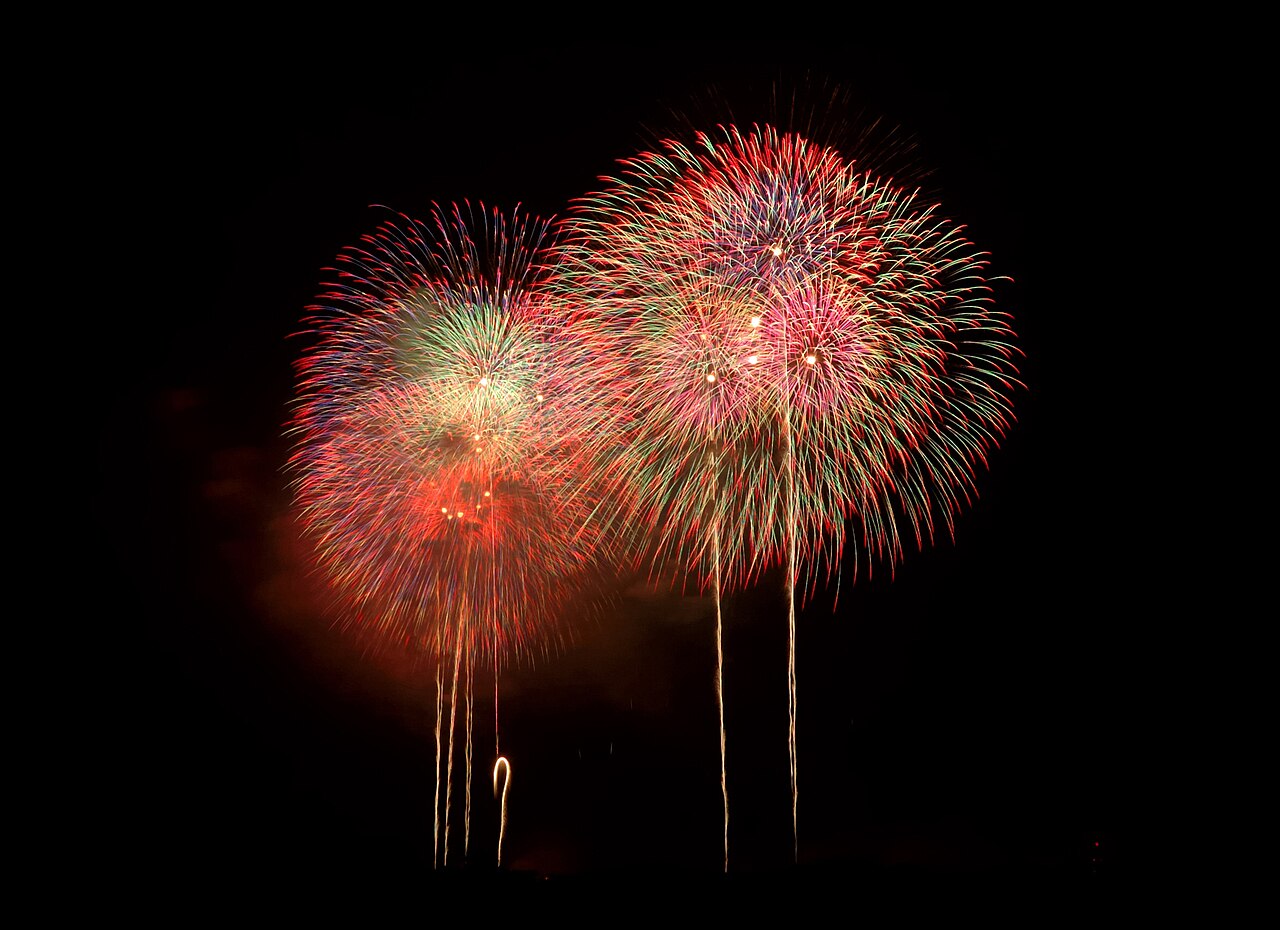
Many fireworks bursting together across the night sky at a Japanese hanabi taikai festival 🗼 Tokyo1
Sumida River Fireworks
Sumidagawa Hanabi · Asakusa, Tokyo

Japan's oldest fireworks festival, with roots going back to 1733 under the Tokugawa shogunate. Today it launches around 20,000 shells over the Sumida River in the middle of Asakusa, drawing close to a million spectators. Fireworks bursting beside Tokyo Skytree is the classic image of summer in the capital.

📍Location: Along the Sumida River, Asakusa–Mukojima, Tokyo
📅Dates: Last Saturday of July (in 2025 it ran July 26)
🚆Getting there: Asakusa or Oshiage (Skytree) station, then walk to the riverside
💡Tip: One of the most crowded shows of the year — grab a spot before noon or book a paid seat, and allow plenty of time to get home.
Tokyo Attractions →
🎆 🏞️ Niigata2
Nagaoka Fireworks
Nagaoka Hanabi · Niigata

One of Japan's three great fireworks festivals. The highlight is the "Phoenix," a continuous launch stretching nearly 2 kilometres along the Shinano River, joined by the giant Sanjakudama shell about 90 cm in diameter. The show was started to commemorate the city's recovery after war and earthquake, and draws around a million people a year.

📍Location: Along the Shinano River near Ote Bridge, Nagaoka, Niigata
📅Dates: August 2–3 every year (fixed dates · 2 nights)
🚆Getting there: Shinkansen to Nagaoka Station, then walk or take a short ride to the river
💡Tip: Paid seats open early and sell out fast, and rooms in town fill months ahead — plan well in advance.
Japan Travel Guide →
🎇 🏆 Akita3
Omagari Fireworks
Omagari Hanabi · Daisen, Akita

A national fireworks competition that Lonely Planet once called Japan's "fireworks Olympics." Around 28 of the country's top pyrotechnicians compete head to head for the grand prize, with both daytime and nighttime fireworks. People who've been say the craftsmanship of each shell is so refined it stands clearly apart from an ordinary show.

📍Location: Along the Omono River, Daisen (Omagari), Akita
📅Dates: Last Saturday of August · around 18,000 shells
🚆Getting there: Shinkansen to Omagari Station, then about a 30-minute walk to the site
💡Tip: It's a far-flung Tohoku show with limited rooms that sell out fast — many people stay in a neighbouring town and take the train in.
Japan Travel Guide →
🎆 🌊 Shiga4
Lake Biwa Fireworks
Biwako Hanabi · Otsu, Shiga

A major Kansai fireworks show that launches around 10,000 shells over Lake Biwa, Japan's largest freshwater lake. The fireworks reflect off the still water in a gorgeous mirror image. Best of all, it's right next to Kyoto — just about a 10-minute train ride from Kyoto Station.

📍Location: Off Otsu Port, around Hama-Otsu, Otsu, Shiga
📅Dates: Early August (in 2025 it ran August 8)
🚆Getting there: Otsu Station, ~10 min from Kyoto Station or ~40 min from Osaka
💡Tip: Pairs perfectly with a Kyoto trip — sightsee in Kyoto by day, then take the train over for lakeside fireworks at dusk.
Kyoto Attractions →
🎇 🍁 Ibaraki5
Tsuchiura Fireworks
Tsuchiura Hanabi · Ibaraki

Another of Japan's three great fireworks festivals, and another national competition — but unlike the others it's held in early November to celebrate the harvest. It's famous for starmine, the rapid continuous bursts considered the best in the country, launching around 20,000 shells beside the Sakura River.

📍Location: Along the Sakura River, Tsuchiura, southern Ibaraki
📅Dates: First Saturday of November (in 2026 it runs November 7)
🚆Getting there: JR to Tsuchiura Station, then a shuttle bus / walk to the site
💡Tip: It's an autumn show, so pack a warm jacket — perfect for anyone who missed the summer fireworks season but still wants a big display.
Japan Travel Guide →
🎆 🎆 Osaka6
PL Hanabi
PL Art of Fireworks · Tondabayashi, Osaka

A fireworks show run by the Perfect Liberty religious order since 1953, famous for launching an enormous number of shells in rapid succession over a short window — especially the finale, which bursts continuously until the whole sky is lit. People who've been say the intensity per minute is unlike an ordinary show. It runs on a single day, August 1, every year.

📍Location: Tondabayashi, southern Osaka
📅Dates: August 1 every year (fixed date) · tens of thousands of shells
🚆Getting there: Kintetsu/Nankai train from Osaka toward Tondabayashi, then walk
💡Tip: It's a one-day show with huge crowds, and the stations are packed both ways — allow extra travel time and head out early.
Osaka Attractions →
How to Enjoy It

4 Steps toGetting Ready for a Fireworks Festival

Your first fireworks festival can feel overwhelming with hundreds of thousands of people around — get these four things sorted in advance and the whole night goes a lot more smoothly.

STEP 1
Pick Your Spot — Book or Stake One Out

Big shows have paid seats (yuryoseki) that open months ahead and sell out fast, giving you a clear view without the crush. If you don't book, you can still watch from free areas — but you'll need to claim your spot very early (some people lay out a mat by midday).

STEP 2
Arrive Early

On show night everyone floods in at once and the nearby stations get packed. Aim to be there at least 1–2 hours before the fireworks start, to allow time for the walk from the station, finding a spot, and queuing at the yatai stalls.

STEP 3
Wear a Yukata + Pack Smart

Wear a yukata with geta sandals to fit the mood (rent or buy one in the host town). Bring a picnic mat, a fan, cash, and water. If it's your first time in geta, pack a few blister plasters too.

STEP 4
Eat Yatai Food While You Wait

Grab takoyaki, yakisoba, karaage, and shaved ice (kakigori) from the yatai stalls and settle in. Most stalls take cash only · and when the show ends, don't rush for the train — wait for the crowd to thin and the trip home is far easier.

Festival Etiquette

How to Do a Fireworks Festivalthe Right Way

Fireworks festivals are something the Japanese love and have done for generations, and there's a little etiquette that keeps everyone enjoying it together. Know it and you'll relax into the night without putting a foot wrong.

📐
Lay Out Only What You Need
Claim the space your group will actually sit on, don't reserve a wide area and leave it empty, and never block walkways or fire exits.
🗑️
Carry Your Rubbish Home
Hundreds of thousands of people generate trash fast. Bring bags, separate your waste, and take it home or use only the designated points.
🚭
Respect the Area Rules
Many events ban smoking outside marked spots, and some prohibit personal fireworks or firecrackers. Check the signs and follow the staff.
🚶
Follow the Set Walking Routes
Big shows set one-way entry and exit routes for safety. Don't push against the flow or stop in the middle of the path when it's crowded.
📸
Photograph Without Blocking Others
Set up a tripod only where it's allowed, and don't stand blocking the people behind you or fire a flash into nearby faces.
🧒
Mind Kids and Valuables
It's so crowded that getting separated is easy — hold children's hands, agree on a meeting point in case you split up, and watch your bag in the crush.
Map

Japan's Fireworks Festivalson One Map

See at a glance which region each show is in — the Kanto and Kansai shows are easy to reach from the big cities, while the Tohoku and Hokuriku ones need more planning for transport and accommodation.

Prep + Booking

6 Things That Keep Fireworks NightSmooth and Stress-Free

🏨
Stay Overnight in the Host Town
For big shows like Nagaoka and Omagari, in-town rooms fill months ahead. Book early so you don't have to fight for a late-night train home.
🎟️
Book Seats the Moment They Go On Sale
Paid seats (yuryoseki) at the top shows sell out fast. Check the on-sale date on the official site and book the instant they open if you want a good view.
💴
Bring Plenty of Cash
Most yatai stalls take cash only, and ATMs are hard to find near the grounds once it's crowded. Carry small notes too.
🌧️
Check the Weather Before You Go
Light rain usually goes ahead, but storms or strong wind can delay or cancel. Check the official announcements on the day and pack a rain jacket.
📶
Get an eSIM Before You Fly
With hundreds of thousands of people packed together, signal often slows down. Keep data on for Google Maps to the site and station, and to meet up with friends.
🦟
Pack Bug Spray + a Fan
Summer evenings by the river are buggy and humid. Bring insect repellent, a fan, and water, and the wait will be far more comfortable.
Related Guides

Keep Planning Your Japan Trip — Seasons, Cities, and Prep

🌸

Japan Cherry Blossom Guide

This page's springtime companion — city-by-city bloom dates, the legendary viewing spots, and how to read the sakura forecast.

Cherry Blossom Guide →
🗼

Tokyo Attractions

Asakusa, Skytree, Shibuya, and the best of the capital — the home base for the Sumida River fireworks.

Tokyo Attractions →
🍜

Osaka Attractions

Osaka Castle, Dotonbori, and the best of Kansai — close to PL Hanabi and the Lake Biwa fireworks.

Osaka Attractions →
⛩️

Kyoto Attractions

Fushimi Inari, Arashiyama, and the legendary temples — just a ~10-minute train ride from the Lake Biwa fireworks in Otsu.

Kyoto Attractions →
🇯🇵

Full Japan Travel Guide

Every region and city, with links into city guides, hotels, and attractions across Japan.

Japan Guide →
ℹ️

Japan Travel Prep

Visa · eSIM · IC cards · JR Pass · yen · power plugs · Japanese etiquette — everything before you fly.

Travel Prep →
Frequently Asked Questions

Questions AboutJapan's Fireworks Festivals

What month are Japan's fireworks festivals (hanabi) held?
Most fireworks festivals (hanabi taikai) take place in summer, from July to August — especially late July and right through August, such as Sumida River in late July and Nagaoka on August 2–3. A few are held outside summer, like Tsuchiura in Ibaraki in early November to celebrate the harvest season. Each show's date can shift from year to year, so always check the official website before you plan.
Where is the biggest fireworks festival in Japan?
The most talked-about top-tier shows are Nagaoka (Niigata), with its Phoenix fireworks stretching nearly 2 kilometres along the river and the giant Sanjakudama shell about 90 cm across, and Sumida River in Tokyo, which launches around 20,000 fireworks for a crowd of nearly a million. Omagari (Akita) and Tsuchiura (Ibaraki) are national pyrotechnic competitions, and together the three (Nagaoka/Omagari/Tsuchiura) are considered Japan's three great fireworks festivals.
Do I need to book a seat to watch the fireworks in advance?
Big shows like Sumida, Nagaoka, and Omagari draw several hundred thousand to nearly a million people. Paid seats (yuryoseki) usually go on sale months ahead and sell out fast, so booking is recommended if you want a clear view without the crush. If you skip a paid seat you can still watch from free areas, but you'll need to grab your spot very early. Check each show's official site for the ticket on-sale date.
Do I have to wear a yukata to watch the fireworks?
It's not required — wear whatever you like — but many Japanese wear a yukata (a light cotton kimono for summer) to fireworks festivals by tradition. You can rent or buy one in the town hosting the event. Pair it with geta sandals and stroll between the yatai food stalls to soak up the atmosphere. If it's your first time in geta, pack a few blister plasters just in case.
What food is sold at a fireworks festival?
Long rows of yatai (food stalls) line the grounds selling Japanese festival food — takoyaki, yakisoba, fried karaage chicken, grilled corn, shaved ice (kakigori), candied apples (ringo-ame), and beer. Grab some and settle in while you wait for the show to start. Just bring cash, because most yatai stalls only accept cash.
Is it hard to get home after the fireworks?
When the show ends, hundreds of thousands of people pour out all at once. The nearest train stations get extremely crowded, and you may queue for an hour just to reach the platform. The trick is to allow plenty of extra time for the trip home, or walk to the next station along the line where it's quieter. Some people sit tight until the very end and then stroll out slowly once the crowd thins. Staying overnight in the host town is the easiest option, since you don't have to fight for a train.
Ready for the Fireworks?

Pick the Show That Fits Your Trip
and Book Before Rooms Fill Up

Plan around the fireworks festival you want to see, open a city guide for hotels, sights, and transport, or start hunting for a room near the grounds early — on show night, rooms sell out fast and prices spike.

🔴 Search Fireworks-Night Hotels Japan Guide