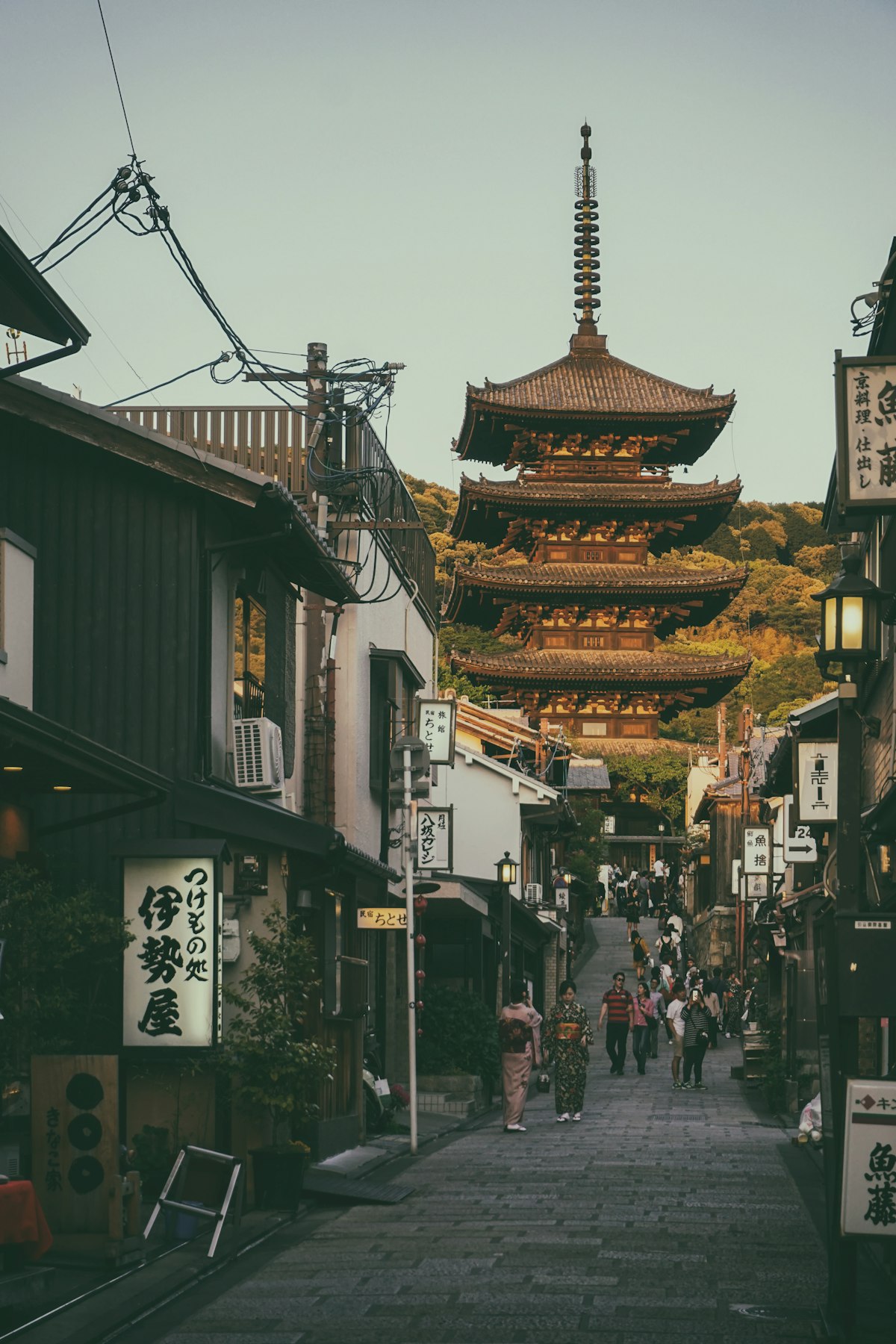
Western Kyoto, where the Sagano Bamboo Grove is free to walk all day, the UNESCO World Heritage Tenryu-ji Temple sits behind it, a monkey park looks out over the whole city, and a scenic train winds through the gorge — all of it in a single day.
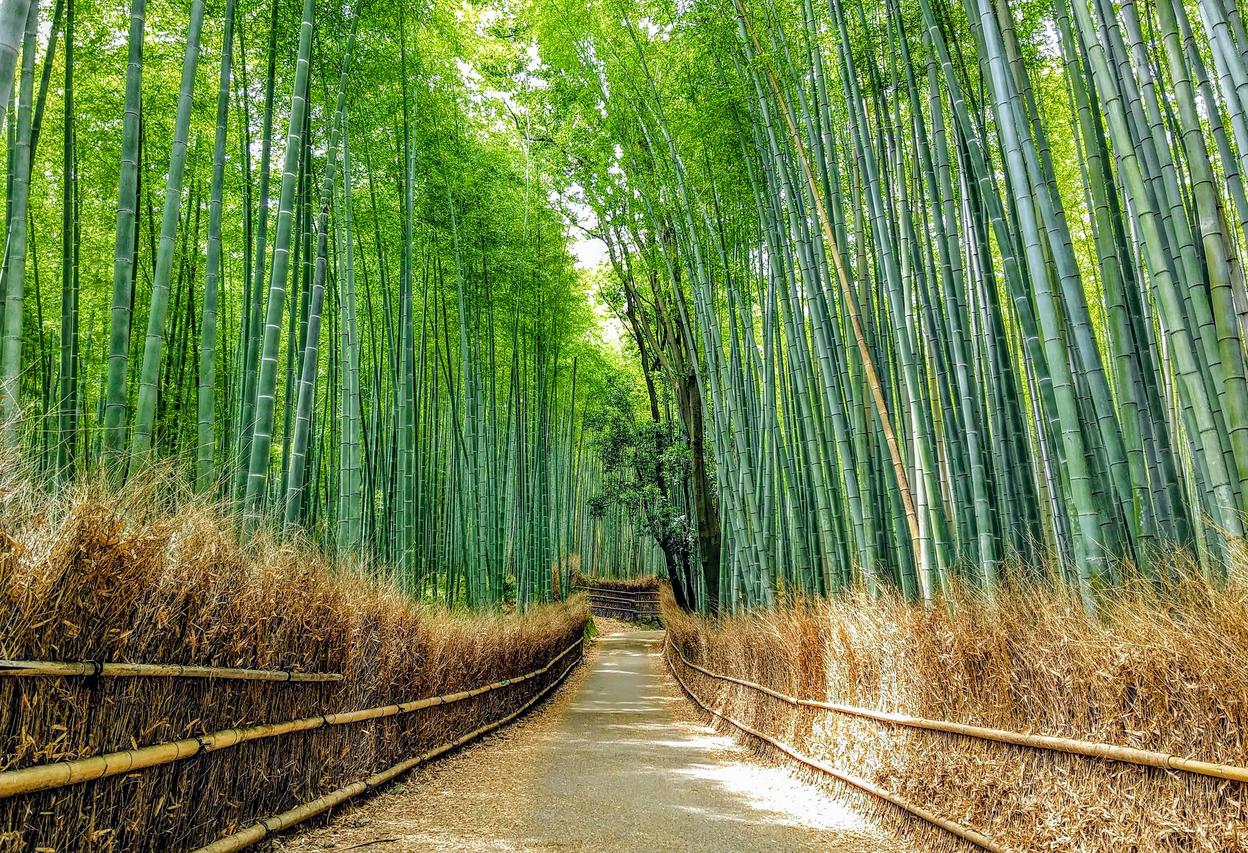
Picture this: you walk into a forest where the bamboo soars overhead on both sides of the path, the morning light slips through the canopy in pale-green streaks, and every time the wind passes the stalks knock against each other in a soft, dry rustle — a sound Japan thought worth listing among its "100 Soundscapes of Japan to be preserved." This is the Sagano Bamboo Grove, the reason travellers from all over the world want to see Arashiyama at least once.
Arashiyama is the nature district on the western edge of Kyoto, packing several things into an area you can cover on foot: the Sagano Bamboo Grove, free to walk; Tenryu-ji, a UNESCO World Heritage Zen temple; the wooden Togetsukyo Bridge arcing across the river; the Iwatayama Monkey Park up on the hillside; and the Sagano Romantic Train that winds through the gorge. All of it is only about 15 minutes from Kyoto Station by JR.
What makes Arashiyama special is that you don't have to choose just one thing — walk the bamboo early while it's quiet, visit the temple mid-morning, eat lunch by the river, head up for the monkeys and the city view in the afternoon, then ride the scenic train back. You can do the whole circuit comfortably in a single day.
Listed in the order you can comfortably walk them — starting with the bamboo in the morning and working down to the bridge by the river.
The heart of Arashiyama: a public path flanked by bamboo up to 20 metres tall on both sides, running from the north gate of Tenryu-ji to around the Okochi Sanso villa. Early morning, 7–8 am, gives you the best light and the fewest people. Come between 9 am and 4 pm and it gets very crowded, especially in cherry blossom and autumn-colour season — so arrive as early as you possibly can.
A Rinzai Zen temple inscribed as a World Heritage Site in 1994. The highlight is the Sogen Pond garden, designed to use the Arashiyama mountains behind it as a backdrop (the "borrowed scenery" technique) — it was the first site the Japanese government ever designated as both a Historic Site and a Place of Scenic Beauty. Garden admission is ¥500, with a further ¥300 to enter the buildings. The temple's north gate opens straight onto the bamboo grove, so you can carry right on through.
A stroll garden that the silent-film star of the Showa era, Denjiro Okochi, built largely by hand over more than 30 years (starting in 1931). It sits at the far end of the bamboo path. The ¥1,000 admission sounds steep, but it includes a bowl of hot matcha and a Japanese sweet at the garden's tea house. The view from the hill takes in Kyoto and the surrounding mountains, and there are far fewer people here than elsewhere — an excellent place to escape the bustle.
Cross the Togetsukyo Bridge to the south bank and walk uphill for about 20 minutes (fairly steep but the path is well kept and children manage it). At the top, around 120 wild Japanese macaques roam freely, and there's a viewpoint over the entire city of Kyoto — on a clear day you can see Kyoto Tower. Buy a ¥100 bag of monkey food and feed them from inside the enclosure (here it's the people who are caged and the monkeys outside, the reverse of a normal zoo). Closed in heavy rain or snow.
Arashiyama's signature landmark, its name means "Moon Crossing Bridge" — it comes from the Kamakura-era Emperor Kameyama watching the moon appear to drift across the bridge as if floating on it. The present bridge was rebuilt in 1934 in reinforced concrete, but keeps wooden railings to preserve the original feel. The view is lovely in every season, above all during the November autumn colour when the mountains turn behind it.
A classic old-fashioned train (known as the Torokko) that runs slowly along the Hozugawa River gorge, covering 7.3 kilometres from Torokko Saga Station to Torokko Kameoka Station in about 25 minutes. A one-way fare is ¥880 per adult (~฿205), ¥400 for children. Some carriages are open-sided so you catch the breeze and the full view.
Very important: this line closes for winter; in 2026 it starts running on 1 March. The views are best during November's autumn colour — which is also when tickets sell fastest. Book ahead, because seats go very quickly in high season. If you want the river-view side, choose an even-numbered seat.
For a shot of the bamboo path with no one in it, there's only one way: come early, 7–7.30 am, before the tour buses arrive. The morning light streaming down through the bamboo tops in shafts is the dream image everyone is after. The Togetsukyo Bridge photographs well all day, but late afternoon — when golden light bathes the mountains behind it — gives you the warmest picture.
One angle people often miss is the viewpoint at the Iwatayama Monkey Park — a slightly tiring climb, but you're rewarded with a panorama over the whole of Kyoto, the Katsura River and the Togetsukyo Bridge below. Worth the sweat, no question.
Three rail lines reach Arashiyama — pick whichever suits where you're starting from and which spot you want to see first.
Stay near Kyoto Station or in the city centre and the JR gets you to Arashiyama in 15 minutes.