Home Mexico City Attractions Mexico About
Home  ›  Mexico  ›  Mexico City  ›  Food Guide
🇲🇽 Mexico City Eater's Guide · Updated 2026

The World's
Street-Food Capital

Mexican cuisine is a UNESCO World Heritage, and Mexico City is its beating heart — spit-roasted al pastor pork, market tlacoyos, breakfast chilaquiles, and mole sauces built from dozens of ingredients. Nine dishes to try before you leave, plus how to eat street food safely.

Why Eat Here

A City Where Street Food Is a World Heritage

Mexico City is a street-food lover's paradise — Mexican cuisine is inscribed as a UNESCO Intangible Cultural Heritage, and this city is its center. Every corner has a taco stall, a spinning al pastor pork spit over flame, women patting fresh masa into tlacoyos right in front of you, and mole shops simmering sauce for hours. The best food usually isn't in fancy restaurants — it's at the stall with the longest line.

Honestly, Mexico City is very cheap for food — tacos run 15–25 pesos each, and a regular sit-down meal is 150–300 pesos. Tip 10–15% at restaurants with table service. Most menus are in Spanish (keep a translation app handy). We picked 9 dishes that answer what Mexico City eats — ordered from the most local, try those first. But before you head out, read the safety rules below.

🌮 Eat street food safely: Pick the "busy, long-line" stalls — fast turnover, fresh ingredients, meat cooked hot in front of you · Drink bottled water (never tap) · carry hand sanitizer · skip ice you're unsure about · eat light on day one because the city sits at 2,240m and many lose appetite at first — your body adjusts in 1-2 days.
The Dishes

9 Dishes to Try Before You Leave Mexico City

Ordered by how uniquely they belong to the city — the dishes that tell the story of ancient cooking and street life.
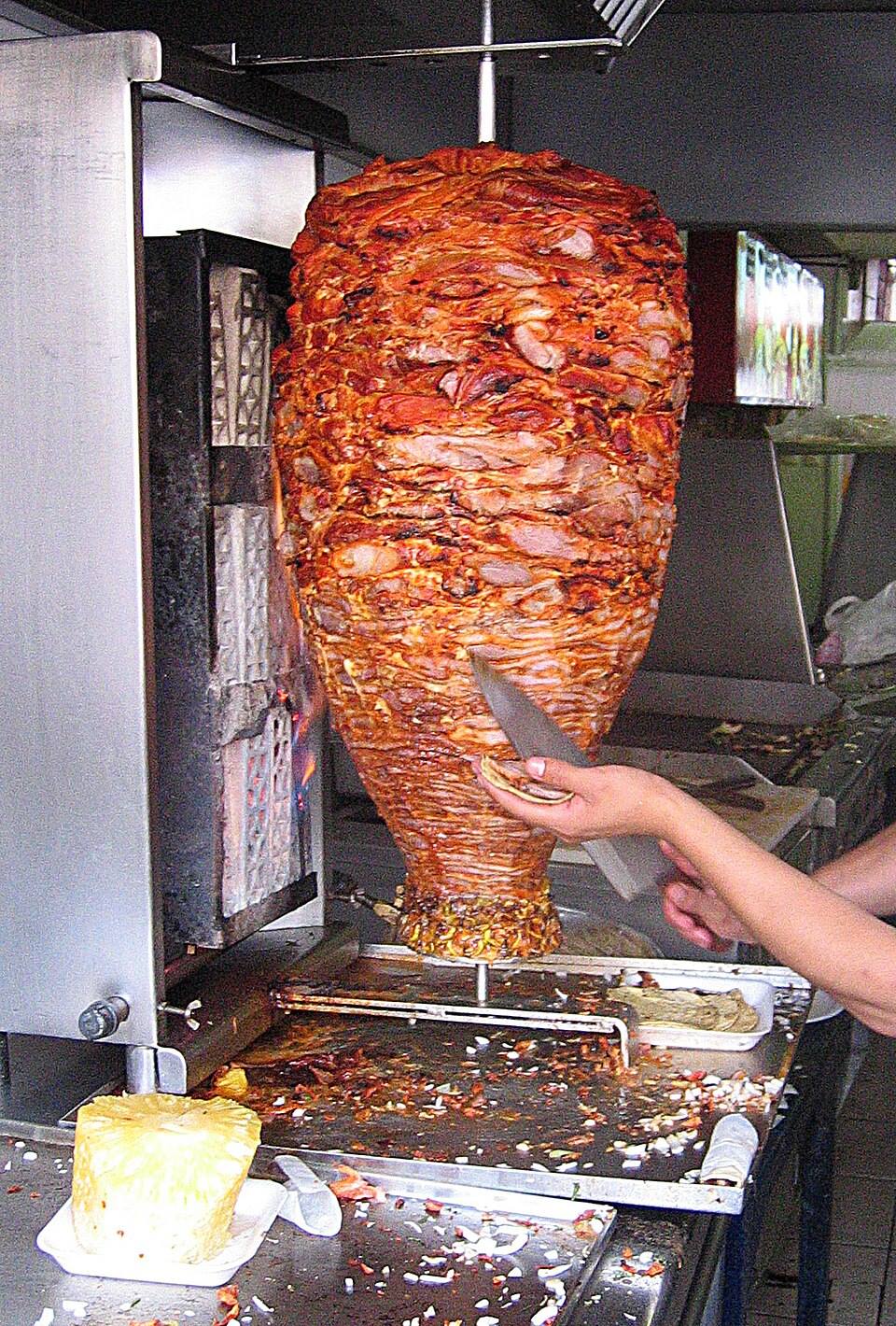
Tacos al pastor with red-marinated pork from a spit and pineapple 1
Tacos al Pastor
Spit-roasted marinated pork tacos · the city's signature

This is the dish everyone should try first — pork marinated in red-orange achiote spices, stacked on a vertical spit and roasted on a turning flame (a technique Lebanese immigrants brought from shawarma). The taquero shaves fresh meat onto small corn tortillas, tops with grilled pineapple, onion, cilantro, a squeeze of lime, and salsa. Sweet-salty pork with tangy juicy pineapple is addictive. Order an "orden" (plate) or count by the piece. El Vilsito and El Huequito are legends — go in the evening to late night for the most authentic vibe.
Where: El Vilsito (nights) · El Huequito · taco stalls citywide
Price: 15–25 pesos each
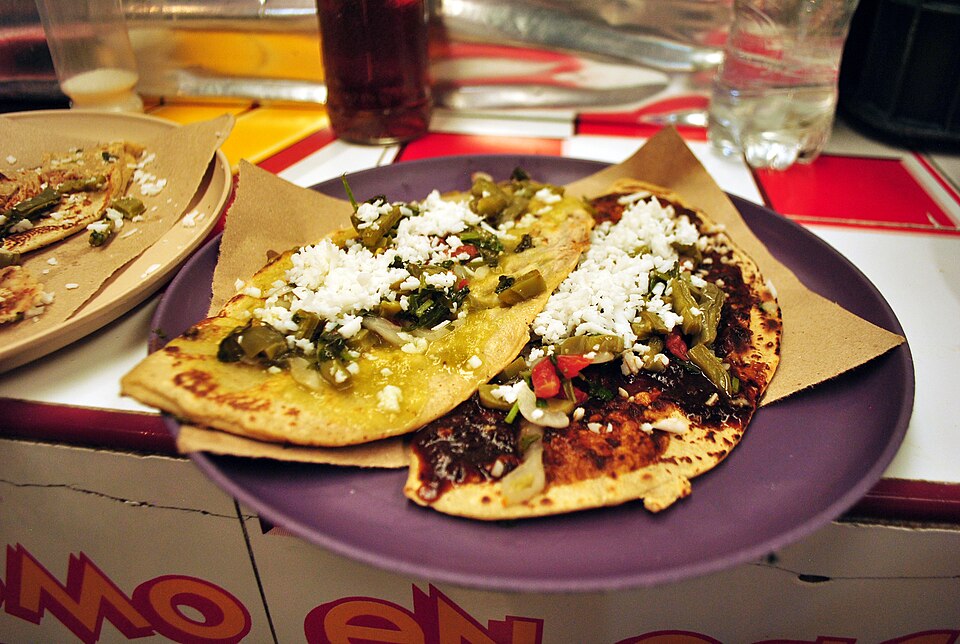
Tlacoyo oval masa cake with bean filling topped with vegetables and cheese 2
Tlacoyos
Oval masa cakes with bean filling · pre-Hispanic food

Tlacoyos predate the Spanish conquest — corn masa shaped into a thick oval, stuffed with mashed beans (frijol), cheese, or requesón (like ricotta), then griddled on a comal until charred. Topped with nopales (sliced cactus), onion, cilantro, cotija cheese, and salsa. Local women pat them out fresh in front of you at market and street stalls in the morning. A filling, cheap breakfast-to-late-morning bite, and a genuinely ancient food that tourists often overlook.
Where: market (mercado) stalls · morning street stalls · La Merced market
Price: 15–30 pesos each
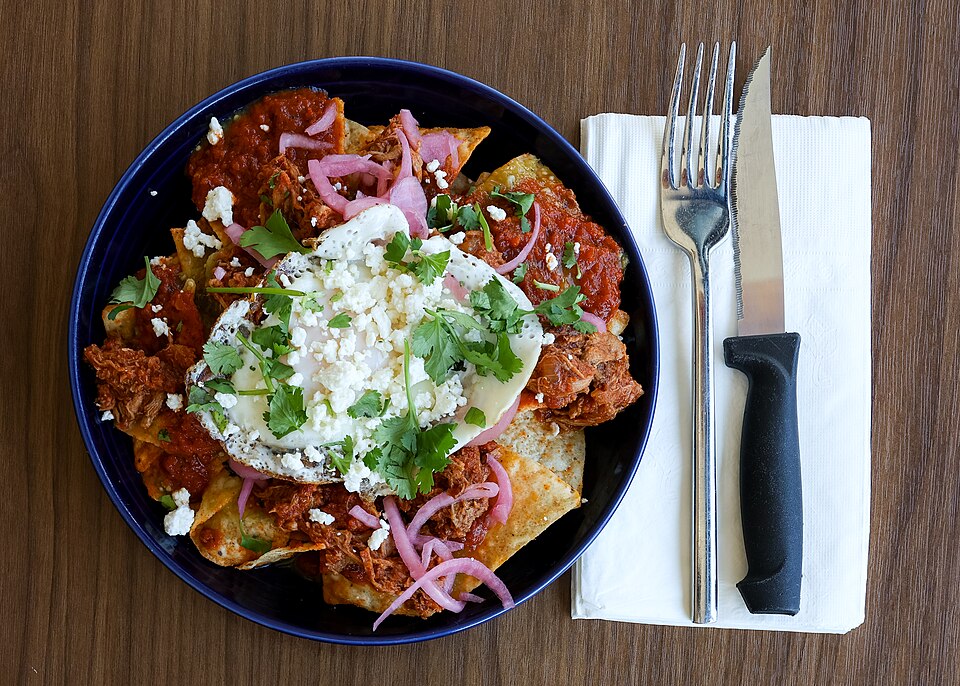
Chilaquiles fried tortillas in green salsa with egg and cream 3
Chilaquiles
The breakfast of fried tortillas in salsa

Ask a Mexican what breakfast is and many say "chilaquiles" — triangle-cut corn tortilla chips fried crisp, drenched in salsa (green verde or red roja) until they start to soften but keep some crunch, topped with cream, cotija cheese, onion, and usually a fried egg or shredded chicken. You choose your spice level. Eat it with coffee or fresh juice. Breakfast spots and fondas (homestyle eateries) citywide serve it — start a sightseeing day with this plate and you'll understand why Mexicans love it.
Where: fondas / breakfast spots citywide · indoor markets
Price: 60–120 pesos / plate
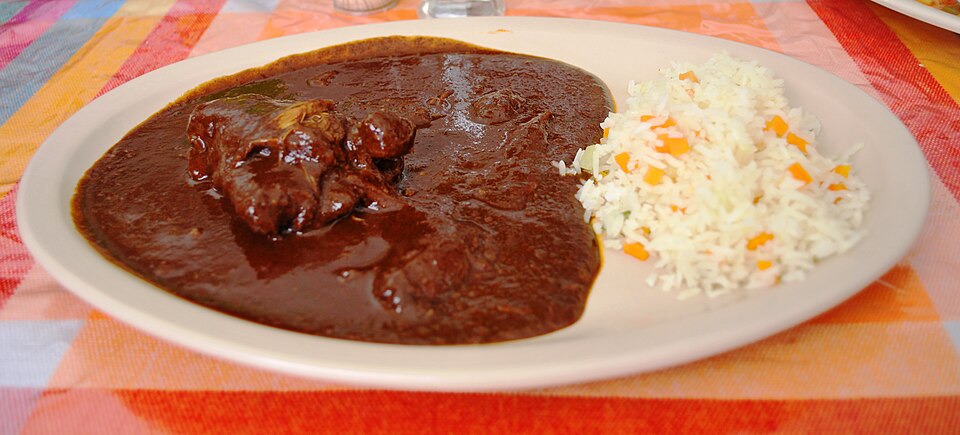
Mole dark brown sauce over chicken with sesame seeds 4
Mole
The ancient multi-ingredient sauce · the soul of Mexican food

Mole is the most complex sauce in Mexican cuisine — classic mole poblano uses 20-30+ ingredients: several dried chiles, chocolate, sesame, nuts, spices, and dried fruit, simmered and ground for hours into a deep brown sauce that's rich, sweet, spicy, and slightly bitter all at once. Spooned over chicken or turkey and sprinkled with sesame seeds. Every family has a secret recipe. It's a celebration food that shows the depth of Mexican food culture — try it once to understand why it's far more than just a "sauce."
Where: traditional restaurants · markets · Coyoacán
Price: 120–250 pesos / plate
Pozole hominy soup with meat and toppings 5
Pozole
Hominy soup · the weekend dish

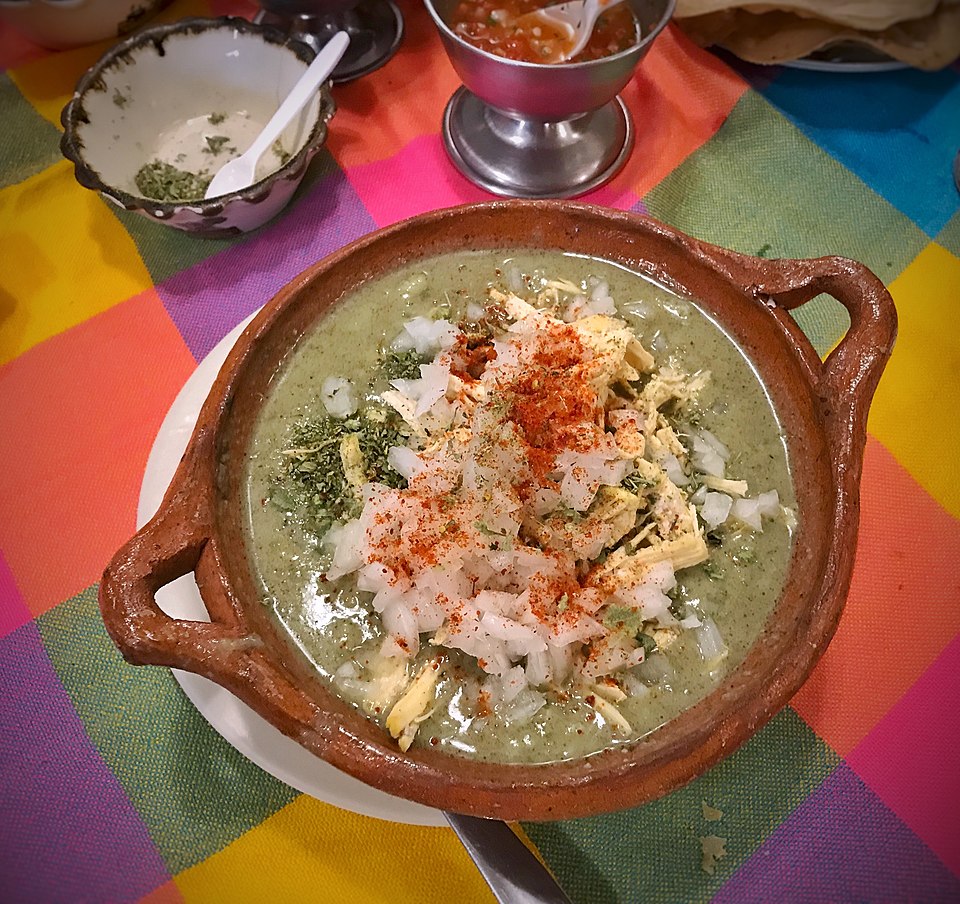
Pozole is the comforting soup Mexicans eat on weekends and at celebrations — large hominy corn kernels simmered with pork or chicken in a fragrant, spiced broth. It comes in three colors: rojo (red), verde (green), and blanco (white). Served with garnishes to add yourself — shredded cabbage or lettuce, onion, radish, lime, oregano, and tostadas (fried tortillas). A hearty, warming, genuinely filling meal, and a family dish every household makes differently. Try it at a dedicated pozolería for the most authentic flavor.
Where: pozolería spots · indoor markets · weekend meals
Price: 80–150 pesos / bowl
Tamales steamed masa wrapped in corn husks 6
Tamales
Steamed masa in a wrapper · the city's quick breakfast

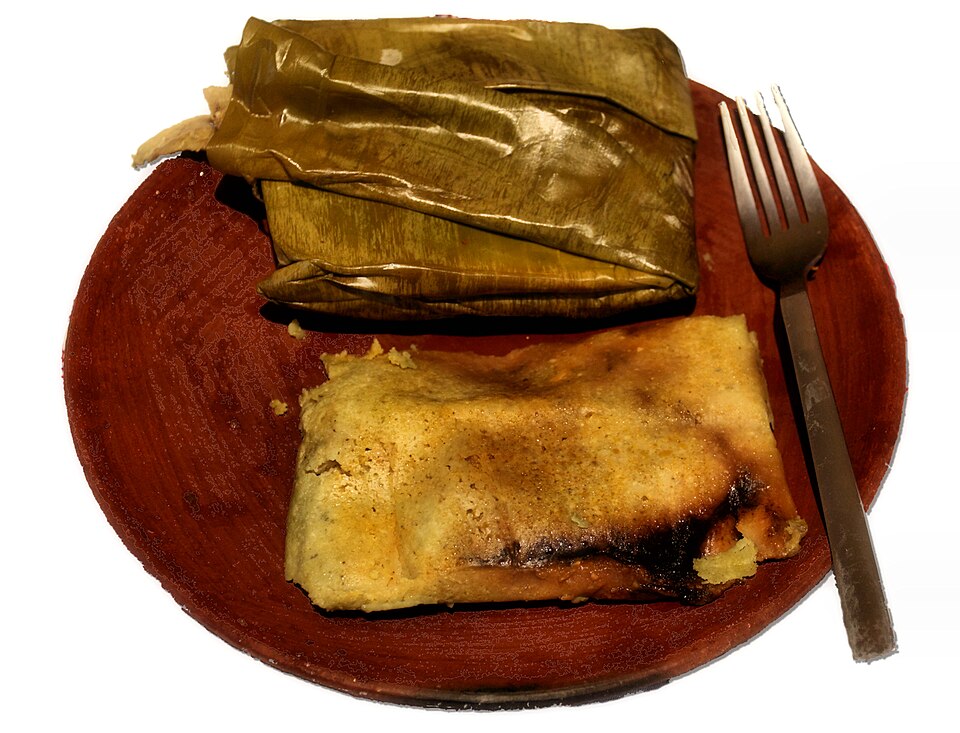
Tamales are the grab-and-go breakfast Mexico City eats on the way to work — corn masa with a filling, wrapped in a corn husk or banana leaf and steamed until soft. Fillings are sweet and savory: mole con pollo, rajas (chile and cheese), verde (green salsa), and a pink sweet one. The city's signature is the "guajolota" — a tamale stuffed inside a bolillo bread roll, a carb-on-carb sandwich (double carbs!) that workers eat with atole (a hot corn drink) in the morning. Buy from chain street stalls in the early morning.
Where: morning street stalls · markets · tamale carts
Price: 15–25 pesos each · guajolota 25–35 pesos
Esquites corn cup with mayo, cheese, and chile powder 7
Esquites
Corn cup loaded with toppings · street snack

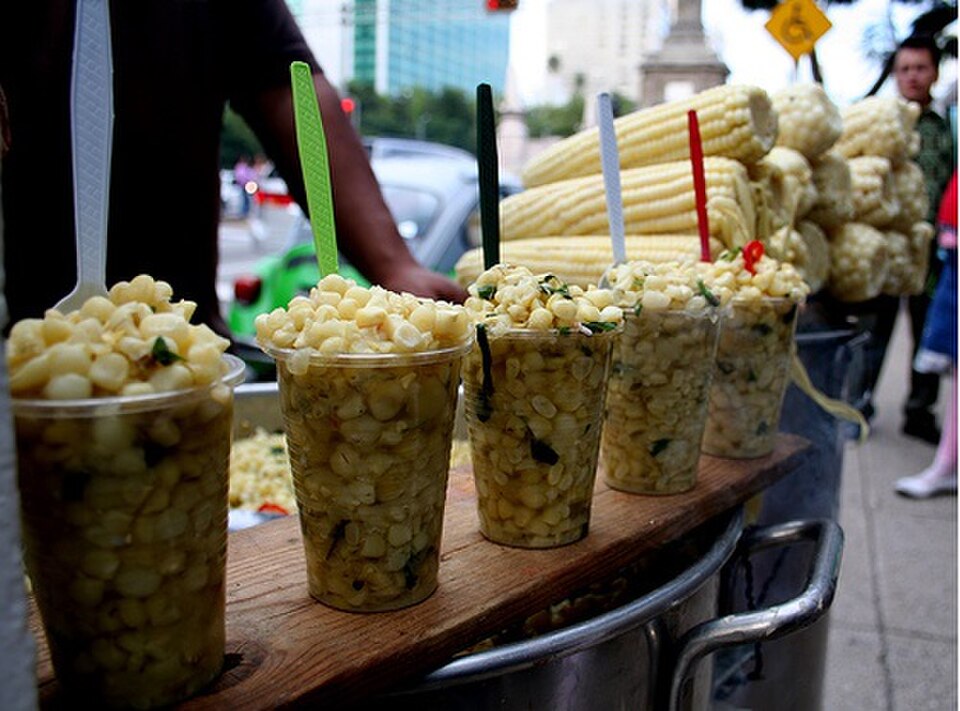
Esquites is the street snack you'll find on every corner — corn kernels boiled with epazote (a Mexican herb), scooped into a cup, topped with mayo, cotija cheese, chile powder, and a squeeze of lime, eaten hot with a spoon. It's the cup version of elote (a whole corn cob on a stick with the same toppings). Creamy, salty, spicy, and tangy in one bite. It's the evening snack Mexicans eat on the go — super cheap. Grab a cup while strolling a plaza or park.
Where: street carts · plazas · parks · markets
Price: 25–45 pesos / cup
Churros long fried dough dusted in cinnamon sugar with dipping chocolate 8
Churros
Fried dough with cinnamon sugar · the late-night sweet

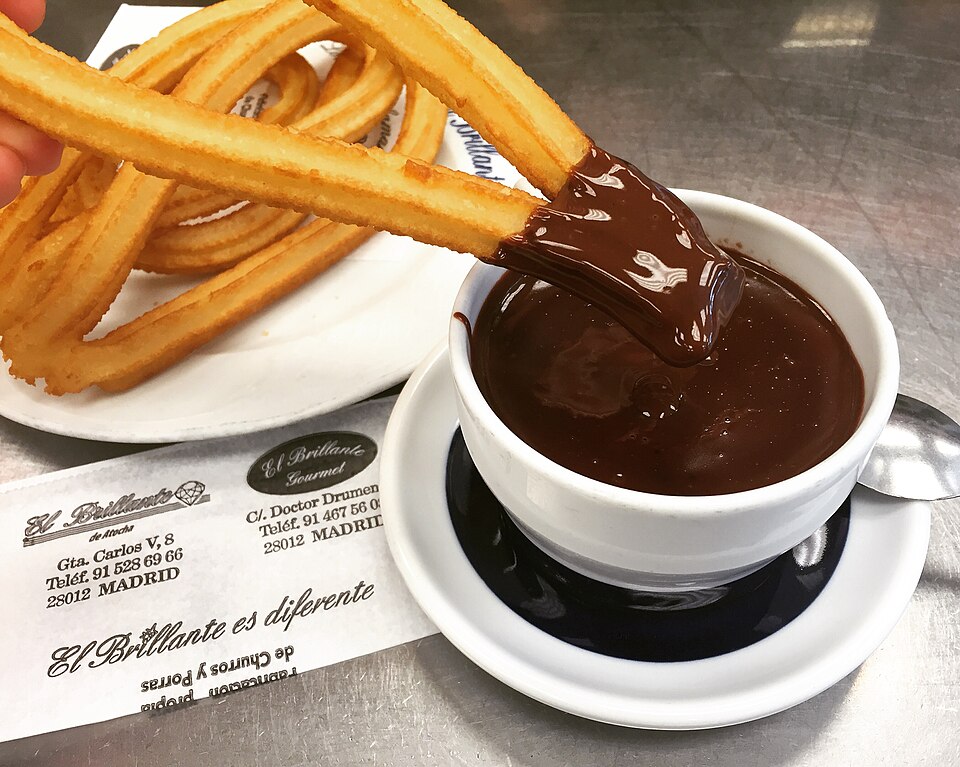
Churros are the sweet Mexicans eat from early morning to late night — long ridged fried dough, crisp outside and soft inside, dusted in cinnamon sugar, dipped in thick hot chocolate so rich it's almost a soup (chocolate caliente). The legendary spot is El Moro, open 24 hours since 1935 — hot churros with chocolate at 2am after the bars is a quintessential Mexico City experience. Some shops do churros stuffed with dulce de leche or custard. A cheap dessert everyone loves, all ages.
Where: El Moro (24h, legend since 1935) · churrerías citywide
Price: churros + chocolate set 50–90 pesos
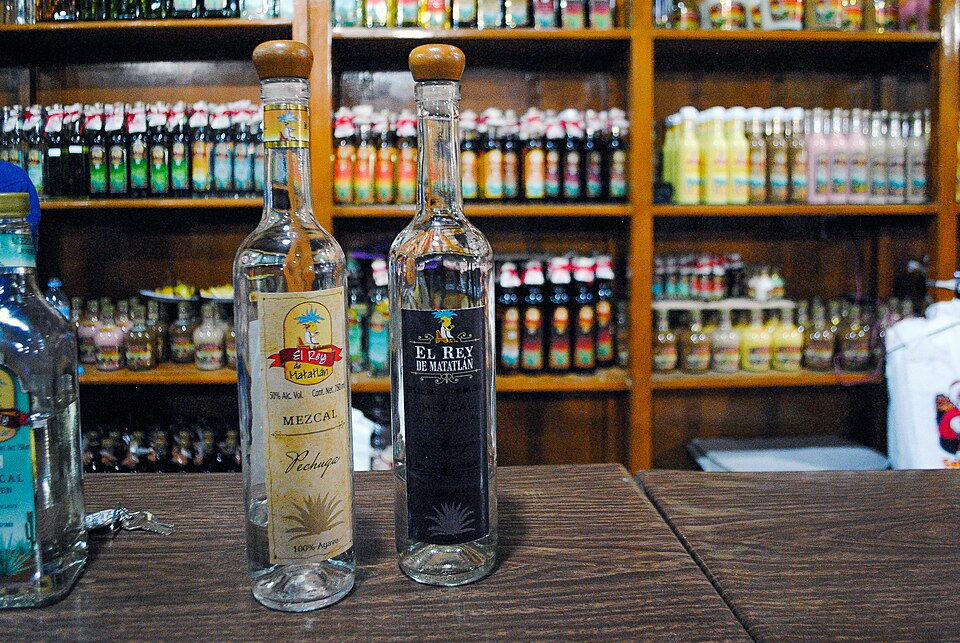
Mezcal in a small glass served with orange and chile salt 9
Mezcal
Smoky agave spirit · tequila's older sibling

If tequila is the agave spirit the world knows, mezcal is its deeper older sibling — made from many agave varieties, roasted in earthen pits over charcoal for a signature smoky character. There's a saying: "para todo mal, mezcal; para todo bien, también" (for everything bad, mezcal; for everything good, the same). Sip it slowly from a small glass with orange slices dusted in chile salt (sal de gusano). Roma and Condesa have stylish mezcalerías with dozens to try — drink mindfully, since the altitude makes alcohol hit faster than usual.

Where: mezcalerías in Roma/Condesa · Centro bars
Price: shot 60–150 pesos
Food Neighborhoods

Which Neighborhood for What You Crave

Districts and markets where the food sits within walking distance.

Centro Histórico
Old downtown · UNESCO World Heritage

The historic center around the Zócalo plaza — legendary taco stall El Huequito, the 24-hour El Moro churros, indoor markets, and traditional restaurants in colonial buildings. Busy all day, easy to wander and graze. Great for a food tour and lunch. Watch your valuables in crowds.

Getting there: Metro Zócalo / Bellas Artes · Best: daytime, daily
Roma & Condesa
Hip district · chef restaurants · mezcalerías

The hippest part of the city — new-chef restaurants, third-wave cafés, designer taquerías, and mezcalerías with dozens of mezcals to try. Leafy streets and a pretty vibe. Great for dinner, brunch, and drinks after sightseeing. Pricier than other areas but quality and atmosphere are worth it. A favorite area to stay.

Getting there: Metro Insurgentes / walk · Best: brunch / evening
Mercado La Merced
Biggest market · authentic, cheap food

One of the largest markets in the Americas — tlacoyo, quesadilla, taco, and soup stalls plus every fresh ingredient. Real, cheap food locals eat. A top food-tour spot for both tasting and seeing Mexican market culture. Very crowded — go with a guide or during the day, and watch your valuables.

Getting there: Metro Merced · Best: daytime (with a food tour)
Coyoacán
Pretty old district · mole · sweets · market

A pretty colonial district to the south (Frida Kahlo's house is here) — the Coyoacán market is known for tostadas, mole, and traditional sweets, with shaded plaza cafés and snacks around the old church. More relaxed than the center. Great for a strolling lunch-to-afternoon, an area that mixes sightseeing and eating well.

Getting there: Metro Coyoacán / Uber · Best: daytime–afternoon, weekends
Polanco
Upscale district · fine dining · world-ranked

The most upscale district — world-class fine dining (Pujol and Quintonil rank among the world's best restaurants), modern Mexican cuisine that elevates folk ingredients into art. Very pricey and booked weeks ahead. Great for a special splurge dinner. If your budget allows and you can get a table, it's an experience you'll remember for life.

Getting there: Metro Polanco · Best: special dinner (book ahead)
El Vilsito (nights)
Auto shop by day · taquería by night

One of the legendary al pastor stalls — an auto repair shop by day that transforms into a taquería at night with a long line (featured on a Netflix documentary). Marinated pork shaved fresh off the turning spit, grilled pineapple, a true late-night Mexican eating scene. Open late, great after a night out. A "busy" stall by the safety rule.

Getting there: Narvarte area / Uber · Best: evening–late night
Legendary Spots

Spots You Shouldn't Miss

Places that have lasted and that locals keep coming back to — put them on your map before you go.

1
El Moro
24-hour churros, a legend since 1935

A churrería open 24 hours since 1935 that has become a city institution — fresh-fried churros, crisp outside and soft inside, dusted in cinnamon sugar, dipped in thick hot chocolate you can choose in several styles (Spanish, Mexican, French). Eating them at 2am after the bars is the real experience. Several branches, but the Centro location is the original. Cheap, always open.

Address: Eje Central (Centro Histórico) · multiple branches
Hours: open 24h · Famous for: churros + hot chocolate ~60 pesos
2
El Vilsito
Legendary tacos al pastor (nights)

A stall featured on a Netflix documentary — an auto repair shop by day that transforms into a taquería at night with a long line. Achiote-marinated pork grilled on a turning spit, shaved fresh onto tortillas, topped with grilled pineapple. A true late-night Mexican eating scene. It's a "busy" stall, safe by the rule — fast turnover, hot fresh meat. Open late, great after a night out.

Address: Av. Universidad (Narvarte area)
Hours: evening–late · Famous for: Tacos al Pastor ~20 pesos/each
3
Mercado La Merced
The biggest authentic food market

A vast indoor market that gathers the city's real, cheap food in one place — tlacoyo, quesadilla, taco, soup, and pozole stalls, plus every fresh ingredient. Women pat fresh masa right in front of you. A top food-tour spot for both tasting and seeing market culture. Crowded — best with a guide or during the day. Watch your valuables and bring peso cash.

Address: La Merced area (Metro Merced)
Hours: daytime (closes evening) · Famous for: tlacoyos · quesadillas · pozole

Want to eat Mexico City street food with confidence?

A street-food tour with a local guide takes you to safe, delicious stalls, teaches you how to order and eat, and explains the food's history — most worth it on your first day, since you'll be confident to wander and eat on your own afterward. La Merced or Centro Histórico tours are popular.

Book a Mexico City food tour on Klook →
Affiliate link — we may earn a commission when you book through this link, at no extra cost to you.
Frequently Asked

FAQ · What People Ask Before Heading Out to Eat

Is it safe to eat street tacos in Mexico City?
Yes, if you pick a busy stall — a long line means high turnover, fresh ingredients, and meat cooked hot right in front of you. The simple rule: choose stalls where locals are queuing, with meat grilling on the fire and constant turnover. Avoid quiet stalls with food sitting out or meat that looks like it's been there a while. Drink bottled water (not tap) and carry hand sanitizer — that's all you need to enjoy CDMX street food.
Does Mexico City's altitude affect eating?
Mexico City sits at about 2,240 meters (7,350 ft), high enough that many people feel a reduced appetite and tire easily on day one. Drink lots of water (bottled), eat lighter on the first day, and go easy on alcohol since it hits faster than usual. Your body adjusts in 1-2 days and your appetite returns — then you can dive into the street food fully from day two.
How much does a meal in Mexico City cost?
Mexico City is very cheap for food — street tacos run 15–25 pesos each, a comida corrida (set lunch) 80–150 pesos, a regular sit-down meal 150–300 pesos, and designer spots in Roma/Condesa more. Tip 10–15% at sit-down restaurants with service; street stalls don't require a tip. Most menus are in Spanish — a translation app helps a lot.
Do I need to drink bottled water in Mexico City?
Yes, always drink bottled water (agua embotellada), not tap. Most restaurants and hotels use filtered water for ice and washing produce, but to be safe avoid ice from street stalls you're unsure about. Fresh fruit waters (agua fresca) from busy spots are usually fine. Carry a bottle — easy to buy at the OXXO convenience stores on every corner.
How much should I tip at Mexican restaurants?
Tip 10–15% (called propina) at sit-down restaurants with service. Some bills include it already, so check before double-tipping. Street stalls, stand-up taquerías, and comida corrida generally need no tip or just a small one. Keep small peso cash on hand since street stalls take cash only.
Is a food tour in Mexico City worth it?
Very much so, especially on day one — a street-food tour takes you to safe, delicious stalls a local guide knows, teaches you how to order and eat, and explains the food's history, giving you confidence to eat street food on your own afterward. Around USD 50–90 per person. Book ahead via Klook or Viator since small groups fill quickly. La Merced or Centro Histórico tours are popular.